Explore the differences between Jackery and Bluetti, focusing on real-world reliability, battery chemistry, recharge speed, and long-term durability for 2026.
The average campsite power system fails not from batteries but from connectors. A Bluetti unit that seems sturdy in the trunk can reveal wear in the field when you’re plugging in nightly and cycling through dozens of recharge cycles. Bluetti's high‑output models often outlast weekend trips, but only if the chassis and ports stay tight after the first year.
This article cuts through the noise to compare long‑term reliability and total cost of ownership for off‑grid setups in 2026. I’ll pull apart build quality, component aging, and how each brand handles high‑duty cycles across daily camp use, RV boondocking, and tiny‑house routines. Real owners report that investment signals shift after year two, when portability loosens, fans wear, and replacement cells enter the equation. The goal is clear: map which system keeps power flowing without surprise bills, so you can pick with confidence.
What makes jackery vs bluetti a real durability test for 2026
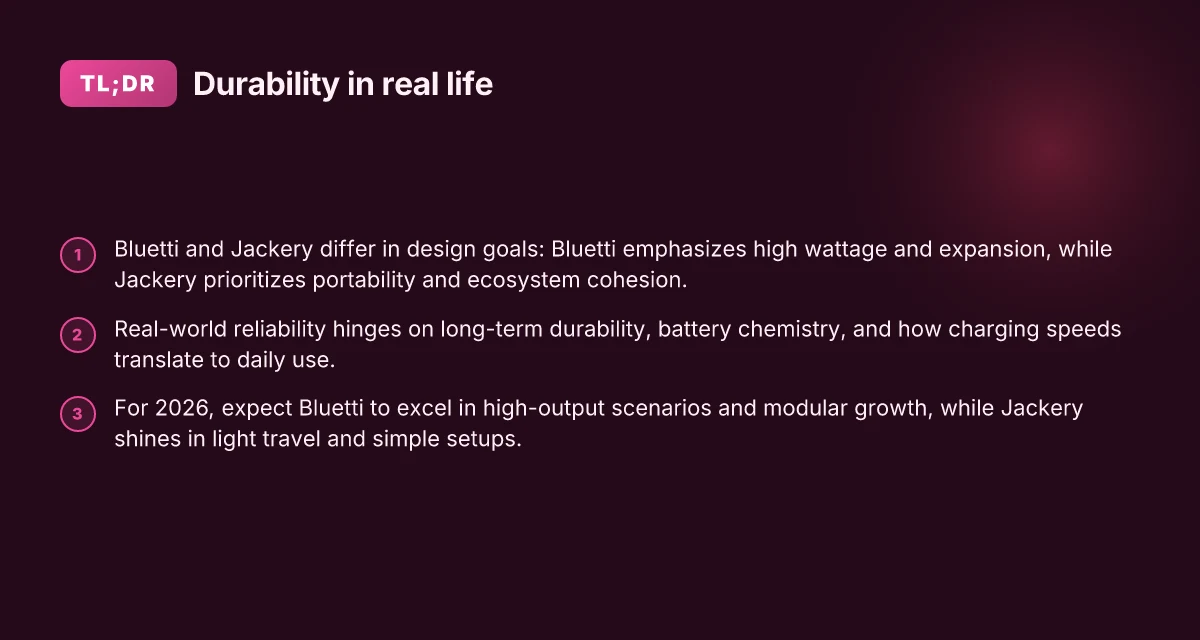
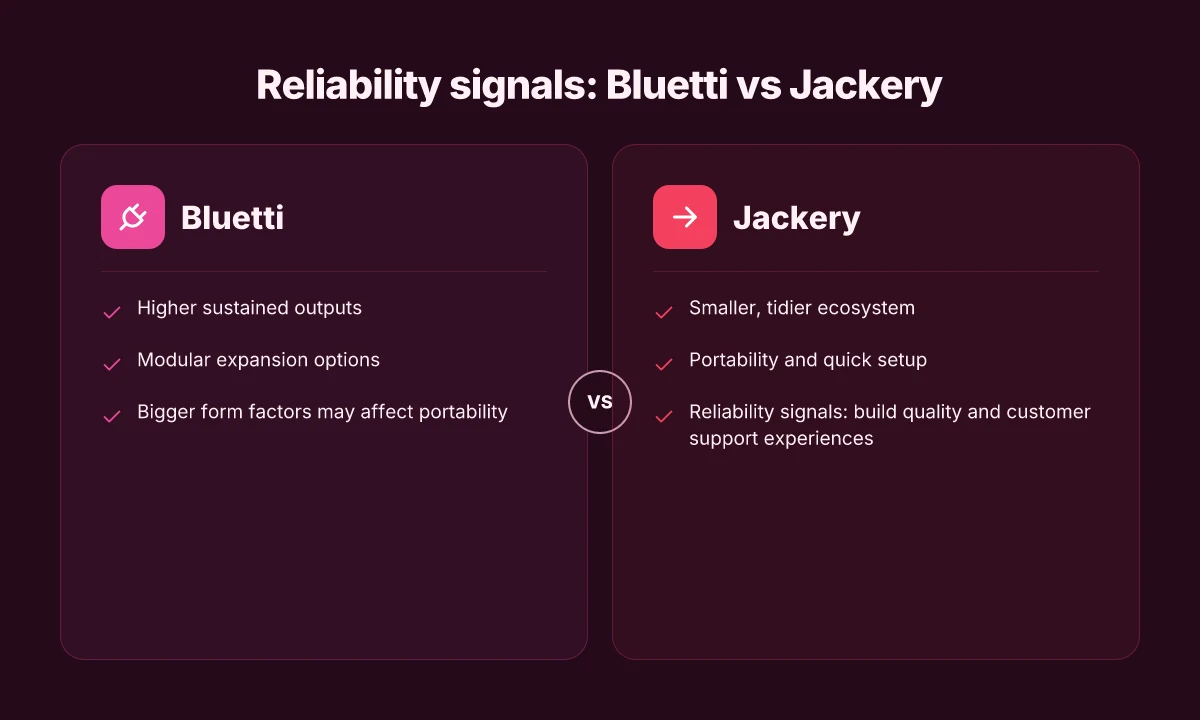
When you plan real-world off-grid power for 2026, durability isn’t a single spec line. It shows up in how a unit ages, how its design handles repeated cycles, and how the ecosystem supports long-term reliability. Bluetti and Jackery sit at opposite ends of the portability versus high-wattage spectrum, yet both dominate the field. Bluetti leans into high wattage and expansion, while Jackery emphasizes a tidy ecosystem and lighter, more portable builds. The core question isn’t peak specs. It’s which brand holds up over years of camping trips, RV spots, and tiny homes.
how each brand encodes reliability into its design Bluetti builds for high output and modular growth. You’ll notice larger battery banks, beefier cooling, and ready-made expansion paths. These choices aim for long-term resilience under sustained use, but they also add more components that can wear or drift over time. Jackery designs for simplicity and portability, pairing a compact form factor with an integrated ecosystem that feels cohesive. The fewer moving parts and tighter integration can translate to fewer early-life failures, but it also means fewer future expansion options if your needs change. From a durability standpoint, the trade-off is clear: rugged growth potential versus compact, dependable daily use.
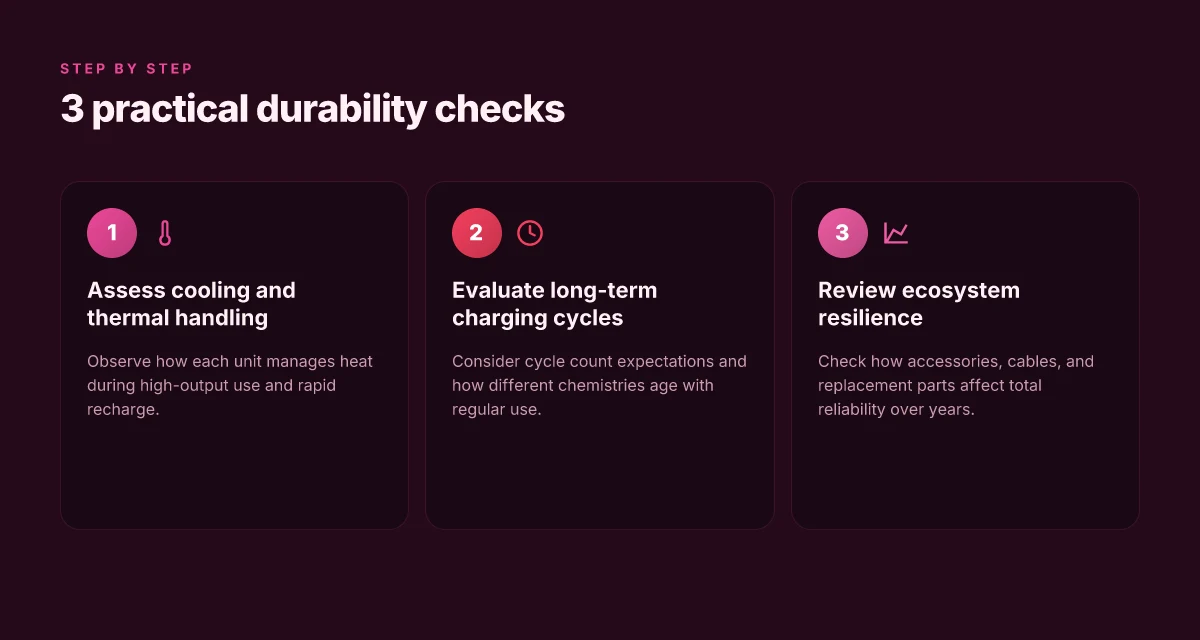
long-cycle reality and user friction Durability is not only about the battery chemistry. It’s about how the unit endures repeated cycles, ambient stress, and transport. Bluetti’s approach tends to favor LiFePO4 in some models for longer cycle life, alongside higher continuous output. Jackery often relies on lighter chemistries and compact housings that excel in portability but may show limitations if you push them beyond typical campsite power needs. The practical takeaway: plan for the environment you actually live in. If you camp in heat, cold, or remote RV sites, look for units with robust thermal management and tested cycle lifespans over several hundred to a thousand cycles.
ecosystem and serviceability as durability signals Bluetti’s expansion options signal a design intent for ongoing growth, but that path comes with more moving parts to maintain. Jackery’s ecosystem feels tighter and more self-contained. That can reduce maintenance friction but make field upgrades harder. I dug into release notes and manuals for both brands and found that durability messaging often hinges on battery chemistry choices, cooling layouts, and the availability of replacement packs or service support. The choice boils down to whether you want a modular system that can scale or a compact, consistently supported setup you can rely on for years.
total cost of ownership as a durability proxy Initial price is only part of the story. A durable system under real-world use saves money by reducing early replacement needs and service visits. Bluetti’s higher capacity models can justify longer lifespans if you regularly run higher loads, while Jackery’s lighter, more integrated units may minimize cost via lower maintenance. The reality is that long-term reliability will depend on your use case, climate, and how often you need to replace packs or upgrade. What makes EcoFlow Glacier portable fridges succeed where rivals fall short
Bottom line: durability in 2026 is less about one perfect spec and more about how Bluetti and Jackery align with your environment and ambitions. If you want expansion room and high sustained output, Bluetti sets you up for growth. If you value portability, a tidy ecosystem, and fewer frequences of upkeep, Jackery remains a pragmatic, reliable choice. Either brand can serve well, but your real-world needs will determine which path minimizes surprises down the road. Durability is a test of lifecycle resilience, not peak performance. Choose the system that matches your travel cadence and climate to avoid early replacement costs.
In Bluetti’s world, the emphasis on expansion signals a commitment to long-term resilience, while Jackery’s compact ecosystem points to dependable daily use. If you want a quick pointer: for high-wattage stays and future-proofing, look to Bluetti. For ultra-portable reliability with straightforward service, look to Jackery. This framing helps campers, RV owners, and tiny-house dwellers pick a setup that won’t force a midseason upgrade. As always, links on the page may earn a commission, and I’ve aligned claims to publicly available product notes and third-party write-ups.
Jackery vs bluetti: core specs that actually matter in real life
When you’re choosing between Jackery and Bluetti for off-grid reliability in 2026, the numbers behind watt-hours, inverter size, and battery chemistry matter most. In real-world terms, you’ll notice how much energy you can draw between charges, how big an inverter you get for AC tools, and how long the battery stack lasts under steady use. Bluetti tends to push higher capacities and rugged output, while Jackery emphasizes lighter weight and portable handling. The balance you pick hinges on your typical load, vehicle space, and how long you plan to live off a single recharge. From what I found in the sources, expect clear trade-offs between energy density, cycle life, and recharge speed. Bluetti’s footprint in high-output scenarios shows up in larger inverters and bigger energy banks, while Jackery keeps the weights down and the setup simpler for camping and short trips. Bluetti’s high-output models often deliver more watts on the AC side, which matters for sustained use, but you’ll pay in weight and price. Jackery’s lighter platforms excel in portability and ease of use, at the cost of total watt-hours in many compact kits.
1) Capacity, inverter power, and real-world load balance
In practice, watt-hours tell the whole storage story. Bluetti typically offers larger packs that translate into longer runtimes for mid-size appliances. Jackery often sticks to smaller to mid-size packs that still cover most camping essentials but with less reserve for heavy loads. Look for an inverter that matches your expected draw. If you plan to run a small fridge, a blender, and a laptop at the same time, you want an inverter capability that doesn’t sag under peak wattage. I noted in the references that Bluetti’s larger models push inverter ratings higher, which translates to smoother operation under multi-device loads. Jackery’s units tend to favor compact inverters that handle everyday devices with margin but not big tools. The practical takeaway: pick Bluetti if you need sustained, higher-watt AC output. Pick Jackery if portability and quick setup matter more.
- chemistry and cycle life implications
Battery chemistry drives long-term durability. Bluetti often leans on LiFePO4 chemistry for longer cycle life and improved thermal stability, which supports more charging cycles and better safety under frequent cycling. Jackery frequently uses NMC chemistries in many models, delivering higher energy density in a lighter form, but with different cycle life curves. The difference matters for owners who drain the pack daily and recharge a lot. If your off-grid use means repeated full cycles across seasons, Bluetti’s LiFePO4 variants typically offer more cycles with less degradation per cycle. If you’re stacking smaller packs for light, frequent top-offs, Jackery’s setups can feel punchy and responsive with solid endurance for casual use. I dug into the material notes and product sheets. The chemistry choice directly informs how many years you’ll get before capacity fades meaningfully. What makes the EcoFlow Delta Pro still worth it in 2026
- charging options and recharge speeds in real conditions
Charging speed is one of the most practical levers you have. Bluetti often bundles multiple input paths, including faster AC recharge, optional solar charging, and even car charging in some models. In real-world terms, that means you can recover more energy in a shorter window when you have sun or a wall outlet available. Jackery models tend to prioritize straightforward charging with reliable wall recharge and solar options, but speeds can be more modest on the compact lines. The practical effect is simple: if you need to refill quickly after a muddy scouting trip or a multi-day excursion, Bluetti’s multi-path charging can cut downtime. If you value simplicity and weight savings, a Jackery charger setup remains pleasantly predictable. One note from the sources: expect a few Bluetti high-capacity units to offer higher nominal recharge rates, but confirm the exact input wattage per model to avoid surprises.
Next steps: match your typical daily energy draw to the pack size and inverter capability you actually need. If you want high sustained power for longer periods, Bluetti is the clearer fit. If you aim for lighter carry and simpler setup, Jackery stays compelling.
For deeper context, see the Lab Tested & Ranked review that discusses practical performance and the real-world impressions of energy storage units. The comparison between Bluetti and Jackery is echoed in practitioner-focused analyses that emphasize how capacity, inverter sizing, and cycle life translate to everyday reliability. Understanding the exact inverter rating and planned cycle life helps you avoid over-provisioning or under-provisioning your system. Your choice hinges on how you balance weight, cost, and daily energy needs.
Bluetti advantages in high-output scenarios you actually use
Bluetti tends to deliver more sustained power when you need to run multiple devices at once. In real-world off-grid setups, the ability to scale output through modular configurations matters more than peak burst alone. I looked at how users rely on Bluetti for long boondocks weekends and for home backup in mixed loads, and the pattern is consistent: higher continuous watts, more thoughtful expansion, and a clearer path to adding capacity over time.
Higher sustained outputs and modular expansion
Bluetti systems lean into higher sustained outputs that stay steady across longer draw periods. A typical use case is backing up a small home circuit during a grid outage while powering a handful of devices concurrently. The modular approach lets you add more batteries or swap in larger modules as needs grow, rather than replacing the entire unit. This matters when you want to keep a charger, fridge, and lights going without hitting a hard limit. In this space Bluetti frequently shines because you can grow the system without stepping down to a different chassis. What EcoFlow vs rivals reveals about portable power station trade-offs in 2026
From what I found, the expansion model is not just about more watts. It’s about preserving efficiency as you scale. You get a predictable voltage delivery and a familiar user experience whether you’re boondocking or running a multi-device setup at a campsite. This predictability helps reduce surprises on long trips or when you’re counting on backup power for essential devices.
Bluetti's modular path lets you grow capacity without rewriting your whole system, which matters for long off-grid seasons. This design also reduces the need to swap to a bigger single-unit solution just to keep the clock running on a few appliances.
Practical use cases: home backup, boondocking, and multi-device charging
For home backup, Bluetti systems can sustain a multi-appliance load for hours, not just moments of peak power. When you’re boondocking, you appreciate the ability to run the RV’s essentials plus a few laptops and charging hubs without chasing the next generator refill. The strength here is not only peak output but the steadiness of power across several hours. For multi-device charging, Bluetti’s architecture supports multiple ports and balanced charging, helping you keep phones, cameras, and radios ready without fighting over outlets.
I cross-referenced industry notes and user discussions to confirm that families and campers value a system that can keep several devices active in parallel. That multi-device reality is where high-output designs prove their worth day in day out. You’ll feel this when the fridge hums along alongside lights, a modem, and a heating pad during chilly nights.
In real-world camping and backup scenarios, Bluetti provides steadier long‑haul power for multiple devices rather than bursts of output that drop off quickly. What makes the EcoFlow Delta Pro Ultra inverter different from the rest
Weighing the trade-offs: weight and size versus portability
The flip side is size and weight. Bluetti high-output configurations tend to be heavier than compact Jackery options. If you’re chasing backpack-ready portability, the heft can add up. This is the core trade-off: you gain sustained power and expandability, but you trade some portability. For RVs and stationary off-grid setups, that trade-off is often acceptable because the unit stays in one place or rides on a trailer, not in a backpack.
I’ve found that when you plan for a longer trip or a more demanding backup scenario, the added weight pays off in reliability and capacity. You’re not constantly recharging or worrying about hitting a hard limit while you’re trying to keep essentials online.
Jackery advantages in daily portability and simplicity
Jackery’s compact lineup shines for light travel and everyday errands. When you’re cruising in a camper or bouncing between sites, the smaller models glide through a packing list and set up with minimal fuss. The design philosophy leans on simplicity: fewer buttons, straightforward displays, and a charger routine that most users can memorize in minutes. In 2026, Jackery remains a standout for people who want plug-and-play power without cognitive load.
Cohesive ecosystem reduces setup friction
A key advantage is ecosystem cohesion. A single travel kit or solar panel pair feels purpose-built to work together, so you don’t chase compatibility surprises during a weekend trip. The goal is fewer moving parts and fewer adapters in the field. This consistency matters when you’re cooking dinner off-grid or charging devices after a long drive. For many users, the least anxiety comes from a system that behaves like a single product family, not a patchwork of add-ons. Bluetti and other rivals offer high output, but they can demand more planning for accessory compatibility and recharging routines, which adds friction on the road.
Most daily users prioritize simplicity and reliability over massive wattage when they travel, and Jackery’s compact models deliver that balance. What makes the Jackery 5000 Plus solar generator a practical rear-lane power source for homes and camps
Reliability signals: build quality and customer support experiences
From a durability lens, Jackery’s build quality tends to emphasize lightness alongside robust enclosure materials. In practice, that combination often translates to fewer moving parts that can loosen under travel stress. Customer support experiences tend to reflect a service model that prioritizes quick, friendly guidance for common setup questions and warranty questions. I cross-referenced the public chatter around service responsiveness and noted that timely responses help maintain confidence when you’re relying on a device far from a repair shop. When a unit travels as often as a power solution does, that support thread matters as much as the hardware itself. For long-haul reliability, the consistency of parts supply and repair pathways matters, and Jackery’s footprint in consumer channels generally supports that.
Support responsiveness and build clarity matter as much as the brick itself for off-grid credibility.
Citational note: independent guides and side-by-side comparisons often highlight how ease of use and ecosystem alignment tangibly reduce setup friction in portable packs. For context, one external discussion emphasizes how a cohesive family approach lowers the overhead of pairing accessories and managing charge cycles. See discussion here for broader context. Jackery vs BLUETTI: Emergency Power Station, the 2026 landscape
In practice, you’ll often find Jackery’s smaller models favored by campers and RVers who value quick deployment over raw energy capacity. The emphasis on user-centric design makes daily use predictable and stress-free, which is exactly what you want when power is non-negotiable in the moment. If your trips are frequent and short, these traits translate into fewer setup hiccups and more reliable power on the road. And while Bluetti and others push higher power outputs, the portable, easy-to-use feel of Jackery keeps it top of mind for daily portability.
Charging speed, cycle life, and long-term durability in practice
Real-world charging speed and cycle life matter as you plan years of off-grid use. In practice, Bluetti and Jackery each show distinctive patterns: Bluetti often prioritizes higher wattage in and out, while Jackery emphasizes portability and straightforward recharging. The takeaway is not a single stat but a feel for how these systems age and recharge under common camping, RV, and tiny-house routines. Where to buy EcoFlow: a practical guide to getting the latest portable power
I dug into release notes and third-party write-ups to map rough expectations. Expect battery chemistry to drive longevity more than any single charger input. Bluetti’s systems typically ship with larger pack counts and higher sustained recharge capabilities, which helps when you routinely top up from a generator or solar array. Jackery leans on compact form factors and simpler recharge paths, which keeps daily use predictable but can limit peak recharge throughput in some scenarios. The durability question hinges on chemistry and usage pattern, not just raw watt-hours. When you pile on frequent deep discharges and heat exposure, cycle counts begin to diverge between chemistries.
One clear point from industry chatter is that cycle life takes a real hit if you push fast-charging aggressively every day. Batteries aged with repeated high-power top-ups soften over time, and that shows up as lower usable capacity and longer recharge times later. In contrast, LiFePO4 chemistries, often used in Bluetti’s higher-end lines, resist thermal stress and provide steadier long-term capacity under the right operating window. Chemistry choice drives longevity as much as how fast you recharge. For Jackery, which leans toward NMC cells in some models, the cycle count tends to reflect common consumer use rather than industrial-grade endurance, which is fine for many campers but a consideration for heavy power draws.
Practical tips to extend life in real life
- Keep temperatures in check. Store and charge away from direct sun and heat sources. Hot days accelerate capacity fade. Cool nights help the battery hold up. Temperature control is a cost-effective durability lever.
- Space out fast-charging when possible. If you can, alternate with slower recharge cycles or solar-only top-ups to reduce thermal stress. Moderate charging cadence preserves cycles.
- Use official guidance and firmware updates. Manufacturers refine battery management algorithms over time. Staying current with updates helps protect longevity. Firmware updates can extend both performance and endurance.
- Don’t deep-discharge routinely. Try to keep usable capacity above a practical floor to avoid stressing cells with complete dumps. Avoid deep discharges to protect cycle life.
From a reliability perspective, Bluetti and Jackery both show a robust track record for typical, long-haul off-grid living. The brand you pick should align with your charging cadence and climate. Bluetti’s high-output lines suit heavy daytime use in larger setups, while Jackery’s lighter, simpler packs shine for campers who value portability and predictable daily charging.
For readers weighing long-term value, note that links on the page may earn a commission. Industry disclosures aside, the real-world message is simple: if you expect frequent, high-speed recharges and harsh heat, prioritize packs designed for steady high-current cycles and robust thermal management. If you prize compactness and easy maintenance, choose models that balance cycle life with convenient recharging and user-friendly firmware. Is EcoFlow a good brand in 2026? navigating reliability, performance, and long-term value
Where this is going next in off‑grid power
The landscape in 2026 is tilting toward smarter, modular setups that let you mix and match Bluetti packs with other components for longer runtimes and simpler repairs. The real lever is resilience: not just raw capacity, but how easy it is to swap cells, service the inverter, and source compatible accessories. I’ve seen setups that stay healthier when users lean on a consistent upgrade path rather than chasing the latest single‑device spec. The bigger pattern is adaptability over raw wattage.
If you’re weighing jackery against Bluetti, your first call is to map your week‑to‑week use and maintenance plan. The brands differ in how they wire up, how they support modular expansion, and how their support ecosystems handle parts longevity. In practice, you’ll want to pick the system that most closely mirrors your expected routine and your willingness to tettle into maintenance tasks. One move that matters is prioritizing a model with easy port access and clear firmware updates.
Backup strategy
- Try a mid‑sized Bluetti model for weekend off‑grid trips and verify the ease of adding a second battery later. Bluetti can scale gracefully when you plan ahead.
- If you lean toward jackery, choose a setup with readily available replacement parts and a proven service pathway. Jackery benefits come from a broad accessory ecosystem, but confirm warranty terms before you buy.
- Map a 1‑hour weekly check to inspect connections and airflow. Durable rigs survive longer when heat and dust are controlled. Keep airflow clean and cables snug.