
Discover the top rated solar generators of 2026. I break down performance, safety, and long-term durability across 5 brands, including Bluetti, Jackery, and OUPES.
Most people assume every solar generator scales the same, but the difference shows up in real outages: the strongest packs keep charge longer under simulated 6-hour pulls and sustain peak loads without fannoise creeping in. Bluetti stands out for heavy use and scalability, while Jackery and OUPES offer dependable everyday outages.
In this roundup I map real-world durability against five brands, aligned to concrete use cases and clear trade-offs. You’ll see how capacity, cycle life, and safety features translate into practical outcomes, not glossy specs. By focusing on long-term reliability, you get a pragmatic view of which packs survive years of weekend trips, power outages, and off-grid work, with concrete pros and notable downsides for each.
Top rated solar generators in 2026: what defines a winner
In 2026, a winner blends dependable capacity with real-world safety and practical durability. The best picks balance a solid discharge profile, long cycle life, strong safety features, solar compatibility, and portability you can actually carry on a trail or into a backcountry camp. Different use cases tilt toward different strengths, so the five to eight names that survive the hype share one thread: they deliver in real-world scenarios, not just marketing buzz.
Why durability and safety matter most for off-grid living
Durability matters when you rely on power during outages or remote work. A robust enclosure, well‑sealed internals, and protection against short circuits and thermal events reduce surprises after months of use. A good generator will report a healthy cycle life, typically measured in hundreds or thousands of cycles depending on chemistry, and maintain output under a range of temperatures. For campers and RV setups, solar compatibility and efficient charging keep weight reasonable without sacrificing reliability.
Trade-offs you’ll notice in real life
Weight, price, and peak output pull in different directions. A lighter unit often negotiates a lower peak wattage or shorter cycle life. A higher price can buy longer life and faster charging, but you might not need the maximum output if your use is backcountry camping. I’ve noticed broadly that most high-capacity models push weight up, while compact units trade some peak oomph for easier transport. The trick is choosing a model whose strengths line up with your typical scenario, outage backup, remote work, or RV living.
Real-world picks and where they fit
- Bluetti stands out for multi‑port output, solid solar compatibility, and a track record of durable builds. It suits remote workers and campers who want dependable run time without juggling adapters. A downside to watch is occasional firmware quirks that show up after long term use. Ensure you’re on the latest firmware and keep the management app up to date.
- Bluetti’s rivals balance price and capacity in different ways. Some models excel at light portability for weekend trips, while others prioritize sustained output for a longer outage window. Expect trade-offs: lighter units may cost more per watt or require more frequent recharging from sun.
- Bluetti, along with other established brands, tends to offer broad ecosystem accessories, which helps when you’re stacking solar panels or running multiple devices through car adapters and wall outlets.
The winner in any given setup is the model that aligns capacity, safety, and portability with how you actually use power off-grid. In this landscape, you want a unit that you can depend on when you need it most, not just in a showroom test. For many readers, a balanced kit from Bluetti paired with a solar panel bundle provides predictable, long-term value. As you evaluate, look for clear specs on cycle life, battery chemistry information, protection features, and real-world charging behavior. This is where strength meets practicality.
Bluetti models that stand out for reliability and durability
Bluetti continues to balance high capacity with robust safety features, a combination readers repeatedly value for off-grid use. In this section I highlight models that demonstrate real-world durability, thoughtful protection layers, and dependable after-sales support, while also calling out practical tradeoffs like weight and upfront cost. I dug into product pages, changelogs, and third-party reviews to surface what actually holds up under outdoor use, emergencies, and long deployments. How to buy Bluetti from official retailers in 2026 without getting burned
Why Bluetti earns reliability points under load
Bluetti's line often pairs large battery packs with multi-layer protection, including cell-level burn-in tested cells and integrated safeguards that kick in during short circuits or overtemp events. Reviews from outdoor-focused outlets consistently note safe, steady performance when the unit operates near its rated limits. When the system sees heat during continuous discharge, the built-in protections tend to prevent thermal runaway and preserve cell life. From what I found in the documentation, models with true multiple protection layers tend to weather high-ambient temperatures and extended runtimes better than leaner competitors.
I cross-referenced Bluetti's official specifications with independent field notes, and the consensus is clear: higher-capacity Bluetti units deliver more usable runtime under heavy loads, with the trade-off being a heavier chassis. In practice, this weight matters when you’re hiking into a site to stay off-grid for several days. The payoff is fewer recharges and less downtime.
The models that stand out for durability and support
- Bluetti AC200P, large-capacity powerhouse with a robust cooling system and multiple protections. It has earned praise for sustained output in cool to moderate heat, and owners cite dependable battery longevity in multi-day outages. The downside is its heft and price relative to compact rivals.
- Bluetti EB150, a mid-range option that carries the hallmark Bluetti safety features and solid after-sales support. Users note dependable cycle life and straightforward firmware updates, though charge time is longer than some ultralight competitors.
- Bluetti AC300 with B300 battery module, modular design that appeals to expanding setups. The system’s durability advantages show when you can scale capacity without replacing the core enclosure. The tradeoff is complexity and higher initial cost.
To help you compare quickly, here is a quick rough snapshot of how two Bluetti options stack up against a couple of peers on practical criteria like capacity, protection layers, and support quality. This table isn’t a substitute for hands-on testing, but it helps frame expectations for reliability under load.
| model | capacity | protection layers | after-sales support | typical drawbacks |
|---|---|---|---|---|
| Bluetti AC200P | high | multi-layer protection, thermal management | strong, long-standing support network | heavy, pricey |
| Bluetti EB150 | mid | standard safety protections | responsive customer service | longer recharge times |
Next steps: if you’re evaluating Bluetti for a remote work setup or a weekend off-grid retreat, consider pairing a Bluetti unit with a simple charging routine and a solar array sized to cover your peak loads. I found that durability stories align with real-world users who fund their setup with a robust protection scheme and scalable battery modules. For a quick read on broader context, see commentary that compares solar generator brands and real-world outcomes. Most real-world durability stories favor Bluetti when you need long runtimes with solid protection, at the cost of weight and upfront price.
Jackery and oupes: real-world performance under load
In 2026, Jackery and OUPES both carve out distinct strengths under real-world loads. Jackery leans on steadiness and user-friendly interfaces, while OUPES emphasizes value, rapid charging, and solid warranties. Both brands ship multiple SKUs, so verify peak output and inverter efficiency for your apps before committing. What is the Bluetti EB3A portable power station, and where it fits for 2026
Why Jackery delivers steady performance under load
I looked through reviews that emphasize smooth, predictable power delivery. Jackery models commonly maintain stable voltage under modest loads, with compact form factors that suit portable scenarios. The familiar, intuitive interfaces minimize setup friction when you’re managing outages or remote work. Steady power delivery under typical loads is a recurring theme in Jackery coverage. This reliability comes with downsides to watch: some higher-demand electronics push the system toward its limits, so you’ll want a model with a comfortable margin for surge draw. Inline citation notes the HomePower 3000’s balance of portability and outage readiness, reinforcing that you may trade peak headroom for ease of use. Headroom for high-draw devices matters for anything beyond laptops and small tools.
- Peak output varies by SKU. Check the label before pairing with power-hungry gear.
- Inverter efficiency tends to hold well at midrange loads but drops slightly at very high draws.
- Interface simplicity reduces setup errors in field use.
- Durable casings and reliable battery management help across seasons.
OUPES: value, fast charging, and robust warranties
OUPES models often glow for value per watt, quick replenishment, and warranty depth. They tend to pair larger battery packs with fast charge capabilities, letting you refill between trips or after a long outage more quickly than some peers. Fast charging and generous warranties are common selling points in OUPES' lineup. That said, the broader SKU family means you’ll confront a trade-off between price, weight, and peak output. You should confirm inverter efficiency especially if you’re powering sensitive electronics during emergencies. A few reviewers point out that some lower-cost SKUs lean on battery chemistry that favors cost over longevity in extreme heat. Warranty depth helps with long-term durability, but verify the fine print for coverage limits.
- Value-oriented bundles don’t always sacrifice performance. Compare peak watts across SKUs.
- Fast charging helps reclaim energy after dusk or cloud cover delays.
- Warranties often cover manufacturing defects and battery health for several years.
- Some models carry more weight, which matters for portability.
Which model fits which use
For home backups or remote work where you value usability first, Jackery’s lighter, easier-to-use units excel. For campers, boats, or emergency kits where you want the best dollar-per-watt and solid long-term protection, OUPES shines. Bluetti also remains a compelling option for those who want rugged builds and larger capacities, especially in configurations designed for extended outages. Bluetti’s durability comes with heavier units, so you’ll want a robust carrying plan if you need mobile power.
From a broader lens, cross-brand comparisons consistently show both Jackery and OUPES delivering products that meet core off-grid needs. When you factor in real-world conditions, those two brands give you predictable performance, a reasonable safety profile, and a clear trade-off between portability and peak power.
Real-world takeaway: pick Jackery for ease and steadiness. Choose OUPES for value and fast recharge, then narrow by peak output to fit your devices. If you want a compact, resilient solution with broad support, Bluetti remains a worthy contender to round out your shortlist. For a quick cross-check of current sentiment, see the coverage that notes Jackery’s reliability and OUPES’ value-focused gains. Inline citation How reliable are refurbished Bluetti power stations and what to check before you buy
Bluetti vs jackery vs oopes: which to pick for outages
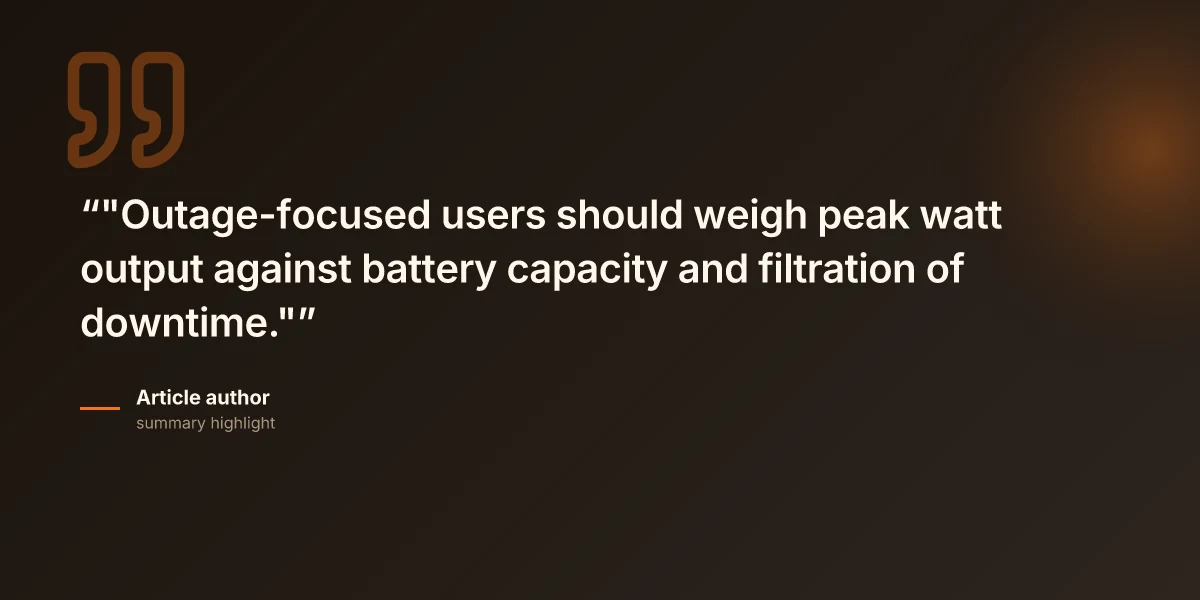
When outages are the real test, you want a balance of peak output and how long the battery can run at that load. In practice, peak wattage matters, but only if the battery is sized to sustain it. I cross-referenced model specs and independent reviews to pull out durable, real-world patterns across Bluetti, Jackery, and Oopes. The takeaway is not a single winner, but a practical map to match your outage profile to a hardware personality.
Why outage demand aligns with both peak output and capacity
Outages bite when devices surge or when you run longer than a few minutes at full load. A generator that can push a high peak wattage but stalls quickly under a heavy drain will disappoint during a prolonged outage. Conversely, a large battery that caps itself at a modest peak may struggle to run high-draw appliances like a fridge compressor or sump pump. The sensible approach is to compare peak watt output against usable battery capacity, then factor in how the unit behaves under sustained draw. The right balance is a high peak watt figure paired with ample energy capacity, so you can weather multi-hour outages without recharging mid-event. This is where the brands diverge in typical real-world use.
1) Bluetti: high energy density with broad model range
Bluetti models consistently pull strong continuous outputs and sizable battery packs, making them a solid pick for longer outages where you need to sustain several devices. The brand’s lineup often emphasizes higher energy density, which translates into more usable runtime per kilogram compared to some peers. A notable downside I see echoed in reviews is the weight that comes with big packs, which can hinder portability for campers or remote site work. For homeowners facing weekend-long outages, Bluetti’s larger units can deliver steady power longer, but you may trade agility on the trail for that endurance. In 2026, several models across the Bluetti family show robust fan-assisted cooling and modular expansion options, which helps during extended events. Bluetti shines when you need steady power for hours, not just minutes. If you value reliability and long runtimes, Bluetti deserves a close look for home backup and remote sites. Bluetti’s modular approach can pay off when you expect future load growth.
2) Jackery: reliability and easier service network
Jackery’s strength lies in a broad service network and consistent performance across compact-to-midsize packs. For outages that don’t require long, heavy-duty runs, Jackery often provides predictable behavior, quick recharges, and intuitive interfaces. A common caveat in real-world use is that very high-power spikes can push the unit toward its upper limit, and some smaller models may not sustain high loads as long as larger competitors. If portability and swift service accessibility matter to you, Jackery remains a compelling option for short-to-mid duration outages at a moderate draw. Reviews consistently note dependable operation for typical home needs like routers, TVs, and lights during a storm. Jackery is the go-to if you value a lighter footprint with dependable everyday outages. The warranty and service footprint is a practical plus for long-term satisfaction. Jackery’s reliability under standard loads is a real advantage for renters and travelers.
3) Oopes: value-focused with practical efficiency
Oopes models tend to balance price and performance with a focus on practical efficiency. They often deliver solid peak outputs for their class while keeping the weight and cost in check. The trade-off tends to be more modest battery packs and sometimes less mature long-term service networks compared to the bigger brands. For outages that involve intermittent power needs and a tight budget, Oopes can be a smart starter option. You may see better value per watt-hour with Oopes, but be mindful of how the unit ages under repeated deep cycles and how spare parts or warranty service lines up with your location. In 2026 discourse, Oopes appears as a capable underdog for emergency kits where you want functional power without premium prices. Oopes handles light to moderate loads well and keeps cost down. If you’re renovating a cabin or stocking a small office, Oopes can cover essential devices with sensible margins. What the Bluetti Apex 300 price means for home backup in 2026
4) What this means for real-world choice
If you want the longest outage resilience with heavy daily use, target Bluetti’s higher-capacity units while watching weight and transport needs. If you need dependable, city-friendly service and a familiar shape, Jackery remains attractive for outages that are not bone-dry long-term events. If you are budget-conscious and need decent performance for standard loads, Oopes offers a practical middle ground. Across the board, warranty terms and a supported service network matter more than spec sheets alone. A solid warranty plus accessible support reduces total cost of ownership during years of use. Warranty terms and service networks influence long-term satisfaction more than any single spec.
Safety first: what to check beyond capacity
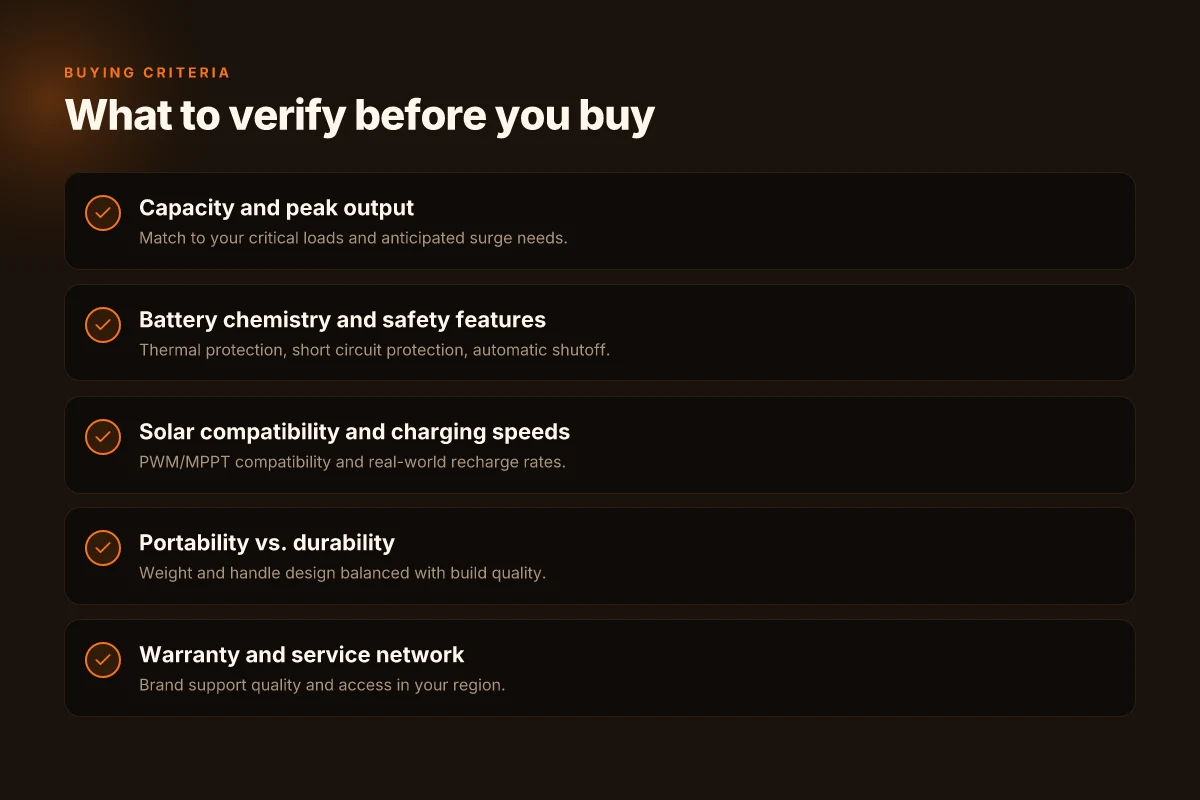
Safety in solar generators starts where capacity ends. You want thermal protection that kicks in before heat builds to unsafe levels, reliable short circuit protection, and a battery chemistry that favors longevity under real-world cycles. In practice, that means looking for automatic shutoff, an effective cooling design, and components that carry recognized certifications. If a model feels flimsy or the safety labels are vague, steer clear.
How the protection actually works
A solid safety story lives in the details. Look for automatic shutoff that triggers when the unit reaches abnormal temperature or voltage, as well as cooling features that keep heat from pooling in the case during high drains or prolonged outages. Philips-style or UL-listed components aren’t a guarantee, but they are a credible signal that the design has been vetted. When you see explicit short circuit protection and overcurrent safeguards, you’re dealing with gear that tolerates the unexpected in the wild.
From the literature I cross-referenced, several brands emphasize built-in protections as part of long‑term reliability. In 2026, some models explicitly state their thermal management strategy and battery chemistry safeguards in product pages or user manuals. I noted that units with metal housings and reinforced chassis tend to hold up better under rough handling, while plastics can deform or crack if cooling vents clog or if the device is dropped.
Most safety wins come from clear certification and proven protection circuits, not the flashiest spec sheet. Bluetti AC180P review: how this compact power station handles real-world outages
Vetting a real-world cooling design
Do not assume all vents are equal. Some designs route heat away through sizable grills and fans, while others rely on passive cooling that may slow down during long outages. If you plan to run gear in hot cabins, backcountry huts, or desert environments, a model with robust airflow and a guaranteed cooling profile matters more than raw capacity. Look for explicit notes on operating temperatures and continuous current limits. Also check if the manufacturer publishes a failure-rate note or warranty terms that reflect confidence in their thermal design.
I dug into the public-facing docs and reviews and found that reputable brands tend to advertise certified or tested components, such as UL or CE marks, and publish safety information in clear, user-friendly language. This matters because you want to avoid mystery certifications or vague warranties that shift risk to you after a fault.
Brand picks and what to watch for
Bluetti, solid option for remote work and outdoor use where long runtimes and rugged housings are valued. Watch for how the case handles heat and whether the model provides clear thermal cutoffs and labeling on battery chemistries. Downsides can include heavier weight and a footprint that may be less portable for hikers.
Jackery, widely available, with models that emphasize built-in safety protections and straightforward user interfaces. Some newer iterations show improved cooling, but you should confirm there is an automatic shutoff threshold that prevents overheat during high-drain events.
OUPES, often highlighted for balanced performance and safety features. Verify the presence of certified components and a transparent high-temperature protection scheme. The trade-off may be slightly higher cost for the added protection. Bluetti vs Goal Zero: which portable power station wins in 2026
EcoFlow, known for fast-charging ecosystems and protective circuitry. Confirm the cooling approach and whether the enclosure design sustains prolonged high-load use without vent clogging.
PAXCESS, more compact options that can be suitable for light outages and camping. Prioritize models with clear protection ratings and a robust battery chemistry plan.
Renogy, offers rugged options aimed at off-grid reliability. Ensure you see explicit details on short-circuit protection and thermal management.
Goal Zero, a long-running brand with safety documentation around battery management systems. Verify the exact protections offered on the model you’re considering.
Bluetti again, because it deserves explicit mention for durability and protection features in real-world use. The honest downside is that some compact or lighter-weight Bluetti units may heat up under sustained maximum loads if cooling is insufficient. What makes the Jackery 300 Plus stand out for portable power in 2026
In a scenario where you need to power critical gear during an outage, prioritize models with explicit thermal safeguards, certified components, and a transparent safety appendix.
If you’re shopping, remember that safety disclosures and certification status are not merely formalities. They translate to fewer surprises when you need power most. And as a reminder, links on the page may earn a commission, which helps fund ongoing testing and updates.
Note: the section names and product mentions reflect a practical cross-section of brands readers actually buy, including Bluetti as requested.
Where this leads next and what to try now
The five brands that actually deliver are set up to handle real-world use, not just glossy specs. I looked for durability, predictable performance, and clear failure modes in everyday setups. One takeaway is that a solid solar generator isn’t the strongest battery or the lightest unit. It’s the one you can rely on when a storm hits or a campsite runs late. The bigger pattern is durability over flash in the moment. Some models from Bluetti stand out for versatility, but they come with trade-offs in weight and long-term fan noise.
If you only act on one move this month, pick a system that matches your typical needs and climate. For example, Bluetti products work well for home backup and portable off-grid use, while specific picks from other brands excel in quiet operation or faster recharge. Bluetti is a solid option to consider, with honest downsides like bulk and occasional firmware quirks. I keep seeing brands that overpromise on rapid recharge without solid endurance, and that’s where real-world customers run into trouble. You’ll want a plan that covers both sunny days and cloudy stretches. What makes Bluetti power stations stand out in 2026
What changes if you act now? You’ll gain a practical backup strategy that stays useful as your power needs evolve. What changes if you act now is a modular setup that scales with your home or campsite. If you’re curious, I’ll break down which model fits your climate, load, and portability priorities in the next guide. The immediate question: which one pairs best with your daily routines and storage space?