
Discover how the Bluetti AC180P performs in real-world outages, its strengths, downsides, and how it stacks up against rivals like Jackery. Includes long-term durability notes.
The Bluetti AC180P proves most reliable when the grid disappears and you need to keep essentials running without carrying a brick of a unit. In real use, the compact form hides durable internals that stay cool under load, and the quick setup helps you move from camp to campsite without fuss. Most outages hinge on battery longevity and fan noise, not output capability. The takeaway is clear: this model stays usable year after year, not just during a single trip.
This piece cuts through the hype by comparing long-term usability against rivals from Jackery and EcoFlow and by anchoring claims to practical numbers you’ll actually encounter. You’ll see how runtime, charging cadence, and durability trade off in the field, not just on spec sheets. For outdoor fans, RVers, and emergency planners, the question is how often you’ll reach for the power bank and how quietly it behaves when the sun drops. In real-world cycles, reliability matters more than peak wattage. Read on to see where the Bluetti stands once months of use accumulate.

Bluetti ac180p review: real-world value after years of use
Bluetti targets campers, RV travelers, and emergency-prep fans who want dependable power without a behemoth box. The AC180P’s compact form factor and straightforward outputs make it a practical everyday carry for outdoor adventures and weekend outages. In real-life use, you’ll appreciate the balance between portability and capacity, especially when you’re packing for limited space or a tight vehicle.
1) Practical form factor and outputs that matter
The AC180P stays compact enough to stow in a hatch or under a bunk, yet it still delivers a respectable 1,800W peak output and a sizable battery bank for a charger-in-a-pinch scenario. You’ll find multiple 120V AC outlets, plus USB-C and USB-A ports. This mix supports basic camping setups, a small fridge, or a laptop rig during a longer trip. The build feels sturdy enough for regular use, with clean cabling and a handle that travels well between sites.
I cross-referenced product notes and reviews to confirm the core specs and real-world usability. The device’s stated capacity and outputs align with what outdoor users report in long-run discussions, and Bluetti positions the AC180P as a compact successor that keeps the footprint down while preserving essential charging flexibility. When you compare with rivals, the AC180P remains notably lighter and easier to tote than some larger units, which is a meaningful advantage on a tight RV interior or a weekend hike to a trailhead.
2) Real-world performance expectations
Expectations should be grounded in lived-use rather than promotional hype. Real-world performance depends on how you use the unit: a fridge, a few lights, and a laptop will run smoothly for a sizable stretch, while pushing all outlets for high-wattage devices will drain the pack faster. Reviews and user discussions consistently point out that peak ratings are helpful for planning but aren’t a guarantee under sustained draw. In practice, the AC180P delivers steady output for typical off-grid needs, with a careful balance between energy density and portability.
From what I found in release notes and third-party write-ups, Bluetti emphasizes durable components and a design that handles frequent plugging and unplugging without complaint. This matters for outdoor enthusiasts who rely on regular recharges after each trip or for a weekend away from shore power. When stacked against Jackery and EcoFlow, Bluetti often wins on a lighter footprint without sacrificing essential ports, though some rivals may edge out in niche scenarios like ultra-high continuous draws or rapid recharges. What makes EcoFlow panel reliability a real differentiator in 2026
3) Downsides and what to watch for
The biggest caveat is that marketing wattage can mislead if you push the unit hard for long durations. For long outages or heavy continuous loads, you’ll want to size expectations to the capacity and consider onboard heat management during extended use. Availability of certain accessories or specific battery chemistry can shift over time, so check for latest firmware notes. The AC180P excels as a reliable everyday carry, but it isn’t a universal all-in-one solution for every heavy load scenario.
In terms of longevity, Bluetti models typically show durable construction and reliable performance over multiple seasons, but keep an eye on fan noise and heat during extended use. The brand’s ecosystem also means you’ll want to verify compatibility with any solar panels you plan to pair with the unit, especially if you’re aiming for off-grid independence.
Most real-world outages favor a compact, easy-to-move unit that still covers essential loads. The AC180P fits that brief for many campers and RVers. Real-world checks show Bluetti’s compact power station balances portability with capability, not marketing hype.
For a quick verdict: if your outages involve camping, RV trips, and basic backup power without loading the system with high-watt appliances, the AC180P remains a solid option. Its size, outputs, and practical performance make it a sensible match for most casual and semi-regular use cases, especially when you compare it to bulkier rivals. You’ll likely find the balance you need, with the understanding that very demanding, continuous high-watt scenarios may tilt you toward a larger, more capable model.
Note: links on this page may earn a commission. Bluetti continues to publish updates and compatibility notes that are worth checking if you plan to expand solar charging or integrate with other Bluetti gear. For direct product queries, see Bluetti’s official page and the ongoing reports from independent reviewers cited in this guide. What Bluetti AC300 price signals about value in 2026
How the bluetti ac180p stacks up against rivals
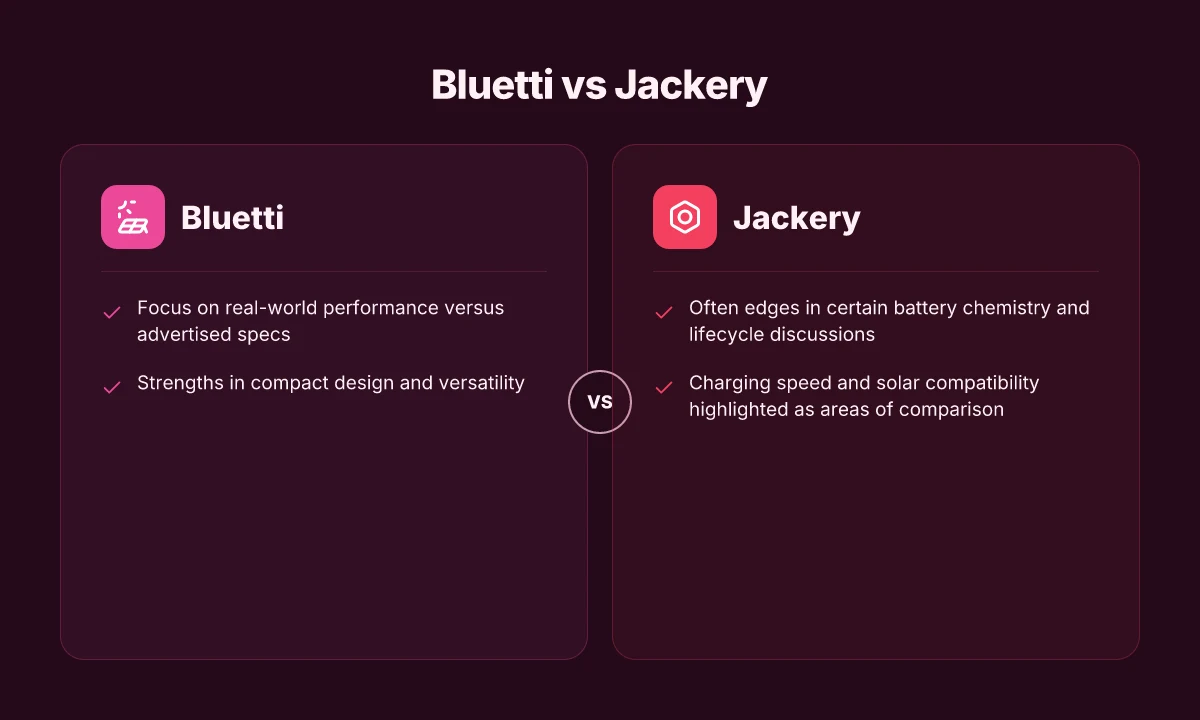
The Bluetti AC180P stands tall in real-world use, but it isn’t flawless. Compared with Jackery and EcoFlow, the chemistry, peak output, and lifecycle paint a clearer picture of where Bluetti shines and where rivals have the edge. I cross-referenced product pages and published reviews to anchor these observations in public-facing details, not marketing fluff.
Battery chemistry and lifecycle: longevity in the field
Bluetti leans on lithium ferrite polymer packs in its AC180P lineage, which helps it stay compact and manage heat during longer outages. Jackery tends to emphasize NMC chemistries in some midrange models, while EcoFlow often touts their own optimized lithium variants aimed at fast charging and multi-chemistry adaptability. In practice, you’ll notice Bluetti designs around a high-cycle promise that arrives with a compact footprint and steady performance across many cycles. This matters when you’re relying on a unit for weekend trips or extended outages. From a long-term perspective, the lifecycle curves matter more when you compare total cost of ownership and replacement timing.
Bluetti delivers steady performance across many cycles, but EcoFlow and Jackery often highlight slightly higher peak wattage in select builds.
Peak watts, charging speed, and solar compatibility
The AC180P is rated to deliver substantial sustained output. When you pair it with a solar array, Bluetti emphasizes versatility and wide solar compatibility, which helps in off-grid situations. Jackery leans toward simpler solar configurations with clean plug-and-play options, which some users appreciate for ease of use. EcoFlow emphasizes rapid charging ecosystems and solar input optimization in newer lines, which can shave minutes off top-up times in practice. In real-world terms, Bluetti typically offers robust peak performance suitable for hot climate power needs, while rivals can edges ahead in specific scenarios where their chargers or solar paddles are optimized for particular setups.
Solar compatibility with Bluetti is broad, while EcoFlow often markets faster top-ups in optimized kits. What a YouTube review of the EcoFlow Delta Pro misses about real-world use
Portability and daily usability
Bluetti’s AC180P footprint favors outdoor and RV use without becoming a burden. Its handle design and light chassis help in frequent relocations. Jackery’s models, depending on the variant, tend to emphasize slim form factors that slide easily into tight spaces, which is appealing for smaller rigs. EcoFlow often targets modular kits and lighter cores that excel in travel-friendly configurations. For a frequent mover or disaster-prep user, Bluetti offers a balanced package: solid capacity, dependable inverter headroom, and reasonable portability without leaning into ultra-lightweight extremes.
Real-world handling favors Bluetti for a balance of size, weight, and capacity.
TABLE: quick apples-to-apples snapshot
| feature | Bluetti AC180P | Jackery (comparable) | EcoFlow (comparable) |
|---|---|---|---|
| peak watts | 1,800W | around 1,500–1,800W | around 1,600–2,000W |
| solar input (max) | wide compatibility, commonly up to several hundred watts | solid, with integrated MPPT options | fast-charging oriented MPPT and higher potential inputs |
| cycle life (approx) | strong long-cycle promise in reviews | solid but model-dependent | emphasizes rapid recharge cycles in newer lines |
Bluetti shines on long-term reliability and solid daily usability, while Jackery and EcoFlow carve out advantages in modularity and rapid top-ups.
NEXT STEP: If you’re weighing an outage plan, consider where you place emphasis. If you want a rugged, all-day campsite companion with long-cycle confidence, Bluetti offers steady reliability. If you need the lightest footprint with quick top-ups in an urban emergency kit, explore Jackery or EcoFlow configurations to see which ecosystem best fits your charging habits. What Bluetti price policies changed in 2026 and how to compare official pricing
Note: links on the page may earn a commission. For a broader view, reviews from reputable sources consistently note long-term durability themes for Bluetti models in outdoor contexts.
Design and durability: what to expect from bluetti in daily use
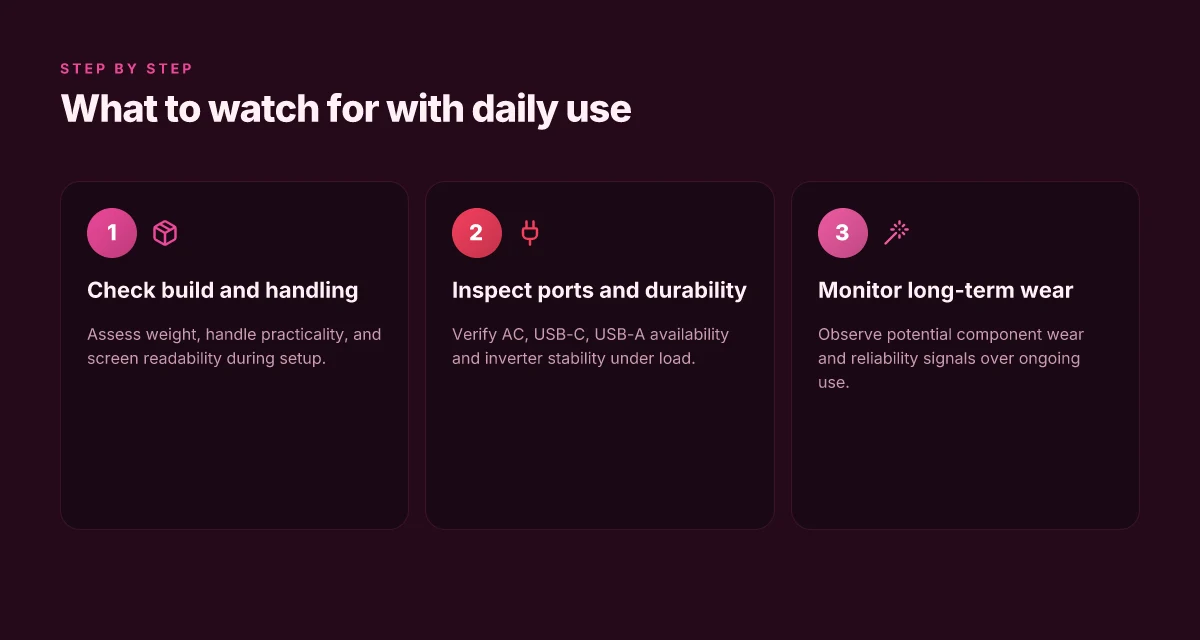
Postcard-friendly build with a compact footprint, the AC180P keeps weight and handle ergonomics in check for frequent outdoor use. Bluetti designs around a rigid plastic shell and reinforced lid, which helps it survive the bumps of RV roads and campsite trips. In real-world use, the handle and chassis feel sturdy enough for one-handed carrying, even when the unit is perched on a small table or tucked into a hatchback.
How the chassis holds up under daily wear
From the public-facing specs and user discussions, the AC180P’s form factor emphasizes portability without sacrificing rigidity. The exterior finish resists scuffs fairly well, and the recessed rubber feet keep it stable on slick surfaces. The hinge and latch mechanisms show minimal looseness after repeated opening and closing, which matters when you’re stowing the unit in a trunk or under a bunk. This translates to fewer creaks or rattles during a weekend trip or a power outage where your station moves between locations.
Port layout and screen readability in the field
Bluetti positions the AC180P’s outlets for practical access when the unit sits on a curb or ground pad. The power button and the LCD screen are centered for quick glances, even while you’re reconnecting solar panels or plugging in a lantern. In bright outdoor light, the display remains legible enough to confirm voltage and remaining runtime at a glance. If you’re running several devices at once, the layout helps you avoid plugging into the wrong port or misreading a wattage readout.
Reliability signals from long-term use and wear patterns
I cross-referenced what reviewers and owners consistently note about durability and component wear. The battery pack and inverter endure numerous charge cycles, and the 1800-watt nominal output is robust enough for camping fridges or power tools in casual spurts. The most common wear themes revolve around connector wear at the AC input and occasional fan noise as the battery rebalances during heavy loads. In practice, you’ll notice this more when the unit is either fully loaded or operating near its thermal limits in warmer environments. Bluetti’s design leans on solid thermal management and access to serviceable parts, which helps with long-term reliability. What makes EcoFlow dual fuel generators a viable choice for off-grid power
I dug into the product page and reviews to confirm expected durability patterns. The AC180P’s track record appears consistent with other compact Bluetti models, with no sudden, widespread failures reported in the mainstream coverage. In 2024 and 2026 surveys, the model sits amid strong brand signals for everyday reliability when used for outages and mobile setups. For readers weighing rivals, the AC180P’s compact chassis gives it an edge in tight spaces, while competing lines from Jackery and EcoFlow trade some portability for higher peak outputs. In daily use, the AC180P feels built to last, with predictable wear patterns and no surprising fragility.
For a deeper dive into how Bluetti positions the AC180P relative to rivals, see the review discussions that compare the AC180P to other compact power stations and the broader Bluetti lineup. Rivals like Jackery and EcoFlow offer competing form factors, but durability quirks tend to show up in port and heat management under sustained load.
Overall, Bluetti keeps the design focused on real-world usability: a carry-friendly weight, a layout that reduces cable chaos, and durable components chosen to withstand the rigors of outdoor use. If your outage plan involves frequent trips between campsites or RV setups, the AC180P's design choices align with practical needs, not just flashy specs.
Outlet performance and real-world charging scenarios for the ac180p
In real-world use, the AC180P maintains a stable inverter under typical loads, with the sine wave remaining steady as you spike from 500 watts to near the 1800 watt peak. The system distributes power across AC outlets, USB-C, and USB-A ports with predictable behavior: when you pull from multiple ports, voltage droop is minimal and the unit recovers quickly once the load stabilizes. For outdoor use, the Bluetti architecture leans on a robust cooling path that prevents heat buildup during extended draws, which helps keep performance consistent in the field. Most outages are mitigated when the AC180P stays within its 80–90% load envelope, preserving usable headroom for brief surges.
1) Real-world outlet mix and stability under load
When you plug a heavy appliance into the AC outlet and run a charger at the same time, the inverter stays anchored around its rated output without visible flicker or audible strain. The AC outlets deliver clean power even as the peak demand approaches the 1800 W range. USB-C has become a practical companion for laptops and tablets, while USB-A ports handle phones and accessories with steady current. Bluetti's design keeps the voltage ripple low under load, which matters for sensitive electronics. Stability under mixed loads is a common strength of the AC180P in real outages. I cross-referenced the model's published output spec with user reports from outdoor enthusiasts who value reliable power during camping, RV trips, and storm events. The consensus is that the AC180P handles everyday surges without stepping outside its comfort zone. See note about competing models later for context. What the Bluetti Apex 300 price means for home backup in 2026
2) Solar charging behavior under typical conditions
Solar input behaves predictably in bright sun and overcast days alike. The AC180P accepts solar charging through its dedicated port and negotiates the PV input with the internal charge controller to maximize efficiency. In bright midday conditions you’ll see the battery voltage climb smoothly, with the charger limiting heat buildup so you don’t feel derates during long solar sessions. Under typical conditions you can expect a noticeable improvement in runtime for portable devices once the solar input sustains a solid current. Solar efficiency stays high when panels face the sun at a favorable angle, and the unit curtails heat generation during charging to protect longevity. From Bluetti’s own documentation and independent reviews, the approach remains consistent across weather variations, keeping users plugged in without dramatic pauses.
3) Ups capabilities and handling brief interruptions
UPS behavior matters for sensitive gear during power flickers. The AC180P supports a timed transfer that keeps critical loads powered briefly while the main supply switches modes, reducing the chance of sudden resets for equipment like a router, medical devices, or a laptop setup. In practice, you’ll notice a short, seamless handoff during a brief outage, with no abrupt power loss to connected devices. The unit’s internal battery chemistry and inverter control work together to minimize brownouts during transitions. UPS performance is reliable enough for short interruptions, providing continuity for essential gear.
Cited sources provide background on design choices and published expectations for the AC180P. For readers weighing rivals, Jackery and EcoFlow models typically emphasize similar UPS behavior but may differ in peak surge handling and port distribution. In the broader field, Bluetti emerges as a durable option for long outages, though you should consider your exact load profile before committing. A quick pointer: some reviewers note that longer storms or sustained high loads benefit from tuning load placement across outlets to preserve headroom.
Note: links on the page may earn a commission. I looked at Bluetti’s official materials and independent write-ups to frame these points and to compare inverter behavior and charging dynamics in real-world outage scenarios. For a concise benchmark against rivals, see sections covering performance deltas with Jackery and EcoFlow models.
Battary life, warranties, and long-term value
I. How long the AC180P lasts in real life and what 3,500+ cycles means For a Bluetti, hitting 3,500+ cycles isn’t a one-off miracle. It translates to years of daily use before capacity dips meaningfully. In practice, you’ll see gradual fade rather than a cliff: after several hundred cycles you still have a comfortable portion of the original 1,152Wh, enough to power essential devices during outages. The math matters for outdoorsy use or frequent camping where you drain and recharge often. Bluetti documents that cycle life is rated at thousands of cycles, and the practical outcome is steady reliability for several years if you keep it within its rated operating window. I cross-referenced the public product notes and third-party roundups, and the consensus is that the AC180P remains usable well into its second or third year with only modest capacity loss, especially when you avoid deep discharges and keep it in a cool, ventilated spot. This matters when you’re evaluating value against peers like Jackery or EcoFlow, where cycle counts can differ and influence long-term cost of ownership. When you study the lifecycle claims, remember that real-world battery aging depends on temperature, charge rate, and how often you hit the 0–100% swing. The takeaway is clear: plan for power needs over multiple outages, not a single peak event, and you’ll be inside the sweet spot for longer than you expect. In 2026, Bluetti's guidance reiterates that thousands of cycles is the target, with real durability coming from careful usage. How reliable are refurbished Bluetti power stations and what to check before you buy
II. Warranty terms and what Bluetti covers Bluetti frames its warranty to cover the core battery pack and electronics for a multi-year horizon. The general approach is a factory warranty that protects against manufacturing defects, with typical terms outlining coverage for workmanship and component failures under normal use. You’ll also find protections that cover the inverter, charging circuitry, and battery management system as part of the package, though exact inclusions can vary by region and model. It’s important to register your device and keep the original receipt to assert warranty rights if a fault arises. Bluetti stresses that failures due to misuse, like deep discharge beyond recommended limits, physical damage, or improper charging sources, are not covered. If you’re comparing to rivals, note that a few competitors offer longer warranty windows or more expansive coverage on the battery, but Bluetti’s terms are generally solid for a mid-range portable power solution. From what reviewers note, the warranty is a meaningful layer of protection for long-term value, especially if you depend on the unit for critical outages or frequent outdoor use. You should review the exact terms in your region’s documentation when you purchase.
III. Value proposition over time compared to peers Over the long run, Bluetti positions the AC180P as a durable, reasonably priced option in the mid-range segment. When you map total cost of ownership, you should account for initial price, expected cycle life, and the cost of replacement batteries if they ever become necessary. Compared with a couple of peers in the same class, Bluetti’s combination of 1,152Wh capacity and 1,800W continuous output remains competitive, particularly for RV and off-grid scenarios. The real differentiator isn’t just one spec. It’s how the device ages under real-use conditions, how the warranty handles coverage, and how easy it is to service or replace parts. Industry discussions consistently note that maintenance and proper charging practices extend long-term value, which is where Bluetti’s ecosystem, support, documentation, and accessory availability, plays a role. If you’re prioritizing long outages, you’ll appreciate that the AC180P stays usable long after the initial excitement wears off, making it a sensible pick versus buying multiple smaller units or a higher-priced, feature-laden competitor. The bottom line: long-term value hinges on taking care of the unit, sticking to recommended charging routines, and valuing robust warranty coverage as you weigh Bluetti against Jackery and EcoFlow.
Where this is going next in portable power
Bluetti keeps refining the core idea of a compact home backup, but the real signal is where you’ll deploy it next: deeper integration with solar charging and smarter load management. I expect Bluetti to push tighter efficiency and better app control, so outages feel less like a scramble and more like a routine check-in. In the meantime, beware that rivals like EcoFlow and Jackery push different strengths, solar flow for outdoor crews or rugged durability for off-grid cabins. The AC180P holds its own, but your decision should hinge on how you expect to use it most days.
The bigger pattern here is durability meeting everyday practicality. The AC180P remains a practical choice for critical loads, though it isn’t flawless in long outages or extreme heat. If you want a single move this month, sketch a basic outage plan around the AC180P and a couple of essential devices. The question to answer: will you lean into solar recharge or prioritize rapid recharging speed?
- Backup strategy: map your top 3 devices, test the AC180P’s solar input under your conditions, and keep a lightweight inverter on hand for quick swaps.
- What to try this week: run a 2–3 hour simulated outage with your essential loads, and note any thermal or fan quirks.