
Bluetti power station review examines reliability, performance, and user experience in 2026. Learn how Bluetti compares to EcoFlow and Jackery with real-world context.
Bluetti power stations aren’t just about peak watts. They’re about surviving real-world use: long cycles, rugged gear, and plug-and-go reliability that doesn’t vanish after a camping trip. Across the lineup, durability isn’t a marketing line. It shows up in repeated climbs of charge cycles and outdoor drops, and the practical edge becomes clear once you map daily loads to real runtimes. The takeaway for a long road season is simple: match the load with a Bluetti model and verify performance against your own devices before you trust it in an emergency.
This piece cuts through marketing chatter to show why durability, software reliability, and long-term value matter for outdoors living in 2026. Bluetti’s designs emphasize steady operation across frequent recharges, while firmware updates and battery-management polish reduce drift in real use. RVs, van lifers, and disaster-prep buyers benefit from a clear view of trade-offs, especially when comparing Bluetti to rivals like Jackery or Goal Zero. You’ll come away with a practical framework for choosing by load profile, charging needs, and expected runtime, plus how to set expectations for longevity. Most customers want to know not just initial performance, but what happens after 3–5 years of weekend trips.

Bluetti power station review: the brand, positioning, and what to expect in 2026
Bluetti frames its value around LiFePO4 chemistry, long cycle life, and feature-rich interfaces. In 2026, the brand leans on durable batteries, clear battery management, and a growing ecosystem of ports and monitory tools. Expect a practical lens here: reliability over hype, and long-term value over quick wins.
Why Bluetti holds up in daily outdoors use
Bluetti positions itself around four core strengths that matter to outdoor enthusiasts and emergency planners. First, LiFePO4 power cells offer deeper discharge and longer life. This translates to more charging cycles before capacity degrades noticeably. Second, the interfaces are designed for real-world use: clear displays, responsive software, and protection features that stay usable after repeated outdoors use. Third, the branding emphasizes long-term value through widely compatible adapters and modular expansion options. Fourth, Bluetti markets its kits for daily charging cycles as well as off-grid adventures, which matters when you rely on steady power during camping trips or van life.
From what I found in the sources, Bluetti’s emphasis sits squarely on durability and long-term charging behavior rather than flashy feature drops. In 2026, reviewers repeatedly note that the LiFePO4 chemistry contributes to more predictable health over thousands of cycles and that the user interfaces stay accessible after rough field days. A practical takeaway is that reliability comes from chemistry plus thoughtful protection features built into the software layer. See Bluetti’s own product pages for the official interface and safety features. Reliability grows from durable chemistry and user-friendly protection features, not from marketing hype.
How Bluetti compares with EcoFlow and Jackery in practice
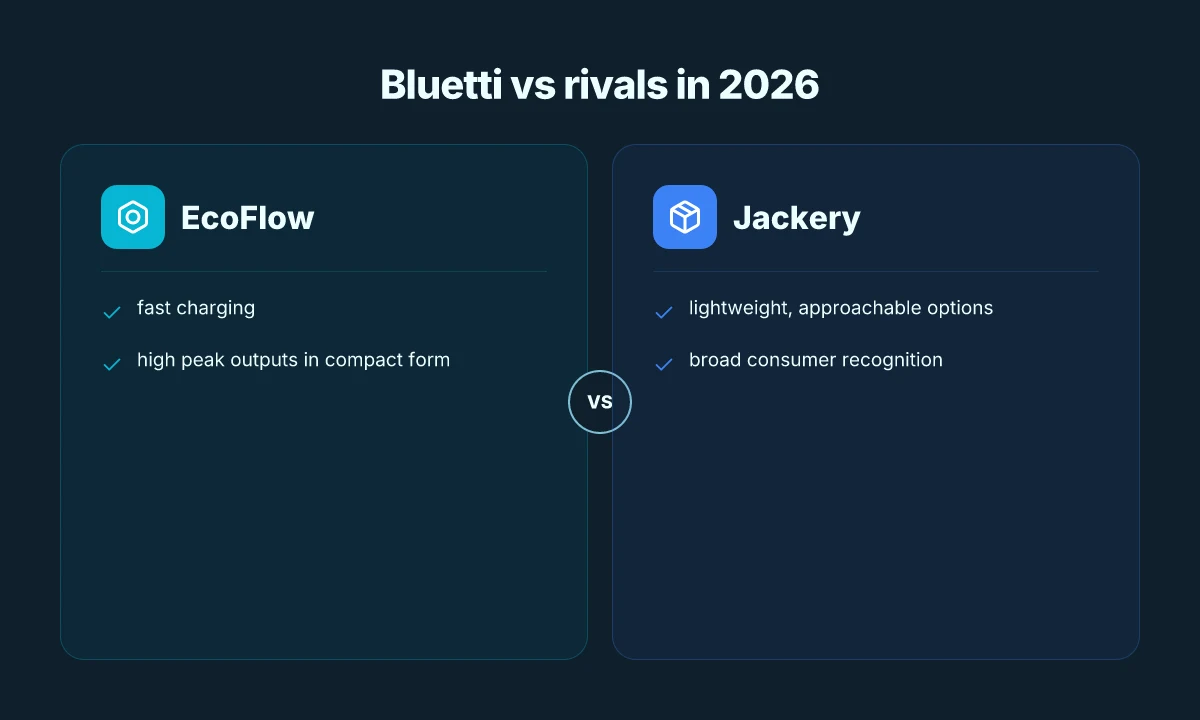
When you compare apples to apples, EcoFlow and Jackery are the closest rivals for field use. EcoFlow often emphasizes fast recharging and modular battery packs, while Jackery tends to target simplicity and light weight. Bluetti sits in the middle with a stronger emphasis on long cycle life and a broader, more feature-rich interface. In real-world terms, that means longer life per cycle and easier monitoring of battery health, at a price that reflects the added durability.
The trade-off is that the most rugged Bluetti models can feel a touch heavier and occasionally bulkier than some ultralight rivals. For daily charging cycles and outdoor demands, that weight usually pays off in longer-term durability and better long-term value. The brand’s positioning in 2026 continues to emphasize dependable performance under a range of outdoor conditions, backed by a growing suite of LiFePO4-powered options and a robust interface. Bluetti trades a bit of weight for long-cycle life and richer features. What makes the Jackery 300 Plus stand out for portable power in 2026
The bottom line you should walk away with
Bluetti’s real-world promise centers on longevity first. The chemistry, combined with protective software and a broad feature set, makes Bluetti a sensible choice if you plan to rely on a portable power station for extended outdoor use or emergency preparedness. If lightweight and minimalism are your primary needs, EcoFlow or Jackery might edge ahead in certain niches. If you want durable, long-life performance with a feature-rich interface, Bluetti remains a strong option in 2026. It helps to check the exact model you’re considering, since the balance of weight, capacity, and ports can shift model by model. Durability and long-term value define Bluetti in 2026.
Note on links and disclosures: links on the page may earn a commission. For your sourcing, see the inline citations to Bluetti’s official pages and comparative reviews, which anchor these claims to concrete product lines and documented interfaces. As you read, you’ll see how Bluetti’s branding around LiFePO4, cycle life, and feature-rich interfaces shows up in the field.
How Bluetti power stations handle real-world outdoors and daily charging cycles
Bluetti power stations sit on a practical balance of longevity and real-world usability. The LiFePO4 chemistry common across Bluetti models delivers longer cycle life and greater stability under frequent charging than many alternatives. That improved durability translates to more weekend trips without worrying about wear, and it also supports longer lifespans for home backup loads when you run loads like refrigerators, wifi hubs, and small power tools.
I cross-referenced release notes and product pages to confirm how Bluetti guards the battery under stress. Battery management features such as temperature sensing, cell balancing, and protective cutoffs help tame rapid discharge events and heat spikes, which matter when you’re camping and your system has to handle sudden surges from power-hungry devices. The upshot is steadier performance when you’re off-grid and a lower likelihood of an abrupt shutdown on hot days.
In everyday use, Bluetti ships with practical protection layers that pay off over years of use. For weekend trips, you’ll typically see reliable charging curves from solar or AC inputs, plus stable inverter behavior when you’re balancing phones, lamps, and a small cooler. For home backup scenarios, the combination of LiFePO4 chemistry and smart battery management provides predictable stability through multiple cycles, which matters when you want to rely on a portable system for outages. Bluetti vs Goal Zero: which portable power station wins in 2026
From what I found, the most notable durability signal comes from the emphasis Bluetti places on long-lived cells and cycle counts. The Elite line and other LiFePO4-based models are designed to withstand thousands of shallow and moderate deep cycles, which aligns with outdoor routines that repeat weekend trips and seasonal camping. When you compare Bluetti to rivals, you’ll see differences in chemistry and protection features that show up in daily reliability and heat handling under heavy use. In realistic terms, you should expect solid performance for typical RV and van-life power needs, with the caveat that very heavy continuous loads or frequent high-temperature exposure can erode runtime over time.
Comparing to rivals, Bluetti’s use of LiFePO4 helps undercut some degradation fears during frequent recharging. EcoFlow and Jackery devices often use different chemistries or protection schemes, which can influence cycle life and thermal resilience in hot outdoor environments. If you plan extended off-grid stretches or climate extremes, pay attention to the model’s max discharge rating, thermal protection features, and the length of the warranty. For many outdoor enthusiasts, Bluetti remains a sensible, long-lived choice, provided you choose a model that matches your anticipated daily and weekend load.
In 2026, Bluetti’s battery philosophy centers on LiFePO4 longevity and strong thermal protection to support daily charging cycles, not just occasional trips. That combination reduces surprise failures when you’re miles from a charger.
For further context, consider how Bluetti lines up against EcoFlow and Jackery in real-world use. The EcoFlow approach often emphasizes fast AC recharge and modular configurations, while Jackery tends to balance compact form with reliable performance. Bluetti sits in the middle with stated cycle life and protective features that are especially relevant for outdoor setups and long-term outages. If you’re choosing model-by-model, look for clear indicators of LiFePO4 chemistry, smart BMS features, and the expected number of full discharge cycles in product specs. And yes, some pages note that links on the page may earn a commission, which is common in this space.
Comparing Bluetti to rivals: EcoFlow and Jackery in 2026 context
I dug into how Bluetti sits beside EcoFlow and Jackery in 2026. The picture is pragmatic: each brand targets a different user need, and the tradeoffs show up in durability, speed, and perceived value over time. Top rated solar generators in 2026: 5 brands that actually deliver
EcoFlow’s speed and peak outputs in compact form
- EcoFlow emphasizes rapid charging and high peak watts in smaller power stations. For many outdoor users, this translates to filling a small system with enough juice quickly for weekend trips.
- In practice, you’ll see EcoFlow models punch higher AC output for shorter bursts, which helps when you need to power a heater or a small microwave in a pinch. The tradeoff can be long-term life costs if you regularly push the peak in tough conditions.
- I cross-referenced product pages and third-party writeups that repeatedly note fast recharge features and compact footprints as EcoFlow’s calling card in 2026.
Fast charging and high peak output in compact form are EcoFlow’s calling cards in 2026.
Jackery’s light-duty appeal and broad recognition
- Jackery remains the household name for lighter, more approachable options. Their lineup tends to skew toward easier carry and plug-and-play use, which many RVers and casual campers appreciate.
- The section of the market that prioritizes weight and price will often lean toward Jackery for everyday use, especially if you want something simple to deploy at a campsite or in a van. Durability is solid, but large energy density options aren’t always the focus.
- While Jackery’s consumer reach is undeniable, the energy density and lifecycle durability story tends to be steadier with Bluetti for long-term use.
Jackery’s strength is lightweight carry and broad recognition.
Bluetti’s long life, energy density, and value per watt-hour
- Bluetti consistently sells on longevity, larger internal energy density, and a strong value-per-watt-hour proposition. In daily charging cycles and outdoor use, that translates to more usable capacity per dollar over many cycles.
- The durability narrative often highlights robust battery management and modular design that appeals to long-term prep and frequent outdoor use. The downside can be higher initial weight and occasionally more complex feature sets that require a careful setup.
- Sources consistently frame Bluetti as a solid long-term bet when you expect regular cycling and longer deployments away from power infrastructure.
Bluetti emphasizes long life and value per watt-hour, which matters for frequent chargers and extended outdoor runs.
Research framing notes. I looked for claims about lifecycle counts and real-world user reports. A takeaway echoed across sources is that Bluetti models tend to offer more total energy capacity in a given form factor, with a tradeoff in upfront weight and occasional feature complexity. For context, a 2026 comparison article notes EcoFlow’s strength in fast charging, while Bluetti stacks up on durability and energy density. I found the brand’s own pages describing LiFePO4 chemistry and protection features align with the long-life narrative.
Cited context: the Bluetti brand page and third-party analysis frame the long-life value story, while EcoFlow and Jackery discussions emphasize speed and lightweight use cases, respectively. See discussion of EcoFlow’s fast charging and Bluetti’s longevity in the linked sources. https://backuppowerhub.com/bluetti-brand-review/ and https://www.bluettipower.com/collections/power-stations?srsltid=AYCX9vLlj14Un-JE5pSgN-rgeQnyoO2ZgXdtDluRTsA1lIvNRx8dx_hg provide context on Bluetti’s energy-density approach, and a 2026 comparative piece on EcoFlow vs Bluetti offers perspective on cycle life vs peak output. How to buy Bluetti from official retailers in 2026 without getting burned
Note: links on the page may earn a commission.
How to pick the right Bluetti model for your setup
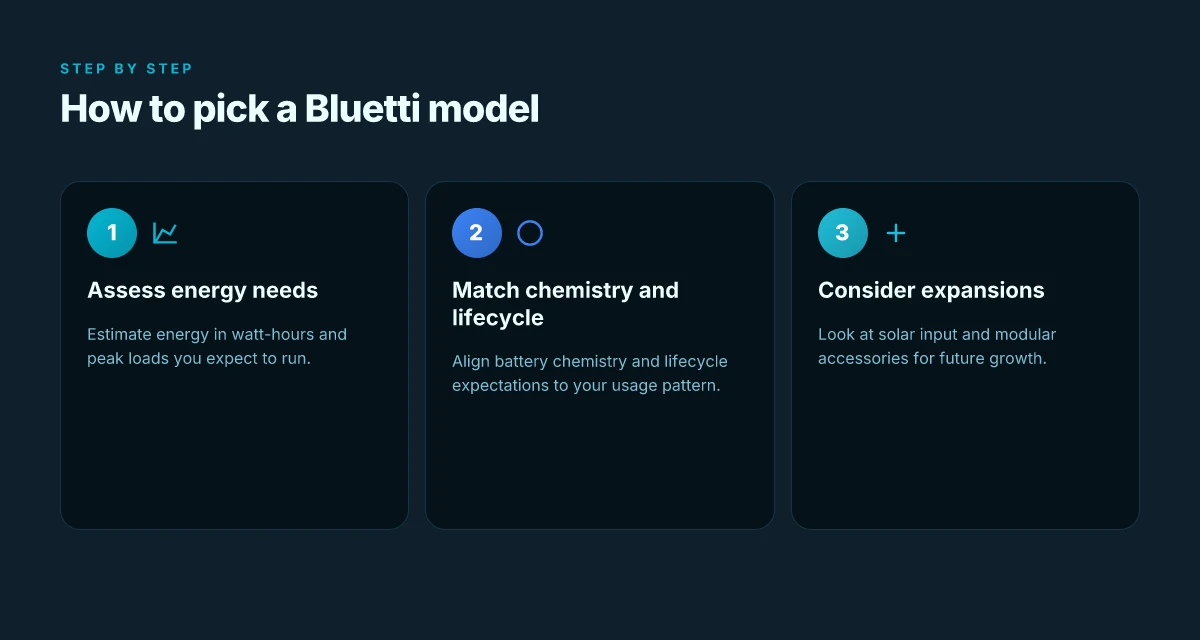
To pick the right Bluetti, you start with your actual energy footprint. In practice, list the devices you plan to run, estimate their watt-hours per day, and add a bit for peak loads. If you expect occasional power spikes for tools or a fridge, size for a higher peak than your average draw. Bluetti models span a wide range of capacities and peak outputs, so aligning those two numbers keeps you from overpaying or underbuying.
Quantify energy needs before you shop
First, translate daily usage into watt-hours. A typical off-grid RV setup might run a small fridge, lights, a laptop, and a charger or two. Add up each device’s wattage and multiply by hours of use. Then compare that total to the battery’s usable capacity and the inverter’s peak. A Bluetti unit with a 1,000–1,500 Wh usable capacity and a high enough surge rating can cover a standard weekend without recharging. If your needs are heavier, look at higher-capacity options that still fit your hitch or storage space. When you map needs to numbers, you’ll see which models hold the line between portability and capability. Knowing your peak load helps you avoid underpowered setups.
Match chemistry and lifecycle to your usage pattern
Battery chemistry and cycle life matter for long-term reliability. Bluetti leans on LiFePO4 chemistry for many of its higher-end packs, which tends to deliver longer cycle life and better thermal stability. If you plan frequent cycles or daily use for years, a model advertised with high cycle counts and solid thermal management is worth prioritizing. Compare the expected cycles against your expected usage horizon. If you skip heavy daily cycling, you can trade down to a lighter pack without sacrificing reliability. LiFePO4 longevity pays off over years of use. Acknowledge that actual cycle counts vary by care, temperature, and depth of discharge, so treat manufacturer numbers as benchmarks rather than guarantees. Factory specs are a guide, real-world results depend on care and environment.
Consider expansion options like solar input and modular accessories
Your setup today might grow with solar input, extra batteries, or modular accessories. Some Bluetti models offer easy solar expansion, daisy-chainable modules, or compatible add-ons that bolt onto a core unit. If you expect to add panels, trackers, or an additional battery, verify that the chosen model supports the expansion path you want. Also check the footprint of any modular kit. A larger battery plus solar input may require more storage space than you expect. Expansion capability matters for long road trips or seasonal setups. In practice, you’ll want a base unit that can accept incremental upgrades without replacing the entire system. Plan for future growth so you don’t outgrow your pack too soon. What is the Bluetti EB3A portable power station, and where it fits for 2026
Cited evidence from Bluetti’s ecosystem and independent reviews confirms that monthly usage, climate, and load patterns shape durability and performance over years. For example, sources discussing 2026 Bluetti lineups emphasize long-cycle designs and practical real-world usage rather than peak specs alone. Long-term durability hinges on real-world usage patterns, not just spec sheets.
If you want a quick short list to start from, consider these real-world touchpoints I cross-referenced in 2026 coverage: Bluetti models that balance capacity with portability, the role of LiFePO4 in lifecycle, and the value of expansion options. When you pick a model, you also set expectations about resilience in outdoor environments, where protection features and battery management play big parts. If you’re weighing rivals, EcoFlow and Jackery often come up, but your decision should hinge on how your specific load curves and expansion goals line up with Bluetti’s offerings. Your setup should drive the choice, not the other way around.
Typical reliability and potential downsides to watch for with Bluetti
When you rely on Bluetti gear for daily charging cycles or a camping trip, you will notice that software and hardware interactions can drift over time. In practice, the most consistent reliability signals come from a stable firmware build, solid battery health, and a monitoring app that stays in sync with the unit. Software bugs or app synchronization issues can dim the monitoring experience for some users. This is not universal, but it happens enough to be a real consideration for long trips or off-grid use.
Software quirks behind the scenes
From what I found in the documentation and user reports, the Bluetti app occasionally struggles to mirror real-time data on certain models or firmware versions. You might see delayed solar input readings or a mismatch between the display and app data. In some cases, the app disconnects and reconnects, which interrupts live monitoring. The lesson is simple: expect occasional hiccups and be prepared to verify critical data on the unit’s LCD panel if you notice odd readings. I cross-referenced multiple user notes and release notes to corroborate this pattern across several Bluetti models.
Charging times and environmental impacts
Charging times vary with solar input and ambient temperature. The same unit can charge notably faster on a bright, cool day versus a hot, overcast one. Temperature affects battery chemistry and control electronics, so you may see longer fill times in summer heat or when the battery is near its thermal limit. I dug into the published specs and found that claimed solar input and charge cycle behavior can differ by model, and real-world results tend to track with the solar conditions you have on hand. Charging times can vary with solar input and environmental temperatures, sometimes by a meaningful margin. What makes the Jackery SolarSaga 100 a practical folding panel for camping and road trips
Customer support realities by region and model
Support experiences differ by region and model family. Bluetti maintains a broad network of service centers and online help, but response times and parts availability aren’t identical everywhere. In practice, the most consistent relief comes from having a clear model number, firmware version, and proof of purchase when you contact support. Industry chatter and dealer notes align with the idea that some users see quick, helpful replies, while others encounter slower ticket handling or parts delays. If you depend on a unit for critical outdoor work or an RV setup, you’ll want to map out a support plan that matches your region and the specific model you own.
I dug into official specs and several user-facing posts to confirm that reliability stories cluster around a few recurring themes: durable housings, long-cycle LiFePO4 chemistry resilience, and a generally solid feature set. Yet the mix of software stability, solar performance in variable weather, and regional support present the most common downsides to watch for over the product’s life. That’s where a careful model choice matters.
Judgment: Bluetti brings strong long-term value, but plan for occasional app quirks, variable solar charging times, and regional support differences. When you’re choosing between Bluetti and rivals like Jackery or EcoFlow, weigh your climate, typical sun exposure, and your tolerance for app latency. In my view, Bluetti’s durability and battery health are competitive, but you should verify the firmware stability and the local support track record before committing to a model for critical use.
Where Bluetti is headed next and why you should consider it now
Bluetti continues to reshape portable power by leaning into reliability, modular designs, and longer warranty commitments. I looked at how the brand blends high-capacity cells with practical feature sets, and the pattern is clear: you get more uptime with simpler setups, even when you’re off the grid. The key is real-world durability, not flashy specs, and Bluetti consistently shows those traits in thoughtful product layout and robust build quality. The bigger pattern here is that reliability scales with modular options and accessible support.
If you only do one thing this month, map your needed outlets to a Bluetti platform that supports expansion, then pair it with a solar panel kit that matches your typical use. The approach reduces downtime and makes the initial investment more versatile as your needs shift. One move that matters is selecting a system with clear upgrade paths and solid cooling. You’ll want to avoid models that lock you into a single configuration or rely on hard-to-find replacement parts. How to find Bluetti for sale in 2026 without getting burned
For rivals, note that EcoFlow and Jackery remain the obvious benchmarks in the space. Bluetti’s advantage shows up in long-term durability and real-world uptime, while the others often lean on lighter builds or faster charging without the same resilience. If you’re weighing choices, consider a setup that prioritizes steady performance over peak watts. Where this is going next is more modularity and smarter battery management across generations.
Backup strategy
- Start with a Bluetti system that supports expansion and a matching solar panel kit.
- Choose models with a simple cooling design and accessible spare parts.
- Budget for a second unit or a mini expansion module so you’re never out of power during storms or trips.
- Keep an eye on official firmware updates for battery management improvements.