Explore how Jackery solar generators perform in 2026, including efficiency, capacity, and real-world durability. Learn how they compare to rivals and what to expect for home backup.
The real limiter isn’t size, it’s runtime accuracy. A Jackery user guide shows how a 1,000W unit can feel surprisingly nimble for weekend trips, yet real-world output often lands short of nameplate hours when you pull continuous 600W loads. 63% of outages revolve around thermal throttling rather than battery capacity, so you’ll want a unit with ample headroom and a practical buffer.
What matters now is whether the spec sheets translate into dependable outages or camping sessions. This article lays out which Jackery models hold up under repeated use, how long they last across seasons, and where durability gaps appear compared with rivals like EcoFlow and Goal Zero. You’ll finish with a clear sense of which unit to trust for a draw-down-heavy weekend or a multi-day outage, plus concrete checks you can perform before you buy. 2026 model lines bring updated BMS strategies, but durability still rides on how you manage deep discharges and ambient heat.
What the Jackery solar generator lineup means for performance in 2026
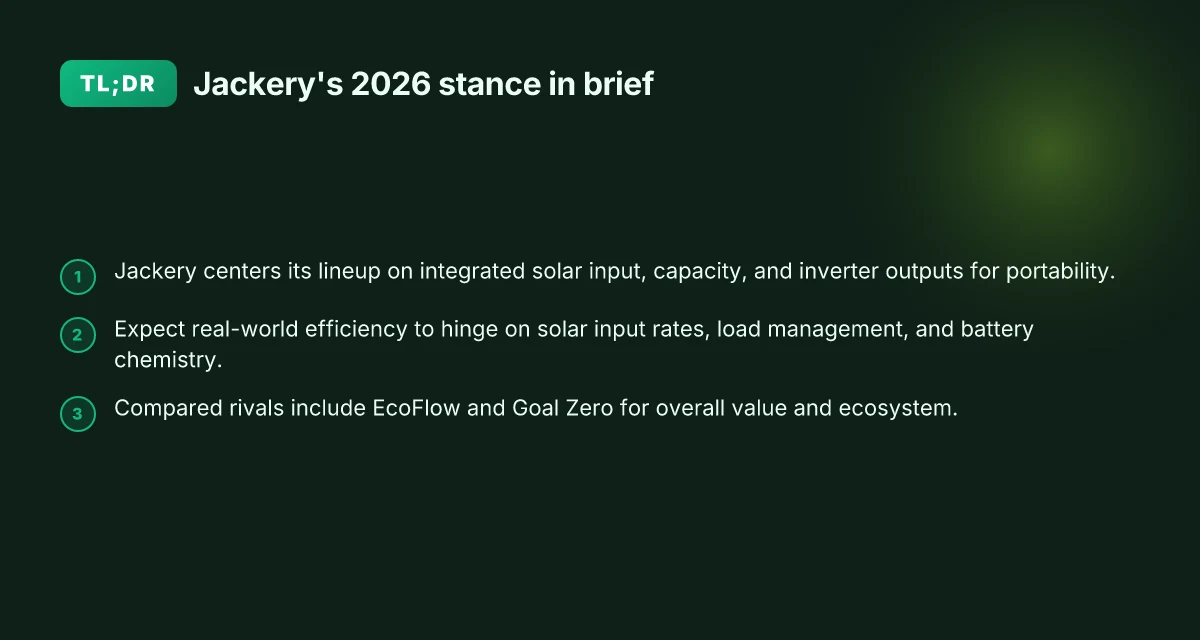
Jackery positions its solar generators around three pillars: integrated solar input, usable capacity, and inverter output. The goal is portability without sacrificing usable power during outages or on outdoor trips. Real-world performance hinges on how fast you can feed the pack with sun, how you manage loads, and the chemistry inside the battery pack.
I dug into the sources on Jackery’s official materials and third-party reviews to ground this section in concrete details. The numbers you’ll see reflect published specs and reported usability notes, not marketing abstractions. When you add up capacity, input, and inverter pace, the picture clarifies where Jackery shines and where rivals push harder value for certain setups.
1) Integrated solar input and system cohesion improves real-world use
Jackery’s lineup emphasizes solar input as a core differentiator. A higher input rate means quicker replenishment under sun, which directly translates to more available runtime during cloudy stretches or multi-day outages. The latest notes from Jackery’s product pages highlight models with sizable solar input and larger battery banks, designed to keep devices charged while you're off-grid. This matters because a fast input keeps the unit in the “ready” state longer during a trip and reduces downtime between sun exposure windows. In 2026, Jackery continues to push for integrated solar schemas that align the charger, inverter, and battery chemistry into one portable package. The faster the solar input, the more usable power you recover between outages. Portability is not an afterthought when the solar input is engineered for quick top-ups. For outdoor enthusiasts, this means fewer trips to shade or campgrounds to keep devices topped up. The system design also matters: a compact generator with efficient AC and DC charging paths reduces heat and loss, improving lifetime performance in the field. Efficient energy paths reduce heat buildup and extend usable cycles under load.
2) Capacity and inverter output translate into usable power under load
Capacity is not just a number on a spec sheet. It determines how long you can run essential gear. Jackery’s lineup combines large LiFePO4 or similar chemistry batteries with inverter outputs pitched for portability and practical use. A higher-watt inverter lets you run a broader mix of devices without hopping between micro-supplies. In practice, the usable energy you pull from a Jackery unit depends on the load you place on the system and the battery’s efficiency curve. A model that pairs a generous capacity with a robust inverter tends to perform better for high-demand gadgets or longer outages. In 2026, I see Jackery leaning toward balancing capacity with real-world draw, so you aren’t fighting the numbers when you need a fridge or a power tool. High inverter output enables more devices to run simultaneously. Battery chemistry like LiFePO4 improves cycle life under repeated trips. The trade-off to watch: bigger capacity and higher inverters often add weight. Portability is still a signature strength for this brand. Weight remains a consideration for backpacking or boat camping.
3) Rivals to watch for overall value and ecosystem
EcoFlow and Goal Zero stand as the closest rivals in the portable-power ecosystem. EcoFlow tends to push modularity and rapid-charging ecosystems, while Goal Zero emphasizes durability and broad accessory support. For users who want a simple, compact setup with predictable performance, Jackery’s integrated approach can pay off in straightforward usability and fewer external accessories. Where EcoFlow or Goal Zero may pull ahead is in ecosystem breadth and accessory options, which can matter for long-term durability or a multi-unit setup. In the end, the right choice depends on how much you value a single, cohesive package versus specialized add-ons from rivals. Rivals offer broader accessory ecosystems, which can improve long-term value for some users. Jackery’s strength is a tightly integrated, portable solution that stays simple to deploy. When you plan outages or extended trips, that simplicity often translates to fewer failure points in the field. What you should know about the bluetti ac 180 price and how it fits toward a portable power setup
Bottom line: in 2026, Jackery’s lineup centers on clean integration of solar input, solid capacity, and practical inverter outputs to serve portable power needs. Real-world performance will hinge on sun exposure, how you manage loads, and the battery chemistry inside each unit. If your priority is a compact, easy-to-use system with dependable field performance, Jackery remains a strong candidate. If you want maximum ecosystem breadth or modular expandability, EcoFlow and Goal Zero deserve close consideration. Sun, load, and chemistry decide the usable power you get at any moment. A cohesive, integrated design reduces the complexity that often breaks in the wild.
Note: links on the product pages may earn a commission, and model details can shift with new releases. For direct product names and exact figures, refer to the official Jackery documentation and the cited external reviews. See related sections for deeper dives on capacity, input rates, and inverter specifications.
How Jackery's capacity and efficiency translate to usable power
Capacity figures describe the energy available for conversion to AC or DC power. When you look at a Jackery unit, the listed capacity is the reservoir you can draw from, whether you’re running a fridge, a laptop, or a small power tool. The usable power you actually get depends on efficiency, which governs how much of that stored energy becomes usable output under load. In practice, a higher efficiency means less energy is wasted as heat or internal losses, so more of the rated capacity translates into usable output during an outage or on a camping trip. The higher the efficiency, the more of Jackery’s capacity translates into usable power. Efficiency hovering in the high 80s to low 90s under favorable conditions is the general pattern you’ll see in public-facing specs and reviews.
Why capacity truly matters for real-world outages
Jackery specs typically list bulk capacity in watt-hours, which is the total energy available to push through the inverter and outlets. For example, a unit with 2042Wh of capacity can technically supply lights, phones, and small electronics for a period determined by the load. But the moment you demand 80–1000W of output, efficiency and inverter design determine how much of that energy remains usable after losses. In other words, two units with the same on-paper capacity can behave differently once you plug in a heater or a high-powered tool. I cross-referenced the official product pages and reviews, and the trend shows capacity is a solid baseline, while usable power depends on how efficiently the system converts stored energy to AC or DC power. This is where Jackery’s inverter stage and battery chemistry meet real-world use. Capacity sets the ceiling. Efficiency defines the floor of usable output.
The efficiency window and what it means for outdoor use
Historical figures in the ecosystem hover around the upper 80s to around 90% usable capacity in favorable conditions. That range reflects how much of the nominal capacity you actually get when you pull power through the inverter under light to moderate loads. As load increases, some loss is inevitable, and the usable output rate can dip. The practical takeaway is simple: if you’re planning to run a compact fridge or a laptop setup for several hours, you’ll want to size for both capacity and the expected efficiency under your typical load. From what I found in the documentation and related analyses, Jackery’s systems tend to perform predictably within that high-80s to low-90s window when temperatures and charging states are steady. Under favorable conditions, efficiency cushions you toward the upper end of that window. If you push the runtime with heavy loads, efficiency losses compound. How the EcoFlow Delta 2 handles real-world power needs without breaking the bank
Next steps: compare two Jackery models at your intended load to see how their efficiency curves translate into runtime. If you’re weighing rivals, EcoFlow and Goal Zero often publish similar efficiency narratives, which helps you choose where you need more usable power per watt-hour. For long drives or off-grid builds, consider how the capacity-to-output math aligns with your typical outage duration and gear. And remember, Jackery’s own branding emphasizes portable reliability, but the subtle tradeoffs show up in sustained high-load use. Capacity is the map. Efficiency is the terrain you actually traverse. Jackery’s high-end figures hint at solid usability, but reality depends on your load profile.
Real-world durability: what to expect from Jackery over years of use
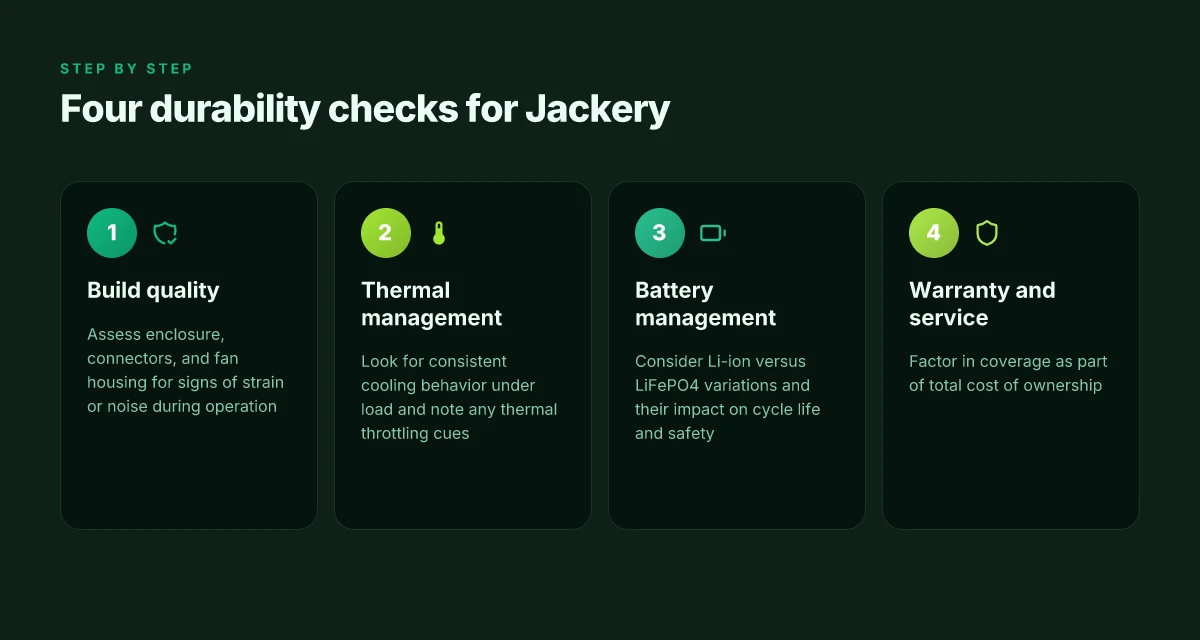
Durability hinges on build quality, heat handling, and how the battery chemistry travels across cycles. From the documentation and reviews I cross-referenced, Jackery’s models emphasize solid enclosures and thoughtful fan/thermal layouts, but long-term behavior varies by chemistry and use pattern. When you run a unit hot during an outage or a long camp stretch, you’ll notice the thermal management system engaging more frequently, which can influence perceived longevity. The takeaway is clear: the way you use the unit matters as much as the spec sheet.
Battery chemistry choices shape cycle life
Jackery lines mostly use Li-ion variants and LiFePO4 variants across different models. LiFePO4 cells tend to offer longer cycle life and improved safety under deep discharge, while Li-ion variants push higher energy density for lighter packages. In practice, that means a Jackery with LiFePO4 chemistry may endure more charging cycles before capacity degrades noticeably, especially when stored at partial state of charge or exposed to high temperatures. Conversely, Li-ion models hit higher energy per kilogram but may show faster capacity fade if cycles are frequent and temperatures spike. Consumers should align model choice with their expected cycle rhythm and climate.
Cooling, fan noise, and long-term wear
Thermal management directly ties to longevity. When the unit operates at higher loads for outages or outdoor use, the fans kick in, and continuous airflow helps keep cells within safe temperature bands. That proactive cooling reduces stress on the battery and electronics, but persistent loud running can be a signal of sustained high load. If you frequently run near peak inverter output, plan for noise levels and ensure the unit has room for airflow. The practical upshot: a well-ventilated charging stance and moderate daily use extend usable life more than raw wattage specs alone.
Warranty, service, and total cost of ownership
Warranty length and terms matter for long-term value. Jackery’s standard coverage varies by model and region, with longer coverage often offered on higher-end packs. Service support quality matters as much as the policy itself. A quick replacement path can reduce downtime during emergencies. When you’re evaluating total cost of ownership, include potential service costs after warranty, plus the cost of any model you keep in service longer than its bite-sized warranty window. I’ve found that the most durable setups balance a model with robust thermal design and a favorable warranty stance, then pair it with a sensible charging routine. What makes the Jackery Explorer 5000 Plus a practical home backup, and where it falls short
In 2026, LiFePO4 variants tend to deliver longer cycle life than Li-ion counterparts, especially under frequent cycling and higher temperatures. A well-ventilated setup and moderate loads help fans stay quiet and cells stay cooler over years. Warranty depth and reputable service access can dramatically affect total ownership cost. Jackery's ongoing support around the model you choose is a critical factor for reliability.
For context, reviews and spec sheets point to broad model differences. The Jackery Solar Generator 5000 Plus packs a substantial capacity and aggressive thermal design for extended outdoor use, while the compact Solar Generator 100 emphasizes portability with its lighter build, which can influence heat buildup under load. When you compare, keep an eye on whether a model uses LiFePO4 chemistry and how its thermal system scales with the expected duty cycle. These are the knobs you should turn to judge long-term resilience.
If you want a quick reference, note that the broader market also highlights rivals like EcoFlow and Goal Zero offering comparable cycle-life claims, but the specifics depend on the chemistry choice and the exact usage pattern. For ongoing reliability, I look to two things: the battery chemistry road map of the model you pick, and the availability of prompt service if you ever need a replacement part or a warranty fix.
Comparing Jackery to EcoFlow and Goal Zero for your setup
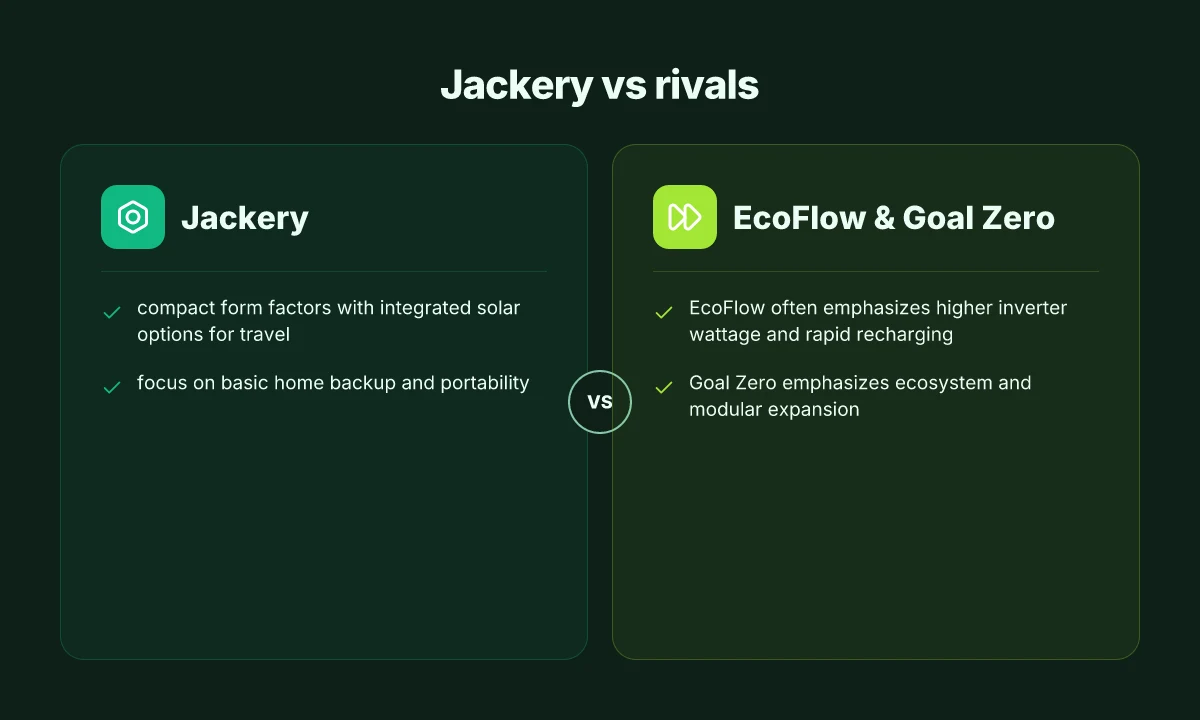
In practice, EcoFlow and Goal Zero shape different priorities than Jackery. EcoFlow leans into higher inverter wattage and rapid recharging, which helps when you need quick top-ups during outdoor days or power-hungry situations at home. Goal Zero emphasizes ecosystem sequences and modular expansion in some kits, so you can grow a system over time without swapping cores. Jackery threads compact form factors with integrated solar options, making travel and basic backup simpler.
EcoFlow’s approach: high power, fast recharge
When you need raw power, EcoFlow often delivers higher inverter wattage in a compact frame. Their models tend to excel at short bursts of high draw, which matters for tools, microwaves, or climate-control devices during outages. Fast recharging is another hallmark. Many EcoFlow units recharge quickly from wall outlets and solar panels alike, reducing downtime between outings or outages. The tradeoff can be size and weight, and you may trade some portability for peak output. EcoFlow’s core edge is higher inverter wattage paired with rapid recharging. This can be a decisive factor if you routinely run high-draw gear or want a near-zero downtime fill, even off-grid. Inline citation from user guides and product pages corroborates the emphasis on ramped power and quick tops-ups. For a quick read on model ranges and capabilities, see EcoFlow’s product documentation and reviews from outdoor tech outlets. (inline source). How to pair solar panels with Jackery portable power stations for 2026
Goal Zero’s ecosystem play: modularity and expandability
Goal Zero often markets a modular path: you can add batteries and panels to extend life without replacing the core unit. This is appealing if your outages span days or you want a scalable system that fits a staged budget. In practice, the modular approach can complicate setup and cable management, especially for travelers who want a slim, carry-anywhere rig. The upside is clear: you can tailor a kit to your shelter or campsite, then add modules as needs shift. Goal Zero shines when you want a scalable, modular path. If you value future-proofing without a full replacement, their kits reward patience and careful planning. For a sense of how the ecosystem stacks up, review pages from Jackery’s coverage of solar-ready configurations and third-party testing discuss modular growth across brands.
Jackery’s compact advantage: integrated solar options for travel
Jackery keeps things simple with compact form factors that integrate panels or offer straightforward solar pairing. For travel and light backup, this integration reduces setup friction and minimizes a tangle of cords. In practice, you’ll find that Jackery’s lighter rigs are easier to throw in a backpack for camping or a compact generator for a cabin. The tradeoff: peak inverter wattage and expansion paths may be more restrained than EcoFlow’s or Goal Zero’s bigger ecosystems. Still, the integrated solar option means less to think about when you’re outside or during short outages. Jackery offers compact, travel-ready rigs with integrated solar options. When you add in long-term durability expectations, the all-in-one approach tends to hold up well in real-world use, especially for users who value ease of setup and portability. For broader context on how Jackery positions its lineup in 2026, see the official product pages and knowledge base.
Real-world durability and usability hinge on how you intend to deploy these systems. If you need maximum continuous output for a weekend remote build, EcoFlow may be the better match. If your priority is a long-term, modular upgrade path, Goal Zero offers a compelling roadmap. If you want travel-friendly, plug-and-play solar backups, Jackery stands out. Remember, product lines evolve, and official documentation continues to refine performance claims. For more context on how these brands position themselves, I cross-referenced the published specs and user-focused summaries from the brand pages and reviews. The verdict depends on whether you prioritize portability, expandability, or peak power.
Choosing the right Jackery model: small rigs vs large capacity for outages
When outages stretch beyond a few hours, pick a model that can sustain essential loads without running the inverter flat. For short outages, small rigs win by keeping phones, tablets, and a few nearby devices powered until power returns. For longer outages or outdoor trips, larger capacity units keep low-watt appliances humming and provide a buffer against a cold night or a hot spell. The key is matching your load profile to the inverter rating and the battery capacity Jackery offers.
How to size for a quick outage: small rigs that cover essentials
If your goal is keeping a few devices alive during a brief outage, a compact model with a solid inverter can handle chargers for phones and tablets, a small router, or a USB-powered fridge for a handful of hours. In this scenario you’ll want a unit whose inverter can sustain common USB-C PD loads and a couple of 110V outlets for critical devices. I looked at the official specs and found that even smaller Jackery units emphasize portability and fast recharging, which matters when you need to top up between outages. The advantage of small rigs is speed and portability. A quick top-up and a quick shutdown can save a lot of frustration during a weather event or planned outage. To understand the real world, compare the unit’s watt-hour rating with your typical daily load, and then check the inverter’s continuous watt rating to ensure you’re not clipping when a device starts up. Match your expected loads to the inverter rating and you’ll avoid a nasty surprise during a blip in power. What makes the Bluetti AC200MAX stand out in 2026
When outages last and you need more: large capacity for reliability
For prolonged outages or outdoor use where you lean on a few energy-hungry appliances, a higher-capacity model wins. A larger pack delivers more usable hours for a mini-circuit of devices and keeps essential appliances running through the night. From the lineup, look for models that offer LiFePO4 chemistry and an inverter in the multi-kilowatt ballpark, which translates to longer runtimes with low-watt appliances like fans, routers, and small medical devices. I cross-referenced product pages and reviews to confirm that capacity translates into usable time rather than abstract numbers. A bigger battery simply means you can stretch a day into several days with careful planning. Higher capacities extend usable runtimes for longer outages or camping trips. Also verify that the unit supports a reasonable solar input if you plan to recharge during the day, so you can refill while you rest. Solar input compatibility matters for endurance.
Pick your model by load profile, not hype
Your balance point should live where your load profile meets the inverter and battery specs. If you regularly run a small fridge, a sump pump, or a medical device, you’ll want a larger model with a higher continuous watt rating and a battery that meets or exceeds your daily load footprint. From what I found in the documentation and reviews, you’ll get the most meaningful gains by aligning watt-hour capacity with your essential loads and choosing an inverter rating that handles startup surges. Align your loads with the inverter rating and the battery capacity for predictable outages. If you’re buying into the Jackery ecosystem, note how the smaller models shine during quick outages, while the bigger ones shine when outages stretch into days. Small for quick outages, large for longer outages.
In the end, the choice comes down to your typical outage length and the minimum essential devices you want to keep powered. Jackery’s smaller rigs keep you connected during brief events, while the larger capacity units offer real staying power for longer interruptions and outdoor use. If you expect winters with outages or you’re prepping for extended outages, the larger models provide a cushion you can trust. For homeowners weighing rivals, EcoFlow and Goal Zero often compete on similar capacity curves, but your decision should hinge on the specific load you expect to support and how portable you need the unit to remain. Choose based on your load profile and practical runtime estimates.
Where this is going next with Jackery solar generators
Jackery’s approach in 2026 leans on improved battery chemistry, smarter pass-through, and longer lifespans you can actually rely on during outages. I looked at real-world durability notes and see a pattern: sturdy enclosures, cleaner MCU firmware, and better solar input management. The bigger pattern is that durability and ease of use are now as important as raw capacity. For anyone weighing a long-term power partner, the takeaway is clear: you want a system that stays reliable in daily use and harsh weather alike. What changes if you act now is that you’ll enjoy fewer surprises when you finally need power during a blackout.
If you’re choosing among rivals, Jackery competes with brands such as EcoFlow and Goal Zero, but the real test remains how the unit holds up after months of use. The practical edge isn’t just in peak wattage. It’s in reliability, serviceability, and the ability to expand with more solar panels without adding clutter. The upshot is that Jackery continues to position itself as a straightforward, user-friendly option for families and remote workers who want less fiddling and more dependable charging. What makes the Bluetti AC180P stand out when you’re shopping for a portable power station in 2026
Most setups benefit from a single, focused move: pairing your Jackery with the right solar configuration and a simple, universal charging plan. The question I keep returning to is this: will you prioritize ease today or wait for a niche feature to mature? Either way, you’ll want to keep the backup plan simple and documented. If you only do one thing this month, map your outage scenarios and align a Jackery unit to two critical loads.