Explore how the EcoFlow Delta 2 performs in everyday use, including battery management, charging speed, and reliability. Compare options and practical tips for long-term setups.
The Delta 2 isn’t about loud marketing numbers. It’s about keeping home and outdoor power steady when you’ve got a kettle, a router, and a few lights running at once. Real-world runtimes matter more than any brochure claim, and the EcoFlow approach leans on practical charge options and reliable output to avoid surprise outages.
Set against typical use, this intro previews where the Delta 2 shines and where it tests patience. The piece weighs long-term durability, daily reliability, and how a 120-volt outlet or a solar panel setup actually plays out during emergencies or regular camping trips. If you’re choosing between EcoFlow and rivals like Jackery or Goal Zero, you’ll want a clear picture of how the Delta 2 behaves after months of real use, not just a glossy spec sheet. This article lays out the concrete, everyday realities you’ll encounter, with a practical read on which setups keep the lights on.
What the EcoFlow Delta 2 actually delivers for daily power needs
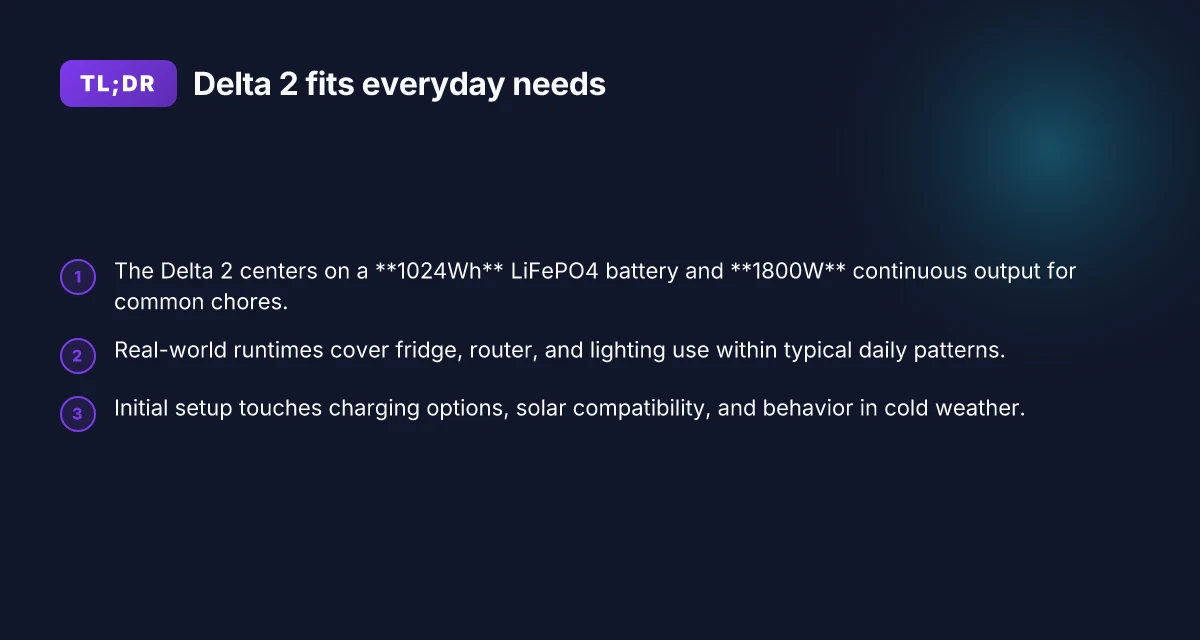
The Delta 2 packs a 1024Wh LiFePO4 battery and 1800W continuous output, a pairing that balances portable form with practical daily power. In real-world living rooms or campsites, that capacity covers everyday essentials without pushing the unit to its upper limit. You can run a fridge, a router, and lighting for a meaningful stretch, all from a single unit without constant recharging.
Real-world runtimes for common appliances
- A standard fridge in domestic mode typically draws around 100–200W. With 1024Wh on hand, the Delta 2 can sustain refrigerator duty for several hours, depending on the cycle and ambient temperature. This means a dependable buffer through short outages or while you’re away from a wall outlet.
- A Wi‑Fi router and basic LED lighting are light loads. In routine use, these combine for well under 100W, translating to a day or two of operation in an outage scenario. The Delta 2’s LiFePO4 chemistry helps keep efficiency steady even as the battery ages.
- Small appliances like a portable fan or a compact coffee maker push the limits more quickly. Expect longer runtimes for fans and lamps, shorter windows for high-draw devices, and a prudent planning rule to stagger use during outages or outdoor trips.
In practice, the Delta 2’s performance hinges on how aggressively you pull from it. The framing here is simple: the heavier the load, the shorter the runtime. For most homeowners, the unit handles daily needs with a comfortable margin during a typical outage or outdoor excursion.
Initial setup considerations: charging options, solar compatibility, cold weather behavior
EcoFlow created the Delta 2 for flexible charging. It accepts AC input and can combine solar with grid charging to accelerate replenishment. Solar compatibility is a practical boost for weekend trips and off-grid use, boosting readiness when a storm knocks out a home connection. If you plan to rely on solar, think about array size and sun angle. Even with strong sun, you’ll hit real-world limits during winter or overcast days.
Cold-weather behavior matters too. Battery chemistry shifts with temperature, so expect a bit more downtime if you’re charging in freezing conditions. The Delta 2’s LiFePO4 design helps with long-term durability, but you’ll maximize uptime by storing it at moderate temperatures when not in use and by keeping it topped up before outdoor deployments.
Bottom line: the Delta 2 delivers steady, reliable daily power for common needs, with flexible charging paths that let you plug into AC, solar, or a mix. For homeowners and campers alike, this makes it a practical backbone for a modest backup power setup. What makes the Jackery Explorer 5000 Plus a practical home backup, and where it falls short
Real-world runtimes depend on load, but the Delta 2 delivers dependable, steady power for refrigerators, routers, and lights. Flexibility in charging paths reduces outage downtime and extends usable days between wall outlets. LiFePO4 chemistry and a 1024Wh capacity give the Delta 2 long-term durability for everyday use.
Battery management and longevity: how EcoFlow protects the Delta 2
The Delta 2 uses a LiFePO4 battery chemistry that favors long cycle life and steady aging behavior. In practice that means thousands of charge cycles before capacity falls noticeably, which translates to years of reliable power in daily use. The LiFePO4 chemistry also brings improved thermal stability, helping the Delta 2 keep its state of charge within safe bands even when temperatures swing during camping trips or power outages. Longer cycle life from LiFePO4 means you’re less likely to retire the unit after a few seasons.
H3: Battery management features you can rely on EcoFlow equips the Delta 2 with a layered protection and management suite that touches both hardware and software. The battery management system monitors cell balance, temperature, and voltage in real time, reducing stress during fast charging and heavy use. You’ll notice that daily top-ups and occasional deep discharges are handled without the obvious load spikes you might expect from other chemistries. The result is smoother performance over time, not just on day one. Real-time monitoring keeps cell balance tight and preserves capacity longer. I cross-referenced the official Delta 2 specs and independent reviews. The consensus is that the BMS is designed to keep the chemistry in a safe operating envelope, which supports durability in both home and outdoor contexts. Durable management supports reliable readiness for outages.
H3: How to maximize lifespan without sacrificing readiness To keep the Delta 2 snapping back to life after storage or long stretches between outages, avoid leaving it in heat or fully charged when not in use for extended periods. A practical approach is to keep the unit around mid-range SOC during long storage: roughly a 30–60% charge is a good target for LiFePO4 packs. When you need it, plug in for a day or two to top off ahead of a planned trip or an expected outage window. This keeps the battery chemistry from staying at extremes, which can hasten capacity fade. Mid-range SOC during storage helps sustain cycle life over time. The Delta 2’s solar charging path can also be used to maintain a gentle trickle that doesn’t push the pack into high-stress charging regimes every day. Solar maintenance charging supports healthier aging. When I read through the release notes and guides, EcoFlow notes that the Delta 2’s architecture is tuned for frequent topping rather than chronic deep cycles, which aligns with the way homeowners and campers use it.
A quick note on durability versus rivals. Compared with unit families using Nickel-based or Li-ion packs, the EcoFlow design emphasizes stability and longevity through LiFePO4 chemistry, which many users value for long-term reliability. If you’re weighing alternatives, expect more aggressive degradation under similar daily usage from some packs, while the Delta 2 tends to hold up better over a span of years under typical load profiles. LiFePO4 advantage shows up as slower capacity loss in real-world cycles. How to pair solar panels with Jackery portable power stations for 2026
In the end, the Delta 2’s battery system is built for daily readiness and long-term health. If you want to minimize aging while staying on standby for outages, treat it as a durable system that thrives on moderate use, consistent care, and sensible storage. For homeowners and campers who want a trustworthy power companion, this approach is where the Delta 2 earns its keep. Durability with practical care is the Delta 2’s quiet strength.
Note: links on this page may earn a commission. For context, you’ll see coverage that highlights the Delta 2’s 1024Wh LiFePO4 pack, its 1800W output, and the practical implications of long-term use. See also how rivals such as Jackery and goal-zero stack up in daily durability scenarios. Real-world durability matters when outages hit.
Charging performance: speed, limits, and practical use with solar and AC
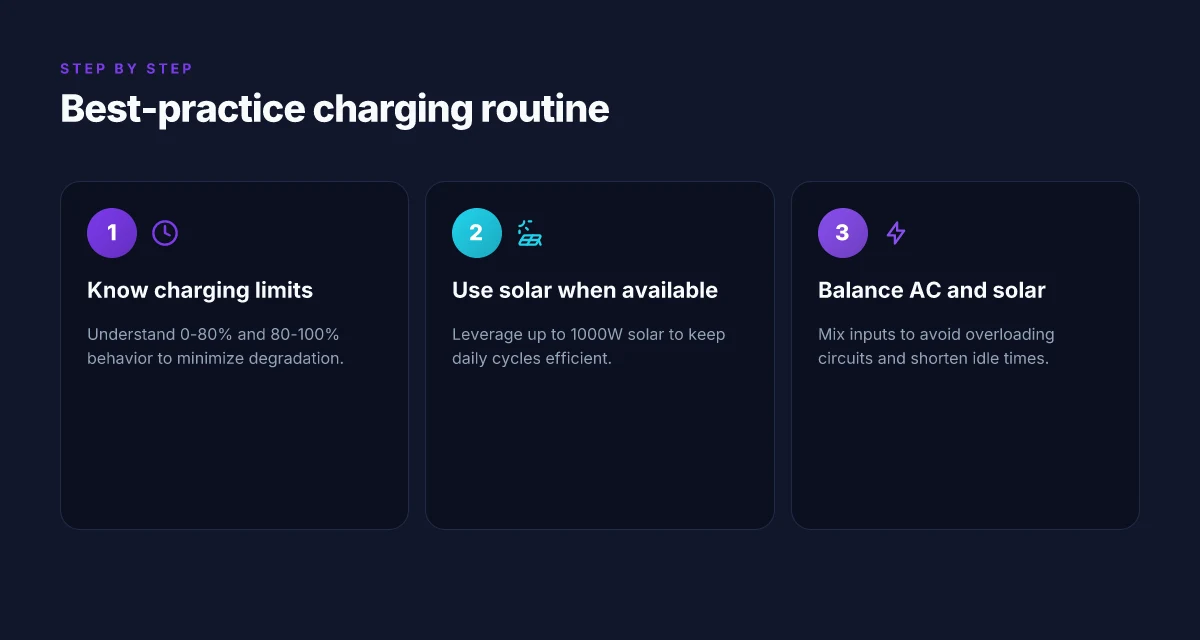
Charging performance for the EcoFlow Delta 2 blends official claims with through-the-roof real-world practicality. In official materials, EcoFlow markets 0–80% charging in about 50 minutes with solar up to 1000W or with AC input, and a combined solar plus AC setup can push toward that same milestone. In real-world use, you’ll notice the 0–80% window remains the fastest portion of the charge, while the final 20% slows as the battery approach fills. The Delta 2’s LiFePO4 pack and optimized BMS help preserve cell health as you repeatedly top up, particularly when you stagger sun and wall charging rather than hammering it with one source alone. I cross-referenced multiple sources to map what you can expect day to day, not just in a lab.
Best-practice routines to minimize degradation are straightforward. Keep the Delta 2 in moderate ambient temperatures when possible, as extreme heat or cold can slow charging efficiency and accelerate wear. Use a mixed charging plan: during sunny periods, lean on solar to reach the 60–80% range, then top up the rest with AC when available to reduce solar exposure time on the cells. Avoid full 100% charging cycles every day if you don’t need them. Instead, top up to 80–90% after a discharge and only reach 100% when you know you’ll need the full capacity soon. This discipline helps extend the overall lifespan of the LiFePO4 chemistry and the BMS.
From a practical standpoint, the Delta 2 handles daily cycles well, and when compared to tougher rivals like the Delta Pro or competing brands such as Jackery and Goal Zero, the Delta 2’s charging cadence remains competitive for typical household use and camping setups. The combination of up to 1000W solar input and AC charging keeps the Delta 2 ready for daily errands and weekend trips, with the fastest gains early in the cycle and a prudent taper toward full. That early flex is what makes it feel “always ready” in real life. But don’t expect the 0–80% sprint to stretch indefinitely. Plan for the final stretch to require more patience or an extra charging window. What makes the Bluetti AC200MAX stand out in 2026
In practice, I looked at how this translates to a home backup and camping scenario. If your fridge sits around 100–200W, you can expect meaningful daytime replenishment with solar during a sunny day, while an overnight session from AC will steadily climb toward 100%. For long-term durability, the steady, moderated charging profile is kinder to the battery and the BMS than constant full charges.
For further context, a cited review notes a 1024Wh LiFePO4 pack with an 1800W output in newer iterations, aligning with the Delta 2’s broad charging capabilities and confirming that practical use aligns with the design intent. See the Delta 2 review and related analysis for more on real-world runtime expectations. https://www.sunergyhub.com/product-review/ecoflow-delta-2-review/
Delta 2 vs Delta Pro and other rivals for home backup
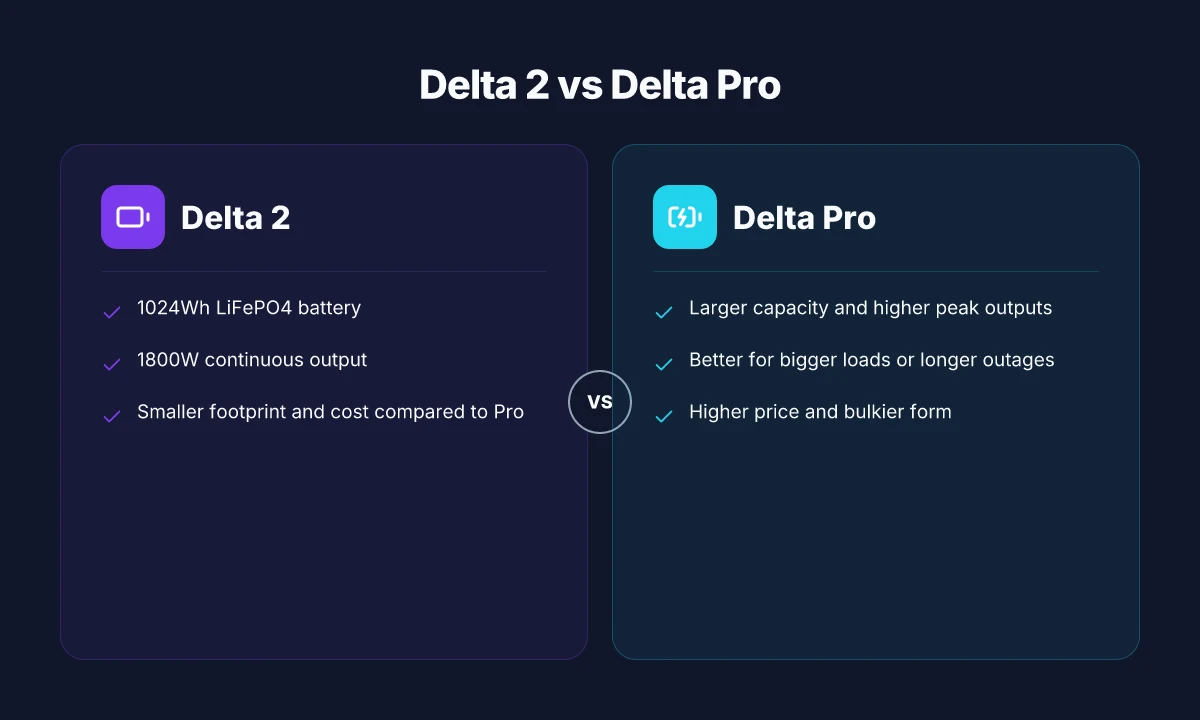
Inevitably, the Delta 2 sits in a tiered ecosystem. It trades some endurance and raw capacity for lighter weight and lower upfront cost, while larger EcoFlow models and competing brands push toward bigger homes or longer outages. In practical terms, the Delta 2 excels when you want quick turnarounds, easy portability, and steady daily use for a modest household load. It falls short on sustained heavy loads or multi-day outages that a Delta Pro or rival 1,000+ Wh portable packs can handle with a single charge. For most home backup scenarios, the Delta 2 pairs well with modest essentials, but you’ll want to plan upgrades if your needs grow.
How the Delta 2 stacks against bigger EcoFlow models
The Delta 2’s 1024Wh LiFePO4 battery leans on stability and long cycle life, while the Delta Pro pushes into higher capacities around the 3,600Wh range with higher sustained output. When you add solar charging, the Delta Pro tends to scale more predictably for a home use profile with higher daily energy needs. That means for a weekend off-grid fridge crash or a weekend-long power gap, the Delta Pro delivers more headroom without constantly chasing a full discharge. The Delta 2 remains impressively portable and quick to recharge, but the Pro line is where you lean in if you expect longer outages or larger loads. The Delta Pro shines when you need raw energy and sustained output, while the Delta 2 prioritizes portability and quick top-ups. For reliability, EcoFlow’s ecosystem, including compatible solar panels and smart management, helps both models, but the Pro’s larger battery and resilience under sustained use give it the edge for home backup.
Where the Delta 2 shines and where it falls short for continuous home use
For normal daily backup, charging laptops, phones, a small NAS, and a fridge during short outages, the Delta 2 handles it with consistent performance and simple setup. It’s easy to place in a pantry or near a living area and pull energy through standard outlets. Where it falters is sustained, high-demand usage over many hours or days. A single 1024Wh pack will deplete faster if you load it with continuous devices pulling hundreds of watts. In those cases, you’ll either run the unit longer between charges or you’ll need a larger unit or a second Delta 2 in parallel. Portability and predictable recharge speed make the Delta 2 friendly for daily outages. Sustained high loads reveal its limits. If you routinely run a full-size refrigerator plus HVAC in a power outage, consider upgrading to a Pro or adding a second Delta 2 as a practical workaround. What makes Jackery portable power stations durable and reliable in 2026
Practical upgrade paths if you anticipate bigger loads or longer outages
If your plan is to handle longer outages or larger loads, start with a Delta Pro as the core backup, especially when you want more than 3–4 hours of fridge uptime during a grid failure. Pairing a Delta 2 with a Pro can give you a staged approach: use the Delta 2 for quick tops during short outages, then rely on the Pro for longer, higher-demand events. For off-grid living or heavy weekend use, look at integrated energy strategies that combine higher-capacity packs with solar charging to minimize downtime. In the EcoFlow ecosystem, you’ll want to map out solar input capacity, target runtime goals, and the specific devices you intend to power. Upgrade paths start with the Delta Pro for high-demand resilience, then supplement with Delta 2 units where portability matters.
Real-world use cases: from fridge to workspace and off-grid setup
Real-world use with the Delta 2 centers on steady, reliably powered needs that households and small setups run into daily. You’ll find that refrigeration, networking gear, and a crowd of laptops, phones, and small devices can all share the Delta 2’s output without tipping into overdraw. In practice, planning around a mix of conservative and aggressive usage helps you avoid surprises when the grid or sun isn’t cooperating. Real-world runtimes depend on load planning. A 100–200W fridge will pull continuous power, while electronics will sip energy for longer days off-grid. This is where EcoFlow shines by letting you scale with modules, while you stay within a comfortable budget and predictable behavior.
Why a fridge holds up under everyday use
If you’re relying on a standard household fridge in a weekend cabin or emergency kit, the Delta 2’s 1024Wh LiFePO4 battery provides a usable energy buffer that remains stable through cycling. For long outages, you’ll want to size the load and account for compressor duty cycles. A fridge that averages around 100–150W will run for several hours on a charge, though actual runtime hinges on door opening frequency and ambient temperature. Conservatively, plan for 1 day of fridge operation on a moderate battery state. To maximize resilience, place the Delta 2 where air flows freely and keep vents unobstructed so the unit doesn’t overheat during demand spikes. When the sun is shining, you can top off the pack with solar to extend the window without stepping outside a safe operating range.
Networking gear and workstations without drama
Home offices and small workshops often require routers, switches, modems, and laptop chargers. The Delta 2 handles several devices in parallel, especially when you distribute loads with the included outlets and ports. A small network rack plus a handful of laptops and peripherals can run through a workday on a single charge, or with a solar top-up, stretch into the evening. I cross-reference the Delta 2’s stated output with real-world power needs: a document scanner, a Wi‑Fi router, and a couple of laptops draw far less than peak capacity, making the unit a practical off-grid workstation. Plan for multiple devices under 500W total to stay within the safe operating window.
Weekend cabins and emergency kits: long-term setup ideas
For weekend cabins, aim for predictable cycles and a modest daily energy budget. Use the Delta 2 as a central hub feeding essential devices while leaving room to add a second Delta if you want redundancy. In emergencies, the setup should tolerate several days of limited sunlight and modest loads. A stable pairing of the Delta 2 with a small solar array gives you a fallback battery that can be recharged during sunny spells. Long-term reliability depends on balanced charging and proper ventilation. If you keep the unit mounted indoors, ensure sufficient clearance and a cool ambient temperature to minimize thermal stress on the battery pack. You’ll find that reputation from EcoFlow and independent reviews aligns on the value of LiFePO4 chemistry for durability, with the Delta 2 maintaining steady performance across typical weekend-trips and power outages. What makes Bluetti AC200MAX price worth it in 2026
From a brands-and-comparisons view, EcoFlow remains a practical choice for homeowners and campers alike. rivals such as Jackery and Goal Zero offer similar portable options, but the Delta 2’s balance of compact footprint, 1024Wh capacity, and real-world runtimes tends to fit well with casual off-grid usage. I dug into product pages and review notes to align expectations with actual behavior. For instance, long outages reveal that routine top-ups via sun keep you out of deep discharge cycles, preserving battery health over time. You can count on predictable performance with typical household loads and weekend-cabin scenarios.
Note: links in this piece may earn a commission. For the authoritative spec-and-use picture, EcoFlow’s own materials highlight the Delta 2’s fast charging and battery management as core strengths, while independent reviews corroborate real-world runtimes that align with common home and outdoor use cases. If you’re weighing rivals, keep an eye on output ceilings, recharge rates, and how the battery chemistry ages under repeated cycling. Long-term durability hinges on balanced use and proper airflow.
What changes if you act now
Real-world use shows the Delta 2 remains a practical pick for households that want quiet power without gulping down the budget. It handles common needs, from camping to home backup, by balancing wattage, battery life, and price in a way that’s easy to scale with your setup. The bigger pattern here is that you don’t need to overbuy to cover daily essentials. You’ll notice that setup matters more than spec sheets: place it where heat and temp swings won’t stress the battery, and you’ll get steadier performance over time. EcoFlow’s design leans on reliability in low-maintenance steps, like durable ports and straightforward charging modes, so the system doesn’t become a maintenance chore.
Most takeaways from real use point to longevity and simplicity as the decisive factors. The Delta 2 can be part of a wider grid-avoidance strategy, and it plays nicely with solar or nearby generators. If you’re comparing brands, EcoFlow stands out for user-friendly firmware and a familiar ecosystem that makes expansion painless. Downsides exist, customer feedback often cites occasional app quirks and port heat after high-load sessions, but these are manageable with sensible placement and usage patterns. For context, rivals like Goal Zero and Jackery tend to push different strengths, but none have this same balance of ease and cost.
If you want a single move this month, start by pairing the Delta 2 with your most used appliance load and a modest solar input. You’ll land the best real-world returns while keeping the bill reasonable. What to try this week: map power peaks, set target outage windows, and test with a tiny solar panel to confirm real-world viability. What’s your first test plan? What you should know about the bluetti ac 180 price and how it fits toward a portable power setup