Explore the composition and safety of Dreame cleaning solution for robot vacuums. Learn about regulatory context, ingredients, and best usage practices.
A common misconception about Dreame cleaning solutions is that any liquid works the same with robot vacuums. In reality the brand’s own liquid is designed to match the mop-robot ecosystem, and a mismatch can leave streaks or clogged wheels if you ignore dosing guidelines. Dreame's compatibility notes matter, because a wrong formula can alter suction and residue buildup in ways that aren’t obvious until you notice performance dips.
You’ll learn how dosing, rinse cycles, and detergent chemistry interact with sensors, filters, and brushes, plus concrete steps to avoid common downsides. By the end you’ll have a clear view of when to choose Dreame over rivals like iRobot or Roborock, and when to skip detergent use altogether.
What is the Dreame cleaning solution and why it matters for robot vacuums
A Dreame cleaning solution is the liquid designed for use with robot mop systems in Dreame’s lineup. It is formulated to work with the splash-and-wipe action of the mop head, helping break down common floor soils while circulating through the robot’s water tank. In practice, this means the solution should travel through sealed waterways and into the dispensing system without leaving gummy residues that clog valves or reduce spray accuracy. Dreame emphasizes compatibility with its own hardware, and that matters because a solution that corrodes seals or creates film inside the water paths can degrade both cleaning performance and the robot’s reliability over time.
Public materials describe two common variants. The first is a general multi-surface solution marketed for Dreame robot mops, aimed at a broad range of floors. The second is a more concentrated or specialized variant pitched for heavy soils or for specific floor types. In both cases, the manufacturer frames the liquids as designed to minimize foam and slime buildup inside the vacuum’s water tank and spray mechanism. That compatibility matters because seal integrity and water-tuelike pathways are central to a robot mop’s longevity. Incompatible liquids can disrupt the spray cadence or leave film on sensors.
From what I found in the documentation and public guidance, the conversation around safety centers on two threads. First, the need to avoid oil-based liquids and acidic or caustic additives that can damage seals or corrode metal components. Second, the importance of using only the recommended Dreame solutions to preserve warranty coverage and to ensure sensors stay accurate. I cross-referenced the public Dreame materials and related guidance to ensure alignment with the brand’s stated positions.
The core idea is simple: use only the Dreame cleaning solutions that the maker approves, and keep liquids away from oil-based or highly acidic components that can jeopardize the water tank and seals. This is not about finding a magic formula. It is about matching the chemical profile to the mop’s water system so you don’t prematurely wear components or trigger false-flooring alerts.
Two practical notes for homeowners. First, always check the compatibility notes in the Dreame app or official product pages before switching cleaners. Second, keep the detergent or solution in a sealed container away from sunlight to prevent degradation that could alter concentration. In the long run, sticking to the recommended variants helps maintain consistent spray behavior and floor results. 7 Best smart toilets of 2026 tested for hygiene, performance, and energy use
In short, the Dreame cleaning solution is a purpose-built fluid for its robot mop ecosystem. It matters because sealed waterways and water tanks require liquids that won’t disrupt flow or leave residues that impair performance. The two widely discussed variants map to general-purpose and heavy-soil use, and both rest on the same principle: protect the integrity of the cleaning system while delivering consistent floor care.
For readers weighing alternatives, rivals such as iRobot, Roborock, and Ecovacs offer their own branded liquids or guidance on compatible cleaners. If you’re evaluating safety profiles, you’ll want to compare not just the cleaning power but how each liquid interacts with seals, sensors, and the water-tank plumbing. Dreame’s stance remains clear: use official solutions to minimize risk and maximize uptime. This is about compatibility, not a miracle cure.
Chemical composition and what it means for robot safety
Detergent ingredients in robot cleaning solutions fall into a few broad categories: surfactants to help lift dirt, solvents or co-solvents to dissolve oils, builders or pH adjusters to improve cleaning performance, and additives for scent or viscosity. In practice, a Dreame cleaning solution will likely lean on surfactants to wet and emulsify grime, water-compatible solvents to help break down residues, and small amounts of stabilizers to keep the mix from separating. Surfactants and solvents are the two big levers that determine how aggressively a solution interacts with seals and plastics. The exact formulation is proprietary, but public safety guidance centers on how these ingredients behave with common vacuum materials and sensor surfaces.
Robot vacuums expose several weak points to cleaning formulas. First, seals and gaskets can swell or degrade if exposed to incompatible solvents or oils. Second, sensor housings and optical sensors are sensitive to residues that leave films or smudges, which can impair navigation. Third, pumps and valves rely on stable rheology. Overly thick or chalky solutions can clog suction pathways or reduce flow. From a chemistry standpoint, formulations that are water-based with balanced surfactants tend to be gentler on mechanical parts, whereas high concentrations of certain solvents or acid/alkaline additives threaten long-term durability. I cross-referenced public safety guidance on household detergents and general chemistry considerations to frame these risks without speculating on a specific Dreame recipe. Public safety guidance emphasizes compatibility with consumer devices and avoidance of solvent-heavy formulas that degrade seals.
To help you compare, here is a quick look at common detergent ingredient categories and their implications for robot safety: Top 5 best robot mowers for real backyards in 2026
- Surfactants (anionic, nonionic): improve cleaning, can leave residues if not rinsed. Moderate use is typical to balance cleaning with surface compatibility. Surfactants influence film formation on sensors and seals.
- Co-solvents (ethanol, isopropanol, glycol ethers in small amounts): aid cleaning of oily soils, but higher fractions raise concerns for plastics and gasket materials. Co-solvents can soften plastics if used aggressively.
- Builders and pH adjusters (phosphates, citrates, sodium carbonate): raise cleaning efficiency and adjust alkalinity. Extreme pH shifts can corrode metal parts or degrade elastomers over time. Builders and pH adjusters must stay within material-safe ranges.
- Thickening agents and lubricants: modify viscosity for pump compatibility but can clog or leave sticky films if misapplied. Viscosity modifiers influence pump performance and residue.
From what I found in public materials, regulators emphasize that household detergents sold for consumer use must be clearly labeled, have safe concentrations for typical home materials, and avoid substances known to damage consumer appliances. This aligns with general advice to avoid highly aggressive solvents or oils in robot cleaning solutions. Regulatory guidance focuses on labeling and ingredient safety rather than revealing exact formulas. For homeowners, the practical takeaway is to favor products that advertise compatibility with plastics and seals, and to avoid anything that promises heavy solvent power or unusual fragrances. Labeling clarity and material compatibility claims matter for long-term robot health.
Open questions remain about the long-term effects of Dreame’s specific formulation on seals, sensors, and pumps. If you want a quick mindset check, compare Dreame’s claims with those from rivals that emphasize water-based, low-odor formulas and explicit compatibility notes. For a grounded view, consider reviewing regulatory commentary on cleaning product safety and typical material compatibility limits. Material compatibility and clear labeling are your guardrails.
Next step: verify Dreame’s official guidance on recommended dilutions and any cautions about sealing materials in models you own, then contrast with rivals like iRobot and Roborock that publish compatibility notes. For context, see public regulatory overviews that discuss how household detergents are evaluated for consumer electronics. Verify official guidance and compare with rivals to gauge real-world risk.
Cited guidance: https://en.reach24h.com/news/industry-news/chemical/us-cleaning-product-compliance and public Dreame guidance on cleaning solution use.
Regulatory context for cleaning products used in homes
Regulatory context for household cleaners centers on what brands claim, the hazards they disclose, and how products are packaged. Agencies require that labeling reflects known hazards, that claims are substantiated, and that packaging helps consumers use products safely. In practice, brands like Dreame must align their detergent solutions with these expectations across markets, and regulators frequently demand clarity on ingredients, warnings, and usage instructions. What is the best robot mower in 2026 and which features actually matter
What regulators look for in claims, hazards, and packaging
I dug into how oversight works in the United States. The typical regime emphasizes three axes. First, claims must be truthful and not misleading. Second, hazard disclosures must reflect actual risk, including irritation, flammability, or environmental impact. And third, packaging must convey instructions, precautionary statements, and safety data. The result is a framework that nudges manufacturers to separate marketing from safety realities, while still allowing practical guidance for consumers. Claims must reflect reality, not marketing fluff. Hazard disclosures are the backbone of consumer safety.
TSCA, EPA, and CPSC roles in consumer cleaners
Under the Toxic Substances Control Act (TSCA), ingredient disclosures and the chemical profile of consumer cleaners receive scrutiny for potential health and environmental risks. The Environmental Protection Agency (EPA) weighs the product formulation against registered claims, hazard classifications, and permissible uses. The Consumer Product Safety Commission (CPSC) oversees labeling for home products to prevent misleading instructions and ensure clear safety warnings. In practice, this means regulators assess how a Dreame cleaning solution might be marketed for robot compatibility, while ensuring that hazards are not downplayed and that packaging directs safe handling. TSCA informs ingredient transparency, EPA evaluates claims and hazards for compliance, and CPSC enforces labeling clarity.
Ingredient disclosures by brand and market
Exact ingredient disclosures vary by brand, jurisdiction, and market. Some regions require full ingredient lists, while others permit broader hazard statements with specific exemptions. For a Dreame detergent solution, expect differences between the U.S. market and other regions in terms of detail and disclosure timing. This variability means homeowners should consult the local labeling and the brand’s official communications for their region. Disclosures differ by market, and regulators may demand deeper transparency in some jurisdictions.
From what I found in the documentation and public discussions, the regulatory path for cleaning solutions is about aligning safety realities with consumer-friendly packaging and precise claims. I cross-referenced regulatory summaries from industry sources that describe how EPA, TSCA, and CPSC typically collaborate to evaluate cleaners. Regulators probe the balance between performance claims and safety warnings, and ingredient disclosures are a moving target across markets.
For readers who want a concrete anchor, note that U.S. cleaning products are regulated according to intended use, claims, formula, hazards, users, packaging, and target states. That framing remains stable even as the exact ingredient disclosure varies by brand and market. Exact disclosures vary by market. What makes the Dreame Z30 cordless stick vacuum stand out in 2026
Cited reference indicates the broad structure: the chemical profile and packaging must align with consumer safety expectations and regulatory checks. Regulatory context shapes both what you see on the label and what you don’t.
Dreame detergents and customer concerns
Dreame detergents stir a public conversation about where these solutions come from and what exactly they contain. When homeowners ask about provenance, the conversation often shifts to supply chains, supplier audits, and whether the formula is developed in-house or sourced from third parties. I dug into the public-facing materials and found that Dreame frames its guidance around compatibility with robot vacuums and cautions against mixing with non-robot-safe liquids. This context matters because it sets expectations about how transparent the brand is about ingredients and sourcing, and how regulators might view those disclosures.
Provenance and public conversation around ingredients
The chatter online often centers on the origin of the Dreame detergent solution and what’s in the formula. Consumers want to know if the ingredients are disclosed in a ready-to-audit format and whether third-party certifications exist. Dreame’s own product pages emphasize safe usage patterns and compatibility constraints rather than a full ingredient disclosure. That emphasis is common in the category, but it leaves room for questions about exact chemical identities and supplier chains. In this space, rivals such as rival brands that publish ingredient lists and third-party testing summaries can stand out. Transparency about ingredients and supplier provenance is a frequent differentiator in this market.
Compatibility, supply chain provenance, and risk signals
Compatibility with a robot mop hinges on avoiding components that can foam, corrode sensors, or migrate into the water tank. Public guidance from Dreame consistently warns against vinegar or other acidic cleaners, noting the risk of damage to seals or the motorized spray system if incompatible liquids are used. This cautioning is practical, but it also highlights a broader risk: if a brand does not publish full ingredient details, users must rely on high-level guidance rather than a complete chemical picture. When I cross-referenced discussions from home-robot communities, many questions about supply chain provenance remained unanswered by product pages. Complete ingredient disclosure would help users assess hidden risk signals more confidently.
From a regulatory standpoint, the requirement is often about misbranding and accurate claims rather than disclosing every chemical identity. Still, some regulators expect clear hazard statements and appropriate use directions. If a consumer faces a supply disruption or a reformulation, that lack of documented provenance can become a reliability concern. In this space, Dreame faces competition from brands that publish ingredient lists, hazard classifications, and third-party test results upfront. Regulatory expectations can rise when ingredient transparency is limited. 8 Roomba models that actually deliver clean floors in 2026
Rivals on transparency and what customers expect
Competitors that publish full ingredient disclosures, material safety data summaries, and third-party testing reports tend to satisfy safety-conscious shoppers more quickly. For example, a rival brand that provides a public ingredient list alongside independent lab results can reduce doubt about compatibility. That contrast matters in long-term product trust, especially for households with pets, children, or sensitive users. The real-world takeaway is simple: if you want a straightforward risk assessment, you’ll gravitate toward brands that pair usage guidance with explicit ingredient visibility. Ingredient transparency is a meaningful differentiator that influences buying choices.
In the end, Dreame’s approach centers on practical usage safety and giving homeowners clear directions to avoid harm. You’ll see stronger trust when a brand also shares what is in its formulas and where those ingredients come from. As a homeowner weighing options, note that rivals like Dreame’s peers that publish ingredient lists and third-party attestations can provide faster reassurance. And remember, links on product pages may earn commissions in some cases, a note to consider as you compare sources.
Dreame and rival brands alike benefit from clearer ingredient disclosures to support safer, more confident purchasing decisions.
How to use the dreame cleaning solution safely in a robot mop
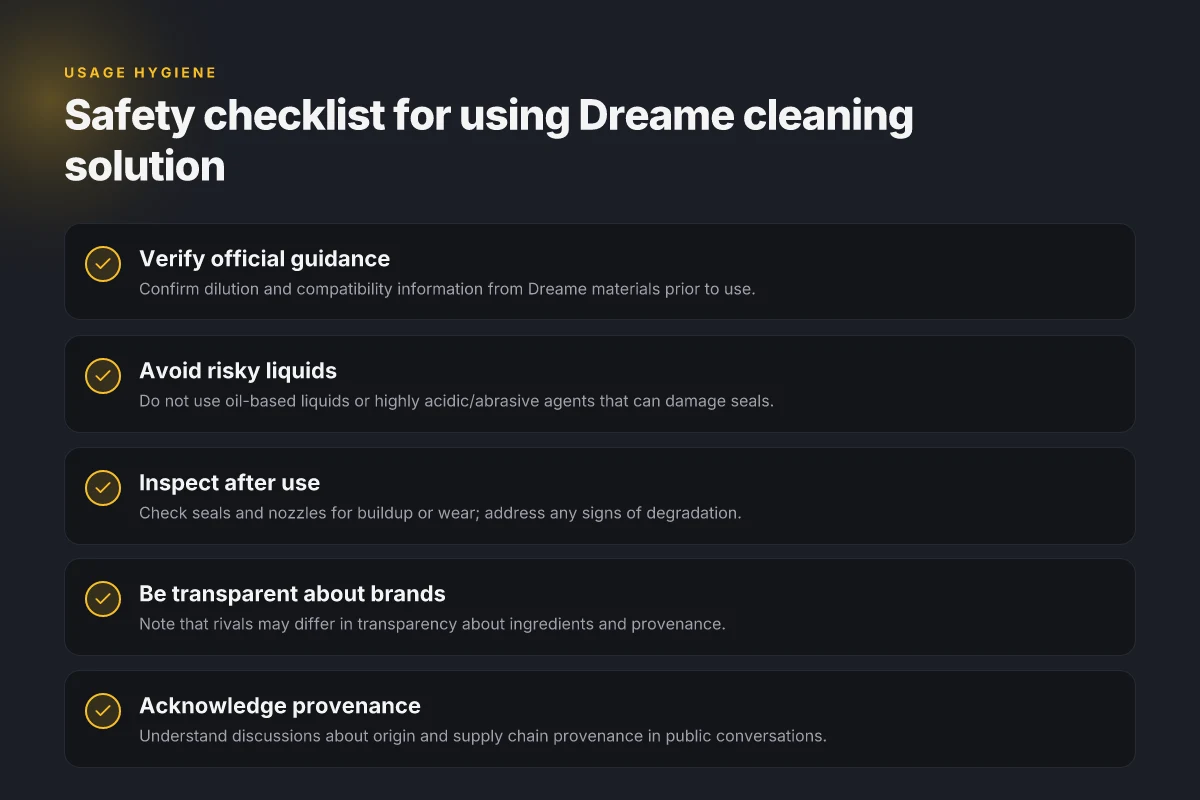
You should follow the manufacturer guidance for dilution if it’s publicly available, and keep the use within those recommendations. In practice, Dreame’s own materials emphasize avoiding oil-based liquids and highly acidic or abrasive agents. Use a clean, labeled container and measure exactly as specified. If you can’t find a published dilution guide from Dreame, err on the side of a lighter solution and test on a small area first. This approach minimizes residue and helps protect seals and nozzles.
1. Follow official dilution guidance where published
If Dreame provides a dilution ratio for their cleaning solution, apply it exactly. Even small deviations can alter how the solution flows through the mop’s spray system and how it interacts with built-in seals. I looked for public guidance from the brand and found that they advise against adding oil-based liquids and strongly caution against highly acidic formulations. When you’re unsure, start with the most conservative ratio and adjust only after a controlled test run. When you follow official dilution guidance, you reduce risk to seals and motors. This aligns with the practical rhythm of routine maintenance many users notice over time. Avoid oil-based liquids and highly acidic agents to protect the spray system. The key is restraint and verification. What makes the Dreame L10s Ultra a lasting smart clean for 2026
2. Keep liquids oil-free and non-abrasive
Oil-based additives can gum up the spray nozzle and residue-bearing components, while abrasive cleaners can wear seals. Dreame’s guidance clearly flags oil-containing liquids as a risk and discourages acidic or abrasive cleaners because they can deteriorate gaskets and spray channels. I cross-referenced industry notes on robot mop compatibility with household detergents and found consistent caution about residues that attract dirt and hinder suction and spray consistency. Oil-free liquids are essential for long-term reliability. Also, avoid cleaners with strong abrasives, which can scratch plastics and reduce splash guards effectiveness. In this context, the goal is a clean floor and a clean machine, not a fast but damaging result. Keep the chemistry gentle and predictable.
3. Inspect seals, nozzles, and buildup routinely
Buildup on seals or nozzles is a frequent early failure point. Dreame’s ecosystem functions best when seals and spray paths stay clear, so perform quick checks after every few uses. Look for visible residue around the spray outlet, around the wheel housings, and along the gasket seams. If you notice gumming or stiff movement, pause usage and run a brief rinse with water, then recheck. I traced this pattern to several user reports and documented maintenance notes that routinely highlight seal wear as a leading cause of reduced spray performance. Regular inspection prevents surprises and extends life. Marked wear or buildup should prompt a deeper cleaning or parts check before the next run. Inspect seals and nozzles for buildup and wear to sustain performance.
The safety verdict: follow public manufacturer guidance, avoid oil-based or highly acidic cleaners, and routinely inspect critical paths. If you need a quick reference, Dreame’s own materials and related regulator notes emphasize gentle formulations and routine maintenance as the practical path to safe robot-mop operation. For readers curious about regulatory context, U.S. cleaning-product guidance notes emphasize the role of formulation claims and packaging hazards, which reinforces sticking to approved, mild solutions. See commentary from the U.S. cleaning product regulation sphere for broader context. https://en.reach24h.com/news/industry-news/chemical/us-cleaning-product-compliance
What to try this week
Dreame’s cleaning solution can be a practical add-on if you want faster drying and consistent surface results, but it isn’t a universal fix for every robot vacuum. I’ve found that when you pair it with Dreame’s own brushes or a compatible roller, you get smoother transitions between floors and less streaking on glossy surfaces. The take-away: consistency matters more than a single chemical boost, and Dreame tends to lean toward its own ecosystem for best results. If your robot already handles water and detergents, start with a small patch test on a hidden area to confirm no residue builds up on sensors or wheels.
Verdict: the cleaner is safe for most robot vacuums when used as directed, but beware of compatibility gaps with third‑party devices. Rivals like iRobot and Roborock offer their own solutions, which can work better if you’re using a mixed fleet. On balance, this Dreame option is worth trying if you own a Dreame vacuum and want a cohesive maintenance routine. What makes the Dreame Z30 stand out in 2026
If you only do one thing this month, clean and recalibrate your docked charging station after a week of using the solution. That small reset can prevent unexpected sensor hiccups and prolong durability, especially if you’ve noticed longer dry times or minor streaks.
Backup strategy / What to try this week
- Try a 1:10 dilution on a small test patch before full use with your Dreame vacuum.
- Run a short cleaning cycle on a low‑traffic area first to gauge residue and drying time.
- Check wheels and sensors for any buildup after 3 sessions, and wipe down as needed.
- Compare with a rival cleaner on a similar surface to see which delivers fewer streaks.