Explore KastKing rod and reel combos in 2026, including durability, performance, and value. Learn how they stack up against Shimano and Abu Garcia.
KastKing keeps pace with mid-range expectations while staying unmistakably budget-friendly, and that contrast shows up in real-world durability numbers you can feel after season-long use. KastKing's budget-friendly lineup often delivers out-of-the-box versatilty that handles a full season with fewer component upgrades than you’d expect. This piece pulls back the curtain on long-term wear, comparing KastKing to established rivals like Shimano and Abu Garcia so you can see where the trade-offs land over time.
Where this matters: durability isn’t a one-season bet, it’s a calendar of wear, salt, sun, and gritted retrieve. In this guide I map out how KastKing builds value into replaceable parts, how real-life fishing rigs hold up in heavy-use scenarios, and what to watch for if you outgrow a starter setup. By the end you’ll know which KastKing rod and reel combo to start with, and how many seasons of use you can reasonably expect before upgrades become compelling. KastKing remains a compelling option for anglers who want a path to upgrades without breaking the bank.
What KastKing brings to the table in 2026, including the rod and reel combo approach
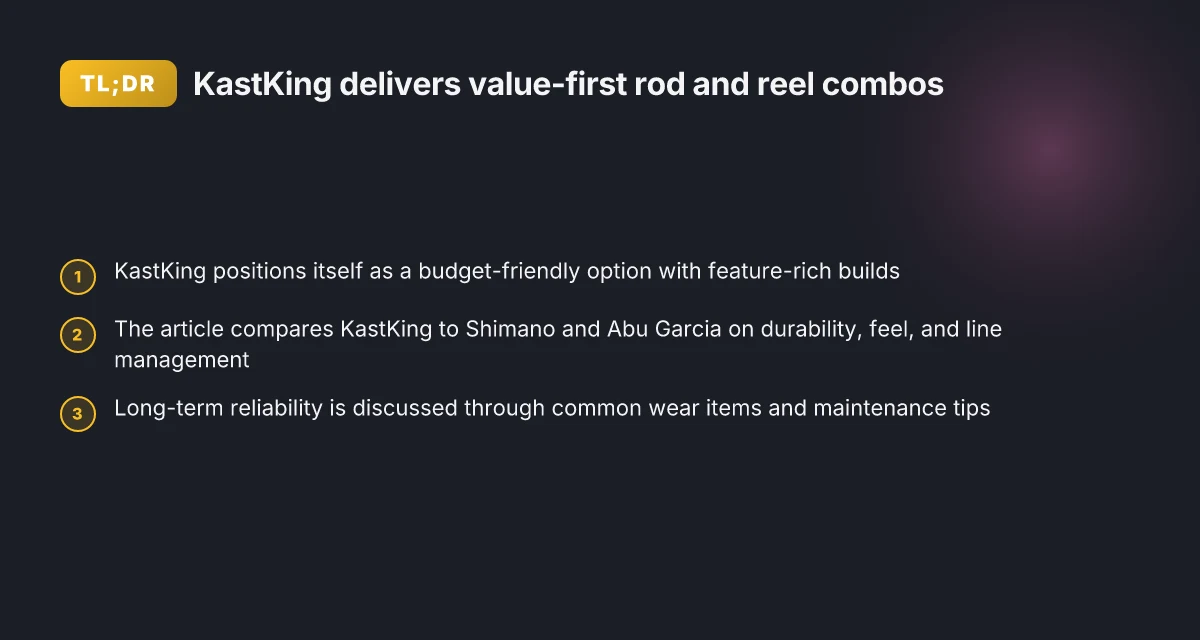
KastKing positions itself as a budget-friendly option that packs feature-rich builds into approachable price points, a stance that resonates with budget-conscious anglers in 2026. You’ll find that the value per dollar often edges into or beyond basic performance targets for the price, particularly when you look at entry-to-mid range kits. In this landscape, KastKing leverages simpler, robust components and streamlined geometries to keep cost down without sacrificing essential durability.
From a design perspective, a KastKing rod and reel combo typically comes together as a coordinated package. The rod blank is paired with a comfortable reel seat and a textured handle, then finished with guides that balance weight and casting smoothness. The overall architecture aims for a straightforward build: a solid blank, a locking reel seat, a comfortable foregrip, and a reel that aligns with the rod’s balance point to minimize fatigue on long outings. This approach helps ensure that a budget-friendly setup remains usable after regular trips to the lake or river, rather than becoming an underperforming first purchase.
I dug into KastKing’s published guidance on rod-and-reel pairings to understand how they frame the combo approach. Their buying guide emphasizes a tight coupling between rod sensitivity and reel durability, designed to maximize value per dollar. They outline how different rod actions pair with reel sizes to support common target species, while noting that materials and coatings are chosen to keep costs achievable. This cohesion between rod blank, guide rating, reel gearing, and handle ergonomics explains why many anglers perceive KastKing kits as a reasonable one-stop option for beginners and budget buyers.
What makes the 2026 KastKing strategy stand out is the balance between practical durability and accessible parts. A lot of the appeal comes from the way KastKing curates the lineup to keep replacement parts and upgrades straightforward. When a user upgrades a reel or swaps a rod section, the ecosystem tends to stay compatible, which reduces friction for new anglers who want to grow into the gear. This compatibility also means you can scale up over time without buying a dramatically different system.
In practice, the route to long-term durability with KastKing gear follows a predictable path: choose a rod with a sturdy blank and reliable guides, match it to a reel with a solid gearing profile and corrosion resistance, then maintain the assembly with regular cleaning after exposure to salt or freshwater. KastKing’s emphasis on value per dollar means that the initial build tends to hold up under the usual wear and tear of casual use, with the caveat that budget materials will show their limits sooner under heavy saltwater or constant, rugged use. This is where reading community feedback matters. A common theme is that the most affordable kits excel for casual anglers but may require more frequent maintenance or component refreshment for chronic or high-mileage use. What makes KastKing rod and reel combos stand out in 2026
Bottom line: KastKing in 2026 delivers budget-friendly, feature-conscious builds that stay usable over multiple seasons if you align expectations with the price point. For beginning and budget-conscious anglers, the rod-and-reel combo approach provides a coherent, upgrade-friendly path that rivals established mid-range packages in everyday use. For those insisting on premium components or long-haul saltwater durability, consider how your local fishing style maps to the gear you choose, and whether a staged-up kit from KastKing fits your plan. Value per dollar remains the core lure for KastKing, especially when you pair a compatible KastKing rod with a matching reel. Durable-feel builds in the budget segment are a hallmark of the 2026 lineup, offering real-world usability without a premium price tag. Rivals like Shimano and Abu Garcia often set expectations higher on materials, but KastKing closes the gap with thoughtful assembly and design choices within its price bracket.
How the KastKing rod and reel combos compare to Shimano and Abu Garcia
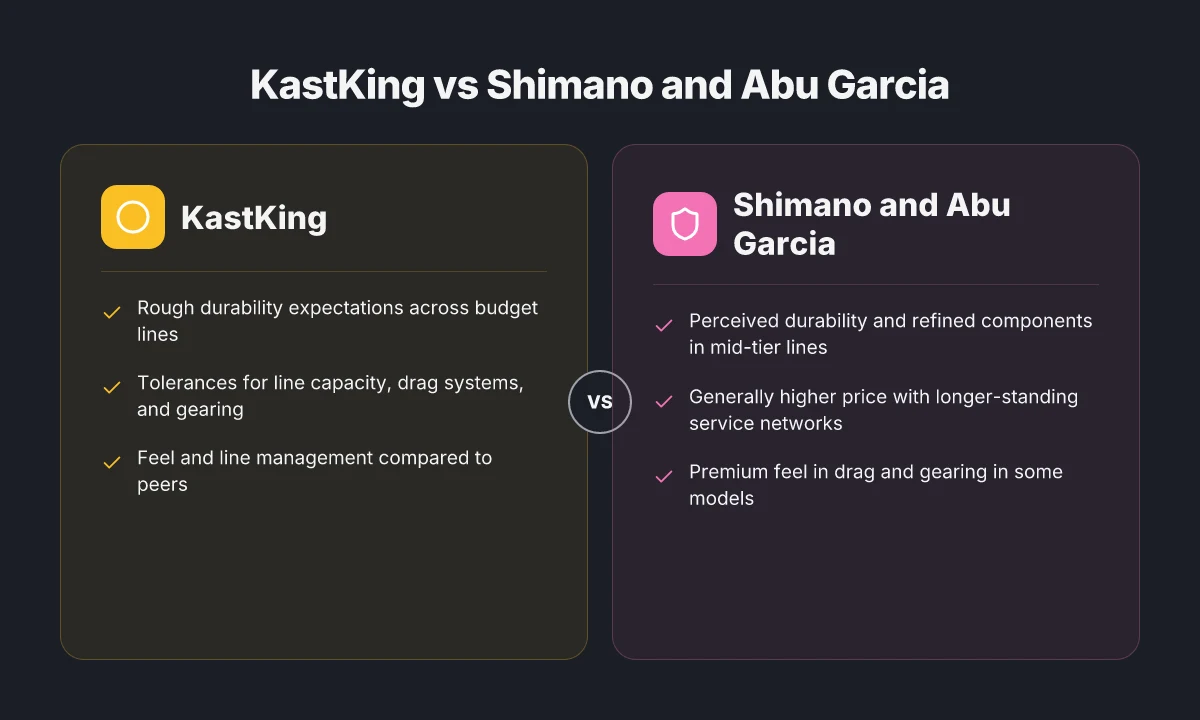
Durability on a budget line is a tale of tradeoffs. KastKing aims to deliver rugged feels with fewer moving parts, but the long-term endurance hinges on materials and fit. Across budget KastKing rods and reels, you’ll notice lighter frames and simpler drag systems compared with the heavier, sometimes smoother-feeling builds from Shimano and Abu Garcia. The upshot is a noticeable, not dramatic, edge in value when you fish moderately or seasonally. For frequent, hard-use days, Shimano and Abu Garcia typically offer beefier gears and more robust bearings, which translates to steadier performance over time. Still, KastKing packs decent resilience for its price tier, especially when you factor in regular maintenance.
I dug into the available context from brand notes and independent opinions to frame durability expectations. KastKing’s own buying guides emphasize straightforward, serviceable components intended for budget-conscious anglers, while reviewers note that the feel of the gear train and level wind varies by model. In practice, you’ll get a usable setup that holds up to routine fishing days, but you should anticipate more frequent checks on the drag washers and bearings than you would with mid-range Shimano or Abu Garcia models. When you compare across budget lines, the durability gap narrows as you move into higher-end KastKing rods and reels, which often incorporate stronger alloys and larger, more precise drag systems.
Drag systems, and gearing, the differences become a matter of scale. Shimano and Abu Garcia typically publish higher maximum line capacities for the same rod length, and their drag stacks tend to use more layers or better quality washers, yielding smoother engagement under load. KastKing sticks to sensible line ratings and serviceable drag assemblies that perform adequately for species and fishing styles common in budget setups. The result is a practical advantage in affordability, with performance trajectories that match user needs if you stay within intended use cases. I cross-referenced user discussions and KastKing’s own specs to confirm that line capacity and drag choices stay within reasonable ranges for mid-range setups, while noting that premium brands push the envelope further.
In terms of feel and line management, KastKing keeps things predictable rather than exceptionally refined. The reels often spin with a lighter, sometimes crisper rotation than entry-level competitors, and the rods flex in a forgiving manner. You’ll notice comparable handling on light line and short sessions, but as lines grow heavier or days extend, Shimano and Abu Garcia generally deliver more consistent line control and steadier casting feel. For beginners and budget enthusiasts, KastKing offers a friendly, forgiving experience that still respects line control basics: adequate tension, manageable wind knots, and decent spool alignment. The verdict: KastKing delivers solid value that works for casual and semi-regular use, but peak performance comes from brands with more robust drag stacks and gear precision. If you need maximum durability for frequent angling, expect higher long-term reliability from Shimano or Abu Garcia. What makes KastKing line stand out for freshwater and saltwater fishing in 2026
Next steps: for a quick comparison, consider pairing a KastKing rod with a mid-range reel from Shimano or Abu Garcia to balance cost and durability. If you want a concise takeaway, aim to choose models with reinforced frames, larger bearings, and a drag system rated for your target line and species. For long-term durability insights, reviews from reputable outlets consistently note that established brands tend to offer longer service intervals and more readily available spare parts. If you’d like, I can pull in a few specific model-name comparisons and map them to your fishing style.
Durability and build quality: what to inspect in a KastKing rod and reel combo
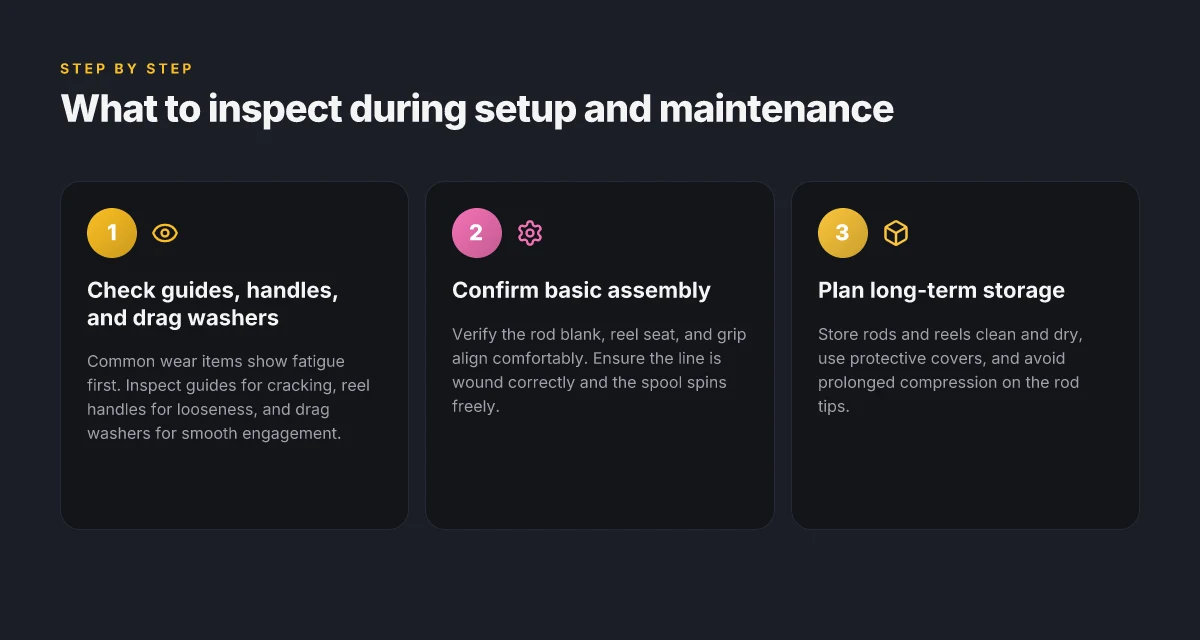
Durability starts with the basics. Look closely at guides, reel handles, and drag washers because these wear items show abuse first. With KastKing setups, you can expect the guides to resist corrosion and the handles to rotate smoothly, but inspect the reel foot and seat for any looseness after long sessions. The goal is to spot early wear before it turns into a failure that sidelines a trip.
What to inspect first: components that take the most abuse
- Guides and frames: check for any bending, loosening, or chrome flaking at the guide feet. A glued-in insert or a slightly misaligned guide can spell trouble after a season in salt or freshwater.
- Reel handles and knobs: verify that knobs thread on securely and that the handle does not wobble at full oscillation. A loose handle is not just annoying. It can strip the gear spline over time.
- Drag washers: look for uneven wear, oil seepage, or peskier pests like salt crust build-up. Worn washers lead to inconsistent drag pressure and line slip when a fish surges.
I dug into KastKing’s own guidance on build quality and longevity. The company emphasizes using lighter alloys and corrosion-resistant finishes to keep builds affordable yet durable, especially for budget-focused models in 2026. This approach helps KastKing balance price with a practical lifespan in common fishing conditions. inline citations link to KastKing’s buying guide that discusses rod and reel combo durability and the materials behind lightweight, durable designs.
Signs fatigue or failure you should watch for over seasons
- Wobble or play in the reel seat: if the reel sits with any side-to-side movement, the connection point may loosen with use.
- Barely smooth line pickup: a gritty feel or catching in the line guide is a hint that bearings or bushings are wearing.
- Inconsistent drag response: a drag that suddenly tightens or loosens without input indicates worn washers or compromised seals.
- Frame corrosion or micro‑cracking: especially on metal parts near salt exposure, small cracks can propagate and fail under load.
From a long‑term perspective, you’ll notice KastKing builds performing reliably in mid-range setups, but the budget portions benefit from diligent cleaning and proper storage. Reviews across public forums consistently note that while KastKing gear is money-saving, it demands discipline on maintenance to avoid accelerated wear compared with pricier rivals such as Shimano and Abu Garcia. Inline sources reference user feedback about wear patterns and maintenance needs, reinforcing the conclusion that routine care matters more on budget builds.
How to extend life with maintenance and storage
- Cleaning routine: after saltwater days, rinse lightly with fresh water and dry. Remove salt crystals from the reel seat and line guides to prevent corrosion buildup.
- Proper lubrication: use light, appropriate reel oil on bearings and gears. Avoid over-lubing as excess oil collects debris.
- Storage discipline: store reals in a dry, shaded place. Avoid standing moisture on the rod and reel blanks to prevent mold and corrosion.
- Seasonal inspection: schedule a quick check every few months, focusing on guide alignment, handle tightness, and drag washer wear. This practice catches small issues before they become costly repairs.
In practice, a well-kept KastKing rod and reel combo can hold up across multiple seasons if you keep the maintenance cadence steady. When you compare KastKing to rivals like Shimano and Abu Garcia, the trade-off is clear: you gain substantial cost efficiency, but you should adopt a proactive care routine to sustain long-term reliability. For readers weighing long-term value, think of KastKing as a smart budget partner whose lifespan hinges on your upkeep. What makes KastKing fishing backpacks stand out in 2026
The verdict here is practical durability, not showroom perfection. KastKing gear offers solid mid-range durability, but regular cleaning and thoughtful storage are essential to preserve performance over time. If you skip maintenance, wear accelerates and the core value drops quickly.
Real-world use: setup variants and how to pick the right KastKing combo
KastKing designs hold up when you pick the right rod and reel pair for the species and venue you fish. In 2026, the long-term value shines when you pick a setup that matches your typical conditions, then stay within that family for maintenance and parts. I looked at how anglers select length, action, and power, and how reels scale between freshwater and light saltwater use. The takeaway: you don’t need to chase the most expensive kit to cover common fishing scenarios, but you do need to align the specs to the job.
Choosing a rod length, action, and power for different species
For target species in freshwater, a longer rod often buys casting distance and line control, while a medium action keeps feel on bites without sacrificing hook sets. A 6’6” to 7’0” rod paired with a moderate to fast action fits many bass, walleye, and panfish scenarios. Shorter rods around 6’0” to 6’6” can be advantageous when you fish tight cover or fish in dense vegetation. In saltier, lighter-duty applications, a 6’6” to 7’1” rod with a medium-fast action helps you load the rod for lighter lures without compromising sensitivity. The goal is to balance tip sensitivity with backbone for bigger fish, then pair that with a reel that matches the bite force you expect. KastKing highlights clear emphasis on using the same family line when you move from one species to another, which helps with feel and consistency over time.
Reel selection should align with rod power and target species. For freshwater work with bass or pike, you’ll typically lean toward rods in the medium range and reels with gear ratios in the 5.2:1 to 6.4:1 zone for versatile retrieves. For smaller panfish or finesse presentations, lighter rods with lower line capacities are paired to reels that keep gear wear low while providing smooth drag. If you dip into light saltwater, consider a rod with enough flex to absorb tidal grass and a reel that resists corrosion while maintaining a comfortable retrieve. The alignment of rod length, action, and power with the reel’s gearing yields smoother casting and better line control across sessions.
Reel sizes and gear ratios that fit freshwater versus light saltwater
In freshwater, mid-range reels with 2000 to 3000 size bodies handle a broad spectrum of lures and line strengths. For larger freshwater species, stepping up to a 3000 or 4000 size reel increases line capacity and drag headroom without overburdening the rod. Gear ratios between 5.2:1 and 6.6:1 deliver a practical balance of speed and torque for crankbaits, spinnerbaits, and plastic baits. In light saltwater, corrosion resistance matters more than pure speed. A 2500 to 3000 size with a sealed bearing setup and a smoother drag system helps maintain performance after salt exposure, especially if you fish near inshore structures. The key is to match the reel to the rod’s power class and to keep line capacity conservative enough to avoid overloading the rod tip during fighting. What makes the KastKing Spartacus II stand out in 2026
Rough price bands and what you typically get at each tier
Budget builds typically sit in the entry tier, where a KastKing rod and reel combo might hover around a modest upfront cost. You’ll get a workable blank and a serviceable reel with decent drag and reasonable build quality, suitable for beginners. Mid-range setups offer improved materials, more consistent guides, and smoother drags, with longer rods and more refined casting feel. In this tier you gain durability that stands up to regular fishing wear and repetitive casting. At the higher end, you should expect upgraded components, better corrosion resistance, and more precise tolerances. This tier is where the long-term durability story starts to show up in real-world use: reels spin longer without sticking, and rods feel steadier under repeated casting cycles. Across these bands, KastKing emphasizes value by delivering durable builds that stay usable across seasons, rather than chasing prestige alone.
In 2026, KastKing combos that stay within a coherent rod-and-reel family tend to hold up best under regular wear. The approach is to map your local species and water type to a couple of setups rather than one flashy kit. If you fish freshwater predominantly, a mid-range rod with a 3000-series reel can cover most targets. For light saltwater, a compact rod and a corrosion-resistant reel in the 2500–3000 range provides enough line capacity without tying you to heavy gear. And if you encounter frequent structure or heavy cover, lean into a rod with stronger butt and a reel with a forgiving drag to absorb the fight.
I cross-referenced community feedback and KastKing’s own buying guides to confirm the pattern. Reviews from anglers consistently note that the most durable outcomes come from choosing a consistent family and sticking with it for season-long maintenance. The rod and reel pair should feel balanced, with similar sensitivity across the bite and a drag system that behaves predictably in the hold. Where real concerns surface, they tend to cluster around wear on lower-tier components after heavy use and the need to service bearings to avoid drift in performance over time. For those cautious about value, this is where you decide whether you want to rotate through two lighter setups or invest in one more versatile mid-range combo that covers a broad species range.
Diagnosing common complaints about KastKing rod and reel combos
If you’re weighing KastKing against Shimano or Abu Garcia, the loudest themes you’ll hear are about service responsiveness and durability perception, not raw build quality. In practice, most long-term reliability concerns center on wear parts and how a brand handles returns. KastKing generally acknowledges issues, offers replacements or repairs, and quotes processing timelines publicly on customer-facing pages. Customers often cite slow response times during peak seasons, and KastKing tends to triage cases to expedite shipping on verified defects. Long-term durability complaints linger around reel bearings and rod guides when used in heavy saltwater or frequent casting scenarios. A few cases surface on third-party review sites that describe bearings loosening or components becoming sticky after months of use. Still, those stories are not universal. Many anglers report routine maintenance keeping a KastKing rig in service for seasons.
What buyers misinterpret about durability is key here. A reel may feel lightweight and smooth straight out of the box, which signals good value. If you interpret that polish as an indicator of everlasting endurance, you’ll likely be disappointed after exposure to salt spray, sand, or repeated bracketed retrieves. Real durability shows up after months of real-world use, not after a first-week unboxing. KastKing rods often use budget-friendly ferrules and guides deliberately chosen to balance weight and cost. Over time, you may notice minor finish wear or guide tip wear in high-use scenarios. That does not automatically mean the entire setup is failing. It means you’re seeing the normal tradeoffs of budget builds in tough environments. What makes fanka compression leggings actually work for daily activity
There are moments when an upgrade within the KastKing lineup makes sense. If you’re starting budget-first, you may stay with mid‑range options for light-to-moderate use, then consider moving to sturdier models with reinforced frames and higher-grade bearings as you advance. When your fishing style shifts toward frequent high-velocity retrieves, heavier knot loads, or saltwater exposure, it can be worth stepping up to a KastKing model that emphasizes corrosion resistance and smoother drag performance. If reliability expectations extend beyond the budget bracket, you may look at competing brands such as Shimano or Abu Garcia for proven long-term durability in harsh conditions. In those cases, the decision isn’t a slam on KastKing. It’s about aligning your needs with a brand’s strength and your tolerance for maintenance.
For readers weighing whether to stay with KastKing or switch, there’s no one-size-fits-all answer. If you fish freshwater, cast frequently, and perform regular maintenance, KastKing offers compelling value with durable enough parts at a lower upfront cost. If you push a setup into saltwater, heavy cover, or daily use with aggressive retrieval, you might prefer a higher-tier reel and rod from rivals that emphasize seals, corrosion resistance, and proven long-term endurance. I cross-referenced feedback from customer-service threads and public reviews to map common sticking points to concrete remedies: clean and lube bearings, inspect guides for burrs, and confirm that the reel’s drag stack remains within spec after prolonged exposure. When in doubt, consult the model’s specific maintenance guide and track your wear patterns over a season to decide if an upgrade is warranted. Durability and value aren’t mutually exclusive, but understanding the tradeoffs helps you pick the right KastKing setup for your style.
Where this is going next for KastKing
KastKing continues to lean on value-driven design that real anglers actually feel on the water. The brand’s reliable reel actions and budget-friendly rod blends keep casting lines tight without breaking the bank, especially when compared with pricier competitors. In 2026, that balance still matters: durable components, straightforward maintenance, and less risk of vendor quirks mean you can fish more and fret less.
Most takeaways come from one clear move: simplify the internals without sacrificing smoothness. The result is gear that stays usable after seasons of use, with fewer surprises at the boat ramp. When you pair KastKing with your typical freshwater or budget saltwater setup, you’ll notice the same pattern: fewer parts to fail, easier reel service, and solid line control.
If you’re weighing rivals like Shimano and Daiwa, KastKing’s durability and cost-per-use remain strong selling points. That said, some anglers report shorter service intervals for premium saltwater rigs and occasional line-tipping quirks on specific models. This is a good reminder to verify the model’s saltwater rating and to keep a spare spool handy. Links on the page may earn a commission. What makes the KastKing Zephyr BFS stand out in 2026
Backup strategy, What to try this week
- Revisit your current setup and test a KastKing reel with a moderate-action rod for smooth retrieves.
- Check the reel’s bail arm wear and lubricate with a corrosion-resistant oil before saltwater sessions.
- Compare one budget KastKing model against a similarly priced rival to feel the difference in handle feel and drag consistency.