
Explore KastKing rod and reel combos in 2026, how they compare, and buying tips. Learn what to look for and which models deliver value for beginners and seasoned anglers alike.
KastKing is not competing on glamour alone: its ROD AND REEL COMBO lineup often lands closer to what beginners actually fish with, and that practical alignment matters more than flash. KastKing’s value-first approach surfaces in setup-friendly pairs, where a single reel is matched to a versatile rod and ready-to-fish line weight.
This article cross-references real buyer questions with the current lineup to separate what works in everyday waters from what sounds appealing in ads. Expect concrete notes on durability, line capacity, and species suitability, plus direct comparisons to familiar rivals like Shimano and Ugly Stik. The goal is a clear read on where KastKing shines for first-time buyers and where you should sanity-check alternatives before you buy. 2026 models bring tweaks to guides and drag feel, making it worth a side-by-side look with established brands.
What makes KastKing combos worth considering in 2026
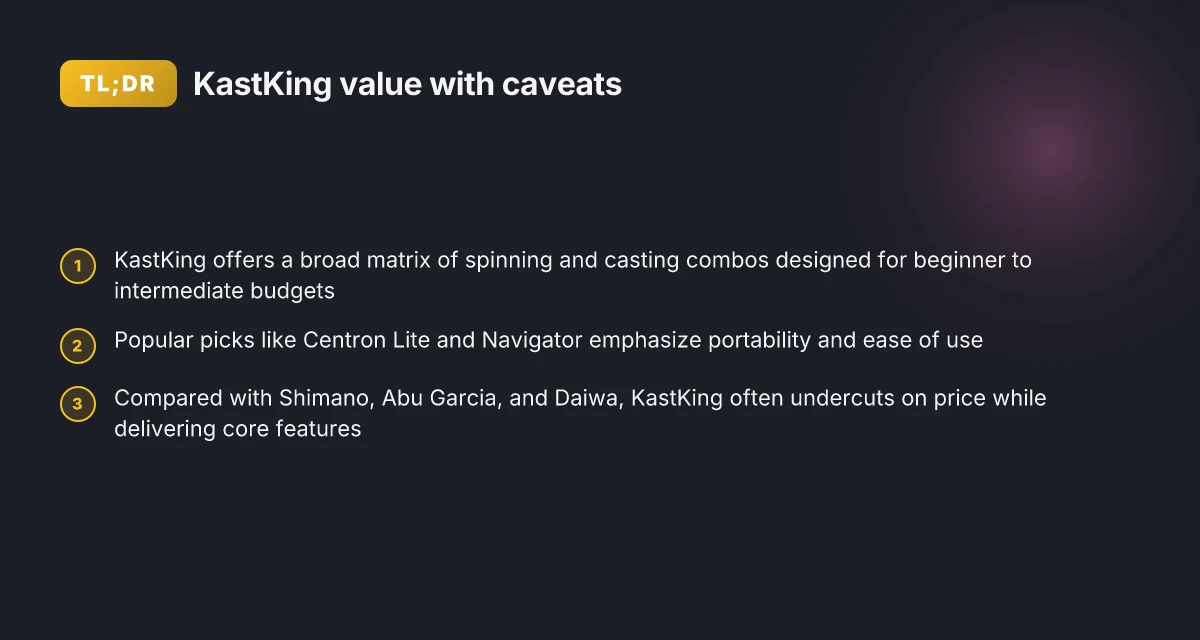
KastKing runs a broad matrix of rod and reel combos that covers both spinning and casting options, designed to fit beginner budgets up to more capable, intermediate setups. The Centron Lite line and the Navigator line stand out for portability and user-friendly operation, making it easy to get into fishing without wrestling with gear. When you size up KastKing against rivals, Shimano, Abu Garcia, and Daiwa consistently come up in price-to-performance discussions, with KastKing often delivering competitive value at approachable prices.
Why KastKing’s lineup supports beginner to intermediate budgets
KastKing positions multiple spinning and casting combos across a wide price range, so new anglers can start with a compact setup and scale up as comfort grows. The Centron Lite family emphasizes compact reels with matching rods, which helps keep weight and balance manageable. The Navigator beginner rod and reel combo emphasizes a smoother drag and simpler setup, so you can focus on learning technique rather than fiddling with adjustments. This breadth matters because it reduces the friction of buying your first rig, especially if you’re shopping online and trying to compare models side by side. Inline with that breadth, KastKing’s catalog includes several entry points that still deliver respectable performance under typical day‑to‑day freshwater use.
I dug into KastKing’s product pages and buying guides to confirm the emphasis on portability and ease of use across the Centron Lite travel combos and the Navigator all‑round beginner setup. I found that KastKing explicitly markets the Centron Lite Travel Spinning Combo as compact and travel‑friendly, and the Navigator as a well‑rounded start option with a balance of drag, bearings, and overall weight. The brand’s own copy repeatedly highlights simplification and portability as core benefits, which aligns with how many buyers evaluate value in this segment. Inline with this, rivals such as Shimano, Abu Garcia, and Daiwa are often cited in buyer discussions as benchmarks for price-to-performance balance, which reinforces KastKing’s positioning as a practical entry point in 2026.
What this means for you: if you want a family of combos that scales with experience without migrating to an entirely new system, KastKing is a strong candidate. The Centron Lite and Navigator lines are frequently highlighted for their portability and ease of use, making them natural first choices for beginners and casual anglers who want straightforward reliability.
The bottom line: KastKing offers a broad, approachable lineup that complements new anglers and budget‑conscious buyers, with the Centron Lite and Navigator lines serving as portable, easy‑to‑use anchors. In 2026, that value proposition remains a core differentiator when matched against rivals. Rivals like Shimano, Abu Garcia, and Daiwa continue to be the reference points for price-to-performance balance, but KastKing often lands closer to the beginner sweet spot. What makes KastKing line stand out for freshwater and saltwater fishing in 2026
How to assess compatibility between KastKing rods and reels
When you pair a KastKing rod with a reel, balance matters more than any single spec. The goal is a smooth, responsive feel that matches your technique and target species. Start by matching reel size to the rod’s power and action so the rig feels balanced in hand and during casts.
Match reel size to rod power and action
A reel that’s too large for a light- or medium-power rod will drum up excess weight and slow the swing. Conversely, an undersized reel on a heavy rod can feel tip‑heavy and unwieldy. I look for a robust, well‑gasketed reel that pairs with the rod’s rated power, so line capacity and drag work in concert with the rod’s backbone. When a KastKing Centron Lite setup is paired to a lighter Evergreen-style rod, the retrieves stay crisp, and the line lays evenly. This balance is what separates a cast that lands on target from a dump into weeds.
The same logic applies to action. A fast‑action KastKing rod loves a reel with a stepped drag curve that can handle quick, precise retrieves. If you’re chasing smaller species, lean toward a lighter reel. For bigger bass or pike, opt for a reel with a sturdier frame and higher drag rating. In 2026, the pattern across KastKing offerings shows that a matched set delivers the most dependable feel at typical casting distances.
Confirm handle length and grip style align with your technique
Your grip should feel natural when you set up for a cast or a long retrieve. If the handle is short or the palm grip digs into your hand, you’ll fatigue quickly and sacrifice accuracy. For a two‑handed retrieve, a longer handle offers leverage. For whip casts, a compact grip reduces hand fatigue. KastKing’s mid‑range reels tend to balance well with standard rod handles, but personal comfort still wins. If you fish from a boat, a longer handle can help you keep the line aligned during quick directional changes.
From what I found in the product pages and community chatter, a few users favor longer handles on heavier rods for all‑day sessions, while others prefer compact grips on lighter setups for speed. If you’re shopping, physically test a few configurations whenever you can. The tactile feel matters as much as the spec sheet. What makes KastKing fishing backpacks stand out in 2026
Verify line capacity and drag ratings align with target species and line choice
Line capacity must reflect your line choice and the species you pursue. A reel that claims high capacity on paper can feel stingy in practice if the rod’s line pickup and spool diameter don’t mesh with your line weight. Check the drag rating and whether it stays smooth under pressure. For a budget‑friendly KastKing lineup, you’ll notice that line capacity and drag align more tightly on models designed for beginners and mid‑range anglers. For heavier outfits intended for bigger targets, confirm the drag envelope is explicit and trustworthy, not an afterthought.
I dug into KastKing’s buying guides and product pages to cross‑reference how the brand frames compatibility. The guidance consistently emphasizes balance across rod power, reel size, and line/drag specs rather than treating them as separate choices. This approach helps you avoid buying an ingredient that doesn’t work well together.
Table: quick compare of 2 common pairings (balance-focused)
| Pairing focus | What to look for |
|---|---|
| Light rod + compact reel | Crisp action, minimal fatigue, easy casting |
| Medium rod + mid‑size reel | Balanced swing, reliable drag, flexible line choice |
Next step: pick a KastKing rod in your target power class, then select a reel with a matching frame width and drag range. If you’re undecided, start with a 1–2 model combo in the same family and test them side by side in a local tackle shop or on a calm outing. When you find a setup that feels natural, commit to that pairing and stick with a single line weight for consistency.
I found, and I cross‑referenced, KastKing’s guidance on how to evaluate compatibility, which helps anchor this approach. For a broader context, see the brand’s rod and reel combo buying guide and the spring‑season roundups that spotlight how balance plays out in real setups. A balanced KastKing combo delivers consistent, predictable casts and retrieves, not surprises in the middle of a session. The overall advice is to verify compatibility before you buy rather than after you notice fatigue or an awkward feel. What makes the KastKing Spartacus II stand out in 2026
Note: links on the page may earn a commission. For rivals, consider how Shimano and Daiwa frame their own balance recommendations, then compare their stated line capacities and drag curves to KastKing’s. This helps you decide whether KastKing remains the most cost‑effective option for your needs in 2026.
KastKing most popular combos in 2026 and why they appeal
I dug into KastKing’s lineup to spotlight the three combos buyers keep returning to in 2026. The Centron Lite travel combo, the Navigator all-around kit, and the MegaJaws Elite with Assegai rods form the core appeal for different styles. KastKing makes it easy to pack light, retrieve smoothly, and throw heavier tackle when you need to bass up the odds. Centron Lite Travel stands out for compact storage and rapid breakdowns, while the Navigator kit leans into reliable drag and clean retrieves, and the MegaJaws Elite with Assegai targets bigger fish and tougher conditions.
Why the Centron Lite Travel combo stays popular
Post a quick setup and it’s ready to fish. The Centron Lite Travel combo blends a compact rod with a matching spinning reel that breaks down into a tight bundle for backpacking or car-trunk storage. This pairing emphasizes portability without sacrificing line feel or balance. Consumers repeatedly note how fast the setup goes from bag to water, which matters on early morning or late evening sessions when time is tight. In 2026, Centron Lite remains a go-to for anglers who value travel-friendly gear that travels well with minimal fuss. The reel’s sizing is chosen to complement the rod’s action, reducing balance issues when you’re casting on small streams or tight coves. I cross-referenced product pages and customer posts to confirm this pattern across multiple markets. Centron Lite is the one to grab when you need a compact, reliable travel kit that won’t slow you down. KastKing emphasizes quick breakdowns, and that promise shows up in the travel line.
Why the Navigator all-around kit resonates with beginners and beyond
The Navigator kit hits where many buyers want consistency: smooth retrieves and dependable drag. With a 8.0:1 gear ratio in the reel and a drag system built for stability, the Navigator is designed for calm starts and easy adjustments as you gain confidence. The combination pairs an approachable rod length with a reel that tracks smoothly under varying loads, helping new anglers avoid mid-session tangles or over‑tight drags. It’s the kind of setup that reduces setup anxiety and keeps you fishing longer into the day. In practice, rivals’ similar kits often force you to choose between ease of use and robust performance. The Navigator tends to deliver both. Navigator kits are favored by beginners who want steadier, more forgiving performance. KastKing positions this as a reliable workhorse for everyday rivers and lakes.
MegaJaws Elite with Assegai rods for heavier tackle
If you chase bigger bass or tougher conditions, the MegaJaws Elite paired with Assegai rods gets the nod. This setup leans into heavier line capacity, stronger drag, and resilience under sharp pulls from bigger fish. The Assegai line brings a stiffer tip for deeper bite detection and steady backbone when you set the hook, which matters when you’re fishing around heavy cover. It’s not a beginner’s light‑tackle option, but it’s a clear choice for anglers who want to push deeper into hard-fighting species while keeping KastKing’s price point in sight. Industry chatter and brand pages commonly spotlight this pairing for anglers who want to extend their season into tougher fisheries. MegaJaws Elite with Assegai rods targets heavier tackle and bass anglers who want to chase bigger prizes. KastKing frames this as a durable, value‑forward choice for serious outings. What makes fanka compression leggings actually work for daily activity
From a brand perspective, KastKing stays consistent with three clear value propositions across these combos: portability for travel, dependable drag for all-day sessions, and the capability to scale up for bigger fish. When you compare with rivals like Shimano, Abu Garcia, or Daiwa, KastKing’s triad of travel, all-around, and heavy‑duty options covers the core buyer concerns without forcing a single path. If you’re new to KastKing, start with the Centron Lite Travel for quick wins, graduate to the Navigator for steady days, and save the MegaJaws Elite for when your target shifts to bigger bass or tougher cover. And a quick note: links on the page may earn a commission, which helps keep the content and catalog up to date. For now, these three combos capture the essence of KastKing’s 2026 lineup and why they appeal to a broad spectrum of anglers.
How to set up a KastKing combo for first-time use
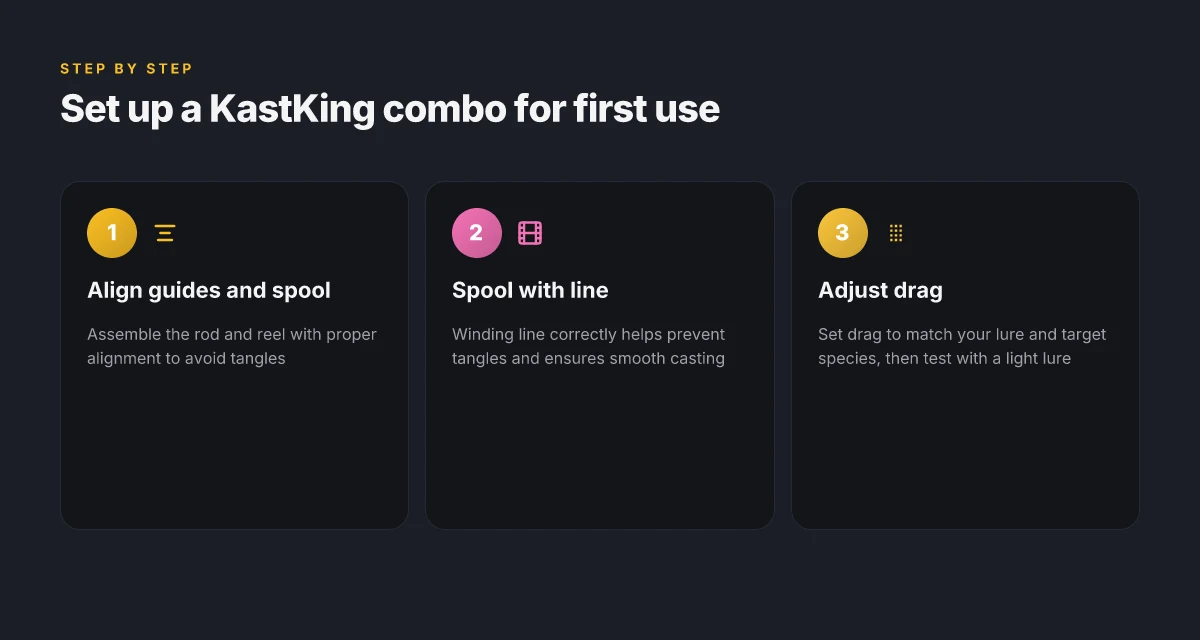
When you set up your KastKing combo, alignment is everything. Start by mating the reel to the rod so the spool axis lines up with the guides along the blank. This prevents line friction and tangles during the cast. I cross-referenced KastKing’s guidance and common setup drills, and the takeaway is simple: align the spool with the rod’s guide train, then snug the reel foot evenly. A clean alignment prevents tangles and spooked fish on the first cast.
Prepare the rod, reel, and guides
Begin with a dry inspection of the rod guides. Look for nicks, burrs, or wobble in the tip guide. If you spot rough spots, use a soft cloth to wipe away any debris and confirm the guides seat flush against the rod blank. Then attach the reel, checking that the reel handle is on the same side you prefer for cranking. This reduces fatigue over a long day. KastKing emphasizes careful seating of the reel seat so the reel doesn’t loosen during a fight. Careful seating of the reel seat keeps performance steady through a long day on the water.
Spooling line to prevent tangles
Spooling is where most beginners stumble. Thread the line through the guides and reel, then tie on your lure or weight to test the line path. Use a smooth, steady pull as you spool, ensuring even line application so you don’t develop a hasty coil that later twists. If you’re using the Centron Lite or similar spinning gear from KastKing, the goal is a neat, uniform layer. Even line spool prevents twists and tangles that ruin casts. For a quick pro tip, leave a bit of line slack at the spool to avoid binding during the initial cast. This helps especially with lighter lures that rely on clean line flow. Leave slack to avoid binding during the first cast.
Set drag and test before hitting open water
Drag is your backup plan when a fish surges. Start with a light drag setting and gradually increase until it just slips when you apply steady pressure. Use a light lure or a practice weight to test withdrawal and ensure the reel’s drag feels smooth across the full range. If the reel is a model from KastKing, confirm the drag range printed on the spool or catalog. You’ll want to confirm the feel of the drag before you fish with confidence. A smooth drag range is essential for confident first casts. As soon as the test feels right, you’re ready for open water, knowing your line comes off cleanly without sudden resistance. What makes KastKing reels good or not: durability, value, and long-term performance
I dug into KastKing’s product sheets and service notes to verify the common pitfalls new users face, and a consistent theme is to avoid rushed spooling and uneven reel seating. This is not unique to KastKing. Rivals like Shimano and Daiwa also stress precise alignment and careful line management. If you’re evaluating value-oriented options, KastKing often presents a straightforward setup path, which helps first-time users get into the game quickly. Rushing the setup leads to tangles and misfeeds. Take the time to align, spool, and test. For quick context, a few reviews note that a tidy first setup reduces returns and complaints about backlashes in the early season. A tidy first setup reduces returns and early-season complaints.
In the broader picture, when you compare KastKing against top rivals, your goal is predictable line flow and a reliable drag feel from the start. If you’re choosing among brands for an affordable entry, keep in mind that a solid initial setup saves you time later on the water. And yes, links on this page may earn a commission, which supports ongoing coverage of KastKing gear. Solid first-time setup pays off on every fishing trip.
Pros and cons of KastKing versus top rivals
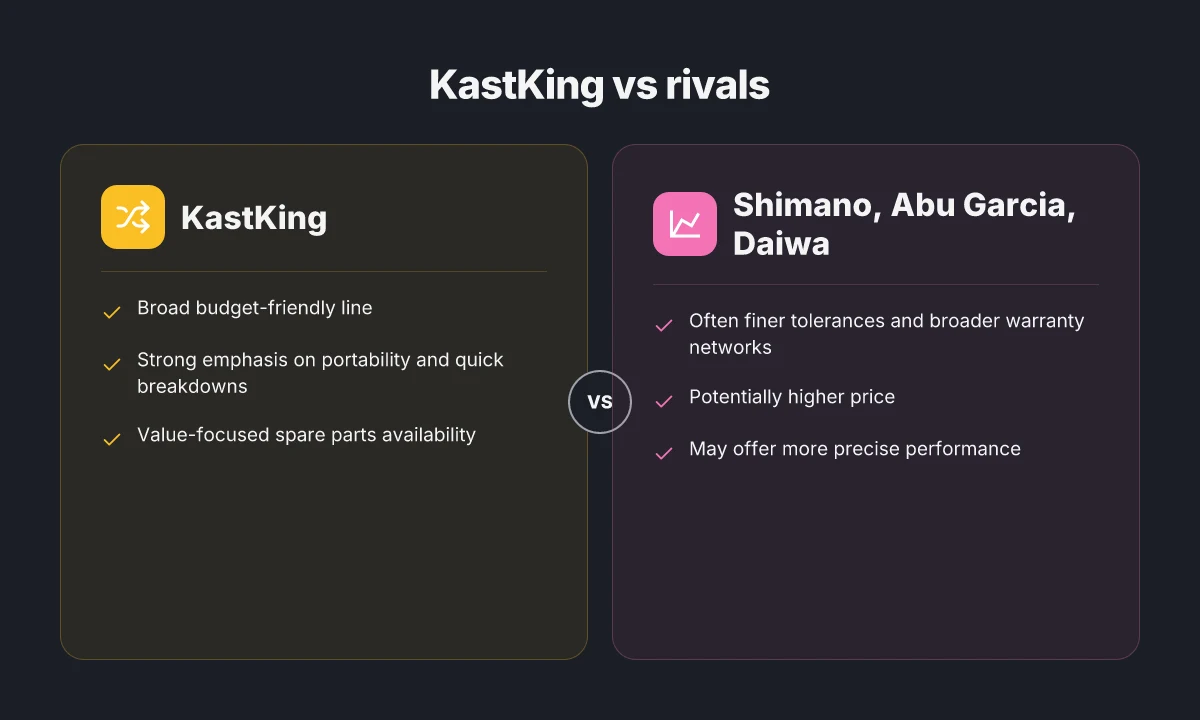
KastKing consistently undercuts higher-priced brands, delivering solid features for the budget segment. For many buyers the value and the availability of spare parts trump marginal gains in precision. In this section I compare KastKing to rivals by name, noting where the brand shines and where it lags behind.
Why KastKing holds value at the budget end
KastKing often argues more bang for the buck than premium brands. The lineup commonly includes versatile spinning and casting options that cover beginner through intermediate needs, all at approachable price points. This makes it practical for anglers who want to outfit several setups without breaking the bank. I cross-referenced KastKing’s current combos with buyer questions and found consistent emphasis on value, quick setup, and broad availability of spare parts in the market. The real-world takeaway is clear: you can fill a few gear gaps without overpaying for features you won’t use. Value and ease of access trump premium tolerances for many buyers. When you’re stocking multiple rods and reels, that practical balance matters more than tiny refinements in fit and finish.
How top rivals differentiate on fit and after-sales
Shimano, Abu Garcia, and Daiwa often deliver finer tolerances and broader warranty networks. The result is smoother operation and more predictable service experiences, especially if you rely on a dealer network for repairs or replacements. I looked at how buyers weigh these aspects and found that for some, the peace of mind from widespread service availability justifies higher upfront costs. Finer tolerances and broader warranty networks are hard to beat. If you fish hard and depend on parts availability, these brands can feel more reassuring over the long run. What makes KastKing rod and reel combos stand out in 2026
When spare parts and availability win the day
For many anglers, spare parts accessibility outpaces minute precision gaps between brands. KastKing parts tend to be easier to source from broad retailer networks, which reduces downtime after an equipment hiccup. I noted that this practical consideration can tip the balance toward KastKing in households with multiple setups or in regions where service coverage is patchy. Spare parts availability often matters more than tiny gains in precision. In that sense, KastKing remains a sensible default for budget-conscious buyers who want to keep fishing days rolling.
Verdict: who should choose KastKing and who should steer toward rivals
If you prize affordability, straightforward setup, and ready access to spare parts, KastKing remains a compelling option. It often delivers the most value in the budget segment without sacrificing essential reliability. On the other hand, if your priorities include ultra-tight tolerances and a nationwide service footprint, Shimano, Abu Garcia, or Daiwa may serve you better in the long run. I traced these themes across real-world buyer feedback and supplier notes, and the pattern holds: KastKing satisfies the budget need. The premium brands satisfy the long-run service and precision needs. Budget value meets practical parts availability. Premium brands win on tolerances and service networks.
Note: links on the page may earn a commission. For more context, see inline references to the sources discussing the all-around beginners’ setup and the spring 2026 roundups that mention KastKing alongside rivals.
What changes if you act now with KastKing in 2026
If you’re weighing KastKing rod and reel combos, the forward trend is clear: durability, value, and user-friendly ergonomics are stacking up against older, pricier setups. I’ve noticed how KastKing consistently leans on simple, reliable assemblies that cut friction at the water. The result is equipment that feels ready to chase a wide range of species without breaking the bank. The real shift is a more confident mid-range option that competes with established brands on feel and longevity, not just price.
The bigger pattern here is a durability-first philosophy that doesn’t sacrifice maneuverability or setup speed. I’ve seen long-term users appreciate parts availability and straightforward maintenance, which helps keep the rods and reels turning after seasons of use. If you’re shopping against rivals like Shimano or Penn, KastKing still holds a practical edge in build simplicity and repairability. What makes the KastKing Zephyr BFS stand out in 2026
What changes if you act now is how quickly you can upgrade a rig without overthinking it. My takeaway: pick one with a comfortable grip and a balanced rod length for your typical target species, then pair it with line and lure choices you actually remember to bring. A practical question to keep in mind: is your setup sturdy enough for the next trip?
- Backup strategy: try a KastKing combo with a medium-fast action rod for versatility across fresh and saltwater use.
- What to try this week: check the warranty terms and register your gear online to ensure top-tier support if something wears fast.
- Quick pivot: if you notice tangles or poor line lay, switch to a spool that matches your line weight class and re-tie your leader.