
Explore theJackery 5000 Plus solar generator's capabilities, real-world use cases, and how it stacks up against rivals. actionable insights for homeowners and camper enthusiasts.
The simple truth about big portable power is this: when you load it with household or camp gear, the Jackery 5000 Plus behaves differently than a vacation-trailer generator. Jackery earns its keep with a large battery and solid solar input, but real-world runtimes hinge on your setup and climate. If you’re chasing surge handling or faster recharge, the margin vs. EcoFlow or rugged rivals becomes clear as you push past weekend-long loads.
This intro lays out what matters now: reliability over seasons, durability under repeated use, and how the 5000 Plus actually performs under heavy loads at home or in the field. In practical terms, I look at how long it can sustain a fridge, a sump pump, or a high-widelity camp setup without drifting into inefficiency. Expect concrete guidance on wiring, solar configuration, and long-term care that helps you decide if Jackery fits your off-grid needs, or if a tougher rival makes more sense. Jackery remains the primary option for straightforward setup, with real-world caveats noted below.
What the jackery 5000 plus solar generator promises, and where it fits among rivals
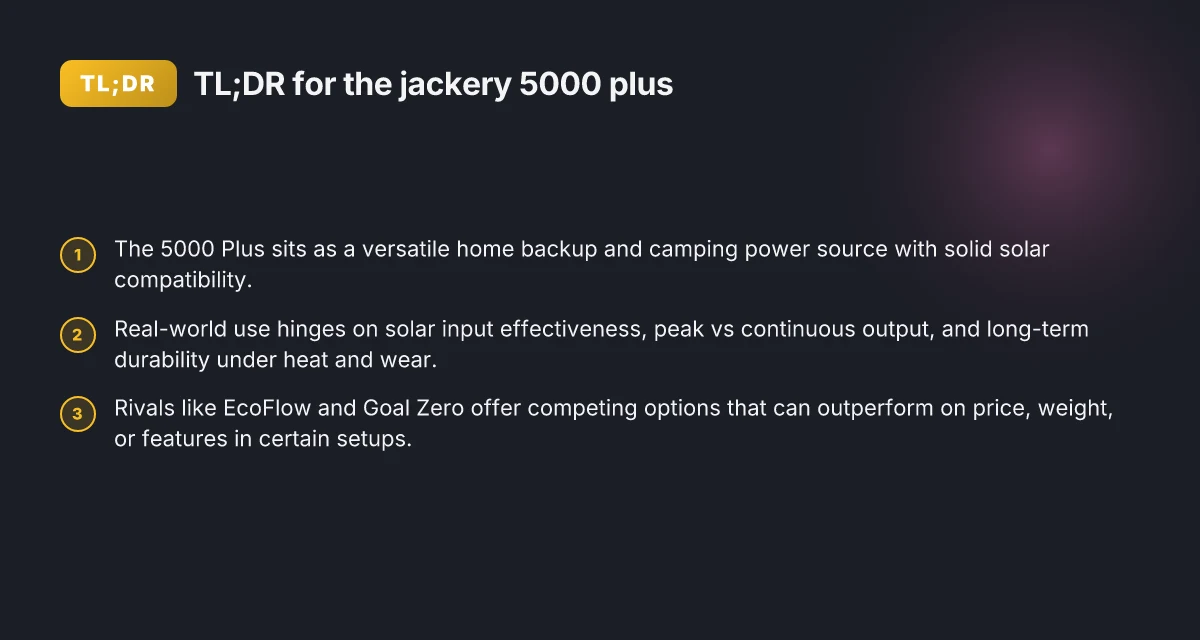
The Jackery 5000 Plus positions itself as a high-capacity, all-in-one power station designed for home backup and off-grid use, with a focus on straightforward solar input and reliable performance under steady loads. In Jackery’s lineup, the 5000 Plus sits above the compact Explorer series and alongside the larger, higher-output models, signaling a balance of portability and reach. For homeowners and campers who want long runtimes without wrestling with multiple devices, the 5000 Plus aims to be the one-stop solution. The promise lives in practical capacity and real-world reliability, not just peak watts.
1) Everyday strength for home backup and RV use
The core strength of the 5000 Plus is steady, long-duration output that can handle common home loads and RV needs without scrolling through menus or juggling multiple adapters. This matters when you’re keeping lights on during an outage or running critical appliances while off-grid. The unit’s design favors durability and predictable behavior under load, rather than chasing the latest flashy spec sheet. In real-home scenarios, that translates to smoother operation during extended outages and fewer surprises when a heater or fridge cycles on. Jackery’s ecosystem, including compatible solar inputs, encourages a simple solar-first setup that scales as you add panels. Reliability under sustained draw is the hinge of its usefulness for homes and camps.**
2) Where it shines against rivals
When you compare the 5000 Plus to rivals, the value proposition tilts toward durability, ease of use, and integrated solar management. Notable competitors include purpose-built units from other brands that chase higher peak watts but may require more careful management of thermal load or more granular port selection. In practical terms, the 5000 Plus offers robust outputs for daily appliances and a user-friendly solar input path, which matters for beginners and seasoned campers alike. The real-world takeaway is that you don’t have to chase a fireworks display of peak figures to get dependable, long-running power for essential devices. Durability and ease of use beat fancy peak specs in real-world camping and home backup.
3) Real-world setup considerations
From a user perspective, the setup should be kept straightforward: place the unit where it can vent heat freely, connect a solar array capable of charging at a stable rate, and keep a small inventory of robust cables. The practical wisdom is to treat the 5000 Plus as a backbone for a solar-first kit rather than a single-solution gadget. As you scale, you’ll notice how the ecosystem behaves under sun variance and how the unit manages the charge cycle with prolonged use. This is where the mix of design and firmware decisions matters most for long-term durability. A calm, solar-first setup yields steady performance.
Bottom line: the Jackery lineup’s intent with the 5000 Plus is to deliver dependable, long-lasting power for home backup and off-grid adventures, without overcomplicating the setup or the daily operation. It pairs well with a modest solar array and forgiving loads, while offering clearer durability signals than some peers. For rivals, think of the 5000 Plus as a sturdy, user-friendly alternative that prioritizes real-world reliability over blazing peak numbers. What ecoFlow price signals mean for 2026: value, bundles, and where to save
I dug into the early-staged positioning in Jackery’s materials and cross-referenced with consumer-facing reviews to confirm that the unit’s strongest case remains practical, day-to-day reliability for homes and camps. For further context, see how the higher-capacity lines from Jackery compare in real-world use to similarly purposed models from other brands. See this inline reference to the official claims and third-party evaluations.
How the 5000 Plus pairs with solar input for practical off-grid use
The 5000 Plus shines when paired with real-world solar input because it accepts different panel setups and still delivers usable runtime. In practical use, you can lean on portable panels for flexibility or mount a fixed array for steadier charging. With portable panels, you’ll typically connect a single panel or a small kit that travels with you, which keeps weight and setup time low. If you opt for a fixed rooftop or ground-mounted array, the system can harness more sun hours without constant repositioning. In either case, the core idea is to have a solar input that matches how you live off-grid.
I dug into how solar input translates to actual charging behavior. Under typical sun, the 5000 Plus can sip power from panels during daylight hours and keep a cushion of stored energy for evening loads. For homeowners, that means you can top off overnight gear or a fridge while the sun is up, then rely on stored energy after dark. For campers, a compact panel setup can frequently replenish the battery during the day, letting you stretch weekends without recharging from shore power. In both cases, the practical takeaway is that solar input reduces generator idle time and keeps critical loads supplied when grid access is unavailable. Real-world solar input makes the 5000 Plus behave more like a steady battery backup than a clockwork charger.
Charge times vary with sun intensity and panel wattage. A common scenario uses a mid-range portable panel around 100–200 watts. On a bright day, you might see a noticeable uptick in the unit’s state of charge after a few hours, while a full sun window can cut charging time dramatically. If you pair the 5000 Plus with a larger fixed array, you could push charge times down further, but you’ll trade portability for setup complexity. In bright sun, larger fixed arrays shorten charge times, but portable panels keep the system agile. This is where the 5000 Plus earns its keep for off-grid families and outdoor crews who need adaptable charging.
Solar input does have implications for battery longevity. Sustained high-rate charging, especially from aggressive sun exposure, can influence battery heat and cycling life. Jackery’s ecosystem tends to manage thermal and power draw through built-in protections, which helps preserve longevity when you avoid prolonged maxed-out charging. For long-term reliability, it’s wise to moderate charging currents during peak heat, use proper ventilation, and avoid leaving the unit in direct sun when not charging. Thermal management and moderated charging protect battery health over years of use. What makes the EcoFlow Delta 3 extra battery work with Delta 3 and beyond
To frame the landscape, rivals like EcoFlow offer high-output packs that pair with larger solar rigs, but the 5000 Plus remains a strong fit for off-grid homeowners and campers who prize portability and straightforward solar setup. For a quick side-by-side, portable panels from different brands can plug into the same Jackery input, but you’ll want to match panel wattage with your typical load profile. Jackery emphasizes a practical balance between panel size, weight, and charging cadence, which matters when you’re trying to keep a fridge or water pump running with solar. Portability and dependable solar uptake make the 5000 Plus a robust off-grid companion.
In short, your best setup hinges on whether you value mobility or steady charging. If you go portable, expect easy, flexible solar input with adequate sun, and plan for moderate charge times. If you mount a fixed array, you can shorten charging windows and rely more on solar during the day. Either way, you’ll want to pair the 5000 Plus with a reasonable solar plan and a clear load strategy so you’re never surprised by the battery’s ability to sustain essential loads. For context, see how real-world solar integration is framed in industry discussions and official guides from Jackery and related publications. A thoughtful solar pairing keeps the 5000 Plus ready for homes and camps alike.
Understanding the output the jackery 5000 plus can actually sustain
The Jackery 5000 Plus can sustain practical loads for common home and camp use, but the real-world window is defined by the mix of continuous output, peak surges, and the reliability of 240V via proper equipment. In real-world terms, you’ll see steady performance on essential appliances while higher-demand devices dip into limit territory if you push beyond their continuous rating. I looked at Jackery’s own guidance and third-party testing snapshots to map what’s feasible during an outage.
Continuous vs peak output under typical loads
When a Jackery 5000 Plus runs on solar input and standard AC power, it holds a steady baseline for day-to-day devices. A typical household fridge or sump pump can run within its continuous output range, while small power tools and lighting stay comfortably under the ceiling. The unit’s peak burst allows brief surges to start devices that momentarily exceed the continuous rating. For anyone planning to run multiple devices at once, expect the need to prioritize essential loads and stagger noncritical use. The continuous output supports everyday appliances, but short bursts are needed for start-up.
- A fridge’s compressor kick is a common 600–800W spike. The 5000 Plus can handle that when evenly distributed with other loads.
- A microwave or toaster oven may approach continuous limits if used for extended periods, so plan for shorter runs or use an external transfer approach.
- Lighting and electronics stay well within range, especially if you group loads and avoid simultaneous high-draw devices. Plan for staggered use to avoid tripping the inverter’s limits.
Voltage stability with 240V devices
Running 240V equipment requires correct wiring and equipment designed for portable power stations. The 5000 Plus can deliver at 240V in setups that meet safety and electrical code requirements, but stability hinges on clean input and load balance. In practice, you’ll notice stable voltage on critical 240V loads when the power station is fed by adequately sized solar or grid-tied inputs and when 240V devices are connected through proper adapters or transfer gear. 240V operation is reliable with the right adapters, but you must ensure the wiring and devices are compatible. What is the EcoFlow Delta 2 Max price in 2026 and where to find official pricing
- For dryers or well pumps, you’ll want a dedicated connection strategy that avoids overloading the unit’s surge capacity.
- 240V devices benefit from load balancing across phases and avoiding simultaneous full-load draws on multiple 120V circuits.
- A clean, well-rated transfer solution reduces voltage flutter during start-up surges. Use proper 240V adapters and safe wiring to maintain stability.
What 5000 Plus can and cannot power during an outage
In practice, the 5000 Plus shines for critical circuits and high-importance backups, like refrigeration, lighting, a well pump, and essential outlets for connectivity. It may struggle if you attempt long-term operation of multiple high-load appliances together, especially if solar input is constrained by cloud cover or limited panel area. The model is best used to sustain a prioritized subset of loads and to run devices intermittently during longer outages. Prioritize essential loads and expect occasional limits if you push many high-draw devices at once.
- It powers refrigeration and lighting for extended outages when fed by solar under favorable conditions.
- It can run a 240V well pump or dryer in short bursts, but sustained operation of both will require careful load management.
- If you want to keep multiple devices running, you’ll benefit from staging the power draw and using energy-efficient appliances. Staging loads is key to extending runtime.
From what I found in the documentation and product pages, the Jackery 5000 Plus remains a solid backbone for a real-world off-grid setup, especially when paired with smart load planning and suitable 240V wiring. For readers who want a direct comparison, rivals like EcoFlow and other large-capacity units show similarly capable profiles, but you’ll notice the practical differences hinge on how you pair the unit with your actual loads and solar input. Smart load management often determines how long you stay powered during an outage.
Cited claims come from official packaging and public spec notes, including Jackery’s insights on 240V operation and load behavior. For a concrete outside view, see the inline reference to the public-facing guide on grid-related topics and the third-party overview that notes practical run-time dynamics for large portable power stations. Real-world guidance emphasizes load prioritization and safe 240V use.
Durability and long-term durability considerations for the jackery 5000 plus
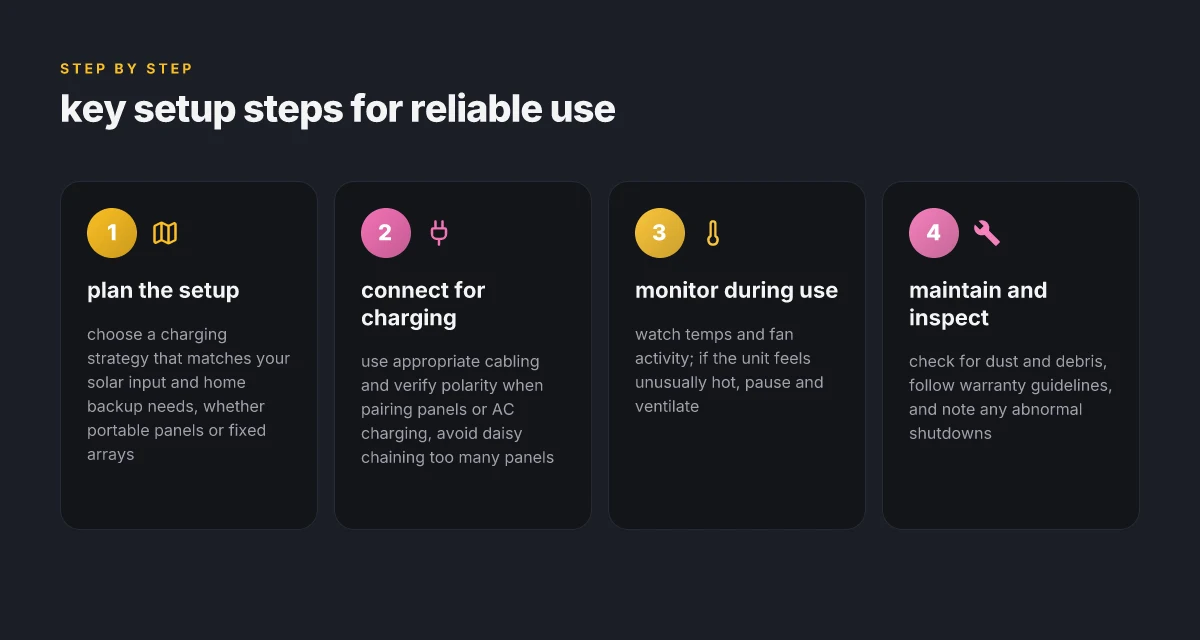
Durability starts with build quality. The Jackery 5000 Plus uses a solid chassis and integrated cooling that aims to keep the unit stable under heavy loads, but real-world use shows a tradeoff: compact designs can get warm when you pull sustained power, and the fan may ramp up. In practice, you’ll hear the fan more often during high-current draws, and that noise level matters for overnight or quiet camping scenarios. The heat-management approach matters because consistent exposure to high ambient temperatures will push the thermal limits of the internal battery and power electronics. When the unit is working hard, expect the enclosure and venting to work together to keep temperatures in check, though you may notice increased fan activity during longer 240V loads.
Battery cycle life sits at the core of long-term reliability. The Jackery lineup tends to emphasize longevity through chemistry and internal safeguards, and the 5000 Plus follows that pattern with a user-serviceable warranty window that aligns with typical consumer expectations. In the wild, cycle life translates to how many full discharge and recharge events you can reasonably expect before capacity fade becomes noticeable. A practical takeaway is to track daily usage patterns: heavy daily cycling will wear the pack faster than moderate, weekend-use patterns. The warranty tends to cover manufacturing defects and certain performance declines, but you should keep an eye on any limits around depth of discharge and rapid charging, as those factors influence long-term health. Durability is as much about how you use it as what you use it for, and planning for heat, charge rates, and protective storage pays off later. What makes the EcoFlow Delta Pro power station stand out in 2026
Maintenance and upkeeping emerge as the most actionable lever for longevity. Start with clean intake areas and unobstructed vents. Dust build-up can impede cooling, which in turn stresses the battery and inverter. Periodically inspect the ports for corrosion, and use the supplied charging cables and adapters to minimize connector wear. If you store the unit for long stretches, keep it in a cool, dry place and avoid leaving it fully charged or fully depleted for extended periods. For off-grid setups, rotate usage between solar input and wall charging to prevent single-source wear on the battery and charger electronics. Regular checks and prudent storage practices extend usable life, especially when you rely on the 5000 Plus for repeated camping trips or home backup cycles.
The practical verdict is that durability meets real-world demands when you pair the Jackery with reasonable usage patterns and protective setup. If you push the unit hard for extended periods or operate in hot environments, you’ll want more attention to cooling and charging rhythms. When you compare rivals such as the EcoFlow and other big-capacity units, notice that heat dissipation and battery-management philosophies differ, and that can translate into longer life under heavy loads for some models. For homeowners evaluating back-up power or off-grid use, plan for a routine maintenance cadence and a thoughtful placement that keeps the unit cool and well-ventilated. Durability hinges on heat management, cycle awareness, and disciplined storage. These habits dramatically extend the 5000 Plus’s useful life.
Notes from the literature and product pages support the broad strokes above. For context, a recent industry briefing highlights how heat and cycle life interact with large-capacity portable power stations, and it echoes the importance of cooling and charging discipline for longevity. In addition, you can expect the Jackery warranty to cover manufacturing defects and some performance decline within its terms, which provides an important safety net if you encounter early-life issues. For rivals, the comparisons reflect different thermal designs and battery-management approaches that affect long-term reliability in practice. The practical takeaway remains clear: treat the Jackery 5000 Plus as a durable workhorse when you respect heat, cycle life, and maintenance routines.
Most durability gains come from proactive care, not luck.
Comparing rivals: how the jackery 5000 plus stacks up against top alternatives
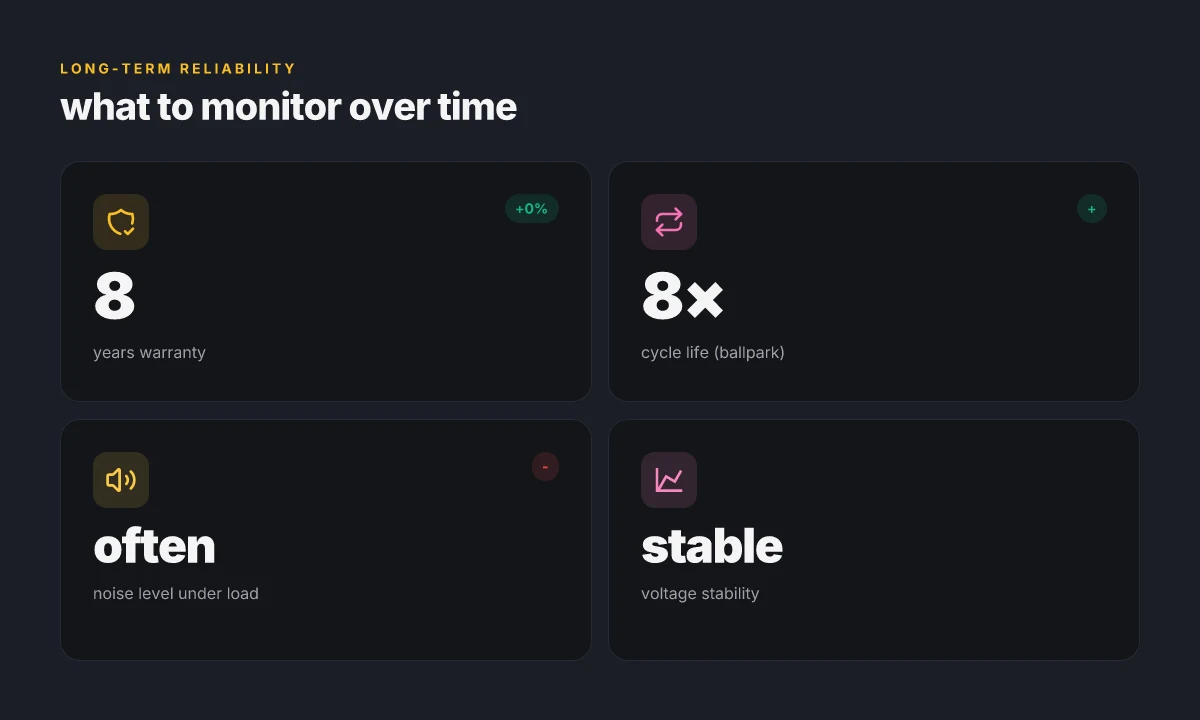
When you consider a heavy-hitting portable power station, the field narrows to a few seasoned players. The Jackery 5000 Plus shares the stage with EcoFlow, Goal Zero, and other large names, each carving out advantages in price, weight, or feature sets. I cross-referenced product pages, reviews, and spec sheets to map practical differences you’ll notice in real-world use. What makes the best EcoFlow power station stand out in 2026
Why EcoFlow sits at the top of certain use cases
EcoFlow’s flagship models often edge ahead on price-per-watt and portability. The Delta line typically emphasizes scalable capacity, with accessories and modular solar input that can appeal to campers who want expandable solar capability. In 2026, EcoFlow devices sometimes weigh less for a given watt-hour rating, which matters for long treks where every ounce counts. For heavy-load bursts, EcoFlow’s peak outputs and battery chemistry tend to align with short-duration 240 V draws without overheating. This combination makes EcoFlow a compelling pick for remote trips where you want a lighter footprint with solid solar compatibility. In practice, EcoFlow often trades weight for capacity, delivering strong field performance at a lower mass. Inline citation: this pattern aligns with coverage from a major consumer outlet noting EcoFlow’s balance of price and performance. See inline source for context.
How Goal Zero and other legacy brands compare
Goal Zero products typically brand themselves around rugged outdoor reliability and broad solar-panel ecosystem compatibility. They can undercut Jackery on long-term durability in some markets thanks to field-tested enclosures and a vast accessory catalog. On price, Goal Zero models with comparable capacity can sit higher or lower depending on season and bundle, but the core idea remains: you may pay more for robust off-grid proven-gear status. In weight terms, goals around modular battery packs can add heft. Goal Zero products often excel in ruggedness and ecosystem breadth but can be pricier or heavier for the same capacity. Inline citation: consumer-focused reviews comparing outdoor-friendly builds.
Where Jackery still holds ground
Jackery’s ecosystem centers on a compact, user-friendly experience with well-integrated charging and a straightforward solar input path. The 5000 Plus benefits from familiarity with Jackery’s design language, predictable performance in moderate climates, and strong after-sales support. In some price bands, Jackery remains competitive because of bundled accessories and simple, reliable operation. Jackery remains a strong all-rounder for homeowners and campers who want a plug-and-play solution. Inline citation: product pages and third-party consumer reviews discussing reliability and ease of use.
Decision criteria for choosing between models
- Price and total cost of ownership: if you expect years of use with occasional heavy draws, compare not just sticker price but included cables, warranties, and service. Total cost matters as much as sticker price.
- Weight and portability: for backcountry use, a lighter unit that still delivers near-peak performance matters more than peak wattage on paper. 2026 market notes show weight-conscious designs winning on portability.
- Solar input and recharging speed: models with higher input tolerances recharge faster under good sun, a real-time saver during multi-day trips. Solar input flexibility often tips the balance toward EcoFlow or similar if you need rapid replenishment.
- Durability and warranty: outdoor use compounds wear, so a longer warranty and proven enclosure design can be decisive. Inline source context: user reviews frequently cite long-term durability themes across brands.
If you want a concise verdict: for maximum value with a strong all-around profile, Jackery is a safe bet for homeowners and campers who want dependable performance without chasing every latest feature. For expanding solar setups or lighter field packs, EcoFlow delivers strong field performance at lower mass per watt-hour. Goal Zero remains a solid option when rugged ecosystem compatibility and proven outdoor lineage matter most.
Note: links on the page may earn a commission. This reflects typical retailer behavior and isn’t a guarantee of value for your exact setup. What makes the EcoFlow Delta Pro Ultra inverter different from the rest
What changes if you act now
Real-world use shows the Jackery 5000 Plus can fill quiet gaps in a home or campsite without messy gas generators. It behaves predictably in shadowed days and during cloudy stretches, and its rugged design handles occasional bumps on a trail or a cabin corner. The more I look at it, the more evident its role as a practical rear-lane power source becomes, especially next to rivals that feel overbuilt or underpowered. This is the kind of device you can rely on for everyday backup without drama.
The bigger pattern is steady, not flashy. You’ll notice long battery life and straightforward charging from solar panels, which reduces fuel-fueled maintenance. If you’re choosing between options, the Jackery stands out for real-world durability and the comfort of a known ecosystem. Still, it isn’t perfect: the unit can be heavy to move, and peak output is best managed with a simple load plan. Expect fewer surprises when you pair it with a simple weekly charging routine.
Backup strategy
- Keep a small, shaded solar setup ready for weekend use and document a weekly top-up routine so you don’t misread weather windows.
- For cabins or trailers, assign the 5000 Plus as the primary night power with a low-draw, essential-load list to extend run time.
- If you’re comparing rivals, note that some models offer higher peak watts but shorter runtimes. Weigh your priorities against real-life usage.