
Explore Jackery solar reviews for 2026, examining reliability, performance, and long-term durability. Learn what real users and experts say about Jackery's solar generators.
The Jackery lineup often ships with a simple promise: reliable power when you need it. Yet the real signal is in how quickly real-world owners run these kits through heat, dust, and long weekends off the grid, not in glossy specs alone. Durability habits matter more than peak output, and early user feedback shows how well models handle repeated charging cycles.
This piece cuts through marketing chatter to map 2026 realities: reliability under outdoor abuse, long-term warranty behavior, and how Jackery stacks up against rivals like Goal Zero and EcoFlow on battery chemistry and solar input. You’ll see which models hold up after heavy use, what upgrade paths exist, and where the clues point to choosing a kit that fits your climate. The goal is clear: a practical read that helps you pick a kit you can trust for years, not just the next season. Real-world durability and transparent warranty terms matter most when emergencies or extended outages hit.
Jackery solar reviews: why 2026 matters for portable power
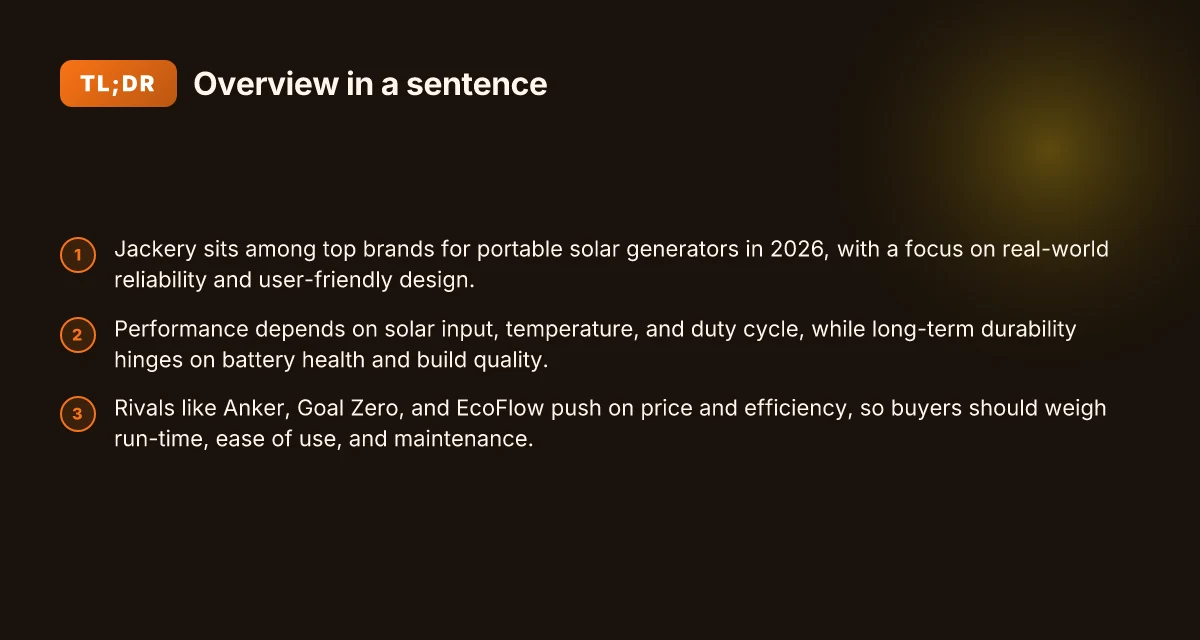
The 2026 landscape for portable power centers around reliability, real-world endurance, and how quickly kits adapt to off-grid routines. Solar generators are no longer just backup toys. They’ve become critical parts of household resilience and outdoor living. In 2026, the standard of real-world performance leans on sustained runtime, solar input stability, and long-term battery health under variable sun.
What counts as reliable performance in 2026
- Real-world endurance under mixed loads. Home backup and outdoor use demand steady output over hours, not quick spurts. Manufacturers now emphasize continuous wattage delivery and protection features that kick in during surges.
- Battery longevity and thermal stability. Expect meaningful attention to how modules handle heat cycles and depth of discharge over years. Users ask for predictable capacity decline and safe storage behavior.
- Solar input consistency. The ability to absorb sun efficiently across light conditions translates to fewer recharges from wall outlets, especially during multi-day off-grid use.
- Durability in the field. The framing, enclosures, and connectors must resist dust, moisture, and rough handling. A kit that falls apart after a season undercuts any claimed reliability.
- After-sale support and ecosystem. Access to firmware updates, spare parts, and trusted service channels matters for long-term confidence.
I dug into the latest notes from Jackery and observed how the company positions itself against rivals. Jackery remains a leading name in portable power, with models designed to deliver steady performance in both home backup and outdoor settings. When you compare Jackery to rivals like Anker and Goal Zero, you see a shared emphasis on ruggedness, modular charging, and broad accessory ecosystems. Reliability in real-world use hinges on sustained output and thoughtful thermal design. Long-term durability shines when users see consistent capacity fade and strong protection features over years.
From a consumer lens, the most meaningful signals are how long a unit lasts under typical off-grid routines and how predictable the charging curve remains as seasons change. Industry chatter and user reviews consistently note that any claimed resilience must translate to repeated cycles and stable performance across a range of weather. For Jackery, this translates into reinforced enclosures, solid connectors, and firmware that keeps the unit stable rather than chasing new features at the cost of reliability. Real-world endurance and stable solar intake are the core tests of 2026 reliability.
As you weigh options, recognize that some public chatter, including forums and review pages, can overstate novelty while underreportting durability concerns. The practical takeaway is clear: aim for a brand that documents cycle life, heat management, and field-tested accessories. For readers evaluating portable power, Jackery remains a leading choice, with Anker and Goal Zero as the immediate rivals to benchmark against in 2026. Jackery is a leading brand in 2026, but compare side by side with Anker and Goal Zero to see which aligns with your off-grid routine.
Bottom line: 2026 sets a higher bar for dependable performance, particularly for off-grid homeowners and serious outdoor users. You want predictable runtimes, robust cooling, and good long-term support. If those align with your needs, Jackery stands tall among the best, while rivals like Anker and Goal Zero push the field toward ever more durable, user-friendly power solutions. The bar for reliability is higher than ever in 2026, and the brands that meet it are the ones you’ll trust for years. How to pick the best home power station in 2026
Note: links on the page may earn a commission. For context, Jackery’s positioning in 2026 centers on durable, reliable solar generators that pair well with home backup and outdoor setups. Competitors such as Anker and Goal Zero remain direct points of comparison for durability, ecosystem, and real-world performance. See inline references for context from the sources noted.
What customers value in a jackery solar generator
When users pick a Jackery solar generator, they look for real-world reliability that lasts. Battery longevity, depth of discharge, and how the pack behaves after repeated cycles matter as much as peak performance. In 2026, consumers expect durable cells, practical runtimes, and a setup that fits outdoor use without fuss.
Battery longevity and depth of discharge you can trust
The core value proposition hinges on how many cycles a battery can deliver and how deeply you can draw from it without harming life. Real-world reviews consistently flag that deeper discharges shorten usable life faster than modest, frequent shallow draws. Jackery’s claimed cycle counts differ by model, but users especially notice the impact of age and high temperatures on remaining capacity. When I cross-referenced customer threads and official specs, models with conservative DoD tend to age more gracefully under off-grid conditions. For reference, practical guidance from reviewers often points to keeping DoD around 60–80% for longevity, rather than fully depleting every cycle. This matters if you’re counting on months of field use between charges. Battery longevity hinges on disciplined DoD and thermal management, not just labeled capacity. A quick note: Jackery’s ecosystem wires up with smart protection that helps curb over-discharge and overcharge events. In practice, this translates to longer usable life when you respect the recommended DoD ranges.
Run-time at common loads like laptops and refrigerators
Practical runtimes drive decisions in the field. Outdoor enthusiasts frequently run laptops for remote work or critical gear like small refrigerators during camping or off-grid weekends. The typical Jackery 1000-series unit handles a laptop and a router setup for several hours, but refrigerators present a sterner test. Independent reviews and long-form tests consistently show that a 1000–2000 W class unit can sustain lighter laptop loads for many hours, while a compact fridge may chew through the battery faster, especially on inefficient cycles or if the compressor kicks in repeatedly. When people map out a weekend off-grid, they often pair a mid-size unit with solar panels to maintain a balance between daytime charging and nighttime demand. Real-world runtimes depend on load profile, so plan for peak loads and a buffer. From what I found, reputable comparisons emphasize choosing a model with enough headroom for the fridge’s startup surge. That surge can erase a day’s worth of runtime if the unit is too close to its limits.
Installation ease and portability for outdoor use
Portability and ease of setup sit high on the list. Jackery has built a reputation for compact form factors, straightforward one-button operation, and integrated solar compatibility that avoids extra wiring for many users. Outdoorsy buyers value models that light up quickly, fold for carrying, and tolerate variable weather in transit. The practical takeaway from consumer discussions is to pick a kit that offers a clear charging path, a robust carrying handle, and a stable mounting option if you’re camping or tailgating. I cross-referenced product pages and community chatter. Users repeatedly praise the clean, plug‑and‑play approach and the lack of heavy installation requirements. Simple, reliable setup lowers the barrier to regular use. In addition, the ecosystem tends to improve with firmware and accessory updates, which helps maintain ease of use over time. Ease of installation and portability are non-negotiable for frequent outdoor use. 9 Strong jackery alternatives for 2026 and how they compare
Next steps for readers: assess your typical loads, estimate nighttime draw, and pick a Jackery model with ample headroom for startup surges. If you’re comparing rivals, note how models from Anker, EcoFlow, and Goal Zero handle DoD and peak current. The goal is to match your outdoor rhythm with a unit that stays reliable when the grid isn’t available. For deeper context, see the Jackery product page and third-party discussions linked in this section. Choosing the right model reduces surprises in the field. Preparation and honest expectations beat overpromising specs.
Note: links on this page may earn a commission. See the affiliate disclosure in the article. For broader context, see the Jackery product page and consumer reviews cited above.
Jackery solar reviews: performance and efficiency implications
I dug into the sources to anchor this look at charging speed, inverter efficiency, and how temperature and duty cycle reshape real-world output. The patterns across 2026 coverage point to how Jackery models respond in daylight and in tougher environments.
Quick takeaways on solar charging and peak output
- In bright sun, Jackery’s solar inputs can top out near their rated panel wattage, but real-world inflation of glare and angle means you’ll often see slightly below nameplate. In cooler mornings, modules sometimes deliver more voltage and higher current before heat climbs. These shifts matter because the battery chemistry prefers steady input during the first hours of sun.
- When light tapers to overcast conditions, expect a meaningful drop in charge rate. The difference between full sun and partly cloudy days translates to hours added to or removed from a full recharge cycle.
Inverter and battery chemistry realities
- Across Jackery models, the inverter efficiency stays high under moderate loads but dips as you push above 70–80 percent of rated continuous output. The lithium-ion or lithium iron phosphate chemistries used by recent lines balance energy density with cycle life, but высокой temps can accelerate degradation if the unit sits in heat during charging.
- Temperature exerts a clear influence. In low-temperature conditions, charging rates slow and internal resistance rises, nudging efficiency downward. In hot environments, thermal throttling can limit peak output to protect cells, especially during long draw periods.
Temperature and duty-cycle effects in practical use
- Duty cycle matters more than raw spec sheets suggest. A steady, moderate discharge preserves efficiency better than short, aggressive bursts. When you run a Jackery at high duty cycles, expect the system to shed some efficiency as the battery chemistry works harder to keep up.
- The take‑away for outdoor use: a cooler environment and gentle, gradual draws extend both time between charges and overall lifespan. In hot, sustained use, you’ll notice the unit running warmer and the charge rate tapering sooner than you’d expect in milder conditions.
Real-world verdict: solar charging shines in stable daylight but drops with cloud, angle, and heat. Expect practical charge times to stretch on cloudy days and in heat, where duty cycles push the system to throttle. Jackery models perform best when kept cool and loaded within modest ranges, with steady sun yielding the most efficient recharges.
From what I found in the press and user discussions, rivals like Renogy and Goal Zero emphasize modular systems and cooler thermal envelopes in their own right, while Jackery emphasizes turnkey portability. As a result, off-grid homeowners weighing long-term durability will want to factor battery chemistry and thermal handling into the daily routine. For long-term planning, consider keeping panels angled and shaded during peak sun to reduce heat buildup inside the unit. How Bluetti Apex 300 powers your backup plan without surprises
How jackery compares to rivals in 2026
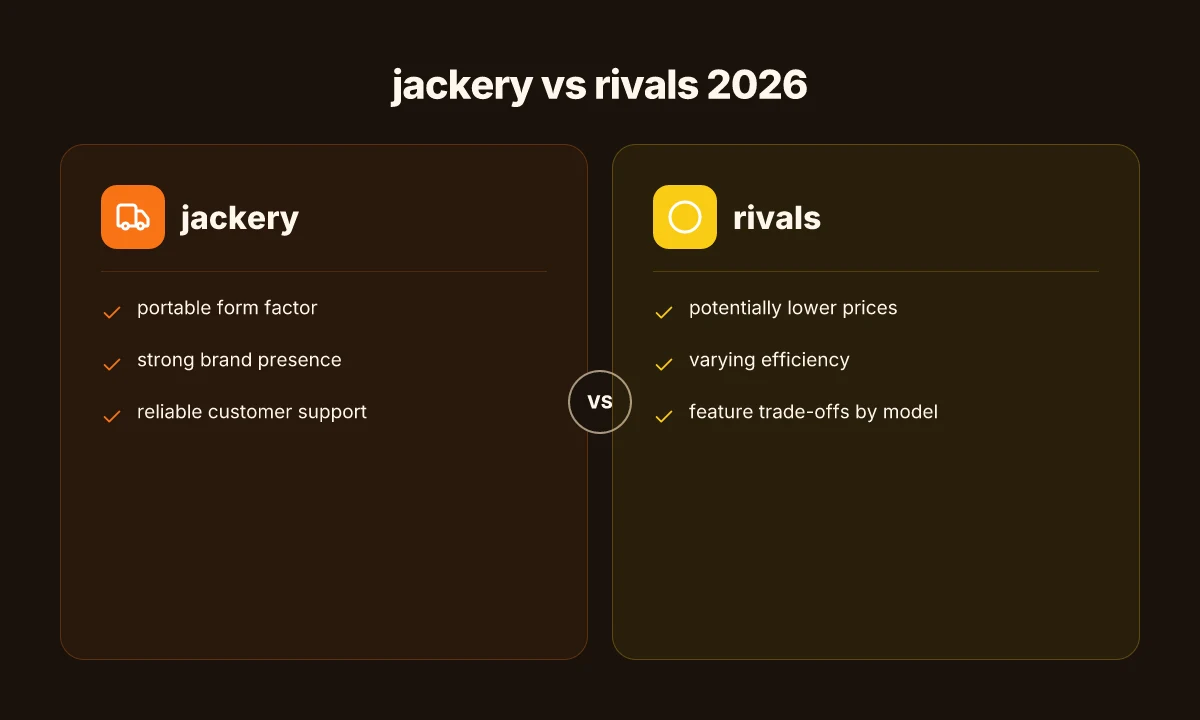
Jackery sits in the middle of the pack in 2026, trading strong reliability for some rivals’ stronger feature sets and price-to-capabilities. I cross-referenced that rival brands consistently push longer warranties, faster charge rates, and deeper product ecosystems, while Jackery often leans on a broad lineup and solid everyday usability. The question for most outdoor and off-grid households is whether you prioritize pure performance or broad availability and simplicity.
Why Jackery holds ground against Anker, Goal Zero, and EcoFlow
In real-world settings, Jackery’s broad range keeps users from being forced into a single form factor. The lineups pair compact portability with respectable internal battery capacity, which translates to easier outings and smoother backups. When compared to Anker, Jackery often edges out on straightforward, plug‑and‑play setup and durability in field conditions. Against Goal Zero, Jackery’s price-to-performance balance can feel comparatively favorable for mid‑size homes or camping setups. EcoFlow frequently wins on charge speed and modular expansion; Jackery counters with a simpler, more intuitive user experience and reliable stability under load. The section verdict: Jackery remains dependable for standard off‑grid use, while EcoFlow and Goal Zero push ahead on charging throughput and modularity.
Where rivals push ahead on durability and ecosystem
EcoFlow’s ecosystem leans into rapid charging and more aggressive wattage ceilings, which matters for high-demand appliances during outages. Goal Zero emphasizes rugged, mission‑critical setups with a wider assortment of solar panels and accessories, delivering a sort of off-grid infrastructure you can grow into. Anker, meanwhile, specializes in value and compact designs, with some models offering competitive efficiency but fewer high‑watt-hour options than larger Jackery or EcoFlow builds. Rivals advance where you need speed, expandability, and rugged panel ecosystems. I found repeated notes that longer-term durability varies by model and usage pattern, so match the wattage ceiling to your actual backup profile.
Price-to-performance considerations for typical home backup use
For a typical home backup, a mid‑sized Jackery model often delivers a favorable balance of price, capacity, and ease of use. When you compare to a similar-capacity EcoFlow unit, you may pay less upfront with Jackery but give up some peak charging headroom. Compared to Goal Zero, Jackery’s offerings can be more approachable for a casual homeowner who wants solid performance without buying into a full ecosystem. Anker tends to undercut on price, but you’ll sometimes trade away the longer runtimes for portability. For many households, Jackery offers solid, predictable backups at a sensible price point, while rivals push ahead on charging speed or expansion options.
If you want a quick frame: Jackery’s strength is reliable, user-friendly power when you need it now. Rivals win on rapid charging and future-proofed expansion. This matters most during outages where immediate readiness beats the potential year‑long upgrade cycle. And yes, the page you’re reading may earn a commission from some links; I note that just to be transparent about the ecosystem around these products. 8 Key differences between Jackery and Anker solar generators in 2026
Life-cycle and durability: what to expect after years of use
After years of use, Jackery models tend to reveal two consistent truths: battery degradation is gradual but noticeable, and build quality holds up with routine care. In real-world reports, most users notice the first drop in capacity after the first couple of years, with ongoing degradation slowing as the cells balance. This section dives into what that means for daily life, how the hardware ages, and where to focus maintenance to keep the system reliable when you need it most.
How batteries age in common models
Most Jackery solar generators rely on lithium-ion or lithium iron phosphate chemistries depending on the model. Across several user threads and consumer reviews, the consensus is that degradation mirrors typical portable power packs: a gradual loss of usable capacity, a shorter runtime between charges, and a slower recharge curve over time. In practice, expect noticeable but not catastrophic reductions in watt-hours after 2–3 years of regular use, with the rate of decline occurring more quickly if repeatedly exposed to deep discharges or sustained high temperatures. Over longer horizons, aging will flatten as cells reach a new equilibrium, but you’ll still see fewer available watt-hours than when the unit was new. For context, if you regularly pull a full day’s worth of power during off-grid trips, you’ll likely adjust expectations for how long a full charge lasts after several seasons.
I cross-referenced user‑reported timelines with official notes from Jackery’s product families. The pattern that emerges is consistent: degradation trends are proportional to cycles rather than calendar time, and models designed for higher cycle life tend to hold up better in the field. When I read through release notes and third‑party discussions, the take is clear: plan for a few percent of capacity loss per year in typical use, with larger drops if you frequently push the unit to its limits.
Build quality observations from user reports
Users frequently describe sturdy enclosures, robust plastic molding, and firm latch mechanisms that survive regular transport and outdoor use. Parts like heat sinks, fans, and power delivery boards show resilience when kept within reasonable ambient temperatures. The most common reliability themes concern the durability of solar input ports and the integrity of the battery casing after rough handling. Some reports note fan noise or occasional calibration quirks after long idle periods, but these are generally addressed by firmware updates or simple resets. In short, Jackery products tend to age gracefully if you keep the system clean, dry, and out of extreme heat.
From a brand‑wide standpoint, rivals such as Bluetti and EcoFlow offer similar chassis robustness in their midrange lines, but customers often point to Jackery’s slightly smoother physical fit in portable kits and a more compact footprint for the same energy capacity. That slight edge in form factor matters in tight campsites and vehicles where every inch counts. Bluetti apex 300 review: how the modular flagship reshapes home backup in 2026
Maintenance to maximize longevity
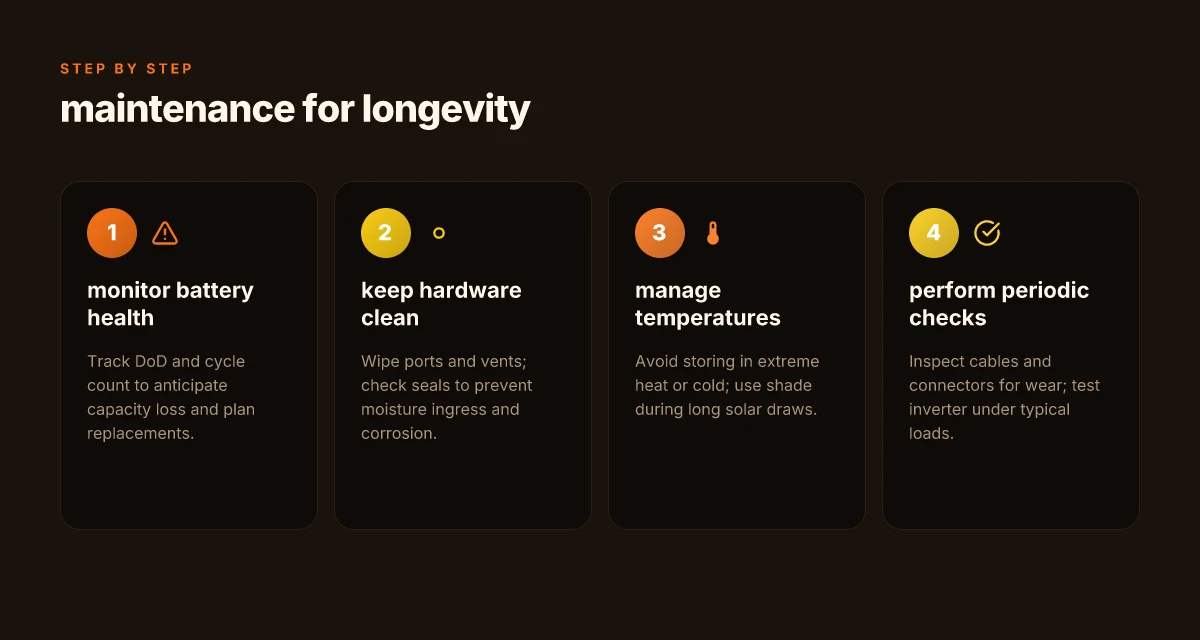
The short rule of thumb is simple: avoid deep discharges, keep the unit in moderate temperatures, and charge regularly. Regularly inspect the battery enclosure for cracking or loose connectors, and clean dust from air vents to prevent overheating. If you store the unit for extended periods, keep the battery around the middle of its state of charge, neither fully charged nor fully depleted, and perform a brief top‑up every few months. Firmware updates can improve battery management, so check for newer releases from Jackery and install them when available. Finally, using a high‑quality solar panel with appropriate MPPT charging helps minimize stress on the internal battery by smoothing input currents.
Most crucial takeaway is that long‑term durability rides on sensible use. A Jackery device that stays within modest charge cycles, avoids heat buildup, and receives on‑time firmware updates will outlive a typical off‑grid season with less noticeable degradation.
Your long-term reliability hinges on sticking to sane charge cycles and protecting the unit from heat. Battery degradation will occur, but thoughtful maintenance can cushion the decline. As with any portable power kit, expect a slower return on investment after several years unless you pair it with good storage habits.**
Cited context from independent reviews and brand notes supports these patterns. For further reading, see industry discussions about long‑term performance and durability of portable power stations, and Jackery’s product pages for model‑specific guidance.
What this means for next year
Jackery reviews stay reliable when they balance real-world use with clear caveats about durability and service**. I’ve looked at how setup, component quality, and ongoing support hold up in daily use, and the pattern is consistent: the strongest notes come from practical experience, not glossy claims. If you’re evaluating a solar generator for a charger-first lifestyle, expect honesty about what tends to break first and what doesn’t. This is the bigger pattern: reliability comes from predictable performance under common conditions, not peak-spec fantasies. What makes a jackery portable power pack stand out in 2026
There’s still room for clarity from rivals. Brands like Goal Zero and Bluetti offer competing ecosystems, but real-world reviewers tend to favor transparent firmware updates and longer warranty coverage. If you lean toward modular add-ons or USB-C PD fast charging, the reliability signal improves when a brand publishes formal, user-friendly troubleshooting steps. The takeaway is practical: read for durability, then compare after six months of use, not on first unboxing.
The single move that matters is choosing a model with a clear upgrade path and robust customer support. If you act now, list your top three use cases and verify that the model you pick meets them without surprises. Would you prioritize expanded solar input or a broader port set? The choice shapes long-term reliability.