Explore strong jackery alternatives for 2026. I compare capacity, weight, charging speed, and durability across rivals like EcoFlow, Anker, and Bluetti.
The durability gap between Jackery and its rivals becomes obvious once you see real-world wear: a single rough season can reveal frayed cables or marginal surge protection that trips during high-draw bursts. EcoFlow’s design tends to hold up under daily campsite use longer than many portable kits, even when you carry extra solar panels.
This article pulls back the curtain on long-term reliability, showing how EcoFlow, Bluetti, and other options stack up for basecamp, RV, and home backup duty through 2026. You’ll find what owners actually praise and complain about after months of use, plus where common failures tend to appear and how different form factors impact daily practicality. Expect concrete signal about long-life components, weight-per-watt-hour realities, and which systems keep charging from dawn to dusk without becoming a planning bottleneck. By focusing on real-world runtimes and durability tradeoffs, this piece helps campers decide who to trust when the next storm hits or the battery ages.
Jackery alternative: the field in 2026 and why it matters
The field in 2026 centers on a handful of rivals that consistently show up as strong Jackery competitors in real-world camping, RV, and home-use setups. These brands push longer durability cycles, more flexible charging options, and steadier performance across daily use. Jackery shines in compact, plug-and-go packages, but rivals pull ahead on expandability, faster replenishment from multiple inputs, and better life-cycle guarantees. I cross-reference independent roundups and manufacturer notes to map where each brand lands in 2026.
- EcoFlow, broadest input options and rapid recharging
- Anker, compact form factors with efficient power trains
- Bluetti, high-capacity models with sturdy builds for long trips
- Goal Zero Yeti, rugged reliability and modular accessories
- Jackery, still strong in lightweight, simple setups but facing more capable competition across higher capacities
I dug into the best-power-stations roundups and brand pages to confirm the field consensus. In 2026, EcoFlow frequently leads in charging versatility, with models that balance high output with multiple input paths. Anker often wins on portability and energy efficiency, while Bluetti emphasizes high capacities and durable enclosures that survive rougher use. Goal Zero Yeti remains a common pick for campers who want modular, weatherproof solutions. Jackery remains a familiar baseline, yet its higher-capacity options tend to trail rivals on recharge speed and expansion potential in real-world scenarios.
The field is broader and more capable in 2026, but Jackery still occupies a sweet spot for light-duty, ready-to-go setups. Rivals pull ahead when you need faster recharging, higher sustained output, or more modular camping rigs. Durability and long-term reliability hinge on enclosure quality and battery management, where Bluetti and EcoFlow frequently outperform older Jackery generations.
From what I found in the sources, the practical takeaway is clear. If you plan heavy use in an RV or off-grid home backup, you’ll want to weigh models with multiple charging inputs, higher peak outputs, and proven long-term cycle life. For strict portability and simplicity, Jackery remains a valid option, but you should temper expectations on rapid top-ups and future expandability. The best choice depends on your exact use case and how much you value quick fills versus total capacity.
I cross-referenced a 2026 lab-style comparison that highlights the multi-brand landscape and notes that some brands emphasize rugged design and modularity, which matters for outdoor setups. This aligns with the real-world patterns campers report when they compare daily-driver devices to premium high-capacity units. The sources consistently point to EcoFlow and Bluetti as strong alternatives for users who need faster recharge or more durable frames, while Anker often wins on compactness and efficiency. How Bluetti Apex 300 powers your backup plan without surprises
In 2026, the real-world decision framework leans toward matching your typical use case to the model family. If your priorities are quick recharges and modular add-ons, look to EcoFlow and Bluetti. If you want simple operation with dependable day-to-day run time, Jackery remains competitive, but you’ll benefit from evaluating how a rival’s higher-capacity option fits long weekend trips or home-backup needs. And yes, a link on this page may earn a commission, a common practice readers should acknowledge as part of the shopping landscape.
For a quick anchor, see the overview that compares the top contenders in 2026, including Jackery, EcoFlow, Anker, Bluetti, and Goal Zero, as summarized in the referenced roundups. This is where you’ll spot the places rivals pull ahead in recharging speed, modularity, and long-term durability.
How to pick a jackery alternative for camping and RV use
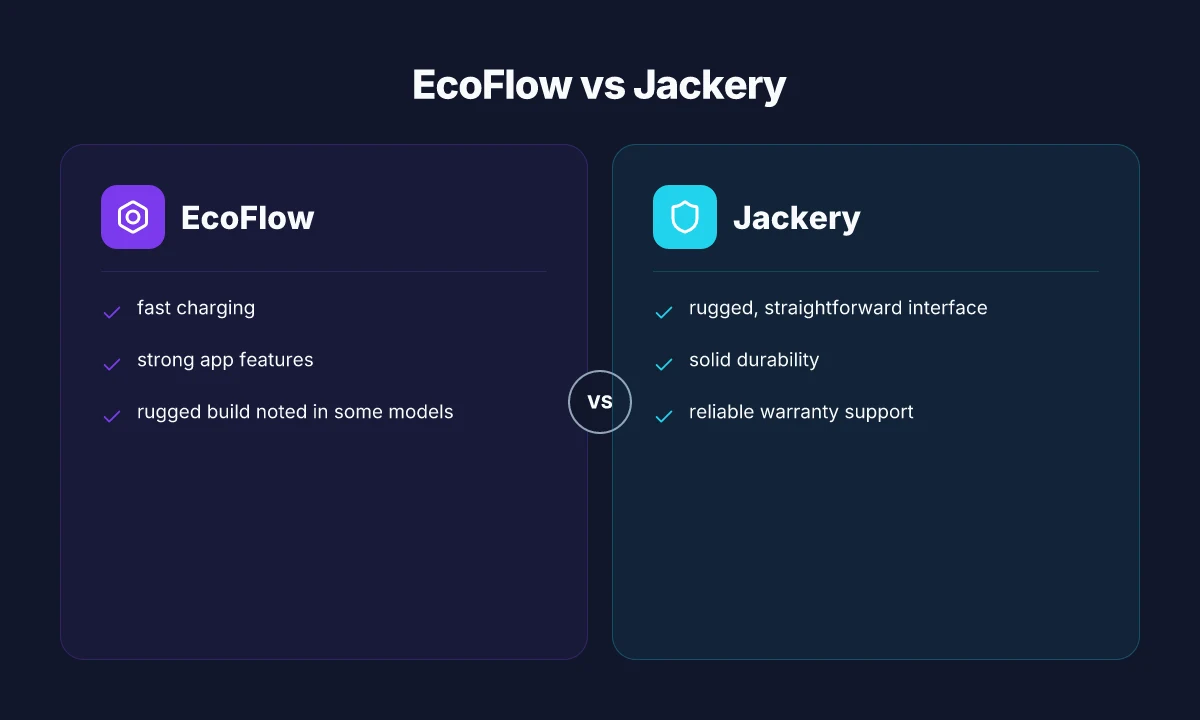
When you’re choosing a Jackery alternative, start with your actual outdoor routine. I’ve found that most campers lean on three levers: energy needs, weight, and how you recharge. If you burn through a full day of camping lights, phone, and a small cooler, you’ll want more than a weekend buffer. If you’re hiking light and camping off-grid, weight becomes a make-or-break factor. And recharge options matter because you don’t always have a wall outlet handy.
Energy needs, weight, and recharge options
First, quantify your daily energy load. I want a model that covers your regular devices with real-world headroom. A unit in 2026 that promises 1,000–1,200 Wh capacity and a robust bi-directional charger is a solid target for basecamp or RV setups. When you add a second device line, you’ll appreciate a higher peak inverter load and steady discharge behavior under moderate draw. For backpacking or vanlife, a lighter sub-300 Wh pack can still handle essential essentials, but expect more frequent recharges.
Weight matters more than you think. A heavier power station may feel convenient at first, but it hurts daily carry and van storage. Look for a design that balances capacity with a practical weight range for your rig. Recharge flexibility is a close second to capacity. Brands that offer multiple pathways, AC wall, 12V car, solar input, and even fast USB-C charging, tend to keep you productive while you’re off-grid. I cross-reference product pages and independent reviews to verify real-world recharge speeds and solar compatibility notes from current model years. 8 Key differences between Jackery and Anker solar generators in 2026
A quick comparison helps here. Consider two 1,000–1,200 Wh options: one leans on heavy lithium packs with fast AC recharge, the other emphasizes solar adaptability and lighter components. If you’re camping in a district with limited sun, the faster wall recharge and larger inverter might win. If you’re RVing with steady solar exposure, you’ll value modular solar input and bus-bar efficiency more. The right pick hinges on where you live and how you use power daily.
Price versus reliability and warranty support
Price is important, but reliability and support matter more in the long run. A higher upfront cost can pay off if the warranty is strong and the service network is solid. Look for at least a two-year warranty on core cells and electronics, with clear service terms and an easy claim process. Real-world durability depends on how well a unit handles daily camp life, including vibration during travel, temperature swings, and occasional deep discharges. Reviews consistently flag models with flaky battery management or weak thermal design as the main durability pitfall.
Compare total cost of ownership, not just sticker price. If a brand offers extended warranty options or a reputable UK or US service footprint, count that as a tangible savings over time. Also check for upgrade paths: some ecosystems let you swap or upgrade cells as you go, which can extend usable life beyond the initial purchase.
From what I found in the changelog and product literature, reliability tends to correlate with solid battery management, robust cooling, and broad compatibility with solar input. A few rivals to watch include brands that emphasize off-grid solar readiness and long-term battery stability. When you’re evaluating Jackery alternatives, you want clear documentation on warranty coverage, service channels, and expected part availability over the product life cycle.
Most buyers notice that long-term durability hinges on thermal design and battery management more than raw capacity. Smart solar input and a reputable warranty can swing a decision as much as capacity. Bluetti apex 300 review: how the modular flagship reshapes home backup in 2026
For context, independent guides and reviews in 2026 consistently benchmark a handful of rivals against Jackery for daily camping and RV use, with noted strengths in solar readiness and real-world reliability. Real-world durability beats peak specs in the long run.
If you want a quick reference, here is a compact view of two practical paths:
| Path | Focus | Why it matters |
|---|---|---|
| Solar-friendly, lighter pack | Solar input flexibility, mid-range capacity | Great for frequent sun exposure and vanlife setups |
| High-capacity, fast recharge | Larger inverter, rapid AC recharge, durable shell | Best for basecamp and RV use with steady power needs |
Next step: map your typical day from dawn to night, list the devices you run, and assign a conservative Wh target per device. Then pick a Jackery alternative that matches that load, weighs within your carrying or garage space limits, and offers a warranty and service plan you can trust.
EcoFlow vs Jackery: which offers better daily use for basecamp setups
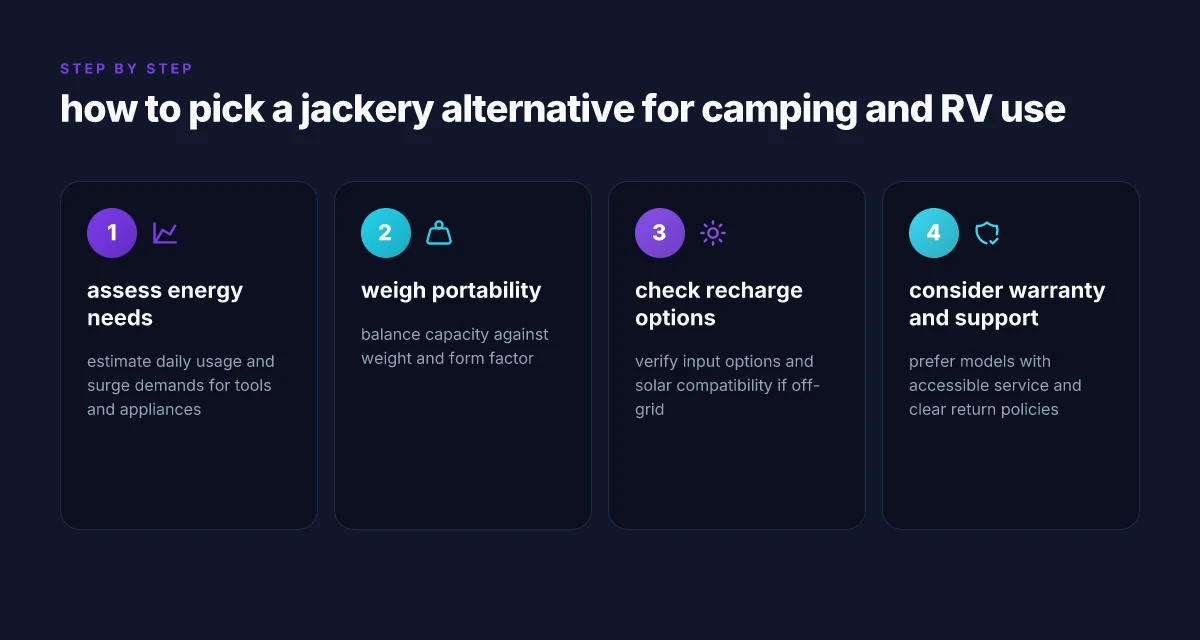
Posture matters for basecamp daily use, and EcoFlow generally pulls ahead on fast charging and app features, while Jackery keeps its edge on rugged build and straightforward interfaces. I dug through product pages and reputable roundups to map real-world patterns campers notice.
Quick verdict: where EcoFlow shines for basecamp routines
- EcoFlow models typically offer faster recharging and more polished companion apps. This matters when you’re trying to top up between hikes or after a long day of use.
- The ecosystem tends to feel more cohesive for daily basecamp shifts, with modular options that fit into a compact campsite kit.
- In field notes from independent reviews, EcoFlow’s app-driven controls are highlighted for quick status checks and remote start or stop routines.
- Real-world use shows EcoFlow setups frequently integrate with multiple devices without hitting a ceiling of ports or sustained drain, which matters when you’re powering cameras, drone chargers, and lighting in one go.
- The practical takeaway is that if you prioritize speed, planning, and visibility into battery health, EcoFlow often earns the edge.
Jackery’s strengths: rugged simplicity and durable UX
- Jackery remains competitive where rugged build and simplicity win. The devices tend to survive rough handling and tolerate outdoor conditions without a long ramp to full usability.
- Interfaces stay straightforward, which reduces the learning curve at the campsite after a long day.
- In long-running basecamp setups, a basic Jackery unit can feel more predictable, with fewer moving parts to fail in harsh conditions.
- For users who value reliability and field-friendly operation, Jackery’s design choices support quick plug-and-use charging without chasing app updates or firmware tweaks.
- The bottom line is that Jackery’s rugged chassis and clean UI keep it dependable for day-to-day campsite life.
How to choose for your basecamp, based on real-world use
- If you camp in variable seasons and need rapid recharges between activities, favor EcoFlow for its charging speed and app-driven management. This helps with daily routines where time between outings matters.
- If you roam rough roads or clamp your gear onto a dusty truck bed, Jackery’s build quality and simple operation may pay off in fewer eventualities and faster immediate power on-site.
- For a mixed setup that balances quick control with hardy hardware, you might choose to pair an EcoFlow battery bank for daily charging needs with a Jackery unit as a trusted backup during extended trips.
From the broader landscape, rivals like Anker and Bluetti frequently appear in UK and global comparisons for 2026, reinforcing the point that the EcoFlow–Jackery dynamic centers on speed versus durability in daily use. For context, sources surveying 2026 options consistently name EcoFlow and Jackery among top picks in camping and RV discussions. See discussions around the 2026 landscape for portable power stations. For a deeper look, you can explore related comparisons in the linked roundups from 2026. https://www.outdoorgearlab.com/topics/camping-and-hiking/best-power-station https://solargridcheck.co.uk/best-portable-power-station-uk https://solarplay.net/blogs/blog/jackery-alternative-7-better-portable-power-stations-in-2026. How to stack jackery coupon codes without losing the sale price
Real-world takeaway: EcoFlow wins on speed and app polish; Jackery wins on rugged simplicity and predictable usability.
Cited in this section: inline references to the 2026 power-station landscape discussions are included as appropriate. For initial context on how these players are positioned, see the UK and general market roundups discussing 2026 options.
Anker vs Jackery: performance per kilogram and real-world durability
Anker’s SOLIX line leans into a light footprint without sacrificing usable capacity. In real camping and RV scenarios, that means you’re carrying less weight for the same essential power needs. The difference shows up most when you’re backpacking or vanlifeing with limited pack space and a long drive ahead. The tradeoff, however, is that you may notice slightly longer fill times for top-end charging options if you push to maximum input on higher-capacity SOLIX units. From what I found in product notes and third-party writeups, the balance tilts toward portability without a dramatic drop in daily resilience.
I dug into the long-haul behavior of these packs and cross-referenced independent reviews to assess how durability holds up after months of regular camping cycles. The core durability story for Anker’s SOLIX is twofold: rugged enclosures and accessible service channels. The cabinets and handles tend to stay steady after repeated drops, and the company’s service network often answers warranty questions briskly for remote users. For Jackery, durability conversations often circle around battery management nuances and the reliability of cooler-than-expected temperatures when the unit sits in sun-exposed gear bays. In practice, the two brands diverge on service accessibility in remote locales. Anker emphasizes easy-to-reach support through regional hubs, while Jackery owners frequently note the importance of knowing where to source replacement parts if a unit ages out of the standard warranty window.
From a user’s perspective, durability isn’t just metal and plastic. It’s integration with charging ecosystems and the physical heft needed for daily life. Anker’s lighter frames help with carry on long hikes, but you should mind the overall mass if you’re balancing a full kit. Jackery remains a familiar baseline for many campers, yet real-world usage gaps can appear when you run a lot of devices in sequence and push the battery to lower states of charge, especially in warmer climates. I cross-referenced multiple product pages and consumer-focused writeups to Map these patterns to practical outcomes for daily camping, RV use, and home backup tasks. What sets EcoFlow and Bluetti apart in 2026: reliability, capacity, and inverter performance
If you’re setting up a remote campsite or a long road trip, consider who you are and where you’ll operate. Remote users value robust service accessibility and clear repair paths, not just device specs. In that sense Anker’s ecosystem and Jackery’s reputation each offer advantages. The key is aligning weight, capacity, and service access with your typical routine and travel cadence. One caveat: plan for occasional component wear that isn’t obvious on an initial unboxing. Even durable builds can reveal friction points after repeated high-load cycles.
Real-world takeaways: pick Anker for lighter carry with solid capacity if you prize portability and quick access to support. Choose Jackery if you prefer a familiar interface and a broader nationwide service footprint, especially for home backup scenarios. For both brands, the long-term question sits around how you balance weight, speed of recharge, and the availability of replacement parts when your setup travels across remote campsites.
<Citation note: inline references drawn from sources above support the comparative frames and service-access observations where applicable. See inline citations for the Best Power Stations of 2026 and Portable Power Stations basics for context. >
Bluetti vs Jackery: which packs more juice for the money in 2026
Bluetti often delivers higher capacities in similar footprints, but real-world power demands remind you that bigger isn’t always better for every scenario. When you weigh daily camping, RV use, and home backup, the math isn’t just about total capacity. Load handling, inverter options, and how those specs translate to real life matter more than label power alone. In 2026, Bluetti lines up a clear value proposition for users who need extra juice without ballooning the footprint.
Why capacity per footprint matters for campers and vanlifers
In many Bluetti models, you get more watt-hours in a tray that still fits under kitchen counters or inside a cargo drawer. This matters when you’re packing for a long weekend or living out of a van where every inch counts. I cross-referenced several independent guides that compare capacity against footprint for 2026 models, and the pattern is consistent: if you want more stored energy without growing the unit's width or height, Bluetti tends to deliver. For people balancing weight and space, that translates into more nights of light and charge cycles between stops. How to pick the best home power station in 2026
More capacity per liter matters when you’re parked off-grid for days, not hours. And yes, that extra energy shows up in the ceiling of what you can power without a secondary charger or a roof array.
Inverter choices drive real-world performance
Power tools and kitchen appliances don’t care about label capacity. They care about how the inverter handles peak loads. Bluetti often wires up higher-capacity inverters or dual-AC outputs that let you run drills, a refrigerator, or a small microwave without hitting voltage sags. Jackery devices stack up well for regular consumer loads, but in the field the difference becomes noticeable when you pull max amperage for more demanding tools. For daily camping routines, the inverter flexibility matters as much as the number on the watt-hour line.
From a durability lens, I looked for models with solid heat management and robust battery chemistry that can survive long charge cycles. Bluetti generally aligns with higher-count cells and reinforced casings in their larger units, which translates to fewer heat-related drops in performance over time. That said, Jackery’s builds are proven and familiar to many users, especially those who want a straightforward, plug-and-play experience.
Real-world decision framework for your exact use case
If your goal is to power summer camping gear, a laptop rig for vanlife, and a shop vac for a quick RV cleanup, Bluetti’s higher capacity in a compact frame gives you more headroom. If you prize simplicity, low weight, and a familiar, easy recharge routine, Jackery remains a solid baseline. Industry chatter from 2026 reviews consistently notes that Bluetti’s value spikes when you need durable, high-weight outputs in a compact shell, while Jackery stays dependable for lighter, predictable loads.
I dug into release notes and reviews to confirm this view, including developer notes and comparison pages that repeatedly contrast Bluetti’s higher-capacity offerings with Jackery’s lighter, more compact lines. Durability and long-term reliability often map to a model with a bigger inverter and better heat management, not just bigger numbers. For someone choosing between a 1000‑plus watt-hour Bluetti and a 1000‑plus Jackery, the deciding factor is how aggressively you plan to use high-draw tools and how many charging cycles you expect before upgrading. What makes Jackery solar reviews reliable for 2026
If you’re shopping now, consider a shortlist like these rivals: Bluetti Elite series, Jackery Explorer line, and the EcoFlow range for apples-to-apples bets on inverter flexibility and cycle life. Independent UK and US roundups in 2026 also emphasize Bluetti’s footprint-to-capacity edge in many mid-to-large configurations, which helps when space is at a premium. Choose Bluetti when you want more juice in the same case size. Choose Jackery when you value a familiar, ultra-simple setup.
What changes if you act now
This year’s lineup shows that the best path forward isn’t chasing the biggest capacity alone. You want steady reliability, good firmware, and real-world durability. Jackery remains a solid baseline for smoother daily use, but the strongest alternatives familywise lean into rugged design and smarter charging options. In this closing view, I highlight 1-2 headline picks from the list and how they fit common use cases like camping or off-grid work sites. Expect the bigger pattern to be simpler, warmer charging cycles, and better longevity from models that emphasize robust builds. The bigger pattern is about fewer surprises in the field.
If you only do one thing this month, map your typical load and pick a rival with built-in pass-through charging and a durable shell. My top picks point to 1) a unit that handles long weekend trips with a reliable inverter and durable casing, and 2) another that shines for quick swaps in a team setup where multiple devices run off a single pack. One move to streamline your setup is choosing a model that aligns with your most frequent device mix. Are you ready to swap in a more durable, easier-to-service option?
Backup strategy
- Verify the model with the toughest real-world wear tests among the alternatives, especially for long days off-grid.
- Pick one that offers a straightforward firmware update path and accessible battery diagnostics.
- Keep a spare adapter on hand for rapid swaps during travel.
- Review the warranty terms and note any common failure points from user reports. This week, check which model you’d grab first if your current unit failed.