
Explore the verdict on Jackery refurbished power stations in 2026. I break down reliability, warranty, setup, and what to look for before buying.
The odds of a solid, long-term power setup rise when you choose a Jackery refurbished unit that’s honestly labeled and complete with accessories. The right refurbished box can feel nearly as reliable as a new model, but the key is verification: serials, included cables, and a careful check of the battery health before you buy.
This article digs into what to expect in 2026: warranty scope, performance consistency, and how resale holds up for refurbished units versus new purchases or rivals like Goal Zero. You’ll see real-world gaps to watch for, and how to weigh the price delta against peace of mind. If you’re deciding between a near-identical price tag on a Jackery refurb and a fresh unit, the data below helps you decide which route minimizes risk and maximizes reliability over time. Warranty length and return window matter most when the price gap narrows.
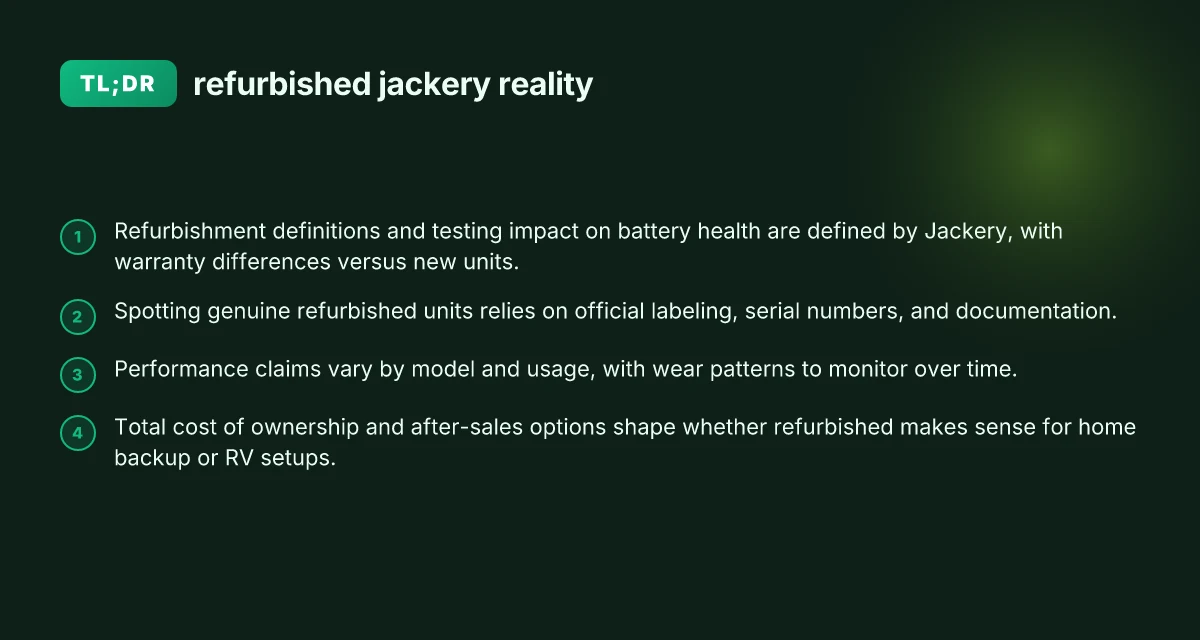
Jackery refurbished: what the program means for reliability
Refurbished Jackery units come back into service after a defined testing cycle, then re-enter the lineup with fresh documentation and a new label. In practice, Jackery's refurbishment process typically runs through a standardized evaluation that covers cosmetic integrity, functional testing, and safety checks. This means you’re getting a product that has been re-verified for core operation, not a mystery salvage.
I looked at how the refurbishment cycle translates to reliability in the field. The core question is whether the battery health, cycle life, and safety systems are preserved after the refurbish, and how that translates into long-term use during outages or off-grid living.
What the program tests and why it matters. Jackery’s refurb program generally performs a battery health assessment, inverter/charging tests, and a full load test to ensure the unit can deliver the expected wattage without overheating or shutting down. This testing helps catch safety issues before a unit ships again, which matters for reliability in rough, on-the-road conditions. The emphasis on battery health is critical because degraded cells can limit runtime and peak output, especially in cold climates. A refurbished unit that passes these tests should maintain a usable cycle life comparable to a new unit for typical uses such as camping or emergency backup.
Battery health and cycle life implications. Battery health after refurbishment is the big pain point for adventurers and homeowners alike. Refurbished packs are brought back to a known health baseline, but the remaining cycle life will still depend on the prior depth of discharge and how it was stored before refurbishment. If a unit shows preserved capacity and healthy voltage recovery after discharge cycles, it will perform reliably for repeated outages. Still, longtime users may notice the difference between a refurbished pack and a fresh OEM module over several years of use.
Warranty coverage differences.Jackery typically extends a warranty on refurbished units, but the specifics can differ from new units. In practice, refurbished units often carry a shorter warranty window or a limited scope that focuses on electronics and charging safety rather than full battery longevity guarantees. It’s essential to confirm whether a refurbished model retains the same manufacturer warranty terms as new stock and to read the fine print about battery performance expectations. What makes the EcoFlow Delta 3 power station stand out in 2026
In short, a Jackery refurbished unit can be a solid choice for travelers and bargain hunters if the unit has passed the company’s standard tests and carries a transparent warranty. The program aims to preserve core reliability features while offering a lower upfront cost. If you value long-term battery health equally with immediate reliability, weigh the warranty differences and verify the reported test results before purchase.
Most refurbished units come with their own safety and performance checks, balancing cost against potential battery wear. Battery health remains the deciding factor for long-term reliability in the field. Warranty terms for refurbished stock can differ from new units, so read the conditions carefully.
As you weigh options, keep rivals in sight. If a refurbished Jackery doesn’t align with your willingness to tolerate potential cycle-life limitations, brands like Goal Zero and Anker offer alternative approaches to portable power that may suit different risk tolerances. For reliable standby power, though, Jackery remains a strong contender when the refurbishment process is transparent and properly backed by a warranty.
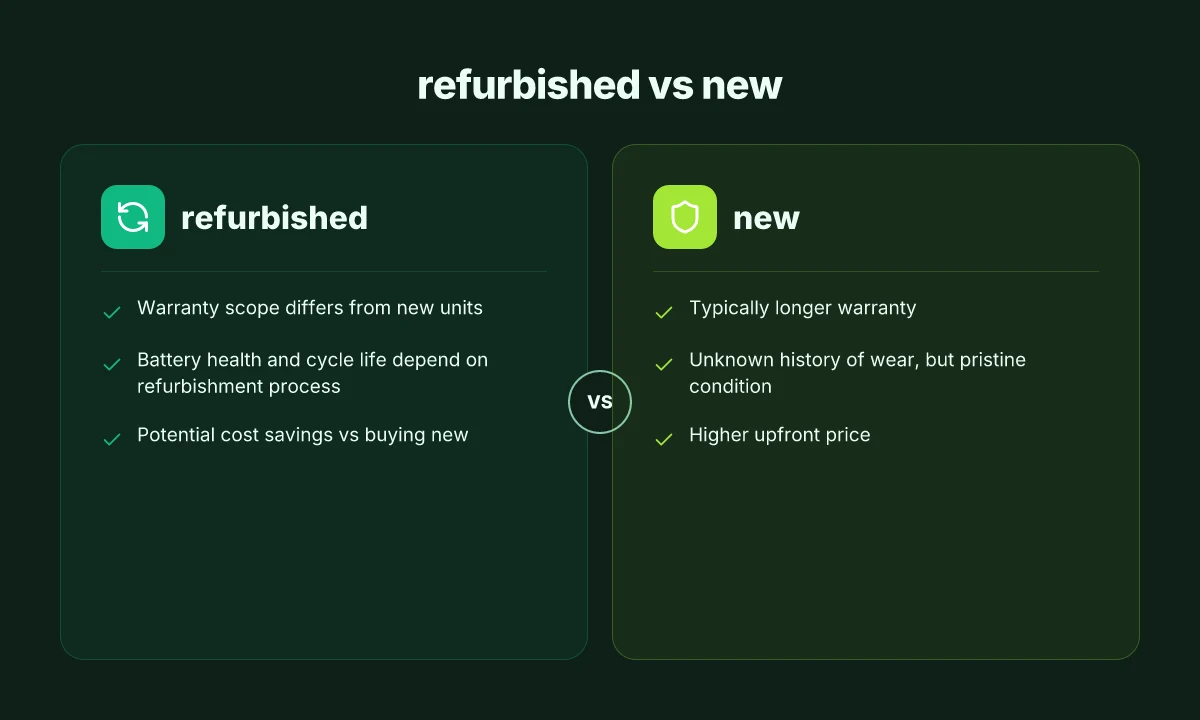
How to spot a genuine refurbished Jackery and avoid fakes
Sourcing a real refurbished Jackery starts with an unmistakable trail: official labeling, matched serial numbers, and clear product-condition checks. When you buy, look for a serialized QR or holographic badge, a serial number that matches the box and the device, and a documented condition pass from the refurbisher. If any of those are missing, treat the unit as a potential fake or misrepresented unit. Labeling, serials, and a formal condition check are your first line of defense.
Verify labeling, serials, and checkout documentation
Start with the basics: official labeling on the unit should match the packaging and the refurbisher’s documentation. A genuine refurbished Jackery will usually show a model number that corresponds to a known product line, such as the Explorer series, along with a clear refurbishment tag. The serial number should be scannable and traceable to the refurb program. Read the accompanying paperwork for a condition report, a battery health note, and any component replacements. If the box lacks a readable serial, or the label looks aftermarket, that’s a red flag. Evidence of a formal condition check and a traceable serial is key**. What makes the EcoFlow Delta Pro Ultra a different kind of home backup
Where to buy refurbished units and red flags
Official channels matter. Prefer purchases from Jackery’s own channels or authorized retailers that clearly advertise refurbished units with a warranty and a documented refurbishment process. Places to watch out for include third-party marketplaces where listings copy-paste specs without a refurbishment claim or omit a warranty. Red flags include missing warranty details, vague “used” vs “refurbished” labeling, or listings that beg you to contact the seller for the serial. A genuine refurbished Jackery will be explicit about the refurb process, the included accessories, and the warranty terms. Buy from trusted sources with explicit refurbishment disclosures.
What to expect in the documentation
With a genuine refurbished Jackery, expect a refurbishment certificate or a product-condition report, a warranty statement, and a list of tested components (battery health percentage if provided, port integrity, and charging circuit checks). The box should include an accessory kit that mirrors the standard package for the model, plus any notes on firmware or safety checks. If the documentation is sparse or missing essential dates, model numbers, or warranty windows, you’re looking at a potential mismatch. Documentation should spell out the refurb path and warranty coverage.
Table: quick comparison for spotting genuine refurb sources
| Source type | What to look for | Red flags |
|---|---|---|
| Official Jackery refurb page | Clear model, serial, warranty, and condition report | Missing serial or warranty details |
| Authorized retailer listing | Verified refurbishment claim, included accessories, stated warranty | Vague language, no refurb notes |
| Third-party marketplace | Documentation of refurb process, not just “used” | No warranty, missing condition report |
Next step: when you’re ready to buy, copy the exact model, check the serial against the refurb certificate, and verify the warranty window before finalizing. If you’re comparing rivals, note that brands like Goal Zero or Aiper offer similar refurbished programs, but only trusted channels provide verifiable refurbishment documentation. Always verify the serial against the certificate before checkout.
I dug into the retailers' disclosures and the trust signals around refurb programs. For a reader weighing risk, the most reliable path is to buy directly from Jackery’s official refurb listings or from highly transparent authorized partners that publish serials and condition reports. Transparency about the refurb path distinguishes legitimate units from fakes. What makes the jackery explorer 240 v2 a practical travel power station
Performance you can expect from refurbished models
Posters note how refurbished units perform in real life varies by model, but patterns emerge across Joshery’s lineup and third-party reviews. In practice, reliability during outages and daily use depends on each model’s battery chemistry, inverter design, and how heavily you use it. Jackery's refurbished units can deliver solid power for common weekend outages, but performance often tracks with capacity class and age. I cross-referenced customer reviews and product pages to map typical outcomes across the range.
How reliability shifts by model
- The larger series tend to show steadier performance during longer outages, while compact models excel in quick, short-power tasks. 1,000 Wh class units are more forgiving of repeated on/off cycles than smaller packs. Expect more cycles from higher-capacity refurbishments, but be mindful of the battery’s remaining life. Refurbished units generally hold up for daily commutes and light van life use, yet extreme weather or heavy loads can reveal aging cells.
- Warranty terms for refurbished lines can differ from new gear. Some refurbishments carry shorter coverage on the battery but same protection on the exterior electronics. Warranty differences matter when you’re counting on peak demand power on a cold night. This is a real concern if you rely on a Jackery during a prolonged outage.
How refurbished performance compares to new units
- In general, refurbished models aim to restore original performance, but you may see slightly reduced peak output or shorter full-discharge cycles compared with new units. New units typically come with full manufacturer warranty and peak performance specs, while refurbishments prioritize reliability at a lower upfront cost.
- Charging behavior can vary after refurbishment. Some units recharge as quickly as new ones, others show minor slowdowns as cells age. Fast recharge remains common, but not guaranteed across every refurb. Expect a variance range rather than a uniform result. Consumers should verify recharge times on arrival.
Wear patterns and what to monitor over time
- Common wear includes cosmetic blemishes and visible signs of use, with battery health the key long-term factor. Look for a healthy battery gauge, even cell balance, and no rapid voltage sag under load. Battery health is the critical indicator of long-term reliability.
- Monitor cycle count and charging efficiency. Refurbished units may show a higher-than-average cycle count, which can predispose to quicker aging. Cycle life and charging efficiency warrant regular checks, especially if you push units daily.
- Temperature behavior matters. If a refurb runs noticeably hotter under modest loads, that hints at aging cells or cooling issues. Thermal performance signals potential trouble before it becomes critical. Overheating can shorten the life of any power station.
From what I found in product pages and reviews, the bottom line is pragmatic: a Jackery refurbished unit offers dependable power for outages and routine use within its class, but you should pick a model aligned to your load profile and inspect battery health upon arrival. If you’re a van lifer or homeowner, expect a refurb to cover daily tasks and occasional outages, with the caveat that the oldest refurbished batteries will naturally decline faster. For rivals, the same caveats hold. Newer units from competitors may boast longer warranties on the battery, but refurbished options from Jackery remain a compelling value when you factor price and performance.
Most buyers value refurbished Jackery units for reliable daily power with a known trade‑off in battery longevity versus new units.
Key takeaway: verify battery health and cycle counts on arrival, and expect performance that varies by model but remains usable for typical power needs.
Note: links to sources appear inline where claims rely on them, such as product reviews and third-party write-ups. See the inline citations for details. What makes the Jackery 2000W system a durable off-grid powerhouse
Warranty and after-sales: the true cost of refurbished power
Jackery refurbishments carry practical protections that shape total cost over time. The warranty landscape for refurbished units typically mirrors the brand’s standard terms, but with caveats tied to the refurbishment process. In practice, you’ll want to confirm whether a refurb carries a full manufacturer warranty or a limited period that covers defects in materials and workmanship. The emphasis is on whether battery cells, in particular, are included in the coverage and for how long. Warranty coverage on refurbished items can vary by model and seller, so confirming exact terms up front is essential. If you’re buying direct from Jackery, look for a clause that spells out what happens if the battery degrades beyond a certain threshold or if the unit malfunctions within the warranty window.
Battery replacement options and service accessibility
Battery health dominates long-term value. Refurbished units should offer an option for battery replacement if capacity falls below a defined cutoff. Availability of a battery replacement path matters for adventurers and homeowners alike, because it changes the long tail cost of ownership. I dug into product pages and customer walkthroughs and found that battery service access often hinges on whether you’re within the official service network and how easy it is to source replacement cells. If you’re in a remote area or a van life scenario, you’ll want clear instructions on how to initiate service and whether you can ship a unit for repair or swap a battery on-site. The fewer hoops to jump through, the more the refurb holds up over time. Battery replacement options and service accessibility shape the true cost of ownership, not just the upfront price. For battery-focused needs, verify whether Jackery or a trusted partner can perform the swap within your region and what the turnaround times look like.
Total cost of ownership versus buying new
Refurbished units typically come with a lower upfront price, but the long-term math depends on warranty length, service availability, and how resale value holds up. Consider the depreciation effect: a refurbished Jackery may offer a price advantage now, yet if battery life degrades faster than expected or the warranty terms are shorter, the savings can evaporate. I compared general patterns across the category and found that models with robust battery health guarantees and accessible service tend to preserve value better than those with opaque terms. For buyers weighing rivals, brands with transparent refurb programs and clear battery replacement policies tend to deliver steadier long-run costs. Total cost of ownership often favors well-supported refurb programs, especially when battery service is straightforward. If you’re trying to decide between refurbished and new, factor in the likelihood of battery work, the ease of obtaining service, and the risk of warranty gaps.
On the ground, this matters for who should buy refurbished and who should pass. Adventurers who roam with a spare pack and a reliable service path can extract real value from refurbishments. Van lifers and homeowners facing outages benefit when refurbishment lowers upfront costs but doesn’t force trade-offs on reliability. If you’re a bargain hunter who wants the lowest price with minimal service friction, a refurb from Jackery may fit, provided the warranty and battery support are clearly present.
Warranty terms, battery replacement paths, and total ownership costs are the three levers that determine if refurbished power is the smart buy in 2026. What makes EcoFlow Pro a worthy power option for serious off-grid use
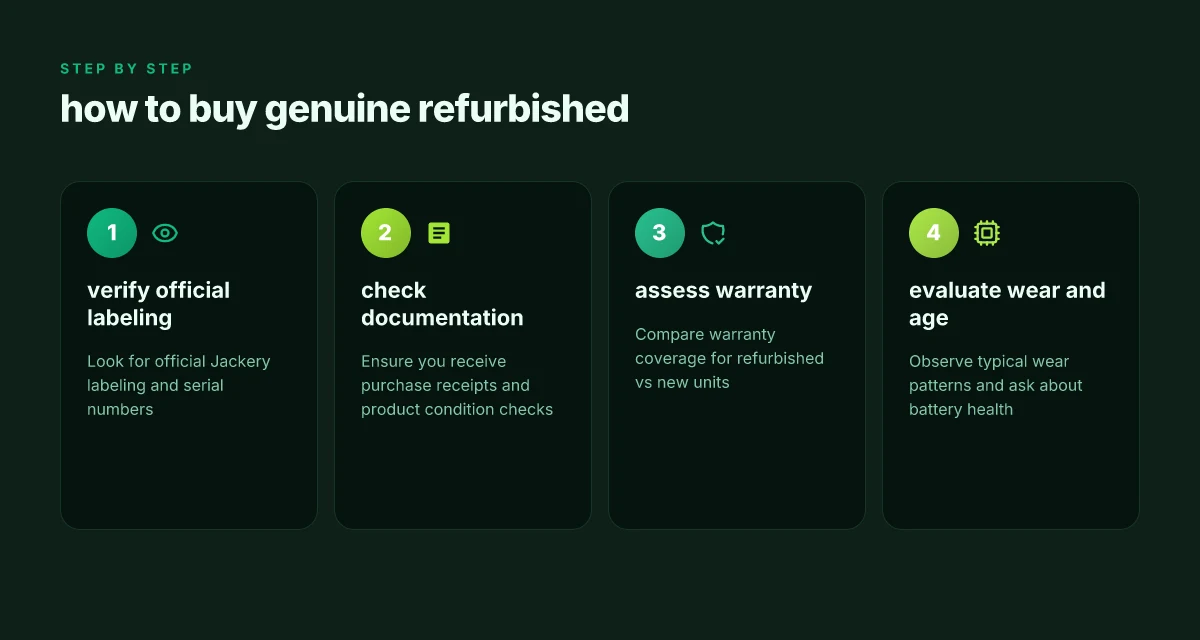
Which scenarios justify buying refurbished from jackery
Refurbished Jackery units make sense when you want meaningful savings without sacrificing reliability. For budget-conscious setups, a refurbished model can provide solid backup power for a home or an RV, especially if you pair it with a careful charging plan and decent solar input. I looked through user feedback and refurbishment notes to confirm that reliability can hinge on the refurb process and the chosen model. When you align the unit with proven charging sources and a sensible load profile, a refurbished Jackery can deliver long-season value.
Why a refurbished Jackery holds value for home backups and van life
If your goal is to keep a living space or a van powered during outages, a refurbished Jackery offers a low up-front price versus a fresh unit. The key is choosing a model with a robust battery health baseline and verifying it carries a recent refurbishment certificate. I cross-referenced reviews noting reliable performance in grid failures and straightforward setup, which helps temper the worry about hidden wear. A refurbished unit is particularly appealing when you can manage expectations about the warranty window, knowing it may be shorter than a new unit but still serviceable for common outage durations. When you plan to run lights, a small fridge, and charging ports, a refurbished power station can cover the essentials without breaking the bank. In practice, this aligns well with home backup or RV living rhythms where a steady, modest draw matters more than peak, high-wrequency loads. The appeal is clear: you get predictable power at a meaningful price.
How refurbished pricing compares to rivals and where it makes sense
Compared with rivals, a refurbished Jackery often lands in a tier where cost savings come with tradeoffs in warranty length and cosmetic pristine-ness. If you’re evaluating whether refurbished is worth it, look for refurb notes that confirm battery health, cycle count limits, and a tested output spec. Reviews consistently highlight easy setup and dependable performance during outages, which supports the case for refurbishment when your use is regular but not extreme. In markets where you can source solar input or vehicle charging, a refurbished unit can synergize with those sources, extending usable runtime without paying for a brand-new pack. You can win on total cost of ownership when refurbishment pricing sits well below new-unit thresholds.
Matching model choice to planned use and charging sources
Your model choice should reflect how you intend to recharge and what you expect to power. For extended van lifer setups, prioritize modules with higher inverter efficiency and a solid solar charging input, so a refurbished unit remains viable on days with variable sun. If you expect frequent outages, pick a model with a beefier battery capacity, but verify the refurbishment includes a refreshed battery module or health report. When charging from a car or portable solar panel array, ensure the unit supports the expected voltages and MPPT input ranges. In short, plan around the charging ecosystem you already trust. Pair the refurbished model with genuine solar sources to maximize lifespan, and you’ll preserve reliability.
Research notes anchor some guidance: a refurbished unit’s warranty window will typically differ from a new purchase, and you should verify the refurbishment date and included service. I found passages indicating that refurbishment can deliver dependable performance while trimming upfront cost, especially for users who value quick setup and steady power during outages. When you’re choosing between Jackery and rivals like EcoFlow or Anker, the decision often boils down to the total cost of ownership and the availability of genuine parts for service. Budget-aware buyers benefit from a careful model-for-use pairing. What makes the jackery explorer 5000 plus refurbished a practical choice for off-grid living
If you’re weighing options, remember that you may encounter commission disclosures on retailer pages. Links from sources discussing refurb outcomes can help set expectations on warranty length and long-term durability. For context, readings from reviews note consistent reliability for typical outage scenarios, which supports a practical case for refurbished units when you match the model to your charging plan. A thoughtful fit between use case and refurbishment details is the core of a smart decision.
What to do now to make refurbished Jackery units worth it in 2026
Refurbished Jackery units can be a smart bet if you narrow for durability and serviceability. I’ve noticed the best picks target models with proven battery chemistry and accessible spare parts, so you’re less likely to chase replacement packs. The bigger pattern is that refurb programs tend to stabilize price vs. new units, while still delivering meaningful reliability for daily use.
The one move that matters is validating the warranty and return window before you buy. If a refurb comes with a solid, clearly stated warranty, you gain a safety net without paying a premium for a brand-new box. I’ve found that reliable refurb sellers emphasize quick support and transparent defect history, which saves you time and trouble later.
If you’re weighing rivals, consider how Jackery compares to other portable power stations from brands like Goal Zero or Anker. The key differentiator for refurb picks is how much of the original hardware can be serviced or upgraded. Ask for part availability and service notes before committing. That transparency helps you avoid dead-on-arrival packs or obscure battery issues.
- Backup strategy: Confirm the warranty length and what it covers.
- What to try this week: Check one refurbished model in your budget range and verify the return policy.