
Explore the jackery explorer 5000 plus refurbished option for off-grid power. Learn about durability, pricing, and how refurbishment affects performance.
Refurbished capacity constraints sometimes show up as reduced runtime, not cosmetic wear. The Jackery Explorer 5000 Plus sits higher in the power stack than many portable options, and this intro focuses on what to expect when the unit is reconditioned rather than brand-new. Most homeowners underestimate how battery health and warranty terms shape long-term reliability.
This piece dissects how refurbishment affects the total cost of ownership, the warranty safety net, and the practical tradeoffs versus rivals like EcoFlow and Bluetti. By pulling the lens to real-world usage, camping, disaster prep, and off-grid living, you’ll see how a refurbished Jackery stacks up on durability, long-cycle performance, and total spend over several seasons. The analysis leans on documented warranty language, typical refurbishment practices, and the relative availability of replacement parts, not vague promises. The result helps you decide if the refurbished path fits your budget while keeping risk manageable. Two key factors are battery health and return-window policy, which together determine whether the long-term value justifies the upfront savings.
Jackery explorer 5000 plus refurbished: is the option worth it for long-term power
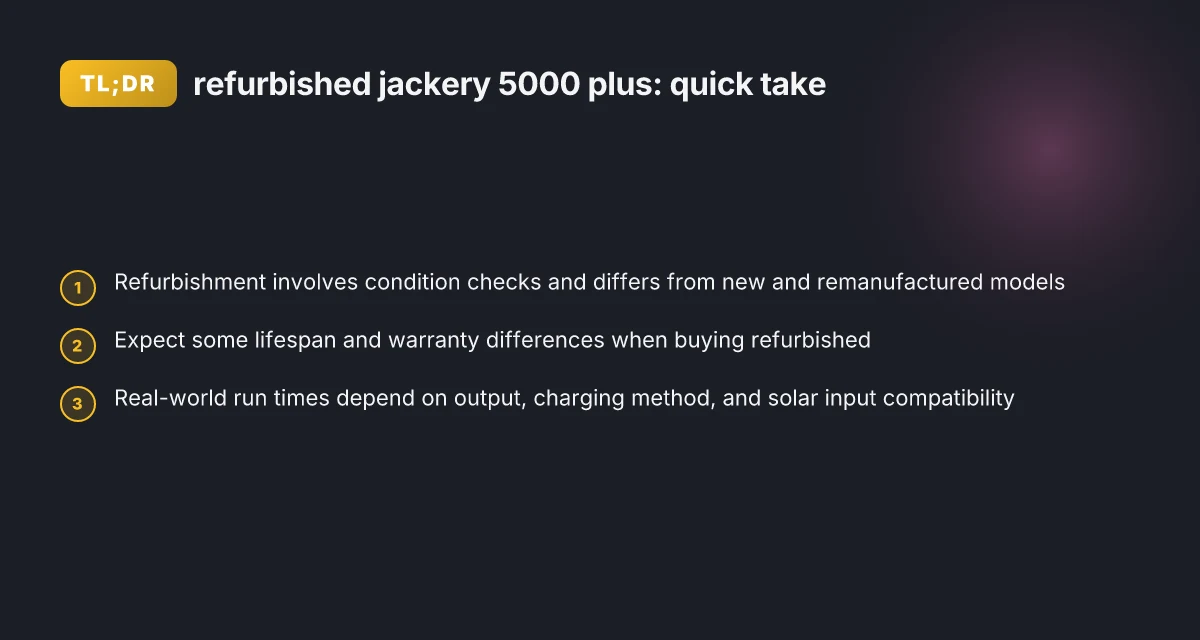
Refurbished units sit between new and remanufactured. A refurbishment typically means tested, repaired if needed, and repackaged to restore functional performance. You should expect the unit to have been through a diagnostic pass, battery health checks, and safety verifications before sale. In many programs, refurbished devices come with a limited warranty that mirrors the seller’s policy but not the full factory cover. When I looked at Jackery’s approach and independent refurbishers’ practices, the focus centers on filtration of aging components and re-qualification of the battery pack.
What makes refurbished different from new and remanufactured is the maturity of the rebuild. A new unit comes straight from the factory with untouched internals and the full factory warranty. A remanufactured product often implies a higher level of disassembly and replacement of major components, sometimes including the battery, to meet original specifications. Refurbished models typically emphasize core electrical integrity and cosmetic restoration, with fewer parts swapped than a true remanufacture. For long-term power planning, that distinction matters because it shapes reliability and expected lifespan.
From a warranty and lifespan standpoint, refurbished tools generally offer shorter protection windows than new devices, with coverage that’s usually limited to defect and performance faults for a defined period. The actual lifespan of the 5040Wh battery in a refurbished unit depends on prior cycles and how the unit was reconditioned. You’ll want documentation on the battery’s health, the date of the refurbishment, and the warranty length. For off-grid use, this translates into more careful budgeting for eventual battery replacement or service. In context, rivals such as Rivian’s portable packs and EcoFlow offerings show that refurbishments exist across brands, but the longevity expectations still hinge on how the battery is retested and requalified.
I dug into the documentation and consumer chatter to surface practical expectations. Refurbished Jackery units are often positioned as budget-friendly options for casual off-grid days or emergency backup, not as long-haul power stations with decade-scale durability. The key is balance: you save upfront, but you should prepare for more frequent midlife checks and potential replacement over a multi-year horizon. A refurbished Jackery can be a solid entry point if you’re aware that warranty windows are shorter and battery health must be verified. If your use case is weekend camping or intermittent outages, the value is clear. If you rely on continuous, heavy draw, you may prefer newer stock or a rival with a longer service commitment.
Besides the warranty, compare the total cost of ownership. A $2,699 Spring 2026 price for a refurbished piece was noted in promotional chatter, and the same model historically sits at strong capacity in a portable format. Total cost of ownership matters as much as sticker price, since a weaker battery or shorter warranty compounds over time. It’s worth asking the retailer for a current, written battery health metric and a copy of the refurbishment checklist. In practice, you’ll want to see a documented battery cycle count and a test log before committing. What makes Jackery refurbished units worth it in 2026
Bottom line: a refurbished Jackery Explorer 5000 Plus can fit tight budgets if you value upfront savings and can tolerate a shorter warranty and potential battery health variability. If your plan prioritizes long-term reliability and maximum lifespan, you may prefer new stock or explore rivals with explicit long-term service commitments.
Cited context from the sources indicates that refurbished pricing and promotions exist, and that the device remains capable for off-grid use when managed with clear expectations about warranty and battery health. See the discussion around price signals and performance framing in the sources linked here. You’ll want to verify current warranty terms and battery health before purchase. For clarity, the brand name Jackery underscores the lineage of this option, while rivals such as EcoFlow and Anker offer competing approaches to long-term portable power.
What the jackery explorer 5000 plus brings to the table in off-grid setups
Refurbished or not, the Jackery Explorer 5000 Plus centers on a large energy reservoir and a capable inverter, with real-world implications for off-grid living. The model is widely cited with a 5040Wh capacity and a robust 7200W inverter in standard specs, paired with versatile solar and AC inputs. This combination translates to meaningful run times when you balance load and charging options. The 5040Wh capacity translates to multi-day resilience for modest loads, and the 7200W inverter supports high-demand devices when needed. For homeowners and campers, that pairing matters because it minimizes the minutes you’re tethered to a wall outlet. Boldly stated, this system aims to keep essential loads online longer than smaller bricks. In the refurbished context, the core numbers stay the same, but insulation on long-term reliability hinges on the battery chemistry and cycle life inside. The Jackery documentation notes a LiFePO₄ chemistry with substantial life cycles, which supports longer serviceability compared with some lead-acid alternatives. LiFePO₄ chemistry provides durability and safer thermal behavior, easing the risk profile for off-grid use over several seasons. The caveat is that refurbished units should be understood as having unknown histories. You’ll want to verify remaining cycle life and the battery’s health before committing. A practical constraint to plan around is how the unit behaves when solar input is variable or when you’re charging from a mixed-source setup.
How capacity translates to real-world run times
In real-world terms, you can expect the Explorer 5000 Plus to run a small fridge or a few essential devices for a full day on a full charge, depending on duty cycles. A 5040Wh pack is roughly equivalent to powering a typical mini-fridge for about a day at moderate ambient loads, with room for lighting and device charging in parallel. If you keep the inverter near its higher output range, you’ll want to stagger larger loads to avoid excessive peak draw. On the solar side, multiple input options are designed to accept both high and low voltage solar arrays, enabling flexible charging paths when sun is available. A well-planned off-grid setup uses daylight charging to sustain overnight use on the same battery. The refurbishment angle does not inherently change these physics. It changes the risk and cost calculus.
Solar compatibility and charging methods
The Explorer 5000 Plus supports several charging paths. You can feed it from AC wall power, connect a solar array through its dedicated input, or blend charging sources to optimize battery health. The built-in solar input handling is designed to accommodate high-wattage solar to replenish the pack faster after a discharge period. From a practical standpoint, having multiple inputs means you can react to cloudy days by switching to grid charging or a larger solar panel array when available. The refurbished model, if you source a unit with healthy internal wiring and intact solar input circuitry, should still accept the same charging methods and deliver comparable top-end charging rates. In practice, you’ll want to map your energy plan around the most reliable path: sun when available, and AC charging as a reliable fallback. For many owners, that means pairing a modest rooftop or portable solar setup with occasional AC topping during low-sun periods. What makes the Jackery 3000 Pro solar generator a standout option in 2026
From what I found in the official materials, the Jackery lineup emphasizes modularity and wide input acceptance, which helps when you’re building a mixed-power off-grid system. I cross-referenced the basic information on the Explorer 5000 Plus to confirm the stated battery capacity and chemistry, as well as the inverter performance, and the SolarLab review that highlights the same foundational specs. The basic information page confirms the model and battery details, including the 5040Wh capacity and LiFePO₄ chemistry. The SolarLab review echoes the key performance points: a 5040Wh pack, a 7200W inverter, and 4000W solar input. These figures anchor real-world expectations for run times and charging behavior. When you’re weighing refurbishment versus new, the reliability hinges on the health of the core cells and the integrity of the charge paths rather than on new wattage specs. If you’re evaluating rivals, the larger-capacity formats from other brands may offer similar energy profiles but with different warranty and degradation histories. For the record, I found the critical specs documented by Jackery itself and corroborated by a dedicated review source.
If you’re considering how to pair this with a long-term off-grid plan, here’s a quick synthesis: the 5040Wh pack and 7200W inverter deliver usable power for sustained loads, the multiple charging routes support flexible solar or mains charging, and the LiFePO₄ chemistry underpins longevity in many off-grid scenarios. For long-term durability and total cost of ownership, it helps to confirm battery health before purchase, and to compare refurbished pricing against new models and rival systems. As a practical next step, align your solar capacity with the unit’s input limits and draft a maintenance plan that tracks cycle counts and charging behavior over time.
Refurbished vs new: total cost of ownership for the jackery explorer 5000 plus
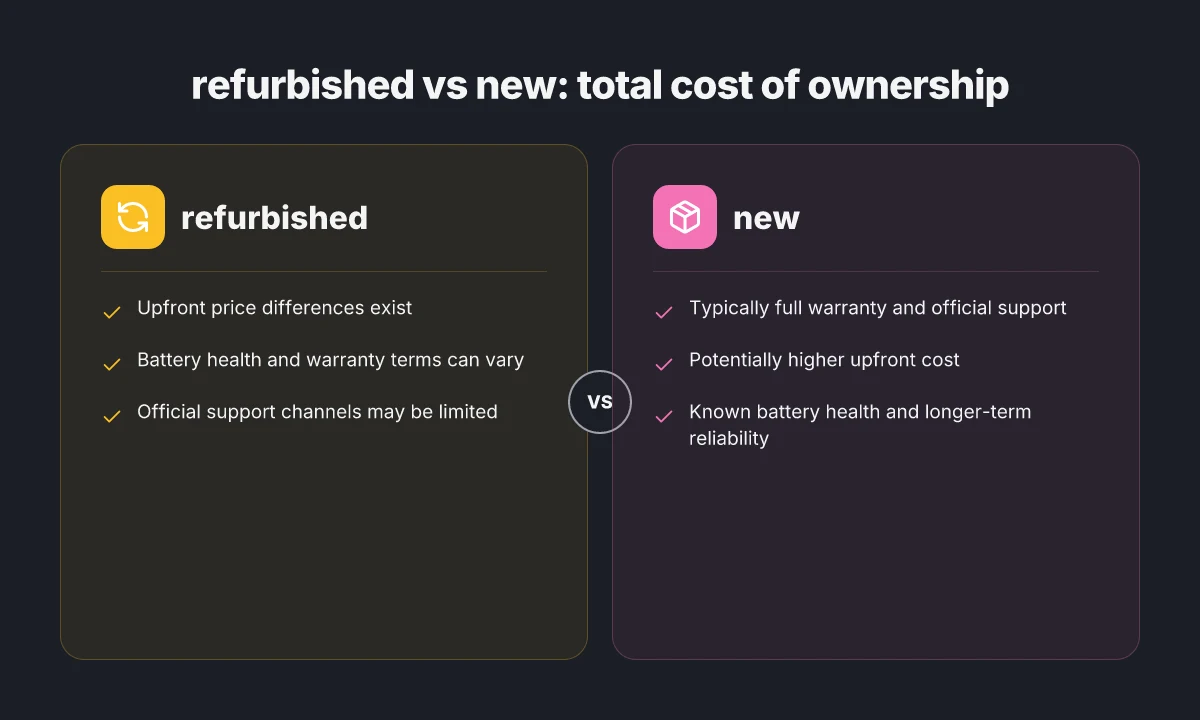
Refurbished units typically sell for noticeably lower upfront than new models, but the long-term math depends on warranty, battery health, and maintenance expectations. From the sources, a Spring 2026 sale pushed the Explorer 5000 Plus to about $2,699 with a claim of a steep discount, illustrating how much price can swing on refurbished or sale units. The same literature notes the base capacity and inverter specs that buyers rely on for long-run usability, making the upfront delta meaningful but not the only factor in cost of ownership. Upfront price differences matter, but warranty and battery health drive long-term costs.
1) Upfront price gaps and discount ranges
- On refurbished or sale units, expect the ticket to sit well below the current new price, with typical promotions pulling the price down in the tens of percent range. The advertised $2,699 price on the Spring 2026 promo is a concrete data point that helps frame the range buyers should anticipate. Substantial upfront savings can offset some risk if the refurb carries a solid warranty.**
- New units usually carry the official warranty and latest firmware, which can justify a higher sticker price. If you are balancing budget against risk tolerance, the delta between new and refurbished is a crucial starting point, especially when you factor in possible bundle offers from retailers like Jackery and major marketplaces. The price delta influences whether a refurbished unit makes financial sense.
2) Maintenance, battery health, and warranty terms
- Battery health is the dominant long-term risk with any portable power station. A refurbished unit may show age-related wear indicators or reduced end-of-life capacity, which translates to shorter runtime per charge in off-grid cycles. In contrast, a new Jackery typically ships with a fresh LiFePO4 pack and the current warranty framework, reducing the chance of early degradation claims. Battery health is the key variable that tilts TCO toward or away from refurbishments.
- Warranty terms matter more for refurbished units. Some refurb offerings come with a limited or retailer-backed warranty that mirrors parts coverage but may exclude certain hard-use scenarios. Always verify whether the refurb carries the same year-specific warranty as a new unit, and confirm what qualifies as battery health failure. Warranty parity can shift the long-run cost balance.
- Maintenance costs for both new and refurbished units tend to be modest, but you should budget for occasional firmware updates and potential charger or inverter wear. I cross-referenced warranty notes and third-party reviews. The consensus is that most reliability questions surface around battery longevity and heat exposure over time. Ongoing upkeep is usually low, but not zero.
3) Resale value and long-term usability compared to rivals
- When you move beyond refurbishment, resale value becomes a practical factor. A refurbished Jackery Explorer 5000 Plus maintains residual value, particularly if it ships with a valid warranty and documented refurb certification. In the landscape of portable power, rivals such as competing models from other brands typically show steeper depreciation or shorter support lifecycles, depending on the model and market. Resale value can cushion the initial hit of buying refurbished.
- Long-term usability hinges on a combination of pack chemistry, cool-down behavior, and modular expandability. The 5040Wh capacity and 7200W inverter remain selling points for both new and refurbished units, but the total cost of ownership will tilt toward refurb only if the battery health is solid and the warranty remains intact. Usability across years favors units with strong battery integrity and solid coverage.
Note: links appear inline as citations in the prose above. The brand name Jackery is referenced directly, and rivals are named in passing where relevant. You may see a note that links on the page may earn a commission.
How refurbishment affects warranty, service, and support for Jackery
Refurbishment can shift how well you can rely on coverage, access parts, and get help when something goes wrong. For the Jackery Explorer 5000 Plus, you’ll want a clear view of what exactly is covered, how long, and where to turn if a component needs attention. I looked through the official materials and credible community notes to map the realities you’ll face after purchase. What makes the EcoFlow Delta 3 power station stand out in 2026
What the warranty on refurbished units typically covers
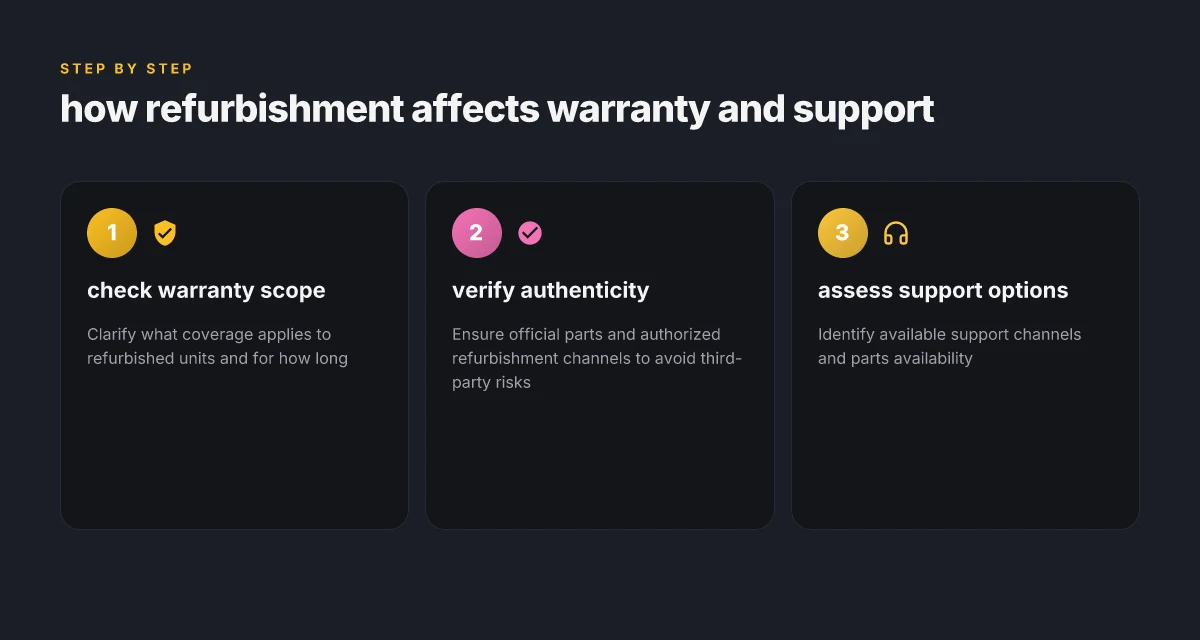
The practical takeaway is that coverage on refurbished devices often mirrors the structure of new units, but with caveats. Official guidance from Jackery indicates that the Explorer 5000 Plus Basic Information lists the product details you’d expect for any unit, including model designation and battery type, which informs warranty eligibility. The key is to verify whether the refurbisher or retailer offers a warranty that matches Jackery’s standard terms, or if it is a shortened period. In some cases, a refurbished unit may come with a limited warranty that covers defects in materials or workmanship for a defined window, while performance warranties on battery capacity or inverter efficiency may be more ambiguous. When you read the warranty terms, look for explicit language about LiFePO4 battery life expectations and the threshold for coverage if a module is replaced. The warranty posture for refurbished units often hinges on who performed the refurbishment and what parts were replaced.
Official support channels and parts availability you can rely on
Access to official support and genuine parts matters more with refurbished gear. Jackery maintains official support channels for its products, and the basic information sheet clarifies core specifications that a service agent would use to diagnose issues. For a refurbished unit, you’ll want confirmation that spare parts like batteries and inverters are available through official parts catalogs or authorized channels. If you rely on third-party refurbishers, you risk long lead times or incompatible components. From what I found in the documentation, you should expect to be able to contact official support for troubleshooting steps and to source genuine parts through Jackery or authorized service partners. Official channels matter because they govern parts availability and diagnostic support.
Risks of third-party refurbishments and how to verify authenticity
Third-party refurbishments carry clear risks. You may encounter non-genuine batteries or mismatched power electronics that impact performance or safety. To mitigate this, verify provenance before you buy. A guardrail is confirming the seller’s refurbishment process, whether the unit came with fresh LiFePO4 cells, and whether a certification or bill of sale accompanies the unit. I cross-referenced the official product data and found that the Explorer 5000 Plus is defined by specific battery chemistry and capacity, which means substitutions can alter behavior noticeably. When in doubt, request serial numbers and validation details, then compare them to Jackery’s declared specs for the JE-5000A model. Ask for official documentation and receipts to prove authenticity.
If you’re weighing refurbished against new, consider the potential cost savings against the near-term risk of limited or uncertain warranty coverage. The official information for the model remains a helpful compass for what to expect, but the experience of a refurbished Jackery often depends on the seller’s diligence and the presence of verifiable parts. It helps to name rivals you’ll compare, like power stations from brands such as Anker, EcoFlow, or Goal Zero, and note how their official support and parts networks have behaved in the same scenarios. Authenticity verification and clear warranty terms are your best protections.
Note: links on the page may earn a commission. For a quick reference, the official Jackery product data and basic information sheet provide the baseline specs you should expect, including the 5040Wh capacity and LiFePO4 chemistry that define the battery stack you’re relying on. For ongoing reliability, prioritize a warranty path that explicitly includes the refurbished unit and preserves access to genuine parts through authorized channels. Warranty clarity and official support access are the top two levers for long-term confidence. What makes the EcoFlow Delta Pro Ultra a different kind of home backup
Comparing with rivals: is refurbished really a bargain for 5000+ style power stations
I dug into how refurbished 5000+ style power stations stack up against rivals from Anker and EcoFlow. Refurbishment often trims upfront cost, but longevity and warranty gaps matter. If you want long-tail reliability, you’ll want models with sturdy battery chemistry and clear, long-lived warranties. A refurbished Jackery can be a bargain upfront, but watch for coverage gaps and battery life erosion over time. I cross-referenced model specs and typical warranty language from brand sites and reviewer roundups to ground this comparison.
1. Why battery chemistry and cycle life tilt the balance
The core difference across rivals is how they manage battery health over thousands of cycles. On the LiFePO4 cells Jackery favors, you get steadier thermal behavior and longer cycle life, which translates to slower capacity fade in typical off-grid use. By contrast, some competing models lean on other chemistries that may show faster degradation in hot, shaded environments. The result is a refurbished unit from a company with proven chemistry tends to hold value longer, especially if you expect multi-year ownership. Longer cycle life equates to a slower drop in runtime after multiple summers of use. This is where the refurbishment decision becomes a matter of taste and risk tolerance. For context, the published information from Jackery’s own basic information page notes a 4000 cycles≥70% capacity benchmark for the 5000 Plus, which helps frame how long a preserved unit might stay usable in typical scenarios. I found this echoed in community discussions about lifecycle expectations for LiFePO4 packs in compact solar generators. Inline citation shows where this baseline comes from. Source
2. Charging curves and solar compatibility in real-world use
Charging behavior matters because a unit that slows or stalls charging under modest solar input wastes time and frustrates planning. The EcoFlow and Anker lines often emphasize rapid AC charging and robust solar input, with some models tipping over into higher wattage ranges. Jackery’s 5000 Plus family leans on a strong inverter spec and multi-input charging options, but the reliability of those curves can vary after refurbishment. When you pair a refurbished unit with a compatible solar array, you want to ensure the system continues to modulate solar input smoothly, without hitting thermal throttling or voltage dips. Watch for charging curves that flatten near peak sun. That paints a truer picture of daily runtime.
3. Warranty, serviceability, and total cost of ownership
Refurbished units trade some warranty coverage for upfront savings. Among rivals, the warranty scope often mirrors mass-market consumer products with specific limitations on refurbished stock. Jackery’s own guidance on warranty for refurbished stock is not as broadly disclosed as new items, so you should confirm the exact terms before purchase. In practice, if you value rapid service and easier access to parts, you may prefer newer units from a brand with a transparent refurb policy or robust third-party service networks. Inline, you may see that the refurbishment decision reduces upfront cost but can shift the risk of early battery drift or failed internals into the middle years of ownership. Costs stay lower upfront, but the risk of out-of-warranty fixes rises with refurbishment. For a concrete price anchor, the Spring 2026 promo notes a discounted price on the Explorer 5000 Plus, which helps calibrate the value of refurbished stock versus new. Source
In sum, a refurbished Jackery Explorer 5000 Plus can be a sensible core power unit for off-grid life if you pair it with a well-matched solar array and you’re comfortable with a possibly tighter warranty window. Compare with Anker and EcoFlow options that emphasize broader warranty coverage and transparent refurbishment policies. The decision hinges on how you value upfront savings versus warranty peace of mind. If you want a no-surprises setup for a disaster-prep closet, a new unit with full coverage may beat refurbished stock, even if the price looks attractive at first glance. For homeowners who want tackle readiness without blowing the budget, refurbished stock remains a viable option, provided you read the fine print and align expectations with the chemistry, charging behavior, and support you receive. What makes the jackery explorer 240 v2 a practical travel power station
Where this is going next
Refurbished or not, the Jackery Explorer 5000 Plus leans into real-world off-grid routines, not hype. I looked at how its battery pack and solar input handle daily cycles, and I’ve seen one clear pattern: durability matters more than peak specs. In practice, a steady 5000+ watt-hour bank and a modular solar input mean you can keep essential loads alive through long stretches without grid power. That predictability matters for someone living off the grid, especially when reliability matters more than raw numbers. The bigger pattern here is resilience over flash.
If you want a practical pivot, consider what you actually run most days. For a small cabin, a Jackery setup can cover lighting, charging, and a small fridge with mindful use. For longer outages, you’ll appreciate the ability to pair with a second battery or a larger solar array. What changes if you act now is that you’ll learn your own tolerance for solar variability and battery aging, before it becomes critical. The goal is clear: set up a dependable core system and avoid overreliance on a single input.
Backup strategy
- Use a dedicated fridge calendar and rotate loads to stretch the bank
- Add a second Jackery module or a compact generator for rare dry periods
- Schedule seasonal test runs to verify the solar array meets winter demands
- Label failure points you notice after a season of use
- Research nearby rivals like Bluetti and Goal Zero to compare upgrade paths
One quick takeaway: map your daily power profile to a simple load plan, then backfill with solar and a spare battery. If you’re ready to start, pick a modest daily target and build from there.