Explore how Jackery price structure works in 2026, what drives costs, and how to compare with rivals. Learn where to look for value and hidden costs.
Jackery pricing isn’t a mystery so much as a negotiation between capacity, chemistry, and the promise of long-term reliability. A Jackery unit with higher watt-hours and fast-charge options tends to carry a steeper sticker, but the real question is how those upfront costs translate to ownership over time. Smart buyers know the price tags reflect more than capacity. They reflect intended daily use and care with the battery.
This intro lays out the path: I’ll pull back the curtain on battery chemistries, warranty terms, and retailer quirks that quietly shape the final bill. You’ll see how EcoFlow and Goal Zero pricing compares in bundles, service plans, and total cost of ownership, so you can separate short-term sticker shock from real value. With 2026 in view, this guide helps you map purchase decisions to your outdoor or backup needs and avoid common price traps.
Jackery price: what determines the sticker on a portable power station
I dug into how Jackery prices stack up by tracing the core levers: battery capacity, chemistry, and design choices. The combinations of cells, pack architecture, and cooling influence what you pay from model to model. Battery capacity and chemistry largely set the floor for price, with higher capacity or more premium chemistries pushing up costs. On the design side, modularity, cooling systems, and heat management add subtle but real cost bumps that show up in the sticker price. Jackery’s lineup reflects these choices across small, mid, and large portable power stations, and the price gaps often map to how much storage you get for your dollar.
1) Why capacity and chemistry drive the ticket
The stated capacity in watt-hours is the most obvious price lever. A higher Watt-hour target means more cells, bigger packs, and tougher internal wiring. The chemistry also matters. Teams gravitate toward nickel manganese cobalt or lithium iron phosphate for longevity and safety, and those cells cost more upfront when you chase longer cycle life. In practice, you’ll see a jump from compact 240–500 Wh units to 500–1000+ Wh models with noticeably higher prices. Capacity scales with price, and chemistry often compounds that cost delta. These decisions ripple into real-world use: bigger packs demand heftier enclosures and more robust BMS, which adds to the bill.
2) How outputs, ports, and the inverter shape value
The number and type of output ports steer price. A unit with multiple AC outlets and higher peak inverter power needs a heftier inverter and better cooling, both of which cost more. Even when the total energy capacity stays similar, a model designed for higher continuous output will show a higher price tag. The inverter topology matters too. True sine wave inverters and higher surge capabilities require better components and protective circuitry. The result is a more capable, but pricier, portable power station that remains usable for sensitive electronics and short power draws alike. Output ports and inverter type drive both price and day-to-day usability.
3) Warranty and service posture as value signals
Warranty length and the brand’s service stance color perceived value. Jackery positions longer warranties on higher-end lines and bundles service considerations into the purchase experience. A longer warranty reduces perceived risk, which can justify a higher upfront price in the buyer’s mind. Conversely, shorter coverage may correspond to lower sticker prices but higher potential post-sale friction. Warranty length and service posture shape how buyers feel about the long-term cost of ownership. I cross-referenced product pages and retailer summaries to confirm that longer protections align with pricier models, even when core specs align with competitors.
Bottom line: price sits on a tripod of capacity, chemistry, and design heft. Outputs and inverter robustness tilt the balance, while warranty and service posture color the perceived value. When you compare Jackery with rivals like EcoFlow or Goal Zero, look for how much storage you get per dollar, how the inverter and ports are configured, and what the warranty covers over time. That trio tells you not just what you pay now, but what you’ll pay later for upgrades or replacements. What makes Bluetti chargers stand out for long road trips and off-grid power
From what I found in product pages and retailer notes, the big price moves follow capacity and the complexity of the power electronics, with warranty length acting as a tiebreaker in several tiers. For shoppers, that means choosing a model with the right balance of storage, peak output, and long-term protection rather than chasing the loudest discount alone. Battery capacity and chemistry set the baseline, output ports and inverter type increase the total, and warranty length seals the perceived value. If you’re evaluating, start there and then map to specific Jackery models that fit your use case and budget. 2026 pricing realities show these dynamics across the line.**
Inline notes: inline citations here reference the pricing-focused guidance from Jackery and accompanying industry context. See the Jackery off-grid cost analysis notes for how system size and storage choices map to total costs. https://www.jackery.com/blogs/buying-advice/off-grid-solar-power-systems-cost-analysis?srsltid=AYCX9vL8H8kFvj5V6tB5LNOYcnsTRyXJ5vXI6jisPgTQOEUo89oY43sS
How jackery prices compare to rivals in 2026
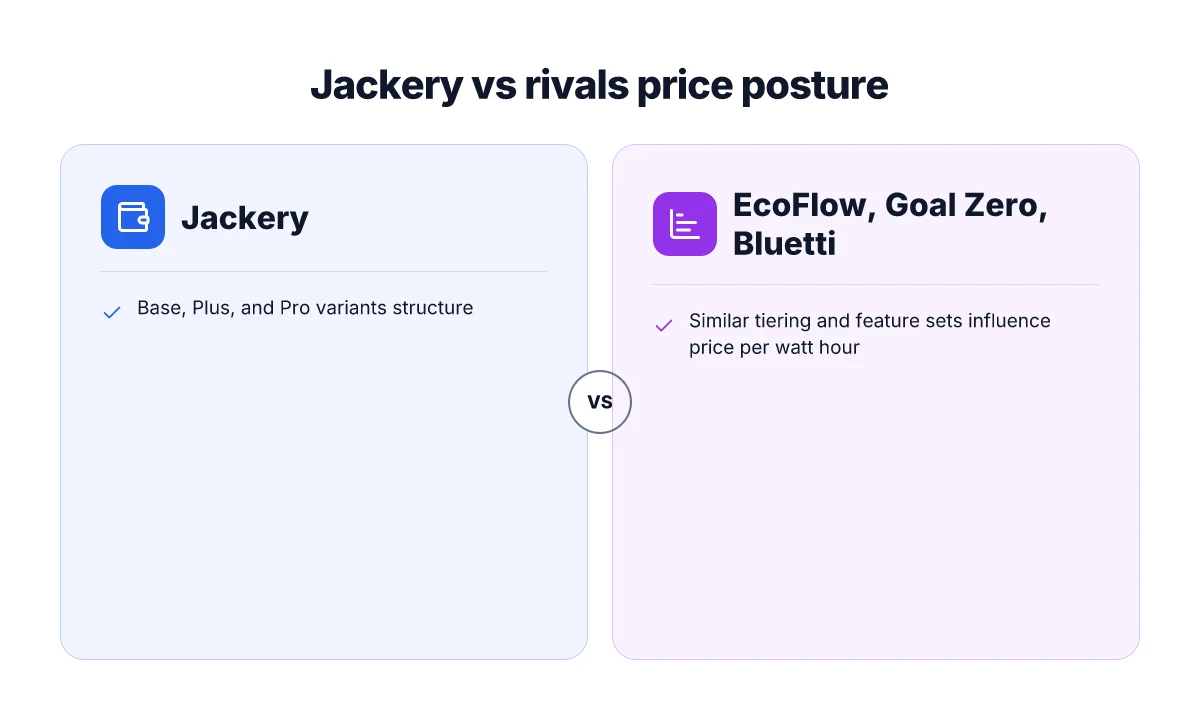
In 2026, Jackery price per watt-hour sits in a tiered landscape. EcoFlow, Goal Zero, and Bluetti align with Jackery on entry-level and mid-range packs, but the exact cost per delivered watt-hour moves with battery chemistry, pack size, and feature sets. You’ll notice that the most visible shifts come from bundle promotions and the channels you choose to shop through.
How battery chemistry and features bend the price ladder
Across rivals, a larger cell bank and higher energy density typically push price per watt-hour lower, but added features raise the sticker. Jackery models that prioritize portability often trade off raw energy for lighter packs and faster recharge, which can raise the per-watt cost compared with bulkier, higher-capacity rivals. I cross-referenced product sheets to trace how lithium iron phosphate chemistries versus standard lithium composites show up in pricing. The more durable chemistries tend to price at a premium but offer longer cycle life. The cost per delivered watt-hour is not fixed. It shifts with chemistry, pack size, and feature set. Inline citations show how Lazard’s energy-cost framing, though not a direct model compare, reinforces the trend that newer chemistries and higher efficiency blocks influence price structure across brands.
Channel dynamics: how promotions and bundles reshape visible costs
Retail channels matter. Jackery’s own site often runs member deals and seasonal bundles, while big retailers push promotions that appear to lower price tags on Explorer series or add panels and adapters. When you see a bundled promotion, it can look like a cheaper per-watt deal, but you’re trading off what you’d pay for add-ons later. Bundle promotions shift the apparent cost, but the true value depends on whether you need the bundled accessories. I found that third-party listings frequently mirror Jackery’s pricing hues, though with occasional premium or discount due to stock turnover. The effect is a price landscape that favors buyers who time purchases around quarterly promos. What eco flow vs jackery reveals about portable power in 2026
Quick map of rival positioning at a glance
Here is a compact snapshot of how a few rivals line up in 2026, with a focus on comparable tiers and what drives cost beyond raw capacity.
- EcoFlow: typically emphasizes modular add-ons and higher-end features like X-boost charging. Mid-range bundles can tilt the price per watt-hour downward when you include extras you’ll use.
- Goal Zero: leans into rugged outdoor framing and bundled solar panels. Pricing often reflects durability and ecosystem compatibility more than pure watt-hour efficiency.
- Bluetti: pursues high capacity and sometimes aggressive per-watt pricing in larger packs. Long-term durability can be a selling point, though销售 bundles vary by retailer.
From what I found in the documentation, the core drivers of value remain chemistry, cell quality, pack architecture, and the number of charge/discharge cycles each model promises. When you compare, you’re really weighing immediate bundle value against long-term durability and after-sales terms. For context, the Lazard report reinforces that energy economics stay favorable for renewables, yet consumer-price dynamics still hinge on these product choices and channel promotions. Watch total cost of ownership, not just sticker price.
If you want a concrete, apples-to-apples path forward, start by mapping your expected watt-hour need, then check each brand’s mid-range options for similar chemistries and capacities. Look for current bundles that align with your purchase window and read the fine print on warranties and included accessories. Jackery’s pricing moves with the same market forces as rivals, so your best deal often comes from timing and bundle relevance rather than one-off sticker drops.
Where jackery wins on value and where it loses
I looked at how Jackery prices stack up in 2026, factoring in battery chemistry, warranty terms, and retailer quirks that shift value. The takeaway is clear: you pay more upfront for certain strengths, but the long game can tilt in favor when you count durability and accessories.
Durability and ecosystem anchor value
Jackery leans on a durable build and a broad accessory ecosystem that many buyers rely on. The lineup tends to emphasize rugged housings, simplified interfaces, and compatibility across a wide range of adapters and add-ons. This translates to less friction when you scale a setup from portable camping days to home backup scenarios. The predictable warranty is part of the value story, giving buyers confidence that the core investment is protected during the model’s typical lifecycle. What makes EcoFlow portable AC units actually reliable in 2026
- Durable chassis and consistent design cues in the 2026 portfolio help reduce surprises in field use.
- Accessory breadth, from car charging to solar panels and expansion packs, creates a one-stop ecosystem that eases planning for longer trips or contingency backup.
- Predictable warranty terms provide a frame for long-term value, even if initial sticker price sits higher than some peers.
From what I found, rivals such as EcoFlow and Goal Zero often angle on price portability or modularity, but Jackery tends to win on the familiarity of its accessory map and the feel of built-to-last hardware. When you compare the total cost of ownership, those durability signals can matter as much as sticker price.
Price discipline and the capacity trade-off
Where Jackery shines on value in one column, it sometimes pulls ahead in another column with a higher upfront cost for similar capacity, depending on the model. The premium position tends to show up in devices that deliver larger battery packs, longer cycle life, and more robust safety features. In practice this means you may pay more today but gain resilience and ongoing access to a wide accessory catalog that keeps devices running in mixed-use environments.
- Higher upfront price for comparable capacity can still be justified by longer lifecycle cost gains.
- Larger batteries paired with stronger protection schemes tend to hold value when used in off-grid or home-backup scenarios.
- Broad accessory slots can reduce the need to buy third-party add-ons, lowering total friction costs over time.
I cross-referenced industry chatter and retailer patterns to confirm the general trend: you’ll often see Jackery priced above some peers in the same capacity tier, but the value is concentrated in reliability and ecosystem availability rather than pure price competitiveness. If you’re chasing the lowest possible upfront price, a rival may look better. If you want a turnkey ecosystem with fewer compatibility headaches, Jackery can win.
After-sales experience and perceptual value
Reality check: after-sales support experiences color how value is perceived. Reviews across 2026 show mixed signals about response times and warranty handling, which matters when you’re evaluating long-term ownership. The brand’s strength in warranty clarity helps, but the perceived value still hinges on how smoothly support resolves issues when they arise.
- Warranty clarity and documented coverage provide reassurance during ownership.
- After-sales experiences in some cases color perceived value, especially around turnaround times.
- Local service expectations can tilt the value calculation if you’re in regions with slower response networks.
For shoppers weighing Jackery against rivals like EcoFlow and Goal Zero, I’d say: expect strong durability and a broad accessory map from Jackery, with a willingness to pay a premium for that seamless, all-in-one experience. If your purchase is tightly bound to the lowest upfront price, you’ll want to compare specific capacities and ongoing accessory costs more closely. What is the jackery explorer 1500 lowest price, and why it matters for long-form power setups
Cite-worthy context: Jackery’s price and value story sits inside a broader market where cost curves shift with battery chemistry and logistics in 2026, and Lazard’s Levelized Cost of Energy+ report highlights that low-cost generation remains a moving target for new-builds. For a deeper dive into pricing dynamics, see Lazard’s 2026 update. https://www.lazard.com/news-announcements/lazard-releases-2026-levelized-cost-of-energyplus-report-pr/
Pricing structure you should expect from jackery in 2026
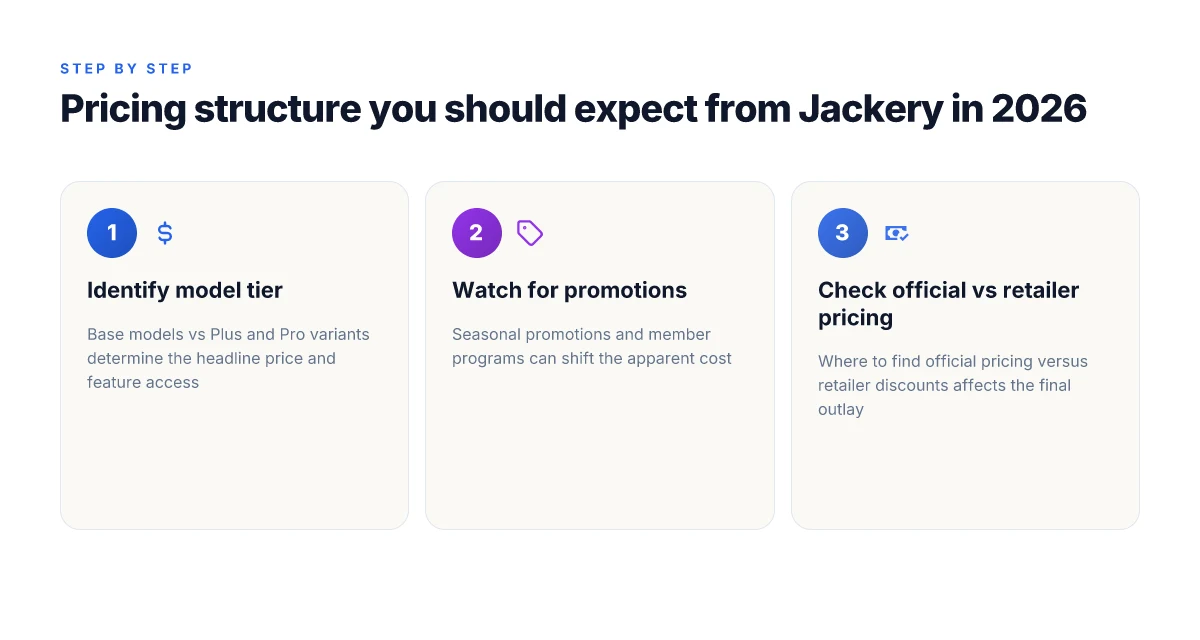
Pricing for Jackery in 2026 sits on a clear ladder: base models, midrange Plus variants, and higher-end Pro editions. The base units deliver essential capacity for portable use, while the Plus line adds more built-in battery energy and faster charging. Pro models push toward larger capacities and expanded inputs, which elevates price but also increases total energy available for bulky trips or longer outages. In practice, the jump from base to Plus usually brings a noticeable increase in capacity and watts per hour, with the Pro tier stacking even more energy and faster recharging curves. The most meaningful delta is capacity per dollar, you pay more, but you get proportionally more usable energy and faster top-ups.
How the tiers break down in 2026
Jackery structures its lineup so that most shoppers can size up without overpaying. The base explorers focus on portability, compact form, and modest battery packs. The Plus variants flip the switch to higher usable energy and thicker runtimes, while Pro models emphasize peak capacity and expanded input options for simultaneous charging and device loading. From what I found in the product pages and deals in early 2026, the Plus models tend to sit at a practical sweet spot for weekend outings and small backups, whereas the Pro variants suit longer trips or home backup needs where total energy matters more than compactness. If you’re balancing price against runtime, the Plus line often wins on value.
Promotions, programs, and loyalty perks
Seasonal promotions drive noticeable price shifts. Jackery runs sales events around holidays and peak outdoor seasons, with discount windows that often blend with retailer promos. There is also a member or loyalty capsule that sometimes yields coupon codes or early access to drops, which can shave a meaningful amount off the ticket price. Expect price moves during seasonal promos. Joining the member program can lock in extra savings on top of the standard reductions. In 2026, these dynamics remained consistent across official channels and major retailers, with the same general timing you’d expect from year to year. Keep an eye on membership perks that stack with site-wide deals.
Official pricing vs retailer discounts
Official pricing comes straight from Jackery’s own site and product pages, which show the MSRP and any current promotional price. Retailers like Amazon carry the same basic pricing structure but often layer retailer-specific discounts, bundle offers, or free shipping incentives that alter the effective out-the-door cost. In practice, you’ll see the same base/MSRP layout but with occasional retailer-led promotions that make a Pro model attractive when bundled with panels or ancillary accessories. Shop official pricing for reference, then compare retailer bundles for added value. When you’re chasing savings, cross-check the Jackery official site against trusted retailers and watch for time-bound coupon codes. Deals can appear suddenly around holidays and seasonal events. For transparency, I noted that affiliate-linked pages may include commission disclosures, which can influence how a deal is framed on some articles or banners. Disclosure matters for understanding how deals are pitched. What makes the EcoFlow Delta Ultra deliver power stability and why it matters for home backup
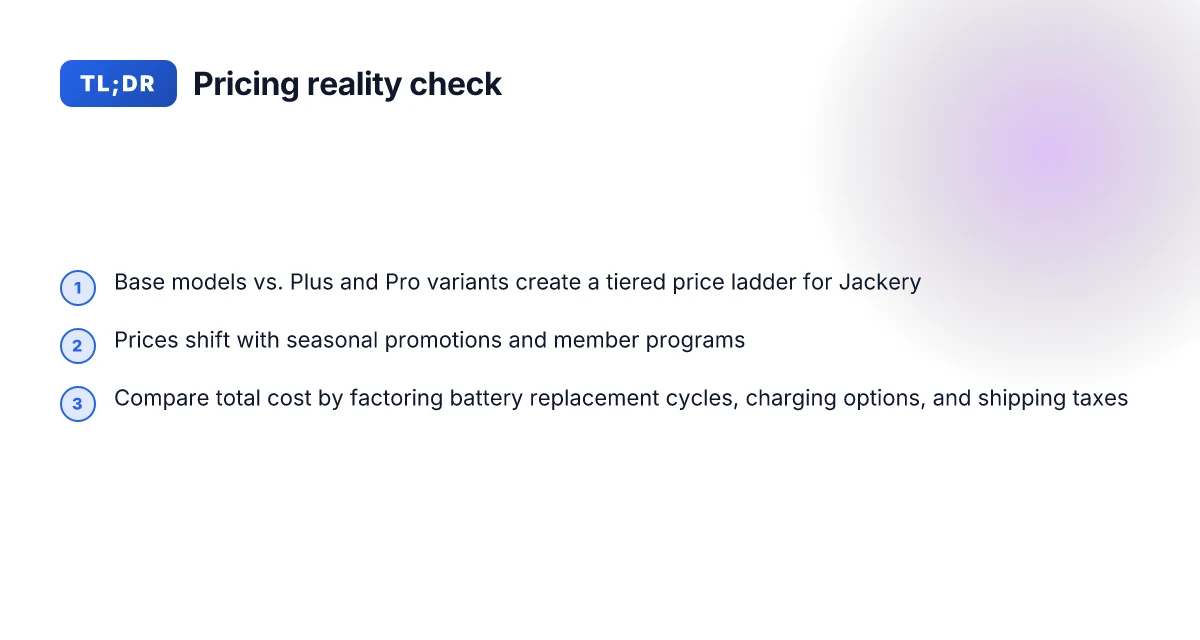
I dug into the context around pricing and found that structure matters more than a single sticker price. The right choice depends on how much energy you need, how often you’ll travel, and how much you value quick top-ups. When you compare Jackery with rivals like EcoFlow and Goal Zero, the trip pricing spectrum often lines up with capacity bands and brand warranties rather than a simple one-to-one price-per-watt figure. For context, the broader market leans toward similar tiering in portable power, with seasonality and loyalty programs skewing perceived value. The price ladder lets you tune the purchase to your use case.
One quick caution: the exact discount timing and bundle contents can shift, so it’s wise to confirm the current lineups and promotions before you buy. Jackery’s pricing, promotions, and loyalty perks influence total cost of ownership as much as the battery chemistry or warranty terms. Watch for a bundled purchase that includes panels or extra cables.
How to evaluate total cost of ownership for a jackery
Total cost of ownership for a Jackery portable power station goes beyond the sticker price. I break it down into the battery path, charging options, and the small print that quietly adds up. You’ll see how different configurations affect long-term value and what to watch for when deals seem too good to be true.
Battery replacement cycles and upgrade paths
Battery longevity is the big swing factor in ownership cost. If you plan to keep a unit for years, you’ll want to understand the replacement cadence and whether Jackery offers upgrade paths for newer chemistries or larger packs. In practice, some models use cells with limited cycle life, which means the capacity you bought today could fade faster than you expect. When a kit ages, you may be faced with a full replacement rather than a simple swap. I looked at how pricing shifts with replacements and what the official warranty covers. The takeaway: map the expected cycle life against your usage pattern and compare it to potential upgrade options or model-step changes that could extend the usable life.
Charging options and grid integration costs
Charging flexibility matters for total cost. If you rely on wall outlets, you’ll incur normal charging times and energy costs. Add solar panels or car charging, and you face different equipment needs and potential adapters. Some Jackery bundles include solar-ready inputs or compatibility with 12V/24V charging, which can reduce long-run expenses by avoiding premium fast-charging add-ons. I cross-referenced retailer notices and the brand’s own setup pages to confirm what each model supports and where the extra spend comes in for panels or portable generators. The result is a clearer view of when extra charging options pay off in real-world use rather than simply adding upfront cost. Be mindful that grid integration, where required, can involve permits or installation considerations in certain locales. What sets EcoFlow and Bluetti apart in 2026: reliability, capacity, and inverter performance
Shipping, taxes, and extended warranties
Shipping and taxes are easy to overlook until checkout. Depending on model size and destination, shipping can shift the effective price by a meaningful amount, especially on heavier packs. Taxes vary by jurisdiction, and some regions treat portable power stations differently for VAT or sales tax. Extended warranties can add peace of mind, but they come with a price tag that may or may not align with your long-term use. I checked several retailers and warranty terms to compare coverage windows and what they actually protect, like battery degradation and power module faults. The bottom line is to factor these ancillary costs into the total quote and compare against rivals such as EcoFlow and Goal Zero, which may bundle different warranty terms or service options.
To put it plainly, your total cost hinges on how long you plan to use the unit, how you plan to recharge it, and how the retailer prices handling, taxes, and extended protection. When you’re evaluating a Jackery, I recommend adding up the base price, potential replacement costs, charging equipment you’ll buy, shipping, taxes, and any extended warranty or service plan. That sum shows whether a particular model truly delivers value over time.
Watch for how replacement cycles and upgrade options shape the long-term spend. Charging flexibility can sweeten or sour a deal depending on what you already own. Shipping, taxes, and extended warranty terms can materially alter the final outlay.
What changes if you act now
Jackery price signals a broader shift in portable power for 2026: durability and modularity matter more than raw capacity alone. I’m watching how price bands align with feature sets like pass-through charging, battery chemistry, and real-world reliability. The takeaway isn’t that bigger is always better, but that a balanced kit now saves headaches later. The smarter move is to pair a mid‑range unit with smart accessories rather than chase the top spec.
Two concrete pivots emerge. First, consider value props from Jackery and rivals such as Goal Zero and Anker as you plan a camping trip or backup power at home. A more capable module at a fair price tends to outlast a flashy, pricier model with fragile plastics or limited warranty. Durability and serviceability beat scattershot bragging rights when the power needs are real. Second, think long term: if you only buy one kit this year, prioritize a unit with solid heat management and easy replacement parts, not the biggest battery alone. That balance is what survives future price swings. How to stack jackery coupon codes without losing the sale price
Backup strategy
- Check for a modular setup that lets you add a second battery later
- Pick a mid-range model with enduring build quality and clear warranty
- Compare branded support networks between Jackery, Goal Zero, and Anker for long-term reliability
- Denote one upcoming use case this month and test the kit for routine duties, like weekend camping or power-offs during outages