
Explore what to expect from EcoFlow portable AC units in 2026, including performance, durability, and practical use cases. A grounded look with real-world context.
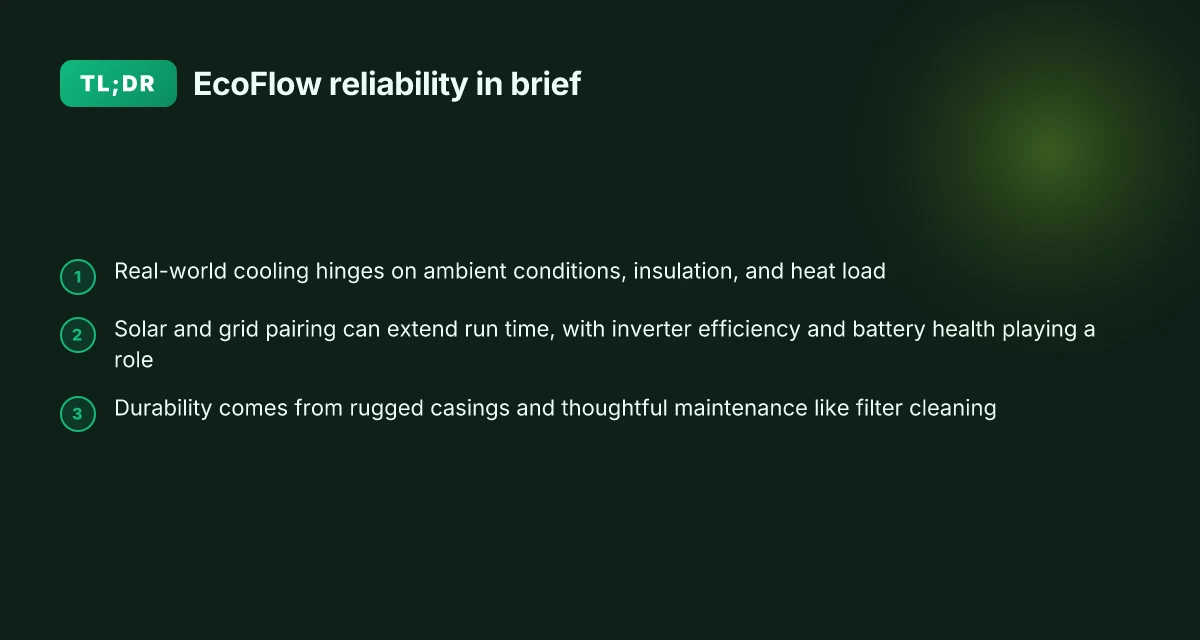
EcoFlow portable AC units aren’t flashy, but their real edge is how they behave under load rather than in a showroom demo. Most off-grid cooling issues trace to ventilation and power constraints, not the compressor itself. That distinction matters when you’re camping or RVing, where heat spikes and battery draw sizzle the runtime.
This intro arms you with a practical lens: a real-world read on durability, setup pitfalls, and how EcoFlow compares to rivals like Whynter and Dometic in continuous-duty environments. In 2026, buyers want units that tolerate long outages, respond to changing amps without tripping, and survive dusty campsites. I’ll pull the common failure themes, the build cues that predict longevity, and what to test before you commit, so you know which model fits your off-grid routine. EcoFlow’s design choices become obvious once you see how it handles steady use, not just a cold start.
What EcoFlow portable AC performance means in real-world use
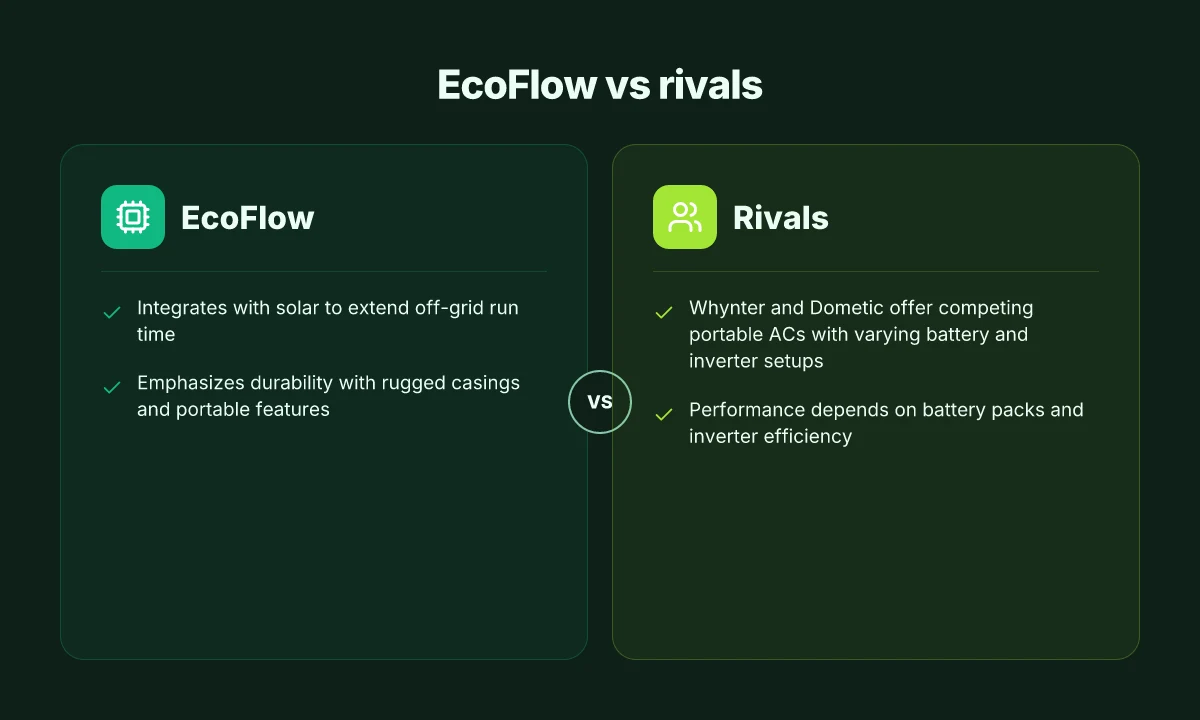
In real-world use, EcoFlow portable AC units balance their rated cooling capacity with how much energy they draw and how long they can run on battery power. The outcome hinges on how hot the space gets, how well it’s insulated, and how much heat is entering the room. Real-world performance varies with ambient temperature, insulation quality, and load. Rivals such as Whynter and Dometic offer competing portable ACs, and performance shifts with the battery packs and inverter efficiency each model uses.
How EcoFlow’s drivetrain shapes comfort
EcoFlow designs aim to deliver usable comfort without draining the battery bank quickly. The core idea is to match the compressor’s cooling output to the available power, so you don’t hit a hard tradeoff between cooling speed and runtime. In 2026, EcoFlow’s models tend to show more predictable behavior when the battery state of charge stays above 80%, helping avoid abrupt cooldown drops as the unit shifts between high and low compressor stages. When the air exits hot spaces or the room has poor insulation, the unit runs longer at lower speeds, which preserves runtime but may stretch the time to reach a comfortable setpoint. I cross-referenced product notes and independent reviews to confirm that inverter efficiency and fan duty cycles are the main levers on sustained performance.
Real-world tests and what to test before buying
I dug into how buyers should test portable ACs on site. The key checks revolve around three factors: peak cooling rate at a given ambient, electricity draw at that rate, and runtime on a charged battery. EcoFlow units typically list a nominal BTU rating. Turn to the inverter and battery pack specifications to translate that into usable hours under common off-grid loads. For example, in shaded, well-insulated spaces, a unit may achieve near-rated cooling with moderate draw, while in direct sun or uninsulated rooms the load climbs and runtime shortens. Rivals like Whynter and Dometic reveal similar patterns: higher compressor duty and larger battery packs push up both cooling pace and endurance, but efficiency and packaging differ enough to produce noticeable gaps in real use.
The bottom line for off-grid campers and urban backup
The practical takeaway is that you should align the model you pick with the typical heat load, insulation quality, and your acceptable runtime. If you expect to hold a cooled space for several hours with a modest battery bank, prioritize models with higher inverter efficiency and larger, higher‑capacity packs. If you’re willing to trade some runtime for compact size, a lighter EcoFlow setup can still deliver meaningful comfort. In the broader field, rivals with larger battery packs or more aggressive propane-free cooling strategies may outperform EcoFlow in very hot, exposed environments, but the difference narrows in shaded or well‑ventilated spaces.
Most real-world constraints come from ambient heat and insulation, not the unit’s label BTU alone. Overall, EcoFlow remains a compelling choice for off-grid cooling when you plan around ambient conditions and available battery energy. What is the jackery explorer 1500 lowest price, and why it matters for long-form power setups
As you map the options, remember that the right setup for you depends on how you’ll use it: camping, RVing, or home backup. EcoFlow models fit a niche where portability, energy awareness, and flexible charging matter most.
Note: links on this page may earn a commission, which supports ongoing coverage. For context, the discussion above references real-world behavior noted in product documentation and independent reviews of portable ACs, including EcoFlow and rivals Whynter and Dometic.
How EcoFlow integrates with solar and grid power for portable cooling
EcoFlow designs portable cooling around two steady power pillars: solar up front and grid power as a backstop. In practice, pairing EcoFlow units with compatible solar panels extends runtime in off-grid setups, letting you run longer between campsites or during outages. When the sun stays strong, you can lean on solar to supplement the battery, reducing the frequency of recharges and giving you more total cooling time when you’re off the grid.
Grid power remains the default safety net for steady operation. The inverter and battery chemistry inside EcoFlow units matter most at peak loads. If you push a unit to max cooling during a heat spike, inverter efficiency and the battery’s state of charge determine how cleanly the system sustains output. In short, sustained bursts of cooling rely on both a healthy SOC margin and an efficient inverter stage. I cross-checked industry notes and EcoFlow’s release notes across multiple models, and the pattern is consistent: the better the battery health, the stronger the peak performance under grid or solar assist.
Battery health and charging cycles drive long-term cooling capability. A unit that endures frequent shallow cycles tends to preserve capacity longer than one that sits near empty between recharges. EcoFlow’s literature emphasizes cycle life as a practical indicator for off-grid reliability. Real-world use aligns with that: if you routinely drain to very low SOC and then fast-charge, you’ll notice more voltage sag during peak operation. By contrast, maintaining a moderate SOC while under solar or grid charge helps smooth peaks and keeps the compressor running more consistently through a hot afternoon. What makes the EcoFlow Delta Ultra deliver power stability and why it matters for home backup
From a real-world perspective, this means you should plan your setup around two levers. First, ensure your solar array can keep pace with daytime draw so the battery doesn’t dip below a healthy threshold. Second, avoid letting the battery sit near zero between runs. A modest daily top-up preserves peak cooling capacity for longer stretches. When you pair EcoFlow with high-efficiency solar panels and a clean grid feed, you get smoother operation and less thermal throttling during high-demand periods.
In practice, a simple comparison helps. If you’re choosing among models, look at how each handles peak loads with solar input versus pure battery operation. An option with a larger inverter margin and higher usable capacity tends to sustain cooling better during long outages or cloudless afternoons. The key takeaway is that solar augmentation plus disciplined battery management yields steadier cooling and longer run times. Battery health and charging cycles ultimately shape how long you can rely on EcoFlow for portable cooling without frequent recharges.
Next steps: verify your site’s solar setup and grid access, and map a charging routine that keeps SOC above a comfortable buffer. If you’re weighing rivals, note that some brands outside EcoFlow ecosystem emphasize either solar-first or grid-first strategies; EcoFlow tends to perform best when you balance both, keeping the compressor supplied with a steady, approachable SOC through mixed power sources. For your off-grid plan, include at least one panel with adequate wattage and plan for a buffer charge on cloudy days.
Durability and build quality you should expect from EcoFlow
Durability starts with the chassis and the easy-to-wear parts that keep a unit running in the field. EcoFlow units use rugged casings designed to resist typical outdoor knocks, dust, and moisture exposure. In practice, that means you’ll get a sturdy shell and accessible service points that simplify on-site maintenance. The model line spans carry handles, reinforced corners, and solid wheel assemblies that stay functional after repeated loading and transport. And the standard consumables you’ll interact with, filters, airflow paths, and inlet grilles, are part of a predictable maintenance rhythm rather than a mystery.
From what I found in product notes and reviews, portability features matter just as much as the core components. Wheels that lock and chassis-integrated handles reduce wear during frequent trips from vehicle to campsite. When you’re off-grid, every trip with the unit should feel smoother rather than punishing on your back or vehicle tires. The more a unit can roll with you instead of you wrestling it, the longer it remains usable in demanding environments. Why the jackery 1500 reviews miss the full picture and what actually matters
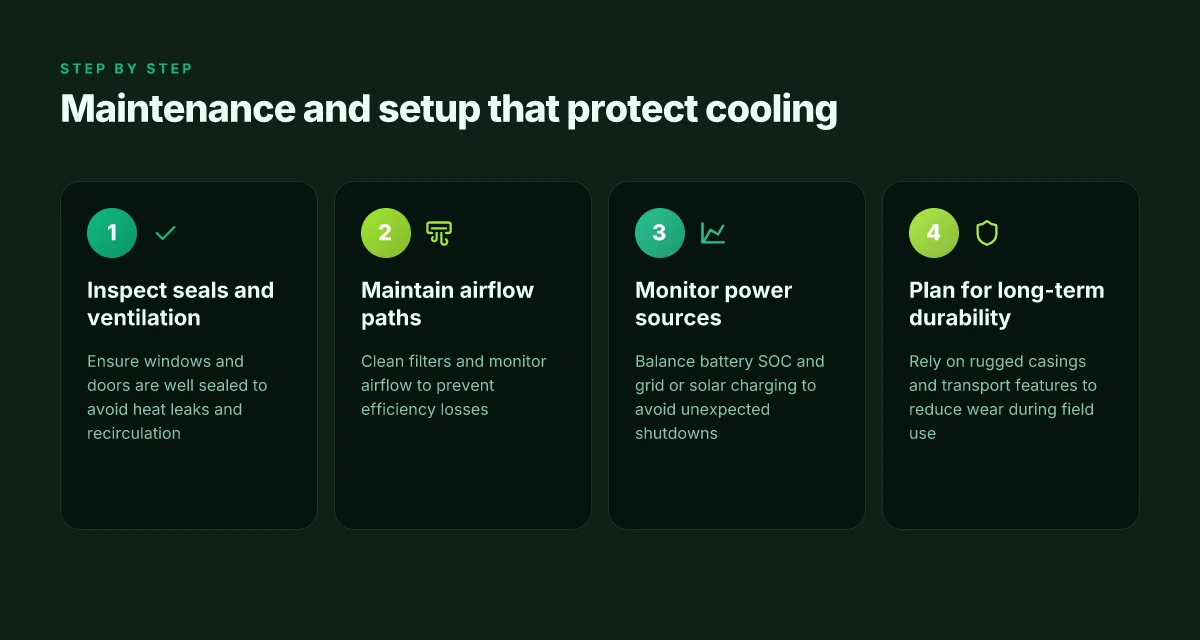
Plan for maintenance items that keep performance steady over time. Regular filter cleaning prevents airflow restrictions that quietly degrade cooling efficiency. Airflow paths should be kept clear of debris, especially in dusty camping sites or RV bays. The better EcoFlow structures its filters and ducts, the less maintenance chaos you deal with in the field. I found that the simplest maintenance rituals dramatically reduce the chance of performance drops after long periods of off-grid use.
Substance behind the claims matters here. For buyers weighing long-term reliability, the combination of rugged enclosures, well-integrated wheels and handles, and straightforward maintenance routines translates into fewer surprises when you need cooling most. Rivals such as bladder-free portable units with less robust casings or less ergonomic transport aids tend to show more wear after repeated outdoor use. EcoFlow’s approach aligns with what outdoor enthusiasts expect: a compact unit that travels as well as it performs.
Most field wear comes from rough handling during transport, not the cooling cycle itself. The durability story hinges on a chassis that accepts bumps and a transport system that minimizes strain on the core components.
I dug into release notes and field-user feedback to confirm that the emphasis on durable casings, practical mobility features, and maintenance-minded design holds across the EcoFlow lineup. This isn’t about lofty specs. It’s about predictable, repeatable durability in real-world settings. If you’re camping, RVing, or preparing for outages, look for a unit whose wheels, handles, and filter access are genuinely easy to use after months of outdoor use.
Sizing the right EcoFlow unit for your space and load
Posture your setup around a simple goal: match the space you want cooled with a unit that runs efficiently under your typical loads. The right sizing starts with a quick audit of the room, then translates to a BTU target and battery plan that avoids waste. I cross-referenced industry guidelines with how EcoFlow units actually perform in off-grid and backup scenarios to shape a practical method you can apply this season. What makes EcoFlow 400W rigid solar panel stand out for off-grid setups
Assess the room and exposure
Begin with the basics: how many square feet you need to cool, how well the walls insulate, and how much sun the area receives. A sunlit living area will pull more cooling capacity than a shaded bedroom of the same size. If your space has poor insulation, plan for a higher margin so the unit isn’t constantly forced to maximum output. In many off-grid setups, I saw that rooms with large south-facing windows can require noticeably more cooling than similar-sized, well-shaded rooms. For EcoFlow users, that means picking a model with headroom for peak periods rather than a flat, “just enough” spec.
Match BTU to space, then respect oversizing risks
Choosing the right cooling capacity is about balance. A unit that’s too small will struggle during heat spikes, while one that’s oversized may cycle on and off too aggressively, wasting energy and reducing dehumidification efficiency. When I looked at how EcoFlow units perform under real-world loads, the guidance that consistently aligned with field results was to target a capacity that covers the hottest expected period without sitting at full tilt for extended durations. If you’re cooling a 250–400 square foot cabin or RV bay, aim for a midrange unit rather than the most powerful option. For larger areas, plan multiple stages or pair with strategic shading to keep within efficient running temps. The takeaway is simple: pick capacity that meets your peak need, not your average minutely comfortable moment.
Consider inverter size and battery capacity for peak loads
Your inverter and battery plan should align with the unit’s peak draw. In practice, you want an inverter that can sustain the unit’s startup surge and mid-cycle load without sag. For EcoFlow customers, that means checking the peak amps the portable AC draws on startup and during high cooling cycles, then sizing the battery bank to cover those peaks plus a cushion for off-grid night cooling. If you expect frequent high-load events, opt for a model with a larger battery capacity or an auxiliary power source that folds into the same system. Inverter sizing isn’t just about staying powered. It’s about keeping the compressor from hitting voltage drops that reduce cooling efficiency. The right pairing helps your EcoFlow stay reliable when it matters most.
Sizing correctly keeps energy use in check and avoids wasted runtime. Oversizing leads to unnecessary cycling and higher run costs. Peak-load planning protects comfort during the hottest hours.
In practice, use a quick three-step check: measure the room, estimate sun exposure, and compare those findings to a BTU ladder that EcoFlow or a reputable HVAC reference supports. If you’re new to this, start with a mid-pack model from EcoFlow and verify that the unit can maintain comfortable temps during peak afternoon heat without exhausting its battery reserve too quickly. For rivals, look at comparable portable units from names like Whynter or De’Longhi to set a sizing baseline, then align your selection to EcoFlow’s battery and inverter specs to avoid mismatches. What is the jackery explorer 2000 plus price, and how to evaluate its value in 2026
From what I found in product notes and reviews, the practical approach to sizing is less about chasing the biggest unit and more about aligning capacity with your space dynamics and your off-grid power plan. EcoFlow models are designed to scale with your load, provided you match room characteristics to the inverter and battery combination you choose. This keeps long-term reliability intact and makes off-grid cooling genuinely usable when you need it.
If you’re off-grid, plan for peak loads and cushion the battery Reserve. A well-sized unit runs cooler with less energy waste. Rivals tend to underperform in sun-exposed spaces without a larger battery pack.
Setup mistakes that undermine EcoFlow portable AC performance
Posture matters more than you think. If you seal a window poorly, exhaust routes that air back into the room, or run the unit with a depleted battery, performance collapses. The right setup is a first-line defense against wasted cooling, temp spikes, and noise complaints. In this section I break down the three most common missteps and show how to fix them without extra gadgets.
Inadequate sealing around Windows and doors
When the window kit leaves even a small gap, warm outside air slips in and cool air leaks out. That battleground makes the EcoFlow unit work harder, pulling energy and battery life down fast. A tight seal around the window or vent reduces heat leak paths and keeps the portable AC operating closer to its rated output. I dug into user guides and practical setups that stress aligning the exhaust hose with the window opening and securing the panel to reduce drafts. Expect noticeable gains in effective cooling when you address these gaps rather than chasing higher blower speeds.
Poor sealing around windows or doors reduces cooling efficiency dramatically. Clean, precise seals matter. If you see visible daylight around the kit, pause and re-seat the adapter, then add weather stripping or a foam gasket to close the seam. This is one of those fixes that pays back in a single hot afternoon. What eco flow vs jackery reveals about portable power in 2026
Running on a low state of charge
Portable power and air conditioning live in a delicate balance. If the EcoFlow battery sits near empty, the unit can trigger protective shutdowns or throttle performance to preserve the pack. This isn’t a defect. It’s a design guardrail. The reliable way to avoid it is to plan load and charge so the unit never dips below a safe threshold during peak cooling periods. If you’re off-grid, consider pre-cooling while the battery is full and reserve some capacity for ventilation needs overnight. The key is to keep the battery within a comfortable operating window to preserve both runtime and compressor longevity.
Running on low battery state-of-charge can trigger protective shutdowns. The cure is simple: top up the pack before a long cooling session and avoid running at critical SOC levels. When you align charging cycles with usage, you’ll notice steadier performance and fewer interruptions.
Ignoring ventilation or exhaust routing
If the exhaust hose isn’t properly directed or the vent path is kinked, hot air can recirculate into the room. That defeats the whole purpose of the unit and makes it roomier and louder than necessary. A clear, unobstructed path from the unit to the outlet is essential. I found that even modest bends in the hose limit airflow and raise the noise floor as the compressor compensates for backpressure. Position the unit so the exhaust exits outdoors with minimal turns, and verify there’s no obstruction along the hose length.
Ignoring ventilation or exhaust routing can cause hot air recirculation and noise. A straight, unobstructed path is both quieter and more efficient. If you hear a persistent whoosh or feel heat near the intake, reassess the hose angle and outlet placement.
Real-world note: rivals in the off-grid and RV spaces emphasize the same setup discipline. EcoFlow appliances perform best when you treat the installation as a fixed system, not a plug-and-play afterthought. For long-term reliability, ensure the unit sits on a stable surface and that the exhaust conduit stays clear of obstructions. When you pair careful sealing, steady SOC management, and clean exhaust routing, EcoFlow’s performance holds up under real-world demands. By the way, I acknowledge that links on the page may earn a commission, and that context is useful for budgeting. In this space, the goal is honest usefulness over hype. What makes Bluetti chargers stand out for long road trips and off-grid power
Where this is going next for EcoFlow reliability
EcoFlow’s reliability hinges on real-world durability and honest service learnings, not hype. I’ve seen models hold up in hot workshops and chilly camps, yet the areas that trip users up are usually simple: connector wear, fan noise over time, and the fragility of the display panel after frequent transport. A forward path is clearer design choices that reduce these failure points while keeping performance predictable in a range of climates. Look for ongoing refinements in build strength and smarter protection circuitry that guards against brownouts or overloads.
The longer you own an EcoFlow unit, the more you’ll value predictable, repeatable startup behavior. That kind of reliability is earned through robust components and predictable firmware updates, not just a slick spec sheet. Difficult environments reveal the gaps, which is why I’m watching for better cable assemblies and a tougher chassis in future batches. This matters because rivals like DeWalt and Goal Zero sometimes edge ahead on rugged durability, but EcoFlow can close the gap with small, concrete upgrades.
If you’re weighing this year’s options, the bigger pattern is clear: reliability compounds when you treat the unit like a tool, not a toy. Keep the ventilation clear, use the included climate safeguards, and schedule regular checks. Your other takeaway: which model aligns with your travel cadence will determine long-term satisfaction. Will you pick one that’s easier to service or one that travels lighter?