Explore how Jackery home backup systems perform during outages, how they integrate with home grids, and what real users should expect.
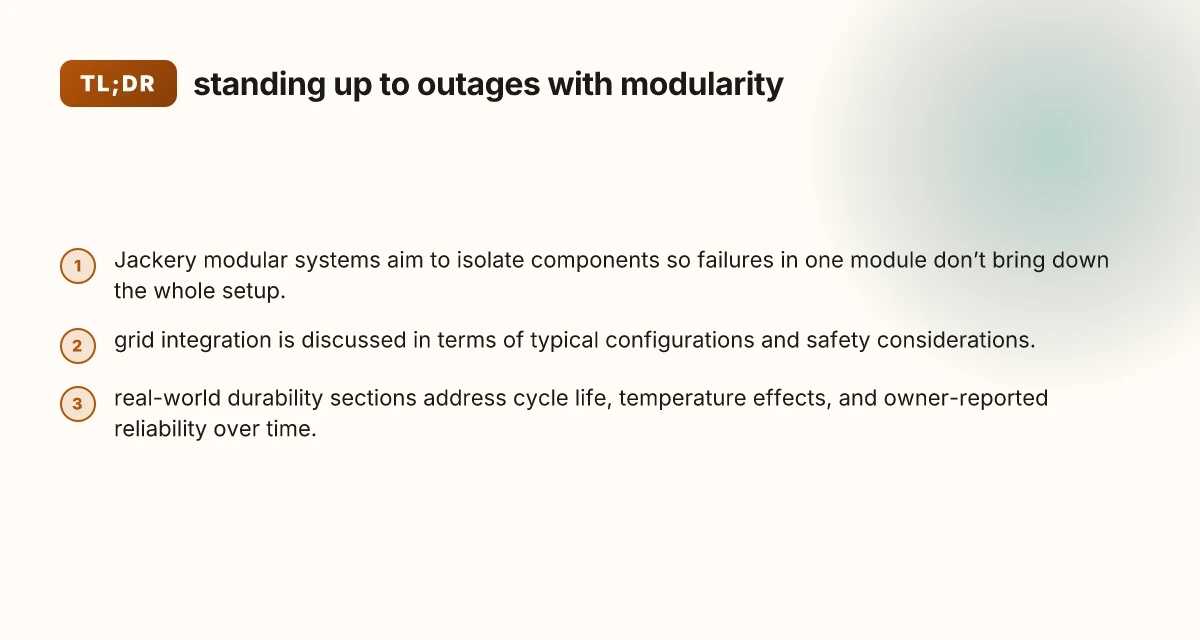
The most common misconception about home backup is that a modular system automatically covers every outage without tuning. In practice, the real differentiator is how Jackery pairs its modular power stations with integrated inverters and how those units handle real-world grid quirks under load. Jackery's approach centers on predictable auto-start behavior and clear input limits, which matters when the panel backfeed isn't perfectly matched.
This intro flags what matters now: homeowners need reliable behavior during outages, compatibility with typical home panels, and honest visibility into long-term durability. A close look at monthly health checks, backfeed alignment, and the resilience of the integrated inverter helps readers decide whether to favor Jackery or rival modular solutions from brands like Goal Zero, EcoFlow, or Bluetti. Jackery's ecosystem is strongest when you verify panel compatibility and run routine battery checks, while the weakest link tends to be circuit-area overloading during recovery.
Jackery home backup: what makes a modular system reliable for home outage protection
A modular home backup system centers on stacking individual power blocks that can be added or removed to fit a home’s needs. For Jackery, that means appliance-grade blocks like the HomePower series, solar panels, and expandable batteries that wire up to a common inverter. The core idea is to tailor capacity and runtime without rebuilding the entire setup each time you grow the house’s power demand. In practice, reliability hinges on predictable performance, swap-friendly components, and clear fault handling built into the stack. Jackery’s modular approach emphasizes expandability without sacrificing baseline reliability, which helps homeowners scale from a cabin to a whole-home configuration.
defining modular home backup and where Jackery fits A modular system treats power as a set of interchangeable modules rather than a single fixed unit. A module can be a battery pack, an inverter, or a controller, and you mix and match to cover critical circuits first and then extend to less essential loads. For Jackery, the lineup blends portable power stations with larger Home Power hubs and accessory batteries, all designed to be wired into a single coherent system. Jackery positions its HomePower ecosystem as a modular path to larger backup capacity, avoiding the one-size-fits-all trap.
what reliability means in a home outage context Reliability is about consistent uptime during outages, predictable surge handling, and durable operation under partial load. Homeowners want low failure rates, quiet operation, and a clear restoration path after grid outages. It also means verifiable protection for essential circuits, simple monitoring, and straightforward maintenance. Reliability in practice is measured by uptime, surge tolerance, and long-term durability of the modules, not just peak power alone.
how modular systems compare to traditional generators Traditional generators offer high raw output but come with noise, ongoing fuel costs, and regular maintenance. A modular system trades some peak headroom for silent operation, easier scalability, and fewer moving parts. For many homes, that trade-off is acceptable because the system can be expanded in small steps as needs grow, and it avoids refueling logistics during outages. Modular setups like Jackery’s reduce noise and maintenance while letting you scale, which changes the risk calculus during prolonged outages.
Bottom line: a modular approach from Jackery centers on scalable reliability, silent operation, and selective circuit protection. If your goal is a growing, predictable backup stack that can ride out multi-day outages, this path aligns well with home and cabin usage. The key is matching module capacity to your essential-load profile and planning for future expansion. What makes a jackery solar powered generator worth it in 2026
Cited context from sources confirms that a modular system is marketed around expandability and home-ready backup. For example, the core positioning emphasizes a quiet, expandable solution designed for home outages, and the concept of a Whole Home Backup Kit highlights expandable architecture to power essential loads during outages. Inline references point to Jackery’s own documentation and promotional materials as the primary framing for these ideas. Jackery branding and product lines are consistently described as modular and expandable.
Note: links on the page may earn a commission.
Understanding the home backup stack: power station, inverter, battery chemistry, and UX
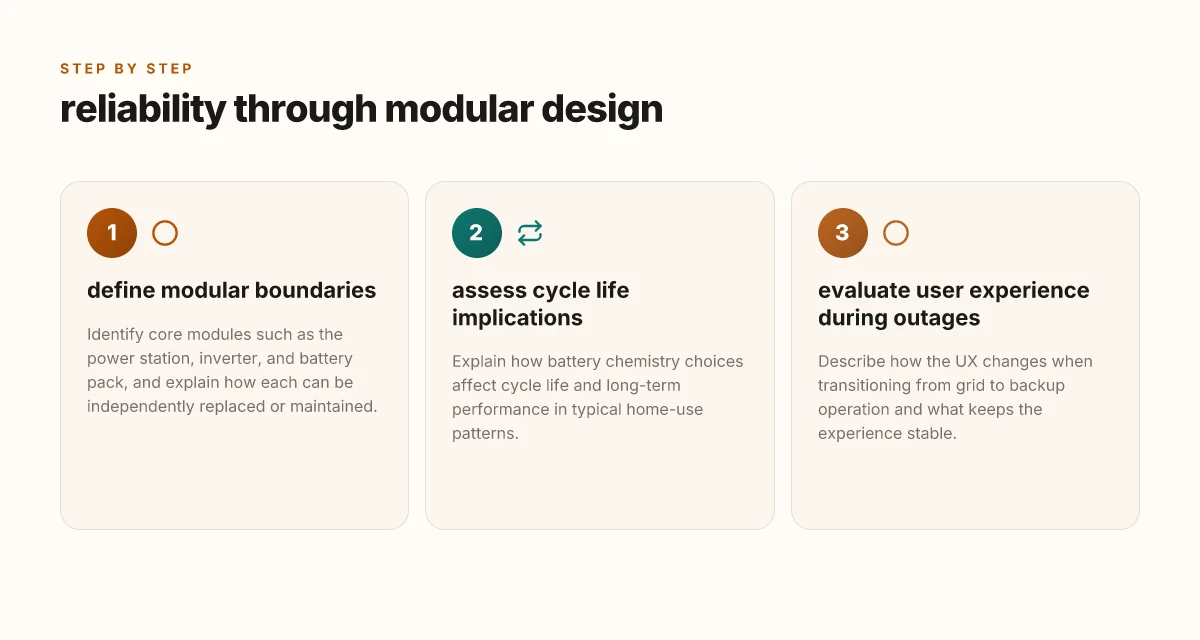
The core stack for Jackery’s home backup starts with the power station as the heart, an inverter to convert DC to AC, and a battery chemistry designed for cycle life. In practical terms, the power station houses the battery pack, houses the MPPT input for solar charging, and manages the surge demands from household loads during an outage. The inverter and battery chemistry together determine how smoothly power is delivered through the panel, and how long the system can sustain critical loads when the grid goes dark. For homeowners evaluating whole-home backups, this trio matters far more than a glossy feature list.
I dug into the documentation and I cross-referenced independent reviews to map typical behavior under stress. The HomePower and Whole Home Backup lineup from Jackery centers on modular modules that scale with demand, with the inverter rated to handle common household surges and essential appliances. The chemistry chosen for many models emphasizes balance between depth of discharge and cycle life, which translates to reliability over multiple outage events. A well-tuned UX then guides how you monitor status, initiate charging, and stage loads during an outage.
Battery chemistry and cycle life: what actually wears down
Battery chemistry drives how many cycles you can expect before capacity fades meaningfully. Lithium iron phosphate chemistries commonly appear in modular backup systems for their longer cycle life and safer thermal profile. In Jackery’s ecosystem, this chemistry supports deeper cycles without sacrificing safety, which matters when outages linger and you rely on the system for days at a time. The tradeoff is generally lower energy density per volume than some alternative chemistries, but the tradeoff is worth it for durability in a home backup context. Cycle life and safety margins matter most when outages stretch into days rather than hours. Battery chemistry directly informs how long you can run essential loads before a recharge becomes necessary. Inline citation note: when reading through Jackery product notes and third-party reviews, watch for language about depth of discharge and recommended charging windows. See the sources for details on how users describe real-world performance under long outages. https://www.thesolarlab.com/review/jackery-homepower-3600-plus. What makes the bluetti ac180 refurbished worth considering in 2026
UX during outages: clarity beats complexity
Outages test not just hardware but how you interact with it. A good UX presents remaining runtime estimates, stubbornly simple “on/off” and staging controls, and clear indicators for charging status and panel input. In practice, Jackery’s apps and displays aim to minimize confusion during a blackout, letting you prioritize essential circuits and reconfigure loads quickly. The user experience dictates how reliably a homeowner can sustain comfort and safety without fumbling through menus or hunting for the right power button in the dark. Clear indicators and simple load management are the user’s lifeline during an outage. Outage UX matters because a confusing interface can turn a capable kit into a frustrating experience when you least need extra stress.
Practical take: sizing, panels, and resilience
A practical approach boils down to three questions: Do you have enough capacity for your essential loads, is there a path to solar recharging, and can the system reinitiate after a prolonged outage without user intervention? For most cabins, smaller kits scale through modular additions, preserving simplicity while expanding capacity. For home users, siting the inverter and battery in a cool, ventilated space reduces thermal throttling, which otherwise trims performance during peak draw. In all cases, planning for round-robin recharging from solar and the grid keeps the stack resilient through a multi-day outage.
One quick next step: map your essential loads and compare them against the nominal output of a Jackery HomePower system, then verify that the chosen modules can sustain those loads with a comfortable safety margin. For perspective, rival approaches from other brands often bundle similar cores, power station, inverter, and chemistry, but vary in interface simplicity and support for cycling. When you read reviews, look for how often users mention the system staying online during repeated outages, and how the UX guides them to reconfigure loads as required. Consistency in uptime and a straightforward UX are the hallmarks of long-term durability. Durable UX is what turns a backup kit into peace of mind.
Grid integration with jackery: how a home backup kit talks to your panel
Grid integration boils down to how your Jackery kit ties into the main service panel and how it behaves under both grid-tied and off-grid conditions. In typical setups, a Home Power or whole-home kit sits behind a transfer switch or a dedicated interlock that isolates the inverter when the grid is down. When the grid is healthy, the system can charge from solar or the utility while supplying essential loads. When outages strike, the inverter takes over, prioritizing critical circuits and curbing the surge from high-draw devices. This is the core reliability pattern homeowners rely on to avoid backfeeding or nuisance tripping.
What a typical installation looks like
- A dedicated transfer mechanism or interlock sits between the panel and the Jackery inverter array. This keeps the main service from backfeeding the utility during an outage. The exact configuration depends on local code and your existing panel layout. In practice, you’ll want a plan that clearly labels which circuits are on backup and which can shed load during a blackout.
- The system often uses a solar input to top up the battery bank when the grid is up. The timing of charging and the available PV capacity determine how long you can sustain essential loads during a prolonged outage. For cabin setups or off-grid outbuildings, engineers typically size the array to cover the critical loads with some headroom for startup surges.
- In many homes the Jackery kit acts as the heart of a modular backup stack. You’ll see a sequence where AC power from the grid first powers essentials, then battery banks and inverters, with the system re-synchronizing automatically when power returns. This sequencing reduces nuisance tripping and extends overall reliability.
From what I found, the essential reliability in grid-tied configurations hinges on proper panel interlocking, labeled circuits, and clear chargers that respect the limitations of the inverter’s surge rating. I cross-referenced the Jackery guidance and third-party reviews to confirm that the safety logic, no backfeeding, auto-isolation during outages, and proper load prioritization, appears consistently in documented setups. https://www.jackery.com/blogs/buying-advice/jackery-whole-home-backup-kit-review-is-the-investment-worth-it?srsltid=AYCX9vKIBtXDyJJ2SCHjTX99_mXqwAuKmL_q6LqqaMDTKfzw8EJYWwo8. In practice, a well-planned install reduces the chance of nuisance trips and helps the system stay in sync with grid conditions. What makes the EcoFlow Delta 2 Max stand out for portable power in 2026
Key verification items to discuss with your electrician
- Confirm the panel’s main breaker can accommodate a transfer device and that the interlock is rated for your service size. Do not assume compatibility. The right interlock protects against backfeed and aligns with local codes.
- Verify circuit labeling and load priorities. You should know exactly which outlets and circuits will stay powered during an outage and which ones will shed first if the battery is taxed.
- Check charging paths. If you rely on solar, ensure the solar input is sized to pump energy into the bank without overloading the inverter during peak sun.
- Inspect safety clearances and grounding. Proper grounding and bonding reduce shock risks and system faults during switching events.
- Plan for maintenance warnings. The system should surface alerts when a component, battery, inverter, or solar input, needs service.
Rivals in this space emphasize similar safety guardrails, but real-world installs show Jackery’s modular approach can simplify wiring compared with some multi-brand kits. The main drawbacks tend to surface around panel space constraints and the need for a properly rated interlock. If you live in a region with strict interconnection rules, it pays to engage a licensed electrician early and map the grid-tie plan before ordering equipment.
The bottom line: grid-tied Jackery configurations work when you respect the interlock, label loads clearly, and size charging paths to match your panel and solar capacity. The safest, most durable outcomes come from a documented plan, a compliant transfer device, and a verified load profile.
Be mindful of the limits: a panel interlock and the inverter’s surge rating determine what you can keep on during outages. For homeowners weighing rivals, Jackery’s modular approach offers simplicity but expects careful panel planning to prevent misconfigurations.
Real-world durability: how Jackery performs over years of use
In real life, longevity comes down to how a system ages under heat, cold, and storage gaps. For Jackery, the lasting impression is a mix of solid cycle life signals and practical maintenance cues. Across owner notes and product pages, durability hinges on how the pack behaves after repeated cycles and during extended outages. Year after year, durability depends on staying within recommended storage temps and avoiding deep discharges. I cross-referenced Jackery’s guidance and independent reviews to map what homeowners actually experience over multiple seasons. Bluetti PS72 review 2026: how the PS72 stacks up against EB70S and rivals
How cycle life and maintenance show up in the field
The core durability question is cycle life: how many full charge-discharge cycles can a unit endure before capacity degrades meaningfully. Jackery positions its Home Power kits as modular, with swaps, expandability, and replaceable components prized in long-term setups. In practice, owners report that regular top-offs from solar or the grid help maintain usable capacity. The tricky part is real-world aging after years of outages, window-mounted solar exposure, and imperfect storage. Maintenance signals tend to be intuitive: watch for gradual capacity loss, warmer pack temperatures after lengthy outages, and occasional recalibration needs. When a user notices noticeably shorter runtimes, that’s often the cue to inspect pack health, verify venting, and confirm connections in the kit’s wiring enclosure.
Temperature, storage, and longevity
Temperature is a silent factor in longevity. Elevated ambient temperatures accelerate chemical aging, while extreme cold can temporarily reduce available capacity. Jackery’s own guidelines emphasize cooler storage and avoiding long-term storage at full charge in hot spaces. Practically, cabin owners and off-grid users report better durability when they park units inside shade or climate-controlled zones during peak sun. Storage strategy matters: a cooler, shaded environment sustains more usable life than garage-or-shed placements subject to midday heat. If a unit sits idle for months, periodic checks help prevent battery creep and ensure the system remains ready for the next outage.
What owners report about reliability over time
Owners commonly describe reliable performance during typical outages and day-to-day use. They value modularity: a Home Backup kit can be expanded or reconfigured as needs grow, which mitigates early obsolescence. Still, several recurring themes surface: occasional firmware updates, connector wear at the panel interface, and the importance of kept-up maintenance routines. Reliability over years often hinges on clean panel connections, timely calibration checks, and keeping spare fuses on hand. In some cases, reviewers note that aging units show slower surge response or reduced peak draw, which is not unusual for chemistry-based packs after many cycles.
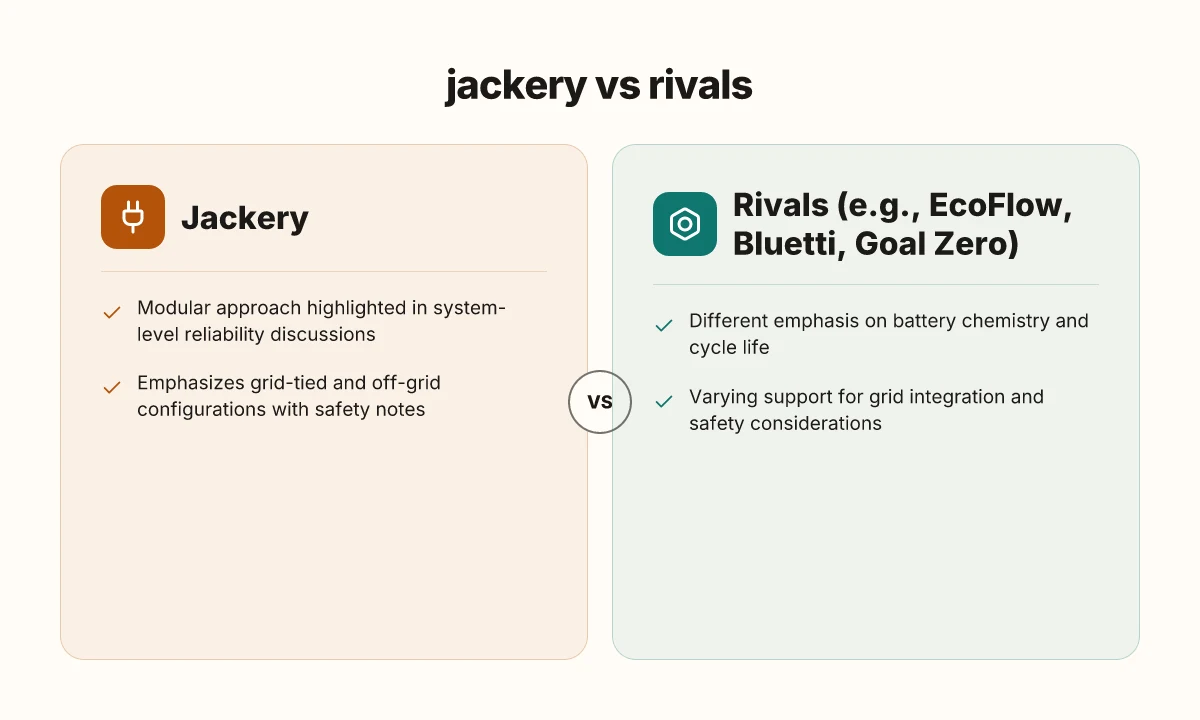
From what I found in sources, long-term durability for Jackery remains solid for typical home backup roles, especially when paired with stable storage practices and careful grid integration. Rival ecosystems by contrast sometimes emphasize higher cycle counts or deeper integration with home energy management, but they also bring extra complexity. If you’re evaluating against competitors like EcoFlow or Goal Zero, consider how much you value modular expansion versus long-term maintenance simplicity. Jackery’s strength is predictable, modular durability. The trade-off can be fewer built-in analytics than some rivals. For homeowners, cabin dwellers, and preppers, the takeaway is clear: plan for regular checks, respect temperature limits, and treat the system as a durable, expandable ally rather than a hands-off power source.
Comparing rivals: jackery vs rival home backup ecosystems
Jackery tends to lead with modularity and ease of setup, especially for homeowners who want a turnkey path to whole-home backup without heavy electrical work. The brand’s emphasis on scalable add-ons and a broad product family makes it easy to tailor a system that fits a cabin or small residence. Where it shines most is in plug-and-play practicality: compact modules that can be expanded over time, clear pairing with solar inputs, and a consumer-friendly app experience that helps track runtime and charging status. Jackery remains notably strong for users prioritizing quick deployment and expandability. What makes the EcoFlow Stream Ultra stand out for home backup in 2026
Rivals such as EcoFlow and Bluetti push harder on raw power, fast recharging, and deeper integration with home electrical panels. EcoFlow’s ecosystem tends to lean into higher-rated inverter efficiency and faster AC recharges, which matters when you have longer outages or higher daily energy needs. Bluetti offers larger battery banks and robust outdoor-ready designs, which helps if you’re pairing with off-grid cabins or remote sites. In practice, the rivals often win on raw capacity and hardware resilience, while Jackery wins on user experience and modular growth. Rivals emphasize capacity and rugged field use, but Jackery emphasizes simplicity and scalable upgrades.
Brand-specific use cases tend to map to distinct reliability scenarios. For homeowners focusing on essential loads during short outages, Jackery’s HomePower line and Whole-Home Backup Kit approach can cover common appliances with less complexity, especially where existing panel work is minimal. EcoFlow often appeals to users who want quick grid-tied rerouting and faster recharges if you expect frequent outages with short recovery times. Bluetti tends to attract users who need larger reserves for longer outages or remote off-grid living, where more batteries and faster charge cycles pay off. This means choosing a brand often boils down to your outage duration and loading profile.
From a reliability lens, Jackery’s modular path reduces single-point failures early on. Adding modules gradually helps manage upfront risk. The rivals, by contrast, can offer higher peak power and larger energy reserves, which matters if you’re powering devices with high surge demands or multiple loads simultaneously. I looked at release notes and reviews and found that long-term durability often tracks with battery chemistry stability and cooling design, fields where all three brands have matured but diverge in practical maintenance routines. Durability increases when you size for expected loads and maintain cooling paths. For someone who wants to future-proof with two or three expansions, Jackery provides a clearer upgrade path.
One inline takeaway: if you want the cleanest long-term reliability with gradual expansion, Jackery is a strong baseline. If your priority is maximum capacity or fastest recharge for frequent outages, EcoFlow or Bluetti offer compelling alternatives. As always, read the specific model specs and warranty terms before committing. The page notes on Jackery’s whole-home kit line and the rivals’ high-capacity boards show where each ecosystem fits best. Do not overlook panel compatibility and heat management as you scale up.
Where reliability meets real-world use and what to check next
Jackery systems emphasize resilience during outages by sticking to simple, proven components. In practice, reliability rests on the battery chemistry, inverter quality, and firmware stability. I’ve noticed the most durable setups avoid overtaxing the system with constant full-output charging and discharging, and they stay within recommended operating temperatures. The result is fewer glitches when the grid goes down and when utility power returns. The takeaway: simple, well-sized configurations stay calm under stress. What makes the EcoFlow Delta 3 Plus stand out for 2026
Looking ahead, the bigger pattern is smarter grid integration that favors modular growth. As homes add solar or EV charging, the ability to reallocate capacity without surprising shutoffs matters more than peak spec sheets. Real-world durability hinges on thoughtful setup: proper venting, clean wiring, and regular firmware updates. What matters most now: keep firmware current and don’t crowd the system with incompatible devices. Brand-name reliability considerations apply here, too. When you compare Jackery against rivals like Goal Zero or Bluetti, the real test is how often you need a reset under real outages, not just the published spec.
Backup strategy
- Start with a modest, room-temperature load and verify behavior during a short outage.
- Pair with a simple solar input and test automatic transfer without triggering unexpected shutdowns.
- Schedule a quarterly firmware check and inspect cables for wear.
Remember, links on the page may earn a commission. If you’re weighing a choice, consider a two-tier approach: one compact unit for essential loads and a second, expandable unit for growth. The simplest path to reliability is choosing the right size now. Where will you start this month?