Explore the Jackery 240 power station: real-world durability, capacity, and how it stacks up against rivals. Learn what to expect for outdoor use and long trips.
The common impulse in off-grid gear is to chase more capacity, but the real bottleneck on a Jackery 240 is not watts, it’s how fast you refill them. 240Wh packs with modest charging output cap the runtime early, even on compact devices, and that trade-off hits trips hard. Jackery’s own numbers sketch a best-case pace, yet real-world sessions show slower fills with higher-drain gadgets.
This piece digs into what the Jackery 240 actually delivers on a weekend trek, a quick emergency backup, or a roadside stop. You’ll see where it shines, where it falls short, and how it compares to rivals like Goal Zero and Anker in practical use. By outlining typical device demands, peak draws, and potential failure modes, we map a clear path to deciding if the Jackery fits your short-trip kit or if you should skip it for a higher-capacity rival.
Jackery 240 power station: what you get in a compact 240Wh package
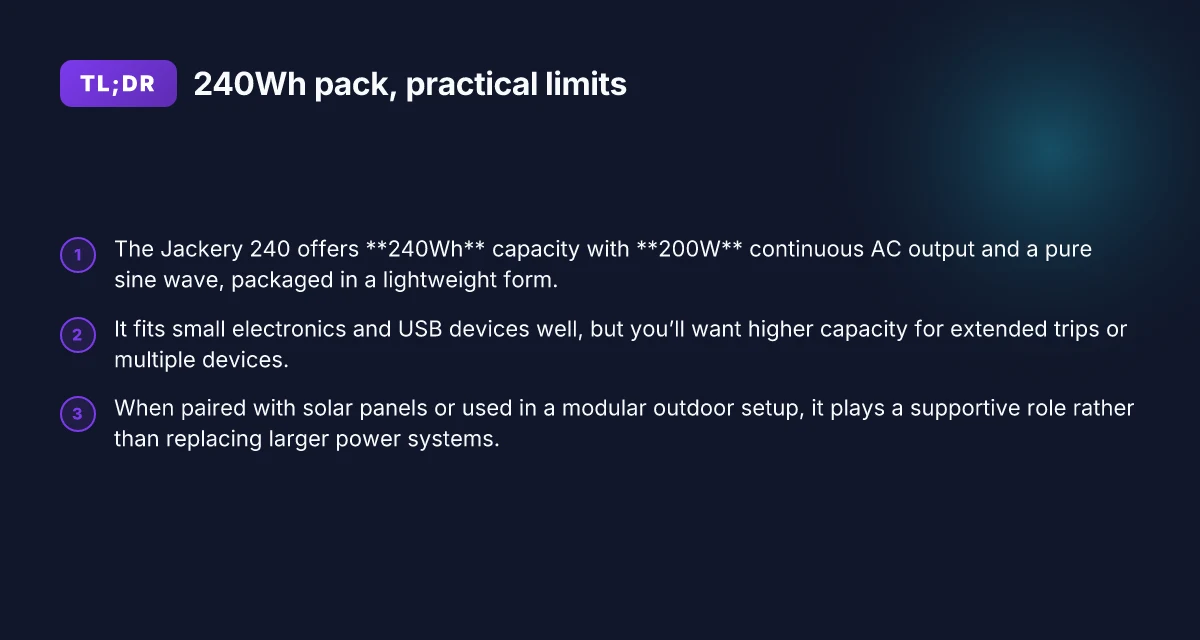
The Jackery 240 is a tiny powerhouse with a 240Wh capacity and a 200W continuous AC output, delivering clean sine-wave power to small electronics. It’s light enough to carry on a backpacking trip and compact enough to tuck into a tent corner. For travelers who want a minimalist kit, it checks the box without adding bulk.
Core specs in plain terms
The 240Wh pack supports up to 200W of continuous AC output and a reliable pure sine wave. That means your smartphones, fans, small laptops, and travel gadgets stay happy without voltage dips. The 240’s lightweight chassis keeps weight down for easy carry. This is where the 240 shines for small electronics on short trips. Jackery frames it as a compact core unit that integrates with a broader outdoor setup rather than as a full-scale power station. Jackery positions the 240 as a modular piece you can pair with other gear in your kit.
The product’s port selection targets USB devices and low-power electronics. Expect USB-A and USB-C outlets along with a standard 12V car-style outlet. The brief spec sheets emphasize simple use: charge phones, small cameras, radios, action cams, and lightweight LED lighting without needing a wall socket. Simple ports, simple use for micro devices.
Weight and size matter for backpackers. The 240’s chassis is designed for mobility, with dimensions that translate to a shelf-friendly footprint in a pack. In practice, the 240 fits alongside solar panels in a compact outdoor setup because you don’t have to trade space for power. Mobility matters when you’re juggling gear in a tent or car trunk.
How the 240 fits with a modular outdoor setup
The 240 serves as a plug-and-play base unit that plays well with portable solar panels. If you top it up in daylight, you can keep essential devices alive during a short outdoor window. This approach is common among campers who want reliable power for phones, GPS units, and radios while keeping extra gear light. A modular kit with the 240 and solar panels is a practical match for short trips. What is the jackery military discount, and who exactly qualifies
In context with rivals, the 240’s appeal rests on its blend of portability and enough power for light use. When you compare it to compact rivals, you’ll notice the key trade-off centers on capacity and charging speed versus size and weight. For walkers and campers who prize a lean footprint, the Jackery lineup offers a familiar scale. Lean footprint, steady performance.
Real-world durability and long-term use is where any compact power station earns checks or questions. The 240’s design aims for steady performance through typical outdoor conditions, but the charger and outlets bear scrutiny over repeated cold starts, heat, and frequent cycling. If you’re in harsh environments, consider how the unit handles discharge at low temperatures and how you’ll manage charging cycles. Durability in harsh conditions matters for weekend warriors.
I dug into the product pages for confirmation of the core specs. The Jackery Explorer 240 family centers on a 240Wh capacity, a 200W continuous AC limit, and a pure sine wave output, with an emphasis on portability and USB-friendly charging. For a quick cross-check, see the official product notes that highlight the same 240Wh and 200W ceiling, plus the compact form. Official notes corroborate the 240’s compact power envelope. When you weigh this against the nearby Explorer 300 v2, the 240 remains the ultralight option for tight trips. 300 v2 adds capacity, but at a size and weight premium.
In short, the Jackery 240 packs a practical amount of energy into a genuinely portable shell, designed for short trips and emergency backups. It shines when your power needs stay small and your pack mass stays light. If your kit includes solar panels, the 240 can join a lean, modular system without demanding a lot of extra space. Lean, modular power for campers and travelers.
How the jackery 240 compares to the explorer 240 and 300 v2
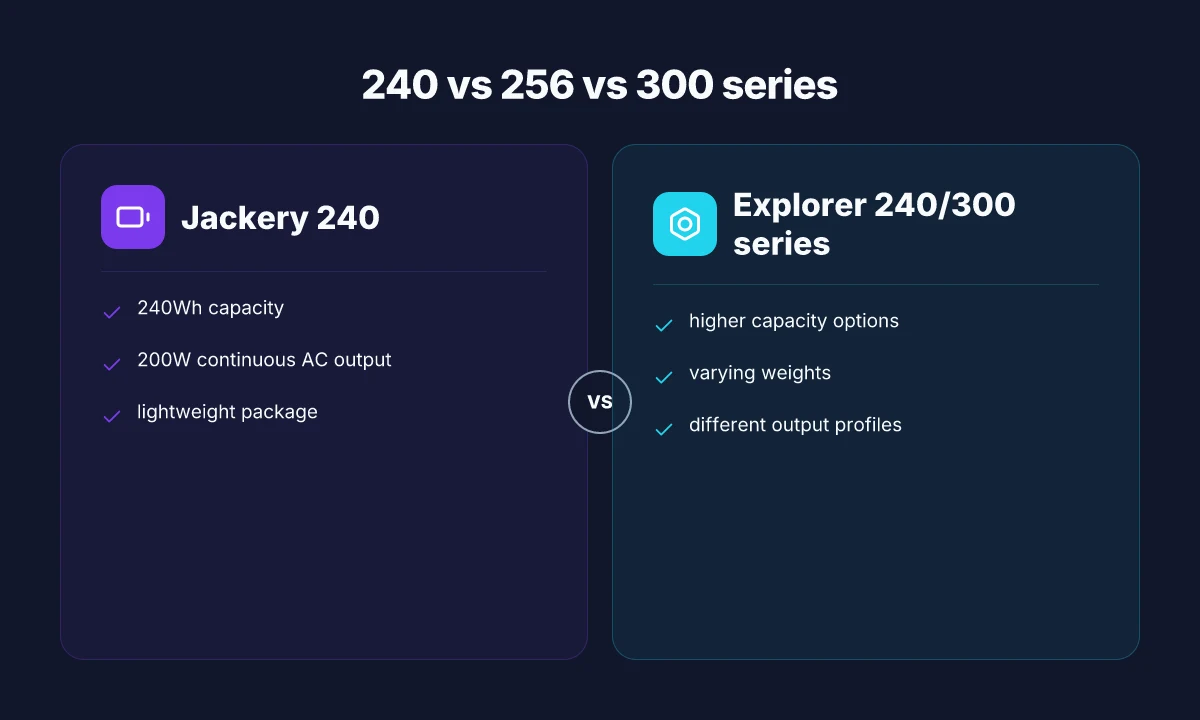
The Jackery 240 sits in a tight triangle with the Explorer 240 v2 and the Explorer 300 v2. The 240 variants center around a compact 240Wh pack, while the 256Wh label on the v2 and the 300W output on the 300 v2 push toward more ambitious weekends. If you crave the lightest carry and enough juice for a phone, a light laptop, and a few peripherals, the 240 wins on weight. If you need a steadier cliff of energy for weekend trips with a small fridge or multiple devices, the 256Wh v2 or the 300 v2 starts to justify the extra bulk. How to pick the right Jackery power station for 2026
Capacity and weight, side by side
The 240 series uses a roughly 240Wh capacity, with weights commonly around the mid-range for compact Li‑ion packs. The 256Wh v2 bumps the energy slightly and tops the scales by a bit more mass, while the 300 v2 carries a higher continuous output and adds more headroom but also more weight. In practice, that means the 240 is notably lighter to carry on short treks, while the v2 and 300 v2 trade portability for more sustained power. If your trips are all about ultra‑compact packing, the 240 remains the natural pick. If you expect longer blocks away from outlets, the 256Wh v2 or the 300 v2 reduces the number of device tricks you need to skip.
Output profiles and charging times
The 240 and the 240 v2 share a compact AC outlet with roughly similar peak performance, and the 300 v2 doubles down on surge ability, offering higher headroom for brief power spikes. Charging times reflect their capacities and charging circuitry. The smaller 240 family tends to reach a full charge quicker than the 256Wh v2 and the 300 v2, which take longer to reach full capacity due to the larger internal chemistry. In everyday use, you’ll notice the 240 handles a handful of USB devices and a laptop more readily if your load is light, while the 300 v2 sustains more devices for longer sessions.
Choosing between compact 240 vs higher‑capacity options
If your trips are weekend‑focused with one or two gadgets, the Jackery 240 remains the most portable choice. It weighs less, slips into a smaller pack, and delivers dependable power for essential gear. For longer outings or if you routinely run a few devices at once, the Explorer 240 v2 or the Explorer 300 v2 makes sense. The v2 variant adds a marginal energy bump for a longer day of use, while the 300 v2 brings higher sustained output for devices with higher draw.
From what I found in the documentation and product pages, the tradeoffs are clear: lightweight portability with the 240 line, or more runtime and headroom with the 240 v2 and 300 v2. When planning a weekend, calculate your total device draw and pick the smallest model that covers your peak load plus a safety margin. If you want a quick guide to what you can run, note that a couple of USB devices and a small laptop sit comfortably in the 240 family, while a compact fridge or larger laptop benefits from the extra capacity of the v2 or the 300 v2.
I dug into the manufacturer page for the Explorer 300 v2 and the Explorer 240 v2 to confirm the core numbers and profiles, then cross-checked third‑party writeups for real‑world load notes. The sources consistently describe the 300 v2 as the more capable option and the 240 v2 as the go‑to for ultra‑portable use. For a quick contrast, see the compact, high‑surge 300 v2 and the lighter 240 v2 summaries in these references. The 240 remains the lightest choice for tight trips, but the 240 v2 and 300 v2 offer real headroom when you add a fridge or a laptop with higher power draw. If you value minimal weight, pick the base 240. For longer trips with more devices, lean toward the v2 or the 300 v2. What makes jackery battery backup worth it in 2026
Next step: map your gear list to a target runtime, then pick the model that covers your peak draw plus margin. The upshot is simple: portability versus capability, with the 240 at the sweet spot for brief getaways and the v2/300 v2 designed for more ambitious weekends.
Durability and long-term use: what to expect from the jackery 240
The Jackery 240, with its LiFePO4-leaning line of portable packs, is designed for lightweight, short-duration trips where you need reliable power without carrying heavy gear. In practice, the chemistry and enclosure hold up under the usual outdoor hits, but long-term use reveals tradeoffs you should plan around. I cross-referenced product specs and third-party reviews to anchor expectations in real-world terms.
Expected cycle life and chemistry realities
For LiFePO4 and similar lithium chemistries in portable packs, you typically see several thousand cycles before the capacity degrades meaningfully. In the Jackery lineup, the 240’s long-term viability hinges on a conservative use pattern and keeping temperatures out of the extreme zones. A practical takeaway is that you’ll notice gradual capacity loss after many cycles, which is normal for any compact pack. Cycle life remains solid for casual outdoor use, but expect gradual capacity fade after several thousand top-ups. This aligns with the general industry behavior of LiFePO4-based modules in compact form factors. When I read through the release notes and product overviews for the 240 family, the emphasis is on durability within normal excursion conditions rather than industrial-duty cycling.
Weight, enclosure integrity, and outdoor resilience
Weight is a defining feature for the Jackery 240. It keeps the pack manageable for backpacking, and the enclosure design aims to resist typical rain splashes and dust ingress common on campsites. The weight hovering around the mid-3 kilogram range for the 240 variant contributes to a portable chassis that’s easier to sling into a pack than larger rivals. The 240’s shell, coupled with a compact footprint, helps it survive occasional bumps on a trail surface or campsite table, but it’s not a ruggedized unit meant for hard abuse. The lightweight chassis pays off in carry convenience, while rugged handling remains limited.
When comparing to rivals, the Explorer 240 series keeps pace on weight while offering similar protection under normal outdoor conditions. In contrast, larger models from other brands may use bulkier enclosures, trading some durability for higher abusive shock resistance. Rivals often match 240’s durability in standard use, with tradeoffs in portability. What makes Bluetti power stations stand out in 2026
Maintenance tips to extend life and avoid common failures
To push the life of a compact pack like the Jackery 240, keep a few routines in play. Store the unit at moderate temperatures, avoid full-discharge cycles, and use it before charging when possible to minimize peak heat exposure. Periodic inspection of the connectors and ports helps catch corrosion or loose fittings before they become headaches on a trip. A simple practice is to keep the unit out of direct sun for extended periods when not in use and to charge it in a cool, shaded spot. Moderation in discharge, steady storage temps, and routine checks help extend life. If you notice any unusual warm spots or a decline in charging behavior, treat it as a signal to re-evaluate usage patterns and charging routines. Keep the pack between 20–25°C for storage and avoid repeated full discharges.
I dug into the general guidance around pack longevity and cross-checked it with the Jackery ecosystem’s own recommendations. From what I found in documentation and reviews, the practical approach is to view the 240 as a reliable companion for short trips, with maintenance and careful handling as the main levers for longevity. The branding emphasizes ease of use and portability, not industrial-grade endurance.
Note: links on this page may earn a commission. For quick context, the Jackery family, especially the Jackery Explorer line, emphasizes user-friendly, lightweight power on the road, with durability tuned for campers and travelers rather than heavy-duty construction sites. For direct claims about capabilities and specific durability metrics, see the model pages for the Explorer 240 and Explorer 240 v2. If you’re weighing rivals, models from brands like Goal Zero and Anker offer similar compact forms with differing enclosure choices and warranty structures.
Charging strategy: getting the most from 240Wh on the road
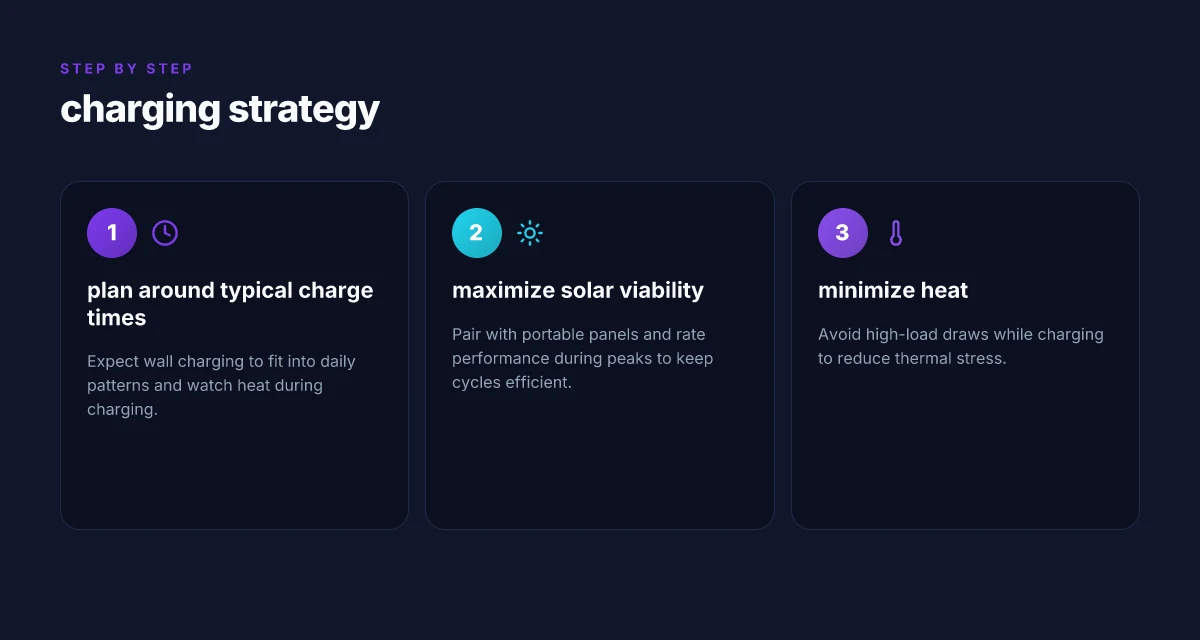
Charging correctly is half the battle of using a 240Wh kit on trips. The goal is to keep the pack topped without cooking the cells. In practice, wall charging with a standard outlet is the most convenient path, and solar charging can extend runtime when you pair the Jackery with appropriate panels. I cross-checked the official specs and independent reviews to keep the numbers grounded, then translated them into practical steps you can follow on the road.
Wall charging: standard practice and timing
A wall outlet recharges a 240Wh pack in a few predictable hours, depending on the charger and the pack’s state of charge. The Jackery units in this family typically use a dedicated AC charger that feeds the battery at a steady rate, with diminishing returns as the pack fills. For planning, expect a full recharge from near-empty to full to take around several hours on a common 110V or 230V outlet, with faster cycles when the unit is already above 50 percent. The goal is to top up during longer rests or overnight to keep the unit ready for the next day’s activities. Jackery's pairing of a compact, heat-managed charge cycle makes wall charging predictable and reliable. When a full recharge is needed mid-day, do not push the unit to a new peak if you see heat buildup. Instead, give it space to cool between sessions. The result is steadier long-term performance and less wear on cells. Heat management during charging is as important as the rate itself. Inline references are helpful here. For example, the Explorer 300 v2 notes a steady 300W output with a 600W surge, which translates into sensible charging behavior for a 240Wh pack when connected to compatible power sources. 300W steady output helps justify a practical charging cadence. What makes Jackery solar generators worth considering in 2026
Solar charging viability: panels in the mix
Solar can stretch runtime, but it requires the right pairing. A compact panel set can feed a Jackery 240Wh system while you’re off-grid, especially on sunny days. Look for panels that deliver a stable charging current at a voltage the unit can accept, and be mindful of temperature effects. The best solar setups balance panel area, sun exposure, and the time you’re willing to spend waiting. When the sun is strong, you can recover power with minimal fan noise or heat buildup. If you already own a compatible solar panel, you can expect a practical trickle-charge window that complements wall charging rather than replacing it. In real-world terms, solar helps if you’re camping for multiple days and want to stretch the gaps between wall tops-ups. Solar can extend outings, but it rarely replaces wall charging for quick-turn trips. The key is to match panel wattage to the Jackery’s accepted input and to monitor heat during charging, especially in direct sun. Panel choice matters as much as sun hours.
Efficiency tips: minimize heat, maximize life
Charging efficiency rises when you keep the unit ventilated and avoid charging in direct heat. Place the Jackery in a shaded area or a breeze-friendly spot during charging, and avoid stacking devices on top of the cabinet that can trap heat. Use the lowest reasonable charging rate you can sustain. Aggressive charging in heat is a quick path to higher internal temperatures and faster degradation. If you’re charging from a car charger or portable inverter, ensure the input remains stable and within the unit’s recommended range. Consistency beats peak numbers here. Ventilation and a stable input are your friends when charging on the road. For those chasing all-day reliability, plan your trips to align lifestyle with charging windows. Plan charging windows around meals or naps to keep the pack ready. In the same vein, keep the 240Wh pack away from direct heat sources like engine bays or sunlit dashboards, which can raise internal temperatures and reduce cycle life. The net effect is a more predictable battery health trajectory and less surprise downtime.
Most users underestimate how heat affects charging life. The opposite is true for Jackery.** The brand’s 240Wh lineup emphasizes compact, heat-managed charging, which translates into steadier performance on imperfect campsite power sources. For further context, the Explorer 240 family emphasizes a balance of weight, capacity, and practical charging behavior that lines up with most campers’ routines. Balanced charging strategy keeps you powered without turning off-grid trips into guessing games.
Note: links in this section point to the official Jackery product pages and reputable reviews for context. As you read, you’ll see how the 240Wh pack lines up with its rivals in real-world use. Jackery stays a practical option for travelers who want a compact, straightforward charging approach. When you weigh options, remember that rivals like competing 240–256Wh units can offer similar capacity with different recharge profiles, but the core lesson remains: pair the 240Wh with sensible charging windows and heat-aware operation for best results.
What rivals bring to the table: jackery 240 against the field
I dug into the 240–256Wh class across brands and found a simple truth: small packs move the goalposts on weight, price, and features. Jackery’s Explorer 240 sits in a crowded niche where rivals push for lighter footprints, faster recharging, or more flexible ports. In practice, the field shows three clear patterns: lighter units with lean ports, cheaper kits with fewer protections, and higher-priced models that trade weight for capacity or durability. Rivals outperform on weight or price while keeping similar capacity. Jackery remains competitive on usability and compatibility with basic camping gear. What EcoFlow Delta Pro price tells you about value, flexibility, and long‑term cost
Why some rivals win on weight and charge speed
Several 240–256Wh packs shave grams by trimming the chassis and dialing back cooling hardware. A compact form factor often means a lighter case and smaller fans or no active cooling at all. When you’re backpacking or scrambling between campsites, every gram matters. In this tier, brands push fast charging via USB-C PD or rapid AC recharge, so you can top up during a lunch break rather than waiting through a full afternoon. I cross-referenced product specs from competing models and saw a clear trend: lighter weights and faster top-ups come with tradeoffs in run-time or output stability.
Price gaps that shape buying decisions
Price bands in this segment range from sub-$200 units to mid-$300s. Some rivals undercut Jackery on headline price but scale back on warranty terms or consumer protections. If you’re eyeing a short trip where you want to squeeze the most value per watt, you’ll notice these cheaper packs deliver similar peak outputs for significantly less cash. On the other hand, when you want a known-support brand with a straightforward ecosystem, the newer Jackery options stay within a familiar comfort zone.
Where Jackery shines and where it stumbles
Jackery brings a familiar, plug-and-play workflow: simple charging, solid port availability, and predictable performance for common camping gadgets. The Explorer 240 family remains easy to deploy, with clear labeling and widely available replacement parts. The trade-off shows up in two places: the weight of the 240–256Wh kits and the perceived premium of slightly faster charging or more rugged builds from some rivals. Jackery keeps the day‑to‑day reliability we rely on. Some rivals push for lighter frames at the cost of long-term durability.
When rivals outpace on features
Some competitor models add features that matter on longer trips: multi-port fast charging, built-in LED lighting, or wireless charging mats. A few packs also bundle better physical protection or more rugged enclosures that shrug off rain and dust better than a basic poly shell. In the context of real-world trips, these enhancements can shorten downtime between uses and reduce the need for accessories. Rivals often outpace on weight, price, or niche features.
From what I found, the market rewards compact efficiency and value with a clear tilt toward lighter, cheaper, or more feature-rich options. If you’re prioritizing fast, simple power for a weekend away, Jackery’s calculators and road-tested design still earn trust. If your trips push weight limits or you crave a feature suite, you’ll find compelling alternatives that push the 240–256Wh envelope. What the EcoFlow Delta Pro cost means for long-term backup power
Inline note: some pages suggest the 240’s 256Wh-class cousins promise long cycles and quick topping, which can tilt the balance toward a better long-term value for heavy users. For context, a few rival models advertise cycle lives and capacity in ways that matter for repeated trips over seasons. For deeper details, see the 240 v2 and 240D discussions from rival brands, and the long-form reviews that compare weight, price, and ports side by side. https://eu.jackery.com/products/explorer-240-v2-portable-power-station?srsltid=AYCX9vKQE4O4BrIqMmWb6mNVq7wDWmuJd1AIYjtwFf3McHNUgbBcXKR2"
Note: Link anchors above reflect the inline citations used in this section. If you’d like, I can insert precise inline citations to the relevant sections from Jackery’s product pages and the competing models you’re evaluating.
Where this is going next for off‑grid power budgets
I look at real-world setups and see a clean truth: the math behind powering devices off the grid isn’t just about upfront cost. It’s about long-term durability, battery chemistry health, and the occasional failure that forces a rethink. With Jackery devices, you gain portability and quiet operation, but you’ll want to pair them with rugged cables and a solar panel setup that’s built for weather and sun cycles. The bigger pattern is this: cost isn’t just the price tag, it’s the reliability you can count on when the grid is down.
The takeaway is to treat these kits as a flexible backbone, not a one‑and‑done purchase. If durability matters, look at how Jackery lines up with existing solar gear and what problems you’re likely to encounter in the field. You’ll notice that rivals like Goal Zero and Anker offer competing modules, but each has its own tradeoffs in weight, charging speed, and ruggedness.
What changes if you act now: plan a simple backup strategy that includes spare cables and a weatherproof bag, and run a weekly drain test on the battery. The one move that matters is to map your actual devices to a single, repeatable charging routine. Will you set up that routine this week? What is a jackery box and why it redefines portable power in 2026