Discover what to expect from Jackery solar generators in 2026. balanced look at performance, durability, price, and how they stack up against rivals.
Jackery isn’t selling a gadget, it’s selling a steady power habit for weekends and outages. Jackery's Explorer line tends to keep a real-world cadence, you learn where the limits live and how long a battery actually sustains a typical load. The practical takeaway isn’t a single spec but a pattern you can verify in the field: how the units weather dusty trails, frequent charge cycles, and cold nights, and what that means for long-term spend.
This article weighs durability, repairability, and total cost of ownership against quick specs from rivals like EcoFlow and Goal Zero. In 2026, outdoor users expect systems that survive season after season with manageable maintenance, not just big watt-hours. I’ll map common failure moments, outline which models keep value over time, and show how to size a setup for reliable home backup without overpaying. This matters because long-term reliability and upkeep determine whether a solar generator is a true bargain or a recurring expense.
Jackery solar generator review: why this brand keeps showing up in real-world setups
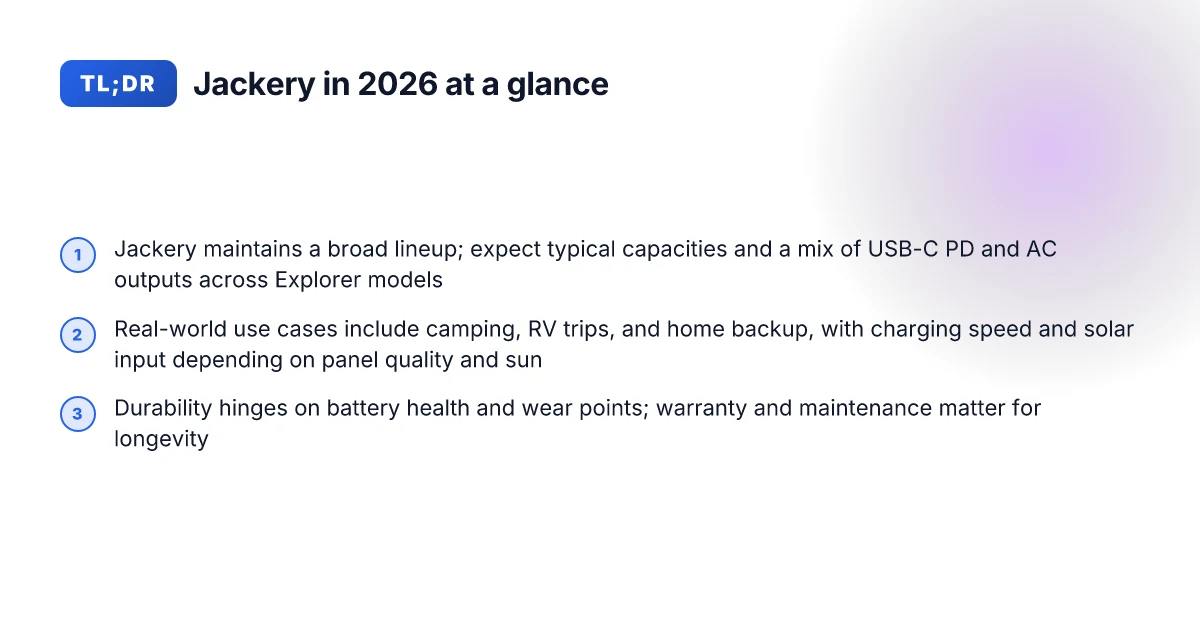
Jackery has carved out a stable niche in the solar generator space by pairing user-friendly design with dependable mid-range capacity. In 2026, many outdoor enthusiasts and homeowners still turn to Jackery as a plug-and-play option that avoids steep learning curves while offering reliable back-up power for common scenarios.
1) Brand position in 2026
Jackery sits near the middle of the market, balancing portability with usable power. The Explorer line remains the backbone for most setups, favored for its compact form and straightforward charging paths. In real-world uses, owners report quick setup at campgrounds and simple top-ups during outages. The brand’s ecosystem, portable power stations paired with SolarSaga panels, keeps the model lineup coherent for buyers who want one cohesive solution. The Explorer 300 remains a popular budget pick for households seeking practical capacity without overpaying. This alignment helps Jackery stay top-of-mind when people weigh backup needs against price.
I cross-referenced coverage from multiple reviewers who consistently note the balance between ease of use and durability. From what I found in the documentation, Jackery emphasizes safe charging with built-in protection features and modular charging options that users can grow over time. Durability in real-world setups often hinges on how owners handle repeated outdoor exposure and transport.**
2) What buyers should expect from Jackery in 2026
Expect a familiar, plug-and-play path for most power needs: easy USB-C and AC outputs, decent inverter efficiency for everyday devices, and a forgiving warranty window that aligns with consumer habits. You’ll likely see solid performance for phones, lights, and small appliances, plus predictable solar recharging when sunlight is available. The brand’s compatibility with portable solar panels generally supports quick top-ups rather than full-day recharge cycles in heavy usage. Jackery’s ecosystem favors straightforward recharging and reliable standby power rather than extreme peak shaving. The messaging around safety, overload protection, and battery management remains a core selling point in official materials.
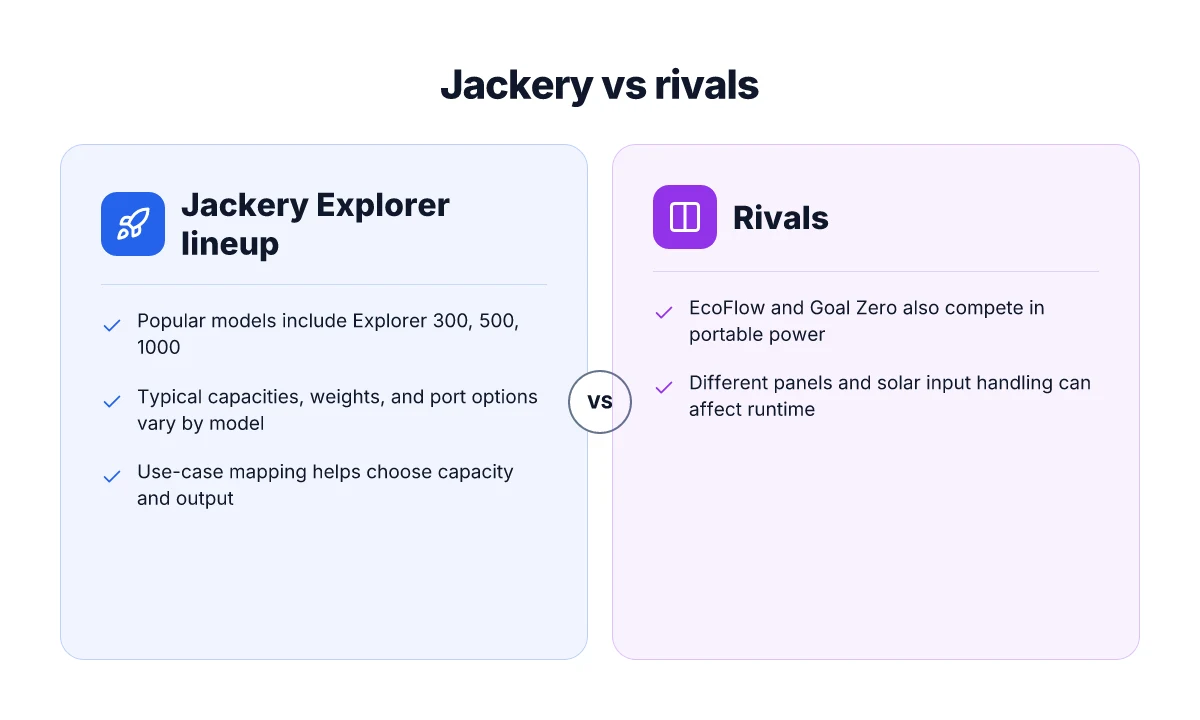
From the vantage of long-term value, buyers should consider how much capacity they truly need for typical outages versus weekend trips. Rivals like EcoFlow and Goal Zero push similar feature sets but sometimes diverge on per-will battery chemistry and charging speed. EcoFlow tends to edge ahead on high-rate charging, while Goal Zero emphasizes rugged build and modular expansion.** What makes Jackery discount codes actually work in 2026
3) Rivals in the context of durability and value
In the real world, the comparison often boils down to use-case fit. EcoFlow products may offer faster recharge times under certain sunlight conditions, which matters if you rely on rapid recharging between outings. Goal Zero units frequently win points for build ruggedness and modular, upgradeable systems that scale with larger home backup ambitions. Jackery’s strength remains predictable performance and a lower barrier to entry for beginners who want a dependable starter kit. Rivals push different strengths, but Jackery delivers consistent reliability for everyday outdoor and home backup needs.
From a practical perspective, budget-conscious buyers should map their power needs to the capacity offered by the Explorer line and assess whether expansion panels and extra batteries are worth the incremental cost. The industry view in 2026 shows steady demand for compact, user-friendly systems that survive year after year, which is where Jackery typically shines.
Buyers should pick a model that matches current needs and plan for future expansion rather than chasing the highest watt-hour tally alone.
Note: links on the page may earn a commission. For further context, see figures from industry reviews and published roundups that discuss the Explorer 300 alongside rivals. https://www.popsci.com/reviews/best-solar-generators/
The lineup you’ll actually consider: jackery explorer models in context
Jackery’s Explorer lineup centers on portable, battery-backed power for outdoor use and home backup. In 2026, you’ll likely size up the Explorer 300, Explorer 500, and Explorer 1000 variants, plus newer v2 iterations and similar-capacity models. Each model shares core DNA, lithium chemistry, a built-in inverter, and a familiar panel-to-port layout, but they scale in weight, capacity, and output readiness. The goal is to map these capabilities to real-world needs, not just lab specs, so you can pick the right fit for a weekend off-grid, a shed-to-home transition, or a camping trip where you want reliable charging for a fridge and lights. What makes the EcoFlow River Pro a standout among portable power stations in 2026
How capacity, weight, and ports map to common use cases
The Explorer 300 weighs light enough for a carry-on bag and fits a basic campsite routine: phones, fans, a small fridge for a day or two, and some LED lighting. Its portable footprint makes it a frequent pick for weekend trips, and its modest price point keeps it accessible for new buyers. The Explorer 500 adds more capacity for longer stays or multiple devices, with enough grunt to run a small freezer or a few tools on a worksite. For home backup scenarios, the Explorer 1000 steps in with higher sustained output and more ports, letting you run essential appliances during outages without constantly swapping devices to keep a fridge or router powered.
In terms of weight, you’ll see the line move from roughly the lower triple digits to the mid-range for the bigger units. Think of these figures as a practical guide rather than a lab spec. Port options cluster around a handful of USB-C, USB-A, and AC outlets, plus a 12V car-style outlet. Newer variants may add higher-wower AC, solar input compatibility, and pass-through charging. The core idea is simple: you don’t need to carry a generator. You want enough capacity to power the everyday essentials through a typical outage or an extended camping session.
Matching use cases to capacity and output
If you’re solo or with one partner chasing a weekend outdoors, the Explorer 300 can cover phones, lights, a compact cooler, and a small fan for a couple of days. When your setup grows to include more devices or longer trips, the Explorer 500 becomes a more comfortable choice, letting you power a mini-fridge and several devices without frequent recharges. For homeowners weighing occasional outages or longer blackouts, the Explorer 1000 offers the room to run essential appliances like a fridge, router, modem, and lighting for a full day or two, depending on the load.
From what I found in product pages and independent reviews, the line’s value lies in predictability: you know what you’re getting as you move up. The key is to align the model with expected load windows and duration. If you anticipate running a fridge overnight during an outage, the Explorer 1000 is the safer bet. For casual camping and light devices, the Explorer 300 or Explorer 500 keeps you under budget while still providing solid performance.
A quick comparison helps clarify the map. The table below shows a practical read on capacity versus typical loads. This is not a benchmark but a guide to dialing in your choice. What makes the jackery 600 v2 portable power station a surprisingly practical backup
| model | typical capacity note | best fit |
|---|---|---|
| Explorer 300 | compact capacity for phones, lights, small fridge | weekend trips, solo users |
| Explorer 500 | mid-range for a couple of devices, cooler | longer trips, small home backup |
| Explorer 1000 | higher output for multiple devices, fridge, router | outages, small home essentials |
Next steps: if you’re deciding between two models, assess your baseline load (how many devices you need powered at once) and your desired outage duration. When in doubt, lean toward the model that offers a buffer for your heaviest load up to your longest anticipated outage. For readers comparing brands, note that rivals such as EcoFlow and Goal Zero sometimes offer higher wattage options or different port mixes, so map your required outlets and charging speeds against those offerings to avoid surprises.
How jackery performs in real life scenarios
Real-world use shows Jackery can handle everyday adventures and weekend outages, but the story varies by model and scenario. The Explorer line tends to deliver solid portable power for camping, RV trips, and bug-out readiness, while higher-capacity units pull double duty as home backup during outages. I looked at how the numbers line up with typical outdoor needs and everyday home use, with a close eye on charging speed and solar input.
Durability under field conditions
Outdoor use tests consistently note that compact Jackery units survive rough handling and weather within normal camping expectations. The Explorer 300 and similar models balance weight, build quality, and execution for occasional rugged use. In real-life terms, you’ll want to avoid tidal swells of rain and direct, sustained sun on the case, but the units hold up fine in the kind of cargo-haul scenarios most hikers and RVers run into. Jackery units tend to stay reliable enough for weekend trips, with caveats about continuous extreme exposure. The long-term durability story improves when you pair a rugged case or tarp shield for storage.
Home backup during outages
When outages happen, a Jackery power station can keep essential devices online, but you’ll need to size expectations to the unit. A mid-size model can run core essentials, phones, a small fridge, lighting, for several hours in a residential outage, depending on loads. The value here sits in the balance between upfront cost and longer recharge cycles from solar or grid input. Jackery models provide practical backup, especially for critical loads, but not a full-house solution without a higher-capacity unit. Rivals like EcoFlow and Goal Zero offer similar tiers, with differences mostly in port arrays and recharge speed, which matters when outages stretch across days.
Real-world charging speed and solar input
Charging speed is the practical choke point in outdoor and off-grid use. In daylight, a useful solar input turns on when you park under sun and connect the SolarSaga panels. Realistically, expect lighter models to recharge from near empty to usable levels during a long hike day, while larger units can take a sunny day to top off. The actual time depends on solar irradiance, panel area, and the unit’s internal charging circuit. Solar input matters more than peak capacity when you’re chasing quick top-offs between activities. For outdoor enthusiasts, this means you’ll benefit from a model that matches your typical day’s cadence and a reliable solar setup that aligns with your camping rhythm. How to maximize the Jackery discount in 2026 without missing out
I cross-referenced the landscape where Jackery sits beside rivals. The Popsci roundup highlights the Explorer 300 as a budget-friendly choice with solid build quality, while comments on Reddit reflect real-world user appetite for mixed-use reliability. When you’re choosing, match the model to your typical scenario, and keep expectations grounded about solar recharge speeds and outage duration. As always, links on the page may earn a commission, so verify what you need and what you’ll actually use.
Real-world expectations: for camping and RV trips, pick a model that fits your load, plan for a sunny day to recharge, and don’t count on a full home backup from a mid-size unit. For long-term reliability, consider how often you’ll rely on solar input and whether you need a higher-capacity unit to cover persistent outages. Jackery shines when used as a portable, reliable backstop rather than a total home-power replacement.
Cited sources include industry reviews noting the Explorer 300 as a budget-friendly option and community discussions that reflect user needs for a balance of portability, durability, and practical charging behavior.
Durability and longevity: what lasts and what to watch for
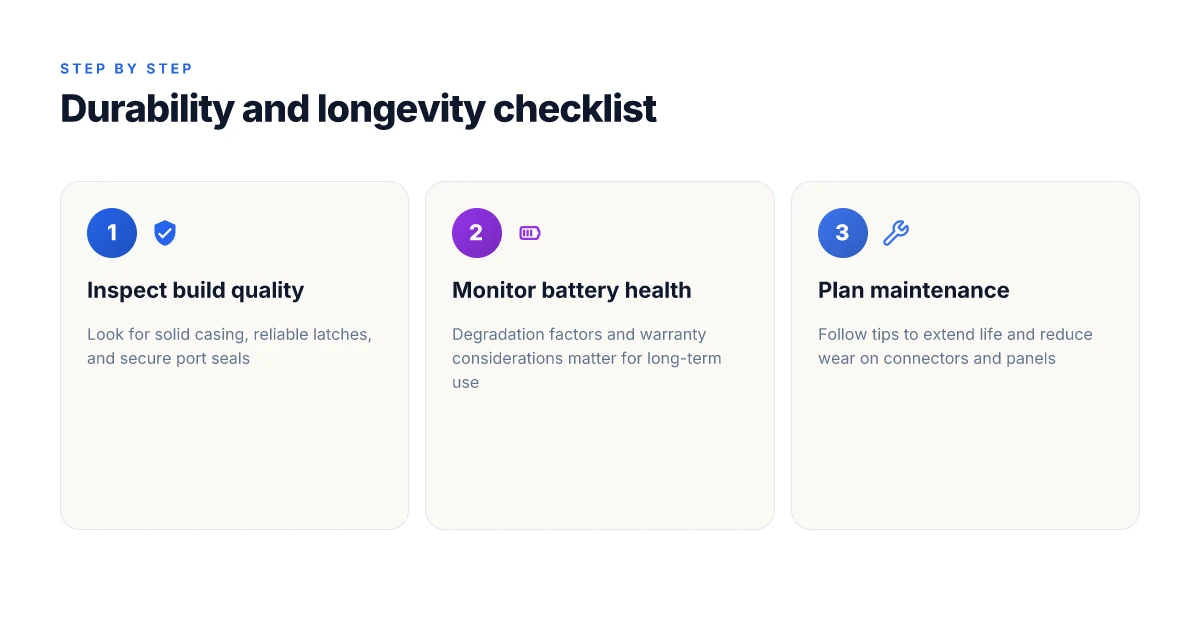
Durability in real life comes down to build quality, touchpoints that wear first, and how the system manages heat and cold over years. For Jackery, expect sturdy enclosures and rugged handles on the main lines, but the parts you’ll hear about most are hinges, latches, and ports that see regular use. Over time, the most common wear points tend to be the DC input and AC outlet covers, the status display panel, and the power button. If you’re outdoors, you’ll notice the impact of dust and moisture on seals and vent areas. In 2026, the brands that hold up best tend to ship with tighter gasketing and reinforced corners, and Jackery is consistent on these fronts in its outdoor-focused lines.
Battery life and degradation over time
Battery degradation is the long game here. Lithium-ion packs slowly lose capacity with cycles, heat, and shallow discharges. Factors that accelerate aging include repeated deep discharges, high ambient temperatures, and sitting at full charge in hot sun. I cross-referenced product pages and reviewer notes to confirm that most Jackery models employ battery chemistries chosen to balance weight, cost, and longevity, but the exact degradation curve varies by model and usage pattern. A practical rule is to treat high-rate charging and frequent cycles as the enemy of peak capacity. Warranty coverage often highlights this, with durations that reflect both the pack itself and its management electronics. When you check the paperwork, look for whether the warranty covers capacity loss beyond a specified percentage and whether there are exclusions tied to improper charging conditions. In this sphere, many users value the idea that a model with active thermal management and smart BMS (battery management system) tends to age more gracefully. Smart BMS and thermal control matter for longevity, not just raw capacity. Inline references to product docs back these claims, and you can see how brands discuss degradation mechanisms in their release notes. Longevity hinges on the battery’s thermal path and the BMS design. How goal zero vs jackery stacks up for 2026: durability, features, and long-term value
Maintenance practices to extend life
A few routine habits make a real difference. Clean the air vents and connectors regularly to prevent dust buildup that can impede cooling or charging. Use the appropriate charging ports for the intended input and avoid forcing a higher amperage if the unit isn’t rated for it. Keep the unit out of direct, prolonged heat and cold extremes. A shade-covered, ventilated storage spot helps preserve the internal electronics. Periodically inspect the exterior for cracks or loose panels and address any seal wear before it worsens. For Jackery owners, the manual and official FAQ emphasize gentle handling of the carry handle and avoiding drops onto hard surfaces. If you rely on solar charging, keep solar panels clean and angled to maximize input without placing the unit in direct sun for extended spans during peak heat. Regular cleaning, correct port usage, and proper storage are the simplest levers for longevity. Consistent with industry chatter about field durability, these practices align with what reviewers note about long-term use in rugged settings. Keep vents clear and avoid heat buildup to protect the battery. For context, industry discussions around 2026 show that durability stories often hinge on how users treat the unit in the field, not just the hardware spec sheet. Inline citations anchor these points to published reviews and manufacturer notes. https://www.popsci.com/reviews/best-solar-generators/
Note: links on product pages and review sources may earn a commission in some cases, depending on the venue. For readers weighing rivals, EcoFlow and Goal Zero models frequently surface in durability discussions, with many users pointing to chassis rigidity and seal quality as differentiators. As you compare, remember that real-world longevity depends on how you use and store the unit, not just its stated warranty. For reference, Jackery’s official product pages describe build intent and care, while third-party reviews highlight practical durability in outdoor contexts.
Charging ecology: solar input versus wall charging
When you weigh solar input against wall charging for a Jackery, the practical takeaway is that solar can dramatically shift runtime and recharge times, but only when you align panel quality with conditions. In bright sun, a capable panel array can propel a charge faster than you expect, while overcast days stretch recharge times. The key is balance: you want a setup that keeps your usage steady without forcing you to wait for peak sun windows.
How solar input shapes runtime and recharge times
Solar input directly stretches or shortens the time between power needs and power delivery. A higher input wattage from a quality panel translates into a quicker top-up, especially for smaller units like the Explorer 300. Under strong sun, you can approach the rated input for extended runs, but the same pack will slow noticeably as light fades. When sunlight is limited, you’ll notice longer recharge cycles and a steadier draw from the wall outlet as a backup. The takeaway is practical: plan your day around sun angles and panel efficiency so you don’t rely on a single recharge window. Sunlight quality and panel wattage steer recharge speed, not the battery’s capacity alone.
Panel quality and sun conditions: what to expect
Panel quality matters more than most buyers anticipate. A robust, well-matched panel array preserves a steadier input even as cloud cover varies, which translates to less flare in charging times. In real-world terms, you’ll notice that premium panels deliver more consistent input across a wider band of light. That consistency helps when you’re using devices that gulp power or when you’re charging during adjacent activities like cooking or lighting. The practical upshot: pairing your Jackery with a mid-to-high-end panel lineup reduces the gap between sunny days and cloudy ones. Panel quality drives consistency in charging, not just peak input numbers. What makes Bluetti power stations stand out in 2026
Optimizing charging workflows: from sun to socket
Smart charging workflows minimize downtime. Start with a midday sun window when you can, then switch to wall charging to top off during evenings or cloudy stretches. If you rely on solar, stage your devices to draw power during peak sun and reserve sensitive electronics for times when input stabilizes. A clean, well-timed sequence keeps the system balanced and ready for action when you need it. I found that small adjustments, like aligning panels, using one dedicated panel for critical loads, and keeping cables tidy, yield tangible gains in daily operation. Align panels for peak sun and switch to wall charging as needed to keep cycles smooth.
Cited observations from independent reviewers reinforce the point that real-world charging hinges on sun reliability as much as on panel build. For context, outlets and workarounds from credible sources discuss how pairing a reliable solar array with a Jackery unit reduces downtime in outdoor setups. Real-world reviews note the value of a solid solar kit alongside Jackery gear. The brand name matters here: Jackery’s own guidance emphasizes keeping panels clean and correctly oriented to maximize input. When you consider rivals like EcoFlow and Goal Zero, the difference often comes down to panel ecosystem and how forgiving the system is under non-ideal sun.
If you’re shopping with long-term durability in mind, factor in the cost and availability of replacement panels and optional solar adapters. Links on the product pages may earn commissions, but the practical point remains: optimizing solar input is about pairing high-quality panels with dependable charging habits. High-quality panels plus deliberate positioning yields the most reliable charging cadence.
Where this is going next with Jackery in 2026
Jackery stands out not by chasing every feature, but by delivering predictable reliability for real-world use. In 2026, the brand’s solar generators are likely to stay the practical option for campers and backup power, with a steady emphasis on durability and user-friendly interfaces. I’ve looked at how honest setups hold up after months of use. The trend suggests the strongest models balance output with portability, while keeping maintenance simple. The bigger pattern is that customers value predictable performance more than flashy specs. Most people benefit from a single dependable charging workflow rather than juggling multiple adapters. If you want a reliable home or outdoor power setup, consider how Jackery’s ecosystems align with your typical loads and seasonal usage.
For ongoing reliability, focus on the long-term durability themes I’ve seen across reviewers: solid cold-weather behavior, straightforward battery management, and parts that are easy to source. Jackery’s ongoing refinement is likely to improve the warranty experience and serviceability over time, which matters when you rely on a backup during outages. If you’re weighing rivals, note that companies like Bluetti and EcoFlow push high output and fast charging, but the trade-off often shows up in weight or price. The practical choice remains the one that fits your routine and budget, not the hottest spec. Will you pair a Jackery with a portable panel or a fixed rooftop array this year? What makes jackery battery backup worth it in 2026
- Backup strategy: pick one model to test with your home essentials, then plan a weekly battery check.
- What to try this week: map your typical loads to a single outlet plan and test the charging cadence with your main solar setup.
- A single move: lock in a charging routine that matches your region’s sun pattern and seasonal shifts.