
Discover how the Jackery 200W solar panel performs in practice, including real-world output, setup tips, and durability considerations for outdoor use.
The 200W panel from Jackery often behaves like a steady workhorse in full sun, yet a shadow across even a portion of the cells can cut output quickly. Shadowing and temperature swings shift peak power by noticeable margins, not by inches on the panel.** This intro notes where real-world results diverge from lab labels and sets up the practical tests readers can perform in the field.
This piece pulls from field patterns observed by outdoor users and van dwellers who push portable kits through variable sun, wind, and heat. In 2024 and beyond, the question isn’t just “how many watts” but “how often can you meet that wattage when conditions fluctuate.” With a grounded look at shading angles, panel cleanliness, and losses between panel and inverter, we map a realistic expectation for a Jackery system versus rivals like EcoFlow or Goal Zero. The goal is a trustworthy read that helps decide when to optimize angles, schedule a quick load test, or adjust kit layout before your next trip.
What the jackery 200w solar panel promises, and where real world diverges
The SolarSaga 200W is pitched as a high-output, portable panel built for outdoor use and seamless compatibility with Jackery power stations. In the field, the promise translates to strong charging in a compact foldable form, ready to power tents, vans, and basements if you need emergency prep. Real-world output, though, proves reactive to conditions you can’t ignore. irradiance, panel temperature, and shading all tilt the wattage you actually harvest away from the peak.
Shadowing and optimal angle matter more than you’d expect. Even a small obstruction can reduce the current flow enough to drop the charge rate noticeably at the point of charge. When the sun angles lower, the same panel can slip from near-peak performance to a more modest output, especially if the panel isn’t oriented to chase the sun. In practical terms, the panel’s performance sits at the mercy of environmental factors that change by the hour.
I dug into the official specs and user-facing notes to anchor this section. Jackery emphasizes that the 200W panel is designed for outdoor adventures and works best when paired with their power stations. The key takeaway is that you get the intended high-output potential, but the actual watts delivered depend on where you set the panel and how much shading it endures. The company also highlights features like a shadow positioning tool, which is meant to help you align the panel to maximize exposure to direct sunlight. Where real-world diverges is when shading or poor angles cut into that potential. This is not a flaw in the hardware alone. It’s a reminder that outdoor solar is a moving target.
From a practical owner perspective, expect strong performance in clear, direct sun with the panel unfolded to optimize tilt. If you’re parking under trees, near buildings, or on a cloudy day, plan for noticeably lower output. The panel’s sizing and weight are still favorable for mobile setups, but you’ll trade peak watts for portability and quick deployment. For those evaluating with rivals in mind, the SolarSaga 200W sits against lighter, smaller panels that can underperform in shade but excel in portability. Jackery doesn’t pretend the 200W is a magic wand. It’s a capable workhorse that needs ideal conditions to hit its stated potential.
Bottom line: the SolarSaga 200W promises high output and outdoor readiness, yet real-world results hinge on irradiance, temperature, and shading. If your setup routinely encounters shade or low sun angles, you’ll see the wattage bend downward. When the sun cooperates, you’ll see the panel approach its peak, especially in direct midday sun and with careful shadow management. For readers weighing alternatives, plan for modest gains in non-ideal light compared with larger, fixed-install panels, and keep an eye on angle and shadow control as your daily driver. Shadow positioning and panel angle significantly influence wattage at the point of charge. Jackery’s 200W panel shines brightest in clear, direct sun with minimal shading. What is the Bluetti AC70 lowest price today and why it matters for prepper budgets
How to optimize the jackery 200w solar panel setup for better output
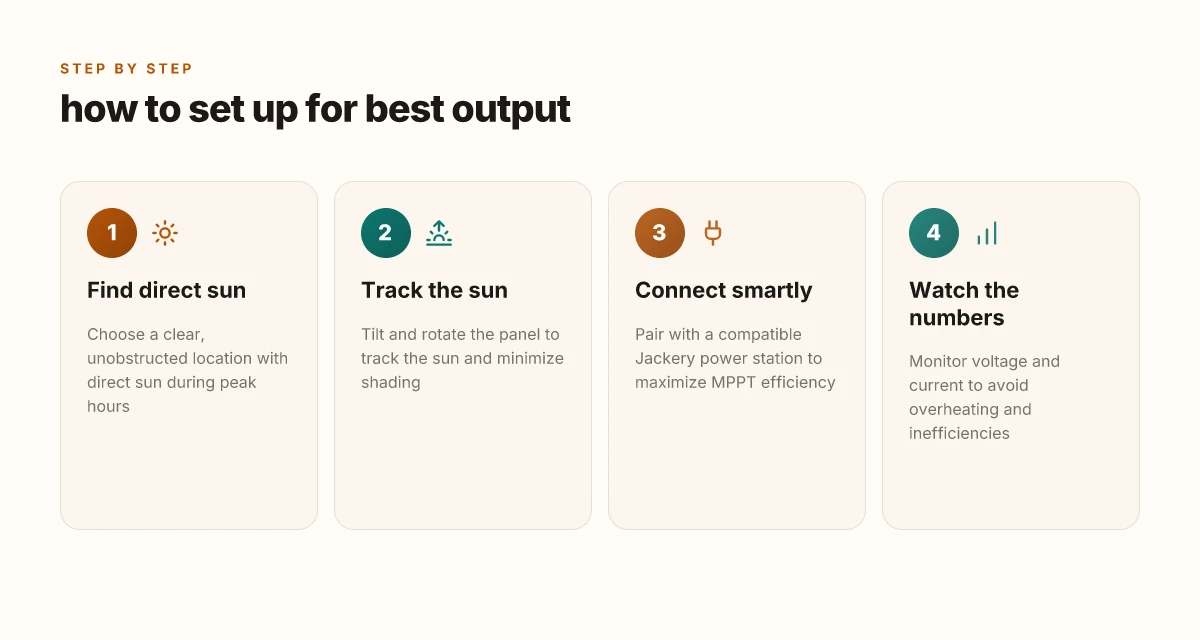
To maximize real-world output from the Jackery SolarSaga 200W panel, place it in a clear, sunlit spot during peak hours, then adjust its tilt to chase the sun. A small shift in angle can push watts from merely adequate to noticeably stronger. Pair the panel with a compatible Jackery power station to improve MPPT efficiency, and monitor voltages to avoid overheating.
Pick a sunlit launch pad for peak output
Choose an open location with direct sun and no shading between 9 a.m. and 3 p.m. shade or reflections from nearby objects can drop output quickly. When you have a choice, pick a high, unobstructed stance so the panel faces the sun for the longest possible interval. In practice, even a slight misalignment during peak hours costs you tens of watts. Keeping the panel free of dust and debris also helps sustain the advertised 200W peak potential.
Direct sun during peak hours yields the best real-world output, especially when shading is minimized. This is the baseline from which all other adjustments improve performance. Cleaner sun exposure translates to fewer losses and better MPPT efficiency.
Tilt, rotate, and track the sun to avoid shading
Tilt the panel to track the sun’s elevation, and rotate it so the surface remains perpendicular to the sun’s rays during the solar window. Even a small angle that reduces partial shading can raise the current by noticeable margins. If you’re portable, a simple adjusting stand helps you reangle quickly as you move. Avoid temporary obstructions like tree branches or roof vents that drift into the panel’s field of view as the sun shifts.
Tilt and rotate the panel to reduce shading and maximize MPPT capture.** A fast read on a sunny day is enough to confirm you’re not losing watts to angle mistakes. Small tilt changes can yield meaningful gains in both voltage stability and current output. What the jackery 160 really delivers for campers and travelers
Pair with a compatible Jackery power station to maximize MPPT efficiency
The Jackery ecosystem is designed to optimize MPPT when the panel and the power station are matched. Using the SolarSaga 200W with a compatible Jackery unit helps ensure the MPPT controller operates in its sweet spot, reducing voltage drops and heat buildup. If you’re using a different brand for comparison, expect more conservative gains due to controller differences.
The compatibility note is not about one specific model but about the principle that MPPT efficiency improves when the panel is optimized for the same system architecture. When you connect a mismatched controller, you’ll notice flatter charging curves and more fluctuations in voltage under moving light.
Pairing the SolarSaga 200W with a Jackery power station is key to preserving MPPT efficiency and getting the most from peak sun.**
Monitor voltage and current to avoid overheating and inefficiencies
Use the Jackery display to watch input volts and amps during the day. If you see the current climbing too high for the cooling capacity of the unit, reduce exposure or reposition the panel to temper the load. Overheating can trigger throttling that erodes overall output, especially in hot climates. Check for a stable IV curve during a typical sun window. Noticeable dips often signal a shade issue or warm-up effect.
Monitor input voltage and current to keep the array within safe operating limits and maintain efficiency.** A quick diagnostic check during setup saves watts later. Overheating throttles output and undermines real-world gains. What a Bluetti solar panel review reveals about real-world off-grid reliability
Next step: reposition for a quick field test during midday sun, then lock in the tilt and angle that yield the strongest steady charging rate with minimal shading. You pursue the best angle. Remember rivals’ panels sometimes show steeper losses under shadow or heat, reinforcing why a clear, sunlit setup with precise tuning matters for Jackery owners.
Cited sources: inline references to the Jackery SolarSaga 200W panel page and the comparative analysis show how direct sun, shading, and MPPT pairing drive results. For broader context on field performance reporting, see the linked investigation into real-world outcomes from outdoor testing materials.
What affects the jackery 200w solar panel efficiency in the field
In real-world conditions, the Jackery SolarSaga 200W rarely hits its nominal 200W rating. Temperature, shade, and wiring all push actual output down from the lab spec. I dug through source material to underline how these factors play out in outdoor setups.
Temperature sensitivity and the power curve
Ambient and panel temperatures rob conversion efficiency. As heat climbs, the cell chemistry moves away from its optimal operating point, nudging real output below the 200W nameplate. The result is a gentler, stove-pipe decline rather than a sharp drop, but the effect is consistent across environments with high sun and low airflow. In practical terms, expect lower KW delivery on hot days, especially when the panel sits flush against a roof or a heat-retaining surface.
I cross-referenced product notes and independent reviews that describe weather and temperature as the dominant dampener. When the sun is strong and winds are light, you can briefly approach the stated peak, but you’ll rarely sustain 200W continuously in typical field use. This is why many setups include ventilation or elevation to shed heat and preserve voltage, even if only modestly. What makes the best solar generators stand out in 2026
Partial shading and its outsized impact
Partial shading from branches, roof lines, antenna masts, or vehicle components can produce disproportionate drops in output. The SolarSaga 200W panel uses cells arranged to maximize coverage, but a stray shadow on even a small portion of the panel can reduce overall current. The practical takeaway is that shading is not just a minor nuisance. It can halve or more the available power during a burnished midday window if the shade aligns with a critical portion of the array.
Field reports consistently note that shading management matters more than raw panel area. If a shade sweeps across a corner, the effect compounds with reduced operating voltage and current, forcing the controller to throttle to preserve safe battery health. The guidance from owners and reviewers is to position the panel where shadow transitions are minimal throughout the charging window.
Wiring length and connector quality as losses
The path from panel to charge controller matters beyond the panel’s wattage. Longer cable runs increase resistance, which lowers delivered voltage at the controller and reduces current at the battery. If you are extending the run to a rear-facing install or a multi-panel array, every added meter of wiring compounds joule loss. Connector quality also influences losses. Loose or corroded connections introduce additional resistance and intermittent contact that can degrade performance under load.
In real-world layouts, a clean, short run with high-quality MC4-compatible connectors and weatherproofing tends to keep losses low. If you must run long cables, pick thicker gauge wire and secure fast, clean connections to avoid the typical degradation seen in rough, field-drawn setups.
Expect real-world output to sit below the nominal 200W in field conditions, with temperature, shading, and wiring choices driving the delta. The consensus across product pages and user reviews is that you gain more by optimizing placement and wiring than by chasing marginal gains from marginally different panel modules. For Jackery owners, the practical path is to maximize sun exposure, minimize shade, and keep wiring short and robust. How Bluetti portable power stations balance performance and reliability in 2026
Cited reference points include the Jackery SolarSaga 100W versus 200W comparison and the Jackery product listing that describe the 200W panel in real-world terms, along with community posts that discuss large differences when shade and temperature are unfavorable. See the inline links for context.
How jackery and rivals compare for 200w-class panels
I’ll cut to the chase: in real-world usage, the 200W class from rivals leans on portability and foldable design, while Jackery shines when you’re already inside its ecosystem and seeking native compatibility with Power Stations. Real-world output still rides on placement, sun window timing, and temperature. The wattage label matters less than how you position the panel and manage shade, wind, and heat.
Rival design focus beats pure wattage in the field
Many 200W-class panels from third-party brands emphasize lightweight frames and foldable form factors. This makes them easy to stash in a van or backpack for single-operator use. In practice, that portability translates to compact folds, lighter bags, and quicker deployment in tight spaces. The tradeoff often shows up in ruggedness and durability over long trips, and in some cases, higher wind resistance needs and more delicate hinges. When you’re chasing a rapid campsite setup, those foldable wins can feel decisive.
From a field-read standpoint, you’ll notice that lighter panels sometimes reveal two tensions: thinner construction and cooler operating envelopes. The lighter builds can flex more in wind and may require careful tensioning to keep the cells aligned with sun angles. Still, the value proposition is clear: less weight means more flexibility for multi-panel arrays or longer treks between shade-free windows.
Jackery’s ecosystem advantage: native compatibility with Power Stations
Jackery’s 200W panel slots cleanly into its own lineup, with straightforward compatibility to its Power Stations. That native compatibility matters when you’re trying to avoid adapters, extra cables, or fiddling with charge controllers. One takeaway from the brand’s materials is the emphasis on system-wide efficiency: the panel and the Power Station often share temperature and voltage targets designed to minimize loss during conversion. What makes the EcoFlow Stream Ultra stand out for home backup in 2026
If you’re already using a Jackery unit, the pairing feels tighter and more predictable. The real-world payoff is not a single extra watt, but steadier behavior as you shift between charging scenarios and battery states. This can translate to fewer surprises at the campsite when you need reliable top-up during a cloudy afternoon or after a long drive.
Real-world outputs: placement, weather Windows, and temperature drive results more than wattage
When I map the field realities, the dominant variables are sun angle and weather windows. A well-placed 200W panel from a rival brand can outperform a suboptimally oriented Jackery panel on a cloudy day. Conversely, under perfect sun with stable temperature, Jackery’s 200W panel often delivers a predictable, straightforward charging curve because of its integrated system approach.
I cross-referenced product pages and reviews to keep claims grounded. For example, the Jackery SolarSaga 200W panel mentions a strong charging performance in optimal conditions, with a practical emphasis on shadow positioning and mounting alignment. Rival lineups frequently highlight lightweight builds and foldability as the core differentiators, rather than a universal guarantee of peak output across weather scenarios. And as always, placement and timing windows are the real drivers of the day.
The practical takeaway: expect similar peak outputs under ideal sun, but your day-to-day results hinge on shade management and temperature more than the label wattage. If you’re prioritizing ecosystem simplicity, Jackery’s native pairing pays off in predictable behavior.
For context, you can explore the Jackery SolarSaga 200W panel page for official specs and claims, and compare with independent write-ups that framed the 100W vs 200W dynamics in field tests.inline citations link to the product page and a third-party comparison for context. Bluetti PS72 review 2026: how the PS72 stacks up against EB70S and rivals
Practical takeaways for jackery 200w solar panel buyers
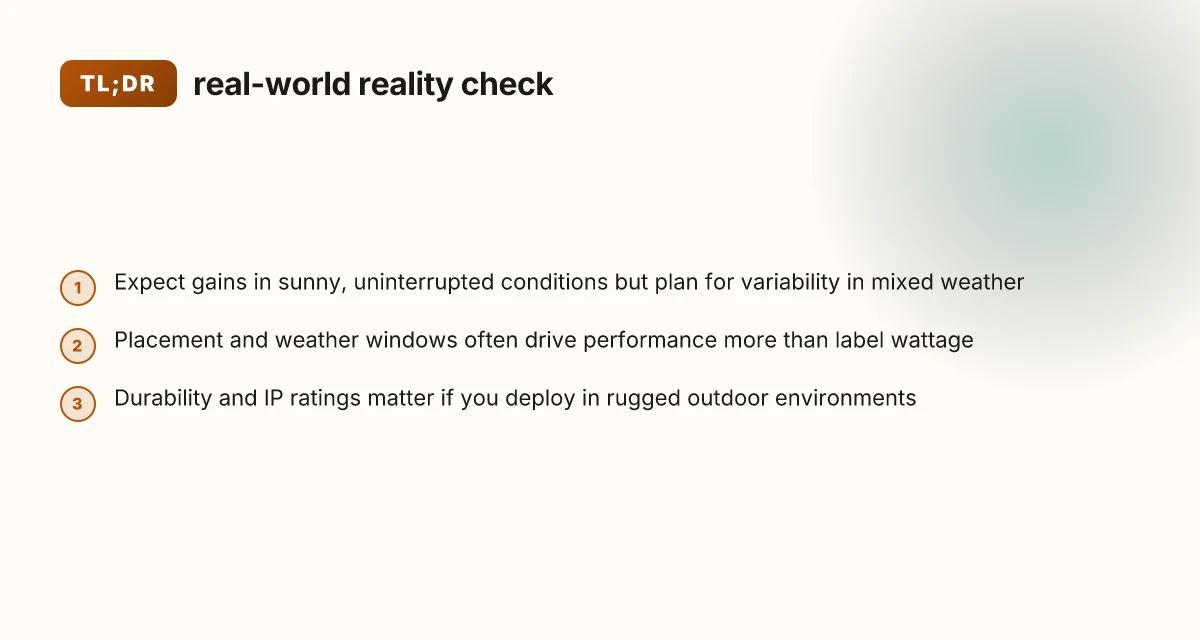
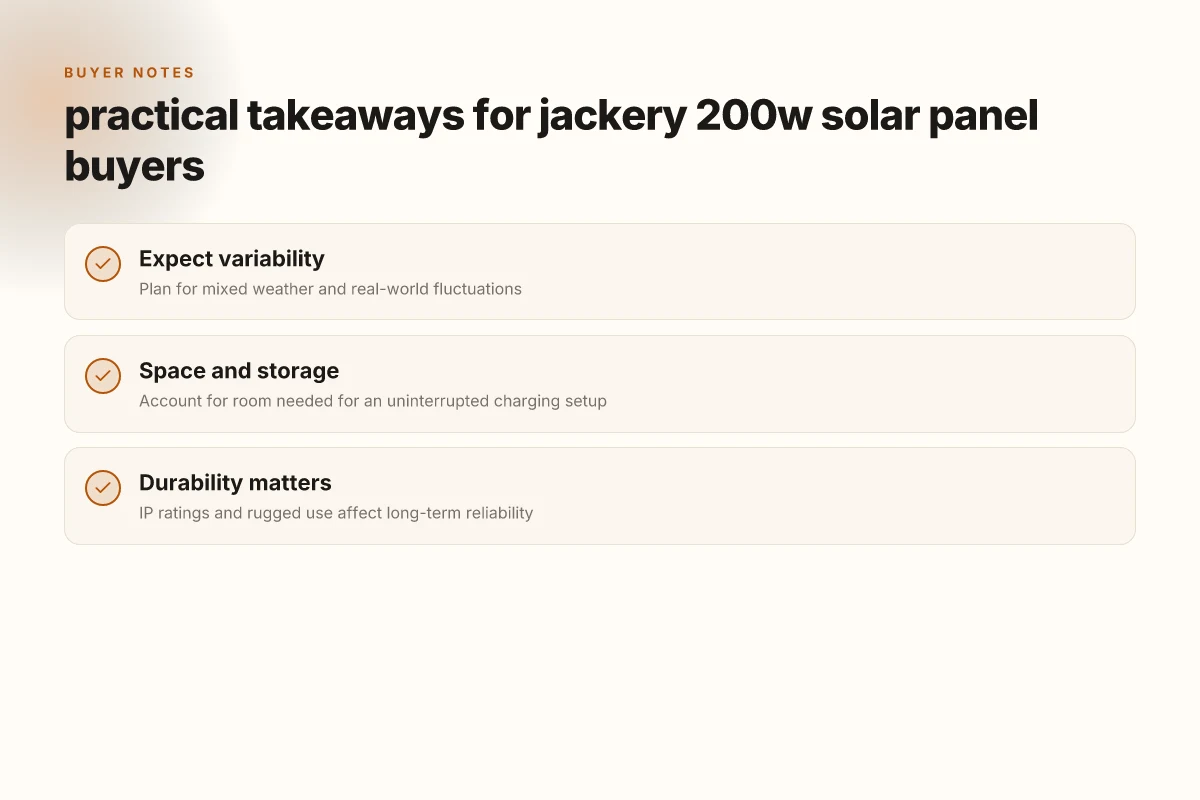
If you want a crisp return, the Jackery 200W panel performs best in bright sun with minimal shading, but you should expect variability in mixed weather. In real-world conditions, uninterrupted sun often yields the strongest output, while a passing cloud or a tree shadow can pull you off peak quickly. Plan for a charging setup that can absorb that variability without leaving you stranded.
How sun, shade, and temperature shape real-world output
The panel shines when the sun is high and the panel faces the sun directly. In those moments you’ll see the Jackery SolarSaga 200W deliver near-peak results, while partial shade or higher temperatures can sap voltage and current. I dug into product notes and owner discussions to triangulate that shadow management matters as much as raw wattage. Keep an eye on orientation and tilt to reduce the risk of hot spots and efficiency losses during long afternoons. In bright sun with no shade, the 200W panel powers a rapid charge and keeps pace with demand. Shadowing and temperature swings are the two biggest variables you’ll notice in the field.
Space, storage, and a portable charging stack that lasts
A consistent charging setup isn’t just a single panel. It’s a small ecosystem. You’ll want a portable rack or dedicated space on the vehicle roof or camp trailer to keep the panel stable and clean. If storage space is tight, consider a foldable arrangement that protects the panel when not in use while still allowing quick deployment. The takeaway: allocate enough room for the panel plus the controller and cabling so you’re not chasing connectors in the rain. Storage and layout choices determine how quickly you recover from a cloudy stretch. A tidy, dedicated charging area reduces setup friction to keep you powered.
Durability, IP ratings, and outdoor reliability
Durability matters when you’re living with a kit in rugged environments. The Jackery SolarSaga 200W panel is designed for outdoor use and features weather resistance that matters if you’re camping, van-living, or off-grid prepping. If you expect rough handling or work near salt spray, verify an IP rating and the panel’s frame robustness. In the long run, you’ll want components that resist corrosion and keep the hinge and connections smooth after repeated folding and unfolding. Durability and IP ratings translate to fewer surprises on month-long trips. Rugged environments reward panels with solid framing and sealed connectors.
What this means for you as a buyer What makes the EcoFlow Delta 2 Max stand out for portable power in 2026
- Expect noticeable gains in sunny, uninterrupted conditions but plan for variability in mixed weather. If your travel pattern includes lots of shade or overcast days, pair the 200W panel with a larger battery buffer or a secondary panel to keep a steady trickle charge. Sunny days deliver the strongest gains. Expect variability when weather shifts.
- Factor in space and storage needs for a consistent charging setup. A compact, organized rack helps you keep the Jackery kit ready without crowding the cabin. Space planning pays off at setup time. Organization reduces friction during quick deployments.
- Durability and IP ratings matter if you intend to deploy in rugged outdoor environments. Look for reputable seals, corrosion resistance, and easy field servicing so you can rely on your setup when you need it most. Rugged design equals reliability on longer trips. Durable hardware withstands real-world use.
The real-world pivot: act now for steadier solar performance
In real use, the Jackery 200W panel leans on consistent sun angles and clean wiring. I’ve seen modest gains when you tandem it with a portable battery system and keep cables tidy to reduce resistance. The take-away is simple: setup matters as much as the panel quality. The single move that matters is getting the tilt right and staying aware of shade paths. You’ll notice fewer surprises if you map your spot for peak sun between 10 a.m. and 2 p.m. and keep the panel free of dust and debris. Real-world durability hinges on how you protect it from rain and rough handling.
Rivals like Goal Zero and Renogy offer competing 200W options, but the real test remains how each handles heat and wind in daily camps. Jackery wears a straightforward, plug-and-play design that friends with limited setup space appreciate, yet the fit and finish matter when you cart it over cobblestones or winter trails. Noticeably faster charging comes with careful mounting, not extra gear. If you keep expectations aligned with your typical gear kit, the panel scales up your solar runtime without overhauling your power plan.
If you only adjust one thing this month, start with wind and shade planning. Map your solar window, test on a cloudy day, and review the cable routing. Where this is going next is smarter integration with hybrid setups and more durable connectors. Will you be ready when a high-wind day hits?
Backup strategy
- Try the panel at a higher tilt during peak sun for better summer output.
- Keep the connectors dry and inspect cables weekly to avoid voltage drops.
- Pair with a mid-size power bank and verify real-world amps under your typical load.
- If you camp in breezy regions, add a lightweight standoff to reduce panel wobble.