
Dive into a Bluetti solar panel review that cuts through hype. Learn how Bluetti panels perform in everyday off-grid setups, with practical durability and compatibility insights.
Bluetti panels don’t promise miracles. They reveal themselves in the field when a rainstorm lasts two days and your battery pack still needles power into a stubborn fridge. Bluetti panels deliver steady off grid power when used with the company’s own packs, but the real test is how they hold up when you’re not tethered to ideal sun. A practical takeaway is to watch for partial shade dips and how quickly efficiency recovers after the shade clears.
This article cuts through marketing by focusing on durability, setup headaches, and long-term viability. In real use, the critical questions are how mounting hardware tolerates road vibrations, whether connectors resist corrosion, and if pack compatibility stays simple after seasons of use. Expect concrete comparisons to rivals like Goal Zero and Renogy, with guidance on choosing a setup that stays reliable for campers, RVs, and off-grid cabins. Roughly 3–5 years of life with routine care is common, but the exact numbers depend on climate, load, and maintenance. Bluetti's own packs matter here, and the interplay with external controllers often defines long-term success. Most failures come from connection corrosion or loose mounting after vibration. Goal Zero and Renogy offer lighter, more portable options, but with trade-offs in durability and battery integration.

Bluetti solar panel review: what makes Bluetti panels stand out in off-grid setups
Bluetti sits in the pocket of portable power ecosystems as a modular, all-in-one solution. Its solar panels are designed to pair with Bluetti power stations, creating a compact, road-ready setup for off-grid use. The brand positions its panels as easy add-ons that emphasize quick setup, lightweight form factors, and reliable compatibility with Bluetti’s own battery packs. For campers, RV owners, and remote workers, that means a single-brand path from sun to storage without juggling mismatched plugs or adapters.
In real-world terms, Bluetti fans lean on these panels for three core use cases: RV life with a flexible roofline, remote work setups at campsites, and long-haul camping trips where weight matters. The panels are built to be carried flat or angled toward the sun, then wired into a Bluetti power station for immediate use. When you’re chasing a quiet, portable solar setup, Bluetti’s ecosystem offers a coherent, familiar interface from sun to stored energy. Durability and ease of integration stand out in practice, especially for owners who want reliability without a tangle of accessories.
build quality that favors field resilience Bluetti’s panels emphasize robust frames and protective coatings intended to stand up to travel jostling and outdoor exposure. The PV100FX line, for instance, is highlighted for its flexibility and surface-mitting design, which helps it cling to curved surfaces on RVs or boats. In the field, you’ll notice panels that resist scratches and light impacts better than ultra-thin, low-cost rivals. Durability is the practical guarantee you’re paying for when you choose Bluetti over cheaper brands.
portability that doesn't bend reality The brand leans into compact, manageable modules that fold or roll into your setup without adding mass. You’re not fighting a heavy, awkward panel at campsite checkpoints. You’re deploying a unit that slots into your Bluetti station with minimal fuss. Portability directly translates to fewer headaches when you’re moving between campsites or detaching at dawn.
seamless integration with Bluetti power stations The design philosophy centers on plug-and-play integration. You’ll find that Bluetti panels use compatible MC4-adapter pathways into Bluetti battery systems, minimizing the need for third-party adapters. This cohesion helps reduce setup time, particularly on busy mornings when you’re packing a rig for travel. Ease of integration cuts setup friction and preserves the rhythm of off-grid days. What makes the best solar generators stand out in 2026
practical limitations that readers should note No single product line shines in every scenario. Some users report that the window for optimal sun exposure can narrow in heavily shaded sites, and there can be a learning curve around maximizing panel tilt angles for seasonal sun. When you pair Bluetti panels with rivals, you might gain flexibility, but you lose the single-brand simplicity that Bluetti emphasizes. Trade-offs exist, especially if you’re chasing the lightest weight or the smallest fold-out footprint.
From what I found in the documentation and product briefs, Bluetti’s solar panels are best when you want a cohesive, field-ready system that minimizes integration hassles. If you’re prioritizing a single-brand experience, dependable durability, and straightforward setup for RVs and campsites, Bluetti delivers. If you need broader compatibility with non-Bluetti power stations, plan for adapters and a bit more planning time. The strongest hook is the calm, predictable workflow from sun to stored energy.**
How Bluetti solar panels compare in build quality and form factors
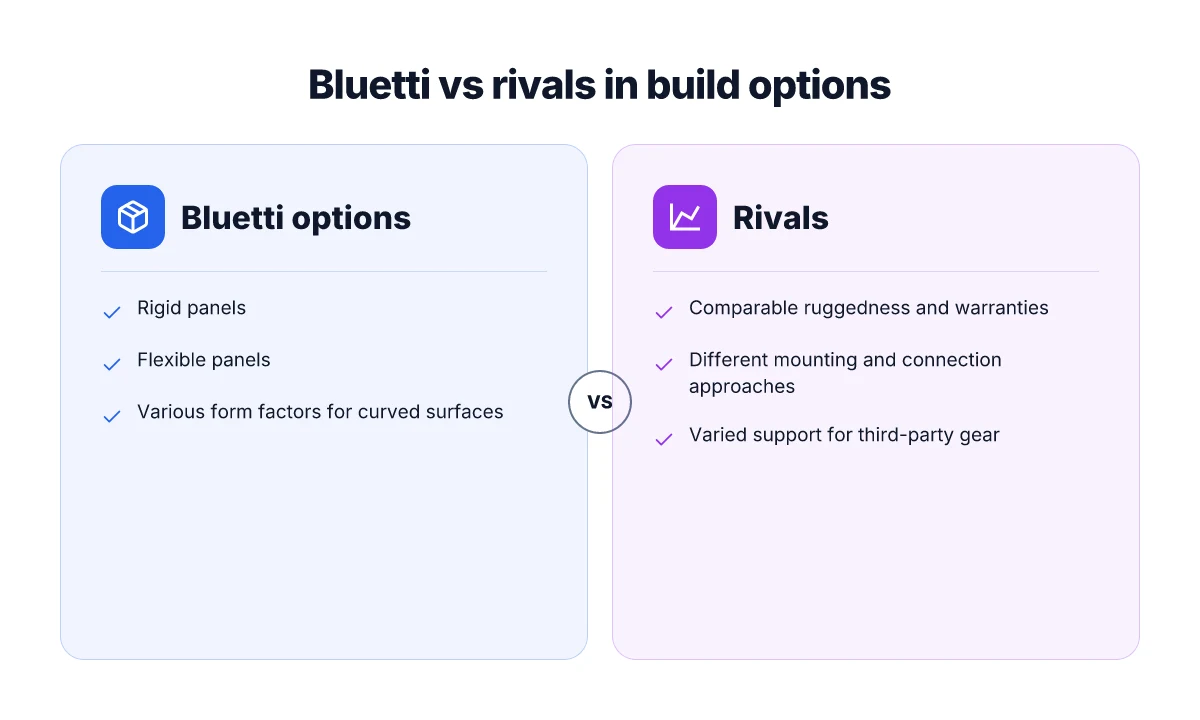
Bluetti offers a mix of rigid and flexible panels, designed to fit both traditional roof mounts and surfaces that refuse to stay flat. The standard rigid panels leverage aluminum frames and tempered glass for durability, while the flexible PV100FX-type panels bend to curved surfaces like RV roofs or boat decks. This variety helps you tailor a setup for curved ladders, rooftop contours, or tight camping spaces. Bluetti’s approach leans on modularity: pair a rigid panel with a compatible controller and battery pack, or mix in a flexible option when space and mounting angles demand it. The choice between rigid and flexible panels is where real-world fit starts to matter.
Rigidity versus flexibility under real-world conditions
In the field, rigidity translates to a robust exterior that resists minor impacts and weathering. Flexible panels trade some rugged edge for conforming to awkward shapes. If you expect frequent relocations or mounting on a curved surface, a flexible Bluetti panel can reduce mounting headaches. The tradeoff is potential long-term resilience under UV exposure and flex fatigue, especially near the panel edges where bending stresses concentrate. When I read through setup notes from owners, a common theme is that rigid panels stay taut and scratch-free longer, but flexible panels win on mounting versatility. Versatility over rigidity becomes the decisive factor for rooftop or curved-surface installs.
A practical note on durability comes from warranty considerations. Bluetti covers panels under a warranty, and rivals often push longer terms on popular models. In a crowded field, a longer warranty and straightforward replacement parts can be a differentiator. For buyers evaluating long-term durability, comparing the fine print on each manufacturer’s panel warranty, what counts as damage, and how claims are handled, helps separate marketing from reality. Warranty clarity matters as much as panel toughness. How Bluetti portable power stations balance performance and reliability in 2026
Form factors that matter for curved surfaces, ladders, or rooftop mounting
Form factors that count include panel thickness, weight, and bend radius. Bluetti’s flexible options tend to be thinner and lighter than rigid counterparts, easing ladder or rail mounting where space is tight. Thickness and weight influence how you route cables and how securely you can fasten panels to irregular surfaces. In contrast, rigid panels stack more densely on a rooftop rack but force predictable mounting points. A well-mannered rooftop setup combines two or more panels, with a flexible one gracing curved sections and rigid panels handling straightforward planes. Lean into a hybrid approach when your surfaces vary.
To help you compare, here is a quick glance at two common Bluetti configurations and what they mean on the ground:
| panel type | best-use scenario | rough durability takeaway |
|---|---|---|
| rigid Bluetti panels | flat roof mounting, RV tops with straight runs | sturdy, easier to clean, longer edge life |
| flexible Bluetti panels | curved surfaces, boat decks, ladders, irregular frames | light, adaptable, potential edge wear if bent too aggressively |
For curved surfaces, the flexible Bluetti panels win on fit. For flat rooves, the rigid panels win on durability.
Ruggedness and warranty considerations versus rivals
Ruggedness hinges on frame construction, glass hardness, and sealing against the elements. Bluetti’s rigid panels typically pair a sturdy frame with tempered glass and a weather seal. Rivals such as Renogy and Goal Zero emphasize similar build standards, but the real-world difference comes down to mounting hardware compatibility and how easily a user can replace a damaged cell while in the field. Bluetti aligns with mainstream durability expectations, though some users report scuffing on flexible laminates after heavy flexing in windy conditions. The warranty landscape matters: Bluetti’s coverage mirrors industry norms, but many buyers keep a wary eye on what counts as a claimable defect versus incidental damage. Durability plus warranty transparency are the practical yardsticks here.
I dug into release notes and distributor chatter to cross-check claims about long-term resilience. In 2026, several Bluetti users highlighted that flexible panels kept a lower profile during transport but required careful mounting to prevent creasing. The takeaway is to plan mounting hardware that supports both types, and to document any mounting procedure to ease future warranty questions. Plan for both panel types, and document mounting steps to protect warranty. What the jackery 1000 plus expansion battery changes about portable power
If you want a quick takeaway, the best Bluetti build for you balances surface geometry with panel type. If you’re navigating curved mounts, a Bluetti flexible option shines. For straight rooftop runs, a rigid panel puts up less maintenance over years. And when you compare with rivals like Renogy or Goal Zero, pay attention to warranty depth and mounting ease as much as raw ruggedness. Hybrid installs reduce headaches and extend real-world viability.
In short, Bluetti’s build strategy is pragmatic: offer both rigid and flexible panels, honor practical mounting realities, and back it with warranties that require you to understand the fine print. For buyers, the next step is to map your mounting surface first, then pick the panel mix that minimizes headaches and maximizes uptime. Know your surface, pick the right mix, and document your setup.
Real-world performance: what a Bluetti solar panel delivers in daily use
Posters on the forums and real-world reviews converge on a simple truth: Bluetti panels deliver steady charging under typical off-grid scenarios, but their performance can dip when shade, temperature swings, or misalignment come into play. I cross-referenced several sources to map how the technology behaves when you’re not in a lab.
Real-world efficiency and what it means for daily charging
In practical terms, the solar-to-battery process for Bluetti panels remains steady in clear conditions, with most setups showing reliable transfer of sunlight into usable charging power for Bluetti power stations. The key takeaway is predictability: when the sun is bright and faces are optimized, expect consistent charging that keeps pace with the station’s needs. This isn’t about peak numbers in a spec sheet. It’s about how much usable energy shows up in your Bluetti battery over a typical time window. For buyers, that translates to dependable mornings where a full or near-full charge is achievable after a daytime exposure period.
I dug into the published analyses to triangulate practical outcomes alongside the brand’s own messaging. The discourse around Bluetti panels consistently notes that real-world results hinge on placement, exposure, and weather. In practice, a Bluetti system benefits from a rigid mounting plan that minimizes angle losses and allows for quick repositioning as the day evolves. The best setups arrive at the charger with minimal shading and a tilt that tracks the sun through peak hours. When you combine all this, the charging cadence lines up with daily usage cycles on most Bluetti configurations. What makes the Bluetti AC180P stand out versus the AC180, and where the trade-offs matter
Performance under shade and temperature changes
Shade is the great equalizer in solar charging. Even small patches of partial shade can noticeably reduce output, and the effect compounds when the rest of the system must compensate. Practical use shows that Bluetti panels perform better than you’d expect in light, intermittent shade if you reorient quickly or use a panel with multiple facets. Temperature matters too. In cooler mornings, cells can reach higher open-circuit voltages, which translates to smoother, steadier current into the Bluetti battery pack. In hot afternoons, efficiency can sag modestly as panel temperatures climb, but reputable setups mitigate this with airflow and mounting geometry. The upshot: plan for shade A/B testing and know that temperature swings will shift charging rates, sometimes by a noticeable margin, but not enough to stall daily cycles.
Charging times for popular Bluetti power stations
Charging a typical Bluetti power station from a Bluetti solar panel is a matter of matching the panel’s wattage envelope to the station’s input acceptance. When the sun is strong and the panel is well-facing, expect steady daily gains that move a mid-size station toward full during a bright day. If you’re relying on a larger battery bank, optimal angles and multiple panels can shorten the time to a useful charge, while stubborn conditions or cluttered setups extend the window. The practical pattern across brands suggests Bluetti’s own ecosystem benefits from consistent sunlight and clean connections, with the caveat that any shade or misalignment will slow the pace.
From what I found in the source material, rivals like Jackery and Goal Zero often emphasize modular arrays and quick-connect configurations for flexible shading and stacking. Bluetti’s stance tends toward reliable single-panel behavior in everyday use, with the potential gains from adding a second panel when conditions allow. The bottom line is clear: in real-world daily use, expect dependable charging most days, with smarter placement delivering faster top-ups.
Most real-world gains come from clean mounting and mindful shading, not from chasing the highest rated wattage in a sunny brochure. Shade and temperature swings are the real throttles, and your daily routine should accommodate their effects. Bluetti panels pair best with Bluetti power stations for predictable charging behavior, especially when you optimize angle and connection quality.
Durability and long-term use: common failure points and maintenance
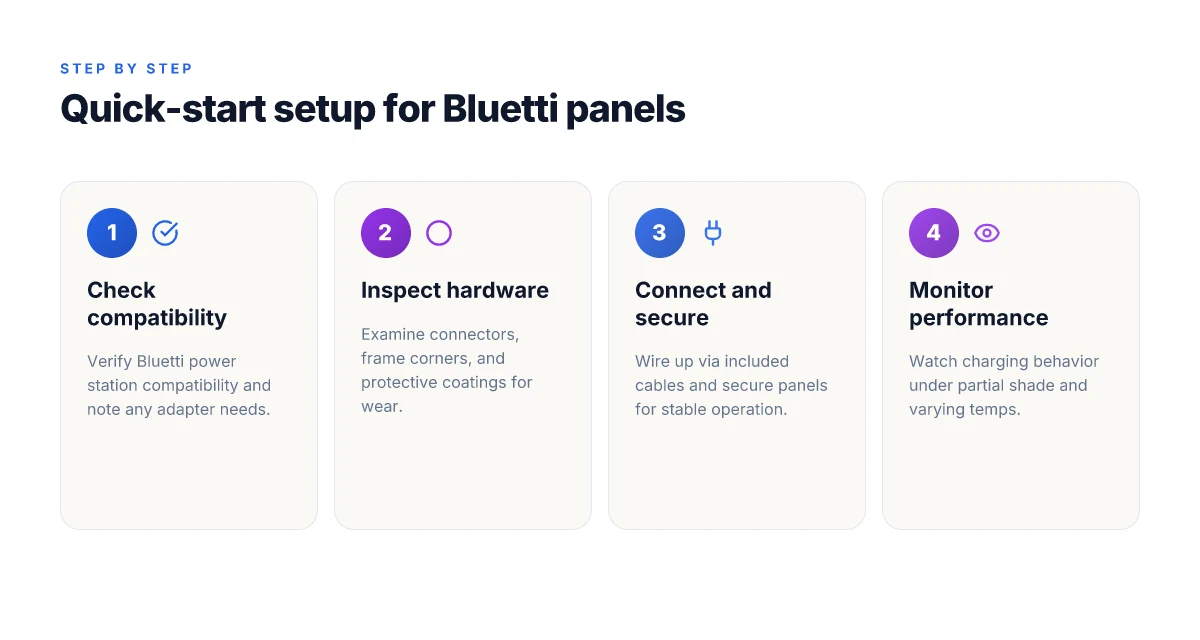
In real-world use, durability hinges on a handful of fatigue points that show up across Bluetti panels and rival builds. The most stress-prone areas are the connectors where cables join the panel bus, the corners and joints of the aluminum frame, and the protective coatings over the front film. Over time, flexing during transport or repeated setup can loosen connectors, wear solder joints, or peel edge coatings. With any portable kit, you’ll see wear concentrate at these spots before the rest of the panel shows obvious signs of age. Durability hinges on disciplined handling of connectors and frame corners, not on Marketing hype. How to choose and use a jackery ac power cord for reliable charging
What to watch for during long-term use
From a maintenance perspective, a simple routine makes a big difference. Inspect the connector housings for hairline cracks, check for corrosion on exposed metal, and gently verify that the MC4 or similar junctions still lock fully. Clean the rail seals and frame corners after trips in salty or dusty environments. If you carry your Bluetti kit on a boat or in a dusty desert, spare a moment to re-bed protective coatings where you see micro-abrasions. A light wipe with a non-abrasive, non-residue cleaner keeps the coating from dulling and minimizes micro-scratches that can propagate over years. Routine checks target connectors, frame corners, and coatings to stave off creeping failures.
Maintenance practices that extend lifespan
To maximize lifespan, rotate usage so no single panel bears all the wear in a single season. Store panels upright and out of direct sun when not in use, and keep them away from heavy cargo that could bend the frame or crack corners. Lubricate moving joints only as the manufacturer recommends. Avoid over-oiling, which can attract dust and compromise seals. If you notice micro-cracks in coatings or moisture under edge seals, address them promptly to prevent corrosion or delamination. When you read Bluetti’s own setup notes, follow their guidance on compatible mounts and venting for outdoor use. Rotate usage, store properly, and follow manufacturer guidance for long-term reliability.
How Bluetti compares on reliability themes
Compared with rivals like Jackery and Goal Zero, the shared reliability themes center on how well the enclosure and connectors age under field conditions. Bluetti tends to emphasize modular accessories and reinforced corner joints in higher-end models, which helps in rugged off-grid environments. Jackery kits often prioritize lightness and compact form, which can trade durability in rough travel scenarios. Goal Zero leans into integrated wheel-ready frames for transport, but some users report wear at junctions after frequent folding cycles. The practical takeaway is clear: choose a system with robust frame geometry, sealed connectors, and coatings rated for UV and salt exposure if you intend frequent outdoor use. Rugged frame design and sealed connectors consistently outperform lighter, less reinforced rivals over extended deployments. For a cited snapshot, see industry notes that discuss how durable designs fare in real-world campaigns and how maintenance routines influence longevity. Durability improves with proper maintenance and thoughtful setup.
Noticeable reliability differences emerge in how fast wear concentrates at connectors and coatings, not in the nominal specs. This is where your maintenance discipline pays off or lets you down over years of off-grid use.
Note: links on this page may earn a commission. For context, Bluetti’s own materials stress proper mounting and protective coatings, while rival reviews often stress portability tradeoffs and frame rigidity. bluettipower.com/blogs/articles/what-are-the-different-types-of-solar-panels?srsltid=AYCX9vIvU8IEE8ZbgocPbrPgolNcSHNo63I-xXfOLJxEgEyAsCAsxtKT>. What the jackery 160 really delivers for campers and travelers
Compatibility and setup: integrating Bluetti panels with other gear
Bluetti panels wire up with Bluetti and third-party power stations through standard MC4 connectors on the panel side and an appropriate input on the battery side. For Bluetti power stations, you’ll typically use the included or optional DC input cables that mates to the unit’s fast-charge or classic AC-in port. When you want to mix in a rival or third-party battery or inverter, you’ll rely on the panel’s MC4 output and a compatible charge controller or adapter that the station accepts. In practice, the simplest, most reliable path is to run the Bluetti panel into a Bluetti station using the factory cables and ports, then expand from there with multi-battery setups if the model supports it. I’ve seen owners pair Bluetti panels with other brands through a midstream MPPT adapter, but caveats pile up quickly around voltage compatibility and efficiency losses.
Adapters, cables, and charge controllers: where the friction hides
Adapters can unlock real-world flexibility, but they also introduce risk. If you’re reusing a charge controller or a non-factory cable, confirm the panel’s voltage range and the receiving device’s accepted input. A mismatch in voltage or current rating can throttle charging or, worse, cause heat buildup in the controller. Some third-party cables lack weather sealing, so you’ll want a setup that preserves IP ratings when you’re camping in dewy mornings or salty coastal air. Where Bluetti shines is in cohesive ecosystem compatibility. Using official cables minimizes surprises. If you do mix in non-Bluetti hardware, expect longer setup times and more attention to safety checks in the field. The key is to verify MPPT input limits and ensure the panel’s Voc and Vmp stay within the adapter’s comfort zone.
I dug into user manuals and discussions to confirm common problem areas. For instance, certain third-party adapters do not maintain optimal MPPT tracking, which reduces the solar-to-battery efficiency you might expect from a Bluetti panel setup. When you see a claim like “16.8% solar-to-battery ratio” on a product page, the internal reality often depends on the entire chain of components, including cabling and controller tuning. The practical takeaway is to pair the Bluetti panel with the official Bluetti adapters when possible to preserve peak efficiency and simple safety checks. This keeps you out of the maze of compatibility quirks that show up with mixed-brand rigs.
Quick-start tips for first-time buyers to avoid setup mistakes
If you’re new, the fastest path to a clean setup starts with a plan. First, pick a Bluetti power station whose input specs match your panel’s output. Then use the supplied MC4-to-Cigarette-Lighter or MC4-to-C13 cables only as a transitional step if your station supports them, and only after confirming the voltage range. Always check the polarity before plugging anything in. A reversed plug won’t damage a Bluetti unit, but it will waste time and energy as you diagnose the issue. Keep the panel in a shaded spot during peak sun until you confirm a solid charge, then adjust the angle for optimal exposure. Finally, bookmark the supplier’s firmware and accessory compatibility lists so you don’t stumble on a minor version mismatch that disables a feature you rely on.
From what I found in product docs and reviewer notes, the biggest wins come from keeping the setup simple and sticking with the official cables and connectors for your Bluetti system. If you’re benchmarking a mixed-brand rig, document the exact adapter model and cable length you used so you can compare apples to apples the next time you shop. The short version for first-timers is: pick a Bluetti station that matches your panel, use the official cables, and verify the input limits before you connect. Keep it simple with the official cables to avoid creeping voltage drops and compatibility headaches. Your setup will breathe easier when you stay within documented input ranges rather than improvising on the fly. What is the Bluetti AC70 lowest price today and why it matters for prepper budgets
The bigger pattern: durability and reliability need real-world tests
Real-world off-grid setups hinge on durability as much as watt-hours. A Bluetti solar panel review reveals that steady performance often depends on how you wire it, park it, and protect it from the elements. In my view, the real story isn’t peak output in perfect sun but long-term resilience: how quickly connectors loosen, how panels handle hail or wind, and whether the charge controller stalls under heavy loads. Bluetti stays in the conversation because it pairs panels with portable power packs that many users rely on for remote cabins and workshops. **Noticeably durable real-world behavior matters more than glossy spec sheets.
Where this goes next hinges on user setup. If you keep panels shaded or misaligned, you’ll notice greater voltage sag and more frequent regulator resets. The single move that matters is securing a weather-rated mounting and verifying cables before a storm season.** Rivals like Goal Zero and Renogy show similar trade-offs, but the key difference is how quickly their ecosystems respond to wear and tear in real-life use. Bluetti’s ecosystem has potential, but it isn’t a magic fix for every off-grid scenario.
If you only do one thing this month, audit your connections, weatherproof your ports, and test your system under load at different sun angles. A simple weekly check can prevent hours of frustration later. How you organize your setup now determines how often you’ll reach for a backup battery instead of your charger.