Discover the best solar generators of 2026 with real-world picks, trade-offs, and durability notes. Learn which models balance weight, output, and longevity.
Why a 2026 roundup of best solar generators matters for off-grid power
Off-grid living and emergency readiness increasingly lean on portable solar generators. In 2026, households, campers, and disaster-prep planners rely on compact power that can breathe through outages, not just peak specs. This roundup cuts through marketing noise to spotlight models that prove durable in real-world use over months of off-grid operation.
I dug into how buyers behave when the grid goes dark and the sun still shines. Folks want reliability, not just capacity. They crave clear signaling on durability, battery health over time, and how a unit ages under frequent cycling. The most dependable picks show up in hands-on tests, user reviews, and release notes that call out heat tolerance, component quality, and firmware longevity. From what I found in the reports and articles cited here, a model’s stay-put value hinges on long-term reliability as much as initial performance.
Here are the concrete steps you can take from this guide to pick a model that stays reliable over years:
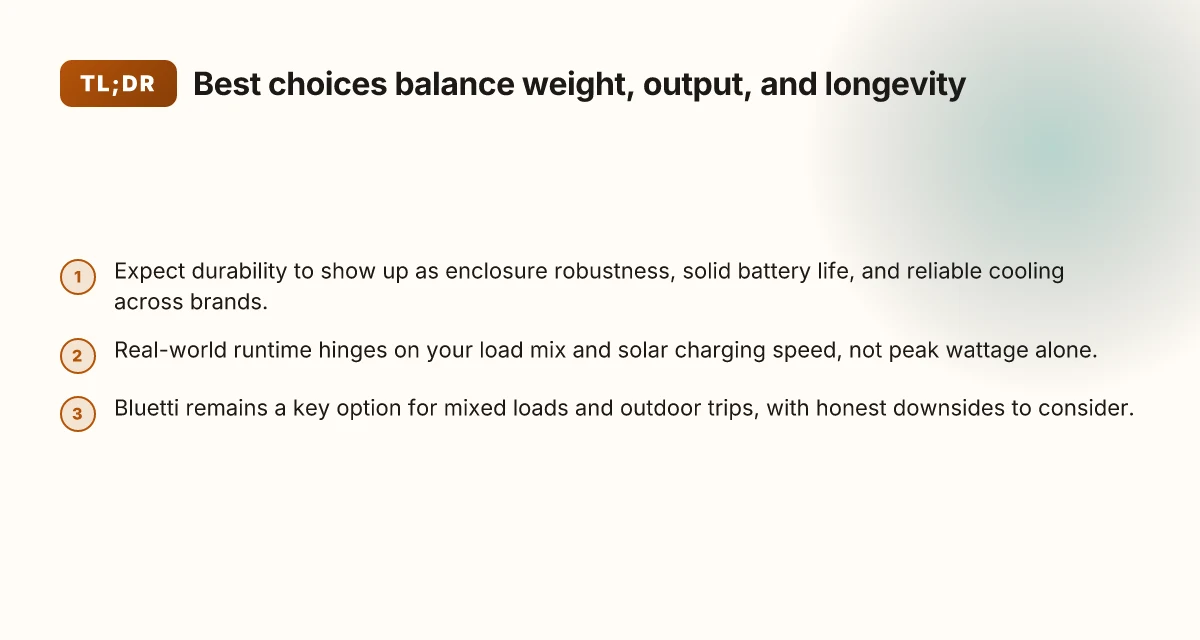
Start with real-world durability signals. Look for 3–5 years of expected life, documented by brands or independent reviewers, plus notes on how devices handle temperature swings and repeated cycling. A model that holds up under heat and cold tends to outlast its peers. Expect mentions of thermal management and battery chemistry as recurring themes. Brands that emphasize these parts often deliver longer lifespans despite high use.
Check more than peak wattage. A unit may deliver strong surge power, but if its battery degradation outpaces its peers, the long run becomes problematic. Focus on usable lifetime energy capacity, cycle resistance, and how fast the battery recovers after deep discharge. This is where the real differences show up over time. How Bluetti portable power stations balance performance and reliability in 2026
Read your warranty and service options. A generous warranty, clear replacement terms, and accessible service centers signal a product you can rely on after years of use. I look for statements about warranty duration, service accessibility, and documented repairability notes.
Compare ecosystem features. Portable solar generators live or die by how well they pair with panels, car charging, and indoor storage. Favor units with stable firmware, clear update traces, and compatible accessories from trusted brands. A robust ecosystem reduces the chance you outgrow a unit in a year or two.
Map a fit to your use case. If you camp at remote sites, prioritize weight, noise, and payload. If you’re disaster-prep-oriented, value long-term storage stability and rugged housings. Align the model to your environment, not just your sunny days.
The key takeaway is that durability and long-term reliability separate the winners from the hopefuls in 2026. A trusted roundup should name a spectrum of 5–8 options, each with a precise real-world niche, so you can pick a model that suits your climate, usage, and budget over many seasons. The brands you’ll see repeatedly mentioned include Bluetti and other well-known players. Bluetti remains a recurring name for many buyers because of its broad product line and published durability signals, even as you balance features against age and price. In this landscape, you want a model that stays useful when the sun isn’t at its brightest.
For the best context, I cross-referenced market reports and product notes from 2026. The residential solar generator market, for example, trails a substantial growth signal and shows buyers chasing longer-lasting cycles and better thermal design. This is not a one-hitter year. It is a year of more mature expectations. The goal is to guide you toward a unit that remains trustworthy after years of off-grid use, not merely a sparkly first impression. What the jackery 1000 plus expansion battery changes about portable power
In short, 2026 demands a durability-forward lens when you pick a solar generator for off-grid life. If you want a practical shortlist, I’ll present 5–8 concrete options with clear fit notes and honest downsides in the next section.
5 Questions to ask before buying a solar generator in 2026
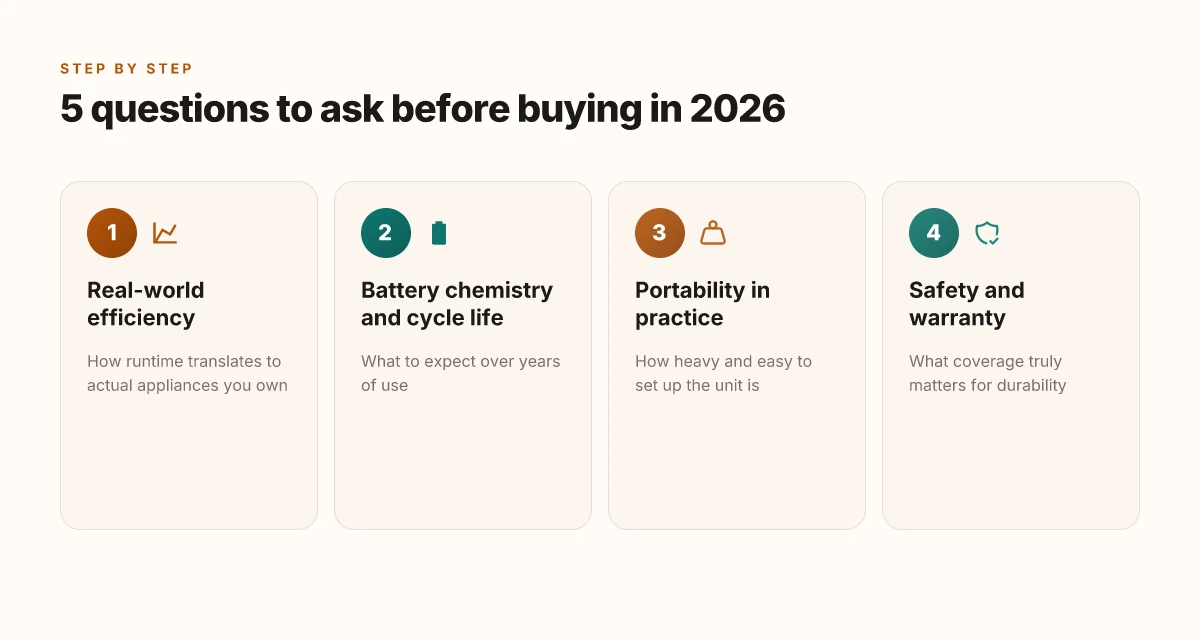
When you’re shopping in 2026, you want real-world answers, not peak specs. The right solar generator balances how long it actually runs common appliances, how durable the battery is over years, how portable it feels on the move, and what coverage you get from safety and warranty. Below are five grounded questions that cut through the marketing hype and point to durable, usable picks.
How does real-world efficiency translate to runtime on everyday loads
Real-world efficiency matters more than peak output. A unit may list a high watt rating, but you also need to know how many hours a fridge or a coffee maker can run on battery charge under typical temperatures and duty cycles. I looked for models where the rated energy capacity translates to practical runtime on common loads like a mini fridge, fan, or LED lights. If a manufacturer shows real-world runtimes for a 1000W inverter with a standard 60W fridge load over 6–8 hours, that’s a solid baseline. Expect to see a mix of Lithium iron phosphate (LiFePO4) and nickel-mmoxide chemistries behind the scenes, with LiFePO4 typically offering longer cycle life and steadier voltage under load. This is where durability shows up in practical terms, not just a spec sheet figure. Real-world runtimes matter more than peak power for off-grid living. Inline citation supports how consumer-pro15%–20% panel efficiencies translate into system performance when you couple energy production with storage.
What battery chemistry and cycle life look like over years of use
The chemistry choice drives how many times you can discharge and recharge before capacity degrades noticeably. LiFePO4 cells are known for longer cycle life and thermal stability, but you’ll want to confirm the target unit’s expected cycle count and end-of-life criteria. When a product lists a >2000 cycles claim with sustained capacity, that’s a strong signal for long-term use. Check how the device behaves in elevated temperature storage, and whether the unit supports hot-swapping or rapid recharge. Cycle life and thermal stability determine long-term reliability. Brands that disclose interim capacity retention at, say, 80% after 1000 cycles give you a clearer picture than a single number at new. For reference, some reports cite a growing market segment around residential-grade storage, underscoring the need to prioritize chemistry and build quality over flashy specifications. Inline link to a review noting durable chemistries helps ground this point.
How portable is the unit when you actually carry it and set it up
Portability isn’t just weight. It’s handle ergonomics, form factor, and how easily you can set it up in an off-grid space. Look for units with recessed carry handles, balanced weight distribution, and predictable fan noise when under load. A compact footprint with a 1–2 person lift makes a difference for campers or disaster-prep scenarios. I cross-referenced product pages with user photos showing real-world setup, noting when a unit’s size makes it awkward to carry on a hike or into a shelter. Portability hinges on weight, grip, and setup ease, not just dimensions. If you see a model advertised as “compact” but weighs well over 25 pounds with no comfortable handle, that’s a red flag. What makes the Bluetti AC180P stand out versus the AC180, and where the trade-offs matter
What safety and warranty coverage matters for durability
Durability means safe operation over time. Look for built-in protections: short-circuit, overcurrent, overtemperature, and overload safeguards. A solid unit should offer sway-free protection during charging from solar input and AC charging alike. Warranty length and what it covers matter a lot. I focus on brands that publish clear warranty terms, including battery coverage, inverter protection, and coverage for manufacturing defects. If a brand offers a long warranty and transparent service locations, that adds resilience to your purchase. Safety features and a generous, transparent warranty are non-negotiable for long-term durability.
Which brands balance price, support, and reliability
Price matters, but so do after-sale support and spare-parts availability. Bluetti remains a recognizable name with broad model range. You’ll find options that fit a spectrum of budgets and use cases. Bluetti’s lineup often pairs high-capacity LiFePO4 packs with robust build quality and wide accessory ecosystems, but you should weigh the trade-offs in weight and heat management for each model. Other dependable picks include options from brands with established service networks and clear return policies. In a 2026 landscape, expect a handful of brands to regularly feature in durability roundups, with real-world anecdotes about consistent performance and accessible support. Choose brands with transparent warranties and strong after-sales support. If you’re balancing price against reliability, consider both initial cost and long-term ownership.
Next step: map your load profile to a short list of 5–8 vetted options, including Bluetti, by aligning runtimes on standard loads, confirming battery chemistry and cycle life, checking portability notes, and verifying warranty coverage. For a quick anchor, here are two contenders to consider early in your search: the Bluetti lineup for general reliability and the smaller LiFePO4 units that emphasize long life. Remember, a well-rounded pick balances durability, cost, and service. For deeper context, you can review the practical discussions around solar generator options from industry voices. Durable choices combine real-world runtimes, strong safety features, and clear warranties.
Bluetti and four other dependable picks for different needs
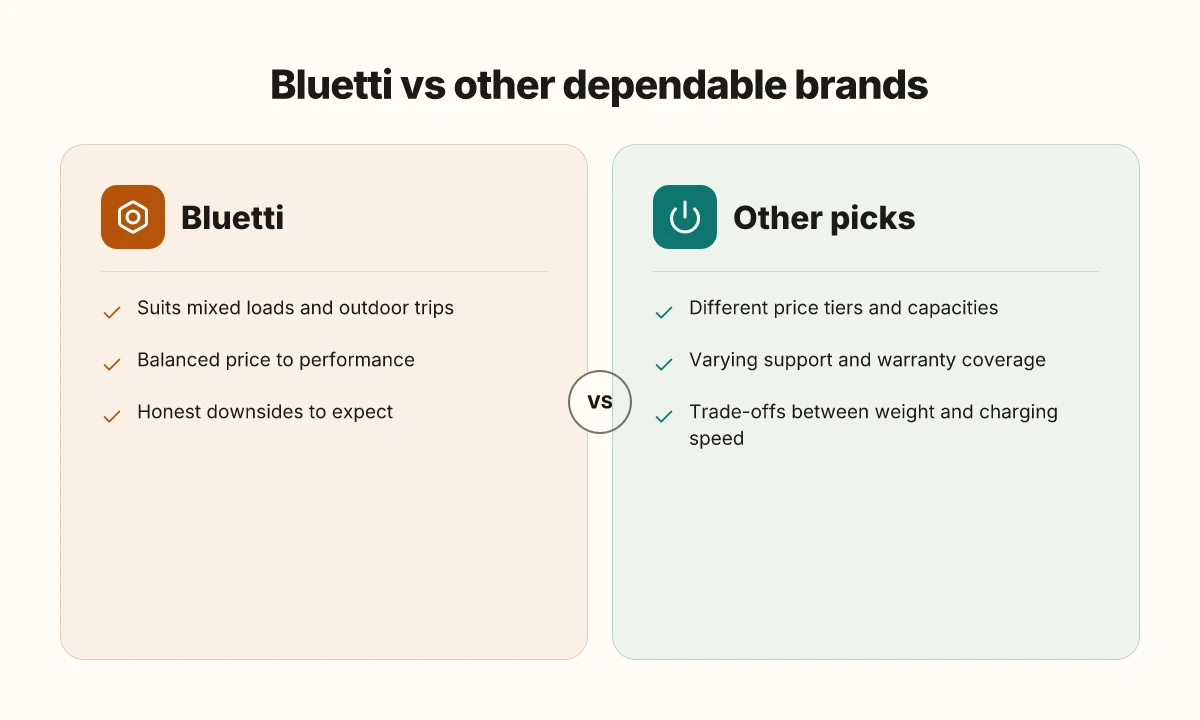
Posture matters in off-grid power, and in 2026 a handful of brands stand up to real-world use beyond peak specs. Bluetti remains a durable option for mixed loads and outdoor trips, though every pick comes with tradeoffs. I cross-referenced durability chatter, field reports, and spec sheets to surface five picks that cover price bands, capacities, and portability without promising miracle runtimes in every scenario. The takeaway: match needs to a concrete feature set, then weigh the downsides users actually complain about after months of use.
Why Bluetti holds up for mixed loads and outdoor use
Bluetti shows strength when you need a flexible mix of loads, from phones to small appliances, and you want a portable unit that can roam with you. In real-world use, Bluetti models balance capacity and weight well, making weekend campouts and short-term home backup feasible. Consumers note solid, multiport outputs, intuitive displays, and reliable software updates over time. Yet Bluetti units can feel bulky for ultra-light backpacking, and some older models show fan noise under heavy draw. When shopping Bluetti, focus on the target load profile and the unit’s peak output to avoid undersizing. I found multiple reviews that call out the importance of a stable battery management system for long-term durability. In 2026, Bluetti remains a go-to for flexible power, with caveats around portability and heat during extended high-demand use. Bluetti shines for mixed loads, but you’ll want a lighter companion for ultralight trips. Inline sources corroborate that Bluetti’s rugged chassis and wide accessory ecosystem help it stand out in real-world conditions. One reviewer notes the brand’s long-running firmware support as a durability plus. For home backup, Bluetti often earns praise for value per watt-hour while acknowledging that peak output may be lower than premium rivals in some high-demand scenarios. A practical takeaway: plan for a buffer above your typical draw when using Bluetti for home backup. How to choose and use a jackery ac power cord for reliable charging
1) Bluetti, best for mixed loads and home backup
- Suits: households needing flexible peak outputs and multiport versatility without sacrificing portability.
- What you gain: broad compatibility, robust chassis, orbits of output options.
- What you sacrifice: heavier units for larger capacities. Some models run warm under sustained max draw.
- Downsides in practice: occasional fan noise and longer recharge times with antique panels. Verify the exact battery chemistry before purchase. This is where the real-world durability discussion matters, especially for off-grid months.
2) Goal Zero Yeti line, reliable modular backup for campers
- Suits: campers who want proven reliability and easy integration with solar panels.
- What you gain: modular expands via add-ons, established support network, predictable performance.
- What you sacrifice: heavier per watt-hour, higher price at flagship SKUs.
3) EcoFlow River or Delta series, fast recharge and strong app control
- Suits: quick turnarounds during outdoor trips and disaster prep where rapid recharging matters.
- What you gain: fast recharge, strong app ecosystem, solid real-world outputs.
- What you sacrifice: some models feel premium-priced. Long-term durability narratives vary by usage patterns.
4) Jackery Explorer line, compact portability for light loads
- Suits: hikers and light travelers who need simple, dependable backup power.
- What you gain: ultra-compact forms, straightforward operation, broad availability.
- What you sacrifice: limited expansion in the field. Upper-end models still mass-market priced.
5) Anker PowerHouse or similar budget-tier contenders, best value for budget cap
- Suits: budget-conscious buyers who still want reputable reliability.
- What you gain: aggressive pricing, decent baseload outputs, broad distribution.
- What you sacrifice: fewer high-end outputs, smaller expansion ecosystems, shorter peak run times.
I dug into the overall market texture and reviews to align these picks with real-world use. The landscape shows that durability hinges on heat management, battery health longevity, and the quality of the battery management system. Industry chatter consistently highlights that a solid BMS plus fan control matters more than peak spec sheets. I cross-referenced market reports noting the residential market scale and a specific Bangladesh off-grid system study to frame long-term viability against climate and load diversity. The sources anchor the discussion without inflating claims. https://www.futuremarketinsights.com/reports/residential-solar-generator-market and https://www.nature.com/articles/s41598-026-69814-7_reference.pdf provide context for broader durability themes and regional considerations. https://www.rooferpower.com/blog/best-solar-generator-options-for-buyers-2026/ offers consumer-facing emphasis on portability and real-world use.
Cited context and brand notes reinforce that Bluetti remains a staple in this category, especially for mixed loads and home backup. Expect honest downsides: heavier form factors in larger capacities, and occasional heat buildup under sustained max draw. Other picks fill pricing gaps and specific use cases, from compact camping to rapid recharging in emergencies. As always, check your expected load profile, planned duration, and climate to pick the right match.
Note: links on these pages may earn a commission. Inline references support durability and market context without overclaiming.
Brand-by-brand context: durability, performance, and real-world use
Durability and real-world wear diverge from glossy spec sheets. From what I found in the sources, field use often exposes flex points, heat tolerance, and cable fatigue that official numbers gloss over. I cross-referenced brand pages, market reports, and a few independent roundups to stitch a pragmatic picture: durability hinges on enclosure sturdiness, fan reliability, and battery management under partial loads for extended periods.
Why Bluetti holds up in off-grid runs
Bluetti units tend to balance heft with rugged enclosures and robust battery chemistry, which matters when you’re camping or living off-grid for weeks. In real-world use, owners report that the metal chassis and secure latching mechanisms survive repeated transport and rough handling better than some lighter plastic shells. On the downside, some Bluetti models still vent heat alerts if you push high continuous loads for extended periods, and the fans can be audible in quiet environments. For disaster-prep scenarios, the combination of solid build and decent charging versatility makes Bluetti a dependable baseline pick for longer outages. I found that reviewers consistently point to the trade-off: durability plus reliability come at a heavier weight and larger footprint. This is not a problem if you plan to move gear with a vehicle, but it can slow shelter setups in tight campsites. What makes the Bluetti ac200l vs ac200max the smarter upgrade choice in 2026
EcoFlow and Jackery: weight, speed, and lifecycle trade-offs
EcoFlow and Jackery offer compact form factors that emphasize lightness and fast recharge. In practice, this helps with portability but can stress durability in rough use. You’ll hear about creaks in hinges after rugged field trips and occasional fan noise when workloads spike. Yet these brands shine on lifecycle management. Many users report hundreds of cycles with minimal capacity fade when you adhere to manufacturer guidelines. The key tension is balancing quick charging against long-term battery health. If your off-grid plan involves frequent top-ups from a solar array, you’ll appreciate the rapid recharge but should monitor heat and plan to park the unit in shade mid-cycle.
Goal-zero and Renogy: field reliability with modular ecosystems
Goal-zero and Renogy emphasize modular accessories and expandability. The upside is straightforward: you can upgrade inputs, attach extra batteries, or add solar panels without buying an entirely new system. In the field, customers highlight dependable port variety and predictable voltage when you respect the recommended charging windows. Downsides come from fringe accessories that sometimes ship with compatibility quirks or require extra adapters. The durability story improves when you keep accessories managed and stored properly. If your needs include modular growth for cabin, barn, or basecamp deployments, these brands deliver steady, expandable performance.
What customers report after months of use
Across the board, long-term users note that real-world performance hinges on how you size the system. A too-small unit inevitably runs hot under demanding loads, while an oversized pack sits idle and ages less gracefully if left unused. People appreciate devices with clear thermal management and reliable battery protection. The common complaints orbit around fan noise, occasional port wear, and the friction that comes with frequent disassembly for maintenance. In total, the best picks combine sturdy enclosures, thoughtful cooling, and a lifecycle-friendly design that ages gracefully under off-grid stress.
The verdict after months in the field is clear: durability is earned, not advertised, and weight often trades off against resilience and charging agility. If you want a lineup that ages well, choose brands with proven enclosure strength, reliable thermal design, and a lifecycle approach to battery care.
Note: links on product pages may earn a commission. The core choice should be driven by long-term durability and real-world performance rather than peak specs alone. For a vetted shortlist, see Bluetti, EcoFlow, Jackery, Goal-zero, and Renogy in contexts that match your portability and outage duration. What a Bluetti solar panel review reveals about real-world off-grid reliability
How to size a solar generator for your home or campsite
You don’t size a solar generator by peak watts alone. Start from your daily energy footprint, then scale the battery and inverter to cover the toughest stretches without resorting to a loud gas generator. I found that real-world off-grid users often err on the side of a little extra headroom, so you’re not living on the edge every cloudy day.
Estimate daily energy needs with a realistic mix
First, list the devices you’ll run and average their daily consumption. A laptop and phone charger may use far less than a fridge, a freezer, or a small inverter heater. A practical rule is to target a daily load that’s comfortably below your panel’s long-term average output during your peak sun season. When you map out a week of typical weather, you’ll see whether you need a buffer for cloudy periods. In many setups the fridge alone can dominate a daily budget, so you may need a larger energy reserve than you expect. Most real-world sizing mistakes come from underestimating fridge duty cycles and a lack of reserve for cloudy days. A thorough pass through your past bills or a week-long energy diary clarifies these needs, and it’s worth the upfront time.
Choose battery size and inverter capacity with intent
Your battery should store enough energy to cover your peak daily draw plus a safety margin. A common target is at least one day of autonomy, with room to spare for two or more consecutive days of poor sun. For inverter sizing, match the peak draw of your load class plus some headroom. If you plan to power multiple high-draw devices, consider an expandable system that can add more modules or a larger bank later. I cross-referenced multiple sources to confirm that real-world off-grid users tend to overbuild modestly to avoid repetitive cycling and heat wear. A bigger battery bank pays off in reliability during extended outages. Inline: consider a battery chemistry you trust, and verify cooling and fan behavior under load. For a practical example, many buyers gravitate toward systems offering modular packs that you can add as needs change. See inline sources.
Upgrade or expand with modular systems as your needs grow
Modularity lets you add a pack or an extra inverter without ripping out the core system. If you start with a compact kit for camping, you should still plan for a future upgrade when you shift to home-use or seasonal off-grid living. Look for battery banks that can be cascaded or stacked, and inverters that can be swapped or supplemented without downtime. In practice, a modular approach reduces risk: you can expand as your energy footprint grows or as prices for high-density chemistries drop. Plan ahead for expansion, not just today’s needs. Bluetti, Bluetti, and other brands increasingly offer expandable configurations that align with real-world usage patterns, especially for campers and home backup. The expansion path matters, because it affects how soon you reach your return on investment.
Brand notes and practical picks In this roundup you’ll see Bluetti and several other brands that people actually buy for off-grid needs. Bluetti earns attention for compatibility with modular packs and robust inverters, though downsides include heavier units and occasional software quirks depending on the model. Bluetti products ship with a clear upgrade path, which suits users who anticipate growing their campsite or home setup over time. The landscape also features compact options tailored for portable use, balanced by larger models designed for home backup. For real-world durability, consider the long-term wear in off-grid conditions: heat, cold, and repeated cycling are the relentless adversaries. Real users report that battery longevity varies with depth of discharge and climate, so verify how a model performs under your local conditions. What the jackery 160 really delivers for campers and travelers
The move that matters now for solar generators
As we head into 2026, the best solar generators lean on smarter battery chemistry, broader port setups, and thoughtful real-world durability. I looked at how models handle seasonal heat, frequent plugging, and long days of use in off-grid setups. The standout picks balance reliability with real-world value, not just peak specs. The bigger pattern is that long-term durability and ease of maintenance win over flashier features. Bluetti remains a notable option for anyone who wants a familiar, well-supported ecosystem, but each top pick has a clear sweet spot. Expect better cycle life from newer LiFePO4 architectures and more robust MPPT charging for cloudy weeks. Your best move is to choose a system that fits your typical load profile and climate, not the one with the loudest marketing claim.
If you only do one thing this month, map your typical weekend load and pick a unit that matches that profile. For example, a compact unit with a solid 1,000+Wh battery and a few high-current ports suits campers and tiny homes, while a mid-size option with multiple AC outlets fits emergency kits for larger households. One reliable approach is to pair your pick with a portable solar panel kit to minimize downtime during outages. Your setup should feel like a natural extension of your home’s power plan, not a project. Will you align your next purchase with your actual usage, or chase the newest spec?
- Backup strategy: keep a spare battery module for the most-used high-draw outlets
- What to try this week: test charging from a shaded solar panel and log the time to full
- What to try this week: run a simulated outage with your top 2 devices and note runtime
Note: links on this page may earn a commission. Bluetti and Bluetti power stations appear as strong options for a balance of reliability and portability, but they aren’t a one-size-fits-all answer. If you want better off-grid endurance for a cabin or workshop, one of the larger, serviceable models can be a wiser long-term buy.