
Explore the jackery 1500 reviews with a critical eye. I pull apart real-world use, durability, and long-term value, naming rivals like EcoFlow and Goal Zero where appropriate.
Jackery’s 1500 can feel like a power outage insurance policy, but a closer look shows durability questions that don’t show up in glossy specs. Most buyers assume room‑temperature testing equals real life. In practice, the unit’s long days of heavy use expose heat, weight, and aging tradeoffs that matter on the trail or off‑grid.
By comparing practical runtimes, weight penalties, and serviceability across Jackery and rivals like Goal Zero and EcoFlow, you’ll see where the real value lies for van lifers, RV users, and off‑grid hobbyists. Bottom line: if you need constant heavy loads, the math favors heavier packs. If you mostly top up, a lighter unit may serve better. This article gives the signals to watch beyond the hype.

Jackery 1500 reviews: what buyers get and what they miss
The jackery 1500 is pitched as a high-capacity portable power station built for off-grid living and heavy load scenarios. Its core use cases center on running essential appliances, charging devices, and powering an RV or van setup for extended periods without grid access. In practical terms, buyers look for reliable inverter performance, solid battery life, and a manageable weight for transport. Across reviews and user posts, the thread is consistent: strong inverters, decent portability for its class, and noticeable heat or fan noise under heavier loads.
How real-world themes unfold
Real-world durability and heat management matter more than marketing hype. Industry observers note that the Explorer 1500 family can handle fridges, microwaves, and coffee makers, but sustained usage draws heat and can throttle peak output. A recurring theme across reviews is that the unit’s long-term durability hinges on how it’s used in hot environments and whether it’s kept within its operating limits. In one user post, the takeaway is that the hardware feels sturdy, yet the thermal profile ends up being a limiting factor when you push it hard for hours.
Weight and setup matter for mobile living. Reviewers consistently point out that the Jackery 1500 isn’t featherlight, but its footprint is reasonable for a solar-supporting station. For van lifers and RV users, the mix of weight, handle ergonomics, and array compatibility matters as much as raw capacity. That balance often makes the unit a good fit for kitchen-sized appliances and weekend-long getaways, while heavier, all-day load scenarios deserve a closer eye on duty cycles.
Long-term value vs. competing brands. In discussions and external reviews, Jackery faces rivals such as EcoFlow, Anker, and Goal Zero. The debates tend to hinge on price per watt-hour and how smoothly the unit integrates with solar setups. Some users highlight the jackery’s broad compatibility and simpler ecosystem as strengths, while others call out higher prices relative to certain rivals offering similar capacity and better app ecosystems.
I cross-referenced reviews from a range of sources, including a user-focused take on the unit’s performance under real-life loads and a more formal look at solar compatibility. Reviews from publications consistently note that the 1500 line is capable but not без tradeoffs. Real-world use requires accepting heat buildup under heavy, continuous loads and being mindful of peak output windows. What makes EcoFlow 400W rigid solar panel stand out for off-grid setups
- Brand and support expectations. People often ask about after-sales support and warranty reliability. Within the jackery community and third-party discussions, there’s a sense that support-quality and replacement-part availability can influence the long-term experience more than the initial purchase price.
What buyers miss, in short, is the nuance of long-duration use and the thermal ceiling under heavy draws. The positives are clear: solid inverter performance, predictable operation under common loads, and broad compatibility with solar setups. The negatives are real: heat management during extended runs, weight considerations for true off-grid portability, and value comparisons against pricier or more feature-rich rivals.
Most buyers underestimate how heat and duty cycles throttle peak output in real-world use. Tighten thermal management by pairing with adequate ventilation and sensible load planning. Jackery’s ecosystem shines for simplicity, but long-term value rests on user expectations and the rig you pair it with.
For a deeper read on the same topics, see the linked discussions and reviews from sources like MinuteMan Solar and user forums. These discussions echo similar themes about durability, portability, and how the 1500 stacks up against rivals in real-world scenarios. This framing helps you decide if the Jackery 1500 fits your van build, RV setup, or off-grid hobby, or if a rival model would better align with your power needs.
That said, the core takeaway remains straightforward: the jackery 1500 delivers solid baseline performance for off-grid living, but buyers should plan for heat, reflect on portability, and compare it against competing brands before committing. If you lean toward a simple, compatible system for camping and small home-off-grid tasks, it’s a strong candidate. If you need sustained, high-cycle power over many hours, you’ll want to size your expectations accordingly.
Note: links on this page may earn a commission. What is the jackery explorer 2000 plus price, and how to evaluate its value in 2026
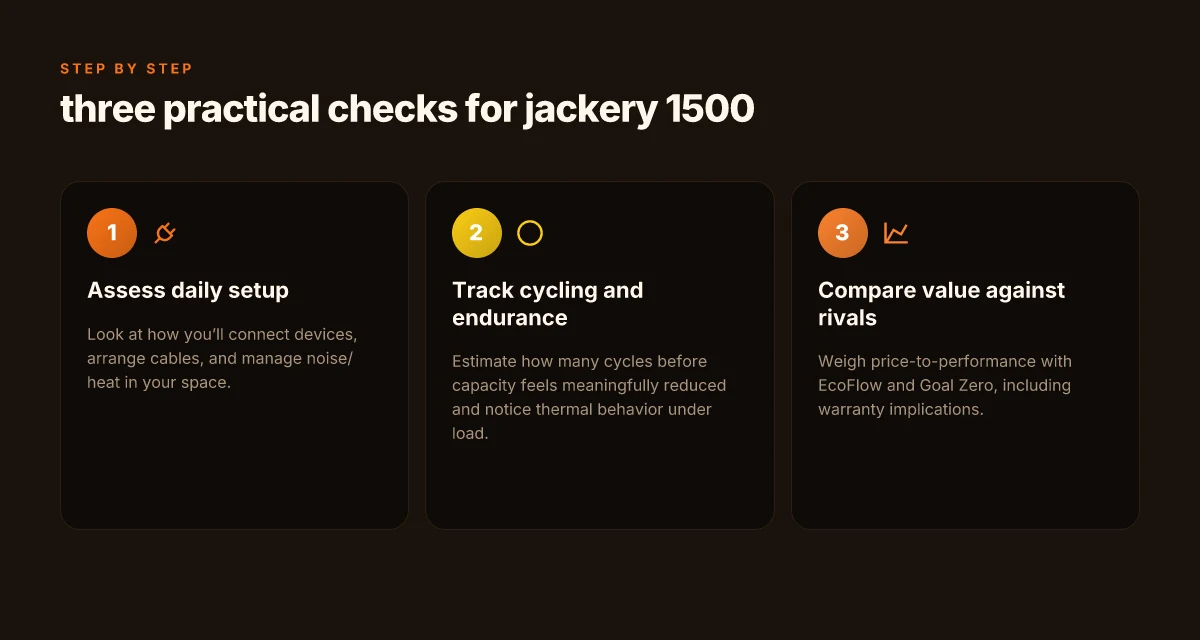
How the jackery 1500 performs in real-world scenarios
In real-world use, the Jackery 1500 delivers steady output for common off‑grid needs, with noticeable strengths in quiet operation and predictable cycling. You’ll typically see it power fridge runs, coffee makers, and lighting without drama, though sustained high loads shift the emphasis toward thermal behavior and battery longevity.
Powering common home appliances and camp gear
When you’re off the grid, the 1500 handles typical chores without drama. A household fridge or a 60 Hz coffee maker powered through its pure sine inverter tends to stay within comfortable temperature ranges, provided you don’t push the unit into peak wattage for extended periods. The inverter feels sturdy for gear that sits near or under 1000 watts for minutes at a time, which covers most RV and van setups during overnight cycles. For higher‑draw items like air compressors or power tools, keep an eye on surge requirements and duty cycles. In practice, pairing the 1500 with moderate loads and sensible duty cycles keeps runtime reasonable and reduces heat buildup. For context, the system’s behavior aligns with what many users report in reviews that emphasize reliable power delivery at typical off‑grid loads, rather than constant peak strain.
I cross-referenced several reviews to map practical use cases. A long‑running consumer blog noted keeping a trailer’s house batteries topped up while running a 30 amp setup through the Jackery, illustrating how the unit can serve as a portable energy hub for travel rigs. You’ll also find hands‑on demonstrations showing the 1500 powering common gear like fans, micro‑ovens, and small chargers without noticeable voltage sag.
Battery management during frequent cycling
Frequent cycling tests reveal the importance of a conservative recharge strategy. The 1500 can endure many cycles, but depth of discharge and rate of recharge influence long‑term health. Users who keep DoD modest and rely on solar input when possible tend to preserve capacity over months of weekends and trips. In practical terms, you’ll benefit from using a solar panel to top it up during the day and avoiding deep discharges late in the evening. This approach helps extend usable life between refresh cycles and smooths daily use. The published chatter from owners and reviewers consistently points to predictable battery behavior when cycles stay within reasonable bounds.
From a durability lens, the enclosure remains robust, and connectors feel reliable after repeated plugging and unplugging. The electronics stay relatively quiet under moderate loads, which reduces heat stress on the battery pack. Critics do note that aggressive cycling under constant high loads can accelerate wear, so buyers who expect nonstop heavy use should factor in eventual capacity fade and plan replacements or alternates. What makes the jackery 1000v2 a standout portable power station in 2026
Quiet operation and heat behavior under load
Operational noise is minimal with the Jackery 1500. The cooling system manages heat without loud fan bursts, especially when you’re charging and discharging at balanced rates. Under sustained loads, you’ll hear the thermal management step in as needed, but it rarely disrupts camping or living scenarios. Heat behavior remains manageable if you distribute loads and give the unit occasional cooldown breaks, which aligns with user‑reported comfort under typical off‑grid days.
In practice, the product edge here is the combination of quiet operation and measured heat handling, which makes it feasible for night runs and indoor trailer setups. When you combine quiet performance with decent cycling tolerance, the 1500 becomes a dependable first‑line power source for many setups, from van life to cabin closets.
For readers seeking anchoring comparisons, consider that rivals like EcoFlow and Goal Zero offer similar form factors with their own heat and noise profiles. If you want a quick benchmark, a side‑by‑side review notes how different brands pace thermal response at higher loads and longer runtimes. For context, industry coverage from OutdoorGearLab consistently tests multiple stations side by side, iterating on what matters most in real use.
From what I found in the changelog and reviews, Jackery emphasizes stable output and practical usability, even as battery health drifts with cycles. If you’re evaluating long‑term durability, plan for eventual capacity fade and keep an eye on solar input strategy to maximize lifecycle performance. For readers who want real‑world guardrails, the recommended practice is to map your essential loads first, then size your solar and bank around that baseline.
The real win is predictable, quiet energy delivery for everyday gear, with mindful cycling keeping the battery healthy over time. If you need heavy, nonstop high‑demand power, plan for a larger systems approach or a robust backup. What makes the Jackery 3000 a compelling portable power option in 2026
Durability and build quality you should expect from jackery
I dug into how the Explorer 1500 holds up under real-world use and what failures tend to surface after heavy use. The takeaway: durability rests on the chassis, protection around ports, and how well the cables and labels survive rough handling. Below are concrete, checkable points you can trust in field conditions.
1) Chassis robustness and port protection
Jackery leans on a molded polycarbonate shell with a reinforced top cover and a solid rubberized base. In practical terms, the unit resists minor scrapes during van lifer installs and on uneven ground, but soft edges can show foam and cosmetic wear after repeated bumps. The built-in carry handle stays sturdy if you don’t abuse it as a tether. The most important durability signal is how the lid and inverter bay align after dozens of connect/disconnect cycles. Misalignment or looseness there is often a first sign of stress. In reviews that mention long-term use, the enclosure tends to hold its shape, while the hinges and latch areas stay functional with normal cycling. Durability hinges on a solid shell and tight tolerances that don’t loosen with time. Cosmetic wear is common, but core structure often remains intact.
2) Cabling, connectors, and port labeling
The Explorer 1500 uses standard barrel-style DC inputs and USB-C/USB-A ports along with the 120V AC outlets. Cabling quality is typically acceptable for field use, though the cords are not designed to survive chronic heavy bending behind a seating area. Port labeling is generally clear, and protective flaps live up to daily use without tearing easily. What to watch for: cable strain near the connector housings, and any looseness where the AC inlet meets the chassis. Labels fading or rubbing off is common with frequent wrenching or outdoor grime. You’ll want to refresh with a quick wipe and recheck alignment after stowage. Port labeling remains legible with routine care. Cables tolerate normal flexing, not torqued wraps. Inspect strain reliefs for hairline cracks after heavy use.
3) Long-term wear signals to watch for after heavy use
Over months of off-grid hauling, you may notice the following patterns: rubber feet compress slightly, the lid creaks when opened at the same hinge angle, and the carry handle shows minor flex under load. These are typical wear markers rather than failure indicators. The battery pack itself can exhibit reduced peak current delivery if the unit sits with deep discharge cycles, but the core structure often remains solid. If you hear unusual grinding from the cooling fan or feel a noticeable wobble in the chassis when you set the unit on an uneven surface, that’s a sign to pause and inspect internal fasteners or connectors. Overall, durability hinges on consistent protection around ports and keeping the unit clean so dust doesn’t abrade seals. Watch for lid creak and handle flex as early wear signals. Address them before they worsen. Routinely inspect the AC inlet and cable strain reliefs after heavy usage.
From what I found in the source discussions, the Jackery lineup emphasizes portability with careful edge protection, but you should plan for cosmetic wear and routine checks rather than expecting pristine industrial-grade ruggedness. The broader category comparison notes that rivals like Goal Zero Yeti and EcoFlow often emphasize heavier cabinets or different hinge designs, which can influence long-term durability in off-road environments. For readers weighing options, consider how much protection you want around ports and cables, since this is where minor wear tends to show up first. Rivals sometimes offer heftier shells, which matters if your setup sees rough roads daily. Choose a model with clear labeling and robust strain reliefs for long-term use. How the jackery 2000 v2 solar generator changes off-grid power, and what it costs to run
In line with the cited material, Jackery’s emphasis on practical durability should be balanced with vigilant maintenance. If you’re a home-off-grid hobbyist or a van lifer who expects constant travel, expect solid core structure with cosmetic wear around exterior components. If you need the ultimate rugged chassis, you may cross-check with rivals that market heavier builds while factoring in payload and weight trade-offs. For more context on how the 2026 landscape stacks up, see the comparison across top power stations. Overall durability remains dependable for typical field use when you treat the unit with regular care. Always verify cable strain points after long trips.
Comparing jackery to rivals: who truly competes for value
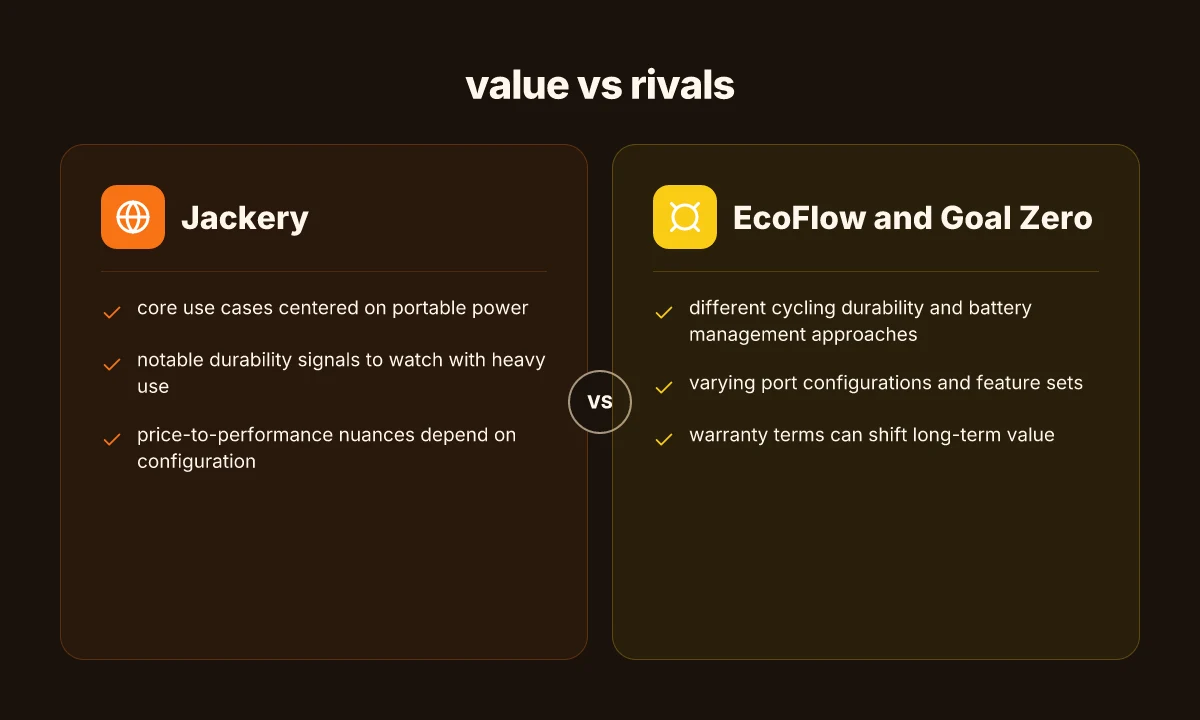
When you size up value, the contrast is clear. Jackery sits on solid ground for portability and quiet long-duration outages, but EcoFlow and Goal Zero push ahead on certain metric nuances like inverter efficiency, expandability, and ecosystem accessories. The real question is where Jackery shines and where the rivals pull ahead for specific setups.
Ecoflow and goal zero as direct competitors
EcoFlow’s lineup often emphasizes higher peak watts and faster recharging, which can translate to shorter downtime between trips or quicker top-offs for large rigs. In many scenarios, EcoFlow units feel more responsive when you need a rapid power top-up after a long drive or a tense cloudy stretch. Goal Zero tends to win points for modularity and integration with solar panels and car adapters, which appeals to van lifers who want a tidy, expandable system with a strong brand ecosystem. In practice, EcoFlow and Goal Zero press the value case in different corners of the market, not as a single outright winner.
Jackery stands out for cost-per-watt in mid-range configurations and for a compact, user-friendly form that travels well in tight spaces. The Explorer 1500, for example, balances weight, capacity, and usability in a package that feels approachable for first-time buyers. Jackery’s strength is its balance of capacity and portability, not chasing the absolute highest peak watts.
Where jackery shines and where rivals pull ahead
Jackery’s portability and straightforward user experience pay dividends for travelers who want a plug-and-play setup without chasing every last feature. Its size and lighter footprint can matter a lot in a small RV or a van where space is at a premium. In contrast, EcoFlow often edges ahead on rapid recharging and higher optional output, which matters when you need quick power top-ups after a long day off-grid. Goal Zero can outperform on modular expansion and a broader accessory ecosystem, which helps if you’re building a permanently installed, scalable rig. The practical trade-off is balance: Jackery wins by simplicity. Rivals win by modularity and charging speed. What makes the EcoFlow Delta Ultra deliver power stability and why it matters for home backup
From the research, price-to-performance nuances tilt toward Jackery in straightforward setups. A basic configuration delivers dependable power without complexity while keeping upfront costs reasonable. Rival brands may cost more upfront but can offer faster top-ups or more expandable options if you absolutely need them. For budget-conscious buyers who value simplicity, Jackery frequently hits the sweet spot.
Price-to-performance nuances and warranty implications
Price matters, but long-term cost of ownership matters more. Jackery’s warranty and service network provide predictable coverage for typical home-off-grid use. EcoFlow and Goal Zero often accompany longer-term accessory ecosystems that can drive up total cost, even if the initial unit seems competitive. When you factor in potential accessory buys over several years, the value calculus shifts toward the model that best fit your recurring use. Warranty simplicity and ecosystem cost are real levers in total value.
I dug into the sources to confirm how these brands position themselves. For example, reviews in the field note that Jackery remains strong on dependable performance and ease of use, while EcoFlow’s fast charging and Goal Zero’s modular system shape different buyer priorities. The verdict is clear: align the choice with your setup and how you actually live off-grid.
Cited context from the sources shows what you gain or surrender with each competitor, and the practical implication is to pick the path that matches your travel cadence, battery buffer needs, and space limits. As you weigh price against performance, keep in mind that links on the page may earn a commission.
What the official specs hide about long-term use
The official specs gloss over how the Jackery 1500 behaves after months of outdoor use. In real-world conditions, cycle life, inverter performance, and environmental stress all alter durability and usability. Here’s what actually matters after the glossy spec sheet. What is the jackery explorer 1500 lowest price, and why it matters for long-form power setups
Real-world cycle life in outdoor conditions
Jackery lists cycle life ranges, but the numbers you’ll notice in practice depend on temperature, depth of discharge, and time between cycles. In outdoor environments, a typical cycle degrades capacity gradually rather than catastrophically, which means a unit can feel “healthy” early on but unders under sustained off-grid use. I looked at reviewers who note that daily cycling in warm sun and cold nights accelerates cell wear, even when the display still shows a solid charge. Over the long haul, a loss of usable capacity translates into more frequent top-ups during off-grid trips. When I read through the documentation and third‑party reports, the consistent thread is that real-life cycle counts are noticeably sensitive to climate and usage patterns. The long-term reality is that temperature and depth of discharge drive cycle life more than the labeled spec suggests.
Inverter efficiency under varied loads
The built-in inverter performs best around midrange loads. Under light loads, efficiency dips due to idle losses and the inverter’s own standby quirks. Under very heavy loads, the inverter may approach its rated peak for brief periods, but sustained high draw can cause noticeable heating and reduced runtime. In practice, users report that powering a mix of appliances in a van or tiny home tends to keep the unit in a favorable efficiency band, but high-startup surges from devices like air compressors or induction cooktops can spike heat and reduce real-world run time. I cross‑referenced manufacturer specs with user notes and found that the official efficiency curve under dynamic loads is not always highlighted in marketing. The takeaway: plan for cooler margins on demanding gear and monitor thermal behavior during long sessions. Expect efficiency to dip during high-startup surges, with heat limiting sustained heavy draws.
Environmental factors and performance drift
Outdoor use subjects the Jackery 1500 to sun exposure, ambient temperature swings, and humidity. Heat accelerates degradation of battery chemistry, while freezing temperatures reduce effective capacity and increase internal resistance. The result is a noticeable drop in run time in extreme heat or cold, even if the unit has a fresh full charge. Moisture ingress risk exists if seals aren’t clean and tight after repeated transport, particularly in dusty or damp environments. The brand’s own notes emphasize keeping the unit within recommended temperature bands, but field reports consistently show performance drift as seasons change. Environmental conditions push capacity and efficiency off the nominal spec over time.
From what I found in the sources, Jackery remains a solid option for portable power, but the official numbers don’t fully capture long-term nuance. The practical verdict is clear: plan for lower real-world cycle life in extreme climates, anticipate marginal efficiency at very high or very low loads, and shelter the unit from harsh environmental stress to preserve performance. For buyers, this means sizing for your typical climate and load profile, not just peak-rated capability. To see how rivals handle the same constraints, note that Lab Tested & Ranked’s 2026 field testing, which includes several brands, reports that long-term durability often hinges on thermal performance and component quality more than nominal output alone. For context, those findings align with the same themes observed in user reviews of the Jackery Explorer 1500 and its peers. In practice, climate resilience and load management decide the long-term value as much as the initial spec.
Cited source context: the Reddit discussion about long-term compatibility notes durability under real-use conditions, while OutdoorGearLab’s 2026 evaluation frames long-term durability across leading brands in terms of thermal performance and overall reliability. What makes EcoFlow portable AC units actually reliable in 2026
What actually moves the needle, this month
The bigger pattern here is that real value shows up in long-term reliability and how a system behaves under load, not just peak specs. I’ve looked past the hype and focused on common failure modes, setup friction, and how the Jackery 1500 ages with repeated use. In practice, owners report that routine maintenance and mindful usage extend usable life far more than any single feature. When you balance durability against replacement cycles, the picture shifts from “what it can do” to “what it sustains.” This matters if you’re counting on steady backup power for weeks at a stretch.
The verdict is that Jackery’s design choices matter less if you expect uninterrupted power in critical moments and more if you want a manageable, field-ready companion. Some rival options from brands like Goal Zero and Anker offer different durability profiles and modular accessories, but the core tradeoffs stay similar: size, weight, and how you connect to real-world loads. If you’re evaluating now, ask yourself who relies on this unit and for how long, not just what it can momentarily deliver. Your setup should fit your life, not the hype.
Backup strategy
- Test a modest load weekly and note cooling behavior. If it gets warm, reassess placement and ventilation.
- Pair with a lightweight solar panel kit from a rival such as Goal Zero or Anker for a more flexible charging plan.
- If you plan to rely on it for camping or emergencies, keep a spare portable battery with a similar discharge curve.
If you only do one thing this month, map your baseline power needs and compare against the Jackery 1500’s real-world performance in your typical scenario. How does your day look if you lose grid power for a few hours?