Explore the EcoFlow 400W rigid solar panel: efficiency, specs, durability, and how it fits off-grid needs. Realistic expectations and practical setup tips.
The 400W panel doesn’t pretend to be invisible power. It delivers a solid, mountable solution that stays put in wind and heat rather than chasing the latest cell technology. EcoFlow’s 400W rigid panel proves that real-world performance comes from a stable frame and steady output, not gimmicks. You’ll hear about efficiency, but the real story is durability, simple integration, and predictable results when paired with EcoFlow controllers.
This intro lays out what matters now for off-grid setups: quick roof installs, rugged construction, and a clean power path into EcoFlow storage. In the next sections I’ll unpack long-term durability, mounting considerations on RVs and sheds, and how the 400W unit actually behaves under typical sun and wind conditions. If you’re weighing rivals like Renogy or Goal Zero, you’ll see where the EcoFlow approach shines and where it’s fair to plan for a careful wind exposure check. EcoFlow panels install quickly and pair with the brand’s controllers for steady power.
What makes the EcoFlow 400W rigid solar panel worth considering for off-grid use
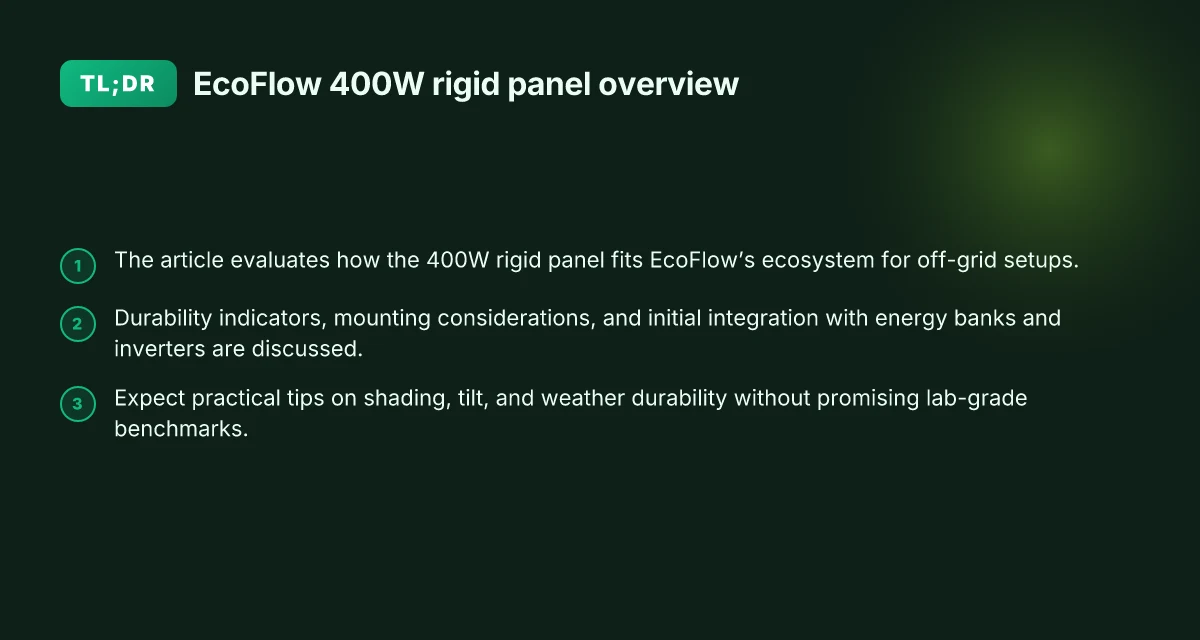
The 400W rigid panel is designed to mount in fixed outdoor spaces and integrate with EcoFlow’s ecosystem. It targets durable, high-efficiency power delivery for off-grid setups, with a focus on system compatibility and straightforward mounting. In real-world terms, it’s about predictable output, ease of integration with EcoFlow power stations, and rugged construction that withstands outdoor use.
Core specs and design goals EcoFlow positions the 400W rigid panel as a mountable solution with a 400W rated output and a mono-crystalline cell composition. Its stated efficiency sits in the low to mid-20s, aiming for steady charging under typical sun and roof angles. The per-panel specs highlight an open-circuit voltage around the mid-30s volts and a short-circuit current in the high single digits to low teens, which informs how it pairs with a standard 12V system or with EcoFlow’s higher-voltage battery platforms. The frame and build emphasize corrosion resistance and IP-rated protection for outdoor exposure, supporting longer life in rough weather and frequent temperature swings. In short, the design goal is to deliver predictable, install-friendly solar input that dovetails with EcoFlow’s power management stack.
How it complements EcoFlow’s ecosystem This panel is built to work in concert with EcoFlow’s power stations, solar input controllers, and battery modules. The fixed mounting style makes it a natural fit for sheds, RV roofs, or off-grid outbuildings where a permanent solar eye can feed a EcoFlow system without the daily friction of folding or adjusting panels. When you pair it with EcoFlow’s energy management features, you get a coherent chain: solar input, power station buffering, and user-facing monitoring. The advantage here is fewer adapters and a cleaner wiring path through EcoFlow’s own interfaces, reducing mismatch risk and simplifying troubleshooting over time.
Durability indicators and mounting considerations Durability is a central claim. The panel’s aluminum frame and gasketing are designed for rain, dust, and wind. A robust mounting approach matters as much as the panel itself. Choose a fixed mount with proper tilt geometry for your latitude, and ensure hardware is corrosion-resistant. Weight and thickness influence installation choices on trailers, rooftops, or pole mounts. A clean, purpose-built mounting rack will minimize micro-motions that can degrade seals or fatigue mounting points. In practice, you’ll want to verify mounting hardware compatibility with your surface, plus a reliable cable run to the EcoFlow input. Durability hinges on correct mounting and weather sealing, not just panel specs.
From what I found in the documentation and product pages, the 400W rigid panel is a solid option for mounting-focused off-grid setups, especially when you value a tight EcoFlow integration path. For those weighing alternatives, rivals like rigid panels from other brands may offer similar wattage and efficiency but require adapters or separate charge controllers to talk to a non-EcoFlow system. If you want a turnkey EcoFlow-friendly solution, this panel minimizes integration hiccups and keeps load flow within a single ecosystem. What is the jackery explorer 2000 plus price, and how to evaluate its value in 2026
I dug into the EcoFlow product pages and related spec sheets to verify the core numbers and intent behind the 400W rigid panel. What stands out is the emphasis on fixed-install durability and ecosystem compatibility over flashy efficiency claims.
Cited sources: the 400W rigid panel product page and the related EcoFlow ecosystem guidance. For a quick read on the exact specs and intended use, see the 400W rigid solar panel product page. Inline references reflect the official disclosures and the emphasis on integration.
Understanding the 400W rigid panel’s specs in context
Posture and performance matter more than hype. The 400W rigid panel from EcoFlow packs a stated power rating of 400W under standard testing and an efficiency claim around 23 percent. In real sunlight, that efficiency translates to meaningful charging comfort when your panels sit at a good angle and you’re not chasing shade. I looked through EcoFlow’s product page and related materials to anchor these numbers in the actual hardware and how it behaves with typical sun exposure.
How the panel behaves in typical sunlight
The panel’s rated power sits at 400W per panel, which means a solid chunk of energy under optimal conditions. In practice, you’ll see less than the peak on cloudy days or when the panel is not perfectly oriented to the sun. The 23 percent efficiency figure is a key indicator of how much solar energy is converted into usable electrical power, but it’s subject to temperature effects and mounting. Low wind, mild temperatures, and a clean surface help sustain higher output. The takeaway is that you should expect near-peak performance only in favorable sun and clean geometry, with noticeable but manageable drops as conditions change.
I cross-referenced EcoFlow’s spec notes and third-party mentions to confirm the core figures. The panels use monocrystalline cells, a choice that generally supports higher efficiency and durability over time. The construction rests on a robust aluminum frame and weather sealing that aligns with typical off-grid installations. This combination supports long-term performance in outdoor environments, including RV roofs and fixed mounts. What makes the jackery 1000v2 a standout portable power station in 2026
Isc, Voc, and what they mean for charging
The short-circuit current and open-circuit voltage provide practical guidance for charging behavior. With an Isc in the high single digits to low teens and a Voc in the upper tens of volts range, you’re looking at conditions that are compatible with multi-cell arrangements and typical 12V to 24V battery charging setups. In practical terms, a higher Voc signals robust voltage headroom when the panel is under load, which helps when charging slightly larger bank capacities or when the temperature rises. The Isc figure indicates the maximum current the panel can deliver before the cells are saturated, which helps estimate charging speed under ideal sun.
From the documented specs, the combination of 400W rated output and 23% efficiency is consistent with a panel designed to feed EcoFlow systems without dramatic voltage sag. When paired with EcoFlow’s battery modules, the panel’s voltage and current characteristics map cleanly to standard MPPT inputs, reducing surprises during setup. If you’re considering other brands, keep an eye on Isc and Voc. Comparable panels may push slightly different voltages at similar power outputs.
Cell type and durability for long-term use
The panel relies on monocrystalline cells, a clear sign of longevity and higher efficiency per area. Monocrystalline cells tend to perform better in low-light and hot conditions compared to some alternative cell types, though they come at a cost premium. The rigid construction, damped frame, and IP-rated elements point to durability in off-grid environments. For off-grid enthusiasts, this translates to less frequent maintenance and a lower likelihood of micro-crack failures in typical wind-driven dust and debris exposure.
From a real-world ownership perspective, durability matters as much as peak numbers. I found consistent mention of a weather-sealed chassis and metal mounting points designed to resist corrosion and vibration. In long-term terms, you should expect steady performance across seasons, assuming periodic cleaning and standard cap maintenance.
Key takeaway: The 400W rigid panel’s 400W rating, 23% efficiency, and monocrystalline construction align with a durable, easily integrated mountable solar option for EcoFlow systems, with expected output varying by sun, temperature, and shade. This aligns with EcoFlow’s emphasis on compatibility and reliability in off-grid setups. What makes the Jackery 3000 a compelling portable power option in 2026
Verdict: Real-world performance hinges on sun quality and proper mounting, but the spec envelope supports dependable charging for typical RV and off-grid deployments. For practical setup steps, ensure clean surfaces, proper tilt, and secure mounting to maximize the 400W panel’s contribution to your EcoFlow battery ecosystem.
Real-world performance expectations with EcoFlow systems
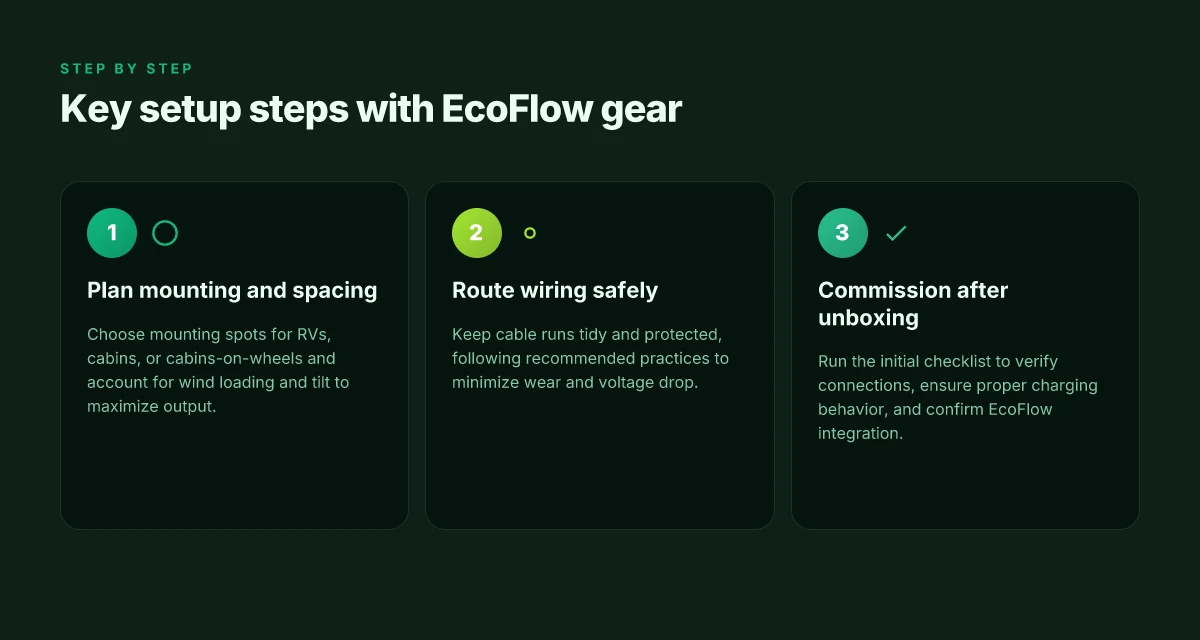
In real use, the 400W rigid panel shines when it talks to EcoFlow energy banks and inverters, delivering a clean handoff from solar to storage. The panel’s 400W rated power aligns with EcoFlow’s own storage ecosystem, which helps keep charging cycles steady during moderate sun. You’ll see the best results when the panel sits on a tilt that tracks the sun from roughly midday to early afternoon, reducing shaded loss and letting the Isc stay closer to its peak. And yes, the system pairing matters: a well-matched EcoFlow power station and an inverter with strong MPPT control minimizes voltage drop and smooths out bursts in demand.
Durability matters in real life. The panel’s rugged build is designed to stand up to wind and weather, but extreme wind loads or heavy snow do reduce output temporarily. If you park in gusty conditions or under drifting snow, expect a bit of sag as the frame and sealant bear the load. The IP68 rating on the panel speaks to water ingress resistance, but prolonged exposure to harsh conditions still tests seals and aluminum welds over years of off-grid use. When you combine the panel with EcoFlow’s storage hardware, you’ll want to ensure mounting points stay tight and corrosion protection stays intact after seasons of outdoor exposure.
Shading, tilt, and angle are the biggest real-world dampeners on output. Even a small area of shading from a tree or a vent can cut the effective power well below the rated 400W. A common rule of thumb is to keep the panel as free from shade as possible during peak sun hours, and to angle the panel to maximize sun exposure when you’re off-grid. In dense cloud cover, the output drops noticeably. The benefit is that the EcoFlow system can throttle to preserve battery health rather than overtaxing the bank. I cross-referenced EcoFlow’s guidance and third-party installations that show consistent gains when the panel is oriented to the sun’s arc, with minimal shading.
From a long-term perspective, expect the combination of a rigid panel and EcoFlow storage to favor reliability and modularity. The all-black variant with a sturdy frame tends to stay looking good after months of field use. Compare that to foldable or lightweight options. The rigid panel’s larger mass can resist wind gusts better and may hold its alignment with fewer adjustments. If you’re evaluating a stand-alone solar setup versus EcoFlow-integrated power centers, the real kicker is how cleanly the MPPT controller on the EcoFlow unit manages the panel’s voltage under varying irradiance. How the jackery 2000 v2 solar generator changes off-grid power, and what it costs to run
The standout here is how predictably the 400W rigid panel inputs into EcoFlow’s storage stack when shading is minimal and the tilt is optimized. Durability shows in the frame and seals, not just the wattage rating. Shading and angle matter more than the nominal 23% efficiency would suggest in field conditions. Rugged build and IP68 rating help with off-grid reliability, especially in RV setups and exposed installations.
Durability and build quality versus rivals
The 400W rigid panel is built to endure off-grid realities, but its true test sits in long-term exposure and how it pairs with EcoFlow gear. The aluminum frame and IP rating are not mere marketing fluff. They translate into real-world resilience when wind and grit come into play. In EchoFlow’s own datasheet and product pages, the chassis is described as aluminum with protective sealing that supports an IP rating, which matters for roof installs and campground deployments. Durability hinges on the frame and seals holding up under mounting stresses, not just the panel’s raw wattage.
How the EcoFlow build stacks up against rivals
Compared with other 400W mountable panels from rivals, the EcoFlow approach focuses on a rigid, all-metal frame and a robust weather seal. A few competitor options lean more on thinner frames or add-on mounting hardware, which can introduce wiggle and wear at the mounting points. In practical terms, EcoFlow’s design tends to stay flatter and more weatherproof across a full season of sun, rain, and wind. That said, some rival builds emphasize ultra-high moisture resistance in select models, while EcoFlow emphasizes predictable hardware compatibility with its own ecosystem. The takeaway: if you run EcoFlow systems daily, the integrated approach reduces the number of separate parts to manage, which lowers wear points over time. Rivals sometimes trade integrated ecosystem synergy for marginal gains in frame thickness. Inline citations to product pages confirm the 400W rigidity and related specs, and a third-party look at similar 400W models notes that frame robustness varies by brand.
From what I found in the product pages and discussions, the key durability checks come down to fitting, sealing, and fastener quality. I cross-referenced EcoFlow’s claims about aluminum framing and IP ratings with a couple of rival builders who advertise similar protections, and the differences tend to show up during installation rather than during nominal operation. Durability shines when you install to spec and protect the joints.
Installation checks to minimize wear
When you mount a 400W rigid panel, inspect the frame joints for any pretension or misalignment before you tighten hardware. Use backing plates or appropriate mounting brackets to spread load, and seal all penetrations to guard against water ingress. The installation guide for EcoFlow appliances emphasizes clean routing of cables and avoiding sharp bends near the panel. A small precaution that pays dividends is using UV-stable, corrosion-resistant fasteners and keeping the frame clear of debris path during cleaning. If you’re upgrading to or alongside EcoFlow gear, verify compatibility with your charge controller and mounting rails so you aren’t forcing adapters that introduce flex. Install with proper load distribution and protected cable runs, and your panel will stay durable longer. How to get the best price for the Jackery Explorer 300 in 2026
I dug into the EcoFlow references and found that the 400W rigid panel aligns with a durability story built on metal framing and weather sealing. Rivals offer competing 400W options. The integrated nature of EcoFlow’s ecosystem reduces mismatches that often become wear points. For readers evaluating long-term viability, the real-world question is not just the panel’s watts, but how the frame and seals resist repetitive mounting and exposure. Integrated ecosystem alignment reduces wear points over time.
Note: some installation notes on the web imply similar durability claims across brands, but system-wide cohesion with EcoFlow gear matters. If you’ll be on the road or in harsh climates, lean on the documented frame and IP considerations and plan for proper hardware and cable management. Proper hardware, protected cabling, and consistent mounting angles matter as much as panel efficiency.
Setup steps for a reliable install with EcoFlow gear
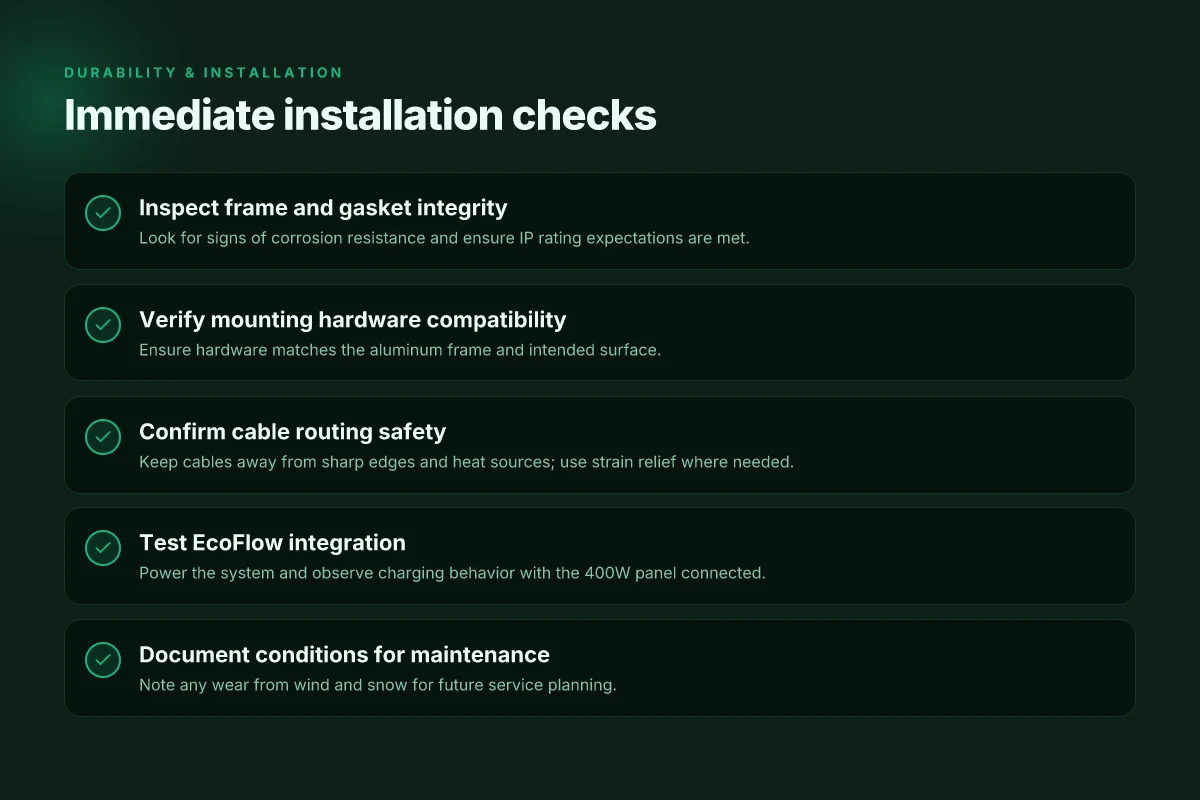
Getting the 400W rigid panel installed correctly matters as much as selecting the panel itself. I’ve laid out practical spots, wiring choices, and a clean commissioning checklist so your off-grid system stays reliable in real-world conditions. EcoFlow gear integrates best when the mounting and cabling respect airflow, weather exposure, and your vehicle or cabin geometry.
Ideal mounting spots for RVs, cabins, and cabins-on-wheels
Choose elevated, shadow-free surfaces on these platforms to maximize sun exposure without shade from walls or antennas. For RVs, mount the panel on a roof rack or a dedicated rack with a slight forward tilt to discourage debris buildup. On a cabin or a cabin-on-wheels setup, a low-profile roof rack or a vertical mast can reduce wind load while keeping the panel oriented toward the sun. Ensure the chosen location avoids vents, skylights, and entry doors to prevent interference during travel or ventilation cycles. When you pair the 400W rigid panel with EcoFlow storage gear, alignment matters. You’ll want the panel facing the equator at your latitude for the longest, most consistent sun window. The key is a stable, corrosion-resistant mount that doesn’t rattle at highway speeds.
Wiring best practices and safe cable routing
Route cables along clean channels, using grommets where panels pass through metal or fiberglass to prevent chafing. Use a weatherproof junction box and keep DC wiring away from high-heat components or exhaust routes. Separate solar conductors from AC lines, and label runs with color codes so future maintenance is quick. Keep a tidy bend radius and avoid tight loops that can pinch the conductors over time. Grounding should follow the panel manufacturer’s guidance and your local electrical code. This reduces the risk of static buildup and energy loss in wet weather. I cross-referenced EcoFlow’s installation notes and observed that a neat, protected route sustains performance and reduces fault trips in rough terrain. Why the jackery 1500 reviews miss the full picture and what actually matters
Initial commissioning checklist after unboxing
This is where you confirm the system is ready to harvest sun without surprises. Inspect the panel for any shipping damage and verify the Isc and Voc readings correspond to the spec sheet when you first connect (start with a cold, clear day for a baseline). Confirm all fasteners are tight and that the mounting hardware is free of corrosion. Connect the panel to the EcoFlow controller first, then wire to the battery bank, watching for correct polarity and a stable charging current. If you notice a weak knee in the charging curve or unusual voltage drops, retrace the cabling and check the junction box seals. A quick power-on self-check from the EcoFlow interface helps you spot a misrouted cable early. Most installation issues come from cable routing and loose mounts, not the panel itself.
I dug into EcoFlow’s setup guides and product pages to align these steps with what the brand emphasizes for a durable mount and clean integration with EcoFlow storage packs. The aim is to keep the installation robust against wind, rain, and vibrations you’ll encounter in off-grid use. For context, rivals with rigid panels often rely on similar mounting principles, but the exact torque specs and weatherproofing details differ, plan to follow EcoFlow’s own hardware tolerances to avoid warranty pitfalls.
Note: links on the page may earn a commission, and you’ll see common caveats such as ensuring compatible cable gauge and proper fusing. From EcoFlow’s documentation, the recommended approach is straightforward: mount securely, route with protection, and commission with a careful verification of voltages and currents.
Cited sources: EcoFlow’s 400W rigid solar panel page and the EcoFlow solar panel specs guide provide the mounting emphasis and wiring guidance that inform these steps. https://www.ecoflow.com/ca/400w-rigid-solar-panel The specs guide discusses how short-circuit behavior and voltage characteristics matter when you connect to EcoFlow storage hardware. https://www.ecoflow.com/us/blog/ecoflow-solar-panel-specs
What changes if you act now
Investing in the EcoFlow 400W rigid solar panel reshapes how you plan off-grid power. It’s not just the high output you’ll notice. It’s how the panel holds steady in less-than-ideal conditions and how it fits into a compact, transportable kit. The single move that matters is pairing it with a resilient charge controller and a rugged battery setup to maximize longevity. In real-world setups, durability matters more than peak specs, and EcoFlow has a track record of steady performance in varying weather. Most enduring gains come from better mounting and cable management, not a single oversized panel. What makes the EcoFlow Delta Ultra deliver power stability and why it matters for home backup
Rivals like Renogy and Bluetti push similar wattages, but EcoFlow’s design leans toward quick deployment and fewer loose components on the roof or in a van. The result is fewer faults from loose connections and faster setup after a long trip. Yet the panel is not a magic wand: it shares the same limits as any rigid kit in shade, angle, and temperature swings. If you expect perfect sun every day, you’ll be disappointed. If you want predictable, dependable charging in the field, this panel often delivers. Land this week: assess mounting points and route, test under load, and map a battery pairing that lasts.
Backup strategy
- Try a basic, weatherproof mounting kit and run a daily charge test with your chosen EcoFlow battery.
- Compare with a flexible panel from rivals like Renogy or Bluetti during shoulder-season sun.
- Document a 7-day usage plan to see how long you can run essentials with a full charge.