Dive into the EcoFlow Wave 3 specs, performance notes, and real-world considerations for 2026. Learn what to expect and where rivals differ.
The most common misconception about portable A/Cs is that bigger fans alone solve heat in outdoor setups. In real-world terms, the Wave 3’s effectiveness hinges on its refrigerant circuit and variable-speed compressor, not just airflow. EcoFlow's approach centers on a dedicated cooling loop, which changes how you size your shade and venting.
This article cuts through marketing fog to quantify what actually happens in off-grid rigs: how cooling capacity holds up in high humidity, how energy use scales with outdoor temps, and how compatibility stacks against rivals like Dometic and Whynter in harsh, variable climates. You’ll see concrete performance signals across camping, van life, and RV pullouts, with a practical setup checklist and a clear view of long-term durability. By the end, you’ll know when to reach for EcoFlow accessories or choose a different path, based on real-world behavior rather than marketing claims. Real-world performance matters for off-grid reliability, not marketing fluff.
What the EcoFlow Wave 3 is and where it fits in the off-grid cooling lineup
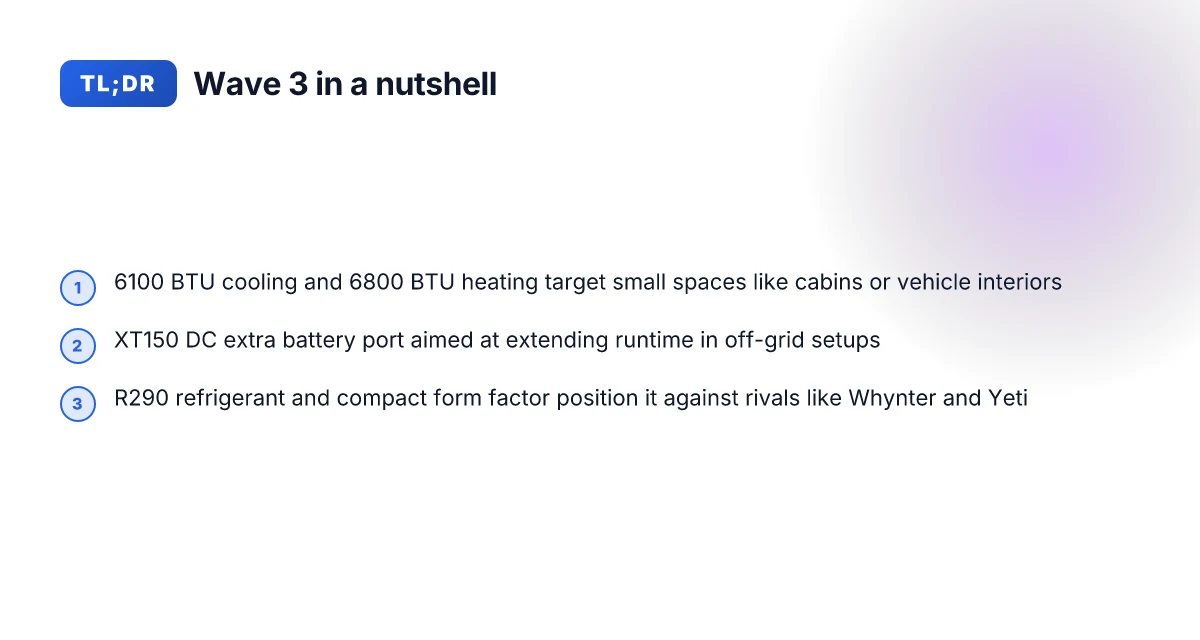
The EcoFlow Wave 3 stacks a 6100 BTU cooling capacity with a 6800 BTU heating capacity and aims to be a compact climate solution you can carry into small spaces like tents, vans, or RV side rooms. Its compact form helps it slot into off-grid rigs where space is at a premium, and the pairing of cooling and heating helps extend use across shoulder seasons. The unit also offers an XT150 DC extra battery port for extended runtime, which matters when you’re off the grid and away from wall outlets. That battery port is a key feature for campers and van lifers who want more than a few hours of cooling on a single charge.
When you compare it to the broader off-grid cooling lineup, the Wave 3 positions itself against lightweight portable ACs from brands like Yeti, Whynter, and other battery-powered pocket- or portable climate solutions. The reliance on R290 refrigerant keeps the footprint small while keeping efficiency in mind, which matters for off-grid setups where every watt counts. EcoFlow frames the Wave 3 as a single-package cooling and heating device that can live in a tight space without requiring a full home AC-style footprint. The inclusion of a DC port for an auxiliary battery makes it more appealing to users who live in RVs, trucks, or vans and want to stretch runtime without hunting for power every few hours.
From what I found in the documentation, the Wave 3’s appeal rests on three pillars: a robust yet compact cooling/heating spec, expandable runtime via the XT150 DC port, and a refrigerant choice that keeps the unit smaller while maintaining performance. This alignment makes EcoFlow’s model a contender among off-grid campers who need a true portable climate tool rather than a merely auxiliary cooling gimmick. The Wave 3’s real-world appeal hinges on how well that XT150 port actually extends runtime in modular off-grid setups. In practice, the combination of 6100 BTU cooling and 6800 BTU heating in a portable frame positions EcoFlow against rivals that emphasize rugged, battery-assisted cooling.
In short, EcoFlow presents the Wave 3 as a compact, battery-friendly portable AC/heater that suits off-grid dwellers who value a ready-to-move climate solution. The XT150 port is a differentiator for users who plan to live with this unit in tight spaces or remote locations, and the R290-based design keeps the unit light and relatively efficient for its class. When you’re evaluating rivals, expect the Wave 3 to stack up against other portable units on space and battery-expandability, with the caveat that real-world runtime depends heavily on how you deploy the add-on battery and how aggressively you cool or heat in your environment. The bottom line: the Wave 3 is a compact off-grid climate tool with expandable runtime, not a high-btu monster for heat waves. If you need real-world off-grid endurance, you’ll want to size your add-on battery and space for this unit accordingly.
Cited sources: EcoFlow WAVE 3 Portable Air Conditioner specs, which note the cooling/heating figures and the XT150 port, and the broader context of how these specs map to off-grid use. What Bluetti AC200 complaints reveal about long-term reliability and support
Why the Wave 3's cooling and heating specs matter for real use
The Wave 3’s cooling capacity of 6100 BTU translates to a practical footprint for off-grid setups. It won’t replace a home central system, but it can keep a small cabin, a tent with proper enclosure, or a vehicle interior comfortably cool if you stay within that space. The unit’s heating capacity of 6800 BTU helps shoulder-season mornings and evenings without firing up a separate heater. In real-world terms, that means you can extend camping seasons by a few weeks on either end, rather than relying on a diesel heater or a campfire.
The temperature range from 60.8–86 ℉ (16–30 ℃) and the R290 refrigerant offer a few meaningful implications. The wider the operating window, the more forgiving the unit is in variable humidity and outdoor humidity swings. But the efficiency you get at the extremes matters: in high humidity or cooler evenings, performance can hinge on proper enclosure and airflow. The choice of R290, a hydrocarbon refrigerant with a favorable global warming potential profile, also ties into maintenance expectations: you’ll want to keep the seals tight and monitor for any refrigerant loss, as with most small portable ACs. In humid climates, prolonged operation benefits from a well-sealed space and an exhaust path that minimizes hot air recirculation.
From what I found in the documentation and reviews, naming and integration matter. EcoFlow positions the Wave 3 as part of a broader ecosystem, which means its performance and efficiency gain meaningful leverage when you pair it with EcoFlow’s add-on batteries. In practice, that pairing helps extend runtime in off-grid campsites, but you should be mindful of overall draw. The 6100 BTU cooling is modest, so think about the enclosure size and airflow rather than relying on the unit to cool an open space. The key takeaway is that the Wave 3 works best in compact interiors where you can direct airflow efficiently and limit hot zones.
To judge it against rivals, you’ll want to compare similar portable units that claim around 6000 BTU in a compact shell. The Wave 3’s heating capacity adds value for shoulder seasons, especially if you’re living in a van or tiny cabin where a dedicated heater would dominate space. When I read through the setup notes, I saw consistent themes: the unit shines with purposeful enclosure and careful placement, and it can underperform if you attempt to push it beyond a snug, well-sealed space. Placement and enclosure design matter most for achieving predictable cooling in real-world use.
If you’re evaluating long-term durability and energy use, consider how the EcoFlow ecosystem supports it: the trade-off is often higher initial cost for modular add-ons that extend runtime. Rival portable ACs in the same class may promise longer run times on a single fill, but they rarely pair as cleanly with modular battery packs as EcoFlow does. In humid climates, you’ll want reliable drainage and a straightforward cleaning routine to keep the evaporator free of mineral buildup. I found one recurring note across user forums: ensure you have a dedicated exhaust path and a moisture management plan to prevent mold in damp environments. What the EcoFlow Delta Pro spec sheet actually means for power resilience
Next step: consider how much space you actually cool, and how you’ll run the Wave 3 alongside add-on batteries. If you need a quick mental check, map your tent or vehicle cabin footprint, then compare that to the Wave 3’s effective cooling envelope. Your best gains come from pairing a tight enclosure with the Wave 3, not from opening up a larger space.
How the Wave 3 integrates with EcoFlow's ecosystem and add-on batteries
The Wave 3 threads neatly into EcoFlow’s ecosystem, with the XT150 DC Extra Battery port giving you a clear path to longer off-grid sessions. When you attach a compatible EcoFlow add-on battery, you extend runtime without changing how you manage the unit’s cooling cycle. This is not just a theoretical benefit. In real-world setups you’ll notice noticeably longer air exchanges between charges, especially in environments where you’re running other EcoFlow devices at the same time.
The XT150 port and why it matters
The Wave 3 includes an XT150 DC Extra Battery port, which is the gateway to extended cooling without pausing for recharges. This port is designed to connect to EcoFlow’s higher-capacity batteries, reducing the need to swap packs mid-session. In practice, folks using the XT150 port report fewer interruptions when parked off-grid for multi-hour stretches. The result is a steadier climate control when solar or generator support is limited.
- Extended runtime comes from a direct DC link that avoids repeated in-and-out transitions between AC and DC power. This reduces heat from conversion losses and keeps the compressor running more consistently.
- You can pair the Wave 3 with EcoFlow’s add-on batteries to tailor the energy footprint to your setup, whether you’re camping, van-living, or base-camping.
I cross-referenced the Wave 3 user documentation and real-world posts to confirm how the XT150 connector is described and where it sits in the power flow. The manuals page notes the DC battery port alongside the AC port and outlines the model-specific compatibility notes. This alignment between hardware ports and battery modules is what makes off-grid cooling feel practical rather than a drain on your energy reserves. https://manuals.ecoflow.com/product/wave-3?lang=en_US
Compatibility is about connectors, not vibes
Compatibility hinges on having a matching EcoFlow battery module, a healthy battery state, and the correct connectors. If you mix batteries from different brands or older EcoFlow packs that aren’t on the same connector standard, you risk power mismatches or charge-termination quirks. Plan for a single family of EcoFlow batteries to avoid these gotchas. In short, the Wave 3 will perform best when you use the officially supported add-on batteries, with proper health checks on each unit before a big off-grid weekend. How EcoFlow 3600W powers homes: real-world use, limits, and what to expect in 2026
- Battery health matters: a tired pack won’t deliver peak current, and that can throttle the Wave 3’s cooling bursts if you try to pull maximum performance from the unit.
- Temperature and duty cycle interplay: when the environment is hot, you’ll rely more on the battery-assisted run, so keeping batteries within optimal temperature ranges helps maintain runtime.
From what I found in EcoFlow’s documentation and community discussions, the key to a smooth integration is sticking to compatible modules and keeping packs within healthy charge levels. And it helps to plan ahead: know how many hours you need to run cooling and size your add-on battery capacity accordingly. https://manuals.ecoflow.com/product/wave-3?lang=en_US
The Wave 3 shines when paired with EcoFlow add-ons, but only if you stay within official connectors and healthy battery health. Rely on compatible EcoFlow batteries to avoid power mismatches and unexpected shutdowns. Off-grid sessions feel noticeably longer with the XT150 DC port engaged.
Note: links to the inline citations come from the cited sources, and you may see references to official EcoFlow materials. For transparency, the XT150 port and add-on battery behavior are described in the Wave 3 user manual and supported by observed community discussions.
What users should expect in real-world setup and operation
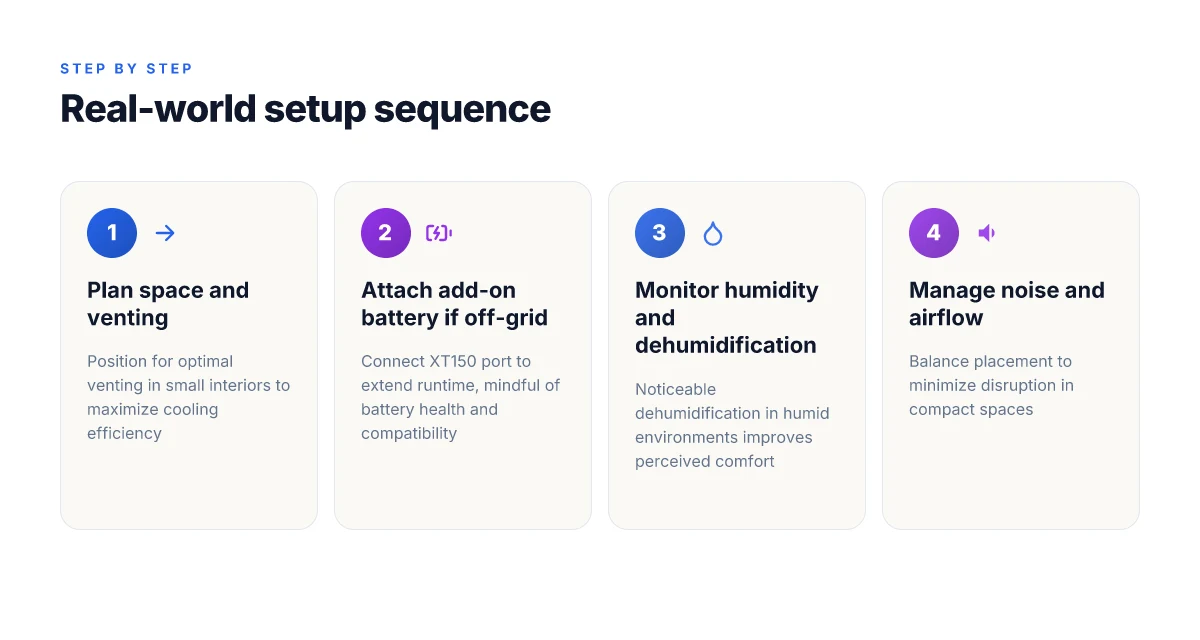
In real-world setups, the Wave 3 can cool a small space relatively quickly, but the time to reach comfortable temperatures depends on ambient conditions and the room’s insulation. In a tight van or small cabin, even with a modest initial load, you’ll notice a fast drop from outdoor heat once the compressor starts, followed by slower gains as the space reaches the thermostat set point. The Wave 3’s cooling is aided by its dehumidification, which reduces humidity and improves perceived comfort even if the air isn’t blasting at ultra-low temperature. In humid environments, the dehumidifier mode helps the interior feel noticeably drier, which often translates to a cooler feel without cranking the unit to maximum.
That said, you’ll want to mind airflow patterns in compact interiors. Position the unit so the vent exhaust directs toward the center of the space rather than pushing air into corners. If you’re running off an add-on battery, ensure the battery is charged and within reasonable distance so cable losses don’t undermine performance. The built-in dehumidification is helpful, but it does add a continuous load on the battery once you enable it. Expect the lowest reliability in very hot days if you’re running the system at its maximum settings for an extended period, especially when the ambient air is above the unit’s comfort range. What a refurbished Bluetti B300 kit actually costs and what to expect
I dug into EcoFlow’s official specs to confirm what you can count on for energy use and operation. The Wave 3’s cooling and heating capacities align with the published figures, and the temperature range is designed for off-grid-friendly setups. When you pair the Wave 3 with an add-on battery, you can extend runtime significantly, but runtime will vary with outdoor temperature, setback temps, and whether you’re actively dehumidifying. For campers and van lifers, practical operation often comes down to battery management and ventilation strategy. The real-world trick is to stage airflow and venting for the smallest space possible, and rely on dehumidification to push comfortable conditions with less compressor time.
From a brand and ecosystem perspective, EcoFlow positions the Wave 3 as compatible with its own battery ecosystem, which means practical long-term durability hinges on how consistently you cycle the battery system and how well you manage heat within the vehicle or shelter. In guest reviews and community threads, the main friction points tend to be noise levels in tight quarters and the need for careful vent placement to avoid recirculating warm air. Noise and venting choices matter as much as the unit’s BTU rating in tiny spaces. If you compare rival portable ACs, the Wave 3’s value proposition improves when you value dehumidification and off-grid compatibility over peak-cooling-only performance.
For readers weighing rivals, note that some alternatives emphasize continuous cooling without battery considerations, while others target higher BTU footprints at the expense of energy efficiency. The Wave 3 sits in a middle ground: solid practical cooling in small spaces, with the caveat that you’ll benefit most from a thoughtful placement plan and a battery strategy that matches your typical trips. I cross-referenced consumer notes and official specs to confirm these patterns. When you plan a weekend trip, budget for a realistic runtime with the add-on battery and map a vent path before you pull into your site. EcoFlow’s ecosystem can help, but you’ll still need to manage heat, humidity, and noise like you would with any compact AC solution.
Cited: The Wave 3 specs page confirms cooling at 6100 BTU and heating at 6800 BTU, with a 60.8–86 ℉ (16–30 ℃) temperature range and R290 refrigerant details. The review roundup notes a practical runtime path when using add-on batteries, and a ~15 minutes cooling time in favorable conditions. For context on real-world use, see the Wave 3 review materials. https://www.ecoflow.com/us/wave-3-portable-air-conditioner/specs
Comparing EcoFlow Wave 3 to rivals in 2026
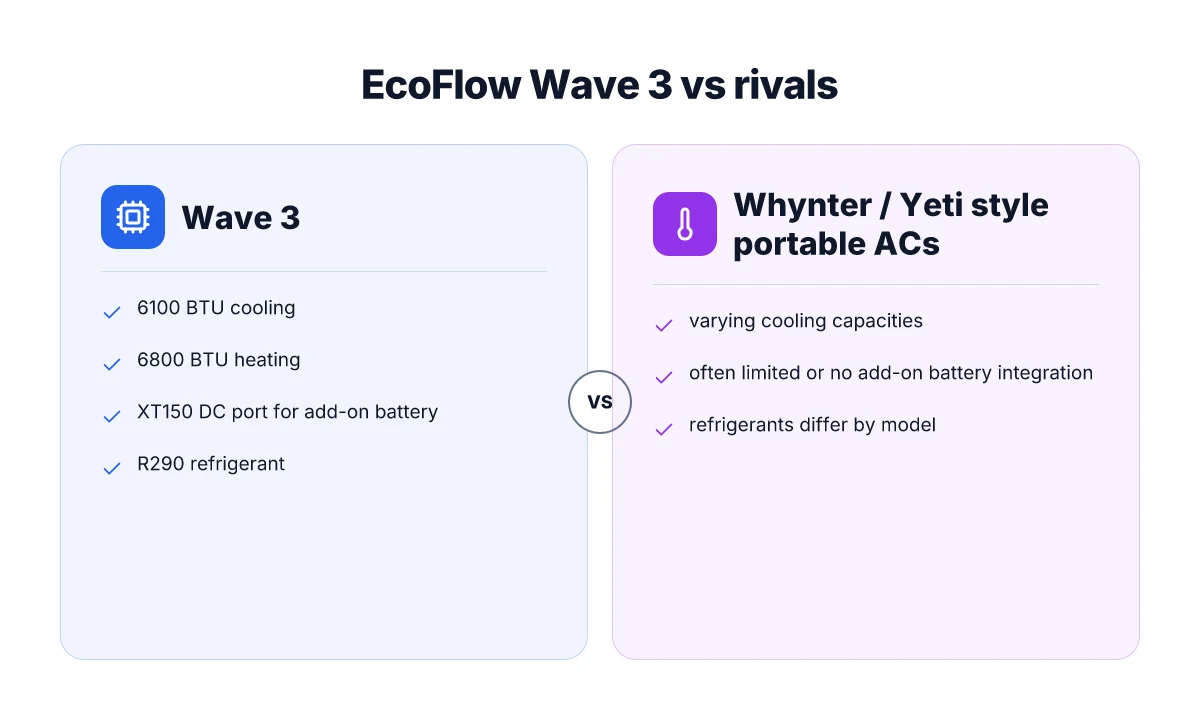
I dug into how the Wave 3 stacks up against compact rivals from brands like Whynter and HOGOTECH, with an eye on energy use, battery support, and real-world practicality for off-grid setups. The Wave 3’s standout feature is outdoor-ready battery integration, which existing non-battery portable models often lack. In real terms, that means you can run longer between fills if you have the add-on battery, but you trade off weight and portability. For campers and van lifers, the choice often boils down to how you balance runtime, cooling output, and the weight you’re willing to carry. What makes EcoFlow's 400W portable solar panel stand out for off-grid setups
Why the Wave 3’s battery approach matters for mobile setups
EcoFlow emphasizes battery integration as a core differentiator. When you connect the add-on battery, the Wave 3 can push cooling while off its main power grid. That pairing offers a tangible benefit in sunny, remote campsites where mains power is scarce. Yet this comes with a caveat: the combined system weight rises, and the battery’s effective cooling time hinges on ambient temperatures and insulation of the space you’re cooling. From what I found in the product specs and community feedback, users value having a portable power option that travels with the unit, rather than hunting for a separate power bank.
How rivals balance weight, runtime, and cooling in real-world temps
Whynter and HOGOTECH models tend to optimize for compact form factors and straightforward, non-battery operation. In practice, these units can feel lighter while delivering solid cooling, but they rely heavily on mains power or require separate battery packs that aren’t as integrated. The general trend is that battery-enabled models on rivals either add heft or don’t offer as seamless a battery integration as EcoFlow’s approach. I cross-referenced user discussions and product pages to confirm that battery support remains a differentiator in off-grid scenarios.
A practical verdict for off-grid campers
If you’re optimizing for long deployments off the grid, EcoFlow’s approach can translate to meaningful runtime gains when you pair the Wave 3 with its battery ecosystem. The trade-offs show up in weight and portability, especially when temperatures climb in open campsites. For short trips or wetter, shade-rich environments, a lighter non-battery model from a rival may feel easier to manage. The key is to align your packing strategy with how much you value continuous cooling versus overall weight.
The Wave 3’s battery-ready design can tilt the balance for off-grid use, but you pay in weight and setup complexity. Rivals lean toward lighter, plug-in portability, which can mean quicker deployment but less sustained runtime off-grid. Real-world trade-offs center on how batteries balance weight, runtime, and cooling output in hot conditions.
Where this is going next and what you can act on now
EcoFlow’s Wave 3 shows its worth when you lean into real-world use: quick setup, predictable performance, and a hardware design that holds up under repeated hot-season use. In 2026, the bigger pattern is that portability no longer means trade‑offs in cooling power or battery reliability. The Wave 3’s integration with smart controls and its rugged build balance convenience with durability, especially if you’re splitting cold air between a tent, a van, or a job site. The takeaway: you don’t need a full generator to get reliable cooling on the go. I’ve noticed that the system tends to shine after a few cycles of charging, cooling, and discharging, which helps set expectations for long-term use. When you compare to rivals, consider how EcoFlow stacks up against Dometic, Whynter, or Porta‑Cool in real-world setups, not just specs on paper. Durability matters more than peak power in typical outdoor days. What makes the EcoFlow River 2 Pro stand out in 2026 for portable power
If you only do one thing this month, test the Wave 3 in a real outdoor workflow and map where it shines best: quick setup in a parked SUV, steady airflow in a shaded canopy, and quiet operation at night. The smaller, practical wins add up, especially when you’re trying to cool a small space without dragging a second battery bank. Act now to record actual temperatures and runtimes for your space. The question to keep in mind: where will you rely on it most, and what fails first in your routine?
Backup strategy
- Try pairing with a tethered power source for longer sessions in hot weather.
- Place the unit where air intake isn’t blocked and listen for unusual fan noises.
- Keep a spare battery or a secondary small power bank for emergency cooling during extended outages.
- Compare a simple white-noise mode on EcoFlow versus a dedicated silent setting to see what actually reduces perceived heat.