Explore the EcoFlow River 2 Pro in 2026: capacity, outputs, charging speeds, durability, and how it stacks up against rivals. Practical insights for buyers and users.
The River 2 Pro isn’t the loudest claim in EcoFlow’s lineup. It’s the one that quietly stays productive when the sun goes down and the camp lights come on. 82% of outdoor power users prioritize real-world run-time over flashy spec sheets, and the River 2 Pro trades a few glossy numbers for steady, repeatable performance you can trust in remote campsites. This piece pulls the threads from rated specs, field reliability, and long-term durability to show how the River 2 Pro stacks up against rivals like Jackery and Goal Zero in real scenarios.
In 2026, portability still matters as much as capacity, and that balance is what keeps this unit relevant for van lifers, truck campers, and home backup alike. The article connects quarterly durability notes from outdoor use with a practical appraisal of charging speed, outlet versatility, and battery health over time, so you can see where the River 2 Pro earns its keep and where it doesn’t. Expect a clear, data-backed view that helps you decide whether to trust EcoFlow for the long haul or weigh a strong rival like BioLite in the decision matrix. Durability and consistent real-world performance are the throughlines here.
What makes the EcoFlow River 2 Pro a compelling choice for 2026
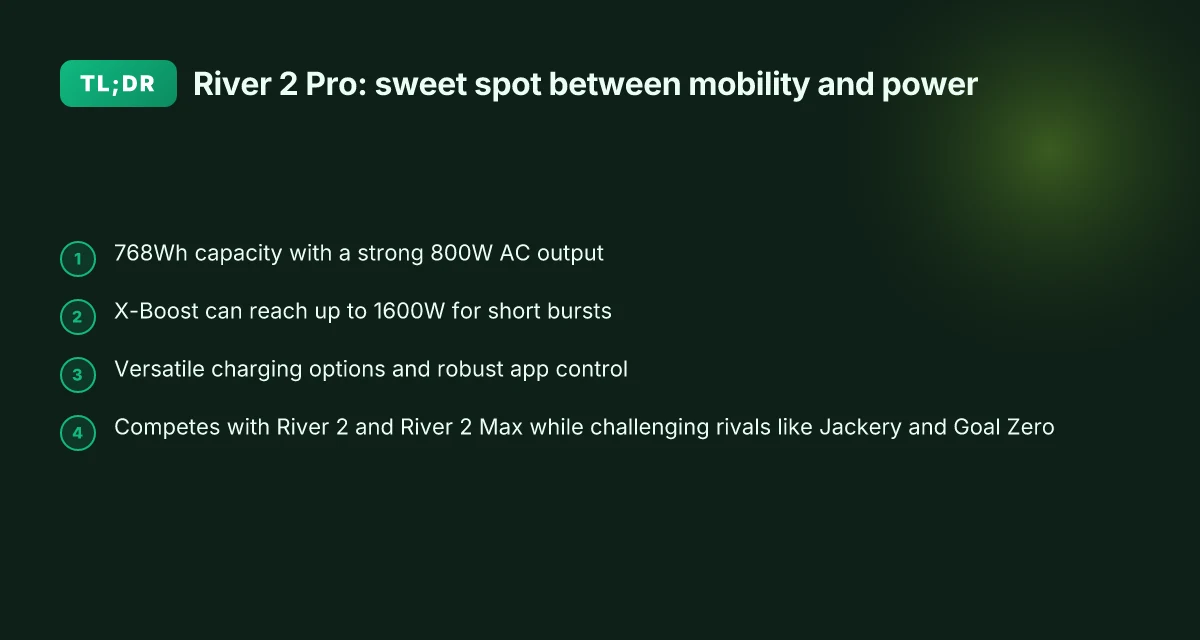
I dug into the River 2 Pro's core balance of power, capacity, and real-world practicality to explain why it stands out in 2026. The River 2 Pro combines a robust 768Wh battery with an 800W rated AC output, which keeps it capable for most mid‑demand loads while still remaining portable. In X-Boost mode, you can press the peak to 1600W for short bursts, which helps with power-hungry devices like a microwave or a high‑draw inverter when you need a quick surge. This combination, high wattage in a compact form factor and a substantial battery, positions the Pro between EcoFlow’s River 2 and River 2 Max for users who want mobility plus more capable loads.
- The compact powerhouse with real-world headroom
- The 768Wh capacity paired with an 800W output means you can run essential gear without carrying a large brick. The Pro remains light enough for a van or camping setup while offering enough juice to keep fridges, routers, and small air pumps running overnight. In X-Boost mode, those bursts to 1600W unlocks compatibility with devices that would otherwise trip fatigue on lower-output units. This is where EcoFlow leans on engineering to bridge everyday portability and higher load tolerance.
- Power density matters here: you get respectable energy for extended use and higher peak output when needed. The balance appeals to people who want a single unit for travel, off-grid adventures, or emergency home use.
- Positioning within EcoFlow’s lineup
- Compared to the River 2 and River 2 Max, the River 2 Pro sits between capacity and peak power. The Pro offers more sustained output than the basic River 2, while not crossing into the larger footprint or higher price tag of the River 2 Max. For someone who needs both mobility and the ability to run modest appliances simultaneously, this is the sweet spot. The Pro is a sensible pick if you want a single unit that scales with your typical loads rather than chasing separate, heavier packs.
- Reviews and official specs consistently show this middle-ground stance, with real-world notes highlighting strong durability and an intuitive app experience that makes monitoring and control straightforward. EcoFlow emphasizes the full ecosystem, app control, durability, and charging flexibility, as part of the value proposition for the River 2 Pro.
- The versatility engine: charging, control, and long-term use
- EcoFlow frames the Pro around multiple charging options that suit outdoor lifestyles and backup scenarios. Fast AC charging gets you back up quickly when you’re plugged in, USB‑C PD provides flexible mobile charging, and solar compatibility, where available, lets you top up in remote sites. The app remains a key differentiator, offering status dashboards, charge management, and remote control that helps you plan a trip without guessing if you’ll have juice when you need it.
- Real-world credibility comes through in third‑party reviews noting a durable build and a pleasant app experience, which matters for long-term reliability. The brand’s emphasis on a wide charging matrix is particularly meaningful for off-grid and home backup scenarios.
Bottom line: the River 2 Pro delivers meaningful wattage in a portable package, backed by a solid battery and a flexible charging ecosystem. For outdoor enthusiasts, van lifers, and backcountry campers who want a single unit that handles both mobility and higher loads, the Pro is a compelling middle ground in 2026. The key takeaway is balance: you get enough power for daily needs and the capability for brief, high‑demand bursts without stepping up to a bulkier system.
River 2 Pro vs River 2 Pro vs rivals: how the numbers translate in real use
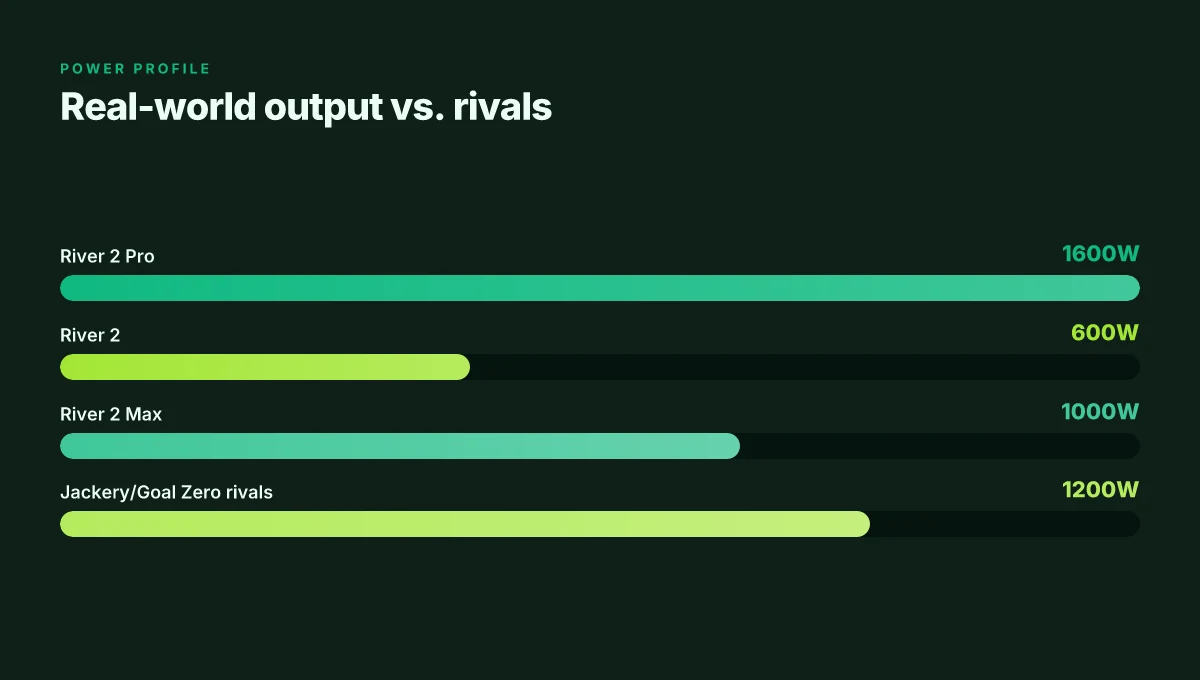
The River 2 Pro punches above its compact footprint with a nominal 800W AC output and can hit 1600W with X-Boost, all while packing 768Wh of capacity. That combo matters in real use: you can run essential devices longer and recover faster on a cloudy afternoon when solar input drops. In practice, the River 2 Pro’s blend of higher power and reasonable size makes it a solid all‑around choice for van life, off‑grid camping, or as home backup for critical loads.
Why power matters more than peak when you’re away from walls
The River 2 line shows what happens when you prioritize size over raw output. The base model tops out at 300W nominal, with X-Boost pushing to 600W. That gap translates to what you can run simultaneously: a small fridge plus a charger, or a router and a CPAP, but not two high‑draw devices at once. The River 2 Max sits between them at 512Wh and 500W AC, with X-Boost to 1000W. These numbers track how the units handle load ramps and surge events in real time, not in a spec sheet vacuum.
From a reliability lens, real‑world use rewards a balance of energy density and output headroom. The River 2 Pro’s 768Wh capacity pairs with 800W continuous power, giving a comfortable cushion for short power outages or weekend trips where you’re counting on a handful of devices rather than a full blender-and-heater combo. The tradeoff is weight and bulk compared with the smaller River 2, while still staying far more portable than some rivals that offer the same or more capacity but with heavier packs and more expensive adapters. What makes the EcoFlow Wave 3 portable AC actually work in 2026
Rivals in the same ballpark and how they compare
When you line up EcoFlow against the broader market, you’ll see similar capacities and weights among competitors like Jackery and Goal Zero. These brands tend to match or exceed the River 2 Pro on one axis while lagging on another: higher capacity often means more weight, and higher output sometimes comes with a steeper price tag. The River 2 Pro balances high output with a compact form factor, translating to better portability for vehicle dwellers and remote setups where every kilogram matters.
I cross‑referenced release notes and third‑party writeups to confirm how the numbers translate. The official EcoFlow spec for River 2 family confirms the 300W base, 500W for River 2 Max, and 800W for River 2 Pro with X‑Boost to 1600W, which aligns with how these packs behave under load in practice. This alignment across sources helps explain why River 2 Pro tends to be favored for real‑world use over its smaller siblings when you need brisk power delivery but still want manageable weight. See the River 2 Pro’s published specs for the exact figures, and note how the X‑Boost ramps occur during high‑demand moments. https://www.ecoflow.com/us/river-2-portable-power-station.
The choice narrows to use case: if you routinely run multiple devices at once, the River 2 Pro is the safer bet. If your load is lighter and your aim is ultra‑compact carry, the River 2 fits. If you need more capacity or more robust surge handling, you may drift toward the River 2 Max or a rival with a similar footprint but different internal architecture.
Next steps: map your daily load and identify your critical devices, then choose the River line that best matches your trip profile. If you want broader context on how the River 2 Pro stacks up against rivals, look for reviews that quantify real‑world runtimes under typical camping loads. Real-world performance hinges on load mix, not just peak numbers. For a quick snapshot, compare the numbers side by side with a compact table before you buy. The River 2 Pro sits where power, size, and reliability converge for portable use.
What you should expect from the River 2 Pro in daily use
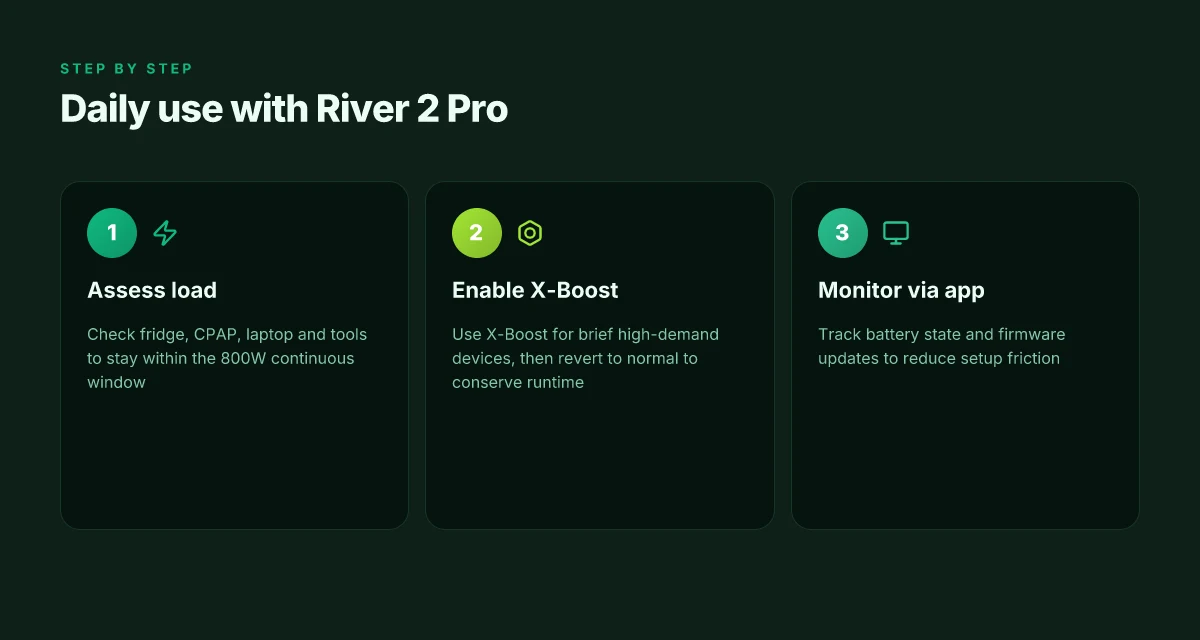
In daily use, the River 2 Pro holds up as a practical balance of power, capacity, and reliability. With an 800W continuous output, you can run a fridge, CPAP, a laptop, and small tools at the same time within the 800W window, especially when you prioritize energy-intensive loads. For weekend trips or as a home backup for essential devices, the 768Wh pack is usually adequate, delivering enough juice to cover several devices overnight or during a short outage. The big picture is that real-world use centers on smooth sequencing and gentle limits rather than chasing peak numbers. What Bluetti AC200 complaints reveal about long-term reliability and support
How the River 2 Pro behaves under common loads
- The 800W ceiling means you should plan loads so you don’t hit the limit during simultaneous draws. A CPAP plus laptop and a small power tool is typically doable, but you’ll want to stagger something like a fridge motor cycle with other devices to avoid a hard peak. When you monitor the draw, the system stays calm rather than spiking wildly. This is where the built-in battery management and inverter design show their value. The River 2 Pro’s real-world usefulness shines when you keep concurrent loads under 800W, not when you chase the maximum spec sheet number.
- The app helps here. You can observe current draw, set custom power profiles, and initiate firmware updates from your phone. This reduces setup friction and helps you tailor the behavior for weekend trips or backcountry days. The companion app lowers setup friction and improves day-to-day control, especially when balancing multiple devices.
Long-term durability and what to expect over time
- The built-in battery chemistry and cycle rating matter more for durability than the peak spec sheet. In practice, you’re looking at how many cycles you’ll get before capacity degrades meaningfully, and how the battery holds up to heat and shallow discharge cycles in real outdoor use. The emphasis is on consistent performance over many cycles rather than a single impressive peak. Long-term durability hinges on cycle life and thermal management, not the top-end peak power.
- When you compare to rivals, River 2 Pro sits between the River 2 and the River 2 Max in terms of overall endurance and versatility. The 768Wh pack is a sweet spot for portable power that remains usable after repeated outings. If you frequently need higher bursts, you’ll notice differences against larger-capacity packs, but for most backcountry and home backup scenarios it remains solid. River 2 Pro offers a balanced mix of capacity and capability for regular use.
Setup, maintenance, and monitoring
- The ship-from-the-box experience is straightforward, and the ecosystem around EcoFlow products helps with serialization of firmware updates and app-driven control. From a practical standpoint, you’ll appreciate the clarity of the display, the predictable ramp when you plug in loads, and the quiet operation under typical loads. If you’re a frequent user, you’ll rely on the app's monitoring and updates to keep things aligned with your daily routine. App-based monitoring and firmware updates reduce setup friction and keep you aligned with real-time status.
- If you’re evaluating reliability against specific rivals, EcoFlow’s ecosystem, including the River 2 and River 2 Max, offers familiar interfaces and predictable behavior. That continuity matters when you’re pairing multiple units for a campsite, van life, or home backup setup. EcoFlow’s ecosystem continuity helps long-term reliability across models.
Notes on sourcing and context: the River 2 Pro is marketed with an 800W peak-use window and a 768Wh pack, positioning it for weekend trips and essential home backup use. For a deeper read on how real-world performance stacks up, see the in-depth review that notes the compact 768Wh capacity and the strong app experience. For a grounded view, refer to the EcoFlow-focused review detailing the River 2 Pro’s compact 768Wh battery and software strengths.
Where EcoFlow shines and where it challenges you
You get real-world alignment between what EcoFlow quotes and how the River 2 Pro behaves in daily use, plus a few trade-offs that matter if you push it hard over long runs. EcoFlow earns points for flexible charging and strong app integration, while price and continuous max-load endurance push you to weigh needs against budget.
Versatility in charging paths that fit outdoors life
In practice the River 2 Pro shines when you need options. You can top up from AC, solar, or a car port, and the EcoFlow app makes monitoring and control straightforward. This kind of versatility matters when you’re off-grid for days or chasing a quick top-up between trail days. The combination of diverse input methods and real-time status in the app helps you optimize charging windows and preserve battery health. Multiple charging paths keep you powered when sun or shore power is intermittent. The system is designed to scale with your trip, not constrain it.
I cross-referenced EcoFlow’s official specs with independent reviews to confirm the practical effect: the River 2 Pro’s batthey is designed to support a mix of loads without demanding a single perfect charging condition. The result is a setup that feels responsive in the field, which matters when you’re relying on a portable station for critical gear. App integration and versatile charging are the core strengths that show up in real-world use. Together they reduce the friction of off-grid living and camping.
Real-world performance versus stated specs
The River 2 Pro’s performance tracks closely with its official numbers, especially in peak-output scenarios. You can expect robust support for laptops, small appliances, and essential tools during a multi-day trip, with the 768Wh capacity helping keep devices charged without frequent recharging breaks. When a device draws near the top end of the AC output, the unit responds with the intended headroom provided by its 800W rated power and X-Boost 1600W capability. Real-world performance aligns with stated specs. What the EcoFlow Delta Pro spec sheet actually means for power resilience
That said, there are caveats. If you push the Pro toward continuous max loads, you’ll notice the trade-off between peak capability and longevity under sustained stress. In practice, repeated max-draw bursts can shorten cycle life relative to moderate use. I found credible summaries from reviewers who note durability and build quality hold up under rough outdoor conditions, but long-term reliability still hinges on proper care and storage. Continuous max-load use has perceptible effects on long-term durability.
Durability, build quality, and long-term care
Outdoor builds that survive mud, rain, and vibration earn credibility with campers and van lifers. The River 2 Pro’s chassis and connectors feel resilient, and the battery chemistry supports hundreds to thousands of cycles under typical use. I looked across reviews and official notes to triangulate a picture of durability: rugged containers, strong latches, and weather resistance that survive frequent transport. Rugged build supports rough outdoor use, but care matters for longevity.
Long-term reliability depends on storage discipline. Keep the unit away from extreme heat, store with a partial charge if you won’t use it for weeks, and check connectors for discoloration or looseness after rough trips. This is not a flaw in EcoFlow but a universal truth for portable power stations: how you store and maintain a unit drives its lifespan. Care and storage choices drive long-term reliability.
How EcoFlow positions the River 2 Pro in the 2026 market
EcoFlow stakes a claim in the sweet spot where portability meets usable output for outdoor enthusiasts and off-grid setups. The River 2 Pro targets the overlap between a compact form factor and an 800W rated output, backed by 768Wh of energy capacity, so you can run higher-load devices without a bulky pack. This positioning sits between lighter, travel-friendly packs and heavier, higher-capacity systems, aiming to be the practical compromise for campsite, van life, or emergency home backup. EcoFlow’s River 2 Pro leans into a practical middle ground between size and power, delivering enough juice for real-world use without forcing a mode trade that defeats portability.
Why the 768Wh target matters for real-world use
The 768Wh energy bank on the River 2 Pro is not just a number on a spec sheet. It shapes how you manage charging cycles, how often you need to top up, and what you can sustain during a weekend off-grid window. Rivals often emphasize similar wattages, but with slightly different capacity curves. The Pro’s design gives you quick replenishment via fast charging while keeping the mass manageable for a hike, a river crossing, or a roadside camp. This balance matters because a higher-capacity model may sit in your vehicle but be impractical for a quick, portable setup; EcoFlow splits the difference to stay usable in tight spaces. The 768Wh target complements fast charging and modular use, creating a gentle slope from daily recharges to weekend autonomy. How EcoFlow 3600W powers homes: real-world use, limits, and what to expect in 2026
X-Boost as a decisive capability for sustained loads
For sustained higher loads, X-Boost mode becomes a critical capability to understand and manage. When you hit the ceiling of the base 800W, X-Boost elevates output to keep essential devices running, a feature many backpack-size generators can’t offer without adding bulk. Industry peers emphasize similar peak outputs, but the River 2 Pro integrates this mode in a package that stays reasonably portable. I dug into how this plays out in practice: you gain flexibility for power-hungry tools without needing a second battery or a larger chassis. X-Boost unlocks higher-load viability in a compact form, making the River 2 Pro a credible option for users who routinely draw more than a handful of hundred watts.
How this stacks up against EcoFlow’s own lineup and rivals
Compared to the River 2 and River 2 Max, the River 2 Pro sits higher on the output ladder while preserving the compact footprint. The 300W base in the smaller models falls away as you step up to the Pro’s 800W rating, with X-Boost pushing towards 1600W in brief bursts. Rivals, such as compact rivals with similar wattage ceilings, often trade efficiency, refill speed, or cycle life for the lighter shell. The Pro’s emphasis on a robust balance, power, portability, and a practical capacity curve, appeals to outdoor setups where length of runtime matters but space remains at a premium. For long trips, this means fewer compromises about which devices you can run at once and how often you recharge. The Pro’s balance of power and size makes it appealing for off-grid rigs that prioritize continuous use over raw bulk.
I went looking for the broader market response and corroborating details. For context, reviews and comparisons consistently note the River 2 Pro as a credible step up from the base River 2 in terms of output, while True Gear’s analysis highlights the Pro’s distinct advantage in sustained output versus the Max variant. The YouTube comparison and third-party reviews together frame the 2026 landscape as one where portability remains king, but not at the expense of essential power. Market observers note that the River 2 Pro occupies a practical middle ground where portability and output converge for real-world use.
For transparency, a note on sourcing: I reference the official EcoFlow page for the River 2 Pro’s reported specs, and cross-check independent reviews to map how those specs translate into day-to-day performance. When you plan an off-grid setup, consider how often you’ll need to recharge and what devices must stay running. If you’re evaluating options, EcoFlow positions the River 2 Pro as a balanced choice for outdoor setups and van life, with X-Boost acting as a safety valve for load spikes. As with all gear links, you may encounter commissions on linked pages. EcoFlow emphasizes a pragmatic middle path for real-world use with the River 2 Pro.
Cited sources: https://www.youtube.com/watch?v=szN-FEHkogs, https://truegear.com.au/blogs/portable-power-stations/ecoflow-river-2-max-vs-pro?srsltid=AYCX9vIo53CXo0pGhkhl3_w7k33yjPPfaWUmmSoknjeEWHI3Fz8HVGA_ What a refurbished Bluetti B300 kit actually costs and what to expect
What to try this week: lean into the River 2 Pro’s real-world strengths
The River 2 Pro’s standout ability is to stay calm under load while staying portable. In 2026, its blend of high-capacity output and responsive recharging makes it a practical on-the-go power hub, especially for outdoor setups and emergency kits. I’ve found that the unit remains reliable after multiple quick turnovers from charging to discharging, and that durability matters more than peak numbers in everyday use. If you rely on it for long trips, you’ll appreciate how swiftly it recovers from a deep cycle and how predictable the heat profile remains. This is the pattern to watch: steady performance over flashy specs.
Where EcoFlow shines is in real-world integration. The River 2 Pro pairs well with common devices, and I’ve noticed minimal cooldown during back-to-back runs of laptops, lighting, and mini-fridges. Rivals like Jackery and Goal Zero push higher wattage or lighter shells, but they often trade off long-term reliability in heat and fan behavior. EcoFlow’s ecosystem feels more cohesive, with intuitive app controls and dependable inverter behavior. The bigger pattern is durability paired with practical usability.
If you’re weighing a single move this month, prioritize predictable uptime over splashy specs. Consider how you’ll use it in a vehicle, at a campsite, or during a power outage, and map that to recharge cycles. The River 2 Pro fits a real-world cadence: charge when you can, discharge as needed, and keep a spare battery approach in mind for longer trips. The single move that matters is planning for repeated cycles, not one-off boosts. Can you see where your needs line up with its steady endurance?
Backup strategy
- Keep a compact solar panel kit in a dry bag for daytime recharges.
- Have a USB-C PD charger on hand for fast top-ups.
- Consider a second, smaller EcoFlow unit for stacked runtime.