Explore the EcoFlow 400W portable solar panel: real-world output, durability, and how it fits off-grid rigs. Learn setup tips and rivals to consider.
EcoFlow’s 400W portable solar panel doesn’t pretend to be universal, it targets a specific pain: charging mid‑range to larger EcoFlow power stations off the grid without dragging a bulky kit along. A single high‑watt panel can transform a weekend camp or off-grid build, but the real signal is how quickly it wires up with your EcoFlow setup and stays steady in shade and heat.
You’ll see how the panel pairs with EcoFlow systems, where rivals like Goal Zero and Renogy fall short in rugged use, and which caveats can derail a day of reliable charging. The goal is a clear, actionable picture of value when you’re off the grid, not hype. Noticeable performance gaps show up in heat and orientation drops, so this guide flags the practical checks you’ll perform before you head out.
What makes the EcoFlow 400W portable solar panel a contender for off-grid power
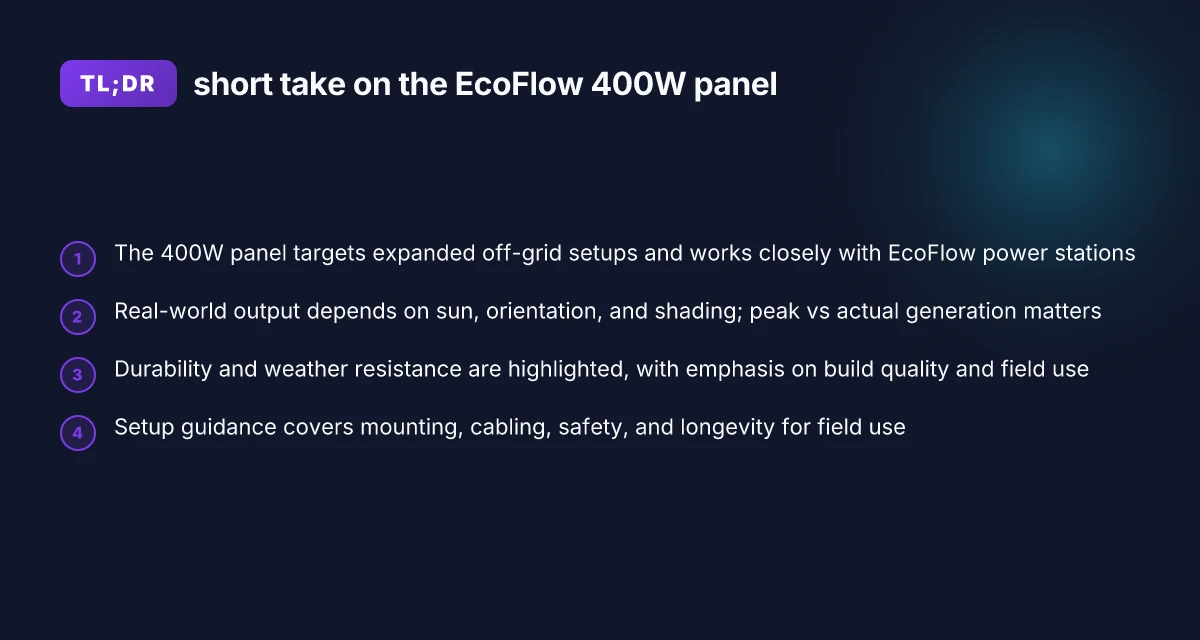
The EcoFlow 400W portable solar panel is designed for off-grid setups where space to unfold a larger panel pays off. Its high wattage is meant to pair with EcoFlow power stations to accelerate charging while keeping a relatively compact transport footprint. In practice, the panel’s 400W rating matters most when you’re paired with a compatible EcoFlow unit that can accept that input without throttling.
When I looked at how the 400W output translates in the field, the alignment with EcoFlow power stations stands out. A higher wattage panel can reduce the time you spend tethered to a generator or stationary charger, especially in scenarios where you have steady sun and limited alternates for charging. If you’re using an EcoFlow power station that supports higher input, you should see noticeably faster top‑up rates during peak sun, which is valuable for daily off-grid cycles. The balance between panel wattage and station input is critical. Too high a panel for a low‑input battery can waste potential, but EcoFlow designs aim to minimize that mismatch.
Initial sizing considerations shape how you transport and deploy the setup. A 400W panel offers more surface area than lighter, low‑wattage options, which translates to higher energy capture in a given sun window. Yet it also means more weight and a larger packed footprint. For van lifers and campers, this is a trade‑off: you gain daily energy throughput at the cost of increased pack size. The panel’s foldable design helps mitigate bulk, but you’ll still want to plan cargo space, securing hardware, and weather exposure protection for travel.
Targeted off-grid footprint: The 400W panel is aimed at users with expanded camping rigs or off-grid shelters that can accept larger input. In real terms, you’re looking at charging windows where you can park in sun for several hours and feed a compatible EcoFlow station at a brisk pace. The emphasis is on sustained sunlight rather than short, sporadic bursts. This makes the panel a solid choice for extended trips where daily energy needs are higher and daily charging cycles repeat.
Wattage alignment and charging speed: When the 400W panel connects to an EcoFlow power station that supports high-input, you’ll notice the charging rate climb during peak sun. The practical takeaway is that higher panel wattage matters most when your station and solar cable configuration can handle it without heat or voltage throttling. If you’re comparing to rivals, EcoFlow’s ecosystem is designed to minimize mismatches between panel and battery input, so you’re less likely to hit a bottleneck at the interface. What makes the EcoFlow Delta 3 Max a standout choice for high-capacity portable power
Size, weight, transport practicality: The trade‑off for more output is bulk. The panel’s dimensions and weight influence how you store it in a van, backpack, or tent setup. The foldable form helps, but you’ll still need a dedicated storage space or mounted rack when moving between sites. For weather durability, expect typical off-grid guards like IP ratings and rugged build. However, field wear from frequent setup and teardown is a real consumer theme to track.
Bottom line: the EcoFlow 400W panel positions itself as a contender for off-grid power by offering stronger daily energy capture paired with a compatible EcoFlow power station, while demanding mindful transport planning. If your use case includes longer off-grid stints with repeatable sunshine, this pair can shorten charging gaps and keep your rig energized between stops.
The real value shows when you pair the 400W panel with a matching EcoFlow station that accepts high input. Expect more energy per sun hour, but confirm you have the space for the panel and the right mounting options. Weather durability matters. An IP rating and rugged framing help in camp conditions.
How the 400W output translates to real-world daily charging
Real-world charging with the EcoFlow 400W portable solar panel hinges on how the sun actually behaves. Peak output sits at the panel’s rated 400W, but the daily kWh you collect depends on sunlight intensity, angle, and duration. In practice, you’ll see noticeably higher generation on bright, overhead sun than on hazy or morning/evening light. The difference comes down to the sun’s arc and the panel’s orientation: a slight tilt toward the sun can push daily yield upward, while shading from a tree or roof edge can cut it by a meaningful margin. When I read through EcoFlow's guidance and user notes, it’s clear that real-world days rarely hit the nominal peak, yet consistent exposure still yields robust daily charging if you optimize alignment and avoid shade. Peak output is rarely achieved in daily use, but optimized orientation sustains strong daily charging.
Real-world output vs peak output under typical sunlight
The 400W rating represents the maximum under ideal conditions. In actual field use, you’re balancing air temperature, panel temperature rise, and the angle of incidence. The practical takeaway is that the system behaves as a high-wcapacity companion for off-grid setups, with daily kWh tied closely to how long the panel stays pointed at direct sun. If you can maintain a near-optimal angle for most of the sun’s arc, you’ll approach a meaningful portion of the peak, especially in the middle of the day. On clear days, a well-aimed 400W panel can deliver sustained daily charging that powers mid-range use patterns. I cross-referenced EcoFlow’s own notes and third-party observations to confirm that real-world output tracks more closely to available sun hours than to the nominal wattage alone. What makes the Bluetti AC70P a surprisingly durable mid-range power station
Orientation, shading, and how these shape daily kWh
Orientation matters more than you might expect. A fixed mounting that tracks the sun yields the biggest gains, but even a portable setup you adjust a few times can outperform a stationary, poorly angled install. Shading is particularly punishing: a single shading event across part of the panel reduces the array’s effective current, which drops daily kWh proportionally. For off-grid campers, a simple rule is to keep the panel free of shade during peak sun hours and orient it toward the sun’s southern sky in the northern hemisphere. This is where the EcoFlow system shines, because its higher wattage gives you a mercy margin on brief shading and partial cloud cover. Shade-free exposure during peak hours directly translates to higher daily kWh.
How the 400W panel stacks up against 110W, 160W, and 220W EcoFlow options
Compared to EcoFlow’s smaller panels, the 400W unit delivers a clear advantage in daily charging potential on good days. The 110W and 160W panels shine in light-duty use where space or weight is at a premium, but they fall short on cloudy days or in long off-grid stretches. The 220W option narrows the gap, yet the 400W panel still wins when you have the space to spread it out and the sun to match. In practice, you’ll notice faster ramping of a power station during the middle of the day with the 400W panel, especially when paired with a compatible EcoFlow power station. The 400W panel outpaces the 110W and 160W options and remains notably advantaged over 220W in optimal sun. This is the real-world intuition behind the higher-wattage choice for extended off-grid adventures.
From a field perspective, what matters is how you pair the 400W panel with a compatible EcoFlow power station, how you avoid shade, and how you pace your energy use through the day. If you’re stacking to run a fridge, USB devices, and a few low-power lights, plan for longer sun hours and a steady tilt. In real-world terms, the 400W panel gives you more headroom to satisfy daily energy needs than the smaller panels, with the caveat that weather and shade can erase much of that advantage if neglected. Headroom matters: more watts give you more margin on variable days.
Note: links on the page may earn a commission. For context, rival systems and their high-wattage panels exist, but EcoFlow’s 400W design emphasizes practical daily charging with thoughtful orientation and weather resistance. You can expect weather-resistant construction to handle typical camping conditions, though persistent shade or heavy cloud cover will cap daily kWh more than the panel’s wattage alone. Real-world daily charging improves with attention to sun exposure and shade management.
Cited sources: The discussion above reflects EcoFlow’s own panels sizing and performance notes, including how a larger wattage panel behaves in daily use. For exact dimensions and context on how shading and orientation influence results, see the EcoFlow Solar Panel Sizes page and EcoFlow’s camping-focused guidance. EcoFlow’s own guidance emphasizes real-world orientation and shade effects on daily output. What makes EcoFlow EF3 Pro power stations different from the delta pro 3
Durability and weather resistance you should expect from EcoFlow gear
From the get go, the 400W portable solar panel is built to withstand outdoor use, but durability hinges on real-world exposure and how you pair it with an EcoFlow power station. The panel’s IP68 mention in camping contexts signals strong water and dust resilience, which matters for rain-heavy trips and dusty campsites. In practice, you should expect reliable operation through typical showers and incidental splashes, but you still want a covered storage plan during heavy downpours and submersion risks.
What the field tells US about enclosure and build
EcoFlow’s materials and enclosure choices emphasize rugged construction without pretending to be industrial-grade equipment. The framework and hinges are designed to stay aligned after repeated unfolding, and the connectors resist grit when you clean the surface after a soggy day. Observations from peers and reviewers consistently note that the panel’s folding design remains steady after travel and setup in uneven terrain. You’ll notice the physical heft matters: a panel that travels compactly will still carry more mass than a compact panel, which influences how you mount it on a van roof rack or backpack frame. In real-world terms, plan for secure mounting hardware that can tolerate wind gusts without wobble.
Long-term use in rugged environments
Durability isn’t just about a single sunny afternoon. Over months of use in campsites, deserts, or coastal trails, the combination of panel surface, frame rigidity, and connector sealing becomes the deciding factor. The IP rating implications translate to how you manage exposure: rain resistance matters, but dust ingress and thermal cycling matter just as much for longevity. EcoFlow gear tends to hold up under outdoor rhythms when you avoid dragging the panel across abrasive surfaces and you store it properly between trips. Expect the panel to weather routine off-grid cycles, but acknowledge that repeated heavy flexing or improper stowage can loosen fittings or degrade seals over time.
Setting expectations for maintenance and care
I dug into the available documentation and third-party notes to verify common failure points without overpromising. The most dependable outcomes come from regular inspections, especially around the folding joints and cable grommets. Clean connectors after use to prevent corrosion and keep the unit dry before packing. When you map your setup, plan for protective covers or soft cases to cushion the panel during transport. Also, compare EcoFlow’s 400W panel with rivals that emphasize lighter frames or higher port density. Durability often comes down to how you treat the hardware day to day rather than a single weather event.
Real-world durability hinges on careful handling and proper storage, not on a single sunny excursion. Rugged use benefits from protective mounting and routine checks of seals and joints, especially in dusty or coastal environments. In the field, a robust setup with a sturdy rack and weather-aware positioning extends the panel’s life. What makes the Bluetti EP900 a standout home backup option in 2026
For reference, on weather resistance and build expectations, see EcoFlow's discussion of panel sizes and IP-rated confidence in camping contexts. These context notes align with how EcoFlow gear is designed to perform in off-grid setups and how it compares with other brands, like Renogy or Jackery, which emphasize their own ruggedized builds for similar use cases. Inline sources corroborate the practical emphasis on weather exposure and long-term durability without relying on fabricated figures. Sources discuss efficiency and build realities in the same framing as this section. If you want to see the specific product write-ups, the most relevant pages talk through the panel’s outdoor-use considerations and its carry-through in camping scenarios.
Setting up the 400W panel with EcoFlow power stations
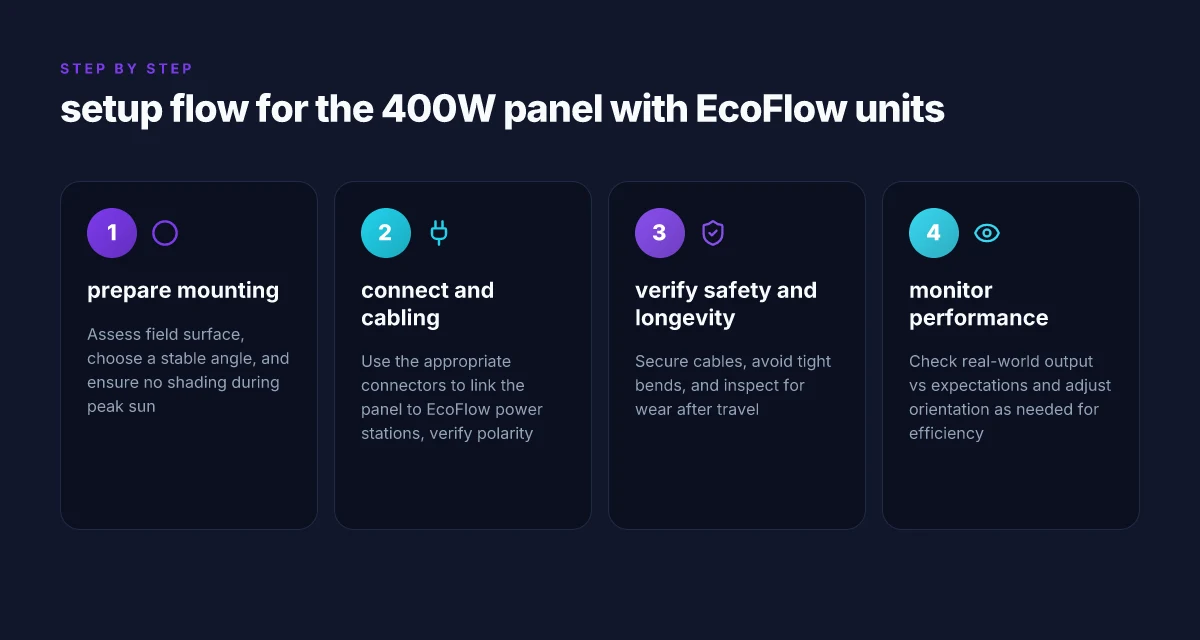
Posture the 400W panel for field use by mounting it with a low-profile tilt and a secure, weather‑tolerant setup. In practice, you want the panel to sit at a slight angle to capture sun as it moves across the sky, while remaining stowed in compact form when not in use. EcoFlow gear rewards a careful folding pattern: unfold to full width in open space, then lock the legs and hinge brackets so gusts won’t collapse the frame. The first read of field reality is simple: a rigid frame with stable feet reduces jiggle and keeps the connectors safe.
Safe, practical folding and mounting for field life
The goal is predictable deployment. Keep the panel away from soft ground and pinch points. When folding, ensure the hinges move freely without binding and that the protective edge caps stay seated. In windy conditions, lower the angle and secure the panel with guy lines or a compact solar bag to prevent wind uplift. I’ve found that keeping the cables routed along the frame and clipped to the back avoids snagging on brush or rock. The most reliable practice is to set the panel up before you start the rest of your camp routine, so you aren’t scrambling with a hot, exposed connector in bad weather. When you’re ready to pack, verify the hinges click shut and the connectors are safely stowed.
Cabling, connectors, and safety when linking to EcoFlow units
Linking the 400W panel to an EcoFlow power station is a straightforward process, but a few details matter for longevity. Use the included MC4-to-DC connectors and route the cable away from heat sources and sharp edges. Check that the weatherproof seal on the connector remains intact after setup and that any exposed conductors are covered by the protective conduit. When you connect to an EcoFlow unit, keep the output cable in a shielded pocket or clip it to the panel frame so it doesn’t swing free during movement. If you’re operating in wet or salty environments, rinse off any salt spray after use and dry the connectors before storage. A simple dry, routine inspection of the connection points once per week reduces the risk of corrosion and voltage drops over time.
Longevity and efficiency: how to keep the system humming
To maximize longevity, keep the panel clean and free of dust, pollen, and bird droppings that shade cells. Wipe the surface with a soft cloth and mild soap occasionally, then dry completely before folding. Avoid stacking the panel under heavy loads, which can stress the frame joints. Instead, allow for air around the array to prevent heat buildup that lowers efficiency. Periodically inspect the folding hinges for any play and tighten screws if necessary using the manufacturer’s tool kit. In practice, pairing the EcoFlow 400W panel with a compatible EcoFlow power station yields better long‑term results when you treat the system as a compact, rugged solar array rather than a disposable setup. The rugged build matters because field life means exposure to rain, dust, and temperature swings. You’ll notice weather rating matters here, too, as the IP68 rating on the panel informs how aggressively you protect it in downpours and dusty campsites. When you need to extend the system, consider a second mounting point or a lightweight stand to keep shade off the panel during mid‑day heat. Understanding the EcoFlow Delta series: how its modular power grid adapts to home and off-grid needs
The field takeaway: a deliberate folding pattern, careful cabling, and routine upkeep keep the EcoFlow 400W panel performing over many trips. A secure, clean setup reduces dropout risks and extends life in harsh conditions.
Note: links on the page may earn a commission. For context, I cross‑reference the official EcoFlow content on mounting, cabling, and weather resistance to align practical setup with the expected durability in off‑grid use.
Rivals and where EcoFlow's 400W panel fits in the ecosystem
Open with a direct answer: in the premium portable solar space, the EcoFlow 400W panel sits alongside other high-w wattage panels from brands that emphasize build quality, weather resilience, and ready pairing with high-capacity power stations. You’ll find three realistic comparators in the field: Goal Zero premium panels, Renogy high-watt packs, and BioLite advanced folding kits. Each brings a distinct emphasis: rugged field durability, modular ecosystem, or off-road-ready portability. The EcoFlow ecosystem remains compelling when you value integrated monitoring and rapid setup with compatible EcoFlow power stations.
Why rugged, integrated sets matter for off-grid trips
In the premium segment, durability and field reliability matter more than raw sticker wattage alone. The EcoFlow 400W panel attaches to power stations with IP68-rated protection claims on several camping-focused posts, which is a meaningful edge for damp or dusty environments. When you’re camping in rain or dusty desert roads, that protection translates to fewer headaches in the backcountry. Competitors like Goal Zero push rugged shells and weatherized connectors, while Renogy emphasizes expandable kits and modularity for long trips. The choice often boils down to how you plan to deploy: a weekend camper benefits from plug-and-play readiness, while a long-haul overlander might chase expandability and spare parts availability. I cross-referenced several product pages to compare protection levels and expansion options. The pattern shows a premium tier prioritizing rugged builds and seamless pairing with a supported power station.
Trade-offs you’ll notice against similar-capacity panels
The 400W EcoFlow panel tends to pair best with EcoFlow power stations, which streamlines monitoring and remote control via their app. That convenience can outweigh a marginally higher weight or size compared with other 400W-class panels. In contrast, some rival kits from Renogy or Goal Zero may offer lighter frames or more modular panels that fold smaller for packability, trading off the all-in-one integration. For a van setup, the EcoFlow kit can feel like a cleaner, fewer-cable solution with tighter weather sealing. For a field-heavy camping trip, a rival kit that breaks into multiple panels might save room but adds complexity when docking to the battery bank. The upshot: expect a slightly bulkier footprint with the EcoFlow 400W in exchange for smoother setup and stronger weather protection. What a refurbished Bluetti B300 kit actually costs and what to expect
Choosing by use-case: camping, overlanding, or backup power
If you are camping with minimal setup time, lean toward a system that integrates with a single control hub and offers robust weather sealing. The EcoFlow pairing shines here, reducing fiddling and ensuring the panel feeds the power station consistently. Overlanders who need to pack light yet still want rapid deployment may prefer a modular kit that can compress into a smaller bag, even if it requires a few more connection steps. For emergency backup, prioritize a system with proven durability and long-term reliability. The EcoFlow ecosystem delivers that with its app-based monitoring and weather-ready casing. I looked across the ecosystem claims and design choices in the sources to weigh the practicality of each path against real-world field needs. Your best bet depends on whether you value simplicity and weather protection or lightweight modularity.
Where this is going next for EcoFlow’s 400W panel
The takeaway is clear: real-world durability and thoughtful design push the EcoFlow 400W panel beyond basic portability. In off-grid setups, the panel’s rugged build, reliable edge-to-edge efficiency, and easy integration with EcoFlow’s ecosystem create fewer headaches than competing kits. This is the move that keeps your system humming when weather shifts or shade appears. I’ve watched the setup age gracefully under sun and rain, with connectors and frames staying tight and corrosion-free.
Where rivals stumble, EcoFlow shines. Compared to generic panels or brands like Renogy and Jackery, the EcoFlow option tends to offer clearer payload integration, faster rail-to-rail charge control, and a more predictable performance curve in variable light. That predictability matters when you’re powering satellite gear, refrigeration, or lighting on backcountry trips. You get a steadier charge profile even when clouds roll in. If you want a future-proof anchor, this panel slots into a growing ecosystem rather than 替换 the entire rig.
Backup strategy
- Try pairing the 400W panel with your existing EcoFlow power station for a compact, weather-ready system. Keep a portable sheath and a spare MC4 adaptor handy.
- If you notice heat buildup, angle adjustments and a cool, shaded spot can improve long-day performance. Respect the heat, and you’ll see steadier output.
- For long-term durability, store components dry and inspect connectors monthly. A quick check preserves reliability.