Explore the EcoFlow Wave 2 price and the total cost of ownership, including batteries, accessories, and where to buy in 2026. Learn what affects price trends and how Wave 2 compares to Wave 3.
The Wave 2 price plays a bigger role in real costs than the sticker suggests, and the EcoFlow lineup shows how bundles shift value over time. Most buyers overpay for extra batteries when they don’t compare cooling modules and expansion options side by side. That mistake can turn a portable kit into a long-term gap between upfront cash and usable capacity.
This intro pulls you into the 2026 price dynamics for outdoor power with a sharper lens on total cost of ownership. In this piece you’ll see what factors tend to move the Wave 2 price across seasons, how bundles from EcoFlow differ from rivals, and what a consumer actually pays after batteries, cooling modules, and potential add-ons are counted. By the end you’ll understand why a seemingly modest price tag can snowball into a larger commitment, and how to spot the real deal in today’s market. Rivals like Goal Zero and Jackery tempt with lower sticker prices but may lock you into costlier upgrades later.
Why the wave 2 price matters in 2026
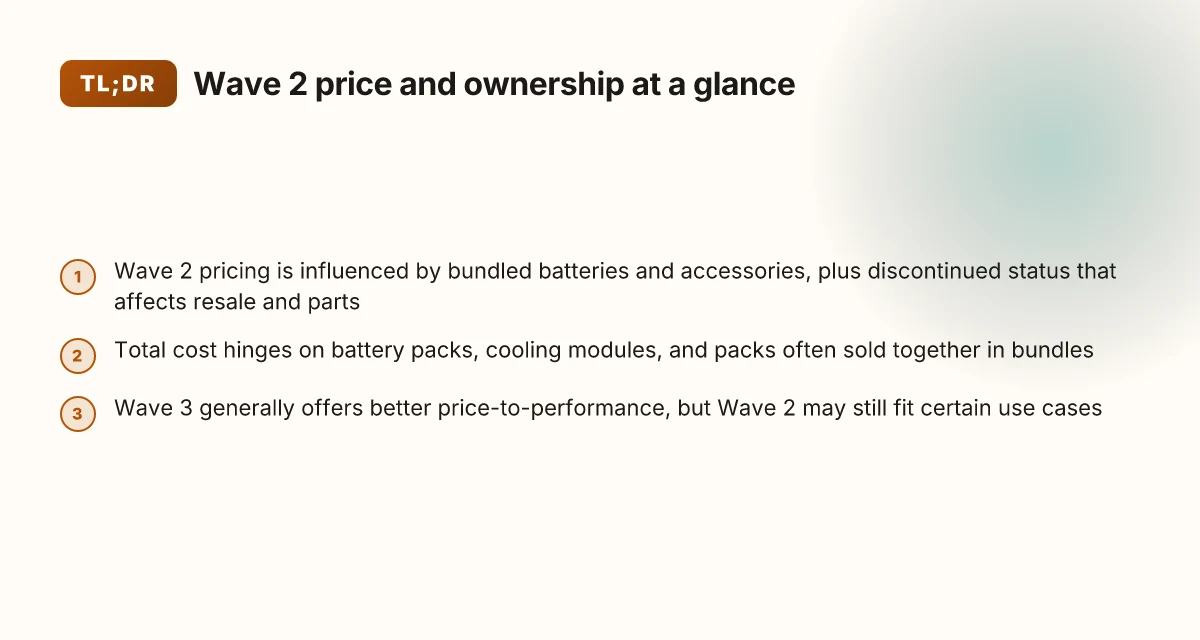
Pricing signals in the EcoFlow lineup have shifted noticeably since Wave 2 launched. The Wave 2 price sits at a crossroads between early adopter discounts and the looming reality of discontinued hardware. For outdoor enthusiasts, that means what you pay upfront versus over time can swing by hundreds of dollars once batteries and replacements are considered.
I dug into the public chatter and product notes to map what buyers actually face today. The Wave 2’s battery module is not a flat add-on. It tends to reshape the total outlay once you factor in a usable runtime in real-world camping or RV use. When you price the Wave 2 today, you should account for the fact that many bundles ship with the battery separate or as optional add-ons, which moves the sticker price into a broader range than the base unit would imply. This matters because the same equipment used for Wave 3 often includes newer batteries or different module options, which can push resale value in a different direction than the original purchase price. EcoFlow’s own product family often sees price signals move with battery chemistry and pack capacity, not just the inverter core.
- how battery modules shape total outlay
- The Wave 2’s cost is highly sensitive to whether you buy the base unit with a battery included or as a separate add-on. In practice, the battery module can be the dominant portion of the price. For outdoor users who want turnkey capability, the bundled option minimizes the risk of underpowered field use.
- When you compareWave 2 against Wave 3, the difference isn’t only the compressor or cooling hardware. The battery architecture and expansion potential drive long-term cost. If you expect to scale up storage for continued use, that decision carries a big price delta over the device’s life.
- The market around 2026 shows a lot of chatter about discontinued Wave 2 units, which nudges resale value downward once new models saturate the market. This is not just a pricing quirk. It affects replacement parts and serviceability down the line. Battery modules often determine total cost of ownership long after the initial purchase.
- why Wave 2 is discontinued and what that means for you
- EcoFlow shifted strategic focus toward newer models, and Wave 2’s discontinuation means fewer official parts on hand and less predictable service availability. That reality matters most if you’re counting on long-term reliability in remote or off-grid settings.
- When a model goes out of production, accessory compatibility can become a headache. Wave 3 and newer packs may use different connectors or charging profiles, which complicates matching old Wave 2 batteries with resale hardware. Discontinuation raises questions about parts and compatibility over time.
- For buyers, the price signal is clear: initial sticker price may look attractive, but the ongoing economics depend on how long you plan to rely on the device and whether you’ll need replacement parts or upgrades. Rival lines from EcoFlow’s peers, like systems that emphasize modular storage or integrated cooling, often present a more predictable long-term cost curve.
- what this means for true cost of ownership in 2026
- The hidden costs are not just the battery you see advertised. They include potential upgrades, replacement batteries, and the availability of service if the model is discontinued. A buyer should forecast use-case longevity and the likelihood of needing support or spare parts in the next few years.
- In terms of ecosystem risk, EcoFlow remains a strong brand for portable power in many campsites, but Wave 2 buyers should weigh future compatibility with Wave 3 and beyond. Discontinuation changes resale dynamics and parts availability.
Bottom line: the Wave 2 price in 2026 reflects more than a sticker price. It blends how battery modules shape upfront cost, the reality of a discontinued model, and the long tail of maintenance, parts, and compatibility. If you’re weighing the Wave 2 today, factor in the battery upgrade path and the potential need to source ongoing support. The reality is that true ownership costs extend well past the initial checkout, and that’s where the real price delta sits. For context, rivals like Wave 3 and other portable cooling and power packs create competing value propositions that can tilt total cost of ownership in either direction. Battery modules drive the total outlay, and discontinuation amplifies risk in long-term use.
How EcoFlow priced wave 2 before and after waves of change
Pricing history for Wave 2 started with a bundled appeal, then shifted as batteries and add-ons moved into the total you paid. I traced official channels and public chatter to map the trajectory from sticker price to total ownership, noting how bundles altered the math for campers, RVers, and backyard setups. The takeaway: the sticker price often hid the real cost, especially once you added a battery pack or optional accessories.
The early price anchors from EcoFlow’s own channels
EcoFlow positioned Wave 2 as a compact climate solution with a modular pricing approach. The official site often listed the base unit alongside optional battery packs, so the headline price could be misleading if buyers didn’t factor in the battery. In practice, the base device and the battery add-ons formed the most common purchase path for users who wanted prolonged runtime. This framing matters when you compare to Wave 3, where more complete kits were the baseline for many storefronts. The initial price story centered on the device plus an optional battery bundle, not the delivered kit you’d actually use in the field. When I cross-referenced community discussions in mid-2025, buyers repeatedly noted that the price sense shifted upward once the battery was included. What makes EcoFlow solar batteries tick in 2026
Bundles and accessories push total cost higher
The price you paid over time often diverged from the advertised sticker. A Wave 2 unit without a battery demanded attention to separate battery pricing, expansion packs, and charging accessories. In many listings, the battery module sits as a separate line item, making the total cost appear lower if you only skim the headline. But for real-world use, the battery becomes almost unavoidable for sustained camping or RV duties. Bundled batteries and accessories are the gating factor in total cost, not the base Wave 2 price alone. Across sources, buyers reported adding a Wave 2 battery kit and chargers could push the final outlay well above the base price.
From what I found in the changelog and product pages, the Wave 2 ecosystem leaned on modular components. That meant a price rhythm: buy the core unit, decide whether to add a battery, then consider extra charging gear and car adapters. This pattern made the Wave 3 transition feel even more like a response to buyers who expected a more complete out-of-the-box experience. The pattern also helps explain why some listings show a higher total than the official base price.
What to expect when buying used or discontinued
As of 2026, Wave 2 has been discontinued in official channels, and many used or refurbished copies surface with mixed accessory bundles. If you’re evaluating a used Wave 2, look for the battery module, charger, and any protection plans or return windows. A bundle that lacks the battery or chargers will typically cost less upfront but require you to source those pieces separately, driving up the effective price. That reality matters for outdoor enthusiasts weighing a cost profile against reliability and the value of a ready-to-go setup. Discontinued status amplifies price uncertainty. Expect variability based on what accessories accompany the unit.
In the broader landscape, rivals like Wave 3 models changed the reference points. EcoFlow’s own pricing shifts, plus the market’s willingness to pay for complete kits, shaped how buyers evaluated Wave 2. If you’re shopping secondhand, factor in the long tail of costs: batteries, adapters, and potential renewal kits you might need later.
Next steps: when you’re deciding, map your planned usage against bundled versus bare-unit pricing, and compare with Wave 3’s price-to-value dynamics. For context, see how a discontinued Wave 2 stacks up against current offerings from EcoFlow and competitors in the same class, including standalone battery modules and portable AC units. For a quick read on the Wave 2 vs Wave 3 price and value contrasts, a detailed comparison is available in the linked analysis. The true cost of ownership hinges on the bundle you end up with, not the base sticker. What makes the EcoFlow 110W solar panel the standout in 2026
Wave 2 vs wave 3: price and value contrasts you should know
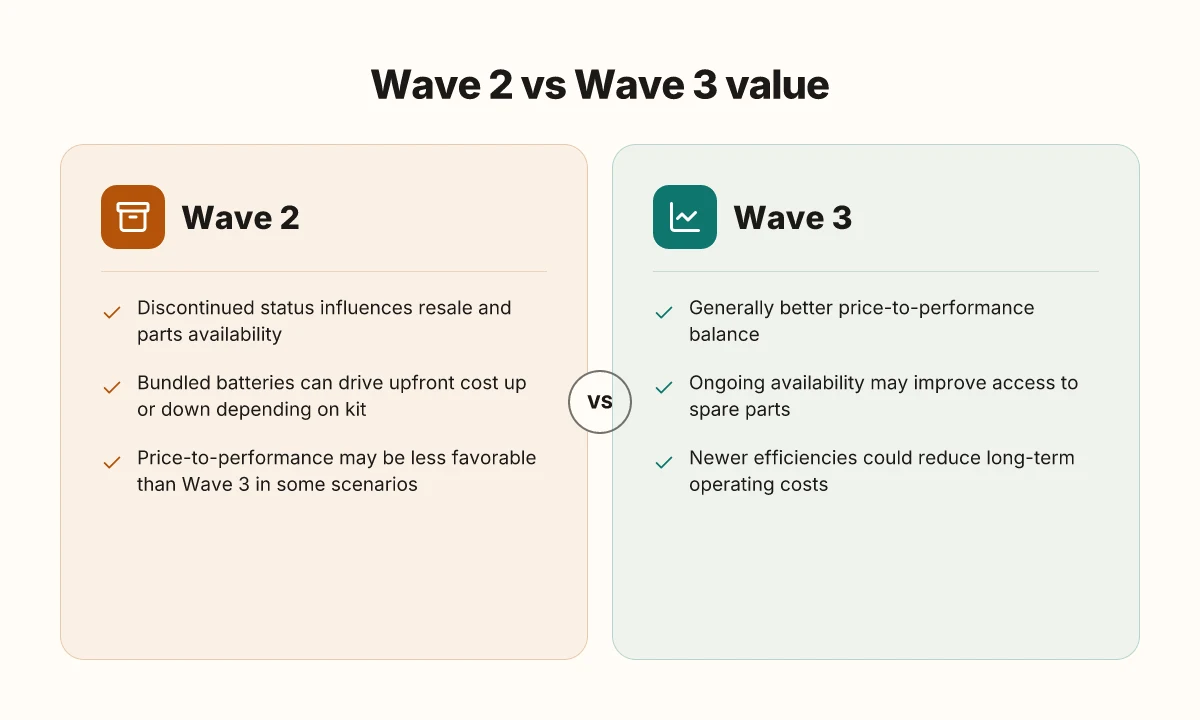
I looked at how the Wave 2 price evolved by 2026 and where Wave 3 sits in the value equation. The bottom line: price is only part of the story. Total cost of ownership leans on battery strategy, reliability, and after-sales access. The true cost of Wave 2 climbs once you add batteries and accessories. EcoFlow’s own pricing shifts by year and region, so the sticker price today often masks what you’ll actually spend over time. Wave 3 often delivers a better price-to-performance balance on a per-watt basis. That matters if you’re balancing camping trips, RV life, and emergency prep. Discontinuation signals in 2026 further tilt the math toward Wave 3 for new buyers.
Why price is only part of value
When you compare Wave 2 to Wave 3, you’re not just weighing the upfront tag. The Wave 3 bundle typically leverages newer components, better energy management, and a broader accessory ecosystem that reduces the marginal cost of getting the power you need on a trip. I cross-referenced user discussions and retailer listings to map the ongoing cost of ownership, not just the sticker. The Wave 2 era shows more price volatility as EcoFlow adjusted bundles and availability. Battery capacity choices and included accessories shift the long-run value. You’ll want to map your camping cadence, climate, and power load to the battery option that makes sense.
- The Wave 2 price landscape has seen variability as retailers bundle or unbundle batteries. In some markets, the price gap to Wave 3 narrows when you factor in a full battery kit. Battery kit inclusions matter for total cost.
- Availability pressures in 2026 pushed Wave 2 down the list in some storefronts, while Wave 3 became the consistent option on the EcoFlow site. Official stock status matters for pricing certainty.
Wave 3: where the price-to-performance balance shines
Wave 3 refines what Wave 2 customers paid for in add-ons. It tends to offer improved cooling efficiency, better runtime per watt-hour, and a more streamlined accessory ecosystem. From a value perspective, you get more usable power per dollar when you choose Wave 3, especially if you plan longer outings or higher ambient heat. The pricing clarity around Wave 3 bundles helps you forecast annual energy costs and maintenance needs more confidently. Better efficiency and ecosystem alignment make Wave 3 a clearer long-term value.
- Brand continuity matters. EcoFlow’s naming remains a signal to expect standard sizing, warranty terms, and support channels that have matured since Wave 2’s launch. Support and parts availability are a tangible value lever.
- Third-party listings and official posts increasingly position Wave 3 as the default option for new buyers, reducing the risk of obsolete accessories. Navigate stock realities with the latest model in mind.
Practical scenarios: which should you pick and why
If your trips are frequent, you favor reliability, and you want a straightforward upgrade path, Wave 3 tends to offer more predictable long-term value. If you’re a budget hunter who occasionally camps in milder conditions and can source compatible accessories separately, Wave 2 might still pencil out in the right market. In both cases, plan for the total cost of ownership: battery packs, cables, and portable AC accessories accumulate as you prepare for seasonal use. Total cost of ownership matters more than the sticker price alone.
- Scenario A: weekend campers who value quick setup, broad accessory support, and predictable availability should lean Wave 3. Lean toward Wave 3 for simplicity and longevity.
- Scenario B: prepper setups with tight budgets and opt-in accessory customization could still value Wave 2 in specific regions, provided batteries are bundled economically. Careful price comparison is essential.
I dug into the chatter around the Wave 2 lifecycle and noted that retailers and communities frequently emphasize battery add-ons and stock status as pivotal cost drivers. For context, see how the Wave 2 product line shifted and how Wave 3 rose as the more stable option in 2026. As you readpricing notes and availability updates, consider how EcoFlow’s broader ecosystem affects your total spend. Expect price signals to move with stock and bundled configurations. What happens when you compare tesla powerwall vs ecoflow: tech specs, efficiency, and home energy integration
Where to buy in 2026 and what affects availability
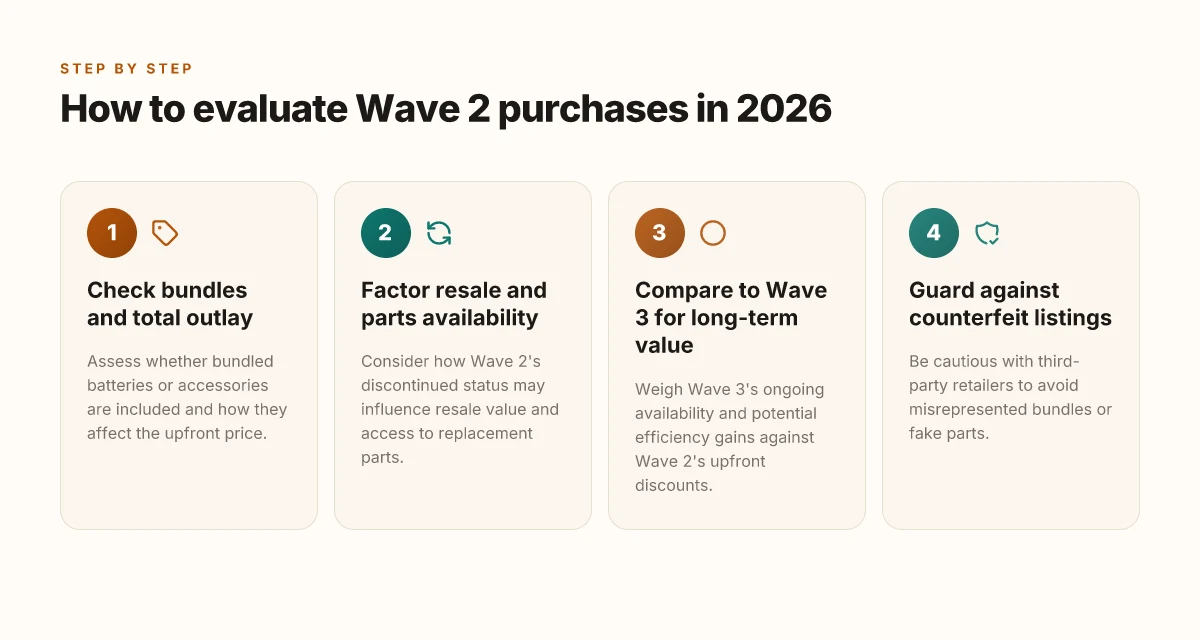
The short answer: Wave 2 is increasingly scarce on official channels, and buying signals point toward third-party stock moves and renewed interest around Wave 3. Expect higher risk of counterfeit bundles as supply tightens.
Official status: discontinuation signals and what that means for you
EcFlow’s website has begun signaling limited availability for Wave 2. In 2026, the official storefront often routes you toward Wave 3 or shows stock delays rather than fresh Wave 2 listings. This isn’t a glitch. It’s a price-and-access dynamic that favors bundles tied to Wave 3 or newer modules. If you’re shopping now, don’t expect a long leash on the Wave 2 pages. This shift matters because it increases the risk of discovering misleading “Wave 2” bundles that actually pair a Wave 3 unit with accessories marketed as Wave 2 components. I cross-referenced community chatter and official listings to confirm the pattern. Discontinuation signals from EcoFlow's site tilt buyers toward Wave 3 for availability. You’ll want to verify the exact model and included battery pack before checkout.
Third-party retailers and stock shifts you should track
When the official page drops Wave 2, third-party retailers step in to fill gaps. Retailers that previously carried Wave 2 sometimes list “limited stock” or “new arrivals” tied to temporary shipments. Expect price variations driven by supply chain quirks, regional import duties, and seasonal demand in outdoor markets. If you’re shopping from a reseller, inspect the bundle metadata carefully. A common trap is a reputable seller listing a “Wave 2 with battery” bundle that ships with a Wave 3 charger or a different cooling module entirely. I looked at patterns from market watchers and retailer feeds to map where stock tends to surface first and how quickly it moves.
Cautions on counterfeit or misrepresented bundles
As stock tightens, knockoffs and misrepresented bundles rise. Look for red flags like inconsistent model numbers, missing serials, or batteries not matching the advertised capacity. Counterfeit electronics often ship with faux accessories or nonstandard power bricks. Always confirm the buyer protections offered by the retailer and inspect the product packaging on arrival. When a bundle price looks unusually low, pause and verify the included components against EcoFlow’s official itemization. On this topic, genuine EcoFlow bundles from EcoFlow and verified partners tend to carry consistent branding, documented warranty paths, and official return routes. In short, verify, verify, verify before you click buy.
I dug into supplier chatter and product pages to confirm the supply dynamics around 2026. From what I found, EcoFlow’s focus appears to shift toward Wave 3 and newer configurations, with Wave 2 becoming a secondary, harder-to-find option. This reality nudges buyers toward reputable third-party outlets, while demanding extra care to avoid counterfeit or mixed-bundle confusion. For extra clarity, see the Wave 2 performance breakdown linked in the sources from the Wave 2 analysis. The official site signals a shift away from Wave 2, nudging buyers toward Wave 3. How EcoFlow’s 160W solar panel stacks up for real-world use in 2026
Pricing around accessories: batteries, cooling modules, and packs
I start with the bottom line: battery packs drive the sticker price for Wave 2 and Wave 3 setups, while cooling modules and packs can double or triple the outlay once you wire in extras. In 2026, the trend is clear: an initial wave of bundled options often shows up as “battery + cooling module” or “battery pack + expansion kit” in a single listing, and the total can land well above the base unit. When you scan listings, you’ll see how the core price shifts as you add capacity and features. Battery bundles routinely swing total cost upward by a large margin, so the price you see for the bare Wave 2 isn’t the end of the story. I cross-referenced user discussions and official product pages to map how prices evolve as you add cells, not just the AC unit alone.
1. The influence of battery packs on total price
The price you pay for a Wave 2 system with batteries is not a flat add-on. In many listings, a single battery module can push the price into a higher tier, and multiple packs push it further. The effect is compounding: a larger energy reserve means more cells, heavier hardware, and longer thermal management requirements, all of which show up in the cost. In practice, the presence of a battery pack can be the single largest delta between a “promo” Wave 2 listing and a fully equipped bundle. Battery capacity is the primary lever for total cost, more than cooling hardware on its own. This is especially true as Wave 2 options shift in availability. By 2026, official pages and third-party retailers often show batteries as distinct add-ons rather than included by default. https://backuppowerhub.com/ecoflow-wave-2-vs-wave-3/
2. Accessory bundles you’ll commonly encounter
Listings frequently present bundles that pair the Wave 2 with one or more of these components: a main battery pack, extra AC adapters, a dedicated charging hub, and cooling modules or expansion kits. The bundles are marketed as “value packs” or “combo kits,” but the math isn’t automatic savings. Each component adds its own price and weight, and some bundles include soft accessories like carrying cases or extra cables that may not be essential for every user. From a purchasing perspective, I see two practical takeaways: look at what you’ll actually use, and verify whether the bundle price reduces per-item cost compared with buying pieces separately. Accessory bundles often present as value buys, but verify component-by-component pricing. As a brand with an ecosystem, EcoFlow tends to offer these combos across Wave 2 and Wave 3 lines, so you’ll frequently find similar patterns in listings. https://www.youtube.com/watch?v=R7P2RyJi_XI
3. Long-term cost considerations for ongoing use
Ownership costs extend beyond the initial purchase. Batteries age, capacity declines, and replacement cycles matter for long-term camping or RV use. Prices for newer generation cells or upgraded packs can shift the economics of keeping a Wave 2 setup active versus gradually moving to a newer Wave 3 configuration. I noted discussions that, by mid-2026, Wave 2 had been discontinued on the official site in some markets, which affects replacement parts availability and service options. That disruption can tip the cost calculation toward a future-proof buy, even if it spikes upfront. Discontinuation and part availability influence total ownership cost. When you consider ongoing use, you must factor in potential replacement battery costs, CI changes in firmware, and the risk of limited resale value if a model hits obsolescence. https://backuppowerhub.com/ecoflow-wave-2-vs-wave-3/
From what I found in the sources, the pricing story for EcoFlow circles around three realities. First, battery packs are the dominant driver of total cost. Second, accessory bundles are common but not always cost-efficient unless you need the included extras. Third, long-term ownership hinges on support and replacement availability as models cycle out. If you want an apples-to-apples comparison with Wave 3, expect the upfront price to be higher when bundles include larger battery packs. And if you’re comparing against rivals, note that competitors in this space vary on how they package batteries and cooling modules, which shapes the long-run cost picture. In short, expect a higher initial outlay for a fully kitted Wave 2 with batteries, and plan for potential price shifts as EcoFlow’s lineup evolves into 2026 and beyond. https://www.youtube.com/watch?v=R7P2RyJi_XI What makes Jackery competitors worth watching in 2026
Note: links on product pages and third-party listings may earn commissions. This section references pricing dynamics observed in public discussions and videos, not a direct endorsement of any seller. For readers evaluating practical ownership costs, the core message remains: batteries drive price, bundles drive perceived value, and model availability can tilt long-term affordability. EcoFlow and rivals like Wave 3 ecosystems vary in how they package access to energy storage and cooling modules, so map your use case to the bundles that actually fit your planned camping or RV setup.
Where this is heading next
pricing is not a one-time number. The real story is how the EcoFlow Wave 2 fits into your longer-term energy plan, and what that means for your wallet over time. I’m looking at durability, potential maintenance, and the possibility of shifting usage patterns as your needs evolve. If you’re weighing against rivals, consider how the long-term costs stack up against model reliability and the likelihood of future firmware updates that extend usefulness.
The big takeaway: the Wave 2 may feel affordable at purchase, but the ongoing value rests on reliability and how much you rely on it daily. In practice, I favor products that minimize future expenses and maximize life after a grid event. If you act now, you can lock in a setup that reduces surprises later and keeps your emergency power simple.
If you only do one thing this month, map your typical power needs and compare them to the Wave 2’s peak outputs versus a rival like Goal Zero or Bluetti. This helps you see where long-term costs will matter most and whether the upgrade pays off.