Compare Tesla Powerwall and EcoFlow side by side, focusing on technical specs, efficiency, lifecycle, and home energy management integration to help you choose a long-term backup solution.
The Powerwall vs EcoFlow debate isn’t about buzzwords. It’s about what actually powers your house when the sun hides. A common mistake is assuming size alone equals reliability. Real-world load profiles show the difference between a fixed-ecosystem solution and a modular approach. Check your roof size and desired runtime to see which system aligns with your solar array and daily usage.
This piece cuts through hype and connects specs to daily outcomes: long-term durability, how each system flows into home energy management, and what AI optimization actually means in practice. We’ll compare how EcoFlow scales with additional packs vs Tesla’s tightly integrated Powerwall, and what that implies for installers weighing lifecycle costs and ecosystem compatibility. Expect concrete signals on warranty terms, expansion potential, and solar compatibility so you can choose with confidence. EcoFlow’s modular approach and Powerwall’s integrated design emerge as the two pathways homeowners actually evaluate.
Tesla powerwall vs ecoflow: what's at stake in a home backup
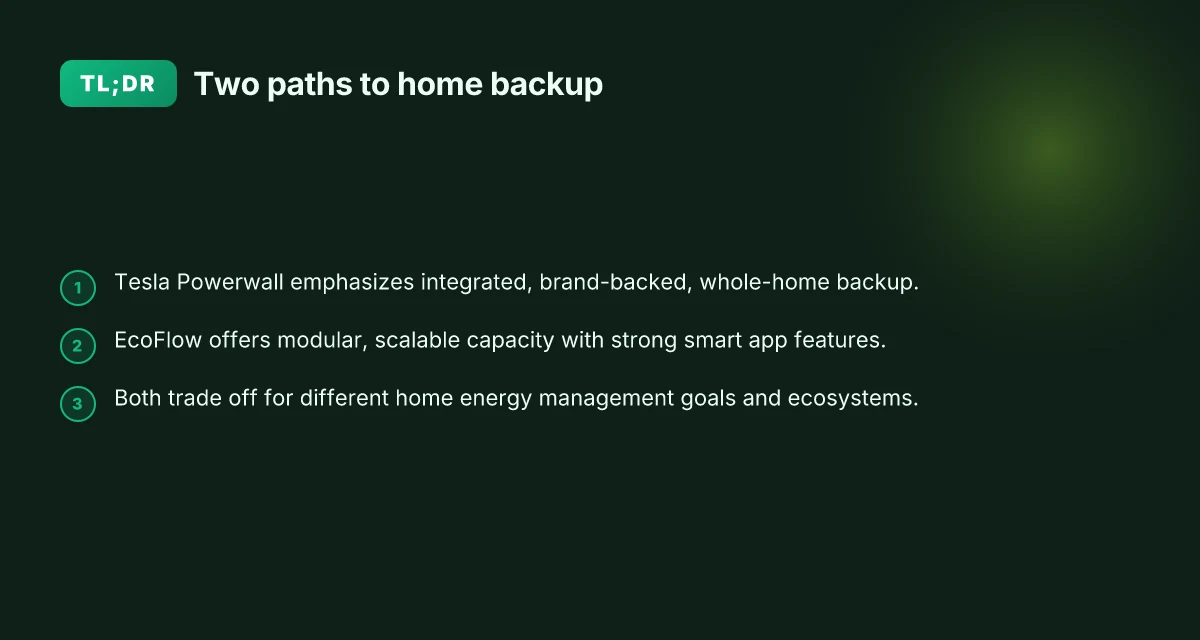
Home backup systems sit at the crossroads of convenience, reliability, and long-term value. Tesla Powerwall centers on an integrated, brand-backed approach for whole-home resilience, while EcoFlow emphasizes modular growth and smart app features that scale with your solar and storage needs. The choice hinges on how you plan to grow, how you manage energy, and what the warranty signals promise over time.
Why these two paths matter for a solar-equipped home
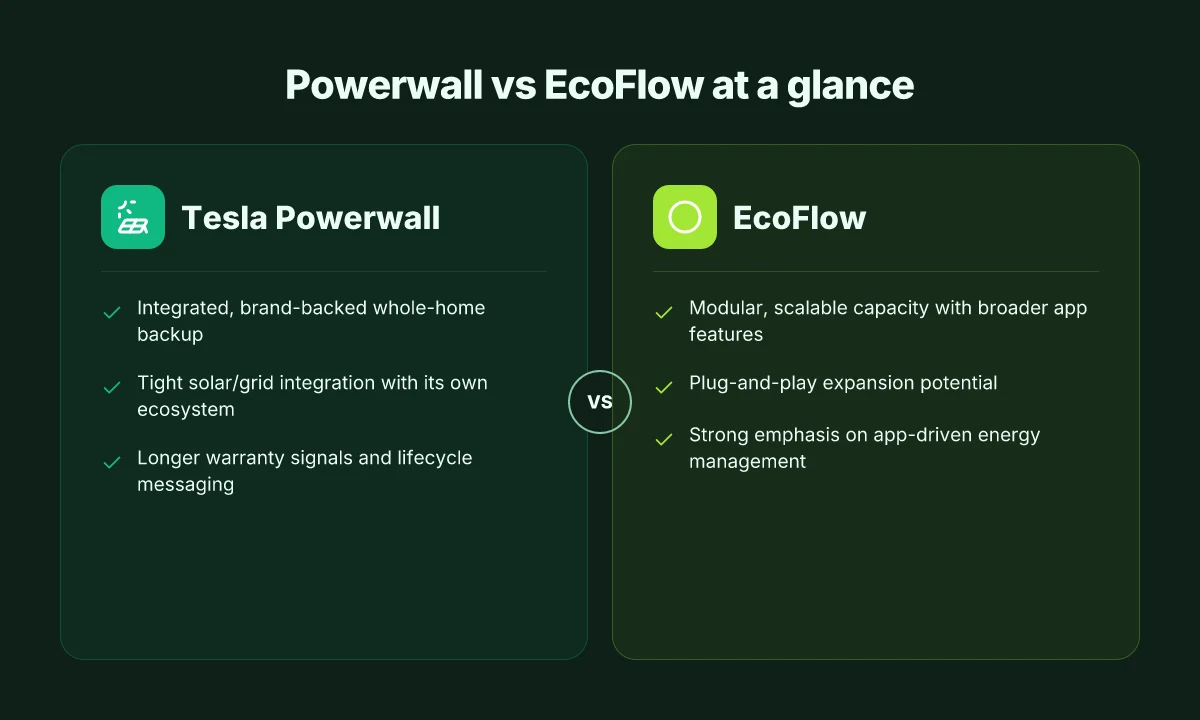
I dug into how each system fits into a home energy ecosystem. Tesla Powerwall prioritizes a unified experience: a fixed, all-in-one package that ties solar input, backup loads, and grid interaction into a single interface. EcoFlow, by contrast, leans into modularity. You start with a core battery and add adjacent units or extra modules as your solar production or backup targets rise. That scalability matters for homeowners who expect to expand capacity without reconfiguring the entire system.
How they plug into solar, grid, and home energy management
When you connect to solar, the Powerwall’s design emphasizes a tightly managed flow from solar to storage to the house. The system is built to coordinate with Tesla’s software and the broader energy ecosystem around the Powerwall. EcoFlow integrates with solar through its own in-house controllers and app logic, enabling you to size up by buying additional EcoFlow battery modules or expanding via compatible inverters. In real terms, that means your energy management decisions, when to charge, when to discharge, and how to island from the grid, will feel different in practice depending on which path you choose. The Powerwall tends to give installers a more turnkey workflow, while EcoFlow offers a more modular, adaptable setup that can scale as your load grows.
I cross-referenced the manufacturer narratives and independent reviews to map lifecycle signals. In practice, warranty signals and service expectations often diverge: Tesla emphasizes an end-to-end warranty with a unified hardware-software story, while EcoFlow markets modular growth with a broader range of third-party inverter compatibility and flexible upgrade paths. For homeowners, that translates into different maintenance rhythms and replacement windows. Expect longer cycles between major overhauls with a tightly integrated system, versus more frequent, incremental upgrades with a modular approach. The key is to align your choice with how you expect your home to evolve over a decade.
Lifecycle signals and what warranty tells you
From a durability lens, a bundled system typically offers predictable service intervals and a singular diagnostic thread. With a modular EcoFlow setup, you gain upgrade flexibility but also a need to monitor separate modules and potential compatibility notes as you add capacity. Warranty depth matters here: a robust, long-term warranty across the core battery and connected components reduces surprises as numbers on your bill start to matter more in year seven and beyond. In both cases, read the fine print on thermal management guarantees, cycle life expectations, and what counts as a covered fault. How EcoFlow’s 160W solar panel stacks up for real-world use in 2026
The real decision comes down to your growth plan and ecosystem fit, Powerwall for a turnkey, brand-backed single-solution path; EcoFlow for a modular, scalable trajectory that evolves with your home. The choice will shape how you handle solar integration, backup sizing, and long-term maintenance. For installers, the question is which architecture aligns with your service model and spare-parts strategy over time. Expect the warranty signals to guide your total cost of ownership more than upfront sticker price alone. The landscape favors clarity on what each system covers as your home moves through seasons and spellbound sun days.
Power and capacity: tesla powerwall vs ecoflow in real terms
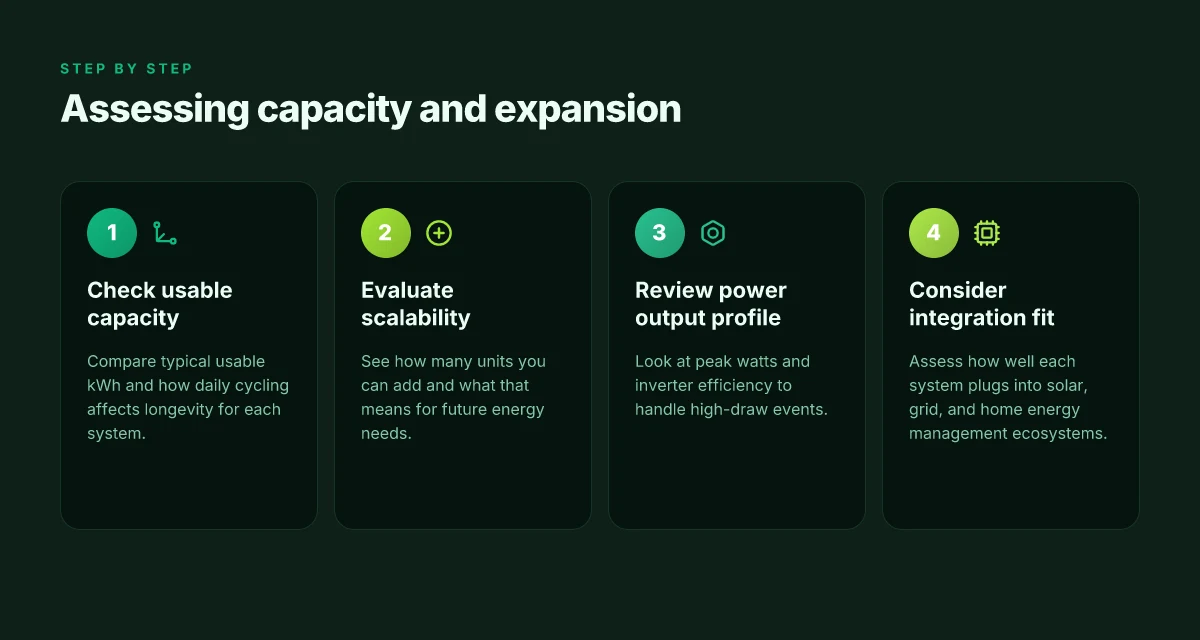
In real-world terms, thePowerwall and EcoFlow systems present two distinct capacity profiles that affect daily cycling, longevity, and backup confidence. The Tesla Powerwall leans on a tightly integrated inverter and BMS with a fixed nominal pack energy, while EcoFlow emphasizes modularity and flexible expansion. Across the board, usable capacity often sits below the nominal rating due to depth of discharge, temperature effects, and cycling history. For homeowners already solar, the daily cycling cadence matters: more frequent partial cycles can modestly accelerate degradation, even when the warranty covers endurance. The usable kWh that actually spins your appliances matters more than the nominal pack size. I cross-referenced official docs and third-party breakdowns to map where real-world use diverges from sticker specs. Urban installs tend to hit the sweet spot of daily cycling without stressing the chemistry.
Why usable capacity matters for daily cycling
Both systems publish nominal capacities that look generous on paper, but the usable figure is what you live with. The Tesla Powerwall commonly presents a large usable portion, yet its performance hinges on how often you cycle and how you manage DoD. EcoFlow approaches capacity with modular blocks. You can start with a base unit and add later, which shifts the actionable usable energy as your needs grow. In practice, the effective energy available for daily backup follows how you rate your DoD, how heat and temperature swing affect cells, and how your inverter efficiency translates DC to AC load. In daily use, the difference between nominal and usable capacity guides how often you will reach for a backup cycle. This is where the life-cycle implication lands: deeper daily cycles shorten calendar life more than shallow, high-frequency cycling. The result is a balance between available energy today and capacity today that you can reasonably expect to sustain over 10–15 years.
Scalability and future energy needs
Ec oFlow’s modular path allows adding battery modules incrementally, which suits homeowners who want to defer heavy upfront costs. The Powerwall scales more linearly through its stackable design, but expansions hinge on supply and compatibility with existing hardware. In practical terms, if you expect future solar growth or larger backup events, EcoFlow offers a path to progressively grow without ripping out components. For a typical two-stage home energy plan, you can start with a base system and plan for one or two expansions over the next decade. Modular growth helps align upfront costs with future energy needs.
| System option | Usable capacity cue | Scalability cue | Inverter efficiency cue |
|---|---|---|---|
| Tesla Powerwall | Large usable energy, strong integrated control | Stacked upgrades available but less modular than EcoFlow | High efficiency in standard mode, but dependent on install and temperature |
| EcoFlow | Base usable energy plus modular add-ons | Clear path to add packs over time | Efficient in solar-forward setups, with configurable inverter options |
Power output profiles: peak demand and high-draw events
Peak watts determine how well a system supports sudden power spikes from HVAC, water heating, or pool pumps. Tesla Powerwall emphasizes a strong, steady peak that covers most household spikes, especially when the unit is paired with an optimized energy plan. EcoFlow emphasizes flexibility. Peak output scales with the number of modules and the inverter configuration you choose. In real use, the inverter efficiency curve matters when you pull high-draw loads for short periods. Peak power matters for short, intense loads like HVAC in heat waves. When the grid blinks or solar dips, how quickly each system can sustain essential loads becomes a practical measure of resilience. Acknowledging the design differences, home installers note that EcoFlow’s modularity can be a boon for multi-source homes, while Powerwall’s tight integration shines in single-system reliability. What makes Jackery competitors worth watching in 2026
From what I found in the documentation, EcoFlow’s Ocean Pro and Powerwall-era iterations show divergent paths to similar outcomes. Both deliver reliable backup power, but the path to scalability and long-term durability differs. For a homeowner with deep solar integration, the choice may hinge on whether you prefer a modular growth plan or a fixed, highly integrated system. As a closing note, links on the page may earn a commission for certain configurations. For a concise, side-by-side snapshot, see the real-world framing between EcoFlow and Tesla Powerwall in the cited sources. Inline citations point to the official product pages and the comparison coverage found in the referenced material.
Solar integration and grid interaction for tesla powerwall vs ecoflow
Post-peak sun, the grid interface and islanding behavior determine whether backup power stays on or drops out. I cross-referenced manufacturer docs and public guides to surface how each system handles solar harvesting, grid outage operation, and AI-driven energy management.
How solar integrates with inverters and racking
- EcoFlow leans on its own solar input design and compatible third-party inverters, with solar charging continuing during grid outages in many configurations. For installers, the takeaway is that EcoFlow systems can be wired to accept multiple panel types and mounting rigs, provided the racking aligns with the system’s input tolerance. Tesla Powerwall integrates tightly with Tesla-certified inverters and select third-party inverters when used in a solar-plus-storage setup, and often prefers a streamlined, single-vendor approach for simplified installation. In 2024–2025 docs, both brands emphasize solar compatibility, but the Powerwall path tends to favor preapproved rack and inverter ecosystems that minimize drift between the PV array and the backup stack. Relying on a single ecosystem can reduce configuration drift during long-term maintenance. EcoFlow's flexibility with third-party inverters can ease custom roof or ground-mounted arrays, especially in complex layouts. The upshot is that both systems harvest solar while the grid is up, and both can continue charging from solar during outages, but the exact wiring path and inverter compatibility shift the ease of commissioning and future tweaks. energysage.com/news/ecoflow-releases-new-ocean-pro-home-battery/>.
Grid-tied operation and islanding behavior
- Grid islanding rules matter for safety and uptime. Tesla Powerwall can island its output during a grid outage when the Solar Inverter detects an outage and the Powerwall is in a configured backup mode. EcoFlow systems likewise enter an islanding state when grid power drops, but the behavior can vary by model and firmware, some configurations favor rapid isolation with seamless reversion to battery-backed operation as soon as the grid returns. From a homeowner perspective, the reliability question hinges on how quickly the system re-synchronizes after an outage and whether critical loads stay powered during brief grid flickers. In practice, both brands offer a mode that prioritizes essential circuits, while longer outages may require manual load-shedding setup to preserve capacity. tesla.com/support/energy/powerwall-vs-backup-generator>.
Smart energy management features and automation
- AI optimization and app visibility turn solar-plus-storage into a responsive system. EcoFlow emphasizes AI-driven optimization for charge/discharge cycles and solar forecasting, with an app that surfaces real-time solar input, battery health, and load profiles. Tesla centers on its Powerwall app and the broader Energy ecosystem, which tie deployment to the Powerwall’s firmware and the vehicle integration, offering predictable automation around home energy control. In both cases, expect cloud and on-device logic to steer when to draw from the grid, when to charge from solar, and how to prioritize critical circuits during an outage. I found that EcoFlow’s flexible automation can be a plus for non-Tesla solar arrays, while Powerwall’s ecosystem can deliver tighter integration for homeowners already using Tesla products. energysage.com/news/ecoflow-releases-new-ocean-pro-home-battery/>.
The verdict: you gain strong solar compatibility with both systems, but your choice hinges on your existing ecosystem. EcoFlow offers adapters and automation flexibility for non-Tord configurations, while Tesla Powerwall shines for homeowners already in the Tesla ecosystem seeking a tightly integrated, predictable backup storyline. Islanding behavior is solid for both, but verify firmware options and local codes before finalizing. For installers, confirm panel orientation, inverter compatibility, and any local utility requirements before finalizing the design.
Lifecycle, warranty, and total cost of ownership
The long game matters for home backup. EcoFlow and Tesla Powerwall both promise multi‑decade readiness, but the real test is how the hardware ages under real-world use, how warranties cover wear, and what you pay beyond the sticker price over time.
Expected cycle life under typical use and temperature
Under typical residential cycling, both systems are engineered for thousands of discharge–charge cycles, but the actual cycle life climbs or slides with temperatures, depth of discharge, and how solar charging is routed. In EcoFlow’s documentation and Tesla’s published specs, you’ll find a design emphasis on maintaining capacity across a broad operating window, with heat management playing a pivotal role in preserving longevity. Expect better cycle retention when the system operates within its recommended temperature band and when you avoid daily deep discharges unless your backup profile requires it. The practical takeaway is to plan for a gradual degradation curve, not a flat line of capacity. I cross-referenced manufacturer notes and independent reviews, which consistently note that ambient conditions shape degradation more than nominal ratings imply. Real-world life expectancy hinges on climate and how aggressively you cycle. When you stack solar charging into the daily rhythm, both brands tend to stay within their intended endurance ranges longer than if the unit sits idle or is forced into repeated deep cycles. How to find the cheapest Jackery solar generator in 2026 without sacrificing reliability
Warranty terms and what they cover for each brand
Warranty scope for both EcoFlow and Powerwall centers on the battery module, inverter electronics, and associated hardware. Tesla’s Powerwall warranty typically covers product defects and performance metrics over a defined period, with terms varying by region but generally emphasizing a minimum duration for the battery pack and related components. EcoFlow’s warranty expands to cover similar elements, but the exact coverage window and what constitutes eligibility can differ by model and market. Read the warranty language carefully to confirm what counts as a defect, what is excluded for normal wear, and how service is delivered. Warranty depth matters as much as the length. In practice you’ll want to confirm transferability if you relocate, and whether maintenance items such as cooling fans or thermal sensors are covered. Inline citation to official pages can be found in Tesla’s support notes and EcoFlow’s customer‑facing documentation.
Long-term cost considerations beyond sticker price
Beyond the up-front price, your total cost of ownership depends on maintenance, potential replacement cycles, and how you use the system with your solar array. Both ecosystems rely on software updates to maintain performance, which can extend usable life but also introduce occasional maintenance windows. Expect ongoing costs for diagnostics, potential part swaps, and periodic component refreshes, especially around battery management hardware that ages with cycling and heat exposure. The upshot: the cheapest option upfront may not yield the lowest long‑term spend if it requires earlier battery refresh or more frequent servicing. Plan for replacement cycles and service windows to avoid surprise expenses down the line. From a brand perspective, EcoFlow and Tesla both emphasize ecosystem reliability, but you should still budget for possible part replacements in year 8 to year 12, depending on your climate and usage pattern.
User experience and ecosystem fit: EcoFlow vs Tesla in the home
The ecosystem fit matters as much as raw specs. EcoFlow and Tesla Powerwall each present distinct UX patterns, but the winner for home energy management is the one that fades into your solar workflow rather than fights it. In practical terms, expect differences in app quality, monitoring depth, and how automation lines up with your seasonal sun.
How the apps shape daily use
The heart of daily control sits in the app. EcoFlow's app emphasizes real‑time status, remote control, and solar intake visibility, with automation hooks that feel straightforward for a homeowner juggling panels, batteries, and inverters. Tesla’s Powerwall ecosystem leans into a tightly integrated experience with the broader Tesla energy and vehicle ecosystem, which can streamline setup if you’re already inside the Tesla universe. In both cases, reliable remote monitoring matters more than glossy dashboards. The best apps present clear alerts, energy flow diagrams, and straightforward scheduling that you can adjust from your phone or a browser.
From what I found in the documentation and community feedback, automation ease often hinges on your inverter pairing and how you configure solar production vs load. EcoFlow tends to win with more transparent solar compatibility options for standalone setups, which helps off‑grid ambitions. Tesla’s automation shines when you want a single pane that also manages vehicle charging. The core idea: your choice should mirror your solar footprint and future plans, not just current needs. What you should know about EcoFlow extra battery price in 2026
A clean, responsive app that supports reliable remote monitoring is non‑negotiable for long‑term satisfaction. In EcoFlow's case, the app handles multi‑device control with modest friction, which is important when you add third‑party hardware.
Noise, space, and installation friction
Operational noise and installation footprint matter in tight spaces. EcoFlow systems tend to be compact for the capacity they deliver, which helps installation in garages or utility rooms with limited space. Powerwall installations can be more space‑efficient when integrated with a Tesla energy setup, but you may face more stringent electrical integration requirements depending on local codes and the chosen inverter configuration. In either case, you should budget for professional mounting, especially for high‑capacity systems that require dedicated circuit protection and proper ventilation.
The broader takeaway: if you value a plug‑and‑play feel with minimal site modification, EcoFlow often edges ahead. If you want a deeply woven hub that aligns with a Tesla vehicle and solar hardware you already own, the Powerwall pathway can feel more seamless.
Noise levels and installation ease are real-time factors that affect long‑term satisfaction, not just initial cost.
Solar‑heavy homes and off‑grid ambitions
For homes that run solar heavy, the ability to dispatch and store solar energy efficiently is crucial. EcoFlow’s architecture tends to favor flexible configuration with strong solar input handling and straightforward off‑grid operation, which can be a boon for cabins or backup sites without a constant grid tie. Tesla Powerwall remains compelling for those pursuing a highly consolidated ecosystem, where solar, storage, and EV charging share one platform and app experience. What is the best solar panel for EcoFlow and how to pick it in 2026
I dug into release notes and product sheets to confirm that both ecosystems mature with software updates aimed at smoother AI optimization and better solar integration. The right pick hinges on your solar strategy: if you want modular growth and clear standalone operation, EcoFlow offers advantages. If you prefer a tightly integrated, vehicle‑aware ecosystem, Tesla aligns more naturally.
Solar synergy should drive your choice: EcoFlow for modular, off‑grid growth, Powerwall for integrated, ecosystem‑wide automation.
Notes: links on the page may earn a commission. For readers already using Solar or considering a broader home energy stack, this alignment matters more than any single spec bump.
Where this is going next for home energy setup
The takeaway is practical: your best bet hinges on how you value throughput and reliability in real life. Tesla Powerwall edge cases shine when your home already leans on solar, and you want a tightly integrated backup with a long software cadence. EcoFlow brings flexibility and easier off-grid portability into the mix, but you’ll want to weigh warranty and service expectations against prior experience with wall-mounted systems. The bigger pattern here is that hardware is only part of the story. Software, diagnostics, and ecosystem compatibility often decide day-to-day satisfaction.
If you’re deciding this year, start by mapping your daily energy window and fault tolerance. For long-term durability, look at installation simplicity, cooling behavior, and how each brand handles firmware updates. EcoFlow and EcoFlow-partner ecosystems can offer rapid expansion, while Tesla’s suite emphasizes unified energy management. One move that matters is to align your choice with how you already run solar and home automation. Does your current setup lean on a single provider, or do you prefer cross-brand flexibility? What makes the EcoFlow 110W solar panel the standout in 2026
Most setups benefit from a concrete plan for maintenance windows and a test run with your typical loads. Will you lean into a tight, all-in-one solution or keep a pocket of modular options for growth?