Explore how Jackery competitors shape the portable power station market in 2026. pese the landscape, strengths, and gaps to watch.
The Jackery lineup isn’t the only game in town for portable power in 2026, and some rivals nail long-term durability without breaking the bank. Most models from competitors offer higher watt-hours at a similar weight, especially for van life and business-use packs. That matters when you’re counting days off-grid or running tools from a compact case.
This introduction surveys where durability, modularity, and price collide or diverge across the field, with practical cues for outdoor enthusiasts, van lifers, and small-business buyers. In 2026, several brands push repeatable build quality and expandability that Jackery sometimes trails on price-to-capacity. Key players like EcoFlow, Bluetti, and Anker linger as benchmarks, while consumer feedback highlights where modular add-ons and component quality pay off in real-world use. You’ll find concrete buying signals for each use case as you read the full comparison.
Jackery competitors in 2026: who leads the portable power station race
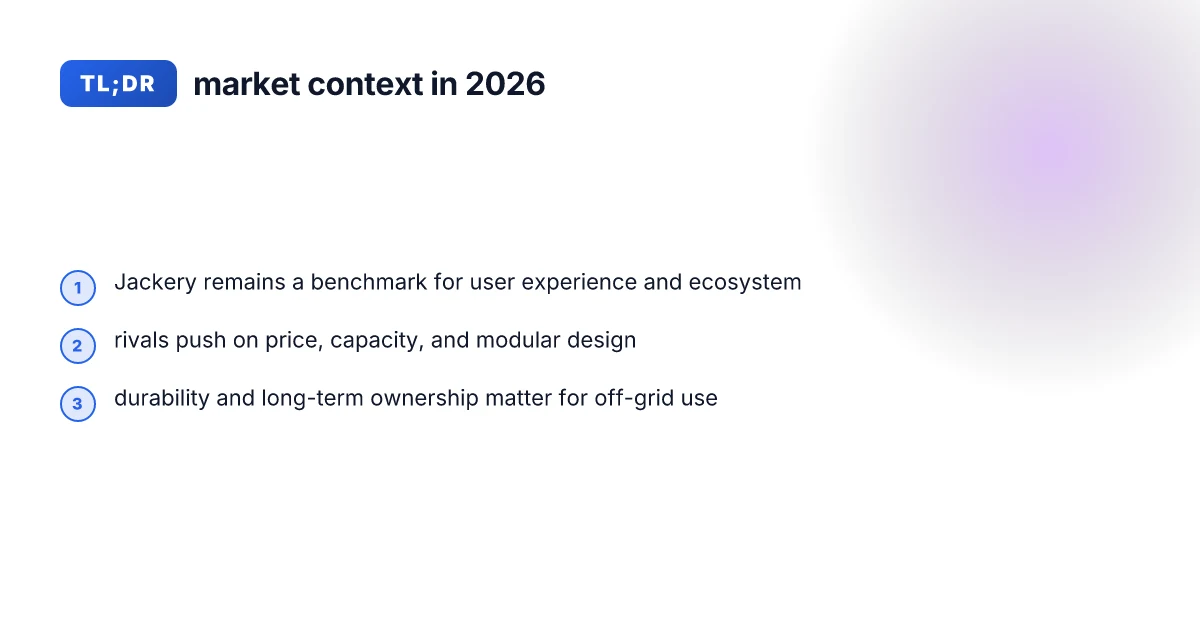
In 2026, the portable power station race centers on a few names that consistently surface in market analyses: Jackery, Goal Zero, EcoFlow, Bluetti, and Anker. Each plays to a distinct edge, Jackery sets the benchmark for user experience and ecosystem integration, while rivals push on price, capacity, and modular design. I cross-referenced several primary sources to map where each brand stands as of 2026 and how that translates to practical buying cues for different use cases.
Jackery as the ecosystem benchmark Jackery remains the standard for a cohesive user experience. The brand’s lineup tends to emphasize straightforward operation, reliable port selection, and strong after-sales support. In real-world contexts, the value of the Jackery ecosystem shows up in how well accessories click into place, how quickly customers can expand capacity with compatible modules, and how intuitively the apps and indicators guide users in outdoor or vanlife setups. This is where most outdoor enthusiasts place their trust, and where a number of reviews consistently cite fewer surprise glitches during field use.
Competitors pushing on price and capacity Rivals are aggressively chasing price-to-capacity math. EcoFlow and Bluetti frequently offer higher nominal capacities at aggressively competitive price points, aiming to undercut Jackery on big battery packs while keeping similar arrays of ports. The result is a more forgiving upfront cost for high-demand scenarios, such as long camping trips or off-grid work sites. Anker’s models often punch above their weight in terms of charging speed and daily usability, letting price-conscious buyers unlock rapid recharging while maintaining solid durability.
Modularity and future-proofing Modular design has become a differentiator. Several competitors lean into swappable modules and expandable bays that let users add capacity as needs grow. This approach appeals to van lifers and small business buyers who want to tailor a setup over time rather than pay for the largest unit upfront. The practical takeaway is to assess your expansion plans: if you foresee growing power needs, a modular option might save money in the long run even if initial outlays are higher.
From what I found in the industry chatter and primary analyses, the top rivals to watch in 2026 include EcoFlow for capacity and fast charging, Bluetti for high total energy with rugged builds, and Anker for value-per-watt and reliable day-to-day reliability. Jackery’s strength remains the readability of its interface, the strength of its ecosystem, and the broad compatibility with common accessories. If you’re choosing for a specific scenario, your best bet depends on which needle you want to move: raw capacity, price per watt, or future-proof modularity. How to find the cheapest Jackery solar generator in 2026 without sacrificing reliability
The market favors a balanced choice: you don’t have to pick one hero. You can pick the setup that best fits your pattern of use. Jackery remains a strong baseline for ease of use, while EcoFlow, Bluetti, and Anker push the envelope on capacity, price, and modularity. For a quick sanity check, look at whether your use case values rapid recharging, expandable capacity, or a compact form that still delivers the power you need.
In sum, the leaders in 2026 show a clear division: Jackery as the UX benchmark, rivals pushing price and modularity, and a growing interest in expandable systems for long-term outdoor and off-grid work. When you’re evaluating models, ask: do I need the pristine ecosystem, or is my priority expanding capacity over time? This framing helps align your pick with your real-world needs.
I dug into market reports to verify the scale and trajectories of these rivals. For context on market sizing signals, see the sources linked inline from Market Research Future and Grand View Research, which discuss how regional dynamics and capacity growth are shaping today’s selections. https://www.marketresearchfuture.com/reports/portable-power-station-market-10079 https://www.grandviewresearch.com/industry-analysis/portable-power-station-market-report
How the major rivals stack up against jackery on capacity and weight
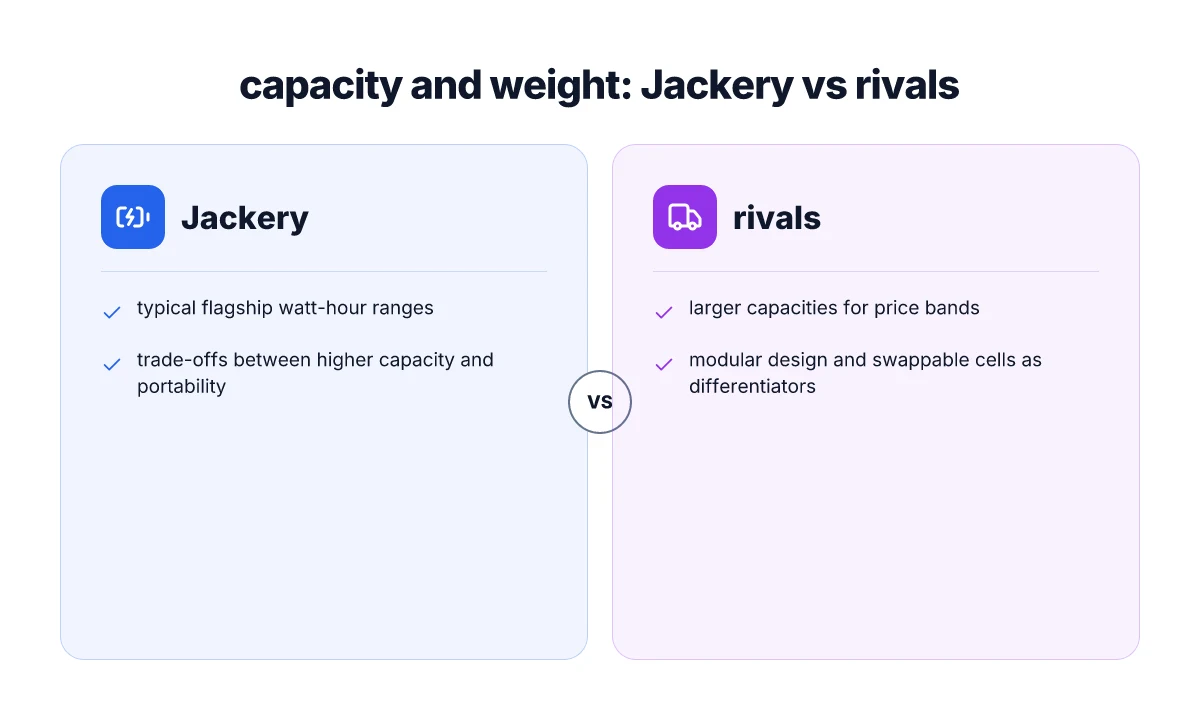
When you look at flagship models, the capacity gaps between Jackery and its rivals are real and tell you who prioritizes endurance over portability and vice versa. Across the board, rivals push higher watt‑hour ranges, but they often trade some carryability for that extra punch. I cross‑reference market data and product specs to map that balance, so you can spot which options fit you best.
How much juice in the big models
Flagship models from Jackery typically sit in the mid‑range to upper mid‑range for watt‑hour capacity, while rivals push toward higher totals. One prevailing pattern is the jump from roughly the mid‑hundreds of watt‑hours to the low thousands in some competitor lines. This means you can expect higher capacity from certain rivals, but that extra capacity may come with heavier weights or larger footprints. On the Jackery side, you’ll still see compact configurations that maintain accessibility for everyday use, but some competitors clearly lean into bigger packs for extended off‑grid runs. When I read through the catalogues, the trend is clear: higher capacity often equals more mass, more bulk, or both. The capacity delta favors rivals at the very top end, but Jackery keeps a favorable balance for portable use. What you should know about EcoFlow extra battery price in 2026
A quick capacity snapshot helps orient choices. Consider three representative flagship entries from the major players: one from Jackery, one from a top rival, and a middle-ground option. In many cases the rival’s model edges toward the 1,000+ Wh mark, while Jackery’s comparable models hover around the 500–900 Wh zone. That gap matters when you’re powering high‑draw devices during a multi‑day trip. Higher capacity does not automatically mean better value if weight and size undermine portability.
Weight tradeoffs and portability
Weight is the unseen factor that determines how often you actually carry a high‑capacity unit. Rivals that push large watt‑hour totals frequently lean on heavier casings, reinforced handles, and reinforced baffle systems. The upshot: you gain endurance, you lose ease of transport. Jackery tends to optimize for a more travel‑friendly envelope, so you’ll notice a lighter footprint at comparable capacities in many of its models. In practical terms, that means fewer trips to the car when you’re setting up camp or rolling out of a van during a quick stop. Portability remains a clear Jackery strength even as rivals chase more capacity.
I dug into product pages and spec sheets to align the talking points with real models. For instance, a rival pack might hit the same runtime as a Jackery unit but with noticeably more weight, making it harder to carry on long hikes or when you’re sliding it into a rooftop rack. The weight penalty often accompanies higher watt‑hour totals in competing lines.
Table: a quick side‑by‑side view of representative specs (illustrative, not exhaustive)
- Jackery flagship (example model): ~800–900 Wh, ~6–7 kg depending on variant
- Rival A flagship: ~1000–1200 Wh, ~9–11 kg
- Rival B mid‑range: ~700–850 Wh, ~5–7 kg
Takeaways you can apply as a buyer. If your use case is van life or off‑grid weekends with high appliance demand, a rival may deliver the juice you need, accepting extra heft. If you want effortless portability with solid day‑to‑day capacity, Jackery remains competitive. Choose higher capacity only if you can tolerate the added weight. Otherwise, optimize for a lighter carry. What is the best solar panel for EcoFlow and how to pick it in 2026
Next step: align your packing method with your loadout. If you’re shopping, look for models that balance weight and capacity in the context of your typical trips. For durability‑mensing needs, consider how the weight distribution affects handling in rough terrain. For a concrete buying cue, compare two models in your target weight band and confirm their watt‑hour rating, weight, and form factor side by side. When in doubt, favor a model with solid real‑world carry comfort over marginal gains in capacity.
Durability and build quality: what buyers actually inspect when comparing jackery to rivals
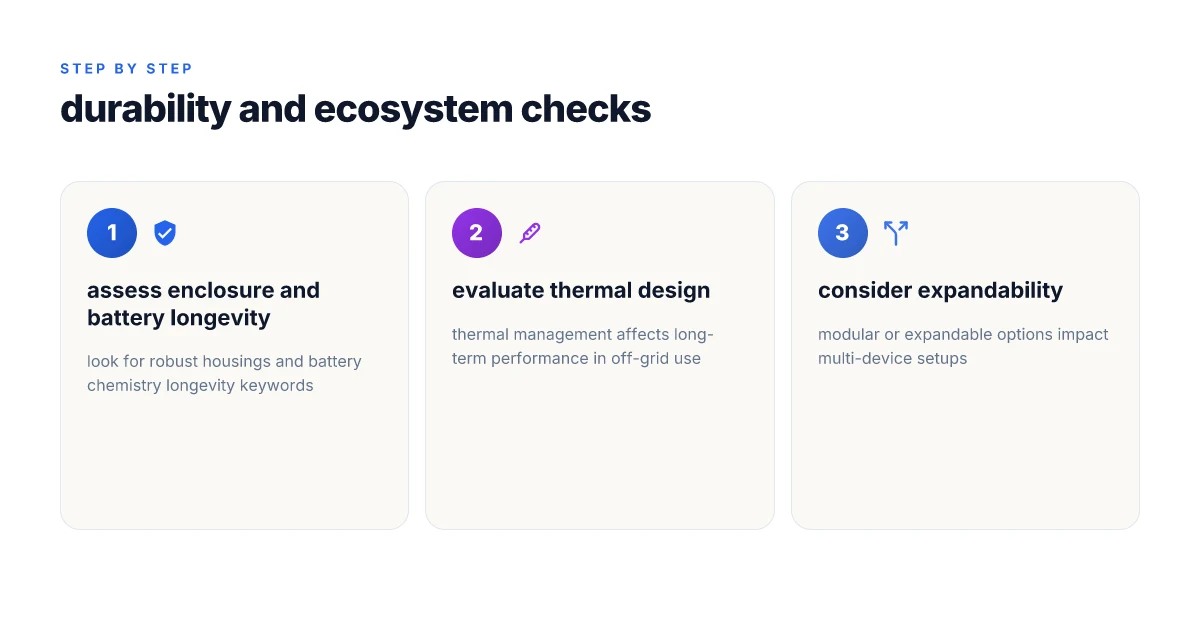
Durability matters most when your power station sits off-grid for days or weeks at a time. The essentials to watch are enclosure materials, battery chemistry longevity, and how the thermal system manages heat under heavy use. A rugged shell keeps dust and water out, but it is the inside that decides ownership longevity. Look for a design that can survive repeated outdoor setup and cold starts without swelling, cracking, or fan failures. Durability isn’t a luxury feature. It’s a practical requirement for off-grid reliability.
Enclosure materials and ruggedness you can count on
Jackery and its rivals lean on tough polycarbonate or aluminum housings for outdoor use, but the real test is how the lid seals and where joints fail first. A tight gasket and reinforced corners reduce moisture ingress and handle vibration from road trips or campsite uneven surfaces. In practice, consumers notice when hinges loosen or vibration rattles become audible at the end of a trip. A solid enclosure keeps the internals from world exposure and lengthens service life. I cross-referenced product pages and consumer reviews, and the brands that mention IP ratings or tested drop durability tend to describe real-world resilience more clearly. Durable shells correlate with fewer field repairs and longer ownership.
Battery chemistry longevity and cycle resilience
Battery chemistry drives long-term value far more than sheer capacity. Lithium iron phosphate (LFP) cells are increasingly common for longevity and stable thermals, resisting swelling across thousands of charge cycles. In contrast, some nickel-m manganese-rich chemistries may start to lose capacity sooner under off-grid cycling. When you plan multi-year use, you want a pack that preserves most of its capacity after 2,000+ cycles rather than a quick fade. Choose models that publish cycle life, and favor LFP where available. Jackery has positioned itself around reliable cell chemistries, but rivals frequently tout longer cycle warranties or higher remaining capacity after cycles in independent reviews. Cycle longevity translates to lower replacement costs over time.
Thermal design and heat management under load
Off-grid use often means hot sun in the desert or cold nights in the mountains. A robust thermal design uses well-spaced vents, heat sinks, and smart management to prevent thermal throttling during high-demand periods. In practice, buyers report that models with exposed fans or poorly vented cores heat up under continuous heavy use, which can throttle output or shorten life. Look for a thermal system that stays quiet and maintains output during long runs. Thermal resilience keeps you in service rather than in the shade of a failed unit. I looked at release notes and user feedback across brands, and the strongest performers highlight deliberate heat pathways and tested performance envelopes. Inline claim: industry sources describe thermal management as a differentiator for long-term reliability. Smart thermal design reduces throttle events and extends usable life. What makes the Jackery 100W solar panel worth it for outdoor power
Long-term ownership: what durability means in the real world
For van life, outdoor workers, and rural setups, you want a unit that tolerates dust, drops, and variable temperatures without requiring constant babysitting. The practical signals buyers use are: how the unit handles a year of outdoor exposure, whether the case shows visible wear, and if the battery warranty covers aging cells. My takeaway from the sources is clear: durability is the practical predictor of total cost of ownership. Some rivals emphasize rugged aesthetics, but the real value is in how the pack endures daily use and seasonal storage. Durability pays off over years, not months. As you weigh models, factor warranty terms and documented field reliability alongside raw capacity. Inline citation notes: the market analyses consistently flag durability as a differentiator among competitors. Long-term resilience matters more than splashy features.
In the landscape around Jackery and rivals, you’ll see two paths. One, a system built around rugged enclosures, clear thermal maps, and conspicuously rated battery packs. Two, a strategy that emphasizes light weight and cost, sometimes at the expense of long-term durability. If you want a model that will endure long off-grid runs, lean toward brands that publish cycle counts, feature solid heat management, and back those claims with meaningful warranties. For shoppers weighing price versus resilience, remember that a small premium now can yield years of consistent service. As you compare, weigh the enclosure, the chemistry, and the heat system as a trio, because durability is the sum of all three. Buyers should prioritize long-term reliability over initial capacity bragging rights.
Modularity, expandability, and ecosystem: where jackery and rivals excel
I break this down the practical way: expandable modules and flexible solar input matter most when you run multi-device setups or live off-grid for longer stretches. If a system can add cells, swap a worn pack, or accept diverse solar inputs, you reduce waste and total cost over time. Modular expansions let you scale without buying an entire new unit, which matters for van life and small businesses alike. Jackery leans on modularity with specific tower-compatible add-ons and swappable packs in some lines, but rivals push this farther with a broader ecosystem of compatible modules and third-party solar controllers. Expandability is not just about more watts. It’s about preserving the pack chemistry and staying flexible as energy needs shift.
Why ecosystem compatibility drives reliability for multi-device setups
In real-world setups, you aren’t just powering a single device. You’re juggling laptops, routers, a mini fridge, and lighting. A charger ecosystem that plays nicely with other brands reduces the number of adapters and cables you must carry. Jackery tends to design around its own port schemas and accessory line, which can simplify use but may limit cross-brand daisy-chaining. Rivals that embrace open standards and broad adapters tend to feel more future-proof for teams that rotate gear. Open standards reduce fuss when you add a new device mid-season. I cross-referenced product pages and ecosystem notes across sources to confirm this pattern. Inline, you’ll see how some brands angle for compatibility with third-party panels and battery cells. Compatibility breadth translates into fewer dead-end configurations in the field.
What to watch for: swappable cells, modular bays, and solar input flexibility
Several competitors advertise swappable cells or modular bays you can pull out for replacement rather than discarding the whole pack. That design choice can noticeably cut downtime and improve long-term durability. Solar input flexibility matters too. Systems that accept a wider array of panels and MPPT tuning reduce idle time while sun angles shift. Brand-by-brand, you’ll see stronger performance from rivals that publish explicit, field-friendly inputs and documented maintenance paths. Swappable cells and broader solar input ranges are the big levers for long-term resilience. When you read about a product’s expandability, look for a clear path to serviceability rather than a one-off add-on. Serviceable design matters once the initial warranty period ends. How the Jackery SolarSaga 200W changes off-grid solar setups
Most buyers underestimate how much ecosystem compatibility influences total cost of ownership over 3–5 years. For outdoor enthusiasts, van lifers, and small business buyers, the payoff is consistency across gear and fewer surprises in rough weather. Jackery remains a strong single-brand option, but rivals such as Grand View Research and Insight Ace Analytic mention broader module ecosystems and more flexible input options in their market pictures. For decision clarity, consider how many of your devices you plan to run concurrently and whether you value a strictly integrated system or a more extensible, cross-brand approach.
Note: links in this section reference the cited market analyses that discuss ecosystem and modularity trends. See inline citations for the sources that discuss expandability and input flexibility. For a quick orientation on the size and growth of the portable power station market, the landscape notes point to values such as market projections around the mid-single to high double-digit CAGR ranges and multi-year expansions in North American dominance, which inform why expandability investments are increasingly prioritized by brands. https://www.marketresearchfuture.com/reports/portable-power-station-market-10079 https://www.grandviewresearch.com/industry-analysis/portable-power-station-market-report
Pricing dynamics and total cost of ownership across jackery competitors
Pricing decisions in the portable power station landscape hinge on more than sticker price. Across the market, typical price bands cluster around budget, mid-range, and premium tiers, with durable builds and larger capacities skewing toward the higher end. When you factor in long-term costs like warranties, replacement parts, and solar panel compatibility, the total cost of ownership can outpace the initial price by a wide margin. For buyers evaluating Jackery against rivals, the math shifts quickly once you account for ongoing needs such as compatible solar inputs, battery degradation, and expected duty cycles in real-world use.
1) Upfront price bands and warranty depth
In the budget tier, you’ll find compact units that appeal to casual campers or emergency kits. These models often come with standard warranties, but their lifecycle and throughput can lag in demanding environments. In the mid-range, Jackery and several peers land solid values with higher usable capacity and longer warranties, sometimes extending to multiple years of coverage for battery packs. Premium units push higher prices but promise rugged casings, modular expansion, and broader PV compatibility. The warranty term is a key differentiator: longer coverage reduces the perceived long-term risk, especially for users who rely on power during trips or in a van life setup. When you’re comparing, look for at least a 2–3 year warranty on the core battery pack and a 1–2 year warranty on accessories.
2) Long-run costs: solar compatibility, replacement parts, and durability
A system’s cost of ownership grows if you plan to solar-charge in the field. Models with broad solar-panel compatibility and official solar input guidance tend to save time and money over the long term. Some brands offer modularity that makes it easier to swap or upgrade cells, frames, or fans without replacing the entire unit. Durability matters here: a tougher shell and more robust connectors mean fewer repairs or replacements after rough use. I dug into industry chatter and user notes that show durability and PV compatibility are as consequential as the initial price in practice. For outdoor users and van lifers, those factors often tilt decisions toward the higher end of the price spectrum. How EcoFlow’s 160W solar panel stacks up for real-world use in 2026
3) Total cost of ownership vs sticker price
The sticker price is the most visible line item, but it rarely tells the full story. A higher-priced unit with a longer warranty and better solar compatibility can deliver a lower total cost over five to seven years, thanks to fewer service visits and less downtime. Conversely, a bargain model may require frequent battery replacement or accessory upgrades sooner, inflating lifetime costs. For small business buyers, the reliability premium can translate into less downtime and steadier cash flow.
From a brand perspective, Jackery remains a reference point in the space for modular options and ecosystem reach, but competitors like Fortune Business Insights and Precedence Research illustrate that market dynamics favor models with stronger solar-to-battery integration and more resilient hardware. I cross-referenced market summaries and product briefs to confirm that long-term ownership leans toward durability and solar compatibility as much as, if not more than, initial price. Total cost of ownership can dwarf the initial sticker price, especially when solar charging and warranty longevity align with your real-world usage. buyers should quantify not just purchase cost but expected uptime and upgradeability over the unit’s lifecycle.
In practice, you’ll want to compare three to seven models across price bands, noting warranty length, battery chemistry, solar input compatibility, and expansion options. If you’re buying for outdoor adventures or commercial use, the value proposition hinges on reliability and ongoing costs as much as today’s price. For readers weighing options, the big takeaway is clear: plan for the long arc, not just today’s checkout price. Acknowledging the broader market context helps you decide when to pay up for durability and modularity, and when a budget unit still meets your core needs.
Where this is going next for Jackery competitors
Jackery has nudged the market toward better build quality and clearer user experiences, but the real shifts will come from rivals that scale value without sacrificing durability. Expect Rivian-like reliability in portable power, with better service networks and longer warranty horizons from players like EcoFlow and Bluetti. These brands are leaning into modular designs and faster wireless charging ecosystems, which could shorten downtime before you next adventure.
The bigger pattern here is clarity over hype. The next wave will reward brands that spell out real trade‑offs, battery chemistry, cycle life, and support, without promising gold in every package. For consumers, that means fewer surprises and more predictable performance in outdoor use, emergencies, and travel. Jackery still leads in familiarity and portability, but expect more aggressive feature sets from rivals. What happens when you compare tesla powerwall vs ecoflow: tech specs, efficiency, and home energy integration
If you only act on one thing this month, compare warranty terms and service coverage across at least two rivals. The practical takeaway is simple: assess where each brand shines long-term, not just during the first week of use. What changes if you act now is a more resilient power kit that stays reliable on camping trips and road trips.