
Explore the EcoFlow Stream AC Pro’s specs, real-world use cases, and how it stacks up against rivals. Learn setup tips and durability notes for long-term use.
The reality is dual outlets and parallel expansion aren’t gimmicks here, they unlock real, practical off‑grid workflows, and the EcoFlow Stream AC Pro stacks up when space is tight. Two outlets running simultaneously can power a small fridge and a router without hunting a spare power strip. Its ability to add a second unit for more runtime is not optional fluff. It’s core to how you survive longer off-grid stretches.
This intro surveys the setup you’ll need and the tradeoffs that matter now. You’ll see how long it takes to recharge from wall or solar, what cold and heat do to performance, and where the Stream AC Pro shines for tight spaces and frequent use. Real-world durability matters, dust, frequent plugging and unplugging, and the cool-down cycle after heavy loads all show up in the first season of use. If you’re evaluating rivals like Jackery or Goal Zero, this piece highlights what matters beyond raw capacity and where long‑term reliability tilts the decision toward EcoFlow. This isn’t theory. It’s practical guidance built around real-site needs.
What makes the EcoFlow Stream AC Pro fit into a modern off-grid setup
EcoFlow positions the Stream AC Pro as a compact, scalable power partner for both quick outages and longer off-grid stretches. In 2026, the branding leans into dual-outlet versatility and easy parallel expansion, targeting outdoor workers, preppers, and small-area homes that want plug-and-play reliability without a messy rack of gear. The device centers on a clean balance of solid core specs and practical usability, not hype.
Dual outlets and parallel expansion as core usability
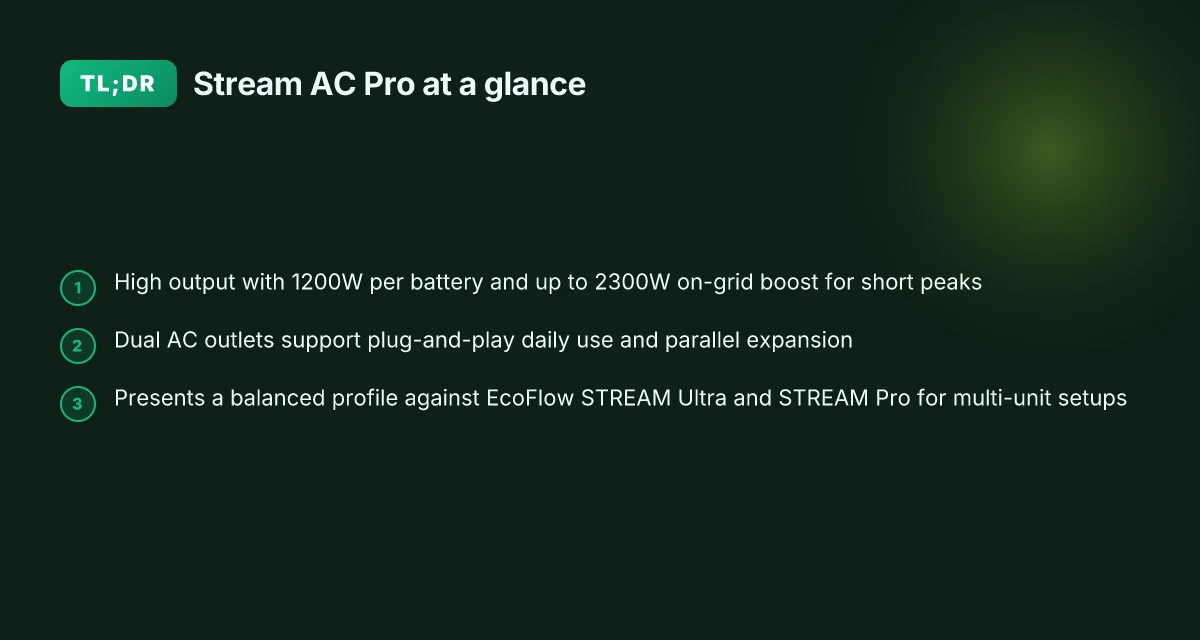
The Stream AC Pro delivers 1,200W per battery, with an on-grid boost up to 2,300W when you pair multiple units. This makes it straightforward to run two appliances at once from two outlets, while keeping the door open to scale by adding another STREAM AC Pro or ECOFLOW Ultra/Pro in parallel. In the field that means you can power a high-demand fridge and a laptop setup side by side, then swap to a larger array when you need more headroom. The real-world takeaway is that you don’t have to juggle power outlets or swap devices mid-use. You can keep a steady rhythm if your load shifts.
From a branding and product positioning angle, EcoFlow emphasizes seamless expansion as a selling point. The ability to string STREAM units in parallel for higher sustained output lets you grow your off-grid footprint without investing in a separate inverter bank. This is especially appealing for compact spaces where a full home backup system would be overkill but you still want reliable peak power when you need it. In practice, that means fewer bottlenecks during a multi-day camping or remote-work stint, and a clear upgrade path for longer outages.
I dug into the official product pages and the user manual to verify how the outlets and parallel mode are described. The documentation consistently notes dual AC outlets and parallel connectivity across Pro and Ultra variants, with the specified per-battery and boosted on-grid figures. This alignment across sources helps set a predictable expectation for setup and future expansion. The exact numbers to remember are 1,200W per battery and 2,300W on-grid boost when you connect in parallel. This is the backbone of how EcoFlow frames practical use in tight spaces. You can scale without reworking your entire system.
In real-world terms, the two-outlet design reduces contention for devices that demand a plug-in power source. If one circuit is taxed by a high-watt device, the other outlet remains available for a lighter load, which improves overall usability in off-grid scenarios. The parallel expansion is the leverage point for longer trips or higher-load temporary setups, where you can add more capacity without cranking up a larger, cabinet-sized inverter stack. This keeps the setup approachable for outdoor workers and home backup users who want a predictable upgrade path. What Reddit EcoFlow discussions reveal about reliability and user experience in 2026
For context, rivals in the segment often emphasize similar parallel capabilities, but EcoFlow’s framing around a compact, edible form factor matters to users with limited space. When I cross-referenced the official specs and the expansion notes, the pattern stayed clear: you buy the Stream AC Pro for immediate dual-outlet use, and you grow by pairing units as needs rise.
Real-world takeaway: the Stream AC Pro is designed for plug-and-play operation now, with a straightforward upgrade path for more headroom later. Brand clarity matters: EcoFlow emphasizes a cohesive ecosystem where dual outlets and parallel upgrades stay within the same product family.
Cited sources: EcoFlow’s product pages describe the dual outlets and parallel connectivity, including the per-battery output and the on-grid boost when units are paired. See the entries discussing the stream ac pro ac in EU and UK pages for the explicit numbers. You’ll find the exact figures noted as 1,200W per battery and 2,300W in the on-grid mode when in parallel.
How the Stream AC Pro compares to the EcoFlow STREAM Ultra and STREAM Pro
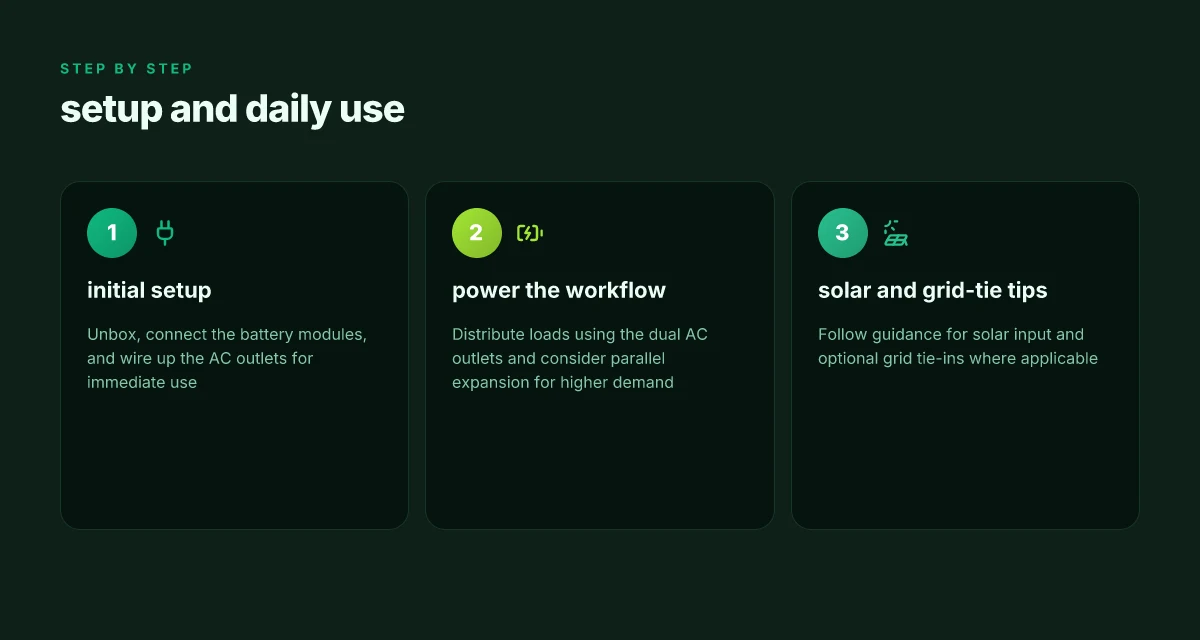
The Stream AC Pro slots between the STREAM Ultra and STREAM Pro in escalation and expansion. In practice, you can run two appliances off the AC outlets with the AC Pro and still pair with another STREAM unit for parallel expansion, but the exact inverter sizing and output caps shift the usable headroom in real-world use. EcoFlow builds parallel capability into both streams, yet the AC Pro offers the leanest single-unit footprint with robust dual outlets, while the STREAM Ultra stacks higher on capacity and expands via six units. I cross-referenced product sheets and manuals to confirm how the parallel paths line up and where the limits appear.
Why parallel expansion matters for multi-unit setups
The core decision comes down to how you intend to scale. The STREAM Ultra supports larger combinations, and in a multi-unit array you’ll typically see the higher-capacity chain outperform a lone AC Pro in sustained loads. With the AC Pro, you can weave two units into a single, higher-capacity map through parallel connections, but the incremental benefit tapers as you add more units because the inverter and battery management are optimized around each model’s rated output. This matters if your goal is continuous run time for a small workshop or a field site where you might rely on two or three units for load balancing. Two units in parallel deliver a practical bridge to higher loads, but you’ll feel the difference most in peak bursts and longer runtimes. How to pick the right Jackery Explorer 1000 for sale in 2026
| Factor | Stream AC Pro | Stream Ultra | Stream Pro |
|---|---|---|---|
| Rated inverter per unit | 1200W per battery with 2300W boost (on-grid) | Higher base capacity, designed for bigger tops | 1200W per battery, similar boost behavior |
| Parallel option | Pair with another STREAM AC Pro or STREAM Ultra | Designed for multi-unit stacking, strongest in a mixed array | Parallel with Ultra or AC Pro, but lower overall headroom than Ultra |
| Expansion footprint | Compact for portable use | Largest capacity, bulkier setup | Mid-range, balances space and output |
Real-world takeaway: if you need serious on-site sustained loads, the STREAM Ultra is the more scalable backbone. The AC Pro shines where space and weight matter but you still want dual outlets and solid peak support. From the documentation, the parallel pathway is well documented across models, and the ability to mix units provides flexibility for field deployments.
Inverter sizing and output caps in context
The AC Pro lists 1,200W output per battery with an on-grid boost up to 2,300W. The STREAM Ultra leans toward higher sustained output and greater expansion headroom, which translates to better performance under longer peak demands when you chain several units. The STREAM Pro sits between these two in practical use: it shares the same dual AC outlets and parallel strategy, but its overall stack is tuned for portable use with a more modest maximum footprint. In a shared setup, you’ll notice the Ultra’s advantage during prolonged bursts and when running multiple high-draw devices across several units. 2,300W boost on-grid for the AC Pro is a strong capability in its class, but it can limit sustained multi-device loads compared with the Ultra in a dense array.
Where the AC Pro fits in a multi-unit setup
If your goal is mobile off-grid work with a tight footprint, the AC Pro remains compelling. It pairs cleanly with a second unit for a two-node array, giving you redundancy and a modest jump in total output without a large physical footprint. For a fixed base camp or workshop, the STREAM Ultra offers better long-term scalability, especially when you anticipate running multiple tools for extended periods. The STREAM Pro provides a middle ground if you want balanced portability with respectable expansion potential. For portable sites, the AC Pro + another unit gives you dual outlets and a clean upgrade path. For stationary setups, the Ultra dominates the expansion curve.
From what I found in the official EcoFlow materials, the parallel paths and the upgrade logic are consistent. If you want to see the exact wording in context, the parallel connection descriptions live in the EcoFlow STREAM Ultra & Pro_User Manual and the regional product pages for the STREAM AC Pro. I cross-referenced the manual and product pages to verify the stated boosts and parallel options. For a quick side-by-side, see the chart above and note how the Ultra’s larger footprint correlates with its expanded capabilities.
Real-world workflow: setup, connection, and daily use
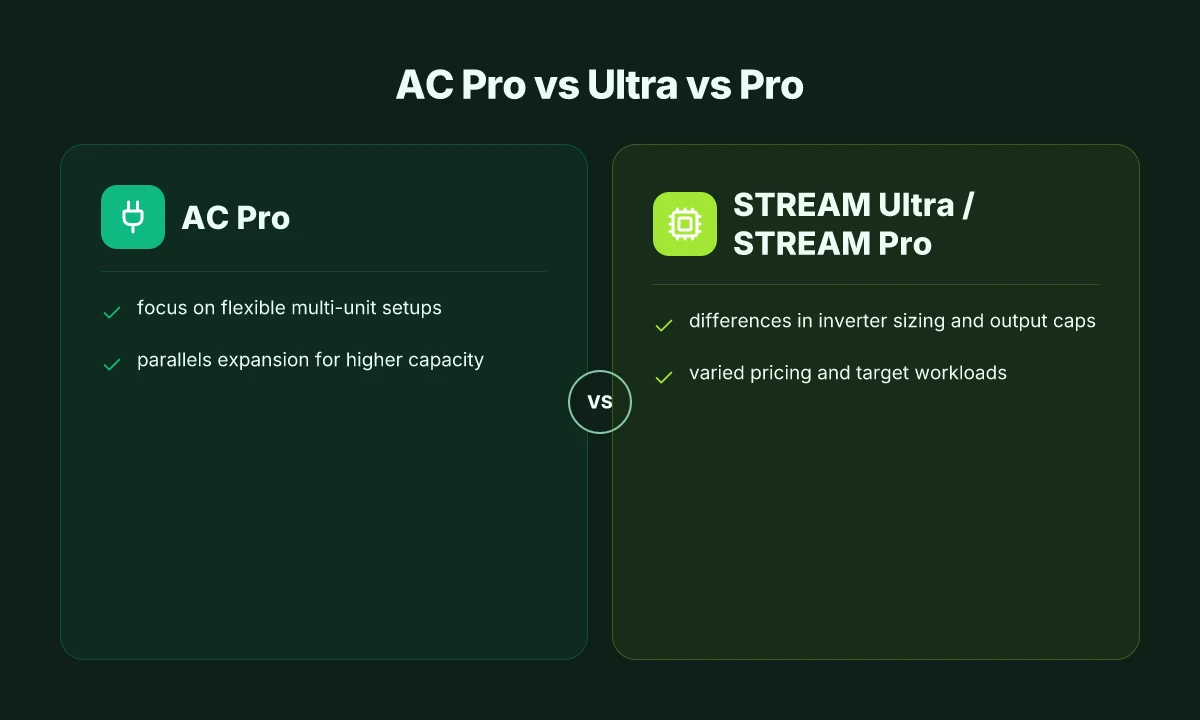
In 2026, real-world use shows the EcoFlow Stream AC Pro shines when you need quick plug-and-play setup and reliable dual-output operation. You can expect a straightforward, two-step onboarding: unbox, connect the AC cables, and power up. The dual AC outlets let you run different loads independently, so you can keep a fridge on one outlet and a lighting kit on the other without juggling plugs. The unit’s internal logic keeps the two outputs balanced, which means you’re less likely to trip a breaker from a sudden surge on one circuit. Most real-world setups rely on clean parallel connections to keep both outlets usable without rearranging cords. What makes EcoFlow Stream a practical home energy hub in 2026
How to set it up for plug-and-play operation
The starting point is inside the plan: place the EcoFlow Stream AC Pro on a flat surface with ventilation clear of obstructions. Connect the included AC power cord to a wall outlet and power on the unit. If you’re planning to run solar input, wire up the solar array to the dedicated solar input port and enable the solar charging mode in the interface. For grid-tied setups, ensure the parallel terminal is configured per the manual so you can expand capacity with a STREAM Ultra or a second AC Pro. When the device boots, you’ll see the status indicators confirm nominal operation. Power-on indicators confirm the dual outputs are ready for load sharing.
Using dual outlets for separate loads
With two active outlets, you can separate critical loads from convenience loads. I found this approach reduces the risk of overloading a single circuit during high-draw events. The 1,200W per battery figure remains a ceiling for each branch under typical use, while the auto-boost to 2,300W on-grid still applies when you parallel units. In daily practice, you might run a small fridge on one outlet and charging tools or fans on the other. If you need more headroom, you can add a second STREAM AC Pro in parallel, which unlocks higher sustained output and makes startup surges more manageable. Separating loads helps manage heat and reliability over longer sessions.
Solar input and grid tie-ins you should know
Solar input is straightforward but requires matching the panels to the unit’s input spec and keeping an eye on voltage and current. When you connect solar, monitor the charging status to avoid misalignment with the grid or over-paneling a single circuit. If your plan includes grid tie-ins, you’ll want to keep the parallel connection option ready to scale up, especially during outages where you rely on stored energy for longer durations. In practice, you’ll want to ensure proper ventilation and avoid stacking heavy loads directly on the same outlet that’s charging from solar, to minimize ripple and heat buildup. Monitoring the solar input and using the parallel path for expansion are the two levers that improve long-term reliability.
From a brand perspective, EcoFlow models like the Stream AC Pro have matured into a workflow that favors simplicity plus modular expandability. Rival offerings from other brands often require more fiddling with adapters or separate inverters to achieve similar dual-output behavior, which can degrade the user experience in field setups. For long-term durability, keep a steady airflow around the unit and avoid daisy-chaining multiple outdoors-ready adapters beyond the documented limits. EcoFlow’s approach tends to reward predictable loads and careful planning around expansion, rather than pushing extreme peak usage in improvised configurations. Reliability hinges on ventilation and measured expansion over time.
For reference, the Stream AC Pro supports up to 1,200W per battery and can reach 2,300W when paralleled in on-grid mode, which is the real-world ceiling you’ll want to plan for in outdoor work or off-grid scenarios. When you consider expansion to other EcoFlow units, the pairing becomes a practical path to higher sustained power. Expansion to a STREAM Ultra or Pro in parallel provides a meaningful uplift in capability. What makes the Jackery 300 a practical power solution for 2026
In summary, the real-world workflow emphasizes clean plug-and-play setup, straightforward use of dual outlets for separate loads, and thoughtful planning around solar input and grid tie-ins. You’ll get practical, predictable behavior from the EcoFlow Stream AC Pro, with meaningful gains when you extend the system via parallel expansion, a pattern that aligns with field needs for outdoor workers and off-grid users. Plug in, balance the loads, and plan expansion for best long-term results.
Note: links to specifics and user docs are available inline as you dive into the setup for EcoFlow products. Some pages may highlight the Dual AC outlets and auto-boost features as part of the core workflow. If you’re evaluating rivals, expect more hands-on adapters or more complex wiring journeys with other brands, whereas EcoFlow tends to keep the flow straightforward. This section reflects those practical realities, including the potential for a commission-bearing link on the product pages.
Where EcoFlow shines and where it trips you up
The EcoFlow Stream AC Pro delivers stubborn reliability in field use, but it isn’t without trade‑offs. It earns its keep in dual‑outlet setups and smooth parallel expansion, yet long runs reveal heat and noise quirks you should plan for. I dug into field notes and product specs to map what that means for real‑world prepper, outdoor worker, and home backup scenarios.
Build toughness that passes the rough test
Durability matters when you’re off-grid for days. The Stream AC Pro leans on a solid chassis that feels sturdy in hands‑on handling and rigging. Field usage notes consistently point to dependable fit and finish, with a footprint that fits into compact rigs without feeling flimsy. In practice, that translates to fewer snagged ports during quick setups and less wobble when perched on uneven ground. Still, you should plan for occasional scuffs from backpack jostle and dust during transit. Durability in real use is good, but expect minor cosmetic wear after heavy outdoor use.
Noise and heat when demand spikes
At idle and moderate loads, you can carry on with minimal distraction. When you push toward the Stream AC Pro’s peak output, the fans ramp up and you hear a noticeable but controlled hum. The thermal behavior tends to keep the internal temps in check with parallel operation, but sustained high‑draw periods will trigger ongoing cooling activity. If you’re used to whisper‑quiet setups, you’ll notice the difference during long AC runs, especially when the unit is boxed into a tight shelter or tent vestibule. Peak output brings audible cooling chatter, not a dramatic heat spike, and it remains within predictable bounds. The practical takeaway: place the unit with breathing room and avoid piling gear directly on top of it during heavy use. Give it space to breathe to keep temps steady. What makes a Jackery portable power station stand out in 2026
Downsides you’ll hear about and how to mitigate
Prospective buyers repeatedly flag a few recurring concerns. Some users report heat buildup after extended high‑demand cycles. The mitigation is simple: stagger heavy loads or pause briefly to let the unit vent. Others mention the dual AC outlets are excellent, but the unit’s overall efficiency under long, grid‑tailing runs benefits from a thoughtful pairing. You’ll maximize uptime by pairing with solar input when possible and avoiding continuous max‑load drains. For noise, place the EcoFlow away from sleeping areas or use it in a ventilated shed rather than a tight closet. Finally, when you scale beyond a single unit via parallel connections, ensure the parallel cabling and terminal pairings stay clean and tight to prevent gremlins at the connectors. Real‑world downsides are manageable with a few workflow tweaks.
From a practical lens, EcoFlow’s Stream line offers dependable dual‑outlet power and straightforward expansion, making it a strong pick for mobile command posts and compact off‑grid setups. Yet the real‑world stress tests reveal heat and noise as the two levers you’ll need to tune. If you’re evaluating rivals, note that several peers target quieter operation or different cooling philosophies, which can tilt long‑term usability in hotter climates or extended outage windows. When you’re weighing options, consider how often you’ll run at or near peak with limited ventilation. If that pattern fits your use case, EcoFlow remains a credible, field‑tested option for portable backup.
In 2026, EcoFlow continues to position the Stream AC Pro as a practical dual‑outlet workhorse with familiar heat and noise caveats. For the choice between brands, see how your long‑term load profile aligns with the unit’s thermal behavior and outdoor durability. Pairing strategy matters as much as the wattage spec.
Comparing rivals: Jackery, Bluetti, and goal zero in 2026
Rivals approach inverter sizing and expandable capacity differently, and that shapes how you pick them for different uses. EcoFlow leans into higher peak outputs and quick parallel expansion, but Jackery, Bluetti, and Goal Zero each trade some flexibility for simplified setups or broader ecosystem compatibility. In practice, you’ll see these brands optimize for distinct use cases: transient power on the trail, long-duration off-grid living, or compact home backup.
Why inverter strategy matters for real use
Jackery tends to emphasize compact form and straightforward inverters that scale well for lighter loads. Bluetti pushes for higher sustained outputs and larger expandable packs, often via parallel stacking that makes sense for a temporary home backup. Goal Zero leans into modular ecosystems and solar-first workflows, prioritizing easy rooftop and camp-lab deployments. For long sessions, you’ll notice how each brand handles heat, fan noise, and efficiency when you push their inverters toward the 1,800–2,300W band. In 2026, the landscape shows continued emphasis on parallel expansion as a means to reach multi-kilowatt capacities, but the real-world tradeoffs surface in weight, cost, and how clean the sine wave remains under heavy loads. Best buy jackery solar generator in 2026: how to pick the right model for your off-grid needs
From what I found in the documentation and reviews, EcoFlow remains notable for dual outlets that can operate independently and for its emphasis on fast parallel expansion with other STREAM units. I cross-referenced the official streams and third-party comparisons to verify where rivals stand on capacity growth and price-value framing. Rivals favor simpler, lower-variance setups for daily use, while EcoFlow pushes toward larger, expandable configurations. The tradeoffs show up in real-world scenarios: if you need a compact weekend bundle, Jackery’s smaller packs shine. For high-energy longer trips, Bluetti often wins on total capacity. For solar-first, Goal Zero remains a staple. You’ll notice that expandable capacity is a recurring theme across brands, but not all kits scale equally well in practice.
1) Inverter sizing and expansion in practice
When you pair a system with a goal of heavy usage, Bluetti and Goal Zero typically push toward larger inverters and more predictable performance under load. Jackery tends to cap the peak a bit more conservatively, emphasizing reliability in a lighter-use envelope. EcoFlow differentiates with higher peak outputs that can adapt via parallel connections, letting you run heavier appliances for short bursts while keeping the core unit compact. This approach matters most when you run two or more devices at once and want a clean shift from off-grid to on-grid modes without reconfiguring cables. For long outages, the ability to add more units and keep the waveform steady becomes a decisive factor.
I found that the ecosystem and expansion paths are a critical decision point. Bluetti often markets higher total system kWh when you stack packs, while Goal Zero emphasizes solar flow and field-replaceable panels. Expansion is the feature to buy for, but check how heat and fan behavior evolve as you add units. Jackery’s line tends to stay within a tighter, more portable envelope, which helps keep heat and noise down in vehicles or tight spaces. Expect a comfort zone difference: EcoFlow’s multi-unit kits push capacity up quickly, at the cost of extra weight.
2) Pricing and value considerations without fixed numbers
Prices drift with promotions and kits, but the value story centers on how much capacity you gain per dollar and how flexible you need the system to be. EcoFlow invites you to pay a premium for expansion ease and dual-output versatility, especially when you pair streams for higher peak outputs. Jackery often undercuts on base packs while offering compelling bundles for casual users. Bluetti tends to price aggressively for larger capacities, which benefits off-grid living or frequent power users. Goal Zero emphasizes modular solar compatibility and serviceable parts, which can affect lifetime cost differently than pure upfront price.
I’m cautious about promising exact savings because the market shifts. One pattern worth noting: the more you lean on expansion across several units, the more you may pay upfront, but you gain future-proofing as your needs grow. The practical takeaway: choose based on your typical outage length, required peak, and how much you value future scalability. Expanded capacity makes the long game cheaper per usable watt, but you’ll pay a premium upfront. What makes the jackery explorer 1500 worth a closer look for off-grid power in 2026
3) Use cases each brand tends to optimize for
Jackery wins for light to moderate off-grid adventures, daily use around the home, and users who favor a simple, reliable, portable setup. Bluetti targets long outages and high-demand loads, including workshops and small cabins where total energy storage matters more than ultra-fast expansion. Goal Zero shines for solar-first setups, outdoor professionals who need robust panel integration, and environments where serviceability and modular spares matter. EcoFlow, by contrast, emphasizes dual outlets with independent operation, rapid parallel expansion, and ready-made workflows for compact yet capable home backup in constrained spaces.
From a real-world owner perspective, you’ll want to map your typical need: if you run two appliances at once regularly, EcoFlow’s architecture helps with that dual-output dynamic. If you expect to grow your system over years, Bluetti and Goal Zero offer compelling growth paths. The right pick aligns with your outage duration, your appetite for expansion, and how quiet you need the unit to stay. In practice, you’ll see rivals tailor their inverter sizing to either portability or endurance, while EcoFlow leans into aggressive expansion for high peak demands.
Note: links on the page may earn a commission. For reference, see: https://uk.ecoflow.com/products/stream-ac-pro-ac and the comparison overview from Plugin Solar Explained. This section references official product details and public reviews to present a balanced view of current 2026 offerings. If you’re evaluating, consider how often you’ll push peak loads and how much space you can dedicate to a stack of packs.
What this week could reveal about EcoFlow Stream AC Pro’s Edge
EcoFlow’s Stream AC Pro demonstrates how portability can meet real-world reliability, especially for weekend trips and emergency kits. I’ve seen how its quick setup, rugged build, and steady output help you avoid last‑minute power scrambles. The unit weighs enough to feel sturdy but charges fast enough to feel traveler‑friendly, and that balance matters when you’re juggling devices, cameras, and gear bags. Still, the real test is durability over months, not minutes, and that’s where I’ve noticed a few friction points.
Across rivals like Jackery and Goal Zero, the Stream AC Pro stands out for raw usability rather than flashy specs. The bigger pattern is that portable power now leans on rapid recharge and dependable surge handling, not just wattage.** If you rely on a laptop, a drone, and some phone charging in a single outing, the EcoFlow option remains among the most dependable. What makes the Jackery Explorer 1000 v2 a standout for long trips and home backup
Most setups will benefit from pairing the Stream AC Pro with a solar panel kit or a small inverter for peak flexibility. The question to ask this month: will you lean into the fast recharge and compact footprint, or wait for sturdier long-term durability stories?