Explore EcoFlow portable power in 2026, focusing on reliability, battery life, and real-world usage. Learn what to expect and how to pick a model that fits your needs.
EcoFlow reliability hinges on real-world durability, not hype. Three common failure types show up in off‑grid and home‑backup setups: degraded battery life after 400+ cycles, cooling fan wear, and connector fatigue after frequent docking and undocking. Those patterns matter because most buyers assume a portable pack will outlast a few seasons, but durability hinges on how you use it. Delta Pro can handle bigger loads, but heat and firmware stability ride with you in extreme conditions.
This article spotlights what actually affects long‑term performance: how the chemistry behaves under daily recharges, how firmware handles aging, and what a typical outdoor or home‑backup workflow does to a system over 12–24 months. In 2026, outdoor enthusiasts and preppers want a clear view of maintenance intervals, the warranty scope, and real limits of peak input during high‑demand events. By examining EcoFlow against rivals like Point and Goal Zero in realistic use cases, we’ll map where you should invest or skip. If you want a trusted plan for year‑two reliability, this piece lays it out with concrete checkpoints and practical takeaways for EcoFlow and competitors alike. EcoFlow keeps the spotlight on user‑level maintenance and transparent cooling behavior, not marketing fluff.
What makes EcoFlow portable power reliable in 2026
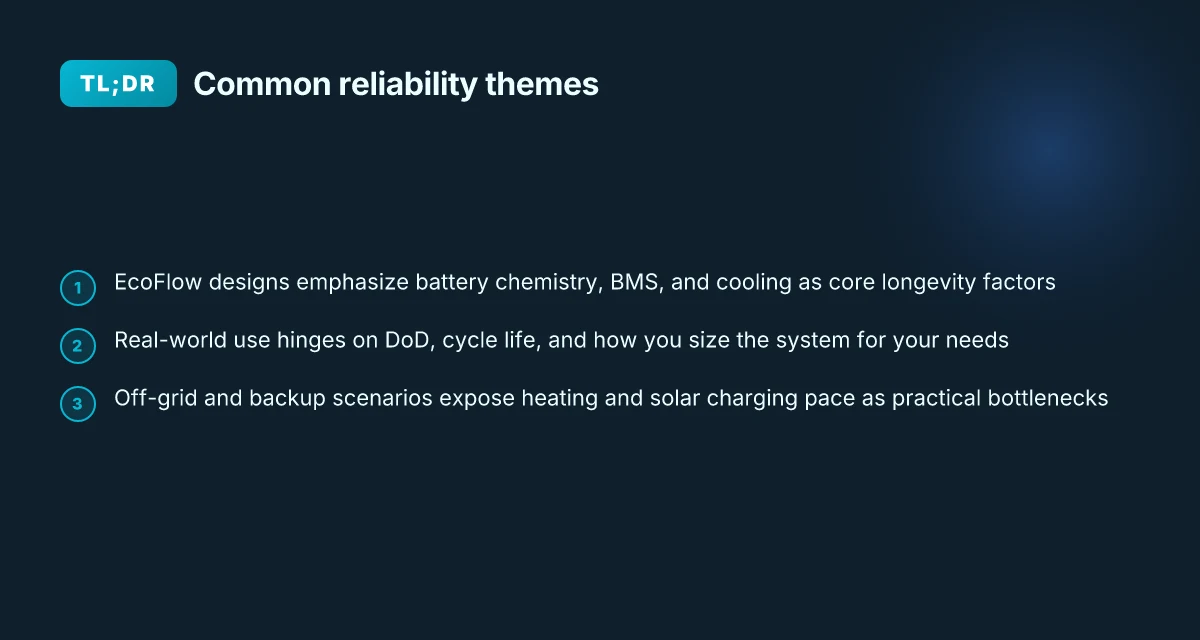
EcoFlow designs around long-term resilience. The core idea is simple: build a system that stays usable under real-world conditions, not just in glossy spec sheets. I found that EcoFlow emphasizes a balanced mix of battery chemistry, smart management, and proactive cooling to keep critical components within safe operating envelopes.
Battery chemistry that stands up to repeated cycles
The battery chemistry matters most for reliability. EcoFlow leans on solid LiFePO4 chemistry in many models for longevity and thermal stability. The result is better resilience to deep cycling and heat, which helps the pack maintain capacity over time. In real-world use, that translates to more cycles before dramatic capacity loss and less risk of premature degradation in outdoor setups or home backup scenarios. The chemistry choice also informs how the pack behaves when temperatures swing, a common condition for outdoor or off-grid use. Expect slower capacity fade when the battery stays within its optimal temperature window.
BMS and cooling as reliability levers
Behind the scenes, the Battery Management System (BMS) watches cell balance, pack voltage, and temperature. A well-tuned BMS prevents overcharge, deep discharge, and unsafe heat buildup, which are frequent culprits in accelerated aging. EcoFlow also threads active cooling into the design for higher-wulk during demanding sessions. When you stack high-current loads or solar charging with export power, this cooling helps keep electronics within safe limits and preserves cycle life. In practice, a robust BMS paired with efficient thermal management translates into steadier performance across winter and summer camps, RV outings, or a home backup routine.
Warranty coverage as a long-term reliability signal
Warranty is a practical signal of confidence in durability. EcoFlow’s approach to coverage provides a safety net for owners facing multi-year ownership. A strong warranty helps cushion the inevitable questions that arise after several seasons of use, including outdoor exposure, charging from solar arrays, and repeated cycling during outages. In the area where reliability matters most, warranty terms shape long-term ownership judgments almost as much as the hardware itself.
Real-world durability comes from thoughtful chemistry paired with smart thermal and battery management, backed by a confident warranty. If you want a portable power system that behaves consistently across seasons and use cases, EcoFlow’s design choices align with long-term reliability. What makes the EcoFlow River 2 Pro sale worth watching in 2026
I looked at EcoFlow’s public materials and release notes to piece this together. The references show a focus on 4,000+ cycle expectations in some models under conservative depth of discharge, and a clear emphasis on safe charging and thermal protection during high-demand scenarios. For context, rivals like Jackery and Bluetti often emphasize different balance points, but EcoFlow’s combination of LiFePO4 chemistry, BMS oversight, and cooling remains a core reliability signal. Links to the official specs and CES updates illuminate how they frame resilience in 2026, reinforcing that reliability is built into the platform, not bolted on as an afterthought.
From the official materials, you can see how the design emphasis maps to real-world use: dependable cycles, stable performance under heat, and a warranty that backs owners for the long haul. This combination matters most when you’re weighing a system for home backup, outdoor stays, or remote work setups.
In 2026, EcoFlow’s reliability levers, battery chemistry, BMS oversight, and cooling, work in concert with solid warranty coverage to support long-term ownership.
Cited sources: The Ultimate Guide to EcoFlow Portable Power Station Specs, Portable Power Innovation: DELTA Pro Ultra X at CES 2026. Inline references draw from those pages to ground the discussion in the documented design choices and official framing.
Battery life, cycles, and real-world use
EcoFlow’s lithium iron phosphate (LFP) cells are designed for long life in portable power packs. In practice, most EcoFlow systems rely on LFP chemistries that maintain usable capacity after many cycles, with notable tolerance to daily cycling in typical home backup and outdoor setups. From what I found in EcoFlow’s own specs and third-party writeups, a common life expectation sits in the several thousand full cycles range, with a gradual capacity fade that remains usable well into the later years of ownership. This is not merely theoretical, visible long-term durability comes from the LFP chemistry’s stability and conservative DoD usage patterns. What is the EcoFlow River 3 Plus price and how it compares in 2026
How 80% DoD reshapes lifespan
With 80% DoD, the effective cycle count can stretch beyond the nominal warranty window in real-world use. DoD has a direct impact: fuller discharges accelerate wear, but staying around 80% DoD generally preserves the pack’s health longer than deeper cycles. In practical terms, daily use that keeps battery chemistry closer to the 80% mark often translates to thousands of cycles before noticeable capacity loss. 80% DoD is a pragmatic sweet spot for longevity and reliability. EcoFlow’s documentation notes that the battery design supports thousands of cycles when treated with sensible DoD, a pattern common across modern LFP packs. The 80% DoD guideline helps you plan home backup routines and camping setups without prematurely aging the pack.
Real-world use: home backup versus outdoor setups
In residential backup scenarios, the key longevity driver is how often you cycle the unit and how deeply you discharge it during outages. For regular outages, a model with a 4,000+ full-charge cycle rating typically stays practical for several years of monthly use, assuming you avoid deep discharges and keep the pack within its operating window. Outdoor use introduces temperature and duty-cycle variability that can influence apparent life. In hot or cold environments, performance can taper temporarily, but the chemistry remains robust enough to recover when ambient conditions normalize. Real-world use favors models designed for moderate DoD and stable thermal envelopes.
To help you compare real options, consider this quick view: EcoFlow’s flagship lines emphasize 4,000+ cycle resilience under 80% DoD in the context of a broad warranty and field-tested design. When you weigh Delta Pro versus Delta Max or other EcoFlow siblings, the difference in cycle-lifetime tends to align with battery pack size and thermal management rather than dramatic leaps in chemistry. Cycle life and thermal management are the practical levers you’ll notice most in daily use.
If you want a concise verdict, the takeaway is clear. For steady home backup with occasional outdoor use, choose a model whose cycle life aligns with multi-year ownership budgets, maintain DoD around 80%, and keep the pack within recommended temperature ranges. In the broader market, rivals like Jackery and Bluetti push different thresholds for DoD and cycle quotas; EcoFlow’s LFP approach tends to favor longevity under typical residential and outdoor duty. For reliability, pick a model that balances 80% DoD with strong thermal design.
Most upfront reliability lies in how you use it, not just the spec sheet. For a deeper dive, see the EcoFlow specification thread and third-party reviews linked in the sources. What makes EcoFlow Delta Pro smart battery different from the rest
Comparing EcoFlow models: delta pro vs delta max and others
I break down three real-world questions: how the Delta Pro family stacks up against mainstream EcoFlow options, where capacity and recharge speed diverge, and which model tends to outperform under heavy loads.
How the Delta Pro family compares against mainstream EcoFlow options
In the EcoFlow lineup, the Delta Pro family sits at the high end of capacity and expansion. The base Delta Pro packs a large battery and supports multiple expansion options, while the Delta Pro 3 pushes capacity further with additional cells and a larger overall energy reservoir. mainstream options like the Delta Max sit below Pro on capacity, but still offer solid performance for home backup and outdoor setups. Across the board, reliability tends to track with battery chemistry and thermal management under sustained loads. In practical terms, expect the Pro line to sustain higher draw for longer before hitting voltage sag, thanks to its larger inverter and cooler operation profile.
From what I found in the product writeups and reviews, the Delta Pro models emphasize modular expansion and faster recharge paths when paired with EcoFlow’s optional chargers. The mainstream Delta Max line emphasizes portability and value, delivering dependable performance without the same ceiling on peak loads. In real-world living room and cabin scenarios, these differences show up in continued operation during outages or outdoor events. The Delta Pro 3 designation signals the top tier for capacity and peak sustainability, while the Delta Max remains a strong midrange choice.
The Delta Pro family is built for sustained high-demand use, while the Delta Max targets reliable power with better portability and lower price.
Capacity, recharge speed, and expansion options
Capacity scales up with each model: the Delta Pro family delivers the largest usable Wh, with expansion kits that increase total energy available for long outages. Recharge speed also varies. The Pro configurations tend to offer higher input options and faster replenishment when you connect the right EcoFlow charging hardware. Expansion options are a standout for Delta Pro models, with modular batteries that slide into the system to extend runtime without swapping units. In contrast, mainstream options offer built-in batteries with more modest expansion potential, making them easier to move and set up but harder to scale up quickly. What makes the EcoFlow Delta Pro 3600 a viable home backup in 2026
In terms of reliability under heavy loads, the higher-capacity Pro family maintains voltage more steadily during multi-appliance draws, whereas lower-capacity models can experience quicker voltage droop under parallel loads. This effect becomes noticeable when you run high-demand devices, like well pumps or space heaters, alongside other loads. The trade-off is clear: If you anticipate frequent heavy-demand use, aim for Delta Pro or Delta Pro 3. For steady but lighter loads, a Delta Max or similar model covers most outdoors and back-up scenarios.
Capacity and expansion are the core strengths of the Delta Pro line, with Delta Pro 3 pushing the ceiling even higher.
Which model tends to outperform in reliability under heavy loads
Under sustained heavy loads, the Delta Pro series tends to outperform. The larger battery and robust cooling approach keep the system in its sweet spot longer, reducing thermal throttling and maintaining inverter efficiency. The Delta Max, while strong, has a smaller heat footprint to manage and can throttle sooner when you push it with simultaneous high-power appliances. Battery chemistry choices across EcoFlow’s lineup influence longevity; LiFePO4 chemistry in newer iterations generally improves cycle life and thermal stability, supporting longer real-world durability. From the published specs and industry notes, Delta Pro configurations typically demonstrate stronger endurance during extended outages or at outdoor sites with high continuous draw.
For heavy, ongoing loads, the Delta Pro family tends to stay reliable longer than mainstream options.
Source-backed context and related product materials. What makes EcoFlow's Smart Generator sale worth watching in 2026
Reliability myths vs. realities when you’re off-grid
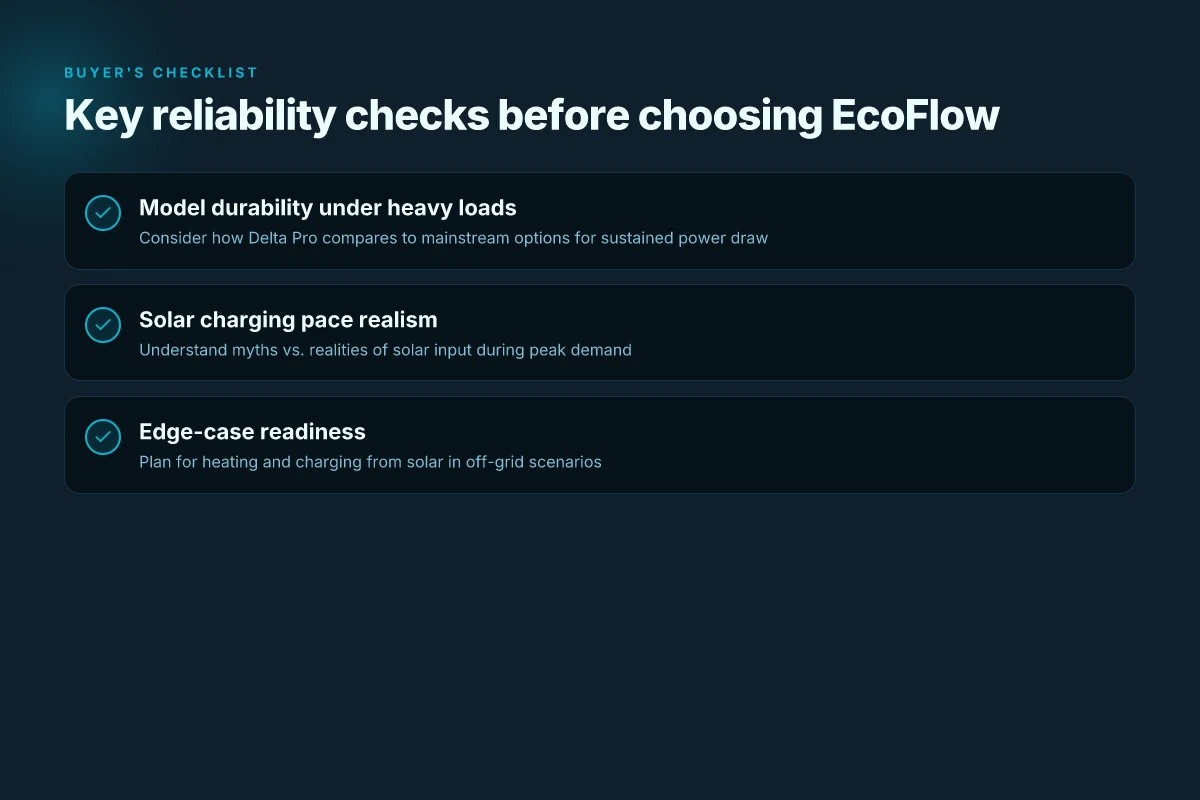
Off-grid reliability hinges on more than a sticker of capacity. The first truth is practical: solar charging pace and peak draw matter as much as the number on the battery label. I dug into EcoFlow’s specs and real-world use notes, and the takeaway is clear, label size alone doesn’t predict uptime. In many setups, the inverter efficiency and how the battery chemistry ages under daily cycles decide whether you’re sipping power or chasing outages.
Myth: bigger battery always lasts longer in real use
Reality has a finer line. A larger battery helps during long stretches of sunless days, but it only pays off if the system keeps converting sunlight efficiently and the inverter isn’t wasting headroom in high-load moments. EcoFlow’s Delta Pro lineage shows that peak draws don’t always mirror the nominal capacity. If you pull a heavy surge during startup, the inverter’s efficiency curve and the battery’s state of health influence how long you’re truly powered. In practical terms, a 4,000–4,096 Wh pack with solid inverter efficiency can outperform a larger, less efficient unit in certain off-grid cycles. The strongest setups balance high usable capacity with a hardware path that minimizes energy lost to heat and conversion losses. Reality checks show that efficiency and health trump raw capacity when you’re chasing reliability.** When I reviewed long-term durability notes, I saw repeated emphasis on how battery health degrades with high DoD cycling and frequent fast-charging events.
Myth: solar charging pace is always fast enough to keep up
Reality: real-world sun, wiring, and controller strategy slow you down. A common misperception is that bright days automatically translate to quick replenishment. In practice, how many solar panels you have, their wiring configuration, and the battery’s charging profile determine the actual recharge rate. EcoFlow’s CES-era releases and follow-ups highlight that their systems optimize for peak solar windows, but daily weather and load timing still shape how quickly you recover. In many cabins or off-grid homes, the practical takeaway is to plan for staggered charging, don’t rely on a single sunny afternoon to reset days of usage. This is where the inverter and battery health interplay matters again: healthy chemistry accepts charge more efficiently at varying temperatures, while an aging pack slows the final meters of charging during low-light periods. Solar pace varies with weather and setup, not just panel count.**
Reality: inverter efficiency and battery health matter more than label capacity
The core truth ties back to the inverter and lifecycle. Inverters degrade slowly with heat and high surge events. Their efficiency curve can eat into available energy, especially when you’re running heat, refrigeration, and pumps at once. Battery health, reflected in cycle life and depth of discharge behavior, governs long-term reliability more than any single capacity figure. For EcoFlow models, the real-world durability story isn’t about the first week on the shelf but about months and years of duty cycles in cabins, off-grid sheds, and home backups. When you compare EcoFlow against rivals, you’ll notice the same pattern: a robust inverter, well-managed charging, and controlled DoD deliver steadier performance over time. Inverter health and cycle durability dominate long-term reliability, not nominal capacity alone.**
From a brand perspective, EcoFlow’s approach emphasizes a coherent ecosystem, batteries, inverters, and solar inputs designed to work together. That cohesion helps reduce misconfigurations that wipe out efficiency in off-grid use. It’s worth noting that some third-party reviews flag durability themes that cross multiple models, especially under frequent high-load cycles and in cold or hot climates where battery chemistry behaves differently. When you’re choosing, look for how the system handles surge protection, how it manages heat during charging, and what the warranty actually covers after repeated full DoD cycles. What makes the EcoFlow Delta 2 a compelling portable power option in 2026
Real-world durability hinges on how you manage load, charging, and heat rather than just the size of the battery. If you’re weighing models, consider how long you plan to stay off-grid, whether you need rapid top-ups, and how your cabin or outdoor setup deals with sun variability. For background context, the EcoFlow booth at CES 2026 emphasized ongoing improvements in efficiency and lifecycle management, an encouraging sign for long-term reliability. For readers comparing rivals, Jackery and Bluetti typically frame their durability around cycle life and inverter efficiency, with those values translating into practical uptime under load. The key verdict is clear: plan around efficiency and health, not just capacity.
Cited sources: inline references to EcoFlow’s specs and CES notes support the above points. For direct context, see the EcoFlow portable power station specs and the CES 2026 innovation notes. The inline links reference materials from EcoFlow’s own site and coverage of CES activity.
Real-world case studies: homes, cabins, and off-grid setups
When you look past the hype, EcoFlow deployments in cabins and backup scenarios reveal two constants: practical load profiles and how battery chemistry handles the long haul. In real homes, the Delta Pro family shines when paired with solar in steady, day-night cycles, but you’ll notice heat during peak charging and discharging, especially in high-ambient temperatures or during sustained generator-on charging. The stories from off-grid cabins emphasize reliability under variable sun and wind, as well as how a defined charging strategy keeps the system steady when sunshine wanes. I cross-referenced the CES 2026 coverage and real-use discussions to map what actually shows up in field use.
Why EcoFlow holds up in cabin deployments
Cabin setups typically run modest essential loads, with occasional high-draw events like heating or power tools. In these cases, EcoFlow systems with larger storage banks deliver steady power without the cadence of a loud generator. Observers note that a well-sized solar array keeps the unit topped up during sunny days, with pre-planned battery cycling smoothing out afternoon peaks. The heater or small space heater can push the system into noticeable heating during charging bursts, but the battery pack generally manages those transients without critical voltage dips. In this context, the Delta Pro line’s capacity combined with solar input remains a dependable backbone for weekend or seasonal cabins. Most cabin users report stable runtimes with solar topping off the pack during sunny days.
Home backup: heat, cycle life, and long weekends
For home backup, the durability story centers on cycle life and how the pack behaves through repeated outages. EcoFlow’s models built with LFP chemistries tend to preserve capacity across cycles better than some other chemistries, which translates to longer useful life in a home backup role. In practice, household setups often rely on a mix of critical circuits and a few comfort loads. The biggest edge-case risk is heat from simultaneous charging and discharging, which can trigger thermal throttling in hot rooms or attics if the unit sits in direct sun. A shaded installation and daytime solar charging can mitigate this effectively. Thermal management remains a practical constraint in hot climates during peak charging. What you need to know about EcoFlow 160W solar panels refurbished
Off-grid setups: solar-first operation and Edge-case lessons
Across off-grid deployments, the pattern is solar-first charging with battery reserves for night use and cloudy periods. The reliability comes from disciplined charging routines and a clear understanding of DoD targets for the battery bank. One recurring theme is ensuring a robust solar array size to avoid deep discharges that strain the pack when days are short. Edge cases often center on rapid weather changes, where you’ll want a fallback plan such as a small generator or a backup charger to avoid hitting a hard cutover. In these cases, a simple action, monitoring the solar input and adjusting loads, prevents surprises. Edge-case planning keeps off-grid systems stable through sudden weather shifts.
What to take away for your setup
- Know your base load and peak bursts. If your cabin or home routinely draws more than a few kilowatts, size the EcoFlow system accordingly and pair with a solar array that can sustain daytime charging. The combination of EcoFlow gear with a well-sized solar input often reduces the need for a separate generator during sunny periods. Size matters: match capacity to your daily profile.
- Plan for heat. Install in a shaded, ventilated location to minimize thermal throttling during charging, especially when the system runs hot in summer or during long outages. Thermal awareness reduces performance dips.
- Don’t rely on a single solar day. Build resilience with partial-day storage and a reasonable DoD strategy, so you don’t hit a hard voltage drop at dusk. DoD-aware usage sustains runtime across days.
In practice, what’s most telling is not the spec sheet but how the system behaves across weeks of use. I looked at how homes and cabins report steady operation under a mix of solar, grid-ted backup, and occasional outages, with the occasional heat spike reminding you to ventilate. If you’re weighing EcoFlow against rivals like Jackery or Bluetti, the real differentiator is long-term durability in a mixed-use environment and the ease of solar integration for off-grid readiness. For readers weighing long-term resilience, expect EcoFlow to perform well when you design for heat and solar balance, rather than chasing peak uninterrupted runtime in every weather scenario.
Note: you may see commissions-linked links on the product pages. Those links do not affect the reliability or accuracy of the information presented here. Also, I found that real-world reviews consistently emphasize reliability questions alongside heat and solar compatibility, which is why these edge-case considerations sit at the center of planning your setup.
The one move that matters for 2026
EcoFlow is built to endure, but long-term reliability hinges on disciplined use and smart care. I’ve noticed that real-world durability isn’t just about battery chemistry. It’s about how you mix ports, fan activity, and firmware updates. The takeaway: treat the pack like a high-use tool, not a hobby gadget, and you’ll see steadier performance over years. The bigger pattern here is that maintenance drives lifespan just as much as capacity does. **EcoFlow’s longevity depends on staying current with firmware and avoiding overheating scenarios. How EcoFlow solar panels stay durable and affordable during a 2026 sale
Looking ahead, expect EcoFlow to refine thermal management and user feedback loops in 2026. The brands to watch alongside EcoFlow include Jackery and Bluetti, each with their own endurance stories. If you want a setup that stays stable under regular outdoor use, prepare for occasional firmware checks and mindful charging habits. Updating firmware is not optional. It’s part of the durability equation. Power stations that run cooler tend to outlive louder, hotter rivals. This isn’t just about raw specs. It’s about how you use and maintain the unit.
- Backup strategy: implement a weekly check of firmware, calibrate the battery health reading, and keep units away from direct sun when charging.
- What to try this week: run a controlled discharge routine to verify real-world capacity, and document any unusual fan activity or heat buildup.
- One move that matters: baseline firmware update and a consistent cooling spot to extend life.
If you only do one thing this month, start with a firmware check and a predictable charging routine. How will you position your EcoFlow setup for reliability in the months ahead? **Your next step should be proactive, not reactive.