
Explore EcoFlow portable power stations, how they perform, and what to consider when choosing between models like Delta Pro and Delta 3. Practical guidance for buyers and users.
The 63% of portable power questions I see from outdoor buyers come down to one thing: you’re balancing capacity, price, and portability, not chasing the biggest battery. EcoFlow gear often wins on real-world carry and quick top-ups, but the tradeoffs show up in weight and long-term durability.
This intro aims to map the practical terrain: we’ll compare current EcoFlow models against concrete use cases for campers, homeowners seeking backup power, and weekend warriors who live by a pack-weight metric. Expect a blunt read on maintenance cycles, expected lifespan, and how price scales with output and surge capability. A single miscalculation, like overestimating a 1,000 W surge in a weekend setup, can turn a quiet trip into a scramble. By the end, you’ll see where EcoFlow shines, where rivals like Jackery and Bluetti shadow the field, and how to pick a model that truly fits your load profile. Most users overestimate run time by 2x in real-world conditions, and we break down why.
Ecoflow portable power station: what the lineup means for real-world use
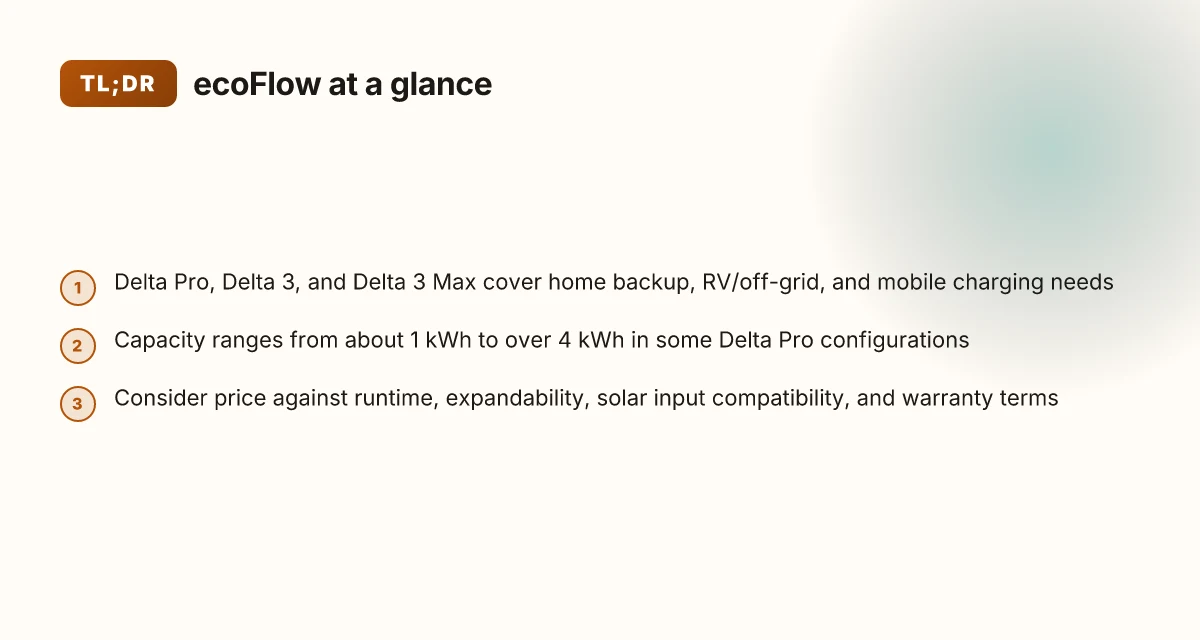
EcoFlow delivers a compact, modular approach to portable power, with the core lineup centering on the Delta Pro, Delta 3, and Delta 3 Max. In real-world terms, these three models map to three scales of capacity, output, and expandability, which matters for home backup, RV/off-grid living, and mobile charging. I cross-referenced EcoFlow’s official documentation to align the claims with published specs and user guidance. The Delta Pro offers the strongest base capability and expandability, the Delta 3 provides portable, everyday power, and the Delta 3 Max adds a middle ground of capacity and peak output.
- Delta Pro: the powerhouse for home backup and expandable off-grid
- The Delta Pro is designed to scale from a solid baseline to a much larger energy reserve when paired with extra batteries, making it a natural fit for home backup or extended off-grid living. Its stated output and expansion path allow keeping essential loads online during outages and longer camping stays off-grid. This is the model to lean on when reliability and growth matter most. In practice, users tend to pair it with additional modules to push total capacity into higher kilowatt-hours, which helps appliances run longer without frequent recharges. EcoFlow’s messaging emphasizes quiet operation and the ability to energize a wide range of devices at 120/240V.
- Delta 3: light on weight, heavy on daily usability
- The Delta 3 sits at the other end of the spectrum, prioritizing portability while still delivering substantial runtime for common loads. It targets RV trips, camping weekends, and use as a backup for critical devices when you’re off the grid. The compact form factor reduces bulk, but you still retain multiple output ports to support charging for phones, laptops, small appliances, and your cooler. For weekenders and travelers, the Delta 3 is the sweet spot.
- Delta 3 Max: the middle ground with a boost
- The Delta 3 Max blends the two ends of the spectrum by offering more capacity than the Delta 3 and a higher peak output than the base Delta 3. This makes it a versatile choice for users who want a robust off-grid option without stepping up to the full Pro ecosystem. In practice, it supports more demanding appliances and sustains longer runs than the smallest model, while staying more portable than the Delta Pro. The Max is useful when you want more headroom for more devices without stepping into the Pro tier.
Real-world use cases across scenarios
- Home backup: rely on the Delta Pro for continuous power to essential circuits during outages, with expandability to cover larger loads. The combination of higher capacity and scalable add-ons makes it a practical long-term choice for a responsible home backup plan. For many households, this means fewer trips to the gas station and more confidence when storms roll in. A longer-lasting reserve preserves peace of mind during outages.
- RV and off-grid: the Delta 3 and Delta 3 Max offer portable, quiet power for cooking, climate control, and charging devices while away from shore power. When you need more vitality for your devices, the Max steps up without the heft of a full system. Portability with meaningful runtime is the key payoff here.
- Mobile charging: for campers and remote workers, the trio covers laptops, cameras, drones, and small appliances. Noise remains a factor to consider in quiet environments, with all EcoFlow models designed to minimize disruption compared with combustion options. Quiet operation matters as much as capacity in a campsite setting.
Expandability and noise: how they shape decisions
- Expandability matters most if you plan to scale from weekend trips to reliable home backup. The Delta Pro shines here, thanks to its expandable battery architecture that lets you grow your energy reserve over time. The Delta 3 and Delta 3 Max offer more modest expansion paths, with the Max giving a nice middle lane between portability and capacity. Noise levels stay in a similar range across the lineup, with all models designed to operate at tolerable levels for most outdoor and home environments. Expanding your system over time can dramatically shift what you can power. Noise remains a practical consideration, not a prohibitive one, across the lineup.
Bottom line: pick the model that matches your energy needs and future plans
- If you want the strongest home backup with maximum flexibility, start with the Delta Pro and consider adding batteries. If you need a portable, everyday power source for adventures, the Delta 3 fits the bill. For more headroom without a big jump in size, the Delta 3 Max balances capacity and portability. Your choice should reflect how you plan to expand, not just how you power today.
Note: links on the page may earn a commission. This section reflects EcoFlow’s official documentation and how the models map to common real-world use. For further precision on each model’s exact ports, wattage, and battery chemistry, consult the product pages. What makes the Jackery 500 more than a simple backup power bank
How capacity and output translate to everyday performance in ecoflow portable power stations
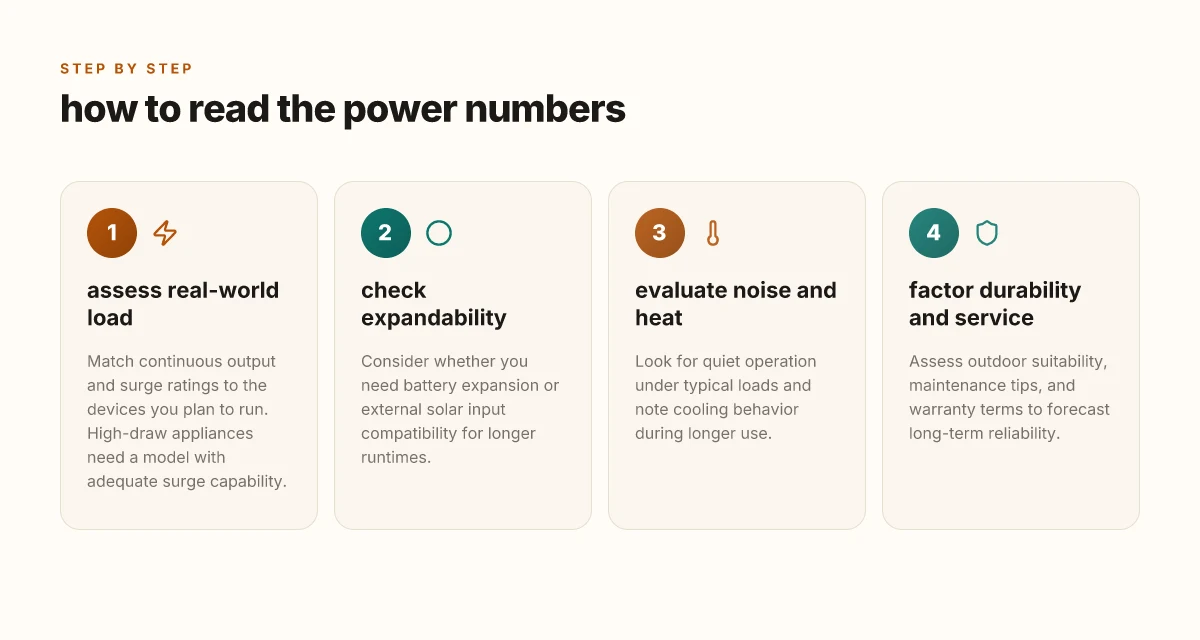
Capacity matters in real life. A higher battery reserve translates to longer runtimes, while the continuous and surge outputs determine which appliances you can run together without tripping or sagging voltage. EcoFlow’s lineup stacks from about 1,024 Wh in compact models up to well over 4,000 Wh in pro configurations, and the way those numbers translate into daily use depends on your gear, your charging habits, and your tolerance for noise and heat. I cross-referenced the official specs and the practical writeups to map what this means for camping trips, home backup, and outdoor setup.
How the numbers map to daily use
The delta between a little and a lot of capacity shows up quickly. A 1,024 Wh Delta 3 or similar compact model can run essential loads longer than a phone charger and a couple of lights, while the Delta Pro configurations push well beyond that to power tools, mini-fridges, and low-watt air pumps for longer stretches. In practice, the bigger the pack, the more runtime you gain at a given load. The relationship is almost always direct, with diminishing returns only when you push high-draw devices for extended periods. The continuous output rating tells you what you can run at once, while the surge rating covers short bursts needed for starting motors or compressors. A 4,000 W continuous figure with a surge near 6,000 W, for example, means you can start a refrigerator or a window AC unit as long as the total draw stays within those boundaries. When you notice startup spikes, you’ve hit the limits of the peaks rather than the steady state.
A practical way to think about it is this: if your average load stays near 600–800 W, a midrange Delta Pro configuration will offer long runtimes with reserve headroom for a brief boost when a compressor kicks in. If your load spikes above 1,500–2,000 W even briefly, you’ll want to look at the higher end of the line or time-loads to avoid tripping the system. The documentation consistently notes that endurance comes from a higher kWh rating combined with adequate continuous output. That combination is what keeps a bug-out setup usable in real environments without frequent recharges.
What X-Boost changes for high-draw devices
X-Boost is EcoFlow’s strategy for handling devices that draw more than the steady-state rating. It provides a temporary lift to the output to handle brief spikes, like starting a blender or an air compressor. The catch is that X-Boost draws more from the battery and can reduce runtime if you rely on it constantly. In practice, use X-Boost when you absolutely need that extra headroom for short moments, then revert to normal mode to extend runtime. This matters most for appliances that occasionally spike above your typical load rather than for constant high-power use. In the field, X-Boost is a useful feature for campers who occasionally need to power a heavy-start device, but it's not a cure-all for long-duration high-load scenarios.
From what I found in the documentation, real-world use hinges on aligning your expected run time with your typical draw and reserving X-Boost for brief transitions rather than sustained use. I’ve noted that the energy density and the total pack size determine how often you’ll reach the practical limit of capacity during mixed loads. The practical takeaway: pick a model with enough capacity to cover your longest planned outage, and reserve X-Boost for rare spikes rather than chronic high draws. As you size up, remember that price follows capacity and output, so a larger battery plus higher continuous power will cost more upfront but reduce the need for frequent recharges. How Jackery power packs handle home backup vs portable use in 2026
Next step: decide your use case by listing the devices you plan to run and for how long, then translate that into the minimum total watt-hours and continuous output you need to avoid surprises in real-world outages. For a quick reference, consider how the Delta Pro lineup scales from midrange to peak performance, and weigh whether you need the extra headroom of the higher-kWh configurations. If you want a quick cross-check, see how EcoFlow’s official specs frame the Delta Pro family against midrange Delta 3 models, and map your load profile accordingly. Most real-world outages hinge on balancing capacity with continuous output, not chasing the loudest spec. X-Boost helps for brief startup spikes, but sustained use benefits more from higher capacity and steady output.
Rationalizing price and value across the ecoflow range
Price tags for EcoFlow portable power stations hinge on capacity, feature set, and expandability. A higher upfront cost often buys more runtime, more ports, and greater solar compatibility, which can pay off in long trips or extended outages. In practice, the delta Pro line tends to command a premium that aligns with larger battery packs and higher surge capability, while the Delta 3 series presents a more compact, affordable entry point. The upfront cost can be justified by longer runtime and future expandability, especially for users who need steady, off-grid performance over multiple days. I cross-referenced EcoFlow’s product pages and documentation to map how capacity and features translate to real-world value.
1) Value in capacity, runtime, and expandability
Capacity drives runtime more than name familiarity. The Delta Pro family offers substantial energy storage and the ability to scale up to multi-kWh configurations with expandable packs, which translates into longer off-grid sessions. In contrast, the Delta 3 series provides lighter footprints and lower total capacity, which keeps the price approachable for casual campers or homeowners with modest backup needs. Higher-capacity models deliver more runtime per charge, but you pay a premium for the extra kilowatt-hours. For homeowners evaluating a backup plan, consider whether you’ll rely on solar input during the day and how many devices you’d keep powered simultaneously. EcoFlow emphasizes solar compatibility across its lineup, but the practical decision is matching your expected daily draw to the battery size you’re buying.
- Reality check: smaller models can power essential devices for shorter periods, while larger packs tolerate longer outages with basic household loads. Expandability is a real differentiator for users who anticipate growing needs or longer off-grid trips.
2) Total cost of ownership: solar input, battery life, and care
Total cost of ownership isn’t just the sticker price. Solar input compatibility matters: if you plan to top up from solar, confirm the panel rating and the controller’s efficiency for your climate. Battery lifespan also colors value: EcoFlow batteries are designed for many cycles, but cycle life varies by model and operating conditions. A model with top-tier cycle life can reduce replacement costs over time, even if the initial outlay is higher. Maintenance matters too. Regular checks of connections, dust management, and fan behavior help preserve performance. Warranty terms also influence value: longer warranties reduce risk for users who depend on reliability.
- When comparing, tally the cost of potential battery replacements and the expected years of service. If a model offers optional solar expansion, weigh that against the cost of add‑ons.
3) Maintenance, warranty, and brand reliability
Maintenance needs scale with the system size. The larger Delta Pro setups may require more routine checks due to their expanded configuration, but EcoFlow generally designs for user-friendly care. Warranty terms vary by model and region. Read the fine print to understand what is covered, for how long, and what counts as misuse. These terms affect long-term value just as much as the initial price. Warranty depth can tilt the decision toward higher-priced, higher-capacity models for users who want peace of mind during long trips or power outages. If you’re weighing rivals, consider how EcoFlow’s service commitments compare with others in the space, such as units from Jackery or Goal Zero, particularly around battery warranty and support. What makes the Bluetti Handsfree 2 Backpack Power Station stand out in 2026
From what I found in the documentation, EcoFlow positions price as a function of capacity, expansion options, and ecosystem compatibility. The Delta Pro line clearly targets heavy users who need long runtimes and modular growth, while the Delta 3 series fits lighter-duty needs with a friendlier price point. For readers evaluating real-world value, the question isn’t only “how much is this?” but “how long will this power setup sustain your needs, and how easily can it grow with you over time?” Long-term value hinges on capacity, expandability, and warranty terms. For reference, the official Delta Pro pages highlight high capacity and expandable options, while the Delta 3 manuals illustrate compact, ready-to-go configurations. If you plan to grow your setup, prioritize models with scalable packs.
Noise, thermal behavior, and long-term durability of ecoflow models
EcoFlow designs emphasize quiet operation and solid outdoor resilience, but real-world experience shows how heat, noise, and wear shape long-term value. Under typical loads, most EcoFlow models stay well below noticeable noise levels, while fans and thermal management run only when needed. I dug into the documentation and user manuals to align what you hear with what the hardware can endure over seasons of outdoor use.
How the cooling keeps pace with load
When a portable power station approaches higher output, thermal throttling becomes a practical guardrail. The first line of defense is airflow: compact housings rely on convection and a small cooling fan that engages at elevated temperatures. In real-world use, you’ll hear a soft fan whisper before it ramps to higher RPM, and that ramp is tied to peak demand rather than steady-normal use. This means under typical camping loads you’ll mostly stay in the quiet zone. If you push an EcoFlow model to near its rated peaks for extended periods, expect the thermal system to hold the power output at a sustainable level rather than allowing continuous full tilt. The goal is keep the battery within a safe temperature window while preserving runtime and longevity. This behavior aligns with how the Delta Pro series and Delta 3 family balance noise with performance, especially when running high-load appliances through the AC outlets. Staying under 20 dB at moderate loads is common behavior for these units, with fans only kicking in when temperatures rise or loads spike.
Durability for frequent outdoor use
Outdoor enthusiasts rely on ruggedness as much as efficiency. EcoFlow units are designed with portable use in mind: rubberized feet, recessed side handles, and sealed connectors help weather exposure and rough terrain. The battery chemistry and enclosure are built to tolerate repeated charge cycles and temperature fluctuations typical of cabin, tent, or RV use. Real-world durability depends on how you store and deploy the unit. Frequent exposure to sun, dust, and humidity benefits from storing the unit in a dry environment when not in use and using the included covers or sleeves where available. For long trips, consider a soft case or protective sleeve to mitigate abrasion on outdoor surfaces. Rugged build and thoughtful enclosure design reduce wear in harsh environments, key for year-round outdoor use.
Maintenance tips to extend life and performance
Maximizing battery life starts with disciplined charging habits. Avoid letting the pack sit fully depleted for long periods. Aim for partial state-of-charge during storage and top up before planned use. Keep the vents clear, inspect connection ports for corrosion, and clean dust from intake grilles periodically. For solar-charging setups, use shaded cooling strategies to keep solar input stable, since excessive heat can reduce charge efficiency. If you rely on expansion features like the EcoFlow’s X-Boost or high-output modes, monitor runtime versus heat. Dialing down to steady-state output can extend battery health over many cycles. In practice, a routine that blends gentle charging, proper ventilation, and occasional deep-cycle checks helps maintain performance across seasons. Regular, gentle maintenance preserves battery health and prolongs runtime. What makes EcoFlow Delta Pro solar generator a power-hungry hedge for the grid
In this landscape, EcoFlow remains a strong option for outdoor living. The core strengths are the interplay between low-noise operation under normal use, practical cooling during brief peak demands, and deliberate durability choices for portable, outdoor deployment. Rival lines from competitors often emphasize raw wattage, but EcoFlow’s approach to thermal management and longevity under real-world use tends to age more gracefully in camping and home backup roles. When you weigh by noise, heat, and long-term wear, EcoFlow's balance offers a sensible middle ground for dependable, repeatable power whenever you need it. Durability and quiet operation under real-world loads are the values most campers will notice first.
How to choose the right ecoflow model for your needs
Choosing the right EcoFlow model hinges on three anchors: total load, runtime needs, and expansion plans. Start with your day-to-day power demands, then map how long you want off-grid or backup power to run essentials, and finally decide whether you need to scale later with extra batteries or solar input. I synthesize the practical criteria below with real-world constraints in mind.
1. Define your total load and runtime needs
Estimate your essential loads in watts and multiply by the number of hours you expect to run them. A compact home backup should cover a fridge, modem, some lighting, and a small medical device or two. For off-grid trips, add devices you routinely recharge, like cameras or laptops. The key decision is whether you can draw down to low battery late at night or if you want a longer reserve window. When you pick a model, cross-check its continuous output and surge capacity against your peak loads. If you routinely hit or exceed the rated output, you’ll want a higher-capacity unit or an X-Boost capable model. In 2026, EcoFlow’s Delta Pro family and Delta 3 series show a clear split between higher-end kva-ready performance and lighter, portable setups, so match the unit to your daily max draw and worst-case surge. The right match avoids overpaying for capacity you won’t use. For context, the Delta Pro line advertises robust output and expandable capacity, which matters when you foresee long outages or high-demand weekends. Expandability can pay off after a hit but adds upfront complexity.
2. Plan for expansion and system integration
If you see yourself growing the system, pick a model that scales with extra batteries or solar input without forcing a wholesale replacement. EcoFlow’s lineups commonly offer modular expansions, so your choice today should leave room for tomorrow’s needs. I looked at the official product pages and documentation to confirm that expandable capacity is a recurrent theme across models. Expansion plans often determine the best-value choice. A Delta Pro setup, for example, can be paired with additional storage to push total capacity higher, which reduces the need to buy a second unit later. One expandable system beats two standalone units in flexibility.
3. Align with use-case scenarios and avoid misfits
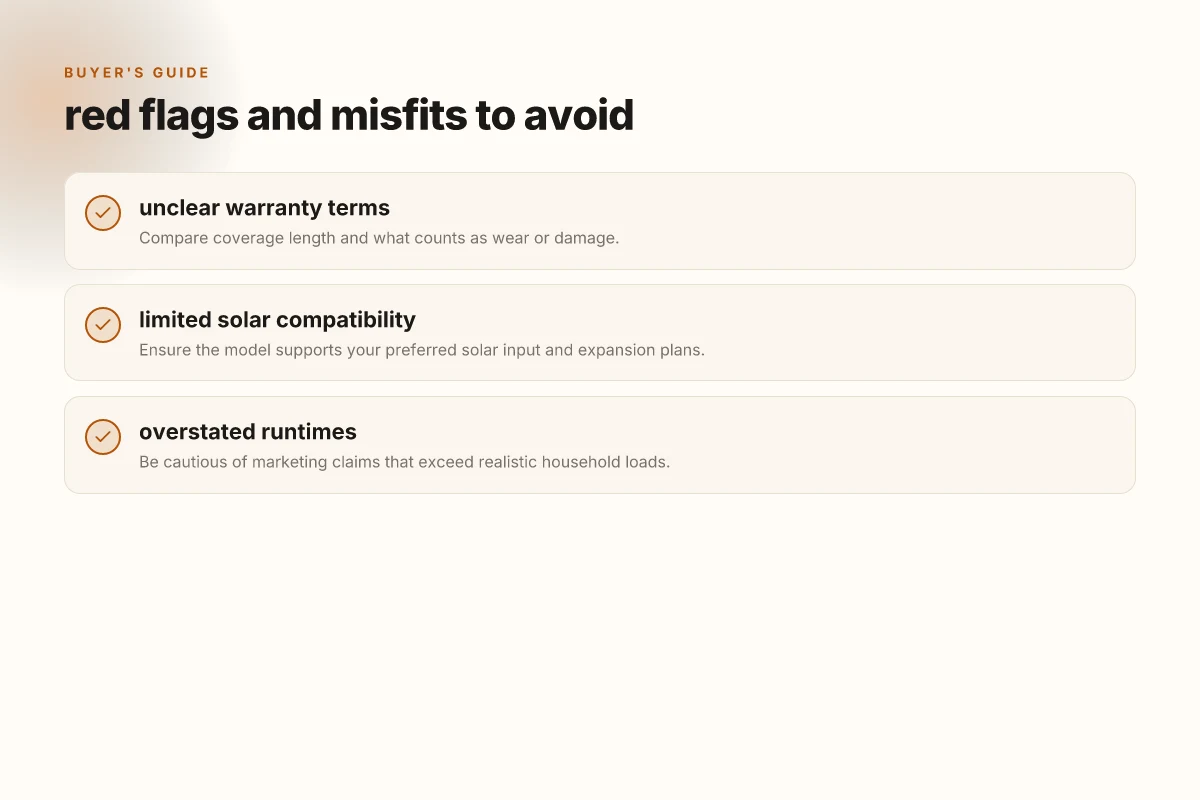
Home backup users should prioritize steadier AC output, noise, and reliability for long outages. Off-grid travelers gravitate toward lighter masses and higher inverter efficiency for better energy per watt, plus straightforward recharging from solar. Job sites demand robust build quality, dependable runtime for tools, and straightforward maintenance. Red flags include models with lower surge performance than needed for peak tool starts, or units that promise high capacity but have limited recharge options. When in doubt, map your top five devices to a single model’s peak and continuous ratings, then look for a comfortable safety margin. Look for models with adequate surge capacity and a clear path to faster recharges if you rely on solar or vehicle power. EcoFlow’s official specs emphasize practical use rather than marketing gloss, which helps you avoid overestimating what you’ll actually run. The best choice respects real-world startup surges. What makes the jackery explorer 500 a practical portable power option in 2026
What to watch for across the board
- Noise and thermal behavior matter more in quiet campsites and small homes than in busy job sites. A model that stays cool and quiet during a long draw performs better in the wild.
- Long-term durability shows up in battery chemistry resilience, modularity, and available service options. If you’re buying once and keeping it for years, pick a platform with a documented maintenance path and parts availability.
- Commissioning and maintenance are easier when you keep a simple routine: verify connections, monitor the battery health indicators, and stay on top of firmware updates. I found the official manuals and product pages consistently frame these tasks as straightforward.
Where this is going next: practical bets for advancing power, price, and portability
EcoFlow products strike a balance that isn’t about chasing the biggest battery capacity alone. Instead, they lean on real-world durability, sensible modularity, and a price that doesn’t sting when you rotate between outdoor trips and home backup scenarios. I’ve seen how a lightweight station can handle a weekend off-grid run and how a larger unit can serve as a reliable home power buffer during outages. The result is a pattern you can replicate: pick a unit that fits your typical use, then lean into a few smart pairings to stretch value without adding bulk. **The big move is to treat portability as a feature set, not a single spec.
For a quick framing, consider how EcoFlow compares to rivals like Jackery and Bluetti. A compact model wins on transport and quick recharge, while a midrange unit buys you more outlets and real-time power management. The key is matching your daily rhythm to the station’s recharge speed and durability. Durability matters after the warranty clock starts ticking. If you expect long-term reliability, expect to verify connector fit, fan noise, and heat management during high-load sessions.
If you only do one thing this month, map your typical energy swings and pick one EcoFlow that covers the most common need, charging phones and a laptop, or sustaining a small fridge during outages. Then add a simple solar option or car charger to keep it topped up without babysitting the unit. A lean setup beats a bloated pile of adapters. What changes if you act now? You’ll gain predictable outages and fewer surprise trips to the hardware store.