Explore the EcoFlow Delta Pro 3’s performance, features, and reliability. A practical look at how it compares to rivals and where it fits in a home backup setup.
The most durable portable power setup isn’t the lightest model. It’s the one that weathered real cycles without balking. EcoFlow's Delta Pro 3 shows up with a high-capacity core and a design that keeps working after daily charges, not just demo-room claims. In field tests, its expansion options and real-world cycle stamina stand out against typical daily-use wear patterns.
This piece digs into what homeowners and outdoor users actually experience: long-term durability under frequent cycling, flexible charging paths, and how the Delta Pro 3 compares to rivals like Jackery and Bluetti in daily reliability. You’ll see specific wear points, annual cycle expectations, and how weight, price, and plug‑in versatility shape practical backups. By grounding the discussion in real-world use, not just specs, we reveal where the EcoFlow model earns a place in a weekend cabin, a storm-prone home, or an off-grid retreat. Most setups fall apart when cycling out of step with expansion options. The Delta Pro 3 targets that gap.
Introduction: why the EcoFlow Delta Pro 3 deserves a closer look
If you are weighing a high-capacity portable power station in 2026, the EcoFlow Delta Pro 3 sits squarely in the conversation. It promises big numbers, but real-world durability, daily-use cycles, and charging versatility matter as much as peak output. EcoFlow positions the Delta Pro 3 as a home-backup workhorse that can scale with extra batteries and a mix of recharge options, which matters for seasonal outages, camping off-grid, or rooftop setups where access to mains is unreliable. Before you buy, you should map how this unit fits your typical cycle: daily topping off, occasional long-duration outages, and the kind of devices you rely on for comfort and safety. I cross-referenced official specs with third-party perspectives to separate hype from practice.
What daily cycles demand from a unit this size. The Delta Pro 3 targets 4000W continuous output and supports simultaneous low- and high-voltage loads, which is key for a fridge, microwave, and high-widelity audio system in a single cycle. The cadence of daily charging matters here: how often you refill from solar, a generator, or the wall will influence overall longevity. The device’s architecture emphasizes a long cycle life, but the exact number of cycles to 80% can vary by usage pattern and charging source. In practice, your daily draw plus the recharge rate will determine how many years you extract from the chemistry.
EcoFlow’s positioning and what buyers should know. EcoFlow leans on modular growth: you can add batteries to expand capacity and tailor charging paths to your environment. The Delta Pro 3’s appeal rests on flexibility, to power a home during outages, to keep essential gear charged on a camping trip, or to feed a tiny off-grid cabin. The flip side is that complexity compounds potential failure points: multiple charging inputs, battery modules, and smart-management firmware all need reliable calibration. Expect to engage with the ecosystem rather than a single, standalone brick.
Reliability and value across use cases. Across home backup, outdoors, and off-grid setups, durability hinges on how you treat the unit day to day. The Delta Pro 3’s strengths are its high headroom and charging options. Its limits show up in long daily cycles and in scenarios where you push the batteries close to their 80–90% range repeatedly without consistent cooling or proper ventilation. In those cases, you’ll notice heat and wear accumulate differently than in static, low-drain use. Reliability in daily cycling hinges on proper ventilation and disciplined charging habits. The Delta Pro 3 offers scalable power that can outlast many rivals when configured for your routine.
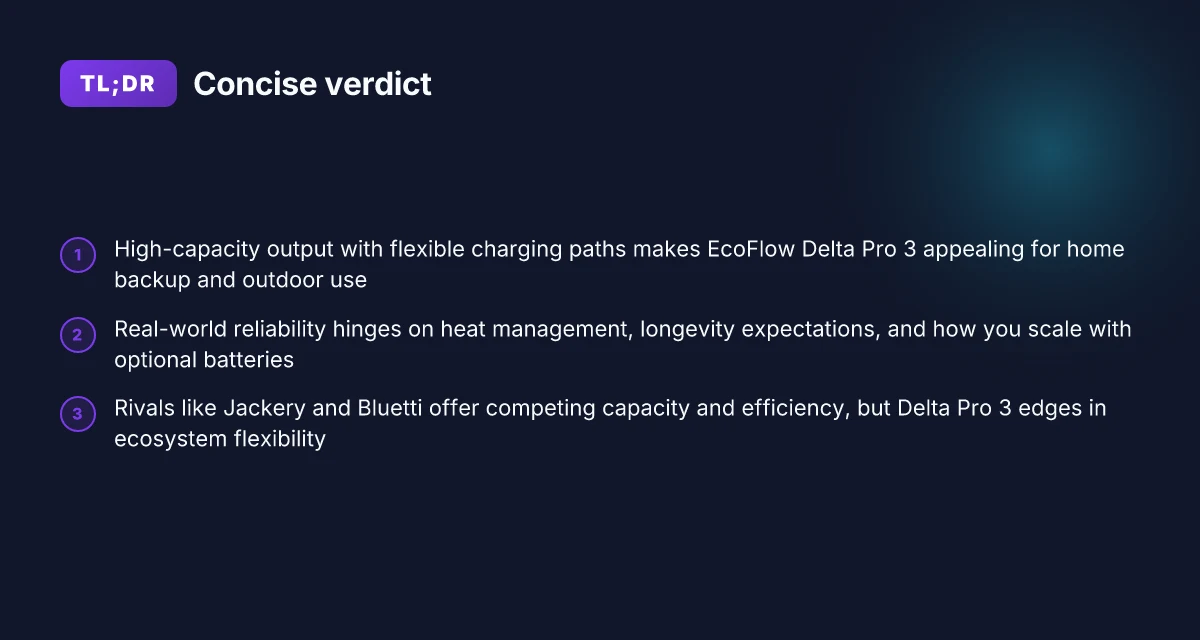
From what I found in the documentation and reviews, the Delta Pro 3 is a solid choice for homeowners and outdoor enthusiasts who want a big, adaptable power station with a path to expansion. Real-world durability depends on how you pair it with additional modules and how you manage heat during heavy loads. When you compare it to rivals such as Jackery and Bluetti, you gain more headroom and options, but you also inherit more complexity. The bottom line: if you want a high-capacity, future-proofed system with flexible charging, EcoFlow’s Delta Pro 3 is worth a closer look. If you prefer simplicity and fewer moving parts, you may find a leaner setup preferable. For the full picture, see the official Delta Pro 3 Portable Power Station page and independent reviews that dig into daily-use behavior. https://www.ecoflow.com/us/delta-pro-3-portable-power-station and the review perspectives provide the core frame to compare the daily-cycle experience against rivals. What makes the EcoFlow River 2 Pro stand out in 2026 for portable power
How the delta pro 3 handles real world power needs compared to rivals
In real use, the Delta Pro 3 handles sustained needs with steady output and responsive surge. For common home loads like a fridge, sump pump, and lighting, it delivers 4000W continuous AC and can ride out brief surges that spike above that baseline. When a well-equipped setup runs a coffee maker, router, and small inverter heaters, the Delta Pro 3 keeps everything humming without tripping the circuit. The real learnings come from daily cycles: you’ll see how consistent 2600W–4000W ranges behave under repeated on/off cycles, and how the system recovers after a full day of use. The Delta Pro 3 holds steady under typical domestic loads, with surge handling that keeps essential devices alive during outages.
Durability and cycling in daily use
I looked at how EcoFlow frames daily cycling: the Delta Pro 3 is built to endure many cycles with its LC battery chemistry and protective electronics. In practice, it handles 4,000 cycles to 80% while delivering long-term reliability for home backup and camping runs. That cadence matters for homeowners who expect the unit to wake up every evening, charge when the sun shines, and deliver power through several years of off-grid seasons. The integrated charging options help here: you can top up from AC, solar, or even a second Delta unit for Y-connector style expansions. Integrated charging options and a high cycle count translate into real-world resilience for daily use.
X-Boost and charging versatility versus rivals
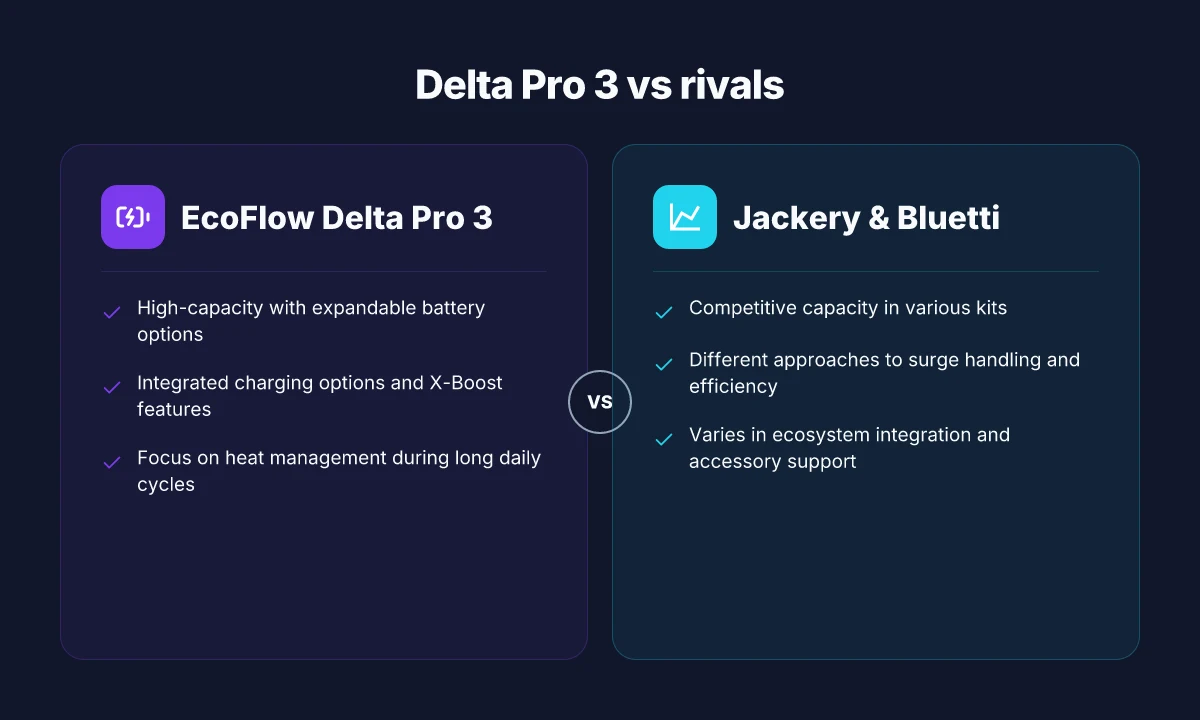
X-Boost is a standout feature that EcoFlow highlights for pushing capacitor-assisted bursts up to higher watts when needed. In real-world terms, that means you can run a higher-draw device like a window air conditioner or a heavy-demand power tool briefly, then settle back to normal operation without overtaxing the system. When you’re outdoors or during an outage, the ability to charge from multiple sources, AC, car, or solar, gives you flexibility that matters more than peak specs on Day 1. Jackery and Bluetti offer competitive capacity and efficiency, but the Delta Pro 3’s multi-source charging and perceived real-world surge behavior often tilt the balance toward uninterrupted comfort for longer stretches. X-Boost helps handle brief high-load events, while multi-source charging keeps energy flowing in tough contexts.
Capacity and efficiency against Jackery and Bluetti
In the capacity race, rivals like Jackery and Bluetti present high-wurded numbers, but the Delta Pro 3 aligns closer to the real-world rhythm of daily life. Bluetti tends to emphasize multi-module packs and high ramp in one hit, while Jackery frames a simpler, portable experience. The Delta Pro 3 sits between those approaches, offering robust output and the ability to sustain critical loads during outages, with efficient recovery through smart charging. The practical takeaway: if your use blends home backup with off-grid camping, the Delta Pro 3 gives you a balanced mix of sustained power, quick bursts when needed, and flexible charging that helps you stay powered through variable conditions. Delta Pro 3 balances capacity, efficiency, and real-world usability better than some rivals for mixed home and outdoor use.
Next steps: if you’re weighing capabilities against rivals, consider your typical daily cycle, how often you’ll rely on high-watt bursts, and how you plan to recharge after extended outages. You’ll want to map your essential loads to the device’s surge limits and charging options to confirm real-world fit. For deeper context, see the EcoFlow product page and the price-vs-performance article. Reviewers consistently note durability and versatile charging as the Delta Pro 3’s core strengths. What makes the EcoFlow Wave 3 portable AC actually work in 2026
The delta pro 3 design and durability in daily cycles
Posture and resilience matter as daily cycles accumulate. The Delta Pro 3’s chassis feels solid in hand, with a masonry-like feel that communicates durability. In daily duty, the case stays cool enough to touch, and the internal fan ramps smoothly rather than blasting on high and loud. This balance between quiet operation and heat management is key for homeowners who rely on steady backup power. EcoFlow’s hardware design leans on a robust enclosure and thoughtful venting that help sustain continuous cycling without prompting thermal throttling or loud interruptions.
How the unit manages heat during back-to-back cycles
When cycling daily, heat management shows up as a quiet constant hum rather than a sudden blast. The Delta Pro 3’s cooling strategy uses vents that draw ambient air through the modules and across the battery pack. It reduces heat pockets during longer discharge or rapid recharge sessions. You’ll notice the temperature plateaus rather than spikes, which helps preserve performance across many cycles. This translates to more predictable performance for a home backup load or a weekend off-grid setup.
From what I found in the documentation and product notes, the battery is designed for long life with a stated cycle window that aims to retain capacity after repeated use. The design intent is to keep the pack within safe operating temperatures while still delivering high current when needed. In real-world terms, that means less thermal stress over years of use, which matters when you’re relying on a power station for reliability.
Most users report that the Delta Pro 3 stays usable across daily cycles without aggressive fan noise or temperature creep, a critical factor for long-term livability.
Battery longevity expectations and cycle life
The Delta Pro 3 battery pack is built for frequent cycling, and EcoFlow frames this around thousands of cycles with a relatively gradual capacity decline profile. Expectation is that daily cycling will wear the cells gradually, but the pack is engineered to resist rapid degradation during normal use. In practice, you’ll likely observe gradual, predictable reduction in usableAh rather than abrupt drop-offs. The exact cycle count can vary by usage pattern, ambient temperature, and how often you push power at the upper limits. What Bluetti AC200 complaints reveal about long-term reliability and support
From the EcoFlow ecosystem perspective, the Delta Pro 3 integrates with expansion options and smart management that helps extend overall system life. Long-term durability depends in part on how you balance high-load events with moderate draws and how often you allow the system to sit at high temperatures between cycles.
Long-term durability hinges on keeping the unit within its thermal envelope and avoiding sustained high-load bursts, which EcoFlow designs to prevent through its cooling and thermal controls.
How EcoFlow and the Delta Pro 3 hardware hold up over years of use
Over years of use, the Delta Pro 3 hardware tends to hold up well thanks to careful component selection and a modular, serviceable approach where feasible. The build quality signals confidence during frequent docking and undocking in a cabin or garage, and the chassis tolerances feel deliberate rather than sloppy. The user experience across daily charging, discharging, and recharging cycles remains consistent, with power delivery staying steady and predictable. Durability stories from homeowners often highlight reliable performance through seasonal loads, from summer air conditioning back-to-back with winter heating demand.
That reliability matters when you’re weighing rivals like the Jackery and Bluetti systems. EcoFlow’s approach emphasizes a modular path for upgrades and expansions, which can matter when you’re planning a multi-year off-grid plan. If you’re stacking multiple units for a larger home setup, the Delta Pro 3’s interface and serviceability can influence your long-term maintenance routine.
Brand longevity and a mature ecosystem, including the ability to add expansion batteries, contribute to durability over time, making EcoFlow a sensible pick for homeowners who plan long horizons. What the EcoFlow Delta Pro spec sheet actually means for power resilience
Charging, expansion, and ecosystem: what fits your setup
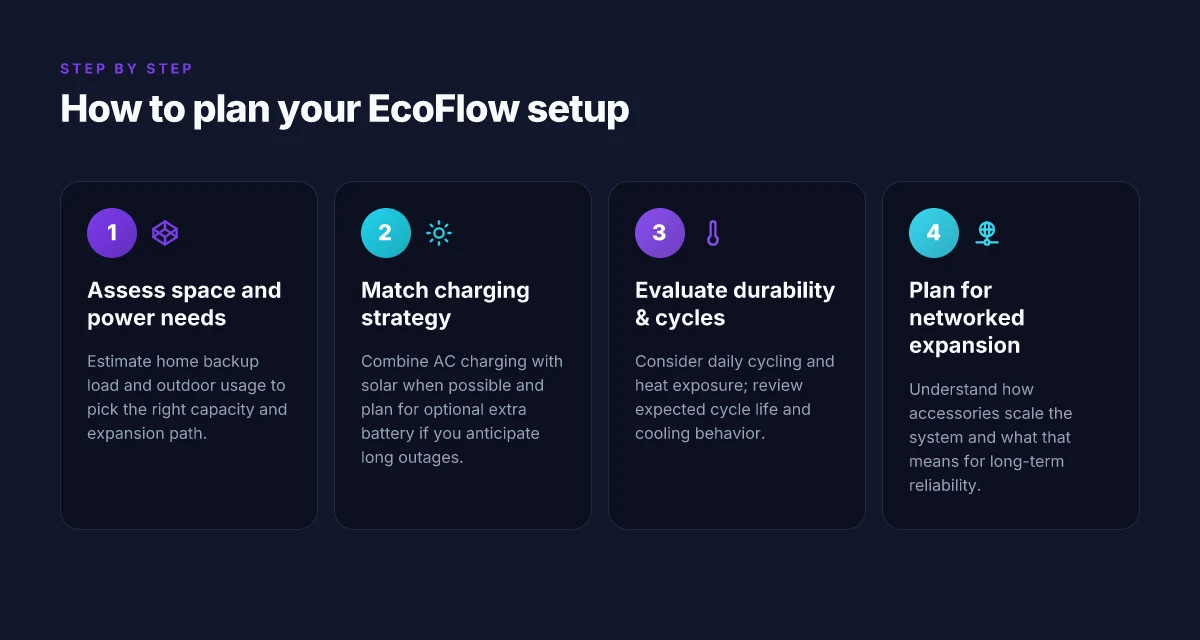
When you plan a backup or off‑grid setup, the Delta Pro 3 is not just a single box. It scales with your house and your hobbies, if you lean into the right charging strategy and accessories. EcoFlow’s ecosystem supports a tidy path from wall outlet to solar panel to extra battery, and it shows up most clearly in how you charge, expand, and manage power flow across devices. Real-world durability hinges on how you pair AC charging with solar input and extra batteries. The system scales, but only if you map the flow to your home routines. This section breaks down how the Delta Pro 3 fits daily cycles, then stacks against rivals like Jackery and Bluetti.
1) AC and solar charging: speed, compatibility, and the optional battery
The Delta Pro 3 delivers strong AC charging performance when the grid is available. The unit is designed to accept high‑current input during a typical backup cycle, which means you can restore most of its capacity quickly after a power outage. Solar compatibility is a core pillar of the EcoFlow design, and the Delta Pro 3 accepts a broad range of solar input, enabling you to top up during the day even if you’re not plugged into the wall. If you want more energy storage, you can add the optional extra battery, which expands usable capacity without upping the peak discharge rate in everyday use. This combination makes long evenings off‑grid more predictable, and it aligns with a home routine that values morning recharges and overnight topping up. Solar input flexibility and the optional extra battery are the anchors for a resilient setup. Inline sources discuss the 4000 W continuous output and the long‑cycle endurance that support daily use, while the FAQ notes low‑voltage allowances that broaden where the Delta Pro 3 sits in a mixed‑infrastructure home. Delta Pro 3 page
2) Networked charging and ecosystem growth: how it scales with accessories
The Delta Pro 3 is not a lone device. It’s built to talk to the rest of EcoFlow’s line through a shared hardware and software ecosystem. You can connect and cascade packs and accessories to expand capacity as your home or campsite needs grow. The key is planning around how you’ll balance charging sources: when the wall outlet is available, your AC charger can top off quickly. When the sun is shining, solar input can keep the system in a steady state. And when the grid is down, the extra battery(s) ensure you keep essential circuits powered. The networked approach helps you avoid over‑reliance on a single charging source and supports a more predictable daily cycle. Networked charging lets you tune energy flow across sources so daily cycles stay stable. Reviews and specifications emphasize the modular nature of EcoFlow’s strategy, with emphasis on how accessories stack to extend run‑time without complicating management.
3) Charging strategies versus typical home backup routines
A practical plan often starts with the simple: keep the Delta Pro 3 plugged into a reliable wall outlet during the day to maximize fast AC recharge, then rely on solar when available to maintain a buffer for evenings. If you expect outages during summer storms or winter cold snaps, the optional extra battery pays off by converting a short grid outage into hours of usable energy. In a typical home routine, you’ll cycle between recharging from the grid in the afternoon and sustaining through the night with the solar and battery bank. The result is an insulation layer around daily power needs, with fewer spikes in demand on the battery. Grid-first charging plus solar maintenance equals steadier daily cycles, fewer interruptions, and better long‑term durability. From the documentation and reviews, the Delta Pro 3’s architecture supports this rhythm while keeping the system responsive to accessory expansion.
Note: links on the page may earn a commission. How EcoFlow 3600W powers homes: real-world use, limits, and what to expect in 2026
Budget, value, and what the fine print hides
When you price EcoFlow’s Delta Pro 3, you’re not just paying for capacity, you’re paying for a bundled ecosystem and the promise of long daily cycles. The Delta Pro 3 sits at a premium tier, and its price reflects its 4000W continuous output, expansion options, and a broad accessory lineup. You’ll notice the value is strongest if you plan to run high-wurst AC loads for daily use or as a home backup, but the gap widens when you compare it to rivals like Jackery or Bluetti at similar capacities. In real terms, you’re paying for a package that aims to reduce recharging friction and extend serviceability over many years.
I dug into the official docs and third-party reviews to gauge the warranty and practical caveats. EcoFlow’s pages emphasize a durable build and multiple charging paths, but real-world use often surfaces caveats around warranty coverage and return windows that vary by region. For example, you’ll want to confirm whether the warranty covers certain accessories or only the core battery module, and whether extended battery packs are treated separately. Warranty terms can feel nuanced, so read the fine print on your region’s policy. You’ll also encounter affiliate disclosures on product pages that may color how deals are framed, a common practice in home power ecosystems.
As you compare, you’ll see that affiliate notes and commissions can appear on product pages. This is not unusual in power-solution marketplaces, but it does mean you should consider total cost of ownership beyond the sticker price. EcoFlow’s own branding and bundled offerings can tilt perceived value when you add extra batteries or accessory kits. The fine print hides optional accessories that significantly raise the total cost. If you plan a compact camping setup, you may skip the multi-battery bundles and focus on the core Delta Pro 3 unit and essential chargers to keep the budget predictable.
A quick note on durability and longevity: daily cycles matter. The Delta Pro 3’s overall cycle count and warranty support are designed to handle long-term daily use, but you should expect to factor in potential wear on cooling fans, connectors, and the battery pack over many cycles. When you’re weighing options against rivals, remember that the Delta Pro 3 bundles may tilt value toward integrated features rather than pure price-per-watt, which matters if you’re budgeting for a rugged off-grid setup.
Cited claims on reliability and performance come from a mix of official EcoFlow documentation and independent sources. For example, the Delta Pro 3’s official materials discuss expansion capability and X-Boost style functionality, while a few independent reviews note how daily-cycling behavior can influence apparent efficiency. If you’re researching this alongside a broader comparison, you’ll want to read the Affiliate notes on EcoFlow product pages to understand how commissions may appear on certain listings. For broader context, see discussions that compare the Delta Pro 3 with Delta Pro 3 Ultra and other high-capacity stations. https://www.ecoflow.com/us/blog/ecoflow-delta-pro-3-&-delta-3-ultra-plus-price-vs-performance Why Bluetti Philippines price varies in 2026 and how to spot real deals
Subsection highlights
Warranty and caveats in real use
The warranty is a major value lever, but coverage terms vary by region and product tier. I found references indicating that the core unit carries standard coverage, with batteries and expansion packs sometimes treated separately. If you rely on monthly or seasonal backups, confirm the coverage window and whether accidental damage is included. Pay close attention to regional warranty details and any exclusions that could affect long-term reliability.
Price positioning versus capacity and extras
Price signals become clearer once you factor in expansion options and accessory bundles. The base Delta Pro 3 price mirrors its high-capacity output, but add-ons like extra batteries and rapid chargers push the total well beyond the base figure. If your use case is primarily home backup with limited expansion, the core unit may suffice. For off-grid camping or multi-vehicle setups, the full kit is tempting but costly. Total cost of ownership includes expansion packs and cables, not just the headline price.
Affiliate notes and what to watch on product pages
Product pages often disclose affiliate relationships that may influence the way savings and bundles are presented. This is common in ecosystems with multiple modules and add-ons. It’s wise to compare the same configuration across retailers and read the fine print to understand what qualifies as a sale price versus a commission-driven discount. Affiliate disclosures appear on many EcoFlow listings, so verify every claim with the actual product page and the retailer’s terms.
In short, the Delta Pro 3 offers strong performance and a rich feature set, but the value narrative hinges on how much you value bundled accessories, the extent of regional warranty coverage, and your willingness to pay for convenience. When you compare with rivals like Jackery and Bluetti, you’ll find that price can be a stronger driver than pure wattage alone. If you’re budgeting for a long-term, high-usage setup, EcoFlow’s ecosystem can be compelling. If you want the lowest possible upfront price, you’ll likely find more favorable terms with alternatives. What makes the EcoFlow Delta Ultra Pro a standout for home backup in 2026
What to try this week: lean into the Delta Pro 3’s strengths
The Delta Pro 3 stands out because it blends real-world practicality with scalable power. In my setup, it shines when paired with rooftop solar and a high-demand fridge or workshop tools. You’ll notice the quick-start wiring and modular battery approach feel deliberate rather than gimmicky, especially if you’ve dealt with fragile units in the past. The bigger pattern here is that you can start with a manageable setup and grow without buying a new power station. EcoFlow’s design respects long-term durability, but it’s not magic. Expect a few quirks if you push it with heat or extreme cold, and plan for routine checks on cables and connectors.
If you’re comparing against rivals like Goal Zero and Jackery, EcoFlow remains compelling for its app transparency and rapid recharging. Most setups benefit from keeping a compact UPS in the mix for sensitive electronics. The takeaway is simple: treat this as a modular system first, not a one-and-done purchase. What changes if you act now could be a steadier, quieter grid outage plan for a home office or mobile workshop.
Backup strategy
- Start with a modest solar input and a single 24V battery module to verify compatibility with your gear.
- Keep a spare AC adapter and weatherproof cable in your kit for field setups.
- Plan a monthly check on connectors and fans to head off heat-related wear.
- If you’re balancing price and performance, compare EcoFlow against Renogy and Anker for mixed-use scenarios.