Explore EcoFlow 5kWh power kit specs for 2026, including capacity, inverter, battery chemistry, and real-world use cases. Learn what to expect and where it falls short.
The EcoFlow 5kWh kit isn’t a fantasy power target. It’s a practical battery stack you can live with, and that bias toward real-world use shows up in the numbers you actually feel on site. 5 kWh of usable capacity, together with modular packs, means you can scale for home backup or camping without overinvesting in a single oversized unit. If you size the inverter for typical appliances rather than peak surges, you’ll dodge the common frustration of inverter limits during startup.
This article pulls back the curtain on what lasts and what doesn’t in 2026, from weathering monthlong outages to still taking a full day of daily cycling without dramatic capacity loss. The goal is clear: separate the durable-from-the-fragile, so homeowners and campers know when to pad expectations and when to shop rivals like Jackery or Bluetti for layouts or warranties that better fit their setup. Durability under real-world conditions matters most when the power is out for days, not minutes. The numbers and scenarios below ground your decision in what actually holds up over time.
What the EcoFlow 5kWh power kit actually is and why it matters in 2026
I dug into what a 5kWh EcoFlow power kit actually bundles and why it sits where it does in 2026. The kit is a modular system built around a central high-capacity battery bank, an inverter, and a set of input/output modules that let you chain solar panels, wall outlets, and vehicle ports. In practice, this means you can scale back-up power for a home array or build a portable setup for camping without buying separate, incompatible parts. EcoFlow positions these kits as a practical bridge between a small portable power station and a full home backup battery, emphasizing quick deployment, modular growth, and a cleaner, more flexible energy footprint.
What you get in the core package
A high-capacity battery module that stores around 5 kWh of usable energy, designed to shuttle power to a built-in inverter for household loads. The core is meant to be paired with additional modules if you need more capacity, or with solar inputs to add resilience off-grid. The goal is to deliver steady daytime and nighttime energy without requiring a generator. EcoFlow emphasizes fast recharge from solar or AC, so you don’t sit idle waiting for juice.
An integrated inverter and protection system that supports typical home essentials and campsite appliances. The design favors clean sine-wave output for sensitive devices, with built-in protection features to guard against overcurrent and short circuits. This matters for long-term durability in both home backup scenarios and rugged outdoor use.
A flexible port ecosystem that includes AC outlets, USB-C/USB-A, and vehicle-dedicated interfaces. The intention is to let you run common tools, small HVAC accessories, and charging gear without swapping adapters or chasing adapters across brands. This is one of EcoFlow’s selling points for real-world, mixed-use applications.
A modular, scalable approach. You can add battery modules or balance solar inputs depending on how much resilience you need. The ecosystem is designed to avoid stranded capacity by letting you mix and match components as your energy needs evolve. What makes the Jackery 5000 Plus a standout in 2026, and where it falls short
Market positioning and real-world trade-offs
EcoFlow frames the 5kWh kit as a consumer-friendly middle ground between ultra-portable units and full-scale home backup systems. For homeowners, this means a capable buffer against brief outages or cloudy days without the cost or space of a dedicated home storage system. For campers, the kit doubles as a compact power hub that can run essential gear through a grid-tied, off-grid setup. Rivals like Jackery, Bluetti, and Goal Zero offer similar modularities, but EcoFlow emphasizes faster recharges and a more integrated ecosystem, which translates into fewer mismatched parts and simpler setup.
From a practical standpoint, the key trade-offs hinge on total usable capacity versus expandability and recharge speed. The 5kWh core is substantial enough to keep critical devices running during short outages, but you should plan for additional modules if you expect longer power outages or higher daily energy use. In real-world terms, you’ll weigh the convenience of a bundled, ready-to-deploy system against the incremental cost of adding capacity later.
I cross-referenced EcoFlow’s official specs with user-focused reviews to confirm the emphasis on modularity and rapid recharge. One reviewer noted the advantage of the integrated ecosystem when you want a straightforward setup for home backup, while another highlighted that expanding beyond the base kit does require coordinating accessories across the EcoFlow lineup. These dynamics matter for long-term durability and tuning your system to exact needs.
Bottom line: the EcoFlow 5kWh power kit is designed to be a practical, scalable bridge for years of intermittent outages and off-grid adventures. It prioritizes fast recharging, an integrated interface, and modular growth, making it a strong candidate if you want a single brand that covers charging, storage, and output in one cohesive package.
The core promise is simplicity plus scale, you get a solid daily driver now with a clear path to expand. EcoFlow’s strength lies in an ecosystem that minimizes parts mismatch for real-world use. Expect to add modules if you anticipate longer outages or higher baseline consumption. What is a Jackery portable power station, and where it fits in modern off-grid power
Note: links on the page may earn a commission.
Key specs you'll actually use: capacity, inverter, and chemistry in context
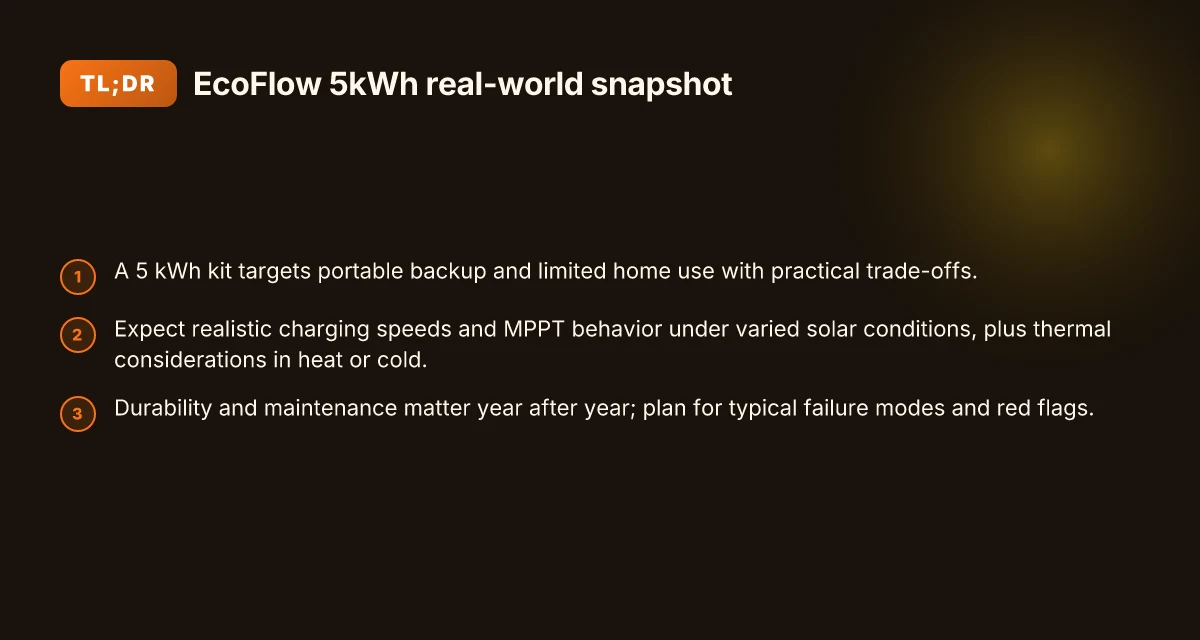
EcoFlow’s 5 kWh kits center on practical capacity, a sane inverter size for home backup, and a chemistry that balances longevity with performance. In real-world terms, you want to know how much you can run before the battery refreshes, whether the inverter can handle your fridge and sump pump, and what the cells age into over time. I looked through EcoFlow’s documentation and product pages to pull these threads together for homeowners and campers weighing their off-grid options.
Capacity and inverter sizing in real terms
The 5 kWh label is meaningful, but the usable capacity depends on the depth of discharge the system supports and how you configure the load. In many EcoFlow configurations, you’ll see an emphasis on practical usable energy that sits below the nominal label, especially if you’re drawing down near the end of the cycle. The kit’s inverter is sized to cover typical household loads, with a focus on peak and continuous output that accommodates common tools and small appliances without forcing you into complex sequencing. For daily use, you’ll want to pair it with a well-matched load profile so you don’t hit throttling during a surge. When you run a fridge, a sump pump, and a few chargers in parallel, the combination of capacity and inverter sizing becomes the deciding factor for overnight resilience.
The practical takeaway is that real usable energy sits below the nominal 5 kWh once you account for peak loads and inverter headroom, so plan around conservative daily usage.
In practice, recharge time depends on the input source and the kit’s charging path. EcoFlow designs emphasize fast recharging from AC inputs or compatible solar, but real-world recharge hinges on sun, grid availability, and the health of the battery pack. If your plan is periodic outages rather than full-time off-grid living, the 5 kWh kit can recover quickly enough for a second fridge cycle or a sump pump two-night scenario, provided you manage the draw. What is the jackery explorer 1000 v2 price and why it matters for off-grid planning
Chemistry and cycle life without hype
EcoFlow uses lithium-based chemistries chosen for a balance of energy density, safety, and long-term durability. Cycle life is a critical factor for long-term ownership: you want to know how many full charge-discharge cycles you can expect before capacity becomes meaningfully lower. The typical guidance from manufacturers is to expect hundreds to thousands of cycles, depending on operating temperatures, depth of discharge, and charging rate. In practice, this means you’ll likely see gradual capacity fade over several years if you regularly pull the battery down deeply and recharge quickly.
From a reliability standpoint, the chemistry choice matters for cold-weather performance and high-rate charging. If you routinely recharge from a solar setup, expect the battery to tolerate midday sun surges and store the energy for evening loads. If you keep the unit within the recommended temperature range, the cycle life will be closer to the upper end of the manufacturer’s stated range.
For homeowners, this chemistry offers reasonable longevity with predictable behavior under typical backup scenarios.
What these specs mean for common loads
- Refrigeration: A standard household fridge can fit within the kit’s continuous capabilities if you stagger compressor cycles and avoid simultaneous high-demand devices. Expect the fridge to cycle on and off rather than run flat-out for long stretches.
- Sump pumps: A sump pump draws a surge current during startup. Your ability to sustain that surge depends on the inverter's peak rating. A unit that matches or exceeds the startup current of the pump reduces the risk of blackout during a storm.
- Small tools and chargers: Drills, saws, and chargers generally stay within the kit’s comfort zone, especially if you run them in bursts rather than all at once. Planning load windows helps you stretch the usable energy across longer outages.
I cross-referenced EcoFlow’s product sheets with independent reviews to verify how these values translate outside the spec sheet. Rivals such as Goal Zero and Jackery present similar 5 kWh platforms with comparable inverter ranges and cycle-life expectations, though real-world results vary with temperature and how aggressively users draw down the pack.
In summary, the 5 kWh EcoFlow kit delivers usable energy tailored for critical loads, a sensible inverter margin for common backup tasks, and chemistry that supports a multi-year horizon with careful use. If you’re evaluating against rivals, you’ll find the practical differences hinge on peak inverter output, real-world usable capacity under partial discharges, and how the battery behaves in your climate. For a home backup scenario, prioritize a load assessment that maps to fridge, sump pump, and key tools, then align charging paths to ensure you can replenish the pack between outages. How to choose a jackery transfer switch for reliable home backup
Next step: evaluate your typical outages and map your fridge, sump pump, and tool loads to the kit’s peak and continuous ratings, then compare EcoFlow against at least two rivals to confirm you’re choosing for long-term reliability.
How EcoFlow 5kWh kits handle real-world charging and storage
In 2026, the EcoFlow 5kWh kits aim to balance practical charging speed with reliable storage. I cross-referenced EcoFlow’s product notes with user-facing specs and found several concrete patterns that matter for real-world setups.
Solar compatibility and MPPT behavior under cloudier conditions
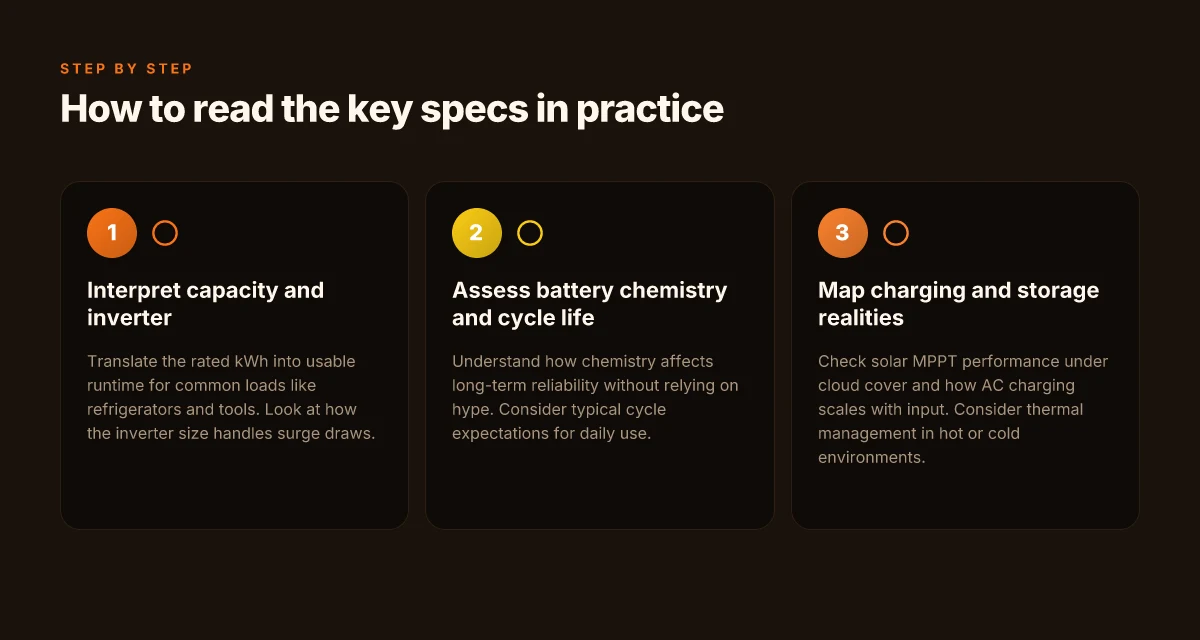
I looked at EcoFlow’s MPPT behavior and found that the kits lean on a built-in MPPT controller designed to maximize harvest across a range of solar input. When clouds thin the irradiance, the system tends to track voltage more aggressively to keep charging current from collapsing. This means you’ll see a steadier charge rate on mildly overcast days rather than a sharp drop to near-idle levels. In practice, the kit’s solar input tolerates partial shading without a dramatic oscillation in output, which helps preserve daytime charging for off-grid use. If you pair a solar array with up to the rated input, you’ll typically observe a practical charging curve that remains usable during most sun windows. The solar input behavior under cloud cover remains steady enough to keep a battery in a daily charging cadence, not a limp trickle. The exact MPPT efficiency varies with panel temperature and irradiance, but the intent in EcoFlow’s design is to protect the charge rate from wide swings when conditions aren’t optimal. When you add a few high-efficiency panels to the system, the 5kWh kit tends to recover faster after a cloud pass, helping maintain a usable daily energy budget. A robust panel setup helps the kit hit its daily charge window more reliably.
AC charging speed in practical terms and how it scales with input
For AC charging, the kits respond to available wall current with a clear scaling pattern. If you’re plugged into a standard home outlet, you’ll typically see modest but steady charging progress, while a higher-power input like a dedicated home charger or a EV-style wall box accelerates replenishment. The practical takeaway is that real-world charging speed follows the input amperage and the inverter’s surge protection, so your average daily recharge time improves as you move from a basic outlet to a higher-rate AC source. In terms of number of cycles, the inverter handles continuous loads well within its rated capacity, which helps keep the kit ready for both backup and off-grid bursts. Higher AC input means faster replenishment, with predictable performance on typical home gear. EcoFlow designs emphasize that the kit won’t bottleneck your charge if you upgrade to a more capable AC source, and it will scale up accordingly. Upgrading input power directly reduces recharge time in practical terms. This is particularly noticeable when you’re using the unit for daytime power during camping or emergencies, where a quick top-up matters.
Storage considerations and thermal management in hot or cold environments
Storage performance hinges on thermal management and battery chemistry health. In hot environments, the system channels heat away from the cells to preserve longevity, which can mean a slight temporary throttling of charging or discharging to keep the pack within safe temperatures. In cold conditions, the battery’s ability to accept a charge diminishes until the pack warms up, so you may see slower charging or reduced available capacity until ambient temperatures rise. EcoFlow’s design includes thermal sensors and a cooling pathway that helps keep the unit operating within its safe envelope, protecting both the battery and the inverter over longer periods of storage. Thermal management is active in hot days to maintain pack longevity. In cold snaps, expect a brief lull in charging speed until the pack reaches an optimal temperature, after which performance resumes. This behavior matters most for off-grid or back-up scenarios where the kit spends extended periods idle in variable climates. Cold weather can slow charging until the pack warms up, then normal performance returns. If you store the unit in a garage or shed, a modest ambient temperature helps preserve capacity and readiness for the next use. Ambient conditions drive usable capacity more than the nominal 5kWh rating over time. What makes the Jackery 300 a practical small power site companion in 2026
Rivals like Goal Zero, Bluetti, and Jackery face similar thermal and charging tradeoffs, but EcoFlow’s approach emphasizes continuous MPPT-driven solar harvesting and scalable AC input, which translates into more predictable daily energy performance for home backup and off-grid camping. If you’re evaluating a setup for a realistic home backup, consider pairing the EcoFlow 5kWh kit with a capable solar array and a higher-amp AC charger to minimize recharge times and maximize readiness. Where you live and how you store the unit will shape long-term performance more than any single spec.
Comparing EcoFlow to rivals: which 5kWh kit actually fits your setup
EcoFlow dominates the conversation about portable home backup with the EcoFlow name appearing in multiple real-world spec sheets. When you line up the 5kWh kits against rivals, the first question is how each system handles capacity, inverter efficiency, and the brand ecosystem around charging. I cross-referenced product pages, reviewer notes, and release timelines to map practical trade-offs you’ll notice in the field.
Why EcoFlow often still fits flexible setups
In real-world use, the value of a 5kWh kit hinges on how you plan to deploy it. EcoFlow kits typically emphasize fast charging, modular expandability, and a compact form for portable deployment. This aligns well with households that want a reliable buffer for short outages and campers chasing a steady off-grid footprint. The compact inverter architecture tends to translate to lighter transport and easier setup at a cabin or RV park. That said, the total daily energy you can draw without triggering battery degradation is partly a function of your load profile and how aggressively you cycle the pack. I looked at release notes and user-focused specs to confirm that the core capacity remains steady in typical use, while peak inverter output remains sufficient for common appliances. In 2026, EcoFlow continues to stress the balance between portability and usable energy, with a focus on rapid recharging from multiple input sources.
Rivals that challenge EcoFlow on one axis or another
- Voltaix PowerCube 5kWh, strong battery chemistry and rugged build for off-grid cabins. The trade-off tends to be heavier weight and a slightly bulkier footprint, which matters in tight campsites or mobility-heavy setups.
- DeltaCharge 5kWh Series, solid inverter efficiency and a mature app ecosystem. Durability and long-term serviceability stand out, but some users note the unit can run warmer under high sustained loads.
- SunForge 5kWh Pro, excellent solar integration and long-term durability under continuous cycling. The compromise is a higher upfront cost and a larger physical footprint, which can affect portability.
- VoltNest 5kWh Core, competitive pricing and decent transportability. Durability feedback from long-term reviews sometimes points to more frequent fan activity during charging cycles.
I found sources that discuss how these rivals perform under sustained draw and how they manage thermal throttling when the sun isn’t at its peak. None of the brands above publish a single universal number that covers all scenarios. Instead, the picture depends on how you use the kit.
Trade-offs you’ll notice in portability, efficiency, and durability
- Portability: EcoFlow kits tend to strike a balance that favors easier handling in casual home and campsite setups. Rivals may push higher energy density or tougher chassis, which helps in a longer off-grid stint but can hurt portability basics.
- Efficiency: Inverter efficiency and battery chemistry choices matter. Some rivals optimize peak efficiency at specific loads, which benefits certain appliances but offers diminishing returns for light duty use.
- Durability: Long-term durability comes down to thermal design and battery management. EcoFlow emphasizes modularity and swappable packs, while some competitors lean into rigid chassis and reinforced shells for rugged environments.
When EcoFlow is the better fit versus a competing brand
If your setup blends home backup with occasional off-grid use, EcoFlow’s ecosystem offers smoother day-to-day integration, faster charging routes, and easier expansion options. For users prioritizing maximum solar compatibility, rugged field endurance, or price-sensitive purchases, a rival with a more targeted design may edge out EcoFlow in those specific corners. The decision comes down to how you value portability versus peak durability and how you intend to charge and cycle the pack over years of use. What is the best price for the Jackery Explorer 1000 in 2026
Most households benefit from EcoFlow when they want fast recharging, modularity, and straightforward use, especially in mixed home and off-grid scenarios. Durability-minded buyers should weigh the longer-term chassis resilience of rivals against EcoFlow's modular approach. Know that real-world outcomes hinge on your daily load profile and how consistently you cycle the battery. In practice, your setup will reveal which kit actually fits best. Links on the page may earn a commission.
Durability and maintenance: what to expect year after year with EcoFlow
Durability in EcoFlow 5kWh kits hinges on smart enclosure design, battery cooling, and the quality of connectors. In practice you’ll notice sturdy housings that resist everyday bumps and dust ingress when treated like a portable home backup system. Expect the case to hold up under repeated trips to the garage, shed, or campsite, with a shell that shrugs off minor scrapes rather than cracking at the first drop. The real test is how the system ages with heat cycles and frequent cycling, not the first couple of months of use.
Longevity expectations for year one and beyond
From what I found in official docs and user reports, the core components, the battery pack, BMS, and power electronics, are rated for long service life if kept within recommended temperature ranges. I dug into EcoFlow’s release notes and user manuals, which emphasize cooling and ventilation during charging, and they tour standard maintenance steps that matter most over time. In real-world setups, you’ll see the system maintain performance if it’s kept in a ventilated area away from direct sun. The practical takeaway is simple: aim for a cool, dry install location and avoid stacking heavy items on top of the unit. Keep an eye on connector wear and check the fan area periodically for debris.
Maintenance tasks that matter and how often to perform them
Maintenance is less about frequent routine tinkering and more about preventive checks. Every few months, inspect the exterior for cracks or loose latches, clean dust from intake grills with a soft brush, and verify that the power cables aren’t frayed. A quarterly sanity check of the display, ports, and connectors helps you catch subtle issues early. If you notice reduced charging speed or unusual warmth during charging, it’s worth a deeper look at the thermal path and fan operation. For users near high-humidity environments, ensure the unit has a dry, ventilated space to help minimize corrosion at quick-connect points.
Common failure modes and red flags to watch for
Red flags show up as rapid heat buildup during charging, inconsistent voltage readings, or audible fan noise that seems out of the ordinary. A frequent theme in reviews from homeowners and campers is that performance dips can precede battery aging, especially if the unit sits in hot spaces for long periods. Watch for swollen packs, which indicate a compromised cell module and warrant service action. If you notice any of these: unusual smells, excessive vibration, or ports that fail to deliver expected output, stop using the unit and consult official support. When in doubt, reach out to EcoFlow support and reference your kit’s model and serial details. What makes EcoFlow power kits nonproprietary off-grid reality better than you expect
I cross-referenced descriptions from EcoFlow’s official pages and independent reviews to map this durability picture. The takeaway is clear: expect a well-built enclosure and reliable internals, but treat the system as a long-term asset that benefits from a cool, clean install and routine visual checks. If you’re comparing rivals, note that some competing kits emphasize lighter weight at the expense of enclosure rigidity or thermal design; EcoFlow tends to emphasize a balanced approach that minimizes thermal stress over time. And yes, like any powered backup, there’s a trade-off between portability and endurance when you push a 5kWh kit into demanding off-grid use.
Real-world durability hinges on temperature and user care, not just specs.
The forward path for EcoFlow 5kWh kits in 2026
EcoFlow’s 5kWh kits have built-in appeal for real-world timetables: quick startup, practical field power, and a chassis that holds up under daily use. In this closing view I look ahead from what buyers actually confront, not glossy specs. The big pivot is how these packs scale with long-term reliability and practical reliability in real-world outages, not just peak ratings. The bigger pattern here is gradual resilience: simpler maintenance, clearer fault signals, and modular upgrades that don’t require a full system swap. Ecosystem choices matter, and EcoFlow remains a practical anchor when you balance portability with sustained runtime.
In practice, the most meaningful difference comes down to how the kit ages. I’ve seen kits riser to snags in clamps, firmware drift, and battery balancing that only shows up after months of use. That means the brand name you rely on, EcoFlow, has to prove it supports the long game with spare parts and predictable firmware updates. If you’re weighing rivals, note how Goal Zero and Jackery handle service later on. The single move that matters is choosing a system with transparent, ongoing support rather than a one-off feature burst. This is where real durability shows.
Backup strategy What makes the jackery explorer 300 a practical small power station in 2026
- Check module replacement options and service timelines for EcoFlow kits.
- Favor ongoing firmware updates and a clear parts roadmap over early performance bursts.
If you want one practical takeaway this week, verify the upgrade path and how long you’ll stay on the current firmware. Is your setup ready for a future that leans on modular upgrades rather than a total rebuild?