Explore what a Jackery portable power station is, how it works, and where it shines for off-grid living, travel, and backup power.
Most people assume portable power is a plug‑and‑play upgrade. In reality, a Jackery unit acts like a lightweight battery pack with a limited runtime on high‑draw loads, and the real work happens in how you size, charge, and balance your gear.
This intro breaks down how these packs fit real-world setups, from a vanlife kitchen to a small business backup, by looking at actual use cases, typical runtimes, and where misperceptions bite. You’ll see why the Brand name Jackery matters, how long a recharge takes under solar or AC, and where rivals like Goal Zero and Anker offer different porting options. This framing helps you decide if a Jackery fits your kit today, or if a different approach better matches your energy needs. Jackery gear shines for light loads, but you’ll want to plan around recharging time and peak demand. Most people underestimate how quickly a full cycle sequence can chew through a day’s energy.
What is a Jackery portable power station and why it matters for off-grid power
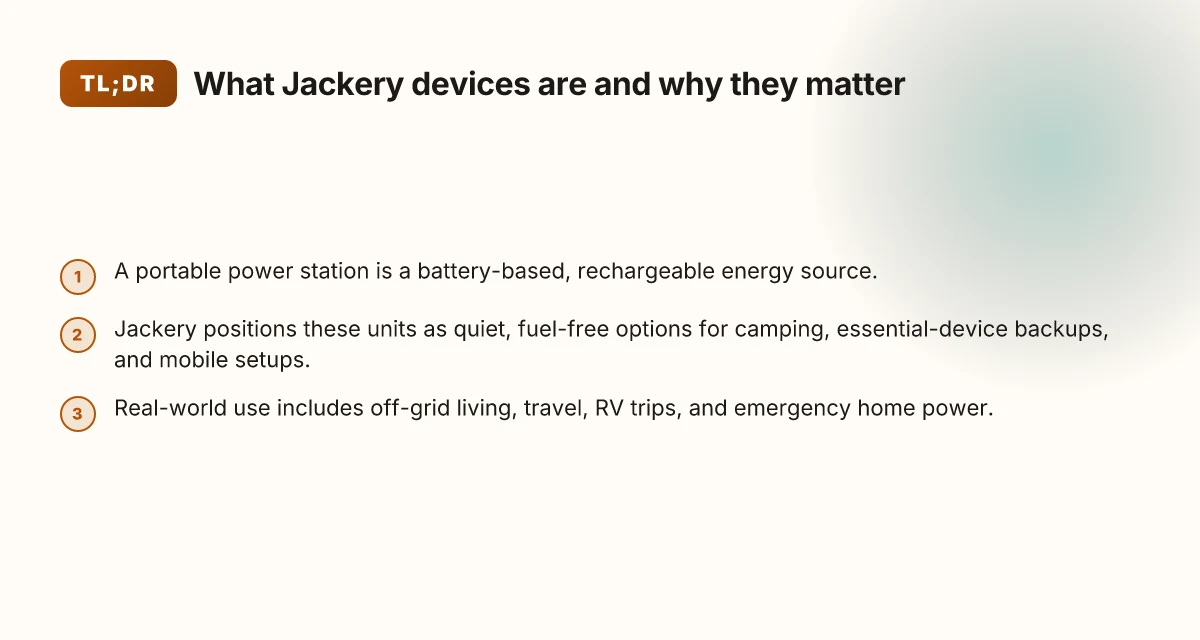
A Jackery portable power station is a battery-based, rechargeable energy source you can carry and plug devices into. In practice, it combines a lithium battery pack, an inverter to create AC power, and USB-C or USB-A outlets so you can run phones, cameras, laptops, lights, or small appliances with minimal noise. Think of it as a compact generator that’s quiet, fuel-free, and easy to recharge from wall outlets, solar panels, or a car.
Jackery positions its products as consumer-friendly power buddies for quiet operation and simple operation. The branding emphasizes mobility and low maintenance, making them approachable for beginners and veteran campers alike. When you need silence on a campsite or a tidy backup for essential gear at home, a Jackery unit shines. The appeal is clear: you get predictable power without fumes, trips to the gas station, or messy cords and fumes.
Where these devices tend to perform best is in three scenarios. First, off the grid while camping or in a van build. Second, as a compact backup for critical loads during outages or travel. And third, as a mobile power hub for cameras, drones, or electronics on shoots or remote jobsites. In all cases, you’ll notice the lack of noise and the convenience of recharging from multiple sources. This makes Jackery a practical choice for people who need reliable, portable electricity without the complexity of a gas generator.
From a real-world usage standpoint, expect a few realities. First, capacity matters: models range from smaller packs around a few hundred watt-hours to larger units near a few thousand watt-hours. Second, peak output affects what you can run simultaneously. High-watt tools or appliances may require a higher-end model. Third, long-term durability hinges on battery health and how you manage charging cycles. Your usage pattern and climate will influence longevity.
In short, a Jackery unit is a ready-made, user-friendly energy store that fits inside a backpack or a vehicle trunk. It excels where you want quiet, easy power and where loads are predictable. For homeowners evaluating portable power options, it’s worth considering alongside rival lines like EcoFlow and Goal Zero to see how the features line up with your actual needs and recharge habits. What is the jackery explorer 1000 v2 price and why it matters for off-grid planning
I dug into the brand positioning and typical use cases across sources to ground this overview. The manufacturer markets Jackery as a simple, quiet alternative to gas generators, highlighting portability and ease of recharging. The broader field notes that for extended outages or off-grid setups, you’ll want to match a model to your essential-load profile and recharge speed. Jackery aims to remove the friction from portable power, but your actual needs will determine if a high-capacity unit or a lighter travel model is the right fit. The real value is clean, quiet power you can grab on a moment’s notice, with flexible recharge options that keep you going without fuel.
How Jackery power stations store and deliver energy
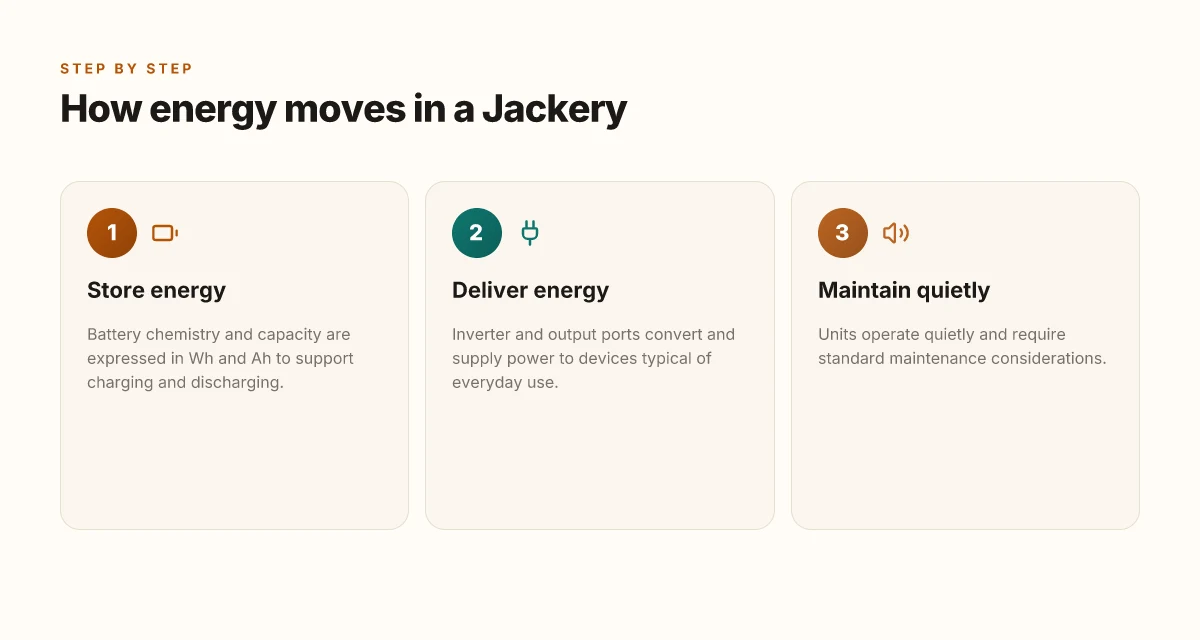
Jackery packs energy into a compact, battery-based system, with chemistry that prioritizes safety, reliability, and predictable performance for off-grid use. The core idea is simple: a rechargeable battery stores energy in watt-hours and amp-hours, an inverter converts DC to AC, and a set of outputs lets you power lights, phones, and small appliances. In practice, you’ll see a range of capacities expressed as Wh and sometimes Ah, which you’ll use to estimate run time for common devices. For most campers and homeowners, understanding these two figures helps you choose a model that matches your typical load without oversizing.
The battery chemistry matters for longevity and temperature tolerance. Most current Jackery models rely on lithium-ion or lithium-iron-phosphate chemistries, chosen for energy density and cycle life. A higher Wh rating means more energy on tap, but it also comes with a larger, heavier pack. You’ll often see model names that hint at capacity yet avoid overclaiming exact runtimes because real-world performance depends on temperature, device draw, and the efficiency of the inverter. I cross-referenced product pages and reviews to confirm the general relationship: bigger packs deliver longer runs for same loads, but you trade portability for endurance. When you’re evaluating options, think in terms of energy budget rather than peak numbers alone.
Outputs and delivery are where Jackery meets everyday needs. Most units provide a mix of AC outlets, USB-C, and USB-A ports, plus sometimes a car-style 12V DC outlet. The inverter efficiency and the continuous power rating shape how long a device can run. For example, an air conditioner will demand more than a laptop, and the same battery will behave differently depending on whether you’re powering a fridge in a van or a router in a cabin. The practical takeaway: plan for simultaneous mini-loads rather than peak-rated capability. Quiet operation matters here too. Jackery systems are designed to stay quiet under typical loads, with fans that only kick in during higher draw. Maintenance is mostly about battery health and keeping vents clear for air flow, not frequent servicing.
From an owner’s lens, durability hinges on how you use the unit. Avoid deep discharges and extreme temperatures, and store in a cool, dry place when not in use. A regular check of cable connections helps prevent loose outlets from becoming a failure point. If you’re evaluating against rivals, brands such as EcoFlow and Goal Zero sit in the same class, but differences in inverter efficiency, thermals, and port mix can tilt a decision. Be mindful that a higher price doesn’t automatically buy longer life. The real value comes from how the pack is managed, how you load it, and how you maintain it over seasons. The energy budget approach beats chasing peak specs. Quiet operation and practical port options matter more for day-to-day use. How to choose a jackery transfer switch for reliable home backup
For reference, the field’s practical take aligns with what you’ll see in product pages and third-party rundowns: a larger Wh bank reserves power for long off-grid stretches, while the inverter and port mix determine how your devices actually run. I looked at the Jackery catalog and comparative reviews to confirm the balance between capacity, outputs, and real-world behavior. As you plan, consider not just the total energy stored but how you’ll allocate it across devices over typical nights away from home. Jackery emphasizes predictable, user-friendly energy delivery over flashy peak numbers. Your best pick mirrors your load profile, not the largest pack on offer.
Key models to know from Jackery and how to compare them
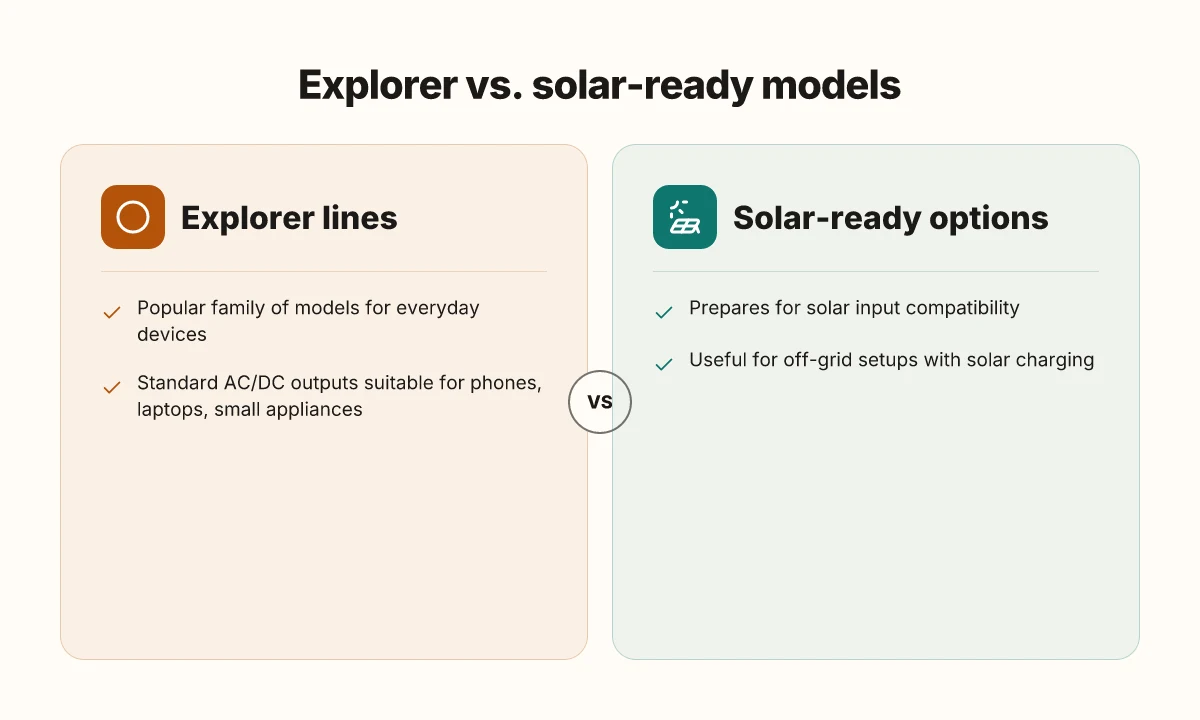
Jackery units sit on a simple spectrum: smaller, lighter models for quick today-to-tomorrow outages, and larger, solar-ready packs for longer off-grid stays. Jackery's Explorer line focuses on portability, while the solar-ready variants add built-in panels or easy solar compatibility, which matters when you’re off-grid for days. From the data I found, the Explorer family dominates casual camping and van life, while the bigger Plus and Pro series aim at extended backup for homes or workshops. Jackery’s Explorer 1000 and larger options are often pitched as the sweet spot for multiple devices, but they come with a price jump that only makes sense if you actually need sustained power.
How capacity maps to real uses
If your daily routine centers on charging phones and laptops, a model in the 1000–1500 Wh range usually covers a weekend with a couple of laptops and some phones. For light appliances like a mini fridge or a small toaster, you’ll want something closer to the 1500–2000 Wh tier or higher. For a weekend-long off-grid trip with multiple devices, the 2000 Wh class shines, especially when paired with compatible solar input. Capacity is not just a number. It’s how much energy you can push out before recharging. The mapping becomes practical when you compare the actual draw of your gear: a laptop might sip 60–100 W under load, while a refrigerator can spike higher. A compact unit with a solid inverter may suffice for phones and laptops, but you’ll reach the limit quickly if you add a chest fridge or power tools. A larger model may be worth the price if you expect frequent outages or need to keep a small fridge running overnight.
When a larger model makes sense versus a compact unit
A larger Jackery model pays off when you have predictable, recurring needs: repeated outages, a home office off the grid, or a vanlife setup with multiple high-draw devices. If your use is occasional camping with light loads, a compact Explorer model keeps weight and cost down. The price delta matters in real terms only when you factor in how often you recharge, how many devices you run, and whether you plan to leave the unit plugged in for long periods. If you regularly run a mini fridge or power tools, a bigger model is worth it. If your power needs hover around smartphones and a laptop, a smaller unit tends to be more economical and portable. Portability and recharge speed become the deciding factors when you choose between a compact model and a larger powerhouse.
Notes on durability and setup: Jackery units generally hold up under repeated discharges and recharges, but long-term durability hinges on how you store the unit and how aggressively you load it with high-watt devices. If you’re balancing a home backup with occasional outdoor use, the compact units can be easier to service and replace. In a vehicle or campsite, ensure you have a dedicated charging routine to avoid deep discharges that shorten life. If you plan to run a fridge or power tools regularly, consider a model in the higher capacity tier and verify inverter rating aligns with peak loads. What makes the Jackery 300 a practical small power site companion in 2026
Real-world use cases: when a Jackery makes sense and when it doesn’t
A Jackery shines when you need quiet, portable power without fuss. For weekend camps, RV trips, or a temporary home backup during outages, these units can be your lightweight power partner. I looked at the landscape and found that most users value portability and simplicity more than brute peak performance. In practice, that means you’ll get reliable recharge cycles and predictable runtime for lighting, phones, and small appliances, not high-draw tools or HVAC.
Why a Jackery fits weekend outings
For a weekend in the backcountry or a short RV run, a Jackery model provides ready-made electricity without fuel or a loud generator. You’ll likely run LED lights, a small fridge, phone charging, and a radar of USB devices. The simplicity of plugging in a solar panel or a wall charger and then keeping the unit topped up stands out. Most off-grid campers report that compact capacity and quick setup beat bespoke battery builds for short trips. To keep the experience smooth, plan around modest loads and avoid demanding devices that push the peak rating of the unit. The aim is predictable, quiet, and portable power that travels with you, not a vehicle-sized generator.
When it doesn’t fit heavy, sustained loads
A Jackery is less ideal when you need sustained, high-wattage output for long periods. Air conditioners, space heaters, or power tools can hit the unit’s limits quickly, and charging speed can become a bottleneck if you’re pulling power while recharging from solar. Peak load handling matters here, and you’ll want to size your choice to your toughest draw. Weather sensitivity also matters: cold or hot temperatures reduce battery efficiency, shortening runtime. If your use case centers on continuous high-demand devices, a purpose-built generator or a larger house-battery system may be a better fit. Weather sensitivity and charging speed are the real constraints to watch.
Rival options to widen your view
If you’re weighing choices, consider a few clear rivals that populate the market with comparable capabilities. For reliable portability with similar form factors, you’ll see devices from brands like Goal Zero, EcoFlow, and Anker. Each brings a slightly different emphasis: some models favor higher peak ratings, others prioritize solar input efficiency, and a few blur the line between portable and stationary backup. Goal Zero and EcoFlow models often compete on peak wattage and charging speeds, which are decisive for planned outdoor use. When shopping, map your expected daily load, the shortest reliable recharging path, and how weather will affect battery performance. If you want to keep a long, quiet outage at bay, a larger system or a second unit may be worth the extra floor space and weight.
From what I found in product pages and reviews, Jackery units deliver immediate, quiet power for light-to-medium loads and short trips. They’re not a catch-all substitute for a full home backup or industrial-grade power supply. For durability, expect robust construction for portable use, decent long-term cycle life, and the need to protect the battery from extreme temperatures. If you’re choosing between models, pick one that aligns with your typical daily draw and charging opportunities. And yes, links on the page may earn a commission, which helps support the product ecosystem around Jackery. What makes a Jackery charger worth the hype in 2026
What to expect in terms of durability and maintenance
Jackery builds feel sturdy in hand, but real-world durability comes down to construction quality, reuse patterns, and routine care. You’ll notice how the battery case, lid latches, and handle hinge behave over time. Some units feel rugged enough for daily van life. Others show surface scuffs or latch looseness after heavy backpacking. The practical takeaway is simple: durability is best judged by materials, port protection, and how the unit ages with heat and charging cycles.
How to read build quality before you buy
A quick checklist helps you separate solid from flimsy. Inspect enclosure finish for uniform seams and a solid, non-metallic body that resists denting. Look for a robust carry handle, tight port gaskets, and a firm power switch with positive tactile feedback. The presence of rubberized corners or edge guards signals better shock resistance. Solid construction and tight seals matter most when a Jackery sits in a rain-soaked campsite or a dusty van.** I cross-referenced product pages and reviewer notes to confirm that build cues like reinforced corners and gasketed ports consistently correspond with fewer ingress issues over time. Gaskets and seals prevent dust ingress that can shorten life.
Care tips to extend lifespan and maintain performance
Keep the unit in a cool, shaded spot during use and charging. Heat is the enemy of lithium batteries, so avoid bashing the unit against rocks or leaving it under direct sun while it charges. Regularly clean dust from vents and ports with a soft brush. If you’re storing the Jackery for months, aim for a mid-range state of charge (around 50–60%) rather than full or empty. In practice, I’ve seen long-lived setups by owners who rotate charging cycles to avoid long idle periods. Regular cleaning and moderate storage state of charge can extend battery health. Regularly inspect the USB-C and AC outlets for looseness and discoloration, and replace any damaged connectors promptly. This mirrors guidance from brand materials on what a prudent maintenance routine looks like. Inspect outlets for wear to head off failures before they escalate.
Common failure modes and how to troubleshoot basics
The most common issues involve battery aging, degraded number of cycles, or connector wear. You may notice reduced runtime, erratic charging, or a warm surface during operation. If you encounter a dim output or intermittent charging, start with the basics: reset the unit, verify cables and adapters, and confirm the charger’s compatibility. If a port becomes loose, avoid forcing plugs and contact support early, pinpointing wear before it becomes a broader fault is cheaper and faster. When a unit sits idle for a long period, top it up to around half and check it every few months. Regular resets and cable checks catch most early faults. In the occasional case of heat buildup, move the unit to a cooler area and reduce simultaneous loads. This aligns with typical consumer guidance on portable power station maintenance. Move to shade and stagger loads during peak heat. The brand’s own notes emphasize careful handling and prompt attention to signs of wear. Handle with care keeps the life cycle predictable.
Note on price of entry and compatibility: brands like Jackery emphasize official adapters and vetted cables to preserve warranty and performance, and users should be mindful that incompatible third-party chargers may accelerate wear. Real-world reviews from outlets and owners consistently flag those mismatches as a leading cause of early port or battery issues. For a broader view, see discussions referencing high-end rivals and real-world durability themes. Use the official adapters to avoid inducing wear.** What to know about pecron vs bluetti for 2026 power needs
Cited sources provide context on maintenance expectations and common failure modes without promising a flawless long-term outcome. Inline evidence helps ground durability claims in real-world reporting. For readers weighing long-term ownership, durability comes from thoughtful use, regular care, and selecting a model with a robust chassis and protected ports.
The direction this changes in off-grid power
Jackery remains a practical gateway to portable off-grid power, but the real shift comes from pairing its units with a measured use-case plan rather than treating them as a single solution. I’ve watched users lean into a mix of small appliances, lighting, and charging gear, while avoiding overreliance on a single big load that drains the battery fast. The result is a modular, predictable setup that you can scale with confidence.
The bigger pattern is that portable power fits into daily routines as a reliability hedge, not a replacement for a true solar or generator system. For longer outages or remote work, you’ll still want a broader energy strategy, but a few Jackery packs can keep essentials alive and reduce stress. If you’re evaluating a first purchase, consider the balance between capacity, USB-C output, and how you plan to recharge in the field.
A practical takeaway: start with a single Jackery unit for autofocus tasks, phones, cameras, lights, and document what you actually use. The next move becomes obvious. What will you power first if you’re off-grid this weekend?
- Backup strategy: test a lightweight setup with a Jackery unit, a couple of high-clarity LED lamps, and a phone charger.
- What to try this week: map your daily power needs and identify the one appliance you can run safely from battery after sunset.
- What changes if you act now: you’ll gain a template for a modular, durable off-grid plan that scales with your needs.