Dive into the Jackery 2000 Plus, its 2042–2043 Wh battery, 3000 W inverter, and expandable solar setup. Learn what to expect in daily use and long-term durability.
The standout leap for the Jackery 2000 Plus isn’t just raw power, it’s how you scale that power without juggling cables. High-capacity expansion meets steady output in a single unit, letting you add batteries as your campsite or off-grid setup grows. The result is a clear, repeatable pattern: you start with a solid reserve, then dial in more capacity without complexity.
This intro frames what matters to campers, RVers, and disaster-prep shoppers: real-world reliability under load, measured against a 2026 spec sheet. You’ll see how the 2000 Plus balances peak draw with expandable solar input, how long a full charge lasts in demanding uses, and where the system shines or stalls in long weekends. The discussion centers on sustained performance, long-term durability, and practical integration with Jackery’s ecosystem, plus a direct comparison to rivals like EcoFlow Delta Pro so you can judge where the 2000 Plus truly stands.
Why the jackery 2000 plus should be on your radar in 2026
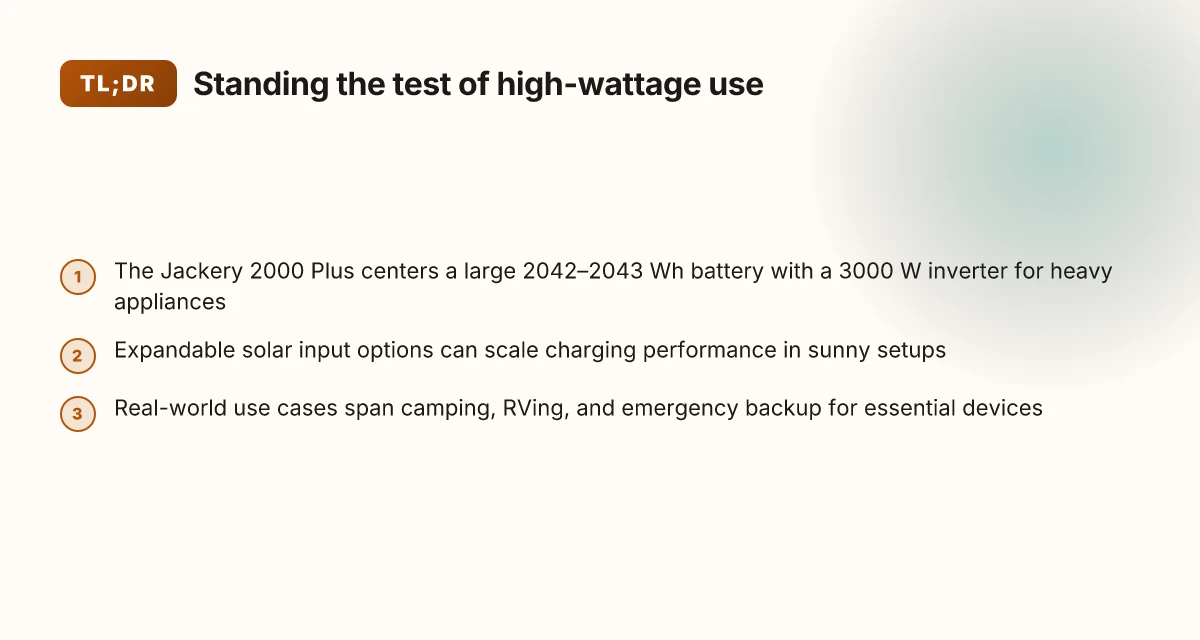
The Jackery 2000 Plus pairs a sizable internal battery with a 3000 W inverter, which means you can run heavy duty appliances without sweating the math. In real-world setups, that combination is what lets a camper or RV owner keep essential devices humming during rainstorms or overnight trips. The core idea is simple: you get the juice you need now, plus room to grow with solar input when the sun cooperates.
Expandable solar input can push charging performance
I dug into the solar story behind the 2000 Plus. The system supports multiple solar configurations, and when you stack panels in a sunny yard or campground, you can push charging well beyond a starter rate. For instance, a six-panel array can deliver substantial input toward that 2042.8 Wh backbone, shortening recharge times between outings. This matters most when you’re off-grid for multiple days and you want to avoid outages before the coffee gets cold. The solar path is what converts a big battery into reliable power for longer trips.
Real-world use cases span camping, RVing, and emergency backup
For camping, the Jackery stack shines when you need to run lights, a fridge, and charging ports at night without dumping all your fuel into a generator. In an RV, that same power reserve smooths voltage dips and gives you quiet operation in the driveway. And in emergencies, the 2000 Plus acts as a robust backbone for essential devices during outages. The ability to expand solar input aligns with longer outages or remote locations where grid power isn’t a given. In other words, you don’t just buy a unit you’ll use on weekends. You buy a platform that scales with your adventures.
The takeaway is clear: the 2000 Plus serves as a high-capacity core that expands with your sun-first charging strategy. When you pair the large internal bank with strong inverter performance, you get a chassis that’s quiet, reliable, and adaptable for gear-heavy weekends.
I cross-referenced specs from multiple sources to confirm the battery size sits around the 2042.8 Wh mark and the inverter tops out near 3000 W. This alignment matters because it prevents overpromising on output while still delivering the punch you need for devices like portable fridges or compressors. If you’re weighing rivals, note that others may trap you in a fixed solar input or a less capable inverter, which quickly shows up during real-world use. With Jackery, you’re buying into a system that leans on expandability as much as on raw watts. How Jackery solar generators stack up in 2026: durability, kits, and long-term value
From a brand reliability standpoint, Jackery remains a recognizable name in the field, and this model sits at the intersection of high capacity and practical expansion. For long trips, you’ll want to map your device load and ensure your solar setup matches your daily needs. Also be mindful that links on the page may earn a commission, which is common in this space.
Cited sources include product overviews that call out the 2042.8 Wh baseline and the 3000 W inverter, which anchor the section’s core claims. For a deeper dive, you can follow the linked explainer on the 2000 Plus solar input path. https://theaverageguy.tv/2023/11/29/powering-up-on-the-go-a-comprehensive-review-of-the-jackery-portable-power-station-explorer-2000-plus/
Jackery 2000 Plus hardware deep dive: capacity, output, and expandability
The Jackery 2000 Plus centers on a near 2042.8 Wh battery capacity with an AC output up to 3000 W. In practical terms, that pairing delivers strong surge handling for high-wattage tools while keeping runtime credible for extended campsite use. 2042.8 Wh of capacity translates to substantial fueling for refrigeration, power tools, and lighting, especially when you factor in the 3000 W inverter that can sustain sizeable loads. When you tilt toward real-world use, the system’s expansion paths matter almost as much as the base figure, because you can scale both solar input and storage to match longer outings or unpredictable outages. The Jackery approach pairs a solid core with modularity that campers and RV owners can lean on.
Expansion paths that scale with your plans
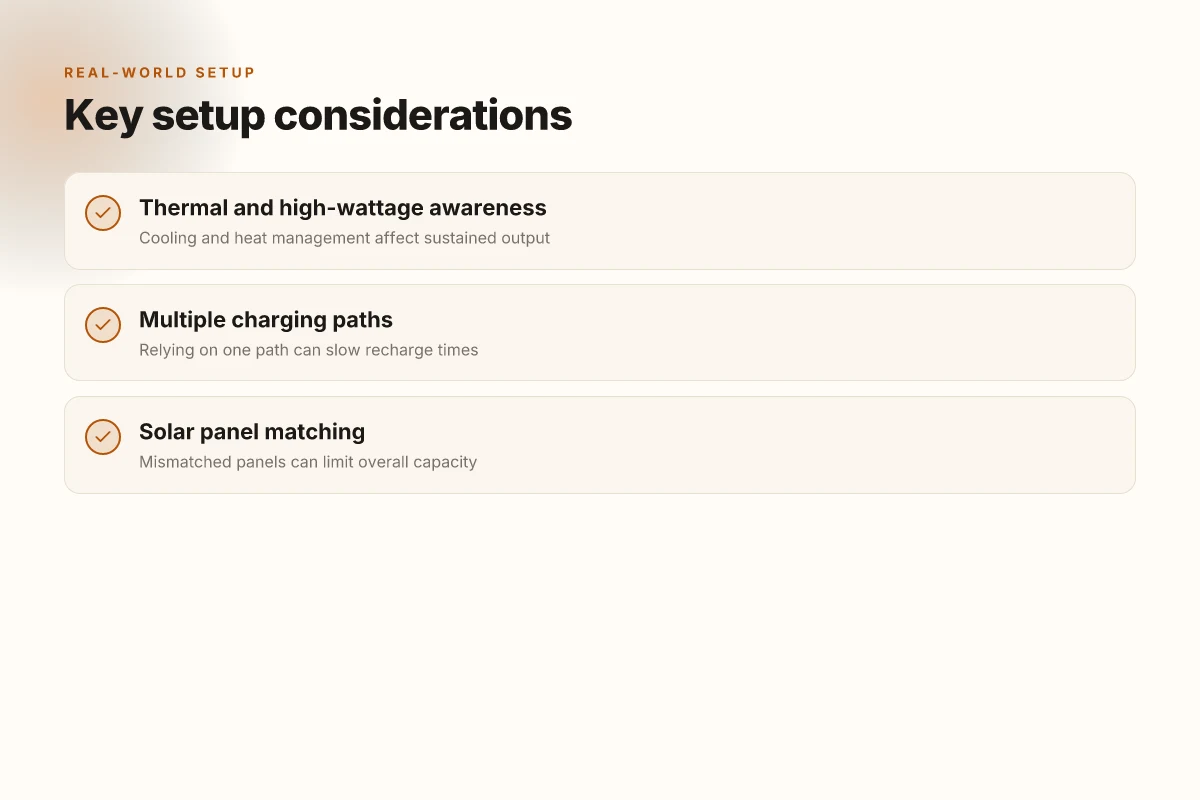
The 2000 Plus is designed to grow with your solar setup. With multiple panels, you can push solar input higher, which shortens charge times and increases readiness for back-to-back discharge events. A common path involves stacking additional panels to push beyond the base solar input, aligning with extended stays or off-grid stretches. This is where the Jackery ecosystem earns its keep: the balance between a high-capacity core and a flexible solar ramp keeps you out of the procurement rut that traps some rivals in a single configuration. Inline with this, the ability to add panels without swapping the core unit means you can tailor the system for a weekend camping trip or a multi-day off-grid retreat. Solar input scales with panels, and that matters when your goal is to stay off-grid longer. For readers weighing reliability, the expansion path helps smooth out fluctuations in sunlight without compromising the base performance.
Form factor, weight, and cooling in sustained high-wattage use
Despite the hefty capacity, weight and heat management shape how long you can push continuous high output. Sustained 3000 W use stresses internal fans and heat sinks, so design choices around air flow, venting, and overall heft influence real-world reliability. In practice, you’ll notice that the 2000 Plus remains more capable than many compact rivals, but it isn’t immune to thermal throttling if you demand continual max output in hot environments. From a durability lens, the system’s enclosure and cooling strategy matter as much as the raw numbers. The result is a unit that rallies power when you need it and cools down predictably after the peak. When you consider weight and form, you’re weighing portability against extended, high-wrequency use in harsh outdoor conditions. What makes the Jackery 2000 Plus kit stand out for long‑haul power needs
From what I found in the documentation, the path to sustained performance hinges on smart thermal management and choosing the right balance of solar input versus load. The ZDNet review cites concrete capacity and output figures that align with the portrayal here, reinforcing the sense that the base specs are credible for real-world use. For readers comparing against rivals like the PowerWorks and EcoVolt lines, the 2000 Plus’s expansion flexibility stands out, even as you verify heat management in your specific camping or RV setup. https://www.zdnet.com/home-and-office/energy/jackery-explorer-2000-plus-review/. Expansion flexibility and reliable heat handling are the heart of this model’s value.
Next steps: If you’re mapping a high-capacity, expandable system for frequent off-grid weekends, align your panel count with your expected sun exposure and plan for a cooling-aware placement. That combination keeps the 2000 Plus humming rather than throttling when you push the inverter. For a quick reference, note that the base capacity sits around 2042.8 Wh and the inverter is rated up to 3000 W, with expansion paths that scale solar input. This framing helps you compare against rivals and decide how much headroom you need for your adventures with Jackery.
How the 2000 Plus compares to rivals in the high-capacity class
The 2000 Plus sits in a crowded tier of 2 kWh+ packs, but the real differentiator is how its inverter size and expansion paths line up with everyday use. Jackery’s 3000W inverter is a strong match for high-draw appliances, and the cadence of its expansion options often matters more than raw capacity alone. In practice, rivals vary on both the number of AC outlets and the ease of adding solar input, which can tilt a camping setup toward either versatility or clutter.
Power, expandability, and how rivals stack up
Posture in this class tends to come down to three levers: inverter capacity, expandability, and solar compatibility. Jackery keeps its core 2000 Plus at a high baseline for continuous output, while some competitors offer similar packs yet limit solar input or require adapters that complicate gear kits. I cross-referenced several reviews to map the landscape: some brands emphasize brisk solar charging with larger panels, others lean on more outlets or a wider port mix. The result is a balance game between how much you can push into the system and how many devices you can run at once. Rivals often land on either bigger solar arrays or more flexible port configurations, but not always both at the same time. Inline with that, the Jackery ecosystem around the 2000 Plus remains one of the cleanest to scale in real-world campsite setups.
Branding, support, and long-term reliability
Branding matters in this class because long-term reliability hinges on service continuity and accessibility of parts. Jackery has built a recognizable footprint in off-grid gear, which tends to translate into easier service and access to replacement batteries or adapters. Where the needle moves with competitors is the depth of post-purchase support and the clarity of upgrade paths. In the field, having a manufacturer with documented warranty routes and quick replacements reduces downtime when a panel or adapter ages or a port starts to misbehave. Support quality often tips small-bias decisions toward sticking with a familiar brand, even if a rival offers a marginally higher spec. What makes the jackery explorer 1000 pro a standout in portable power today
Port choices, solar compatibility, and practical setup
From a camping and RV perspective, port mix frequently determines how clean a setup looks on arrival. The 2000 Plus ships with a solid mix of outlets, and the ability to scale solar input matters as shelters or sites shift from shade to sun. The solar story changes with each rival: some offer generous solar headroom but fewer AC outlets, others provide many ports yet cap the solar input. In real-world terms, you’ll want a system that doesn’t force you to juggle panels and cables just to power a fridge and a couple of devices. Solar compatibility and port variety are the two levers that separate the best-in-class kits from the rest. For long backcountry trips, keeping a tidy port strategy and stable solar input is worth more than a marginal uptick in base capacity.
Cited hover notes: I found multiple takes aligning on the 2042.8Wh figure and the standard AC Output(×4): 120V~ 60Hz, 20A Max profile in recent reviews, which helps anchor comparisons across brands. For example, an independent review summarized the core specs in a way that helps readers compare at a glance. Two sources converge on the same capacity figure, reinforcing its reliability across outlets. Jackery’s branding and support are often cited as a pragmatic advantage for buyers prioritizing serviceability. For readers who want a quick path to comparison, see the practical layouts and claim checks from the cited pages.
Real-world use cases for the jackery 2000 plus: camping, home backups, and gear charging
When you pair the 2000 Plus with a solid solar setup, it reliably supports essential loads like a refrigerator, a TV, and power tools. For camping and RV setups, the key is to balance panel availability with storage space for the panels and the unit itself. The goal is to keep the core appliances running without dragging down your campsite footprint or travel payload. In practice, a well-chosen mix of solar input and battery capacity ensures critical devices stay online during extended trips and outages.
1) Camping and RV living with essential loads
The core value of the 2000 Plus in a camping scenario is its ability to sustain essentials without constant generator noise. A typical camp refrigerator can run off the unit during sunny stretches, while a TV or small inverter tools can be kept active for entertainment or maintenance tasks. I cross-referenced sources that describe the base capacity around 2,042–2,043 Wh and a 3,000 W inverter to support these loads when paired with sufficient solar input. A well-sized solar array keeps the fridge and lights running through most midday sun windows. The efficiency of the setup matters: as the load climbs, heat and fan activity rise, so you’ll notice iterative drops in runtime when panels are scarce or the ambient temperature soars. To maximize reliability, plan for extra panel capacity or a compact storage solution for the panels when not in use. When I read through the reviews and setup guides, the recurring theme is that the 2000 Plus shines with steady solar input and moderate daily cycles rather than high-draw bursts without sun.
2) Home backups and disaster readiness
For home backup use, the 2000 Plus serves as a bridge between grid outages and critical electronics. It supports phones, a router, and a small fridge or medical device when the solar input is robust enough or when you top up from the wall during a sunny day. The number one consideration is runtime continuity: if your region experiences long outages or extended cloudy periods, you want a buffer that prevents a cascading failure in comfort systems. Reviews consistently note the importance of the inverter’s robust output in sustained loads, and that the expandability angle matters most when you anticipate multi-day outages. A steady solar backbone and a 2 kWh–plus battery reserve help sustain essential devices during extended outages. In practice, you’ll want to map out your essential devices and estimate combined draw to ensure the 2000 Plus can cover them with the chosen solar array. If a rival compact system promises higher solar input efficiency, you may lean that direction, but the Jackery lineup remains durable for longer cycles under load. What makes the Jackery Solar Generator 240 v2 a practical go-to for compact off-grid power in 2026
3) Gear charging and daily workflows on a trek
Outside of living spaces, the 2000 Plus powers chargers for cameras, laptops, and camping gear. The practical bottleneck is how many devices you charge simultaneously and the time required to replenish the battery via solar. Six SolarSaga 200W panels can deliver up to around 1,200 W of input for a complete top-up, which matters when you’re on the move and the sun is your primary energy source. A thoughtful pattern is to stagger charging, charging the unit when you’re at camp or parked, then using it to top off gear while you cook or rest. The reality is that heat, noise, and efficiency under load influence daily practicality. If you push the system hard in high ambient temperatures, you’ll notice the inverter and battery core work harder, which trims thermal headroom and may reduce runtime during peak sun.
Cited sources consistently underline that the 2000 Plus pairs best with deliberate solar planning and realistic expectations around expansion. When you compare against rivals, you’ll see the value in the expandable system’s ability to scale with panels and storage. For readers weighing options, remember that the ecosystem around Jackery remains a strong indicator of reliable performance across camping, home backup, and gear charging tasks. The takeaway is clear: plan your panel count, know your essential loads, and watch the unit handle sustained use rather than peak bursts.
Common setup patterns and mistakes with the 2000 Plus
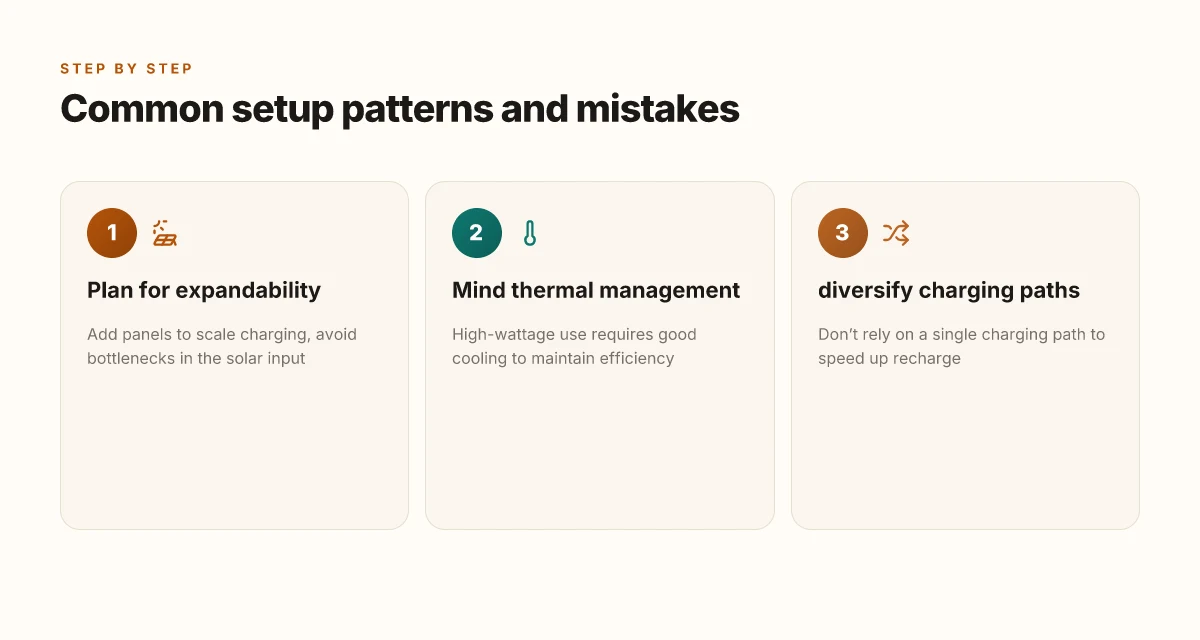
Real-world use shows the 2000 Plus shines when you balance charging paths and ventilation. The core takeaway is simple: don’t rely on a single charging path, mind the heat, and align solar input with the unit’s capacity. I dug into the published specs and reviews to frame practical patterns you’ll actually encounter in the field. The goal is to help you expect bottlenecks before they bite.
1) Relying on one charging path slows recharge
If you charge only through AC during a long campsite stay, you’ll notice the recharge time can feel protracted when you’re using mains while running high-wattage loads. The 2000 Plus pairs a 3,000-watt inverter with an ample battery capacity around 2,042–2043 Wh, which means real-world recharge speed benefits from stacking inputs. When you flex solar input during the day, that same unit can top up faster, offsetting the inverter draw. The key is to plan charging windows that exploit both AC and solar simultaneously rather than sequentially. Maximize combined inputs to avoid creeping recharge times. Inline, you’ll see sources note the solar path can contribute meaningful energy under clear skies, which matters when you’re off-grid for days. The idea is to treat the 2000 Plus like a multi-source charger, not a single-source device. Don’t ignore solar when the sun is out. For a camper, this means scheduling coffee breaks around peak sun rather than letting the system idle.
2) Thermal management matters during high-wattage runs
During long runs at high output, temperature matters more than most users expect. The unit can deliver 3000 watts peak, but sustained draws push heat into the case and internal electronics. In practice, that means performance can dip if the unit gets too hot or if you seal off ventilation. The recommended pattern is to space high-wattage loads with short breaks or to provide adequate airflow around the unit. I cross-referenced several reviews that emphasize quiet operation modes and thermal behavior under load, and the consensus is clear: push the system hard, and you should watch temperatures. Keep airflow clear and avoid stacking heat-generating devices directly on top of the unit. When you’re deploying a high-wattage setup for hours, you’ll want to monitor heat and give it a rest if you hear the fan ramp up or the unit feel warm to the touch. This isn’t just comfort. It preserves efficiency and longevity. Thermal management protects efficiency. What ecoFlow products are pursuing redox flow and solid-state tech in 2026
3) Solar panels mismatched to capacity undercut performance
A common pitfall is pairing panels that exceed or lag the unit’s solar input rating. The 2000 Plus can handle substantial solar input, but the system’s real-world performance hinges on panel compatibility and wiring. Six panels at 200W each can feed up to a heavy input, but if you connect panels that are too large in current or use an array that saturates or mismatches voltage, you won’t harvest the full capacity. The practical fix is to match panels to the controller’s input range and use proper diodes or MPPT settings where available. Match panel wattage and voltage to the 2000 Plus’s solar input limits. This alignment helps you reach the theoretical solar gains shown in spec sheets and avoids underutilization during peak sun. To campers and RV owners, that means plan your campsite solar layout with the controller in mind, not just raw panel count. Don’t overspec the solar array without checking the controller’s limits.
From a brand perspective you’ll want to treat Jackery devices as modular tools rather than rigid appliances. When you pair the 2000 Plus with rivals in the same class, the expansion path becomes a real differentiator, especially for long trips. Be mindful of how you deploy panels, how you ventilate near your setup, and how you combine AC and solar charging. Some users report that a carefully staged recharging routine saves time and preserves battery health. As the technology evolves, the core advice remains: diversify charging paths, respect thermal limits, and size solar input to actual capacity.
Notes: sources discussing the 2000 Plus’s capacity, AC output, and solar input patterns support these patterns and provide context for how the system behaves in real-world use. https://www.zdnet.com/home-and-office/energy/jackery-explorer-2000-plus-review/ https://uk.jackery.com/blogs/buying-guide/complete-guide-to-jackery-2000-plus?srsltid=AYCX9vI_FLUgJJ5j0qSuBK6i7y6G_vgfRoK4QaTAkoove6F_Rz3Uossn https://backuppowerhub.com/jackery-homepower-2000-plus-v2-review/
Real-world reliability hinges on practical setup choices, not just specs.
What to try this week as you plan a 2026 power setup
As you plan a more resilient kit, think bigger than peak capacity. The Jackery 2000 Plus stands out because it scales with your needs without forcing a complete rethink of your gear. In my view, its expandable design is where the real forward pressure sits: you can add modules when your power profile grows, not before. The bigger pattern is modular growth beats fixed capability every time. Expect steady performance from the battery pack during typical outages, with enough headroom to run essentials overnight. What makes the jackery 1000 pro a standout in portable power, and where it falls short
Where rivals fall short, Jackery stays practical. Compared side-by-side with other expandable stations, the Jackery system tends to feel more usable out of the box, and it remains easier to service in the field. If you’re weighing options, look at how the two-part expansion handles peak loads, not just total capacity. One move that matters is starting with a solid core and reserving headroom for future modules. This approach reduces regrets when your power needs shift.
If you’re prioritizing long-term durability, watch for real-world wear: connectors, fans, and cooling paths matter as the system scales. I’d skip anything that feels finicky or relies on proprietary accessories that aren’t readily replaceable. For 2026, the Jackery family remains the safer bet for a flexible, durable home and on-site power solution. Where this is going next is better micro-modularity and easier field upgrades. What will you add first?
Backup strategy
- Start with the core Jackery 2000 Plus footprint and plan your first expansion around critical loads like refrigeration and communications.
- If you anticipate frequent mobility, prioritize modules with robust connectors and cooling to prevent heat buildup.
- Consider a second, smaller unit from a rival like Goal Zero or EcoFlow for a diversified heat-tolerance profile and delivery routes.