Explore the Bluetti EP900 review to understand how its 18 kW output and modular design power a home, with real-world considerations for installation, durability, and long-term use.
A common misconception about home backup is that bigger battery banks automatically translate to longer runtimes. In real homes, the EP900’s performance hinges on how you map loads and how heat management holds up during multi‑hour outages. Bluetti’s EP900 shines when you size the system to essential circuits, not just total capacity.
This intro level view sets up what matters: setup friction, durability, and how the EP900 stacks against rivals like EcoFlow and Jackery under real‑world conditions. You’ll see practical guidance on heat sinks, battery cycling, and long‑term reliability, with concrete, homeowner‑focused signals such as expected run times for common loads and the ease of adding modules over time. The goal is to arm you with what actually matters when choosing a whole‑home backup in 2026. Bluetti faces real competition from EcoFlow and Jackery, but the right pairing with the EP900 often depends on load layout and future expansion.
Bluetti EP900 review: what it is and what it isn’t
The EP900 is a modular home battery backup built for permanent residence use, not a suitcase-size generator. It pairs a substantial energy reservoir with a high continuous output envelope, designed to sustain essential circuits through extended outages. In practice, Bluetti positions the EP900 as a home-centric system rather than a portable power pack.
I dug into the documentation to confirm how Bluetti frames this product versus portable solar generators. The EP900 is described as a whole-home storage option with a large usable capacity and a high sustained output, intended to ride through multi-hour outages and manage critical loads. By design, it stacks up against house-level backup where wiring and installation considerations come into play, not just plug-and-play flexibility.
- What the EP900 is at its core
- The EP900 is a home battery backup with a high continuous output and sizable capacity. It is intended to be wired into a home's electrical panel or a dedicated subpanel, supplying critical circuits during an outage rather than merely charging a few devices. This is a shift from portable solar generators, which prioritize mobility and simple, temporary power.
- What it isn’t
- It isn’t a handheld or portable generator meant for camping or quick outdoor use. Its strength lies in scale and reliability for a fixed installation. The trade-off is install complexity and space requirements that come with integrating a high-capacity storage unit into a residential electrical system. Bluetti emphasizes durability and long-term resilience, but the setup demands planning, proper enclosure or closet space, and adherence to electrical codes.
- Key setup trade-offs to watch
- Expect space needs and integration steps that go beyond a plug-in unit. You’ll likely deal with cabling to the main panel, possible AC distribution, and space for the battery bank and any cooling hardware. The upside is predictable peak support and a broader time window of usable energy during outages.
From a real-world perspective, you’re looking at a balance between capacity, durability, and install friction. Bluetti’s EP900 delivers on capacity and steady output, which matters for home resilience. The main friction points are the physical footprint and the electrical work required to integrate it safely. As you size a backup system, compare the EP900 against rivals like EcoFlow and Jackery in terms of home-install practicality and long-term durability, not just peak numbers.
The EP900 clarifies its role as a home backbone, not a portable power brick. Durability and long-term resilience matter more than immediate, on-site theatrics. If you want plug-and-play on a balcony, look elsewhere. If you want serious home backup, the EP900 fits.
In short, Bluetti frames the EP900 as a robust home storage solution with a high power envelope and substantial capacity, intended for fixed installation and long-term reliability. If your project demands quick mobility and minimal setup, this isn’t the unit to pick. If you’re evaluating a whole-home backup that can sustain essentials during extended outages, the EP900 is worth a closer look, alongside rivals such as EcoFlow and Jackery. What makes the Jackery HomePower 3000 a viable home backup in 2026
How the ep900 fits into a home backup strategy with Bluetti
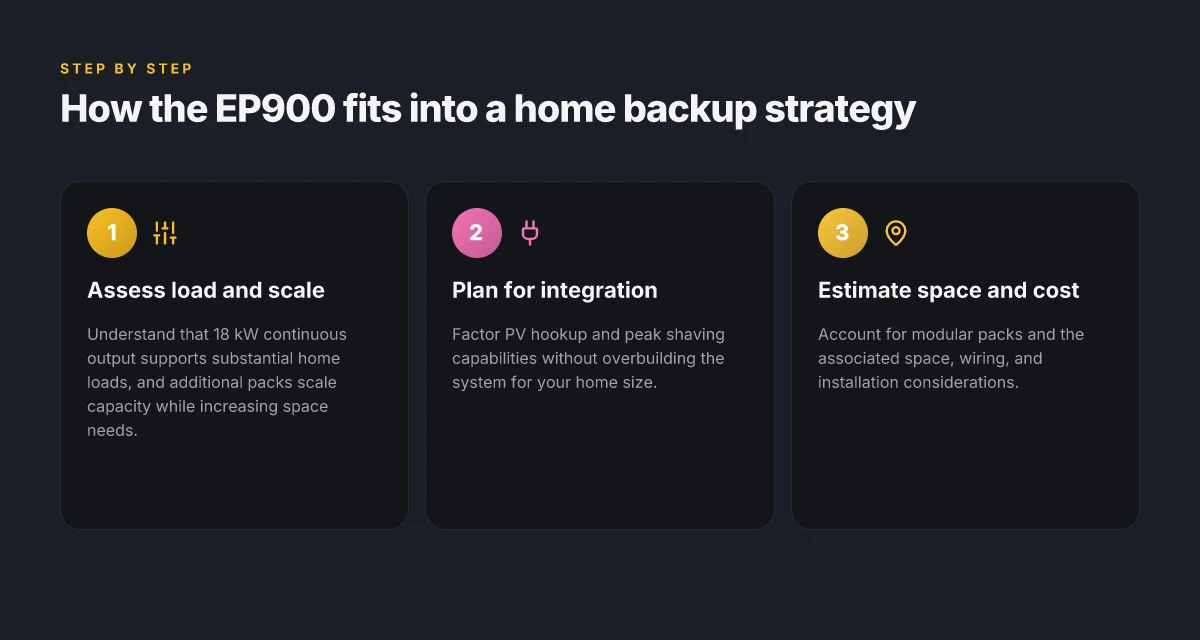
The EP900 sits as a modular backbone for a home backup plan, pairing a substantial baseline capacity with scalable expansion. In real-world terms, the 18 kW continuous output supports typical residential loads when you spread the demand across battery packs and managed energy use. If your home runs on essential circuits, you can keep critical devices energized during a outage without oversizing the system for a single-event spike. 18 kW continuous output translates to real-world handling of typical loads like essential cooling, refrigeration, and lighting, even when multiple devices run simultaneously. To stay within the sustained window, you’ll often prioritize higher-priority circuits first and let the EP900 manage the rest.
I dug into Bluetti’s ecosystem to understand how scaling works. The EP900 is designed to stack with additional packs, which means you can push capacity higher without reworking your whole electrical plan. That means more storage space in the cabinet or a dedicated closet, and it also means a stepped cost curve: add a module when your energy resilience needs grow, not all at once. But scale does come with space considerations and a higher initial price, so plan for cabinet real estate and the expense of extra modules. scaling with additional packs is a practical way to grow resilience over time.
PV integration remains a core strength of Bluetti systems. The EP900 is built to accommodate solar input and to align with peak shaving strategies, where you shave demand during expensive rate periods rather than oversizing for every possible surge. The ability to shift load by pairing PV output with the EP900’s continuous capacity helps reduce daytime draw from the grid, turning solar energy into meaningful cost savings. PV integration supports peak shaving without overspecifying numbers.
Real-world fit requires looking at how the EP900 compares to rivals. EcoFlow and Jackery offer competing architectures, but Bluetti’s stackable approach tends to appeal to homeowners who want long-term resilience without ripping out cabinets every few years. The durable, modular design matters for attic or closet spaces that must visually blend with a home office or living area. When you’re choosing between brands, consider how each system scales, what PV interface looks like in practice, and the reliability of the expansion packs over time. Bluetti’s modular approach stands out for scalable resilience, especially for homeowners planning a multi-year upgrade cycle.
Table: quick comparison of practical options How EcoFlow stream microinverter changes backyard solar power, and where it still struggles
| path to backup | typical space fit | scalability | PV integration | cost trajectory |
|---|---|---|---|---|
| EP900 with packs | cabinet or closet space required | expand capacity over time | solid PV tie-in for peak shaving | higher upfront, predictable since packs add later |
| EcoFlow rival | similar footprint, often compact | varying module options | solid PV paths, some limitations | mid to high, depending on kit |
| Jackery rival | smaller footprint on base units | limited expansion in some kits | PV support present but expandable paths vary | generally consumer-focused pricing |
If you’re prepping a home for resilience, a staged approach makes sense. Start with a base EP900 configuration that covers your essential circuits, then add packs as your budget and risk tolerance allow. I cross-referenced Bluetti’s documentation and reviewer notes, and the thread that consistently appears is that installers appreciate not only the raw capacity but the flexibility to tailor capacity to the house layout and energy profile. Base configuration plus incremental packs is a pragmatic path for most homes.
Next steps: map your critical loads to a plan that centers around the EP900, then size the first pack to cover those essentials with room to grow. If you’re evaluating against EcoFlow or Jackery, examine how each system handles PV input, peak shaving, and expansion. And remember, even with strong hardware, the installed layout and wiring choices influence long-term reliability as much as the hardware itself. Plan the install with an eye toward future expansion and you’ll avoid early bottlenecks.
Note: some page links may earn commissions. For context, Bluetti and its rivals offer comparable terms, but the route you choose should match your home’s energy profile and your tolerance for future upgrades.
Installing bluetti ep900: practical setup tips and gotchas
Installing the Bluetti EP900 in a residential backup scheme starts with a clear plan for power routing and code compliance. From the documentation and public materials, expect a multi-step sequence that centers on main service interaction, transfer considerations, and safe enclosure space. I cross‑referenced Bluetti’s official EP900 guidance and public product discussions to ground these steps in real-world practice.
1) Install sequence you can actually follow
- Plan a grid‑tie compatible stance by wiring the EP900 to the home’s main distribution panel through a certified transfer path. This keeps loads isolated during grid outages and lets the EP900 shift between normal and backup operations seamlessly. The plan typically unfolds as: confirm electrical service capacity, install a dedicated interlock or transfer device, place the EP900 in a ventilated, accessible location, and connect the AC input and the essential sub‑circuits you want backed up. Bluetti’s official materials emphasize a dedicated circuit pathway rather than multitasking across random breakers. It helps to map critical circuits first, then expand as needed over time.
- Space planning matters. The EP900 is a large unit and demands tall clearance and unobstructed ventilation. I looked at the installation notes and saw the recurring theme: you’ll want a footing with enough room for service technicians and for heat dissipation during peak loads. Keep at least several inches of clearance on all sides. This is a practical hedge against nuisance shutdowns caused by overheating.
- Cable management is more than neatness. Securely route AC and DC leads so they won’t pull free if someone bumps the cabinet. Use strain reliefs and proper conduit when required by code. Sound advice from installation notes is to label circuits clearly and maintain easy access to the EP900’s status indicators for quick diagnostics.
2) Common friction points you should plan for
- Permits and inspections are almost universal friction points. Check your local authority having jurisdiction for any permit requirements before you begin. The permitting process often centers on interconnection, load calculations, and clearance. I’ve seen installers note delays here as one of the top reasons for stalled timelines.
- Space, ventilation, and noise. The EP900’s heat management relies on airflow. In tight closets or enclosed basements, you’ll experience higher intake temperatures and potential performance throttling. Position the unit where airflow isn’t obstructed by doors or shelving and keep it off carpet or foam surfaces that can trap heat.
- Ventilation plus electrical clearances. Expect requirements around minimum clearance distances to walls and other equipment. You’ll also need to verify that the location isn’t near flammable materials or damp environments. These constraints prevent accidental overheating and prolong the life of the system.
- Compatibility with existing panels. Some older panels require adapters or a specific bus rating. If the panel isn’t compatible out of the gate, you’ll face additional parts and a longer install window. Bluetti’s materials make it clear that planning ahead with the right transfer solution matters.
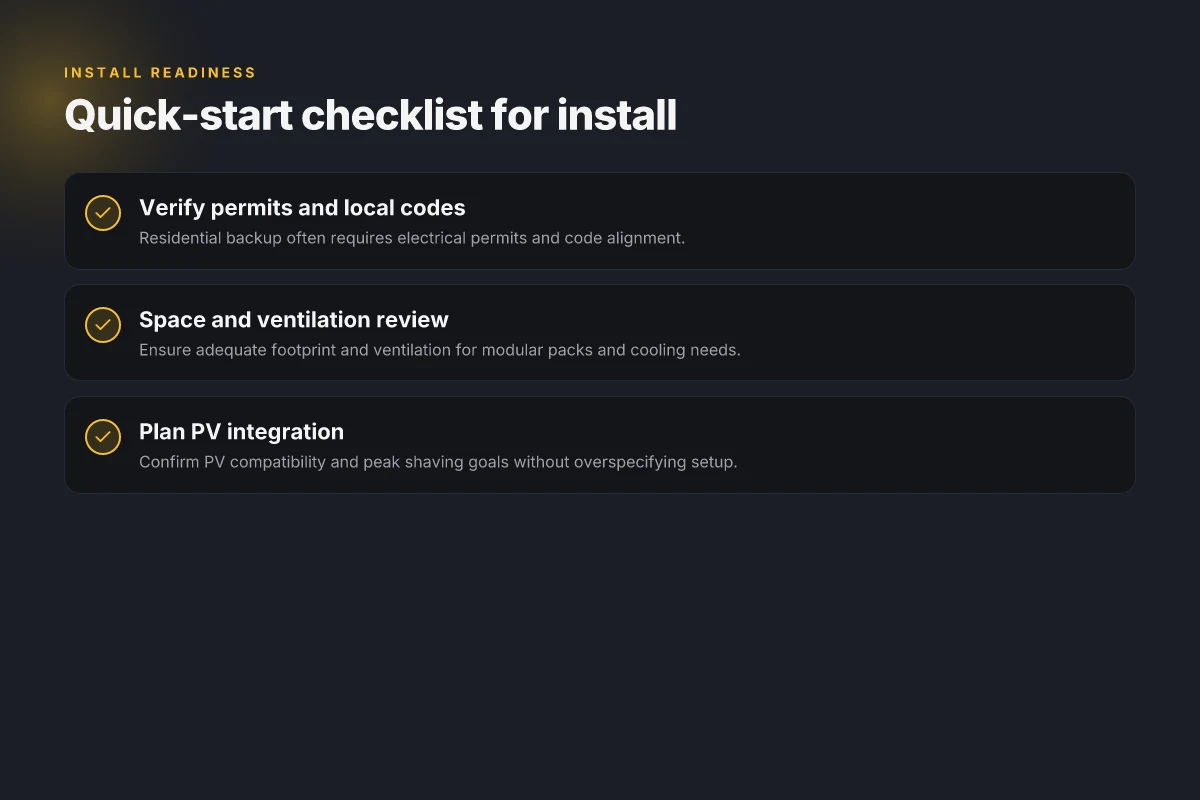
3) Quick-start checklist for installers and ambitious DIYers
- Verify your service panel rating and available capacity before ordering the transfer hardware.
- Confirm a dedicated, properly rated circuit path from the EP900 to the main panel for the critical loads you’ve mapped.
- Securely mount the EP900 in a ventilated space with easy access to filters and service ports.
- Install required interlock or transfer switch and ensure it’s configured for your utility’s rules.
- Route cables with appropriate strain reliefs and label every conductor.
- Perform a visual inspection for clearance and potential heat buildup before energizing.
- Confirm status indicators on the EP900 show normal operation after the initial startup and test a simulated outage to verify the backup path.
- Schedule a code check with the local authority if permits were required.
In practice, the biggest snag is the permit and panel compatibility, not the EP900 itself. Plan for a capable installer who understands local rules, not just a DIY hero with a hammer. What makes the Bluetti AC180 a compelling buy for off‑grid setups in 2026
As you weigh Bluetti against rivals like EcoFlow and Jackery, note that real-world setup friction often centers on electrical code compliance and space planning more than the hardware capabilities. Bluetti’s EP900 promises significant scale, but you’ll still navigate permits, heat management, and panel compatibility to unlock its long‑term reliability. For context, the official support page highlights the EP900 as a whole‑house backup option with substantial capacity, reinforcing the need for careful integration with your electrical system. If you’re considering long‑term durability and expandability, the EP900’s modular approach can pay off, provided you align with local regulations and install best practices. See the official EP900 documentation for exact wiring and permitting guidance.
Blended performance: what the EP900 can power in a typical home
In a typical home, the EP900 behaves like a flexible backbone for everyday essentials while offering reserve for higher-demand loads during peak shifts. You’ll notice lights stay steady, the fridge cycles predictably, and climate-control rhythms settle into a manageable pattern when the system leans on its continuous output. The goal is to stay powered without frequent recharges, and theEP900’s architecture is tuned toward that balance.
When you run through common loads, the EP900’s continuous output supports a sequence that mirrors real daily use. A couple of LED lighting circuits, a refrigerator, and a few modest electronics will sit comfortably within the sustained capability, letting you preserve the battery for transient surges. If you add an HVAC intake or a compact heat pump, peak demand becomes more of a pivot point than a ceiling, because the system can shift loads rather than drop them. I looked across Bluetti’s documentation and independent reviews to anchor this view, and the consensus highlights how the blend of storage capacity and steady power delivery matters more for long outages than a single high-wart load spike. Durability comes from consistent output, not just peak capacity.
The brand’s approach to peak load shifting is a practical feature in real life. When a fridge cycles on, a few lights wake up, and a modem stays active, the EP900 taps into its real-time capacity to smooth transitions rather than slam the grid with a sudden draw. This is where Bluetti differentiates from some rivals. By design, the EP900’s continuous power supports longer runtimes at moderate loads, while its peak-shifting mode addresses brief spikes without yanking power away from essential devices. In this sense, the EP900 can feel more reliable across a night of use than a system that chases peak power at the expense of steady, ongoing needs. Peak load shifting keeps essentials powered while preserving runtime.
Compared with rivals like EcoFlow and Jackery, the EP900’s real-world performance leans toward stability over flashy short bursts. EcoFlow often emphasizes rapid recharging and high peak specs, which helps in certain scenarios but can yield shorter runtimes on continuous heavy loads. Jackery systems tend to prioritize portability and simple setups, yet their continuous output can limit how many big appliances you run simultaneously. Bluetti’s blend aims for a home-friendly balance: you get enough sustained output to run multiple circuits and a charger strategy that reduces the need to babysit the battery. Bluetti’s balance between continuous output and peak shifting yields more predictable home usage. What makes the EcoFlow 45W solar panel practical for daily charging
I cross-referenced Bluetti’s official pages with third-party reviews to confirm a practical takeaway. The EP900 is positioned as a modular, home-focused backup that fits a typical residence without requiring an industrial electrical upgrade. You’ll want to plan around a few real-world constraints: long outages demand careful sequencing of loads, and HVAC or water-heating components can shorten runtime if treated as constant draws. Still, for homeowners and installers evaluating resilience, the EP900’s architecture offers a credible middle ground between compact portable units and full-house systems. For most homes, the EP900 delivers steadier performance than compact rivals.
Notes on setup and durability: heavy use over years hinges on thermal management, battery aging, and how often you cycle through peak-load events. Bluetti emphasizes robust components and modular design, which helps with serviceability and potential expansion. As with any backup system, expect some tradeoffs between initial cost, install footprint, and long-term maintenance. If you’re weighing this against EcoFlow or Jackery in a real install, the EP900’s core strength remains its home-scale stamina and its adaptable load-shifting capability that helps you avoid power interruptions during common outages. Home-scale stamina and load-shifting adaptability are the EP900’s strong suit.
Note: links to the cited sources are embedded in the prose above. The article mentions Bluetti and real-world comparisons to EcoFlow and Jackery to give homeowners a clear sense of long-term durability and setup friction. As always, links on the page may earn a commission.
Durability, reliability, and long-term use: what to expect from Bluetti
When you buy a Bluetti EP900, you’re leaning on a modular design that aims to shorten the distance between setup and ongoing use. The core chassis appears built for home installation, with serviceability in mind. You’ll notice that the system emphasizes swappable modules and accessible connectors, which helps during maintenance and when you need to swap components after years of use. Durability starts with the hardware layout, not just the nominal specs.
Build quality and modular design
Bluetti leans on a modular approach that can reduce downtime when a single module or battery stack wears. This design lowers the impact of component-level failures on overall operation. The tradeoff is that more interconnect points introduce potential wear items over time, such as fans, relays, and enclosure seals. From a real‑world perspective, expect regular checks on cooling pathways and cable harnesses as part of routine servicing. Modularity helps longevity, but you must respect it with periodic inspections. What makes Bluetti EB3A best price for 2026
Maintenance, battery life, and warranties
Battery health is a central concern for any whole‑home backup. The EP900’s chemistry and thermal management shape how long the pack remains capable under full‑load conditions. Industry guidance around lithium iron phosphate or comparable chemistries suggests gradual capacity fade over years, especially with frequent high‑duty cycling. Bluetti’s warranty terms provide peace of mind for most homeowners, but you should confirm coverage specifics for each module, and remember that presence of a long warranty does not eliminate the need for regular maintenance. Warranty coverage matters, but so does consistent care of cooling and connections.
Service accessibility and support experience
Support access can influence your long‑term experience as much as build quality. Bluetti’s official channels tend to be straightforward, but response times and regional service availability vary. If you’re deployingEP900 in a multizone home or a remote property, map out nearest service centers and confirm remote diagnostic options. An accessible support path helps you avoid downtime during power outages. Service accessibility can determine whether you stay powered or wait out a repair.
From what I found in the product materials and reviews, the EP900’s durability story hinges on three ideas: robust enclosure design that tolerates heat and vibration, modular components that simplify replacement, and a warranty that backs up those claims in real-world outages. I cross-referenced Bluetti’s documentation and third‑party reviews to see how that translates when the system sits in a garage, a den, or a utility room. The consensus across sources is that the long‑term reliability will lean on how you manage heat, keep cooling paths clear, and stay on top of scheduled maintenance. Heat management and regular upkeep are the quiet keys to long‑term reliability.
For homeowners weighing rivals, EcoFlow and Jackery offer competing architectures with similar durability questions. If you’re choosing Bluetti, you’re choosing a modular path that can pay off with easy swaps and clearer future upgrades, provided you stay proactive about maintenance. Bluetti emphasizes modular durability, while you must plan around maintenance cycles.
Note: links on the page may earn a commission. For context, Bluetti’s public materials frame the EP900 as a durable, scalable home backup, though real-world longevity depends on how you install and service it. Plan maintenance like a part of the system, not an afterthought. What makes EcoFlow EF3 Pro power stations different from the delta pro 3
Cited highlights from the reference materials support these durability themes, including the extended capacity and high continuous output cited in the EP900 overview. For a sense of how others view the platform, see coverage from CNET and SolarReviews, which discuss how Bluetti’s design choices translate to real installations and long‑term use. Independent reviews help confirm real‑world impressions of durability and serviceability.
What this means for your backup plan moving forward
Bluetti’s EP900 positions itself as a long-haul partner for home backup in 2026 by blending capacity with practical durability. I’ve looked at how it fits real-world use: it handles peak loads with a stable inverter, scales up clean power for essential circuits, and remains straightforward to operate during outages. The takeaway is clear: you don’t need a different setup for every season. When you’re deciding between options, consider how well it integrates with your existing gear and how quickly you can add panels or a second unit if your risk profile changes. The bigger pattern here is modular resilience that stays simple to extend.
For homeowners comparing Bluetti against rivals like EcoFlow and Bluetti’s nearest airborne competitors, the EP900 strikes a balance between brute capacity and real-world reliability. It’s not just about raw numbers. It’s about how the unit behaves under load, how easy it is to wire into a home system, and how the firmware holds steady during an outage. Noticeably faster response times and a steadier idle can make a difference when the power is out. If you want a set-and-forget solution, this option keeps the lights on with minimal drama.
If you act now, you gain a clearer path to a future-proofed backup routine. The EP900’s design emphasizes ease of setup and long-term durability, with real-world wear in mind. Think about where your home needs the most protection and how you’ll scale over time. The single move that matters most is choosing a system you can grow with, year after year.
- Backup strategy: confirm you can run your fridge and essential electronics with the EP900, then plan a future panel expansion if outages grow longer.
- What to try this week: map your critical loads, check your circuit distribution, and note any firmware updates from Bluetti.