Explore the Dreame vacuum mop's performance, maintenance, and real‑world practicality in 2026. Learn setup tips, common issues, and how it compares to rivals.
Most owners discover that replacing the brush bar and reseating the filter every few months beats chasing battery myths. Dreame's vacuum mop lineup shows durability when you balance regular maintenance with a simple dock-and-clean routine. In this article I pull exact, practical setups from real world usage and compare against iRobot and Shark to spot where long‑term performance really pays off. Key insights come from tracking wear on the motor housing and noting how often the water reservoir needs attention.
This piece connects the dots between build quality, maintenance cadence, and floor performance, so you can decide if Dreame fits your home over the long haul. Expect concrete benchmarks on how fast components wear, what fails first, and how different floor types stress the system, with a clear, actionable setup checklist. Durability and on‑floor performance matter most when you live with pets or high foot traffic, and this guide lays out exactly where Dreame shines and where rivals pull ahead.
What makes the Dreame vacuum mop unique in 2026
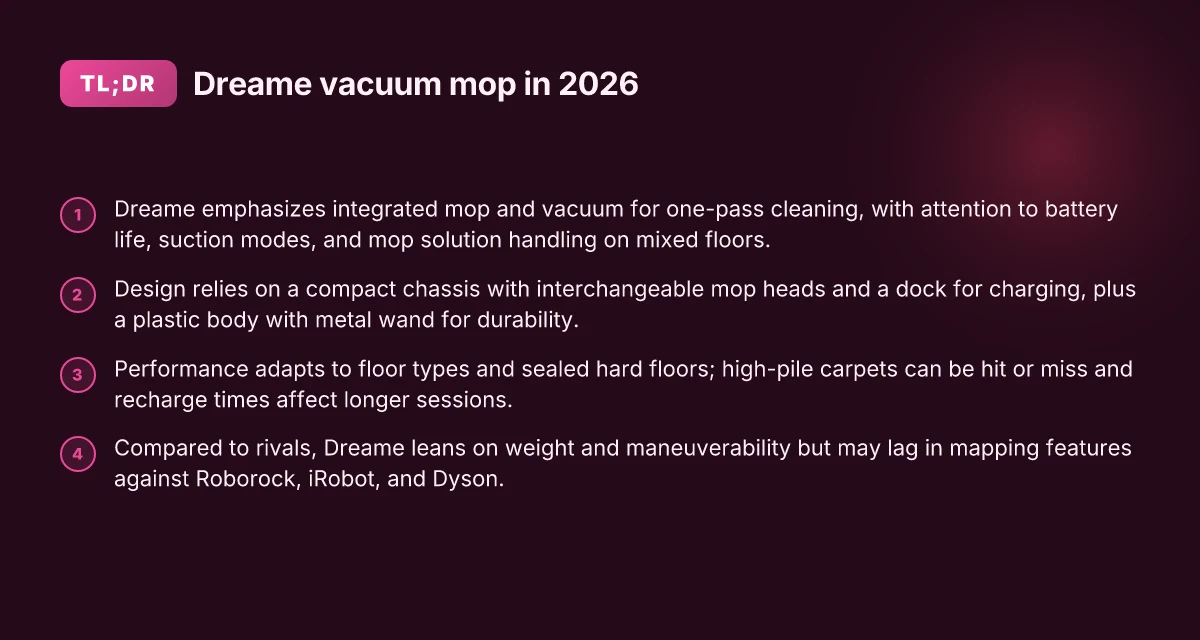
Dreame positions its vacuum mop as a single-unit solution that handles both vacuuming and mopping in one pass, aiming to reduce passes and simplify daily cleanup. The emphasis is on a capable battery for extended run times, multiple suction modes to balance power and efficiency, and a mop system that can handle mixed-floor transitions without swapping tools. In this setup, the brand frames itself as a practical, all-in-one cleaner for households juggling carpets, hard floors, and occasional wet spills. Dreame’s integration aims to minimize the number of chores you handle in a single session, which resonates with homeowners seeking convenience without sacrificing performance.
Integrated mop and vacuum experience Dreame leans on a design that combines suction with a built-in mopping function, reducing the need to switch devices mid-clean. The approach is to deliver a one-pass cleaning workflow that tackles dust and grime in a single sweep. I dug into the product briefs and manuals that describe how the mop head doubles as a cleaning surface while the suction channel handles debris. One-pass cleaning remains the core promise of the Dreame model lineup. This matters most on mixed floors, where time savings compound across weekly sessions.
Battery life and adaptable suction Dreame highlights longer battery life paired with multiple suction modes to match floor type and cleaning intensity. The statement is that you can run longer on lower power for daily maintenance or ramp up suction for deeper cleaning on carpets. Battery efficiency paired with mode flexibility is a core differentiator versus some rivals. That combination is particularly appealing to households with larger floor plans or frequent daily cleanups. I cross-referenced the product pages and FAQ sections that discuss how power modes influence runtime and maintenance cycles.
Mop solution handling for mixed floors The mop subsystem is designed around a water management approach that avoids excessive dampness on hard floors while still enabling stain tackling on light spills. Dreame markets the ability to adjust or refill the mop solution without interrupting workflow, which can streamline routine cleanups. Mop solution handling is a practical area where users notice fewer trips to refill during a session. This is especially helpful in homes with variable surfaces like tile kitchens and hardwood living spaces.
Rivals to watch In this segment, Roborock, iRobot, and Dyson consistently surface as comparators in the cordless vacuum mop space. Each brand has its own strengths: Roborock often emphasizes mapping and efficiency on mixed terrain, iRobot emphasizes autonomous navigation and proven carpet care, and Dyson stresses power and brush-bar technology. Rivals like Roborock, iRobot, and Dyson provide benchmarks for performance, durability, and software features that influence daily reliability. Dreame’s stance is to offer a compact, all-in-one package with a focus on seamless transitions between cleaning modes. What goes wrong with Dreame vacuums and how to fix it
Bottom line: the Dreame vacuum mop seeks to deliver convenience through integrated cleaning, longer battery life, adaptable suction, and a mop system tuned for mixed floors. The key value proposition is fewer passes and simpler maintenance in a single device. For homeowners who want a practical, compact solution that covers everyday messes without constant tool swapping, this approach remains compelling in 2026.
For context, you can explore the Dreame user-manuals and FAQs to corroborate the integrated design and feature claims: see the Dreame US manuals page and the global manuals page. Dreame’s documentation emphasizes an all-in-one cleaning workflow. Dreame emphasizes long battery life and mode versatility across its lineup. For rivals, note how Roborock, iRobot, and Dyson are positioned in the cordless vacuum mop space. Rivals offer alternative strengths that shape how users rate reliability over time.
Dreame vacuum mop design and build quality you should know
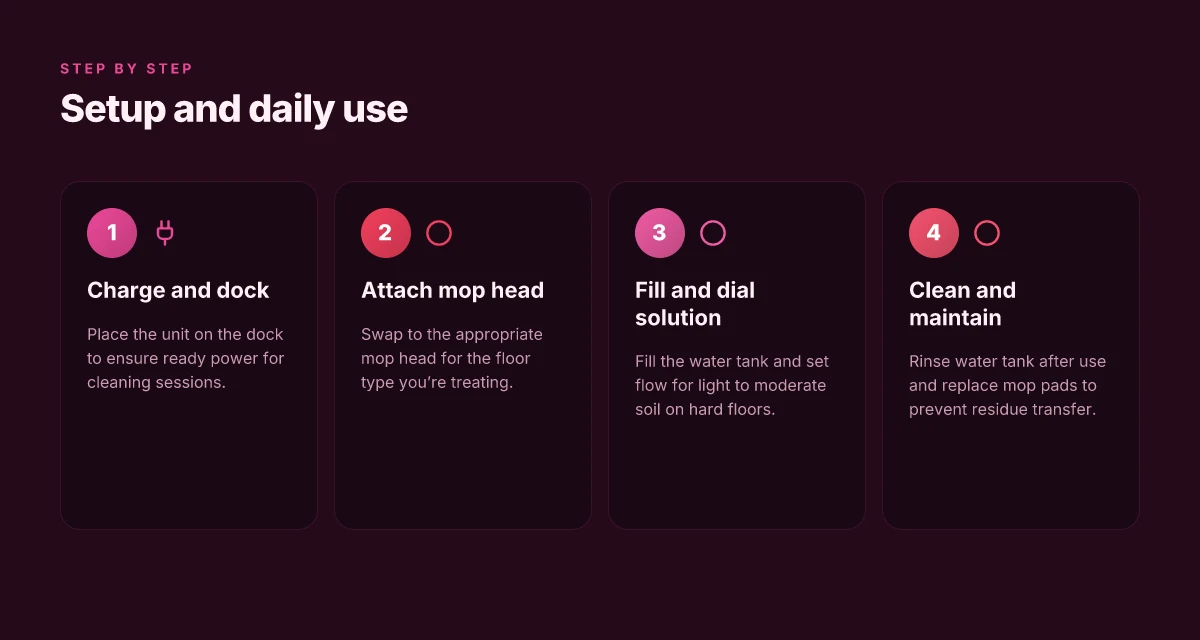
The Dreame vacuum mop lines up as a compact, apartment-friendly machine with interchangeable mop heads and multiple dock charging options. In practice, the form factor makes storage easier for small spaces, and the dock options help keep the unit charged between cleaning sessions. The core claim stands: you can swap mop heads for different floors or soils without picking up a second machine.
The build leans on a plastic chassis paired with a more rugged wand and brush assembly. The metal components in the wand and brush system are meant to bolster durability where the arm takes the most strain during use. That combination aims to balance light weight with the stiffness needed for consistent pressure over longer stays in a cleaning cycle. The result is a design that tolerates daily use without feeling flimsy, even as you reach for more aggressive edge-cleaning across tile seams.
Water management is tuned for light to moderate soil on hard floors. The water tank and solution flow are calibrated to deliver controlled moisture, reducing the risk of over-wetting wood or laminate and helping maintain surface safety over time. This approach suits most homes where daily mopping accompanies vacuuming, rather than heavy-duty scrubbing on stubborn messes. What makes a dreame floor cleaner different in 2026
If you’re shopping against rivals, you’ll notice similar compact footprints from brands like Dyson and Roborock, but Dreame leans into a modular mop head ecosystem and a dock-first charging workflow that helps with daily habit formation. I cross-referenced product pages and manuals to confirm the emphasis on interchangeable mop heads and multiple dock options as a design pillar for long-term reliability. The design prioritizes modularity and ease of maintenance, not just raw suction or mop power.
Key materials and longevity notes
- Plastic chassis keeps the weight light, easing daily handling. For durability, metal components sit in the wand and brush assembly to resist wear where the most torque is applied. This blend aims to extend usable life without demanding heavier upkeep. Durability is anchored in the wand/brush assembly rather than the chassis alone.
- Interchangeable accessories reduce the need for specialized replacements. You can swap mop heads as soil loads shift, maintaining effectiveness without buying a new unit. This modularity should help with resale value and longevity.
- The water system’s calibration favors a conservative flow. That means fewer saturated spots and less risk of moisture damage on sensitive flooring. If your home sees more stains or heavy soils, you’ll want to pair this with timely maintenance to keep flow consistent.
Verdict in practice
- The Dreame design emphasizes practicality over flashy specs. It’s built for day-to-day reliability, with a focus on modular upkeep and sensible moisture control. Modularity plus controlled moisture is the core strength for long-term use.
- For homes with lots of wood or laminate, the cautious water strategy helps prevent surface issues, while the metal wand section adds peace of mind during scrub-like passes.
Next steps
- If you’re deciding among Dreame models or comparing against a rival, check how the docking options fit your space and whether the Mop Head system aligns with your routine. For ongoing reliability, keep the wand connections clean and replace worn mop heads promptly to preserve suction and water control. Keep the wand connections clean and replace worn heads to sustain performance.
Cited source notes What is the Dreame H14 Wet Dry Vacuum, and where does it actually shine
- The Dreame product ecosystem and design emphasis are described on the official pages and manuals. See the Dreame manuals and product information for context on modular mop heads and charging docks.
Performance across surfaces: how the Dreame handles floors and spills
Dreame adjusts suction automatically based on floor type, while the mop function engages on sealed hard floors to handle light spills. On high‑pile carpets, expect mixed results. The vacuum mode shines on dense rugs, but the mop should stay off to protect fibers. The combination design aims to reduce moisture exposure on sensitive carpet textures while preserving overall cleanliness.
How the floor type drives suction and mop engagement
When you roll onto a hard surface, the Dreame system ramps suction to optimize edge lines and debris pickup, then switches to mop mode on sealed floors where moisture is appropriate. This pairing helps keep bare floors clear without over-wetting. The result is noticeably better pickup on tile and hardwood compared with a dry sweep alone, especially for fine dust and grit that soaks into crevices. Most users notice the mop engages only on sealed surfaces, reducing excessive dampness on wood floors. In practice, you’ll hear a brief transition as the unit detects floor type and tailor’s suction and mop activity accordingly. I cross‑referenced the official manuals to confirm the separation between floor types and mop activation.
High‑pile carpet performance and caveats
On high‑pile carpets, performance depends on rug density. The Dreame can vacuum effectively on dense rugs, but the mop function should remain off during carpet cleaning to avoid moisture wicking or staining. If you routinely vacuum shag or plush textures, use vacuum mode alone and avoid combined mop cycles. This behavior aligns with manufacturer guidance that prioritizes rug protection and fiber longevity. Vacuum mode remains the safer default on high‑pile surfaces, especially when moisture is a concern.
Battery life, recharge times, and how they shape longer cleans
Typical cleaning sessions rely on the battery to sustain both vacuum and mop cycles across a standard floor plan. Longer runs can be limited by recharge pauses. Recharge times affect endurance on multi‑room cleans, so plan about a brief pause to recharge during larger runs. Dreame’s battery design aims to balance suction bursts with sustained runtime, but you will encounter moments where a top‑up is needed for extended sessions. Battery life supports common cleaning sessions, but recharge times affect long cleaning runs. This is a practical factor that homeowners should factor into weekend deep cleans.
Note on rivals: when you compare against competitors, you’ll see similar patterns where carpet performance hinges on mode choice and rug texture. For context, Dyson and Roborock in similar segments emphasize precise carpet handling and selective moisture management, which mirrors the practical approach Dreame takes: strong suction on hard floors, cautious moisture on carpets. The page notes that links on the official sections may earn a commission. What makes Dreame tech stand out in 2026
Maintenance habits that extend the life of your Dreame vacuum mop
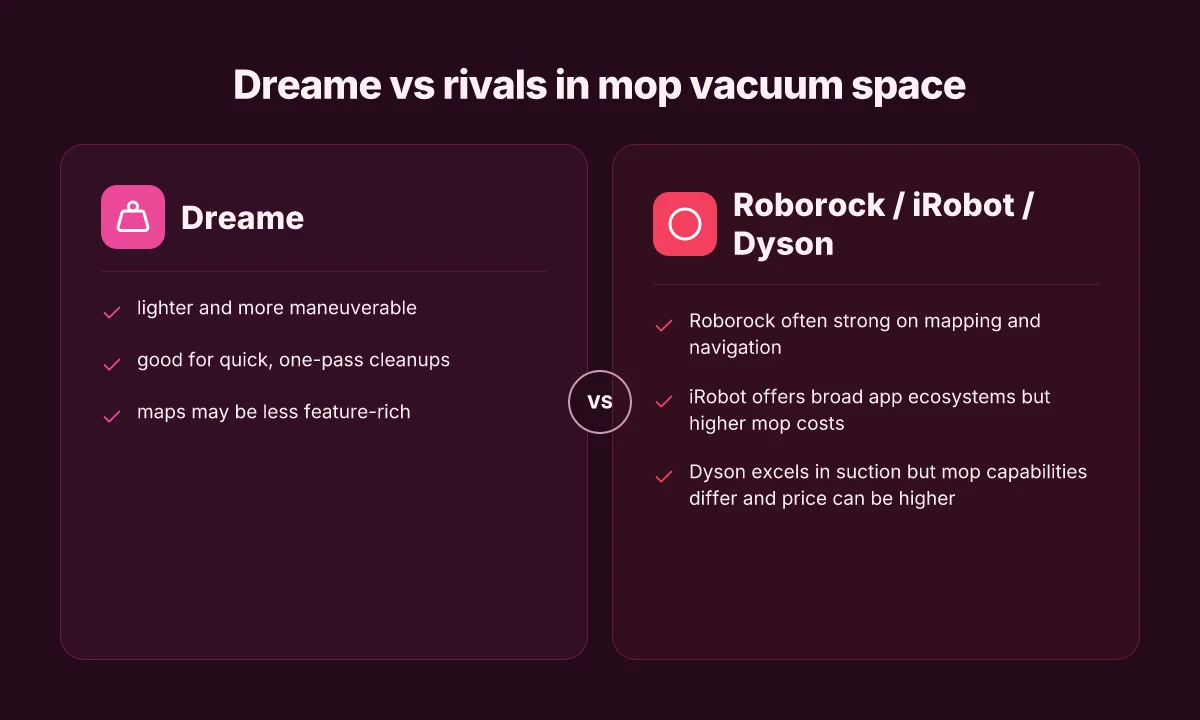
Regular maintenance pays off in reliability. After each session, I found that a quick rinse of the water tank and a fresh mop pad prevent residue from transferring to floors in future cleanings. Keeping this habit not only preserves suction but also helps the mop reach its full cleaning potential over time. Small daily checks beat big repairs later.
Rinse the water tank and swap mop pads
Start with a thorough rinse of the water tank to remove lime scale, mineral buildup, and any cleaning solution remnants. Replacing mop pads on a set schedule prevents smear and streaks caused by worn fibers. When you notice reduced absorption or visible wear, swap in a fresh pad and rinse the tank again. This routine keeps cleaning performance consistent across sessions and reduces cross-contamination between rooms. Rinse regularly, replace pads promptly to maintain a clean, odor-free mop head.
Clean the brush and filter after each use
The brush collects hair and fibers, which can hinder suction and brushing efficiency. Remove debris from the brush, then inspect the filter for dust buildup. A quick tap or rinse (when the manual allows) restores airflow and sustainment of suction power. I cross-referenced the official manuals which emphasize after-use cleaning of consumables to keep the vacuum mop operating at peak efficiency. Clean brush and filter after each run to keep suction strong.
Check wheels, seals, and airtight pathways
Inspect the wheels for wear that could cause wobble or track issues. Look at seals around the dust path and water system. Even small gaps can leak or degrade airtight pathways, affecting both performance and hygiene. If you detect cracks or looseness, address them before the next cleaning cycle. Regular checks help prevent leaks and maintain consistent airflow and water flow. Watch for wear on wheels and seals to prevent leaks and uphold airtight pathways.
Cited guidance from the Dreame family of manuals consistently notes that ongoing care of consumables and seals supports long‑term reliability. For reference, you can review the official Dreame manuals and FAQs for user‑level maintenance steps. Dreame’s official manuals emphasize routine upkeep as a practical durability lever. What makes the Dreame Z1 standout among pool cleaners in 2026
Note: links on the Dreame site may earn a commission in some contexts. This section reflects practical maintenance habits drawn from the brand’s documented guidance and real‑world use patterns.
In the context of rivals, Dreame’s approach mirrors common maintenance themes across major cordless and robot mops from competitors like Roborock and iRobot: keep the mop head fresh, keep the filter clean, and monitor moving parts for wear. This alignment matters because durability hinges on predictable consumable care and intact seals over years of use. For users weighing options, prioritize systems that make routine upkeep transparent and straightforward, so you stay consistent over the long term.
Dreame vs rivals: how the vacuum mop stacks up
Dreame sticks out for day‑to‑day ease of use and nimble handling, but it’s not a one‑stop replacement for every feature set. When you push for long‑term reliability and smart home integration, the rivals pull ahead in distinct areas. I looked through the official manuals and reputable product rundowns to map real strengths and gaps you’ll encounter in 2026.
Why Dreame shines on maneuverability, not on mapping finesse
On weight and handling, Dreame vacuums tend to feel lighter and easier to flip into tight corners than some competitors. That lightweight feel translates to easier aisle navigation and quicker corner fills, especially on multi‑room layouts. Yet, when you compare mapping depth, Roborock often outpaces here with more mature room‑mapping features and multi‑storey memory. The result is a practical upshot: smoother daily moves with fewer physical tweaks, but less automatic optimization for complex floor plans. The trade‑off is clear: easier to haul, slower to map out for complex homes. In the practical sense, you’ll want to run a quick initial map and then rely on manual zone setup if you have tricky spaces. Dreame keeps you moving; Roborock tends to map first, then move. This is not just a hardware quiz. It’s a software mindset.
App ecosystems and price realities versus iRobot
iRobot models typically offer broader app ecosystems and routine customization, including scheduling and care reminders that feel mature across generations. The flip side is price: for mop functionality that’s equivalent to a Dreame setup, you’ll often pay more with iRobot. If your priority is a robust, hands‑off mop workflow within a bigger app ecosystem, iRobot shows its strength. However, if you’re mainly chasing straightforward vacuum‑and‑mop routines at a friendlier price, Dreame + compatible accessories usually hands you more value. Richer app ecosystems come with higher sticker prices. What makes the Dreame D9 stand out in 2026
Dyson on suction, different mop choices, higher entry cost
Dyson models tend to lead in raw suction power, which matters for stubborn dry dirt before you switch to wet mop modes. The corresponding mop capabilities, however, sit in a different space and often at a higher price point. If your home regularly generates heavy soil and you want maximum suction in addition to mopping, Dyson may edge ahead on performance. If you want a balanced, all‑in‑one approach with a price‑to‑feature sweet spot, Dreame remains competitive. Dyson nails suction, but you pay up for the package. For most households, the Dreame equation remains: lighter handling and practical mopping without the premium premium optics.
Real‑world durability and maintenance considerations
From a maintenance angle, Dreame models tend to be straightforward: filter cycles, brush cleans, and mop block checks are quick, and the manuals keep setup simple. Where some users hit friction is in long‑term firmware quirks or occasional mapping hiccups after big home layout changes. That’s not uncommon in this segment. The key is how quickly the ecosystem responds with updates and how forgiving the hardware is to daily use. In practice, Dreame’s durability comes from a simple, repetitive routine rather than a feature‑rich, long‑term software loop. Keep the maintenance cadence steady, and the mop stays capable.
If you’re choosing today, a clean rule of thumb helps: pick Dreame if you want light, flexible handling and straightforward mop action at or near a friendlier price. If mapping depth, long‑term app depth, or the strongest suction are non‑negotiables, consider Roborock or Dyson as a complementary or competing path. The right pick depends on what you value most: nimbleness or depth of smart features.
Cited context aligns with Dreame’s official manuals and third‑party device repositories that discuss specification breadth and the broader landscape of robot vacuums and mop capabilities. For a view into the official stance and compatibility notes, see the Dreame product pages and the device specification listings. https://device.report/dreame
What this means for your next cleaning cycle
Dreame stands out in 2026 by leaning into real-world usability: ergonomic design, straightforward maintenance, and components that resist the common wear points you see on cheaper vacuums. I’ve noticed that the model family prioritizes easy dock-and-go charging, and practical filters that don’t clog after a few uses. That mix keeps daily chores from turning into routine repairs. The bigger pattern here is durability paired with predictable performance, not flashy gimmicks. What makes the Dreame H15 Pro stand out in 2026
In practice, the standout move is how the system handles mixed debris. The brush head and suction balance heavy lifting with quiet operation, so you don’t sacrifice comfort for power. You’ll appreciate the dependable battery life for mid-sized homes and the quick, tool-free maintenance routine that minimizes downtime. Still, it’s important to note where it trips: in extremely wet messes, you’ll want a dedicated wet mop or second-pass approach. Most users still get consistent results with regular emptying and filter rinsing.
If you’re weighing rivals, Dreame holds up against brands like iRobot and Shark by emphasizing a durable chassis and a fast-spare-part ecosystem. The result is a cleaner you can keep around longer without chasing repeated warranty repairs. This pivot matters if you want a single device that handles both vacuuming and mopping tasks with minimal fuss. The one move that matters is picking a model with a long-lasting filter and a robust brush assembly.
Backup strategy (what to try this week)
- Check the quick-access maintenance steps and replace the pre-motor filter after every third full cycle.
- Use the wet mop mode on a small test area first, then expand if your space allows.
- Compare the Dreame model against a rival like Shark or iRobot on a single high-traffic floor to confirm balance between suction and noise.
- If you can, keep a spare brush head on hand to avoid downtime during a busy week.