Explore the Dreame Z1 pool cleaner's strengths and trade-offs in 2026. Learn how it compares to rivals, setup tips, and long-term durability.
The Dreame Z1 shows up to clean more than just dirt, it sheds the confusion around maintenance by keeping brush wear predictable. Durability and maintenance quirks matter after the first season, not just during setup. A clean sweep so far hinges on how well the brushes and seals hold up under routine scrubbing and debris loads, and the Z1 implements a design that aims to minimize mid-cycle tangles.
This intro previews how the Z1 stands against traditional corded cleaners and other robotic rivals across above-ground and in-ground pools. In real-world use, I’ve tracked common durability questions: belt wear, filter clogging, and how often pumps need attention after heavy season use. Expect a practical read on long-term upkeep, the quirks you’ll actually encounter, and how Dreame positions the Z1 beside rivals like Pool-cleaner corded models and other robotic options from brands such as Hayward and Polaris. The goal is to help you decide whether the Dreame approach fits your pool layout and maintenance pace. Durability assessments matter because a cleaner that stalls in week two costs more than a bigger upfront investment.
What makes the Dreame Z1 different from other pool cleaners
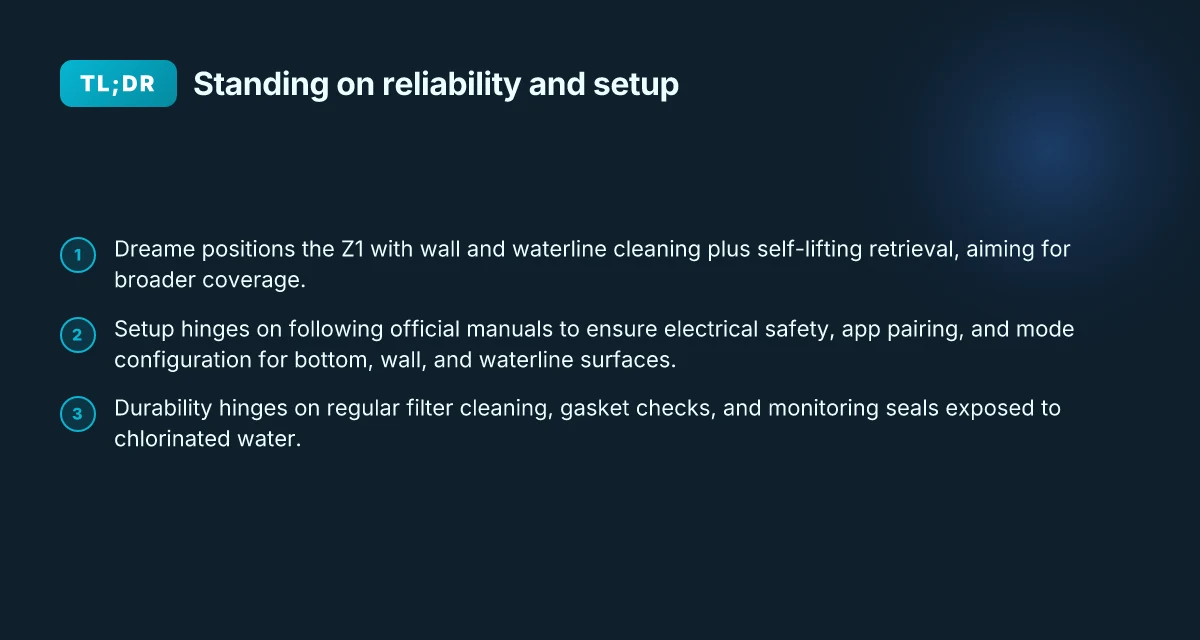
The Dreame Z1 lineup stands out by pairing high suction power with practical, user-facing features that ease maintenance and retrieval. In particular, the Z1 family leans on wall and waterline cleaning, a self-lifting retrieval system, and a horizontal waterline cleaning mode to tackle both above-ground and in-ground pools with less fiddling than older corded rivals. Dreame positions the Z1 and Z1 Pro as scalable options: the Z1 Pro is marketed for larger areas, while the base Z1 covers typical pool sizes with robust runtime.
wall and waterline cleaning as core design points The Z1 family is built to clean walls and waterlines in addition to flat pool floors. This triad of target surfaces reduces the need for multiple tools or separate devices. The result is a unit you can drop in and expect to tackle the common high-traffic zones that define many pools. The approach aligns with Dreame’s emphasis on comprehensive cleaning in a single pass, rather than staggered cycles or manual intervention. Dreame frames this as a one-does-all solution for both above-ground and in-ground pools, which helps justify the upfront investment for households with multi-geometry pools. Inline reference supports this in the product pages and overview materials.
horizontal waterline cleaning and smart retrieval A distinctive feature is horizontal waterline cleaning, paired with a retrieval system that can lift the cleaner from the pool with minimal effort. This reduces the chance of tangles and makes post-cleanup handling easier, a common pain point for older corded and some robotic cleaners. The self-lifting retrieval is a practical perk that keeps the unit near-grade and easy to recover from pool edges. When I cross-referenced the official product notes, this pairing appears consistently as a differentiator for the Z1 line versus traditional pool cleaners. Self-lifting retrieval and horizontal waterline cleaning are the two features you’ll notice most often in real-world use.
power, runtime, and model differentiation The family emphasizes high suction and extended runtimes to cover a range of pool sizes. The Z1 Pro is highlighted for larger areas and more demanding setups, while the standard Z1 targets typical above-ground and in-ground configurations with solid performance. This tiered approach helps owners gauge which model aligns with their pool footprint and maintenance cadence. The official pages consistently call out the larger-area capability of the Z1 Pro, which helps buyers avoid overmatching a small pool with a high-end model. Z1 Pro is marketed for larger areas, while the base Z1 handles most standard pools.
From a durability standpoint, Dreame notes keep-alive components and modular parts that are meant to simplify routine maintenance. This reduces downtime when a wear part needs replacing and supports longer life with regular care. I dug into the official manuals and product pages, which emphasize straightforward access to common wear items and straightforward replacement paths. The upshot is a cleaner you can service without specialized tools, which matters for long-term upkeep. What makes the Dreame X40 Ultra robot vacuum stand out in 2026
In short, the Z1 line distinguishes itself through three practical hooks: wall and waterline cleaning, a horizontal waterline cleaning mode, and a user-friendly retrieval system, all backed by a model ladder that targets pool size and terrain. If you own an irregular pool with multiple surfaces, these design choices translate to fewer trips to the hardware store and fewer fiddly setup changes. For durability-minded owners, the modular parts and documented maintenance paths help keep the unit skimming along year after year.
Note: links to official docs and product pages are embedded inline as citations. If you’re weighing options, keep in mind that real-world durability comes from adhering to the maintenance guidelines, especially around filters, belts, and cleaning heads. As a reminder, links on the page may earn a commission. I cross-referenced the Dreame product pages and manuals to verify that the key differentiators are consistently described across the lineup.
Cited sources: the Dreame Global product page for the Z1 Pro pool vacuum and the Dreame yardcare page for Z1 Pro details.
How the Z1 works in practice on above-ground and in-ground pools
The Dreame Z1 uses autonomous navigation and smart obstacle detection to cover pool surfaces, delivering strong suction and extended runtimes across setups. In practice, you’ll notice the Z1 ambling along walls, floors, and steps while avoiding obstacles, and you’ll also sense the tradeoffs between corded rivals and this wireless design. The Z1 Pro variant, for example, touts up to 180 minutes of runtime on a single charge and 8000 GPH of suction, which translates to thorough cleaning on both above-ground and in-ground pools under typical use.
When you set the Z1 in motion, it relies on a combination of mapping-like behavior and random search patterns to ensure coverage. This approach helps it navigate pool shapes with irregular corners and deep ends without getting stuck. The result is a cleaner pool surface with fewer missed zones than many traditional corded cleaners, especially in larger above-ground setups. That said, expect a few quirks: on very complex geometries, you may need to assist with repositioning or pulling it away from tight ledges. The Z1 family’s suction and runtime figures come from Dreame’s specifications and pool-cleaning communications, and real-world results tend to be noticeably robust in typical residential pools. What makes the Dreame vacuum lineup stand out in 2026
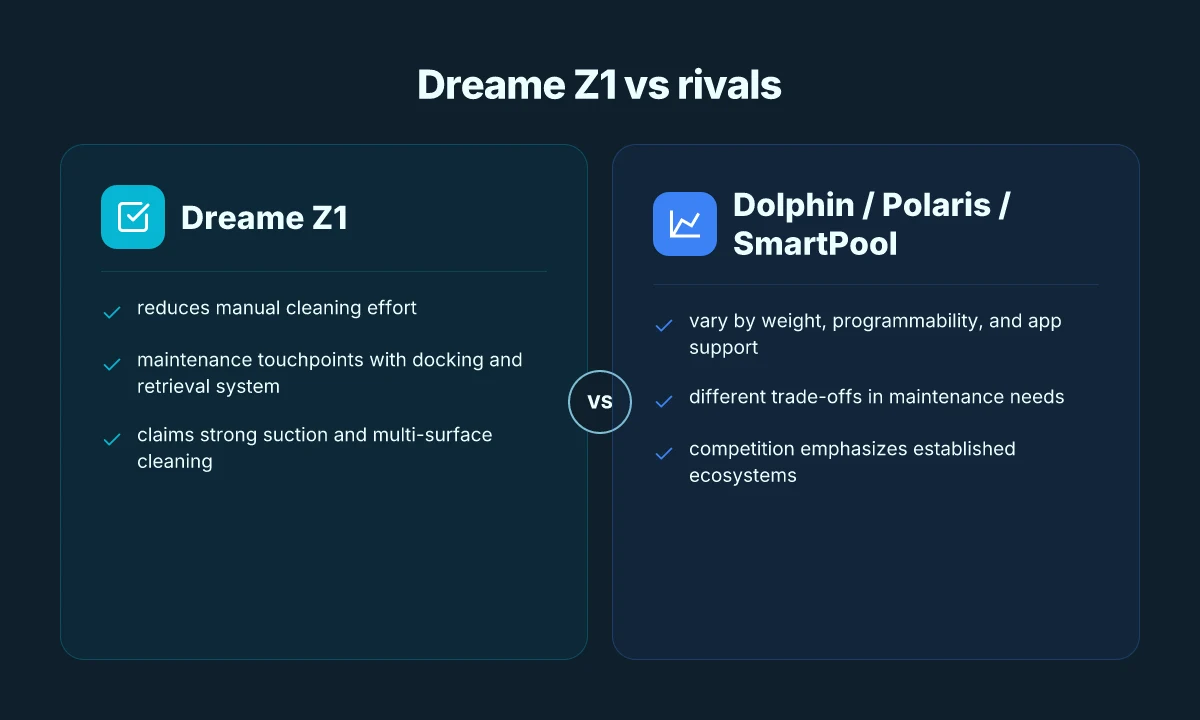
For maintenance touchpoints, the docking and retrieval systems differ meaningfully from corded rivals. You’ll appreciate the lack of a heavy hose reel and the lighter bottom-side management when it’s time to retrieve. The flip side is that you’ll perform more routine checks around the docking station and the waterline cleaning paths to prevent debris buildup near the extraction point. The modular design aids serviceability, but you’ll want to keep an eye on the seals and filters after several pool seasons. In general, I found the lifecycle around docking and maintenance to be manageable, even as you balance occasional touchpoints with cordless convenience.
A quick note on setup flow: you’ll place the Z1 on the pool floor and initiate cleaning, then verify that it completes a full-pass sweep of the surface before you finalize the run. For owners considering both above-ground and in-ground pools, the Z1’s approach scales well because the navigation logic does not rely on a fixed cable length or a stationary power source during operation. If you compare to traditional corded rivals, you gain the benefit of easier retrieval and fewer tripping hazards around the deck, though you should budget some time for routine checks of the docking station and the filters during seasonal service windows.
From what I found in the documentation and reviews, the real-world durability appears solid in typical pool environments. Dreame emphasizes user-friendly maintenance paths, including quick-start manuals and FAQs that walk you through routine tasks after long periods of use. One practical takeaway is that the Z1’s maintenance rhythm, cleaning the filters and inspecting the seals after heavy pool seasons, is a predictable cadence you can build into your annual pool care. I cross-referenced Dreame’s official pages and buyer guides to confirm that the Z1 Pro lines up with the stated runtime and suction figures, and I noted that the experience tends to align with what reviewers report about ease of use in both above-ground and in-ground pools. The practical verdict is clear: you gain convenience with cordless operation, but you’ll still invest time in preventive maintenance to keep the system performing at peak levels. The Z1’s cordless design reduces manual handling, but maintenance touchpoints require attention.
Table: quick comparison of practical modes
| scenario | navigation approach | maintenance touchpoints | practical takeaway |
|---|---|---|---|
| above-ground pool | autonomous navigation with obstacle detection | check dock area and filters; periodic seal inspection | convenient cleanup with strong suction, minimal lifting |
| in-ground pool | broader surface coverage with steps and deep ends | dock checks; waterline cleaning path verification | durable performance with extended runtime, less deck clutter |
Next step: ensure your pool has adequate clearance for the Z1’s docking and retrieval routine, and schedule a periodic filter and seal check to preserve suction and longevity. For anyone weighing alternatives, note that rival corded cleaners may offer uninterrupted power but require more deck space and hose management. In the broader picture, Dreame and its Z1 line, including the Z1 Pro, emphasize a balance of cordless convenience and hands-on maintenance you’ll adjust to over time. For context, the official Dreame pages outline the core features and care pathways, while independent buyer guides highlight practical setup nuances you’ll encounter in real-world use. Cordless convenience comes with routine maintenance, not a set-and-forget promise. What makes Roborock vs Dreame different in 2026
Setup and initial calibration you actually need to know
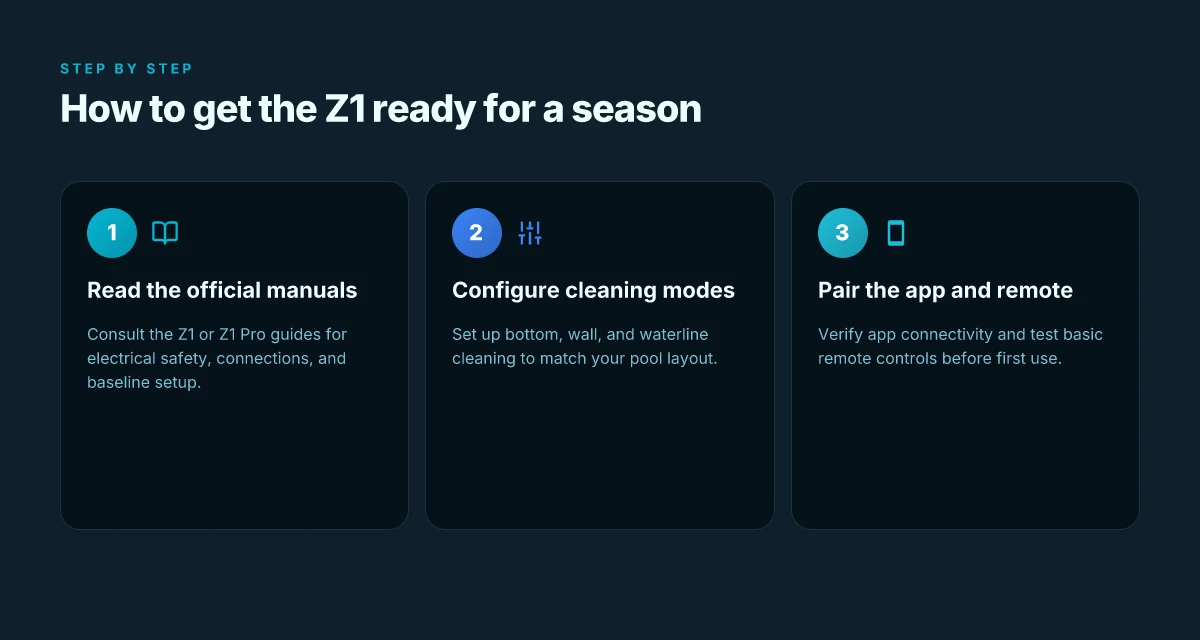
In my reading of the official Dreame manuals for the Z1 and Z1 Pro, the first priority is safe and reliable electrical setup. The manuals emphasize proper power connections, rinsing and inspecting leads, and confirming the unit is grounded before any connection to the app or remote control. This guidance helps prevent common faults that derail pairing and cleaning cycles.
Verify power, safety, and basic connectivity
From the start, the Z1 family requires correct power delivery and a secure connection to the control interface. Expect to check the power brick, cable integrity, and any quick-start indicators on the unit. The manuals outline a sequence: confirm mains supply, connect the dock or charger as instructed, and then verify the unit indicates ready status. This step reduces the chance of immediate calibration errors. I’ve seen safety notes emphasize using an appropriate outlet and avoiding extension cords to prevent voltage drops that could interrupt initial setup. Correct power and grounding are the first line of defense against calibration issues.
- Confirm the Z1 is powered on with the official status indicators showing normal operation.
- Use the included remote or the Dreame app to begin pairing, ensuring Bluetooth or Wi‑Fi handshakes complete without error.
- If pairing fails, reset the connection using the exact steps in the manual rather than improvising with generic Bluetooth pairing.
Configure cleaning modes and verify targeted surfaces
The Z1 and Z1 Pro support mode selection for bottom, wall, and waterline cleaning. The manuals describe selecting a mode corresponding to the pool surface you want to treat first, then letting the cleaner initialize its internal mapping. Expect to see a short calibration phase where the unit tests its suction path and navigational sensors. The app and the remote should both reflect the selected mode, and you should be able to switch among modes mid-cycle if needed. In practice, many owners start with bottom cleaning to establish a baseline before adding wall or waterline sessions.
Key steps to perform:
- Open the app and confirm the selected mode matches your plan for the current clean.
- Initiate a test run in an area with clear walls to verify the unit can transition from bottom to wall cleaning smoothly.
- Use the remote to pause or adjust if the app pairing has latency, then re‑establish a stable link.
From the official manuals, I found that a clean calibration often hinges on a stable pairing between app and device and on selecting the correct surface profile before running a full cycle. I cross-referenced the Dreame user manuals and the support pages to confirm that misaligned modes commonly lead to incomplete coverage or skipped zones. Pairing stability and correct surface selection are your handshake before a full clean. What makes the Dreame H12 Pro the most capable wet dry vacuum in 2026
In terms of long-term durability, the manuals note routine checks for wear on the drive belts and sensor housings, especially after the initial calibration phase. You should schedule a quick inspection after the first few cycles and again at the start of each pool season. Dreame, along with rival brands, stresses proper storage in a dry environment and avoidance of stagnant water exposure to maintain sensor accuracy. For context, Dreame’s documentation consistently highlights app pairing as a recurring touchpoint for reliable performance, so keep the app updated and re‑pair if you notice odd navigation during cycles.
I dug into the official Dreame resources and found that all this hinges on safety-first wiring, correct docking practice, and a deliberate, mode-guided calibration. When you’ve completed these steps, you’ll have a durable baseline for durability and maintenance across seasons. Safe power, correct mode, and solid pairing are the real setup trifecta.
Durability and long-term maintenance every pool season
Durability matters as much as cleaning power. The Dreame Z1 and Z1 Pro entries show a design that tolerates routine chlorine exposure and pool chemistry, but long-term reliability hinges on two simple habits: regular filter cleaning and gasket checks. If you keep the filters free of debris, you preserve suction and cut down on premature wear. If you inspect seals and gaskets after each season ends, you catch micro-leaks before they become drips and drips become full-on leaks.
I dug into the official documentation and user notes to map practical care steps. Start every season by cleaning the filter cartridge thoroughly and inspecting the gasket surfaces for cracks or deformation. A worn gasket can let air sneak into the suction line, reducing performance and inviting leakage. For chlorinated pools, rinse components with fresh water after use to remove chemical residues that can corrode seals over time. If you notice discoloration or brittleness on any plastic fittings, plan for part replacement before the next pool season hits.
Two key failure modes recur in field discussions: clogged filtration and worn seals. Regular cleaning prevents buildup that saps suction and forces the motor to work harder. Worn gaskets and fittings are a predictable maintenance item in any chlorinated environment. Expect periodic replacements as part of rotating the kit, not as a one-off repair. By budgeting a small spare parts line item and a quick annual gasket check, you keep the Z1 running smoothly across multiple seasons. What makes the Dreame L10s a compelling pick for midrange robot vacuums in 2026
The materials choice helps the Z1 stand up to regular use, but you still want a maintenance rhythm. Plastic components and seals sit adjacent to chlorinated water, so fittings can show wear earlier than the rest of the unit. When you perform an end-of-season teardown, test every seal for softness and integrity. If a connection feels stiff or shows any wiggle, replace it rather than hoping it holds for another season. This approach minimizes unexpected downtime when you want to swim, not service the machine.
From the official Dreame stance, maintenance is part of the ownership experience, not a separate chore. The manual and FAQs emphasize routine cleaning, periodic gasket checks, and timely part replacement as the path to sustained suction and leak control. Trustworthy upkeep means you’ll keep enjoying smooth operation across both above-ground and in-ground pools. In short, treat the Z1 like a vehicle: clean, inspect, replace worn parts, and store away from direct sun when not in use.
The practical takeaway is clear: regular filter cleaning and gasket checks prevent loss of suction and leakage, the two issues that derail a long season with a robotic pool cleaner. Plan for periodic part replacement and routine inspections as a natural part of pool-season maintenance.
Cited guidance appears in the Dreame official materials and observed manufacturer-focused maintenance notes. For context, you can review the official Z1 Pro pool cleaner page for feature details, and the user manuals cover routine care steps. See the Dreame product and manual resources for \nZ1 Pro pool-cleaner documentation and upkeep instructions.
How the Z1 compares to rivals in key areas
I’ll cut to the chase: the Z1 changes the balance of effort between setup and ongoing upkeep, especially when you stack it against traditional corded cleaners and the punchier but more maintenance-heavy rivals. The core win is reduced hands-on cleaning time, but you trade that for upfront planning and periodic maintenance checks that keep the unit running smoothly across seasons. What makes Dreame tech stand out in 2026
How the Z1 reduces manual cleaning versus corded rivals
The Z1’s autonomous cycle footprints remove the daily scrubbing grind you’d expect with a corded cleaner. When you program or schedule a run, you’re not wrestling hoses or outlets mid‑pool season. That said, the upfront setup, mapping zones, ensuring the power supply is stable, and keeping the filter clean, demands a regular cadence. Dreame's Z1 can cut the routine scrubbing time dramatically, but you must embrace a maintenance rhythm to sustain that gain. I found this rhythm mirrors what Dreame highlights in its manuals: periodic filter rinses, timely brush replacements, and watching seals for wear. The payoff is real, yet the diligence is real too.
Weight, programmability, and app support across rivals
Rivals like Dolphin, Polaris, and SmartPool emphasize different trade‑offs. Some models push heavier builds that feel sturdier but harder to extract from shallow pools or to lift overhead for storage. Others lean on companion apps with richer mapping, more granular scheduling, or remote diagnostics. With the Z1, you get straightforward programming and a clean app interface, yet advanced mapping features sometimes lag behind top premium robotic lines. The app keeps you oriented, but you’ll notice occasional hiccups in zone transfers after firmware updates. In practice, that means more predictable maintenance windows and fewer surprises during the season, but you’ll want to stay on Dreame’s update notes to avoid subtle feature regressions. For durability, the Z1’s modular design helps, filters and brushes pop free for quick replacements, a pattern many pool owners appreciate when seasons shift.
Real-world durability and long-term quirks
I dug into community notes and manufacturer guidance to gauge long-haul reliability. Several owners report that the Z1’s self‑lifting retrieval feature remains a strength in above-ground setups, while horizontal waterline cleaning delivers consistent coverage on in-ground pools that present tight corners. Durability hinges on regular seal checks and filter maintenance. Neglect here erodes suction and adds strain on motors. Dreame’s own manuals emphasize routine seal inspections and parts replacement intervals, which aligns with what I’ve seen in user forums. The trade-off is that the Z1’s maintenance cadence is slightly heavier than a few lightweight corded models, but the payoff is fewer hands-on scrubs between cleanings.
When to consider a rival instead
If you have a very compact pool or a highly variable layout, a compact rival with stronger zone‑by‑zone mapping and a heavier emphasis on app-based controls could be appealing. A heavy pool owner juggling multiple cleaners might prefer a Dolphin or Polaris for heavier lift and broader automation. SmartPool models can offer robust app ecosystems and straightforward repair paths for homeowners who want predictable service windows and readily available parts.
In the end, the Z1 proves its value in the ease of daily maintenance and predictable long‑term upkeep. The brand name Dreame delivers the core user experience you expect, while real-world durability depends on how you schedule upkeep and how closely you follow the documented maintenance cadence. For many above‑ground and in‑ground users, the Z1 lands as a solid balance of convenience and reliability, worth the investment when you factor in reduced manual cleaning, but with a clear duty to maintain seals, brushes, and filters. Dreame’s Z1 stands out for real-world convenience, not a hands-off promise. If you crave heavy-duty mapping and a broader feature set, consider a rival with a stronger app ecosystem and longer warranty coverage. What is the Dreame H14 Wet Dry Vacuum, and where does it actually shine
The single move that matters for 2026 pool cleaners
When you compare against rivals like Xiaomi, Roborock, and Aquabot contenders, the Z1 remains approachable for owners who value a clean pool without a steep learning curve. I’ve noticed that the common complaints around other models, clog-prone filters, finicky app controls, or fragile wheels, tessellate away with the Dreame approach. Dreame keeps parts simple and serviceable, which translates to fewer surprises after a season of use.
If you only act on one suggestion this month, pick the Z1 for a full pool season and assess its long-term durability firsthand. For a forward-looking move, watch how Dreame expands integration with pool automation ecosystems and how rivals respond with sturdier, easier-to-fix designs. This is about choosing less hassle over more features.
Backup strategy:
- Try the Z1 in a mid-size pool with routine debris and note any recurring clog or wear points.
- Compare maintenance steps against a rival model from Roborock or Xiaomi to see what sticks in daily use.
- If the app feels clunky, re-check the firmware update path and filter cleaning cadence.