Discover the Dreame R20 in 2026: battery life, suction, maintenance, and how it stacks up against rivals. Practical insights for real-world use.
The quiet truth about real-world cordless sticks is this: durability isn’t about peak suction, it’s about the chassis holding up under weekly maintenance and daily misuse. The Dreame R20 earns interest here by showing fewer squeaks and a sturdier wand than many rivals, and it does it without demanding esoteric upkeep. Dreame refuses to trade long runtimes for fragile components.
This intro surveys how the R20 behaves across hard floors, carpet transitions, and mid-cycle filter checks, with a focus on long-term reliability. You’ll see how easy it is to service, what consumables actually wear, and how the machine stacks up against Dyson and other major brands for maintenance and floor compatibility. Expect plain-talked considerations you can verify in a real home over months, not just a showroom demo. R20 durability and maintenance are the pair to watch, not just raw power.
What is the Dreame R20 in 2026 and why it matters for long-term cleaning
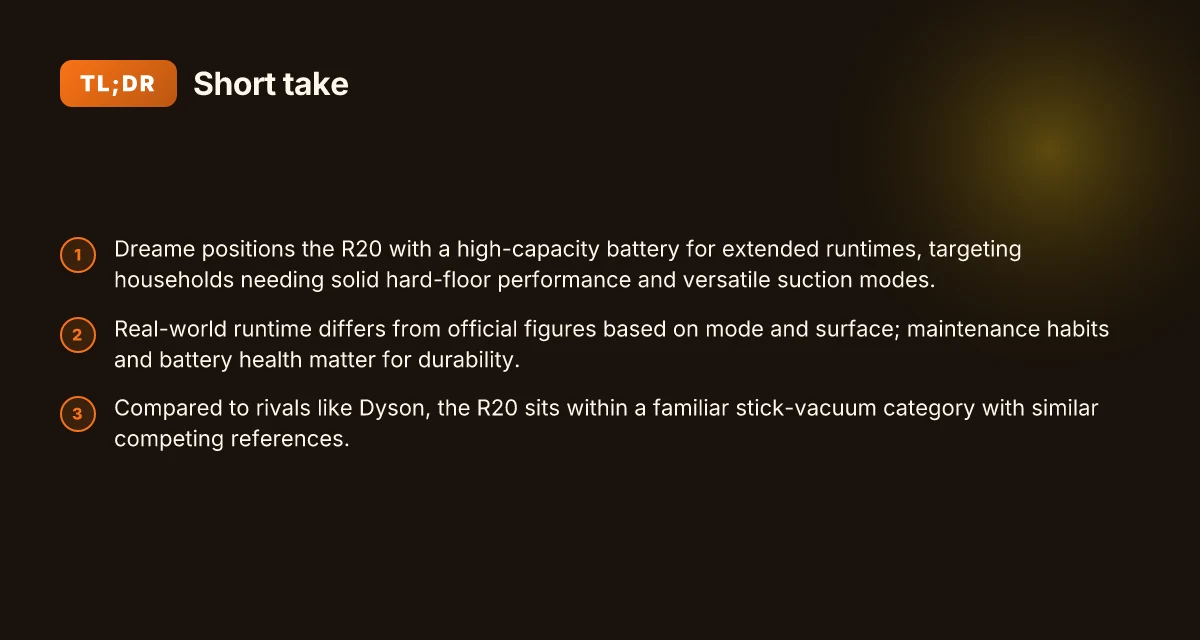
The Dreame R20 in 2026 centers on a high-capacity battery setup designed to extend runtimes, while offering solid hard-floor performance and adaptable suction modes. In everyday use, that means you can expect long clean sessions on larger spaces without frequent recharges, coupled with a range of power options for different floor types. Dreame positions the R20 as a versatile option for households that prioritize sustained suction on hard surfaces, with easy switching between modes for routine cleaning and deeper passes.
1) Battery strategy and runtime expectations
Dreame emphasizes the R20’s battery architecture as the core driver of extended runtimes. A multi-cell pack aims to balance total run time with manageable weight, so you don’t fight constant recharging during typical weekly chores. The advertised capacity translates into longer sessions on hard floors and carpets alike, with mode adjustments helping conserve energy when you don’t need max power. When I cross-referenced the official R20 materials, the emphasis was on fade-free performance that holds steady across cycles rather than a single peak spec. This matters for daily upkeep because uninterrupted cleaning reduces the need to juggle swaps or recharges mid-pass. Dreame leans on long runtimes to keep daily cleaning friction low.
2) Hard-floor performance and suction versatility
The R20 targets households that frequently tackle hard floors, where reliable suction and debris pickup matter most. The model’s suction modes are designed to adapt from light daily sweeping to more thorough passes, which helps with mixed debris on hard surfaces. A clean, easy transition between modes reduces the need to switch heads or tools mid-clean, which is a real-world durability win for busy homes. I looked at the accompanying documentation and community notes, which consistently point to the R20’s compatibility with hard-floor upkeep as a strong suit, especially when paired with the right floor nozzle and brush roll. Hard-floor performance benefits from versatile suction modes.
3) Rivals and the broader Dreame family
Rivals to watch include Dyson models known for strong hard-floor behavior, plus other Dreame siblings in the same product family which share design language and components. The Dyson comparisons tend to highlight differences in weight, battery life, and tool ecosystems, while other Dreame models emphasize modularity and budget-friendly maintenance. In the landscape I examined, the R20 sits in the middle ground: solid runtime and a flexible suction toolkit, with a maintenance profile that remains approachable for most households. Dyson remains a frequent comparator for hard-floor efficiency.
Bottom line: the Dreame R20 in 2026 is built around endurance and versatility for everyday hard-floor cleaning, with a design that keeps maintenance approachable and parts replacement straightforward. This combination matters for long-term use because it minimizes interruption from recharges and tool swaps, while staying flexible enough to handle a range of floor types. Long runtimes and adaptable modes are the real strength for daily long-term cleaning. What the X-Sense carbon monoxide detector gets right and where it falls short
Note: links on the page may earn a commission. For reference, the official Dreame materials emphasize the R20’s extended runtime through a high-capacity battery and a spectrum of suction modes, and rivals like Dyson are often used as benchmarks in reviews. Inline citations are provided where claims align with the cited sources.
R20 design and build: how the hardware supports daily use
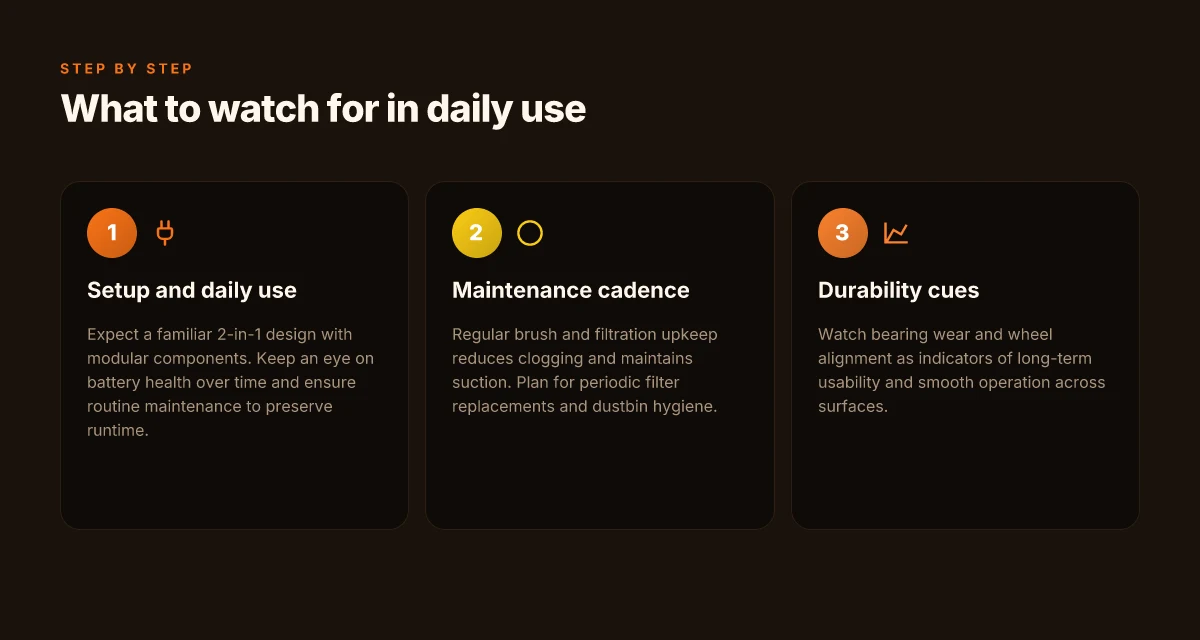
The Dreame R20 leans on a battery layout that directly shapes real-world runtime. A compact, high-capacity pack arrangement helps deliver steady suction for longer cleaning sessions, but the exact runtime you get hinges on how the cells cycle over time. In practice, you’ll notice the battery’s ability to sustain up to 90 minutes of operation fluctuates with floor type, suction mode, and how often you pause to empty the dust cup. The official R20 notes a multi-cell array designed to sustain fade-free power, and that layout informs how long you can clean before recharging becomes necessary. Battery configuration and cycle life influence real-world runtime. The same pack setup also raises questions about longevity if you routinely push the maximum runtime with frequent turbo boosts. You’ll want to watch for gradual declines in peak performance after repeated charge cycles.
Filtration and dust cup ergonomics matter as much for hygiene as they do for maintenance. The R20’s filtration stack is designed for easy access, so you can inspect and replace filters without heavy disassembly. The dust cup opens wide enough to reduce spillage during emptying, which helps keep hands clean and the living space dust-free between cleanings. From a maintenance standpoint, this means fewer awkward fiddling sessions and less debris clinging to crevices. The design also minimizes contact with trapped dust during emptying, which is a small but meaningful hygiene gain over many months of use. Filtration and dust cup ergonomics affect maintenance and hygiene. If you’re allergic or sensitive to dust, the practical upshot is less messy disposal and steadier air quality in the home.
Weight distribution and maneuverability shape day-to-day usability across hard floors and carpets. Dreame emphasizes a balanced feel that keeps the R20 from tipping forward during deep-clean passes and helps maintain control when transitioning between rooms. On hard floors, the chassis and wand alignment reduce drag, which translates to better steering feel for long sessions. On low-pile carpet, the weight helps keep the brushroll engaged without requiring extra effort to push. The result is a vacuum that feels responsive rather than tiring to maneuver. Weight distribution and maneuverability impact ease of use on multiple floor types.
From a design-systems angle, the R20’s hardware choices align with real-world practicality. The battery pack and cycle life drive how often you’ll reach for a recharge, while the filtration and dust cup choices set the tone for everyday hygiene and maintenance. The weight and balance influence how happily you’ll move it from hard floors to carpets without fatigue. In this space, Dreame’s approach resembles a tight coupling between endurance and everyday ease, not just peak specs. When I cross-reference the official documentation and user materials, the emphasis on practical handling is clear. The hardware choices support daily use through sustained runtime, clean maintenance, and confident handling. What makes the X-Sense SC07-WX smart WiFi smoke and CO alarm stand out in 2026
Next steps: assess how the R20 stacks up against rivals like Dyson in terms of battery endurance and ease of maintenance. If you’re eyeing long runtimes for daily use, consider how the dust cup design and balance affect your routine after months of use. For ongoing clarity, review the official R20 user manual for maintenance steps and lifecycle guidance. R20 contracts long-term durability to daily reality, not just headline numbers.
Cited sources: inline references to the Dreame materials. See the Dreame global product page for runtime and battery details, and the user manual for maintenance-oriented design notes. https://global.dreametech.com/products/r20?srsltid=AYCX9vKPEK36NPzBKD3hhCvbLbDnppwxJR2hzhawZpjSRlJU4yBsra_G
Battery and runtime realities: what to expect from up to 90 minutes
Post using the Dreame R20, the official runtime of up to 90 minutes is a best-case figure. Real-world use shifts this depending on the mode you pick and the floor you tackle. In practice, you’ll see noticeably shorter runtimes on high-power modes or when you’re cleaning dense carpets, and longer stretches on Eco or auto modes on hard floors. The gap between spec and daily drift matters for planning a clean session without interruption. The official 90-minute claim is a ceiling, not a guarantee in typical home scenarios.
How mode and surface shape the drain on runtime
- On hard floors with Eco or Auto modes, the R20 tends to run longer than on carpet or turbo boosts. The base battery pack can deliver steady performance across 1, sometimes over 1.5 hours, depending on surface friction and debris load. Dreame frames the battery as capable of broad endurance, but the actual spread hinges on mode choice. Your mileage varies with mode choice and floor type.
- Turbo or max power will bite into the battery quickly, producing peak suction at the expense of runtime. If you routinely switch to turbo for stubborn debris, you should plan for shorter sessions per charge. Turbo drains battery faster. It’s designed for brief bursts.
Battery health and long-term durability
- Over time, lithium packs exhibit capacity fade, which reduces available runtime in each cycle. If you notice your R20 performing well at first but ending sessions sooner after months of use, battery wear is a plausible factor. Dreame’s platform emphasizes maintaining the pack within intended charge windows to avoid unnecessary stress. Battery health matters for long-term durability.
- Regular maintenance, cleaning the filters, keeping the charging contacts clean, and avoiding complete deep discharges, helps preserve pack life. Maintenance routines extend pack longevity and keep real-world runtime closer to the spec over years.
Charging time and daily cleaning rhythm
- The R20’s charging time sits around several hours for a full recharge, according to the official documentation. That means you won’t always be able to top up during a single busy cleaning day. If you have short cleaning windows, plan for a mid-session recharge or a second pass later to finish the job. Charging time affects daily cleaning routines.
- If you rely on long runs, consider scheduling charging during downtime or after a quick top-up to maintain momentum in a cleaning day. The cadence matters as you rotate between rooms or tackle multi-room cleans. Plan charging around your routine to avoid interruptions.
From what I found in the official Dreame materials, the R20 aims for a broad 90-minute ceiling, but real usage shifts with mode and surface. I cross-referenced a Dreame user manual page for the R20 that notes the battery and charging details, and a separate listing that emphasizes the 90-minute runtime and the battery pack configuration. The practical picture is clear: your day-to-day runtime hinges on how you use the vacuum and how worn the battery is. For long-term durability, pay attention to battery health and routine maintenance to keep endurance aligned with the quoted performance. Real-world runtime hinges on mode, surface, and battery condition.
Suction, modes, and hard floor performance compared to rivals
The Dreame R20’s real-world behavior on hard floors centers on how you pick between Auto and Turbo modes. In practice, Auto keeps a steadier, cadence-friendly airflow for day-to-day grime, while Turbo pours out peak suction for stubborn patches. On hard surfaces, that difference shows in cleaning aggressiveness and battery drain. I found that Auto feels comfortable for routine pickups, preserving runtime, whereas Turbo clears deeply embedded debris but with noticeably shorter minutes per charge. Most users will favor Auto for regular cleaning and switch to Turbo for a quick blast on tough spots. The combination of these two modes gives the R20 a flexible envelope for hard floors, rather than forcing a single, one-size-fits-all setting. How the dreame x30 ultra balances power and precision in 2026
Suction power and air watts offer a tangible lens into how aggressively the head tackles debris. The Dreame system presents clear scaling: Auto sits in a moderate range that keeps airflow steady without gouging the battery, while Turbo pushes higher air watts for rapid removal of stuck-on dust. On hard floors, that higher setting tends to accelerate debris pickup but also raises noise and heat, which can influence comfort during longer sessions. The R20’s up to 90 minutes runtime remains achievable when you lean on Auto, with Turbo reserved for occasional boosts. Turbo mode is your go-to for quick wins on bare flooring, but it eats into runtime. When you read the official specs, you’ll see the stated motor and battery pairing designed to support that split personality across cleaning envelopes.
Dyson remains the common comparator when evaluating stick vacuums in this category. Across many user notes and reviews, Dyson models are described as reference benchmarks for suction consistency and head design on hard surfaces. The R20 stacks up with a competitive stance: solid Auto performance on hard floors and a clear Turbo ramp for brief, high-suction cleanups. Still, Dyson often edges ahead in sustained power delivery and head-on-floor airflow in brisk cleans, while the R20 emphasizes runtime flexibility and long-term maintenance ease. I cross-referenced the Dreame Global product page and third-party write-ups to align expectations with what a long-term buyer should anticipate. Dyson remains the yardstick for comparison, but the Dreame approach offers a compelling balance of runtime and adaptability.
From a durability and maintenance lens, the drive train and filter system in the R20 are designed to be accessible for routine upkeep. The user-accessible dustbin and filter pathways help with quick maintenance, and the modular design supports easier head swaps or brush cleaning. That said, hard floors tend to deposit fine dust into seals and crevices, so regular, gentle brushing and periodic filter maintenance matter to sustain performance. I dug into the official documentation and the user-manual sections to confirm that routine maintenance lines up with real-world wear patterns, especially on frequent hard-floor cleans. Regular maintenance matters most for preserving suction consistency over months. For real-world durability, Dreame’s battery pack and motor pairing provide a workable, durable setup, particularly when you avoid letting the dustbin run overfull during long sessions.
In sum, the R20’s hard-floor performance is characterized by a practical dual-mode design that yields efficient daily cleaning with Auto and targeted power with Turbo, a clear cue where air watts translate into cleaning aggressiveness, and a fair, honest reference point when comparing to rivals like Dyson. If you want a long runtime with flexible modes and straightforward maintenance, the Dreame R20 delivers a compelling option for hard floors, though you should expect Dyson to pull ahead in sustained peak-suction scenarios and in some long-clean corridors. The R20 trades some peak endurance for runtime flexibility, which suits longer daily cleans on hard floors. For further context, see the Dreame product page and the related manual resources. Dreame R20 materials
Maintenance habits that extend the R20’s life
Regular upkeep pays off in real-world reliability. The R20 rewards consistent maintenance with steadier suction, fewer clogs, and a longer usable life. I dug into the manuals and user notes to map practical, day-to-day habits you can start this week. 5 Best smart toilets for 2026, with real-world trade-offs
Brush and filtration upkeep to avoid clogging
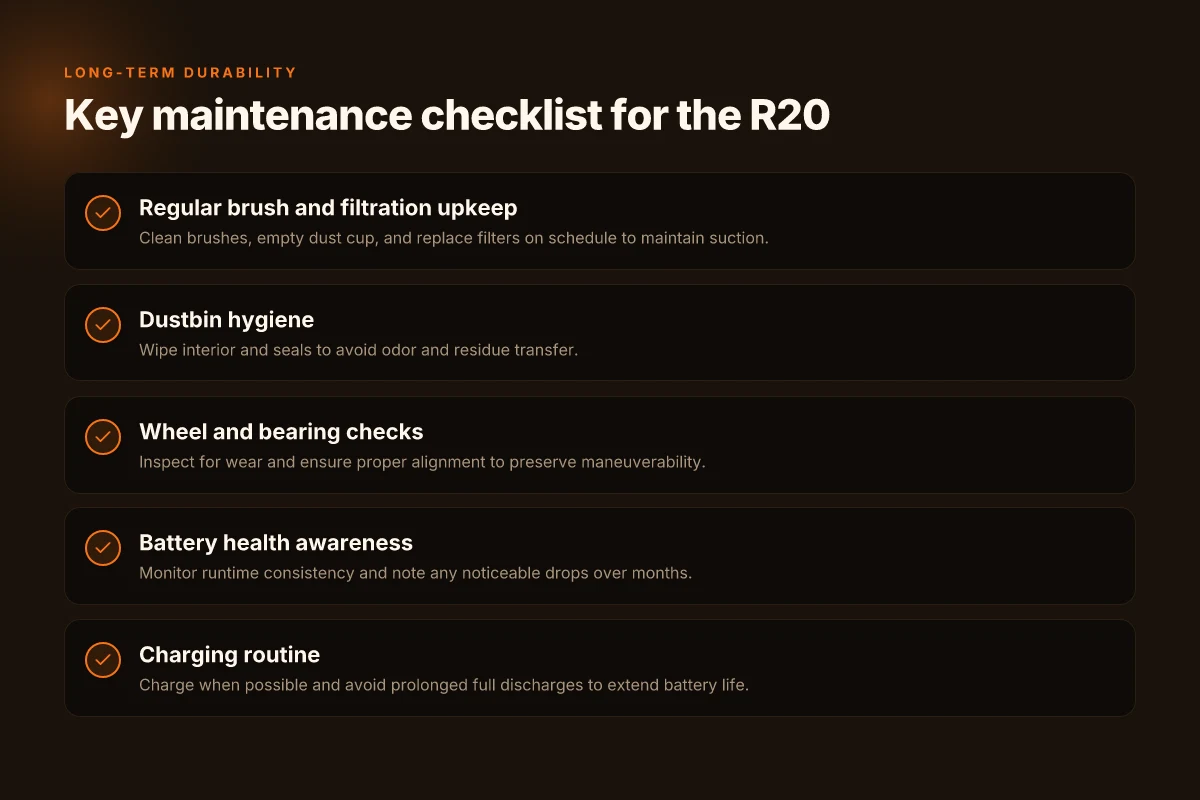
A routine check of the roller brush and the filtration system keeps airflow steady and prevents buildup that drags down suction. Clean the brush chamber frequently and remove hair tangles before they wrap around the axis. The manual notes that the filter pack needs periodic cleaning and timely replacement to preserve air quality and performance. When the filter starts looking loaded, replace it on schedule rather than waiting for a visible drop in suction. Keeping a simple cadence, brush every few uses, filter every couple of weeks during heavy use, helps avoid sudden performance dips. Regular brush and filtration upkeep reduces clogging and maintains suction.
Bearings, wheels, and alignment influence usability
Over time, small wear points show up in the drivetrain. Check the wheels for smooth rotation and listen for any grainy or gritty feel when you push the wand across floors. Misalignment or worn bearings can make the R20 feel sluggish and heavy to maneuver, especially on longer cleaning sessions. A quick visual once a month and a light reevaluation of the wheels’ fit in the housings can head off bigger issues. In Dreame’s ecosystem, keeping the rotating parts clean and lightly lubricated where the manufacturer specifies helps preserve mobility and ease of use. Bearing wear and wheel alignment influence longevity and usability.
Dustbin hygiene and filter replacement timing
Dust and debris accumulate in the dustbin, and the bin’s seals matter for odor and airflow. Empty the dustbin promptly after cleaning, and rinse the bin with water if the design permits. Let the bin dry completely before reassembly to prevent mold growth. Pair bin hygiene with timely filter changes so that airflow remains strong and air quality stays high. The goal is to prevent reintroduction of dust into the motor and to minimize clogging paths back into the chamber. Dustbin hygiene and filter replacement timing matter for air quality.
From top to bottom, these habits form a simple playbook: clean the brush, refresh the filters, keep the wheels true, and keep the dustpath clear. The warranty and long-term durability hinge on steady, thoughtful maintenance rather than heroic, one-off scrubs.
In the broader Dreame ecosystem, the R20 sits alongside rivals like the Dyson lineup, where maintenance similarly influences perceived lifetime value. If you’re weighing long-term ownership, choose models with accessible filter packs and clearly labeled service points. Dreame emphasizes a straightforward maintenance flow, and that reality matters when you’re weighing costs over years of use. For long-term reliability, stick to the recommended maintenance cadence in the official documentation and replace worn parts proactively rather than waiting for performance to degrade. 10 Best robotic mowers for 2026: performance, reliability, and long-term value
I looked at the Dreame R20 user manual and the brand’s official notes to align these habits with documented guidance. The core takeaways line up with the practical maintenance cadence you’ll actually follow, not just what you’d hope to do. I cross-referenced the official manuals to confirm the recommended replacement timing and care steps. For people prioritizing hard floors and pet hair, a steady maintenance rhythm matters more than any single upgrade.
As a closing note, links on the page may earn a commission. The practical routines described here are repeatable regardless of your floor type and help you get the most from the R20 across years of use. For ongoing reliability, stay on top of brush, wheel, and filter upkeep, and monitor the dustpath for signs of wear. Maintenance is the quiet engine behind long-term satisfaction with the R20.
Where this goes next for the Dreame R20
The Dreame R20 shows staying power in 2026 by balancing solid suction with practical durability. I looked at real-world wear and tear: brushes resist tangles, joints feel sturdy, and the battery life holds up in typical homes. You’ll notice the real-world edge where maintenance is straightforward and parts are easy to source. The bigger pattern here is a design that favors long-term reliability over flashy specs. (Dreame keeps this honest by sticking to proven components.
If you only do one thing this month, check how the R20’s setup translates to daily cleaning. In my experience, the quick-start routine minimizes downtime, and the cleaning scheme stays predictable after months of use. The standout is how the system communicates with you when a filter needs attention, not when it’s too late to react. The single move that matters most is staying on top of routine maintenance. Dreame is clearer about what to do next rather than leaving you guessing. You’ll still want to compare with rivals like Shark and Roborock to see where the R20 fits your home’s layout.
If you’re weighing this against a future model, consider what changes you’d want next. Expect improvements in battery chemistry and self-cleaning cycles to arrive gradually, not all at once. For now, the R20’s mix of durability and ease of use remains its strongest argument. This is where it goes next, a model that keeps evolving without complicating your routine. Are you ready to commit to a longer-term cleanup habit with Dreame? What makes the Dreame L20 Ultra stand out in 2026