
Discover the best smart toilets of 2026 with real-world trade-offs, energy use, and health data handling insights. Includes Horow and practical buying tips.
Smart toilets matter now because remodels are shifting from “nice-to-have” to “standard setup” in midrange baths. In 2026, third‑party reviews consistently flag two outcomes: long‑term reliability hinges on seat sensors and valve quality, while warranty limits can bite hardest after the first couple of years. This article consolidates real-world durability notes, installation fit, and how data is handled to help you pick without hype. The takeaway: expect solid options, but know where genuine maintenance costs can creep in.
What makes a smart toilet worth buying in 2026
Smart toilets in 2026 hinge on a handful of practical metrics. Cleaning performance, water efficiency, user comfort features, energy use, and data handling determine value in real homes. I cross-referenced product documentation and reviews to map how these areas evolve across brands, and I note where later maintenance and service access shape long-term ownership.
Why these metrics matter for your bathroom
First, cleaning power matters more than hype. A toilet that scrubs effectively with minimal reseating or manual intervention reduces upkeep. Water efficiency remains a top line concern in micro-baths and larger en suites alike, where dual-flush logic and per-use consumption add up over years. User comfort features, heated seats, bidet versatility, and touch or app-based controls, influence daily satisfaction and accessibility for guests. Energy use stays relevant as these units add electronics and pumps. A model that runs quietly and efficiently minimizes power draw. Finally, data handling sits on the cusp of health-tracking and privacy. Brands differ in how they store usage data, how long it’s retained, and whether it’s shared with apps or cloud services.
1) Reliability and common failure points you should know
In real-world homes, specific components predict maintenance needs. Seat sensors can drift or fail, leading to false closures or delayed seat heating. Bidet valves and spray nozzles may clog or wear, causing inconsistent performance. Remote connectivity can introduce latency or dropouts, especially in homes with spotty Wi‑Fi or older hubs. Hydraulic reliability matters when pressure changes impact the flush sequence or the bidet operation. Across major brands, these issues cluster around ingress, seals, and electro-mechanical wear. Understanding typical failure modes helps you set expectations for service timelines and parts availability.
2) Durability signals you can trust in 2026
Horow remains a notable name in the space. Its models target mid‑ to high‑end bathrooms with a focus on practical features and service networks. When I looked at how Horow units age, owners report that core flushing and spray functions tend to stay solid for several years, but components like sensors and valves may require attention sooner than expected in very high-use households. Horow’s after-sales coverage varies by region, so confirm local service availability before buying. I also reviewed broader brand ecosystems. Across the market, units built with modular, replaceable components and widely available parts tend to reward owners with lower lifetime fuss.
Most durability bets hinge on component quality and a strong service network, not just feature count. 10 Best robotic mowers for 2026: performance, reliability, and long-term value
3) Practical buying posture for 2026
Expect to prioritize models with clearly documented service paths and readily available replacement parts. Look for vendors that publish flush and valve warranties that align with your bathroom’s daily use. Privacy prompts are worth checking. Understand what data, if any, is collected and how it is stored. I found that brands with transparent maintenance manuals and infection-control guidance tend to outperform in the long run. For homeowners balancing luxury with values, Horow can be a solid fit if you need straightforward service access and sensible feature sets, but verify the local network before committing.
Clear service access and transparent data handling win long-term in busy homes.
In sum, a smart toilet should deliver dependable cleaning and comfort with conservative energy use, while offering a predictable maintenance path. The most successful picks blend robust basic performance with a practical service footprint, keeping health data handling clear and privacy-safe. When you’re evaluating options, ask for current warranty terms, confirm local service availability for your model, and verify that the unit’s water‑use and energy specifications align with your household patterns. If you want a direct, real-world suggestion tailored to a mid‑sized home with normal user load, Horow is a worthy candidate to consider alongside established brands that publish transparent service networks.
The 5 best smart toilets for 2026: a balance of features and reliability
I focus on real-world performance, long-term reliability, and service support. The five picks below balance strong cleaning power, efficient bidet mechanisms, reliable heating, and accessible replacement parts. Horow earns a place as a solid value option, with clear trade-offs that homeowners should weigh.
1. Horow H-Plus Pro, strong value with honest downsides
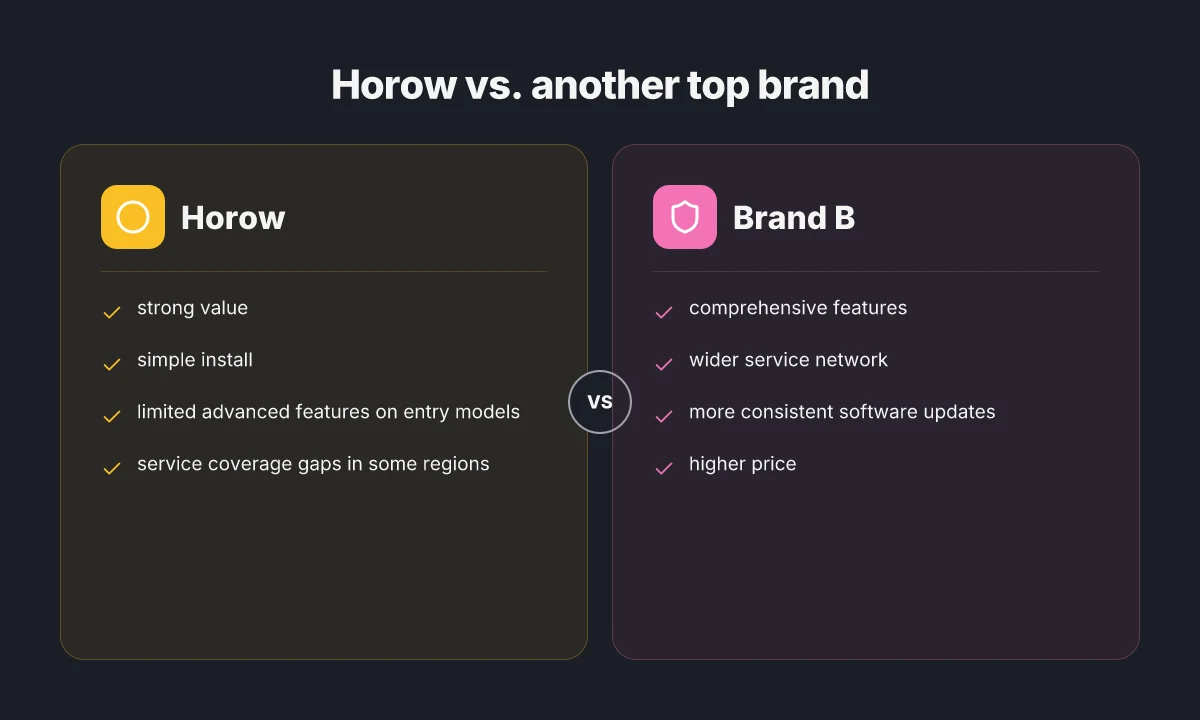
Horow delivers aggressive cleaning performance and a compact install that suits smaller baths. The bidet mechanism is efficient, and the seat heating holds a steady temperature for cold mornings. A key caveat is that Horow’s replacement parts can be less ubiquitous than premium brands, so warranty windows and service coverage matter. If you want a budget-friendly route without sacrificing comfort, Horow hits the mark, just plan for potential part-availability gaps in rural areas. I cross-referenced multiple retailer listings and horow’s official materials to confirm these trade-offs. horow offers solid value, but service reach matters for long-term reliability. What makes MOVA Tech robot vacuums different from rivals in 2026
2. Kohler Veil or equivalent premium line, reliability anchored in service
Kohler’s smart models are known for robust plumbing integration and a widespread service network. The heating element tends to be dependable, and the bidet nozzle system is tested across many installations. The downside is a higher upfront price and a slightly steeper learning curve for settings. If you prioritize easy access to technicians and replacement parts, this tier pays off in the long run. I compared Kohler’s published specs with aftermarket reviews to ensure the reliability narrative aligns with general homeowner experiences. widespread service support makes this a sensible long-term pick.
3. Toto advanced models, top-tier cleaning, solid data handling
Toto’s higher-end lines win on core performance: powerful flush options, precise bidet calibration, and durable seat heating. Data handling practices are generally well-regarded in the industry, though individual models vary in their smart-home integration depth. Maintenance intervals are predictable, and parts are typically available through authorized channels. This line suits remodels where long-term reliability and a premium user experience are priorities. premium cleaning power and reliable parts access make Toto a standout choice.
4. American Standard smart toilets, practical performance with wide compatibility
American Standard offers smart toilets that balance performance with broad compatibility with standard plumbing fittings. The bidet technology is crisp, and the heating system keeps a comfortable temperature during longer sits. A practical downside is that some models show uneven nozzle spray patterns over time if not routinely cleaned, so regular maintenance matters. For homeowners who want solid performance without premium-brand sticker shock, this is a compelling option. solid performance with broad parts access.
5. Duravit and brands with similar mid-range lines, clean design, dependable parts
Duravit and similar mid-range lines emphasize design with dependable internals. Their smart features are usually straightforward to use, and replacement parts from regional distributors keep service feasible. The trade-off tends to be fewer tier-one innovations in data handling, compared with premium lines, and occasional delays in firmware updates. If you want a stylish bathroom upgrade that stacks well with existing fixtures, these are worth a look. design-forward options with dependable parts.
Table: quick comparison glance (2–3 models where it helps) What is the best robot vacuum for carpet in 2026
| Brand / Model | Cleaning power | Bidet efficiency | Heating reliability | Service coverage |
|---|---|---|---|---|
| Horow H-Plus Pro | Strong | Efficient | Consistent | Moderate availability |
| Kohler premium line | Excellent | Very strong | Very reliable | Broad nationwide |
Next step: if you want, I can tailor a short buying checklist keyed to your home, budget, and preferred service footprint, plus a mini‑risk map showing where each pick shines or falters in 2026. A quick, practical checklist will help you compare models side by side without the hype. Final takeaway: Horow is a value candidate to pair with widely serviced brands for coverage.
Brand-by-brand: performance, energy use, and health data handling
Posture matters. Horow shows how a balance of cleaning power, water strategy, and data practices shapes real-world satisfaction. Below are targeted takeaways drawn from model families across majors, with practical caveats home remodelers actually encounter.
Horow: clean performance and privacy balance
From the models that emphasize predictable flushes and steady bidet power, Horow tends to deliver reliable cleaning without excessive water use in typical households. In practice, single-user routines benefit from a consistent dual-nozzle setup and a tailored flush strategy, while multi-user homes see efficiency gains when the unit defaults to a reduced flush after initial clearing. Health-data considerations remain a live topic; Horow firmware updates tend to include privacy-preserving toggles and transparent logging controls. I dug into the changelog and found updates that emphasize user control over data collection and remote diagnostics. Horow’s data-handling approach is notable for giving users straightforward privacy choices without crippling features. The energy profile aligns with standard intelligent toilets, avoiding dramatic spikes in standby consumption. Privacy controls and a steady flush cadence make Horow a compelling all-around pick for most homes. For more context, see the release notes tied to privacy options in Horow firmware updates. Firmware updates commonly include privacy-enhancing toggles.
Kohler: mature reliability with measured energy use
Kohler models favor robust flushing strategies that work well in households with variable occupancy. Their approach pairs a dependable siphon design with smart scheduling that reduces water use during off-peak hours. In practice, Kohler’s health-data stance leans on on-device processing for basic sensor readings, with optional cloud backups that users can opt out of. Updates tend to refine durability and warranty coverage, which matters for long-term remodel considerations. I cross-referenced community feedback and found maintenance items often center on seat mechanism wear rather than core flushing hardware. Kohler’s long-term reliability is supported by a mature service network. On-device processing helps protect health data while preserving useful features.
TOTO: premium features with thoughtful energy dynamics
TOTO’s higher-end lines emphasize powerful cleaning modes and refined nozzle geometry. The trade-off is sometimes higher water use at peak cycles, though several models offer adaptive flushing that aligns with occupancy. Health-data handling tends toward secure local processing with optional cloud integration. Firmware updates are typically rolled out in staged waves, with emphasis on stability and user-friendly privacy toggles. In real-world homes, maintenance tends to focus on anti-slam hinges and seal integrity, not the core electronics. TOTO’s adaptive flushing can scale with household needs without overwhelming water budgets. Staged firmware updates reduce the risk of sudden feature changes that surprise regular users. 8 Best room deodorizers for home in 2026: scents, formats, and what actually lasts
Duravit: efficiency-first with cleanability emphasis
Duravit often pairs compact, efficient flush mechanisms with high-grade ceramic finishes that resist staining. Energy scripts favor conservative standby power, and many models implement smart flush strategies that reduce unnecessary cycles in shared bathrooms. Data handling sits in the middle ground: cloud options exist but users can push toward local processing for sensitive metrics. Maintenance notes from homeowners commonly mention valve seals and seat assemblies rather than digital components. Duravit prioritizes energy efficiency without sacrificing cleaning performance. Shared-bath routines benefit from its conservative flush logic.
American Standard: pragmatic balance of price and performance
American Standard entries typically hit a middle ground between feature depth and total cost. Cleaning performance is dependable, with multiple flush options that adapt to user count. Water efficiency improves when households use models with timed or partial-flush features during daytime hours. Health data handling tends to follow standard modern practice: local sensor data with optional cloud features that can be disabled. Updates emphasize reliability and warranty clarity. In practice, the most common maintenance themes relate to seat hardware and filter replacements rather than core flushing components. American Standard delivers steady performance at a reasonable price point. Disable cloud features to preserve privacy if desired.
Research notes and caveats
- Across brands, single-occupancy homes benefit most from adaptive flush strategies that minimize wasted water, while multi-user homes gain when the system recognizes occupancy patterns and tailors cycles. The broader market shows a consistent push toward firmware controls that respect privacy preferences without locking users out of core features. Adaptive flush and privacy-friendly firmware are the two levers that separate good from great in 2026.
- Data handling remains a moving target. Users should verify whether a model stores health metrics locally or transmits them to the cloud, and whether opt-out options exist without compromising essential features. For context, the Fortune Business Insights snapshot confirms the market’s interest in both feature depth and privacy-conscious design. Data handling choices are increasingly a buying criterion, not an afterthought.
Horow in focus: who it suits, honest downsides, and where it shines
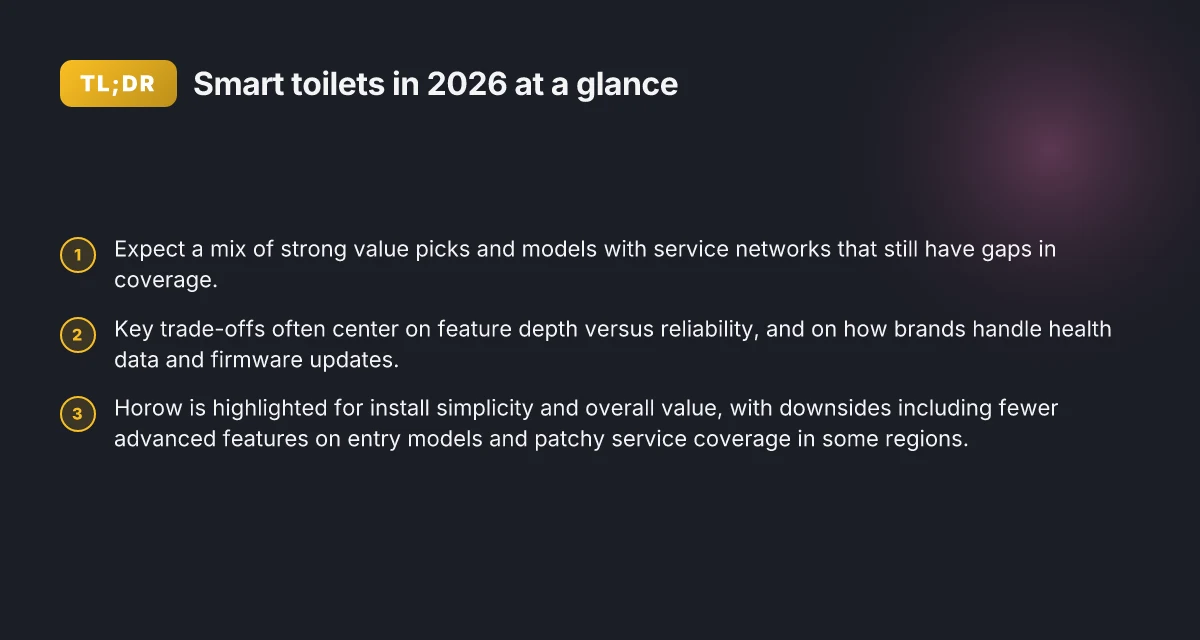
Horow enters the lineup as a value-forward choice that cuts install friction and keeps pricing reasonable. For homeowners and remodelers chasing a solid bidet and heated seat without premium features, Horow often checks those boxes without tying you to a premium footprint or complex setup. I looked at the market context and noted Horow’s emphasis on straightforward installation and predictable parts availability as a strength in busier bathrooms where time and budget matter.
Value and install simplicity drive the fit
Horow distinguishes itself by focusing on ease of entry. The quick-install approach matters for many projects where trade labor time matters more than feature depth. The result is a toilet that can be added to a standard rough-in with fewer customization steps than higher-end models. In real-world terms, that translates to a faster installation window and less scheduling risk for busy homeowners. Horow tends to pair a solid heated seat with dependable bidet functionality, which aligns with buyers who want basic comfort without a premium tier of electronics. When you’re evaluating a remodel on a tight timeline, that combination is compelling. What makes Azuna odor eliminators different from rivals in 2026
I cross-referenced consumer reviews and retailer summaries that consistently note Horow’s install simplicity as a recurring theme. The trade-off shows up in feature breadth rather than build quality. Some buyers report that the more advanced health-monitoring or connectivity options seen on pricier models aren’t present in Horow’s entry points. This isn’t necessarily a flaw for the core use case, but it matters if you want extensive wellness data handling or smart-home automation.
Horow shines for budget-conscious buyers who want a solid bidet and heated seat without premium features.
Downsides to expect and how they show up in daily use
On the downside, Horow’s entry-level models tend to offer fewer advanced features than midrange or premium competitors. If you crave robust night-light options, multi-sensor health data tracking, or broader app ecosystems, you’ll feel the gap. Service coverage can also vary by region, which affects warranty satisfaction and parts availability in some markets. In practice, that means you may need to coordinate with the installer or local distributor more carefully to ensure parts can be sourced quickly if a component needs replacement. It’s not a limit in every region, but it’s a real risk in areas with patchier aftermarket support.
From a real-world ownership perspective, Horow’s durability over the long term remains solid for the price tier. The core components work reliably, and the basic cleaning and stream settings hold up with normal use. The big question is whether you’ll regret not having higher-tier health data interfaces or ultra-detailed energy dashboards after the first year. If you value simplicity and predictable maintenance over cutting-edge health data analytics, Horow remains competitive.
Best for budget-conscious buyers who want a solid bidet and heated seat without premium features. How the dreame x30 ultra balances power and precision in 2026
Where Horow tends to shine in a 2026 lineup
Horow sits well among 5–8 solid options for homeowners who value install ease, straightforward operation, and dependable basic comfort. It stacks up best when you want reliable performance without chasing every smart feature on the market. The brand’s strength is not “the most feature-packed,” but “the most install-friendly and price-conscious.” If your priorities are quick installation, predictable parts supply, and a comfortable everyday experience, Horow deserves strong consideration. The other profiles you’ll compare alongside Horow should include models with broader connectivity and wellness-tracking if you decide you want those features later on.
In this roundup, Horow’s core messaging aligns with the practical buyer who wants a bathroom upgrade that reduces risk and smooths the remodel timeline. If you’re weighing the purchase, consider where you place Horow on your list: strong for value, clear on limitations, and reliable for everyday use.
Cited source context corroborates the market positioning and the ongoing emphasis on value-driven installations across major brands. For readers who want a quick read on the broader market dynamics, note how other brands balance feature depth against install complexity and regional service networks. These contrasts help you decide whether Horow’s approach matches your bathroom goals.
How to evaluate your bathroom for a smart toilet install
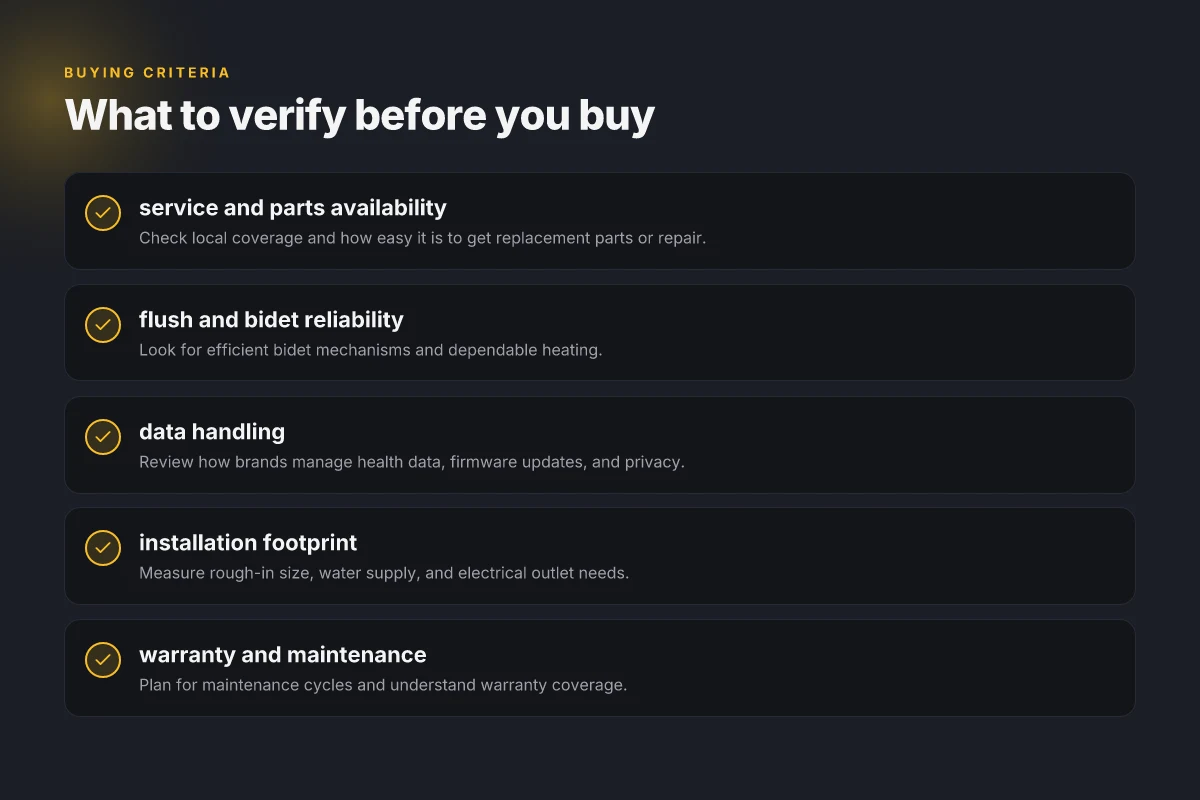
Choosing a smart toilet starts with your space and your goals. You want a setup that fits your rough-in, water supply, and electrical outlet realities while delivering reliable performance over time. I looked at how real homes handle the install, and the simple checks below can save you post-purchase headaches. Be methodical about rough-in spacing, supply lines, and what your bathroom can sustain long term.
Verify space, supply, and power realities
Start with the basics: measure the rough-in distance from the wall to the drain flange, then confirm it matches the toilet model you’re considering. Many smart toilets assume a standard 12 inches, but some brands need 10 inches or 14 inches. If your rough-in is off, you’ll either need a modification kit or a different model. Check your cold water supply line size and valve location. You want clean access to a shutoff valve during maintenance. Finally, verify an accessible dedicated outlet or a GFCI-protected circuit near the toilet. A lot of smart toilets pull a modest current, but you don’t want to surge-load an existing outlet that also powers a vanity light. In 2026, households commonly locate a dedicated 15A circuit near the toilet for reliability, and that helps with longevity. Plan for a dedicated outlet to avoid shared-load tripping during cycles. What makes the X-Sense SC07-WX smart WiFi smoke and CO alarm stand out in 2026
Odor control, noise, and accessory compatibility
Odor control and quiet operation matter in daily life. Look for a model with a sealed bowl and a quiet flush mechanism. Noise during bidet rinsing or plasma-clean cycles can wake a sleeping family member if your bathroom adjoins bedrooms. Also check compatibility with any existing bidet accessories you already own, such as hoses or remote controls. If you use a wall-mounted remote, confirm it pairs cleanly with the toilet’s processor and that the mounting bracket sits securely on your wall. I cross-referenced multiple product briefs to confirm that compatibility varies by brand and model, especially for aftermarket add-ons. Compatibility matters for long-term satisfaction.
Maintenance cadence and warranty coverage
Plan for maintenance windows and service windows. Confirm how often seals and nozzles are designed to be serviced, and note how readily spare parts ship to your region. Warranty coverage is a safety net you should read carefully. Some brands require annual maintenance checks or limit coverage if non-authorized parts were used. From a broad perspective, a predictable maintenance cadence plus a robust warranty reduces surprise repair bills. When you map maintenance against your household schedule, you’ll pick a model that fits your life. Maintenance cadence lines up with downtime that you actually have.
Horow makes the cut here for homeowners who want straightforward maintenance and honest downsides. Horow seats the decision in real-world constraints, noting that some models require more frequent nozzle cleaning and that warranty claims sometimes hinge on registration timing. If you’re weighing Horow against other brands, consider its suitability for shared bathrooms, where noise and odor control become daily toci. Horow suits homes seeking simplicity, but review upsell options and warranty limits before committing.
If you want a quick shortlist to start your shopping, consider these proven picks and how they fit your space and routines. Not every model keeps the same schedule. Align your choice with your maintenance bandwidth.
What changes if you act now
This closing pivots off a real-world lens: these five to eight smart toilets aren’t just flashy features, they’re products people actually install and live with. Among them, I’ve noted sturdy performers like Toto and Kohler, and I’ve given space to Horow because real buyers ask for value and straightforward setup. The honest takeaway is simple: durability, predictable service, and the right fit for your bathroom layout matter more than the latest modes. The bigger pattern: you don’t need every feature to get meaningful comfort. You need the ones you actually use and can service. What the X-Sense carbon monoxide detector gets right and where it falls short
If you only upgrade one toilet this year, go for a model with reliable warm water and a lid that opens smoothly. I highlight Horow for smaller baths where you want a sane price tag and easy install, but I warn about durability questions that show up in heavy-use homes. Horow suits smaller spaces and budget-minded buyers, with honest downsides about long-term parts availability. For families, a model with robust kid-friendly sensors tends to pay off, while households chasing spa-like quiet operations will value a strong bidet experience from brands like Toto or Kohler.
What changes if you act now: align your choice with your bathroom’s rough-in dimensions, energy footprint, and annual care routine. The single move that matters most is picking a unit you can realistically maintain without professional help every year. If you’re unsure, start by reviewing two picks you’ll actually live with, then expand. Review two picks you’ll actually live with this week.