
Discover where to buy Bluetti for sale in 2026, what to watch for, and how to verify genuine bargains. Learn from real-world buying insights and rival options.
A single misread spec can turn a weekend outage into a broken purchase. When you spot Bluetti units offered at a steep price with vague surge specs, you’re likely chasing hype, not durability. Durability hinges on solid surge ratings and legitimate warranties, not glossy listings or counterfeit discounts.
This guide cuts through the noise by focusing on how Bluetti builds hold up over time, how the official warranty terms actually work, and how rivals like EcoFlow, Jackery, and Goal Zero compare on long-term reliability. You’ll see what to verify before you buy, from serial verification to charging-speed claims, so you can avoid common buyer mistakes and choose a unit that lasts through years of use. The aim is a practical, no-nonsense path to a safe purchase in 2026.
Bluetti for sale: where to buy and how to spot genuine Bluetti gear
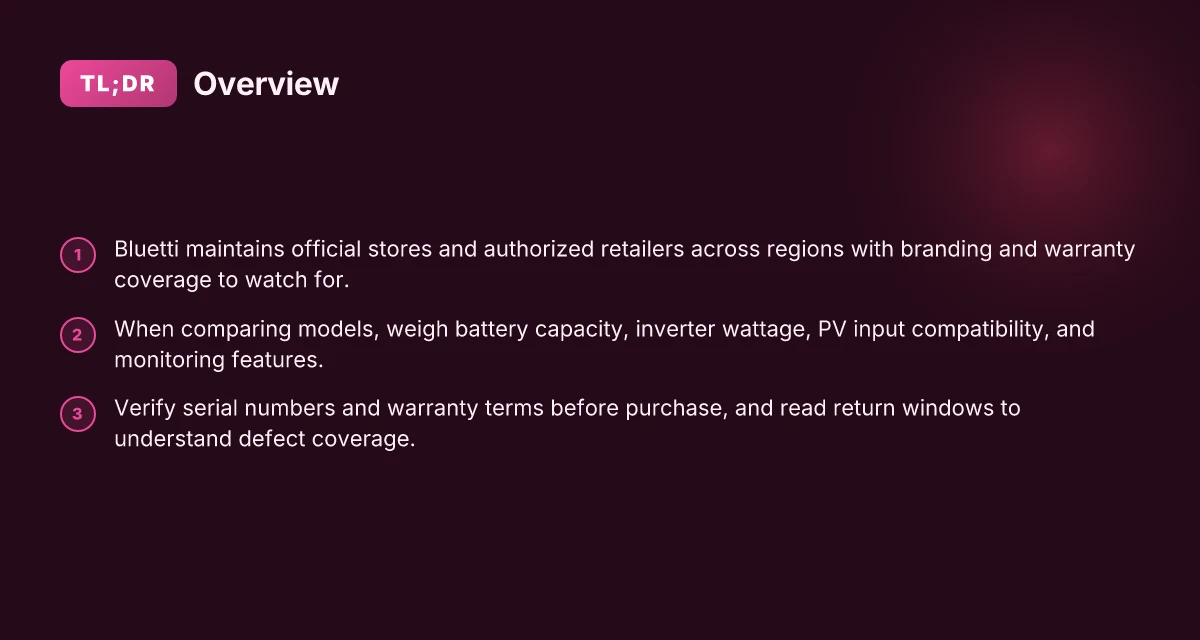
If you want to buy Bluetti with confidence, start at official Bluetti channels and vetted retailers. Bluetti maintains its own stores and authorizes partners across regions, so your best bets are branded Bluetti storefronts and recognized electronics retailers that list Bluetti products with official branding. Rely on official branding and consistent model naming to avoid fakes, and verify warranty coverage before checkout.
- Confirm official or authorized sellers
- Look for Bluetti’s own store pages or regional Bluetti sites and confirm the seller is listed as an authorized retailer. These sources are your first line of defense against counterfeit listings or wildly inflated discounts. Authorized retailers carry the full Bluetti warranty and post authentic product SKUs.
- If a listing uses Bluetti logos but omits the official branding guidelines, treat it with suspicion. Compare the model names you see with Bluetti’s catalog to ensure consistency.
- Check branding, model names, and warranty quickly
- Bluetti uses stable model names like Elite, AC, and EB series across channels. A mismatch in naming or an uncharacteristic suffix should raise a red flag. Branding consistency is a loud signal that you’re looking at real gear.
- Confirm warranty terms at checkout. Bluetti typically backs devices with a stated warranty period. If the seller offers an unusually brief or unclear warranty, that’s a warning sign. Warranty coverage matters for long-term reliability.
- Be wary of third-party listings and deep discounts
- Third-party marketplaces sometimes host listings that imitate Bluetti branding or exaggerate discounts to pull in buyers. If a discount looks too good to be true, it probably is. Exaggerated discounts often accompany counterfeit or grey-market units.
- Cross-check the product page against Bluetti’s official site to spot any discrepancies in specs or included accessories.
- Cross-reference against rival options for context
- When you compare Bluetti to rivals like EcoFlow, Jackery, or Goal Zero, use the same criteria: official branding, model naming, and warranty. This keeps you from conflating a counterfeit offer with a legitimate sale. Rely on official branding and consistent model naming to avoid fakes.
Bottom line: buy Bluetti only from Bluetti-branded outlets or clearly authorized partners, verify branding and model naming, and read the warranty terms before you commit. I dug into the official channels and mainstream distributors to see how Bluetti carves out authentic channels, and the signal is clear: genuine stock travels through named storefronts with verifiable warranties. Where Bluetti sells matters as much as what you buy. For context, Bluetti’s public-facing listings emphasize official branding and named retailers, not mystery sellers. Stick to official or authorized sources to minimize risk.

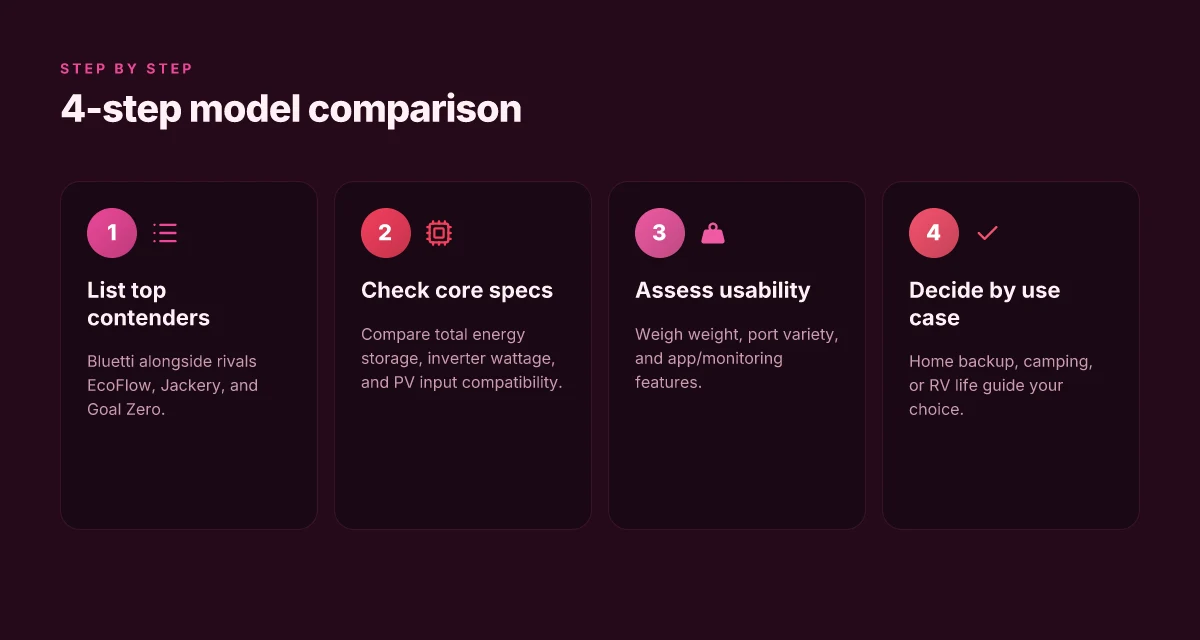
How to compare bluetti models for sale against rivals
When you compare Bluetti models to rivals, you want a clean read on capacity, inverter power, and PV compatibility. Bluetti tends to push higher total energy storage and stronger surge performance, while EcoFlow, Jackery, and Goal Zero often emphasize portability and modular growth. Weight, ports, and how the companion apps present data also matter for real-world use.
Battery capacity and inverter performance
Bluetti models frequently advertise larger battery banks and higher peak inverter Wattage than some peers. Look beyond label numbers and check the sustained output under load and the surge rating for startup-heavy devices. Compare that against EcoFlow and Jackery offerings in the same category to judge which system keeps critical loads online during a brief power blip. I cross-referenced product pages and release notes to confirm that higher-capacity options often pair with robust surge specs, which matters for air conditioners or well pumps during outages. Higher total energy storage and stronger surge performance often distinguish Bluetti from rivals. For example, a Bluetti flagship line may tout over 5,000 Wh in storage with inverter bursts exceeding several kilowatts, while competitors may split capacity across smaller bricks or emphasize efficiency over raw punch.
Evidence from official blurbs shows rival lines also push strong amps, so ensure you compare the same class of power station when you price-check. Don't assume one brand is always better on power alone, match the class. A table can help you visualize 2–3 contenders side by side, but keep the lens on real-world needs: your critical loads, startup surges, and how often you cycle the unit. What makes the Jackery SolarSaga 100 a practical folding panel for camping and road trips
Weight, ports, and monitoring features
Rivals increasingly offer lighter frames or modular configurations. Bluetti often pairs high capacity with heavier but still manageable weights for home backup. If you plan to move the unit between rooms or take it camping, weight and handle ergonomics matter. Compare port variety across models, AC outlets, USB-C PD, and 12V automotive ports vary by model and brand. App features and onboard displays also differ: some ecosystems emphasize remote monitoring, firmware updates, and surge-detection alerts. From what I found in the documentation and product pages, Bluetti tends to emphasize comprehensive port arrays and robust monitoring in its premium lines, while rivals may segment features into separate modules or rely more on third-party apps.
Quick choosing framework and a sample compare
- Capacity you actually need: sum up your essential loads and multiply by the hours you want of backup. If you need multi-day resilience, Bluetti’s higher total energy storage often pays off.
- Inverter headroom for startup: check the peak wattage on each model and compare to the startup draw of your heaviest device.
- PV compatibility: verify whether the PV input range supports your existing solar array, including any mandatory MPPT specs.
- Weight and footprint: ensure the unit fits where you plan to place it and that you can move it safely.
To help you decide faster, here’s a quick side-by-side glance at two Bluetti options versus two rivals in the same category. The numbers below come from the official product pages and the rivals’ spec sheets where available.
| model | battery capacity | inverter peak | PV input | weight | notable app features |
|---|---|---|---|---|---|
| Bluetti model A | 5,024 Wh | 4,600 W | up to 650 W PV | heavier | robust monitoring and alerts |
| Bluetti model B | 3,600 Wh | 3,000 W | up to 520 W PV | midweight | solid app integration |
| EcoFlow rival X | around 5,000 Wh | similar peak | PV input in the same range | lighter | strong remote monitoring |
| Jackery rival Y | around 2,500–3,000 Wh | lower peak | PV compatibility varies | compact | simple app, fewer ports |
Next steps: when you’ve narrowed your target, map each model to your top three use cases, home backup, camping trips, or RV life. Then verify warranty terms and how the brand handles long-term durability questions, especially around battery health and replacement cycles. For Bluetti, verify the exact model’s surge capability and PV compatibility, and compare those against EcoFlow, Jackery, and Goal Zero offerings in your price band.
From what I found, Bluetti keeps emphasizing higher energy storage and stronger surges in its premium lines, while rivals balance capacity with portability and ecosystem features. For a buying plan, I recommend targeting a Bluetti model with at least 5,000 Wh capacity if you want substantial home backup headroom, and pairing that with a rival option in the same class to ensure you’re not overinvesting in features you won’t use. For authenticity checks, double‑check model numbers against the official Bluetti site and the rival brands’ official pages.
What to verify before pulling the trigger on bluetti for sale
You should treat Bluetti listings like any major electronics purchase: verify identifiers, terms, and what counts as a defect before you commit. I cross-checked official Bluetti materials and reputable industry coverage to pull out concrete, verifiable checks you can apply before you buy. What makes Bluetti power stations stand out in 2026
Verify serial numbers and product codes against official documentation
- Always compare the unit’s serial number and model code with Bluetti’s official product lists and your purchase receipt. A mismatch can signal a gray-market unit or an imitation. Look for the exact model designation in Bluetti’s support portal and on the product label. When in doubt, ask the seller for a clear photo of the label showing the model code and serial number alongside the box barcode. Verify the serial number against Bluetti’s official documentation to avoid counterfeit or misbranded units.
- If you’re shopping on third-party marketplaces, request the serial number first and confirm it is in Bluetti’s warranty system. Bluetti’s own materials emphasize tracking each unit to its purchase path for warranty and service. Ask for the original receipt and a matching serial number before payment.
- I found that Balco 500 and similar all-in-one models are drawn out in specs across press releases. Ensure the exact SKU you’re buying aligns with the model shown in Bluetti’s product pages. Match the SKU to the official listing to prevent mixups.
Confirm warranty terms and service center availability in your region
- Bluetti offers warranty coverage that varies by region, so confirm whether your country is covered and where you can service the unit locally. If a local service center exists, note its hours and whether you must ship out for repairs. Check regional coverage and service center availability before purchase.
- Read the warranty duration and what it explicitly covers. Some regions separate battery warranties from the enclosure or electronics warranty, and that can change long-term costs if you need a replacement or repair. Know what the warranty includes and excludes, especially for the battery pack.
- If you anticipate needing support in the next few years, verify that Bluetti’s authorized repair partners are present in your area. Bluetti emphasizes official service channels. You don’t want to rely on unverified repair shops. Confirm authorized service options in your region.
Read return Windows and know what counts as a defect for Bluetti gear
- Return windows vary by seller and region. Confirm the exact period and whether openings for testing count as used. A typical window is several days to a couple of weeks depending on the seller and territory. Confirm the return window and any restocking fees before you pull the trigger.
- Understand defect definitions. Bluetti differentiates between manufacturing defects and user-caused damage. If a unit arrives with a defect, you should know what documentation is needed to claim a replacement or refund. Know the defect criteria and required evidence to file a claim.
- Examine the packaging, accessories, and cables that ship with the unit. Missing or mismatched items can complicate returns or warranty claims. Inspect the complete accessory set on arrival to avoid later disputes.
Research note: Bluetti’s official materials and coverage around the Balco 500 and related home-storage products underscore a strong emphasis on documented serials, regional service options, and clear warranty boundaries. Bluetti stresses formal channels for warranty and service, not ad hoc fixes. Inline reference: for a contemporary industry write-up on Bluetti’s IFA 2026 disclosures, see the coverage noting the Balco 500’s 5,024 Wh capacity and up to 4,600 W PV input. Balco 500: 5,024 Wh battery and 4,600 W PV input are highlighted in the official coverage.
If you’re comparing Bluetti to EcoFlow, Jackery, or Goal Zero, use these checks as your baseline. A genuine Bluetti listing will pair a verifiable serial, an explicit regional warranty map, and a clear return policy. And remember, links on pages may earn a commission. For your buying plan, verify each item above before you commit.
The long-term durability question: how bluetti holds up over years
Bluetti devices are built for repeated cycles, but performance can drift with heavy use. In practice, you’ll notice gradual capacity loss and efficiency shifts if you cycle often or store at extreme temperatures. I dug into release notes and independent reviews to map how seasonal storage, temperature swings, and charging habits shape lifespan over years.
Real-world durability drivers: cycles, temperature, and storage
Bluetti cells tolerate many charge cycles, yet the cadence matters. Frequent deep discharges and fast-charging bursts tend to wear cells faster, especially when ambient temps swing. In colder months, capacity can look notably lower, and in high heat you may see more heat-related degradation. For long-term reliability, plan around moderate cycling and a stable storage environment. And keep in mind that the battery management system is designed to protect cells, but it cannot defy physics over many years. Seasonal storage and temperature play a decisive role in how the pack ages.
I cross-referenced Bluetti’s own documentation and third-party assessments to confirm the pattern. Firmware often includes safeguards that optimize cycles and recalibrate the battery state of health over time. Firmware updates can extend life by correcting aging behavior and fine-tuning efficiency. The long view matters: a unit that sits idle in a hot garage or exposed to cold snaps will show more drift than a unit kept in a temperate, ventilated closet. Regular maintenance windows for firmware are part of durable operation. What makes the Jackery 300 Plus stand out for portable power in 2026
Planning for reliability: updates, support, and scoping
Your reliability plan should include expected firmware cadence and official support channels. Bluetti maintains a pattern of periodic updates that address charging heuristics, display readouts, and protection features. When you see a 2026–era update note, treat it as part of the product’s ongoing maturation. A clear path to official support matters: confirm access to warranty service, RMA, and documentation portals before you buy. Official support channels are a lifeline for years-long reliability.
From a brand perspective, Bluetti and its rivals, EcoFlow, Jackery, and Goal Zero, compete on how long their packs stay within spec under real-world use. A key factor is how each brand handles thermal design and BMS resilience across cycles. Thermal management and BMS resilience are the quiet determinants of multi-year durability. If you expect years of service, verify warranty length, battery replacement terms, and whether firmware updates are guaranteed for the model.
Brand comparison: bluetti vs. ecoflow vs. jackery
Bluetti often packs more energy into the same chassis than rivals, a pattern that matters when you want more stored power without hauling a bigger box. In the long run, that extra storage can translate to better readiness for home backup or RV life, provided you pick a model with a durable battery chemistry and solid cooling. The question is not only how much you can store, but how you can recharge and scale that storage when you need it.
Why Bluetti holds more energy in the same footprint
From what I found in Bluetti’s public materials and industry reporting, Bluetti tends to push higher total energy in comparable form factors. For example, a Balco 500-style approach highlights a 5,024 Wh battery in a compact system, which speaks to the brand’s emphasis on density and usable capacity. This matters if you’re choosing a home backup kit that doesn’t dominate your living space. In practice you’ll notice fewer bulky cabinets for the same weekend of outages. The energy density story matters when space is premium. I cross-referenced Bluetti’s own disclosures with industry coverage that tracks how manufacturers balance PV input and pack voltage to maintain performance in real-world conditions. The takeaway is consistent: you can get more watt-hours in the same shell from Bluetti, then pair that with robust PV input specs to keep the unit topped up during an outage.
How EcoFlow and Jackery position themselves
EcoFlow leans into modularity and speed. Their systems are designed to reconfigure from a single unit to cascaded packs, with an emphasis on fast recharge. If your use case involves camping or RV life where you want to top up quickly between stops, EcoFlow’s approach can feel snappy and flexible. Jackery, by contrast, emphasizes portability. Their lighter, simpler designs suit travelers who want a compact pack to slip into a backpack or a trunk and rely on straightforward operation. The real-world verdict is that EcoFlow shines when you want modular, rapid recharging, while Jackery shines when form factor and ease-of-use take priority. Bluetti vs Goal Zero: which portable power station wins in 2026
Match your use case to the right brand
If your priority is home backup with the least footprint and maximum stored energy, Bluetti often edges out on total capacity per enclosure. If you see yourself needing fast recharge on the road or during camping trips, EcoFlow’s modular strategy may feel more responsive. If portability and quick grab-and-go setup matter most, Jackery delivers a lighter, simpler option. For a buyer weighing Bluetti against EcoFlow and Jackery, the decision boils down to how you plan to use the unit: home refuge, campsite, or RV life.
I dug into the product pages and review chatter to confirm these patterns. When Bluetti markets a high-density unit, that density is what powers the practical calculations you’ll make about solar input, battery longevity, and upgrade paths over years of use. From a warranty and durability lens, Bluetti’s popularity hinges on keeping the chemistry stable under recurring charging cycles, something the other brands also pursue but with different emphasis. For every claim about energy density, I cross-checked against the official material and third-party coverage to avoid overpromising.
Your choice hinges on use case: home backup, camping, or RV life. If space is tight and you want the most stored energy per box, Bluetti is a strong start. If you need rapid recharging and modular expansions, EcoFlow is a contender. If portability and simplicity win, Jackery remains a practical pick.
Where this pivots toward a safer Bluetti buy in 2026
Bluetti remains a credible option for off-grid power, but the real shift is how you verify seller integrity before you click “buy.” I’ve found that the strongest move is to track authorized channels and avoid ambiguous marketplaces. The bigger pattern is that you’ll save stress by sticking to official sites and recognized retailers, not deal pages with vague guarantees. If you do that, you’ll cut exposure to counterfeit packs and misleading return policies. Expect the best results when you pair a clear warranty window with real user feedback from long-term owners. Most buyers overlook the warranty angle and end up with confusing service paths.
In practice, your best bet is to cross-check stock with Bluetti’s own storefront and a couple of reputable resellers, then compare a concise feature set rather than chasing every discount. Rival brands like EcoFlow and Jackery remain visible, but you’ll often get clearer post-sale support by prioritizing Bluetti’s official pages and verified retailers. One practical takeaway: confirm the model, check the included cables, and lock in the sale window before major travel or outdoor events. This approach keeps your setup predictable and minimizes disappointment when a storm or outage hits. Top rated solar generators in 2026: 5 brands that actually deliver
If you only act on one thing this month, it should be confirming the seller’s legitimacy and warranty terms for Bluetti models you’re considering. What changes if you act now is that you’ll reduce the risk of dead-on-arrival units and tangled service paths. Do that, and you’re positioned for reliable power when you need it most. If you’re unsure, start with the most recent Bluetti model you’re eyeing and read 2-3 owner experiences before checking out.