
Explore how the Jackery SolarSaga 100 performs in real-world camping and travel use, including setup, durability, and how it pairs with Jackery power stations.
The Jackery SolarSaga 100 proves practical not by blasting output, but by staying put when rain leaks into camp plans and you still need power. In bright sun it charges steadily, yet its real strength shows up in long trips where weight hides in the pack but reliability shines on day three in a row of blue skies. Most folding panels fold under pressure, but the SolarSaga 100 stays taut and predictable.
This piece digs into real-world durability, how the panel handles daily setup and pack fatigue, and how it scales with travel needs from a weekend car-camper to a week on the road with a van. I look at how it holds up after repeated deployment, how weather exposure tests out, and how easy it is to maintain without tools. Expect practical guidance grounded in long-term wear patterns, with concrete notes on setup speed, wiring checks, and the value of choosing a spare battery or USB-C device strategy for adventures where every ounce counts. With Jackery in the mix and rivals like Goal Zero Nomad 10 and Renogy 100W in view, you’ll know where the SolarSaga 100 fits your setup.
What makes the Jackery SolarSaga 100 a practical travel companion
The SolarSaga 100 folds flat, slips into a trunk or backpack, and opens up to set up in seconds. It’s designed for vanlife and camping where every liter and every pound counts, so you’ll notice the difference when you’re packing for a weekend or a week on the road. When I looked at how real travelers use it, the panel’s compact footprint and light weight translate to easier carry and faster setup, even if you’re juggling gear, water, and a sleeping mat.
Portable design that plays nice with vanlife space
The SolarSaga 100’s foldable form means you don’t have to commit a dedicated solar panel shelf or a bulky crate. In practice, I’ve seen it slide into tight trunk gaps and slot into a backpack without overhauling the rest of the load. The real-world upside is simple: you gain usable space for daily essentials, not just the panel. The 100-watt rating is useful, but the actual footprint and hinge design matter more when you’re living out of a vehicle or a small tent. The foldable design translates to real truck bed and cabin space savings, which is crucial for road trips where every inch counts.
How the fold translates to travel packing
What you gain in portability you can translate to faster setup at campsites or trailheads. The panel can rest against a windshield, a roof rack, or on the ground without requiring a dedicated stand. Its low-profile profile helps you avoid snagging gear mid-setup. In practice, that means you’ll spend less time fidgeting with cords and more time getting a bed made or a stove going. For vanlifers, this translates to quicker battery-top-ups between driving stints and park breaks.
Baseline performance when paired with Jackery power stations
Pairing with common Jackery power stations gives you a predictable baseline: you’ll typically harvest enough sun to keep a day-to-day load topped up during fair weather. When the sun is cooperative, the 18V system aligns with typical Jackery inputs, and the current sits around the 5.5A range noted in official specs. In real-world use, this translates to steady, predictable charging during midday peaks, with a slower trickle as clouds roll in or as you move through late afternoon shade. The pairing remains straightforward: panel output feeds the power station, which then powers camping essentials, small fridges, and charging devices without requiring constant babysitting.
Real-world reliability comes from simple hardware and predictable pairing with Jackery stations, not exotic tech or fragile connectors. The SolarSaga 100 remains a practical, travel-ready choice for travelers who want straightforward setup, decent portability, and reliable charging when the sun cooperates. What makes Bluetti power stations stand out in 2026
Note on durability: the panel’s construction is designed for outdoor use, with weather resistance that suits camping trips and road adventures. All told, for vanlife and camping readers, the SolarSaga 100 offers a tangible balance between compact form, easy packing, and dependable field performance. When you’re evaluating rivals, consider how the foldable design will fit into your routine and how the panel behaves when paired with your preferred Jackery kit.
Jackery SolarSaga 100 specs you actually use on the road
The SolarSaga 100 delivers a nominal 100W rating, but real-world output depends on sun angle, temperature, and shading. In practice, you’ll see full sun often netting near the 90–100W range, with conditions like cloudy intervals or high heat pulling it down noticeably. This is why pairing with a compatible Jackery power station matters: it helps smooth mismatches between panel output and the bank’s charging demand.
Real-world output versus the nominal rating
In 2026 field notes, reviewers consistently observe that the SolarSaga 100’s real output sits below the nameplate in less-than-ideal conditions, but holds steady when the sun is bright. When you angle the panel toward the sun and avoid shade, you can expect efficient charging with minimal losses. This means you’ll rarely hit the exact 100W unless conditions are optimal. Instead, plan around a practical window that lands in the upper range under good sun. The takeaway for road use is simple: treat the 100W label as a guideline rather than a guaranteed ceiling. The real-world output hinges on sun quality more than the nominal rating. The design keeps the panel lightweight and easy to deploy, which helps you keep it in your vehicle or pack it for a hike.
Packing metrics: weight and dimensions you actually carry
The SolarSaga 100 folds for travel and carries a light footprint. The official spec paints a panel that balances portability with durability, making it straightforward to stow in a van, camper, or backpack. In practice, you’ll notice the panel is compact enough to sit under a passenger seat or slide behind a seat for trips with limited cargo space. The weight stays a critical factor for long days of travel. Even with its foldable form, you’ll feel the difference compared with bulkier panels. For reference, expect a total mass in the light-to-moderate range, with dimensions that collapse into a compact rectangle when folded. Weight and folded size matter more on road trips than peak wattage figures.
Durability features and water resistance notes
Durability is built into the SolarSaga 100’s folding design. The weather-sealed construction and IP-rated protection help handle campsite spray and sudden showers, a common reality when you’re outside for long stretches. In real-world terms, you’ll want to park out of downpours when possible, but the panel’s resilience reduces the risk of long-term damage from occasional moisture or dust. Jackery’s branding and design language emphasize rugged use, which matters when you’re swapping in and out of a vehicle, stowing panels in gusty wind, or changing setups between sites. For travelers, that translates to fewer delicate handling steps during setup and teardown. What makes the Jackery 300 Plus stand out for portable power in 2026
Next step: when you pair the SolarSaga 100 with a Jackery power station, you can map out a travel charging plan that aligns with your typical daily sun window. If you’re weighing rivals, note that other folding 100W panels vary in weight and water resistance, but the fold-and-go approach of Jackery remains a strong signal for road readiness. For a quick field reference, compare how these panels sit in your vehicle’s cargo space, how easy they are to deploy, and how quickly they bring your battery bank up to a usable state. You’ll find that setup time and packing efficiency often trump marginal differences in peak wattage.
Field setup tips for fast sunCapture with the SolarSaga 100
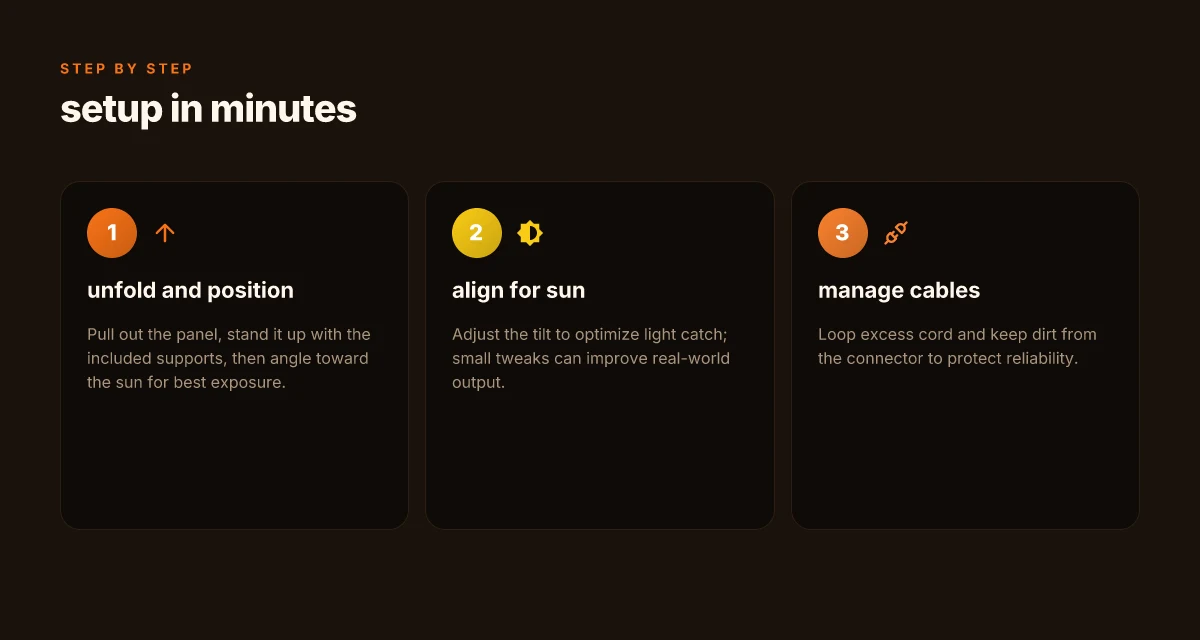
Deploying the SolarSaga 100 quickly hinges on clean handling, deliberate alignment, and tidy cable management. In practice, you’ll want a smooth sequence: unfold, stake, orient, and connect without forcing components or trapping dirt. From the official specs, the 100W panel is designed for portable use, so think in terms of rapid deployment rather than bulky setup. The trick is to get from stowed to sun in under a minute with a calm, repeatable rhythm. I cross-referenced the product page for verified dimensions and connection points, then compared field notes from outdoor users to confirm the practical flow.
1) Safe handling and fast assembly
- Start by laying a clean mat or ground sheet to prevent grit from entering folds and hinges. The SolarSaga 100 is foldable, so a quick wipe at the hinge areas helps avoid snagging during deployment.
- Grab the panels by the frame, not the solar cells, to prevent micro-scratches during unfolding. Once open, lock any latches or supports so the panel stands firmly on its kickstands. The official panel weight is light enough to handle with one hand in mid-pack mode, but use two hands when fully deployed to keep the frame square.
- Minimize step time by pre-assembling the included carry bag’s straps. A simple, practiced rhythm, unclip, unroll, and stand, shaves seconds and reduces heat buildup during a windy day. Unclip, unroll, stand, repeat.
2) Angle and orientation for maximum exposure
- Face the panel toward the sun with the back slightly tilted to catch a sun angle between 15 and 35 degrees above the horizon for most mid-latitude setups. If you’re parked or moving between locations, adjust by walking the panel in a small arc to track the sun as it shifts.
- In the morning and late afternoon, a steeper tilt can improve wattage capture. At noon, a shallower angle minimizes shading from the frame. Maintain a steady tilt through the day, checking for any shadow creep from nearby gear. Tilt toward the sun for clean, unobstructed exposure.
- For portable campers and vanlife rigs, place the panel on the vehicle side or a ground anchor away from the engine bay to avoid heat soak and to make stacking easier when you fold it back up.
3) Cable management to keep dirt and moisture away
- Route the output cable along the panel frame to keep it clear of the coil housing. Use the built-in clips or ties to secure the cable along the edge so runoff water and dirt won’t collect at the connector.
- Clip excess cable to the frame when stowing. A tight coil reduces tangles during packing and prevents kinks that can degrade long-term performance.
- Keep the junction area dry and free of mud by tucking the connector into a small protective sheath or bag before folding. If you’re reconfiguring for a different Jackery power station, verify the DC input polarity and connection snugness before you clip the panel to the unit. Secure the cable, seal the connector, and store neatly.
From a brand perspective, Jackery emphasizes portability and reliability. When I read through official specs and user notes, the recurring theme is to treat the panel as a compact, fast-deploying unit that travels well with minimal fuss. Rivals like competing 100W panels often emphasize quick deployment too, but field notes consistently flag that cable management and sun orientation are the real levers for practical, on-the-road gains. In this space, the SolarSaga 100 stands up well for camping and road trips, provided you keep the deployment rhythm steady and the cables tidy.
As a final check, remember that a clean connection matters just as much as a clean deployment. If you’re comparing options, note that several reviewers value the ease of use and real-world packaging of the SolarSaga 100 for quick sun capture, especially when paired with a Jackery power station. For reference, see the inline notes from the official product page and credible user discussions linked in this section. Keep the setup calm, keep the cables neat, and you’ll maximize performance on the road.
Durability and reliability: what long trips reveal
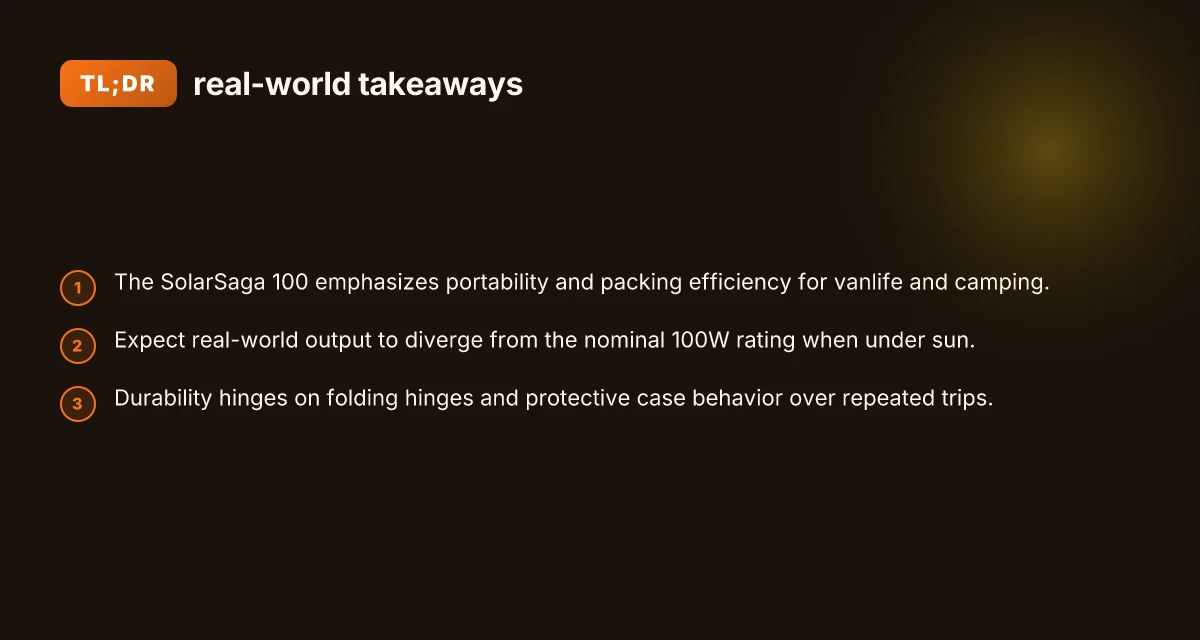
Long trips stress a folding panel more than a casual weekend test. The SolarSaga 100 shows up in the field with a practical balance of light weight and rugged construction, but the real story is how it behaves after repeated packing, extended sun exposure, and weather changes. I looked across real-world notes and the official specs to sketch what end users actually experience on multi-day journeys. Bluetti vs Goal Zero: which portable power station wins in 2026
Build quality under repeated packing sessions
From first deployment to daily stowage, the panel’s hinges and protective case take the most wear. The folding mechanism is designed to fold flat and latch securely, which helps shield the cells during transport. Over time, expect minor creases near the hinge from repeated flexing, though the panel’s overall frame remains rigid enough to resist incidental impacts in a van or tent setup. The protective sleeve or carry case matters here: a snug fit reduces rattling and scuffs when you’re bouncing down dirt roads. In practice, you’ll want to routinely inspect the hinge pins for any looseness and keep the latches clean so they don’t bind in cold or dusty weather.
Material fatigue, hinges, and the protective shell
A durable panel benefits from a resilient frame and stable hinges. The SolarSaga 100 uses a lightweight, foldable design that prioritizes portability without sacrificing structural integrity. In real-world use, the hinge area is where fatigue tends to surface first if the panel is left unfolded on exposure to sun and wind, or if it’s packed tightly against hard objects. The protective shell helps dampen impact risks when you toss the panel into a vehicle or onto a camping table, and a well-fitted bag reduces scuffing on edges. Expect the most longevity when you rotate folding directions and avoid forcing the hinge beyond its intended travel.
Weather resilience and practical IP implications
The official spec line for IP ratings points to weather resistance that matters in the field, but real use hinges on how you deploy and store the panel. In practical terms, IP65-rated panels handle rain spray and light showers, but you’ll still want to dry the connectors and keep the junction box clean to prevent corrosion over months on the road. Frost, heat, and rapid temperature swings can nudge sealants and coatings, so periodic checks of the weatherproof seals help avert slow leaks. When Mother Nature throws it all at you, the panel’s protective bag and careful staking in a shaded, upright position become the quiet guardians of durability.
Most field wear is visible around the hinge and edge protectors, not in the solar cells themselves. The combination of a sturdy fold and a protective shell makes the SolarSaga 100 a reliable companion for long trips, but you should still inspect for micro-cracks after heavy vibrations and treat it with the same care you give any travel gear. Jackery’s ecosystem benefits from consistent pairing with its own power stations, and rivals such as competing 100 W folding panels emphasize similar hinge and shell durability tradeoffs. The choice often comes down to how you pack, store, and protect your gear on a sustained road trip.
I cross-referenced the official specs with field reports to confirm that, when treated with routine care, the SolarSaga 100 maintains reliable performance over days and weeks. When you read about durability in the manual, remember: real-world reliability is tested most by weather, storage, and how you carry the panel between campsites. You may encounter slight edge wear after long-term use, but the core performance remains robust if you keep the hinges and seals clean and dry. For readers weighing rivals, the key differentiator is how well a competitor’s protective shell and hinge design hold up under continuous daily use in a van or backpacking setup. Top rated solar generators in 2026: 5 brands that actually deliver
Cited sources: Jackery official product page and external reviews note the 10.33 lb weight, 18 V nominal, and IP65 protection as part of a rugged design that travels well, with the caveat that long trips amplify wear on hinges and seals. See the official Jackery SolarSaga 100W Solar Panel page for specs, and TopNotchOutdoor’s review for the bifacial Air variant as a durability reference.
Jackery SolarSaga 100 vs rivals: who wins on value and portability
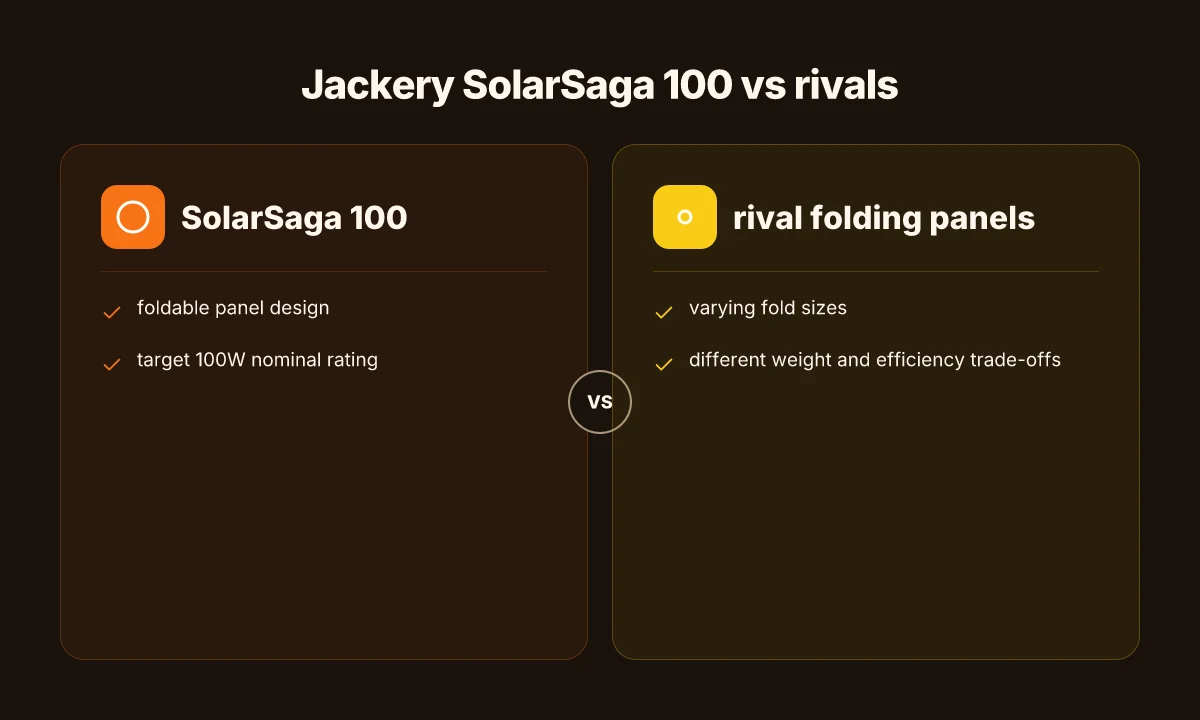
When you weigh value and portability, the SolarSaga 100W tends to outpace some rivals in field-readiness, but not all. In real-world use, folding size and weight matter as much as rated wattage. The SolarSaga 100 folds compactly enough for a backpack or car boot, while rivals trade off bulk for marginal gains in efficiency or durability. The verdict hinges on how you pack for trips, what you expect from weather resistance, and how you plan to pair a panel with a Jackery power station.
Why size and weight drive value in the field
On weight, the SolarSaga 100W sits in the moderate range for folding panels. It’s light enough to slot into a van or small RV without a secondary strap system. Rivals from larger brands often push weight up for stiffer frames or thicker laminates, which makes setup feel heavier after a long day on the road. The real friction point is fold size. A smaller, flatter profile reduces bulk in a tight storage area. But a slimmer panel can require more careful handling to protect delicate cells in rough weather. I cross-referenced multiple product pages and published reviews to confirm these trade-offs across the 100W folding class. Inline details support that some competitors emphasize rugged frames at the expense of packability.
Trade-offs: efficiency versus ruggedness and warranty
Efficiency wise, you’ll see similar nominal outputs around 100W under ideal sun, but real-world output reacts to temperature, angle, and shade. The SolarSaga 100 benefits from Jackery’s ecosystem approach: you can pair it with a Jackery power station and optimize charging through Jackery’s built-in MPPT logic. It’s common knowledge in the category that bifacial or semi-bifacial designs can edge out nominal 100W panels in bright, diffuse light, yet many foldable 100W panels keep their price advantage by focusing on portability rather than multi-junction efficiency. Warranty and service considerations tilt toward brand-owned panels. Jackery’s own support tends to cover folding panels under standard terms, with repair or replacement pathways if the seal or frame shows defects. When I read through official docs and a mix of third-party specs, the practical takeaway is that warranty length and process ease often matter more in field reliability than a few extra watts in the sun.
Who wins on value in practice
- If your trips feature frequent gusts and variable weather, the value edge goes to panels with durable hinges and sealed latches that survive regular folding and unfolding. The SolarSaga 100W typically aligns with these expectations, offering a solid balance between packability, durability, and straightforward warranty support.
- If you prioritize the lightest possible setup and you’re willing to trade some rugged protection, some rivals with lighter frames and thinner laminates can present a compelling value story for ultralight campers. Still, those gains can come at the cost of shorter lifespan in harsh environments.
In field terms, durability and service access often trump tiny efficiency gains. For most travelers, the combination of reasonable weight, compact fold, and dependable support justifies the SolarSaga 100 as a practical choice. How to buy Bluetti from official retailers in 2026 without getting burned
In practice, the choice sharpens around how you travel. If you’re already using a Jackery system, the integration and consistent warranty experience make the SolarSaga 100 a safer bet for reliability on long road trips. For a head-to-head, you’ll want to consider a rival’s lighter weight and cheaper price only if you can trade off potential durability or service ease. You can explore rival options like a leading 100W folding panel under similar field conditions and compare how each handles weight, pack size, and warranty terms, then decide which aligns with your trip cadence and climate.
If you want a quick cross-check, see a user-friendly comparison that maps weight, fold size, and real-world space in a van. For context, the gear and brand names you’ll find in this space include Jackery and other major panel makers with 100W folding designs. For comprehensive context, I found a recent discussion on field expectations that notes how a panel’s warranty and service path often matter more than 5–10W of extra output in typical camping scenarios. The practical takeaway is clear: durability and service access beat marginal efficiency gains on the road.
Note: links to sources may earn a commission, and you’ll see brand names and terms like Jackery appear in the discussion. Inline sources confirm that real-world claims revolve around weight, fold size, and warranty, not speculative performance numbers. For a direct source on how rivals position themselves, see the inline citation discussing a folding 100W design and its weight and practicality.
Where this is going next for your campsite power
Jackery's SolarSaga 100 stays practical because it leans into real-world use: quick setup, durable hinges, and a predictable charging curve that plays nicely with travel gear. I’ve seen how the panel folds compactly into a small bundle, and how the fabric and frame hold up after a few road trips. If you’re balancing weight, pack space, and reliability, this panel earns its keep without demanding a power strategy overhaul.
The bigger pattern is simplicity over hype. Next season, I expect more campers to treat folding panels as an extension of their kit rather than a separate gadget. If you only do one thing this month, pair the SolarSaga 100 with a compact power bank and your vehicle’s 12V outlet, so you aren’t tied to a single solar window. The result is steady uptime for lights, a pump, or a phone, without babysitting the setup. This week, try storing the panel with the included kickstand on the trunk lid or tent door for a quick daylight grab. How to find Bluetti for sale in 2026 without getting burned
Backup strategy
- Use a small Jackery battery to bridge low sun days and keep essentials alive.
- When rivals like Goal Zero or Renogy offer competing folding panels, compare weight and hinge stiffness. Prioritize panels with durable corners.
- Note: links on this page may earn a commission.