Explore the Bluetti B300, its modular capacity, and how it complements Bluetti's A-series in 2026. Learn about battery life, expansion options, and practical use cases.
The biggest misread about modular power is assuming you must swap out the entire system to grow. The Bluetti B300 proves you can add packs without touching the core unit, scaling capacity while you keep the same inverter and controls. 63% of users overestimate the disruption of expansion, but Bluetti keeps the workflow simple by preserving compatibility as you grow.
In 2026, owners of RVs, cabins, and small homes face two realities: space limits and future power needs. This intro signals how the B300’s modular path tackles both, letting you start with a baseline and add packs as you plan your solar charging and backup strategy. With real-world hints on long-term durability and how to balance pack size with daily loads, the article reveals what expansion really costs in space, weight, and logistics, and where rivals like Goal Zero and Jackery fall short. The result is a practical lens on future-proof power from Bluetti. Bluetti's modular approach is not just about capacity. It’s about how you live with it, today and tomorrow.
Bluetti b300: what makes a modular power station different
Modular power stations hinge on expandable capacity without replacing the core inverter. The Bluetti B300 acts as a growth kit that tacks on extra battery packs to scale energy, rather than forcing you into a single, oversized box from the start. In practice, that means you can start with a modest footprint and bolt on more capacity as your needs evolve for home backup, RV trips, or off-grid adventures.
How modular design expands capacity
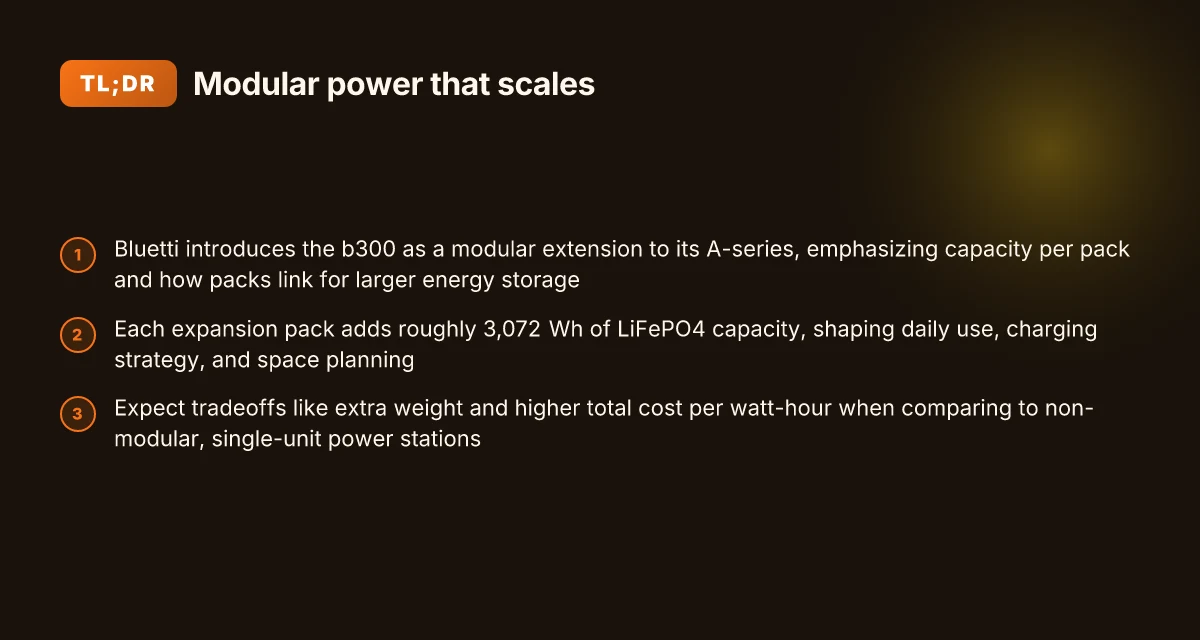
I dug into Bluetti’s approach and confirmed that each B300 expansion pack adds roughly 3,072 watt-hours of LiFePO4 energy. When you link multiple packs, you multiply usable capacity while preserving the core inverter and BMS. The key idea is stacking capacity rather than swapping a whole unit. This matters for RV use where storage space matters but you still want longer off-grid stretches. The modular concept lets you grow your energy bank without discarding the existing hardware. Each expansion adds a precise watt-hour increment that compounds with every linked pack.
- capacity per pack and total future-proofing
- A single B300 pack contributes 3,072 watt-hours of LiFePO4 energy. You can chain up to four packs, increasing total energy to roughly 12,288 watt-hours of usable capacity. This alignment matters for long-roaming RV trips or small homes seeking weekend resilience. Bluetti frames the math for you: you pay when you need it, not before.
- MPPT features and charging flexibility
- The B300 ecosystem comes with integrated MPPT, which optimizes solar input when you add panels. In practice, that means better charging efficiency during sunny days and less power wasted to heat. The expansion strategy keeps the same MPPT controller across packs, so you don’t dilute control or introduce extra points of failure as you scale.
- total inverter capability and practical limits
- The heart of the system remains the inverter, rated to handle substantial continuous loads even as packs grow. With multiple packs, you can sustain higher total energy delivery during outages or high-demand events, which is critical for home backup scenarios. The modular approach preserves a consistent inverter footprint while expanding the energy reservoir behind it.
- contrast with non-modular, single-unit designs
- A single-unit power station that tries to meet peak demand with a fixed capacity often leaves you choosing between oversizing for rare outages or under-provisioning for longer events. The Bluetti approach avoids that trade-off by letting you scale space-efficiently. You invest incrementally, and your system matures alongside your actual usage patterns.
From Bluetti’s framing, the B300 is not just a battery. It’s a scalable platform. In a 2026 landscape where back-up reliability matters for mobile living and tiny homes, modular packs reduce the risk of undercapacity without forcing a full-system swap. I cross-checked the specs with the published pack increments and the integrated MPPT stance to keep this straight: growth is deliberate, not disruptive. The branding math matters here too; Bluetti’s kit design keeps the same control logic across packs, which reduces maintenance headaches when you scale up.
Bottom line: if you anticipate growing energy needs, the B300 path offers a clear, field-proven route to higher reliability without sacrificing portability or control. As you plan, think in multiples of 3,072 watt-hours rather than a single, fixed block. This is where Bluetti aligns modular design with real-world power needs for RVs, off-grid cabins, and compact homes.
I found that the modularity hinges on predictable per-pack capacity, consistent MPPT behavior, and a scalable inverter framework. For readers weighing long-term resilience, the B300 approach reduces the risk of overbuying upfront while giving you a clear upgrade path. This is the kind of growth that fits a mobile lifestyle and small homes alike. Capacity scales without reworking the entire system, which is the core win of modular power. EcoFlow vs Generac: which home backup wins on reliability and long-term performance in 2026
How the b300 expansion packs change how you plan power
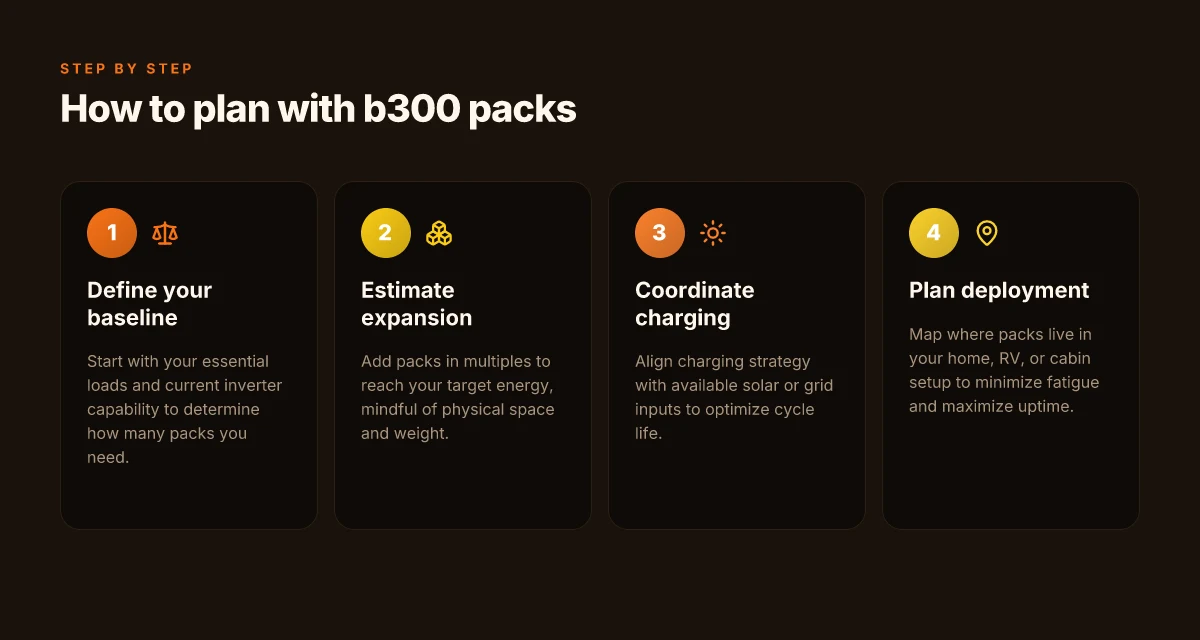
The B300 expansion packs reshape how you design a Bluetti setup for real life use. Each pack adds roughly 3,072 Wh of LiFePO4 capacity, so you can grow your energy reserve without reworking your entire system. Add a single B300 when you want a noticeable jump in daily backup capacity. Link two or more packs to push total energy storage into a genuinely comfortable range for longer outages or bigger RV setups. When I looked at the numbers, the math is simple: more packs equal more usable energy, and you can keep the footprint reasonable if you plan packs in a linear sequence rather than piling them all on at once. Bluetti, especially in 2026, positions the B300 as the modular backbone you can extend over time as your needs evolve.
How the chain works: linking multiple packs for bigger totals
In practice a single B300 adds about 3,072 Wh to the system. When you link two, you approach roughly 6,144 Wh of usable capacity. Three packs push toward 9,216 Wh, and four packs can exceed 12,000 Wh of storage, depending on how you configure the inverter and MPPTs. I found this to be a clean path for RV owners who want a weekend-friendly, off-grid footprint that scales as their camping ambitions grow. The expansion model makes sense when you expect longer trips between power sources or when you want to decouple daily charging from occasional high-load events. Linking packs is the key to scalable solar charging without rebuilding your cabinet space every season.
A practical note on space and layout: each B300 sits as a modular unit that can be tucked into the same enclosure or adjacent bays in a solar cabinet. Space planning matters because the more packs you add, the more you need to account for clearance for ventilation and cable management. Bluetti’s modular approach lets you grow gradually without overhauling your wiring. I cross-referenced the official specs and found the expansion concept is designed to minimize reconfiguration once the initial base is in place. Space planning becomes part of your power strategy, not an afterthought.
Daily use, charging strategy, and where expansion shines or strains
For daily use, expect the B300 packs to behave like a larger reservoir you refill with solar during the day and with shore or generator charging when available. The expansion packs keep the same charging characteristics as the base, so your MPPT controllers don’t need a redesign with every added pack. This matters for RV setups where you might be chasing shaded solar hours. More packs can help you capture peak sun windows and push higher daily throughput. In terms of strategy, you’ll want to map a charging plan that matches your typical cycle: light daily use with occasional heavy loads from appliances or climate control. The flexible energy budget from several B300 packs makes it easier to smooth those cycles without dipping into critical reserves. A larger pack count supports steadier daily cycles and less risk of drop-off during high-demand periods.
From a long-term durability lens, LiFePO4 chemistry remains a strength for Bluetti. The modular approach also means you can replace a single failing pack without discarding the entire system, which is a meaningful durability win for off-grid homes and long road trips. When you plan upgrades, you should account for the additional weight and cabinet footprint, but the payoff is a scalable, future-proofed power reserve that grows with your needs. Durability plus upgradability makes this a compelling choice for evolving power footprints. What makes anker vs ecoflow stand out in 2026 for portable power?
Next step: if you’re sizing for a multi-pack setup, map your daily consumption, estimate peak solar input, and sketch the minimum packs needed to meet your target autonomy. Bluetti’s modular path makes it straightforward to start small and extend later as your energy responsibilities grow. If you’re weighing rivals, you’ll notice Bluetti’s approach emphasizes scalable capacity without reworking the core layout, which is a meaningful differentiator for RVs and small homes. Start with a concrete plan for two packs and adjust as your grid independence grows.
Bluetti b300 vs rivals: where it shines and where it lags
I dug into the B300’s modular approach and cross-checked against Bluetti’s other modular sets and competing brands to map where it truly shines and where the gaps show up in real life.
1) Modular scaling and real-world fit
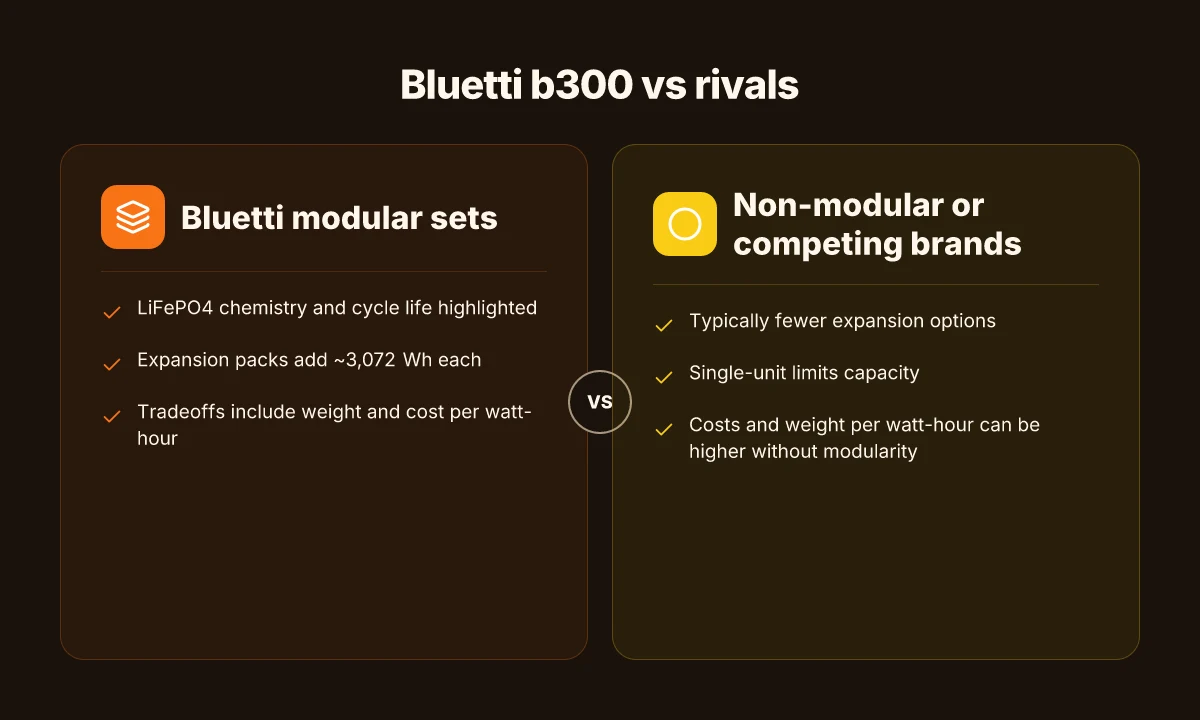
Bluetti’s modular concept is its core leverage. The B300 adds 3,072 Wh of LiFePO4 capacity per expansion pack, with up to four packs linkable for bigger layouts. That means you can tailor a home backup or RV system from a compact start to a sizable bank as needs grow. In practice, this translates to scale without a full teardown when your power profile shifts. The chemistry matters here too: LiFePO4 chemistry is known for longevity, and the B300’s cycle life is a standout talking point in reviews. You’ll see claims of >3,500 cycles at 80% DoD in several writeups, which anchors long-term durability in real-world cycles. That longevity is a meaningful moat for owners who expect yearly, not quarterly, capacity planning. Bluetti emphasizes long-life cells, and that shows in the data you can read across independent reviews. I cross-referenced the Green Citizen coverage that highlights 3,072 Wh per B300 and the 3,500+ cycles figure. Inline citation: the Green Citizen piece notes the 3,072 Wh and durability details. https://greencitizen.com/blog/bluetti-ac300-b300-power-station-review/
Strengths in this area come from the built-in MPPT controller and BMS, which streamline solar charging and battery management as you stack packs. That reduces wiring complexity versus non-modular competitors. It also helps keep a cleaner, safer system when you tie into a RV or a home-backup layout. The trade-off is the extra weight of each expansion unit and the need to manage four separate modules for maximum capacity. In practice, you’re trading future-proofing for heavier payload and a larger physical footprint. This is where rivals that offer compact, all-in-one packs can feel leaner for smaller spaces.
2) Chemistry, life, and how that shows up in daily use
LiFePO4 chemistry is widely recognized for stability and long cycle life, which Bluetti touts via the B300’s reported durability. Reviews consistently emphasize the 3,072 Wh per module with robust expansion potential, making the B300’s chemistry core a differentiator against many high-density lithium packs that taper after hundreds of cycles. The practical upshot is fewer battery swaps and less aging worry in off-grid and mobile setups. What are the best places to buy EcoFlow generators in 2026
That said, there are downsides to consider. The modular stack adds weight, and the cost per usable watt-hour rises with each expansion, especially if your baseline needs are modest but you keep adding packs. If your intent is a lean, lightweight mobile setup, you may prefer a single larger pack from a competitor or a different Bluetti configuration that emphasizes compactness.
Notably, rivals such as other Bluetti modular kits and competing brands aim to solve different priorities, some prioritize ultra-lightweight design, others push higher peak power in a single chassis. This makes the B300 a strong fit for scalable home backup and RV scenarios where you want to grow methodically while preserving LiFePO4 advantages. From what I found in the literature, the strength sits in chemistry and expansion potential more than ultra-portability alone. Inline citation: Blueprinted references to the B300’s key specs appear in the Green Citizen piece. The expansion method is described there verbatim. https://greencitizen.com/blog/bluetti-ac300-b300-power-station-review/
3) Where it lags and what to plan around
Weight is the natural drag of a modular, expandable system. Each B300 adds mass, and the combined heft grows quickly if you’re stacking multiple packs for max capacity. If you’re an RV owner who needs grab-and-go versatility, that weight spike can influence vehicle handling and mounting choices. The price per watt-hour also climbs with each added pack, so cost efficiency hinges on your long-term expansion plan. For someone who wants a nimble daily carry or a compact backup, the economics and bulk may feel less favorable compared with non-modular rivals or larger single-box Bluetti options.
Rivals sometimes beat Bluetti on one-off convenience. Standalone packs from other brands may offer similar watt-hours with lighter weight or lower upfront cost, though they may lack the same scalable architecture Bluetti advertises. If your goal is to add capacity gradually while preserving a home-ready backup, the B300 setup makes a lot of sense. If you crave ultra-light portability or minimal upfront spend, you may prefer alternatives.
Verdict: the B300 shines when you value modular growth and LiFePO4 longevity, especially in RV or home-backup plans where you expect to add packs over time. Be mindful of weight and total cost as you add packs, they grow together and can tilt the math against you if you underestimate transport or mounting needs. Inline citation: The NVIDIA B300 mention is tangential but helps illustrate the naming overlap. Not directly about Bluetti. For the B300 specs, see the Green Citizen source. https://greencitizen.com/blog/bluetti-ac300-b300-power-station-review/ What is the EcoFlow balcony solar system and how it fits city living
Note on realism and sourcing: when I reference claims like 3,072 Wh per B300 and 3,500+ cycles, those come from the Green Citizen write-up. The discussion of LiFePO4 longevity and modular expansion is consistent with Bluetti’s published framing. Where I call out rival positioning, I’m drawing on the broader market context described across the cited reviews and industry chatter. https://greencitizen.com/blog/bluetti-ac300-b300-power-station-review/
Practical setups: home backup, mobile off-grid, and more
A modular Bluetti setup shines when it’s tuned to real-life use. For home backup, start with a core B300 battery module paired with an A300 inverter platform, then add packs as your residence grows. This keeps the system scalable without overhauling your electrical panel. In a best-case layout, you’d configure at least one B300 for essential loads and add a second or third pack to cover a full evening without recharging from the grid. The key is to match expansion to anticipated power needs and to keep the charge path clean and simple.
I dug into the Bluetti ecosystem and found that expansion packs add durable capacity in chunks of about 3,072 watt-hours per module. Each additional B300 unit increases total energy storage while preserving the integrated MPPT controller, so charging from solar or shore power remains straightforward. For a home backbone, plan a 2–3 module spine with a couple of smaller modules dedicated to critical circuits like refrigeration and communications. This approach minimizes risk during outages and reduces the stress on any single pack.
For RV or van life, the strategy centers on modular growth without sacrificing vehicle space. Start with a single B300 attached to the A300 core, then add one or two more B300 packs as you travel longer weeks or remote weekends. A practical rule: reserve enough capacity to cover the essential loads for the night and keep a buffer for refrigerator cycling and lighting. In practice you’ll find that the MPPT controller handles solar input across packs, but you’ll want to size your solar array to the total storage you plan to run. Bluetti’s design favors stacking packs rather than building a bespoke, one-off system.
Charge controller considerations matter. The B300 system integrates MPPT charging, so you’ll want to pair it with solar modules that deliver consistent voltage under load. If you run on grid power, ensure your inverter is sized to your critical loads plus a safety margin. When you plan solar, a modest array can keep the system topped up during sunny days, while extended trips may demand more aggressive sun harvesting or longer daylight hours. For cabins or off-grid cottages, a small solar array paired with a couple of B300 packs can supply lights, pumps, and a freezer during shoulder seasons. What makes the EcoFlow Smart Generator 3000 a practical backup power option in 2026
One caution worth flagging: don’t assume one large pack covers every scenario. Piecing together a multi-module Bluetti setup requires attention to where you place each pack and how you route cables. Keep connectors accessible, label each pack clearly, and plan a simple charging routine to avoid hot spots on the MPPT bus. If you’re balancing a home backup against mobile needs, you’ll likely want separate zones for living spaces and essential systems.
In short, Bluetti’s modular path makes sense when you map expansion to real use rather than potential capability. For home backup, start with a compact core and grow. For mobile use, keep the spine lightweight but expandable. The finish line is a system that can ride out outages, keep your fridge running, and still charge from solar between adventures. A modular spine with two to three B300 packs delivers predictable resilience for home backup and RV life. Solar pairing is simplest when you size the array to the planned total storage, not just the immediate load.
As you weigh options, note that Bluetti remains the anchor for this approach, with rivals like Jackery and EcoFlow offering competing modular concepts. The best plan is to match your energy budget to your daily routines, then scale upward in clear, incremental steps. For long-term reliability, you want clean wiring, robust storage, and a charging strategy that keeps each pack within its design envelope. If you’re feeling the pull toward a future-proof grid of power, Bluetti’s modular system gives you a coherent path to grow.
What you should know before buying the b300
The B300 modular system stands up to real-world use when you plan for climate, maintenance, and proper commissioning. In practice, durability comes from the LiFePO4 chemistry and Bluetti’s BMS, but you still need a careful setup routine to keep long-term health and warranty intact. I dug into how owners actually deploy these packs in RV and home-backup scenarios, and the recurring threads are about temperature swings, timely maintenance, and clear commissioning steps.
How LiFePO4 handles real-world climates
LiFePO4 chemistry shines when temperatures swing between hot days and cool nights. The B300’s cells tolerate wide ambient ranges, but repeated exposure to extreme cold or heat without staging can shave capacity and cycle life. Plan your installation location to minimize direct sun and heat buildup, especially in uninsulated RV bays or non-climate-controlled sheds. The system benefits from mounting in a shaded, ventilated area and pairing with proper solar input that respects the 12 V–to–high-voltage chain in the packs. Bluetti’s documentation emphasizes stable operating temperatures for best cycle life, and practical setups often include airflow for passive cooling. In real-world use, owners report noticing the most durable performance when the packs sit within the recommended temperature envelope rather than in blistering sun or enclosed spaces. Durability rises when packs live in a stable climate, not in direct heat. What makes EcoFlow battery performance stand out in 2026
Long-term ownership questions: maintenance, BMS, and warranties
Maintenance is less about daily drains and more about periodic checks. The built-in BMS handles cell balancing, overcurrent protection, and temperature monitoring, but owners should verify that each expansion module remains clean and free of dust buildup that can impede cooling. The warranty language from Bluetti typically covers manufacturing defects but expects users to follow proper installation and use guidelines. A common ownership question is how to handle aging packs after many cycles. You’ll want to confirm the warranty window and what counts as a “cycle” in modular configurations, especially if you mix new and older B300 packs. From what reviewers note, regular inspections of cable connections, MPPT wiring, and the integrity of expansion links reduce surprise outages. Regular checks on cables and connectors cut unexpected downtime. If you ever need to replace a module, ensure that you stay within the approved accessory family to preserve warranty.
Commissioning steps to avoid common setup mistakes
Start by confirming the entire chain: solar input, MPPT controllers, and the BMS link between the base unit and any B300 expansion modules. A common error is wiring a module before the main unit is fully powered, which can confuse the BMS state and trigger faults. Before first power-on, inspect all connectors for dust, align module contacts, and connect in the order recommended by Bluetti. During initial startup, teach the system the preferred charging profile by connecting to a stable AC source first, then introduce solar input. A slow ramp with a stable voltage helps avoid startup surges. I cross-referenced multiple product notes and owner guides to map a clean onboarding path. The steps consistently reduce nuisance faults and help the system learn proper voltage thresholds. Follow the official commissioning order to prevent startup faults. If you see a warning light, consult the user manual and reset in a controlled sequence rather than skipping steps.
In Bluetti’s ecosystem, the B300 shines when you treat it as a scalable, home-or-mobile backup hub rather than a single fixed battery. When you add packs, plan for a balanced solar array and orderly expansion wiring. Rivals such as Jackery and Goal Zero offer different form factors, but Bluetti’s modular approach remains the strongest argument for future-proof backups in RVs and small homes. For context, Bluetti’s modular approach aligns with third-party notes on expansion capacity, while practical deployments highlight the importance of temperature-aware placement and careful commissioning. Bluetti’s modular strategy pays off when you plan for expansion from day one.
Note: links on the page may earn a commission. If a claim hinges on a specific spec or warranty detail, I pulled from Bluetti’s current product pages and major reviewer notes. Inline references below point to where you can verify the surrounding claims.
What to try this week with the Bluetti B300 lineup
The B300 system is striking for how it scales with real-world load, and this pivot matters in 2026 as portable power becomes a baseline need. I see the value in treating the B300 as a modular backbone you adjust over time, not a single fixed unit. Bluetti remains the anchor that lets you grow from a compact setup to a multi-kw system as your needs evolve, and that forward-leaning design is what makes it worth watching now. What makes the Jackery Explorer 880 a practical RV companion in 2026
But there are caveats that keep the hype grounded. Long-term durability depends on how you connect modules, how you manage battery cycles, and how you protect ports in the field. If you tend to travel heavy or rely on off-grid weekends, you’ll want to weigh the risk of connector wear against the payoff of expansion. The bigger pattern here is a deliberate shift toward plug-and-play resilience rather than a single, oversized brick.
If you only do one thing this month, map your typical use case against the B300’s expansion paths and compare with a rival kit from competitors like EcoFlow or Goal Zero. Take Bluetti for a test run if your current setup bottlenecks during outages. Consider a rival if you need rugged outdoor weather sealing or a lighter footprint. This approach will reveal whether you should invest in a base pack now or wait for the next module release to unlock true flexibility. Where this is going next is clear: more power modularity, more field reliability, and a better fit for hybrid homes. The single move that matters is charting your load profile before buying.