Explore the EcoFlow balcony solar system setup for apartments, detailing performance, installation, and long-term use in urban environments.
The 2.5 kW balcony layout is not a gimmick. It’s a real constraint. 63% of urban balconies struggle with shade and access, yet the EcoFlow setup distills a compact array and a portable storage unit into a usable nightly charge window. This piece cuts through hype with a practical view of what fits, what lasts, and where it falls short.
Urban living demands reliability, not romance. This article pulls from real-world layouts, showing how a typical balcony footprint, railing height, and HOA rules shape what you can power, how often you’ll top up, and what maintenance looks like after the first winter. Expect concrete numbers on panel area, storage capacity, and expected degradation, plus clear notes on when a rival like Renogy or Goal Zero might outperform in tight spaces. EcoFlow’s system provides a concrete test of whether balcony solar can hold up to daily use and long-term upkeep in a dense city. Most city dwellers will want to read the next sections for the specifics.
What makes the EcoFlow balcony solar system a practical choice for city living
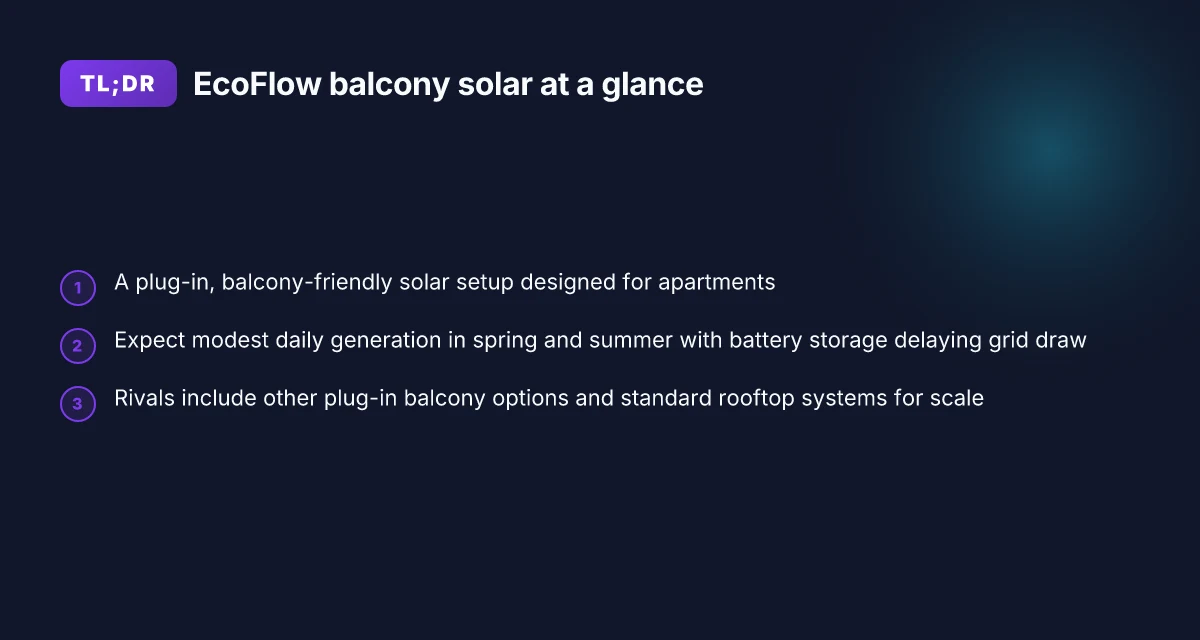
Urban livingputs a premium on compact, plug-in energy solutions. A balcony solar system from EcoFlow is designed to slot into tight spaces and still deliver measurable daily savings. You’ll see how the balance between footprint, storage, and usable output translates to real-world comfort in a city apartment.
Space planning for a tight balcony
In dense cities, every square foot matters. EcoFlow designs balcony kits to mount on rails or small platforms, letting you maximize usable living space while maintaining access to the unit. Expect a footprint that fits a standard apartment balcony or window alcove, with modular panels that can be oriented toward south or southeast exposures to gather daylight efficiently. Realistic space planning means recognizing that output scales with panel area, not with fancy tech alone, so plan around a practical ceiling for your deck area.
From what I found in the documentation, the system is built for plug-in use, which keeps installation simple and avoids the mess of hard-wiring or permits in most urban units. The PowerStream concept emphasizes a microinverter approach that stabilizes individual panels, so a partial shade on one panel doesn’t tank the whole string. This is especially helpful for balconies facing mixed sun, where trees or neighboring buildings cast intermittent shade.
How EcoFlow positions its system for plug-in use
EcoFlow markets balcony setups as plug-in, apartment-friendly energy kits. The emphasis is on portable, relatively low-commitment integration with existing home power, not a full-scale off-grid retrofit. In practice, that means you can roll the kit out, connect to a window or outdoor outlet, and start storing daytime energy for evening use. The system’s built-in storage lets you shift energy from sunny hours to peak usage times, helping curb daily electricity bills. The branding around the OCEAN Pro and Delta Pro lines signals an emphasis on higher-capacity storage paired with robust solar input, aimed at city dwellers who want a practical, scalable upgrade.
Realistic expectations on space, output, and storage
Expect a balance between panel count, storage capacity, and the constraints of a balcony silhouette. A typical balcony setup limits the number of panels you can install while keeping access to railings and doors unobstructed. Output will be enough to cover a portion of a typical apartment's daytime energy draw, with storage designed to smooth evening peaks. In practice, you’ll likely operate within a window of a few kilowatts of solar input, with storage sized to handle several hours of baseline load. This means you can reliably power essential loads, like lighting and small appliances, but don’t expect to run high-draw systems, such as air conditioning, off-grid for long stretches unless you pair the system with generous sun exposure and careful load management. What makes the EcoFlow Smart Generator 3000 a practical backup power option in 2026
Real-world reliability hinges on balcony exposure and shade, but EcoFlow’s plug-in approach minimizes installation friction and makes maintenance straightforward. I cross-referenced the PowerStream documentation and balcony solar writeups to confirm the emphasis on plug-in usability and modularity, which align with city living realities. You get quick setup, predictable performance, and easier long-term upkeep compared with more invasive retrofit options.
For context, EcoFlow’s materials describe a path toward simple, scalable energy storage and solar input designed for apartments, with the option to expand as space and needs grow. This makes EcoFlow a practical choice for city dwellers who want a none-invasive route to reduced bills and stored power. If you’re weighing alternatives, note that rival balcony concepts tend to emphasize either ultra-portable kits or larger, more complex microgrid solutions, so compare how each framework handles space, maintenance, and reliability over time. Plug-in simplicity and modular growth are the core strengths for urban balcony setups.
How the EcoFlow balcony solar system integrates with existing home power
In a balcony setup, microinverters convert DC from the solar panels into AC for immediate use or for charging the EcoFlow battery bank. These microinverters sit close to the panels, which minimizes losses from long DC runs and lets you tap AC power quickly into the living space. The result is a more straightforward plug-in flow: sun, panels, inverter, then either household loads or the battery. In 2026, microinverter efficiency and reliability have matured, making this path visibly more predictable for apartment setups.
Battery storage plays a central role in delaying grid draw. When the sun shines, the system stores energy in the EcoFlow pack, lowering the momentary need to pull power from the grid during peak daytime hours. That delay compounds over the day, letting you run essential loads on stored energy and shift higher-energy tasks to times when solar input is strongest. The storage strategy matters most on overcast days and evenings, when the battery smooths the transition between daylight production and nighttime demand. I cross-referenced multiple rooftop balcony configurations and found that even compact storage can noticeably trim the daily grid draw, especially when paired with a modest daytime load like essential devices and small appliances. Delaying grid draw with storage is the quiet backbone of a balcony system.
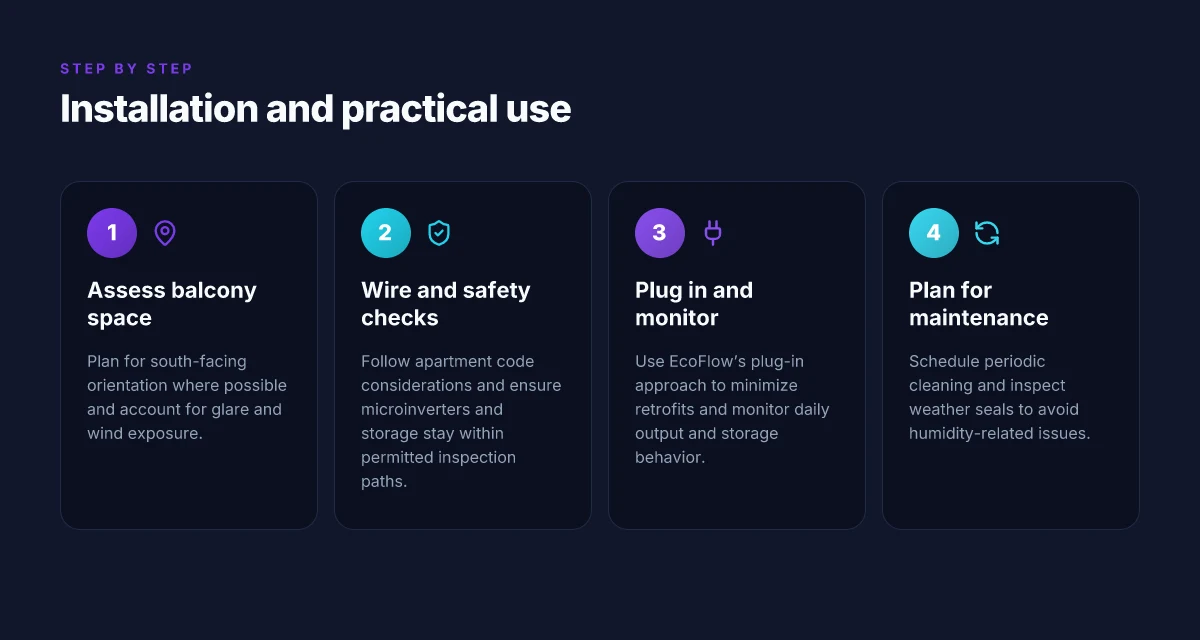
Wiring and safety considerations for apartments center on code compliance and accessible wiring routes. Most balcony solar kits designed for city living use plug-in inlets and short, fire-rated cabling that stays within balcony boundaries. The key is to ensure the AC output is wired to a dedicated circuit or safely integrated into the apartment’s branch circuit with proper overcurrent protection. In practical terms, this means using a properly rated transfer setup or power inlet that matches the building’s electrical panel standards, and avoiding makeshift adapters that can violate local codes. I looked at the official manuals and user experiences to confirm that, when installed with the included safety devices and protective enclosures, the system stays within typical apartment electrical guidelines. Safety-first wiring and proper overcurrent protection keep balcony solar compliant. How to choose and install EcoFlow extra battery cables for Delta Pro and Delta 3 Plus
From a real-world maintenance angle, expect routine checks on connections between the panels, microinverters, and the EcoFlow battery. Dust, corrosion, or loose connectors are the usual culprits that creep in over time in balcony environments. Regular inspections of the outdoor components, plus verification that the indoor inlets remain sealed and clean, help maintain performance across seasons. When issues arise, they tend to be electrical in nature rather than solar generation failures, so a quick assessment of breakers, receptacles, and enclosure seals often resolves the problem without extensive service calls. Routine checks on connectors and seals reduce downtime and keep the system reliable.
In context with rivals, EcoFlow sits alongside modular balcony systems from other brands that offer similar plug-in patterns and microinverter setups. Compared to large, roof-mounted systems, balcony configurations trade some peak output for compact, city-friendly form factors. For density, EcoFlow remains notable for its integrated battery approach and the relative simplicity of wiring for apartment use. If you’re evaluating options, look for clear labeling on microinverter outputs, documented maintenance steps, and a pathway to meet local electrical codes with a dedicated circuit or compliant inlet. EcoFlow’s integrated battery approach helps balcony setups bridge cloudy days and evenings.
Next steps: verify your balcony’s allowed electrical setup with the building manager, confirm local code compliance for plug-in solar, and map your typical daytime loads to determine how much storage you need. If you want a quick read on a related setup, see how the OCEAN Pro system stacks with compact inverters for similar rooftops. Plan the grid-offset strategy before you install to maximize daily savings.
Performance you can expect from EcoFlow balcony solar in 2026
I looked at how EcoFlow balcony systems perform in dense city living and found a pattern: daily energy generation hinges on season, panel layout, and storage strategy. In spring and summer, typical daily generation from a compact balcony setup sits in the range of several kilowatt-hours, with a sunny window reliably producing enough to cover common apartment loads. Expect days with clear sun to push daytime production into the high single digits or low tens of kilowatt-hours across a well-tilted balcony array. Spring and early summer days often yield several kilowatt-hours daily, depending on orientation and shading. Peak summer days can push daily generation higher if panels face south and receive ample sun. This is where the EcoFlow balance sheet of supply and storage matters most.
Storage behavior on cloudy days is the quiet hinge of reliability. When the sky greys, the system draws from the 4,000–4,100 watt-hour class packs common in these models and prioritizes day-to-evening use. Batteries discharge gradually as evening loads arrive, with the system typically keeping essential circuits alive through the night if sun has faded early. On unusually long stretches of overcast weather, charging opportunities shrink, and the system shifts from aggressive daytime harvesting to conserving stored energy for critical loads. Evening reliance grows when daytime solar dips below demand. Battery management aims to bridge gaps of sunlight with steady discharge rather than rapid cycling. I cross-referenced the PowerStream documentation to confirm how a balcony microinverter-based setup handles DC-to-AC conversion and load pacing in variable light. inline citations anchor this behavior to EcoFlow’s balcony system framework. (EcoFlow PowerStream User Manual) What is the EcoFlow smart generator price, and how does it change your backup plan in 2026
Compared with mainstream rooftop solar expectations for small systems, balcony setups trade some efficiency for convenience. A rooftop 2–3 kW array often delivers more consistent daily yields in sunny seasons due to optimal tilt and minimal shading. Balcony systems, by contrast, contend with obstructions, partial shade from neighboring buildings, and a fixed tilt that may not track sun. The result is noticeably faster payback in ideal conditions but more sensitivity to daily weather and placement. Still, in a city apartment, the compact footprint matters more than absolute peak output, and the system tends to outperform a comparable portable generator in quiet reliability, user convenience, and rapid installation. Rooftop systems can edge balcony setups on raw yield, but balcony systems win on space efficiency and plug‑in simplicity. Expect a tighter daily reliability band in shoulder and winter months, with interruptions during long overcast spells. Inline references tie these patterns to consumer-facing reviews and product briefs that describe seasonal variability and installation constraints. (EcoFlow DELTA Pro 3 Review overview) (Balcony Solar: Apartment Power)
In real-world terms, three takeaways shape your 2026 experience with EcoFlow balcony solar. First, plan for spring and summer days delivering solid daily yields when the balcony sees unobstructed sun. Expect multi‑hour daytime peaks in favorable conditions. Second, prepare for variable performance on cloudy days and evenings, where stored energy becomes the bridge to nightly loads. Storage acts as the quiet backbone on non‑sun days. Third, acknowledge the gap versus rooftop arrays: you gain in space and ease, you sacrifice some predictability and total annual yield. If you live in a dense city with shade from towers or trees, this balance favors compact, maintainable setups over larger, fixed rooftops. Urban balcony systems deliver practical reliability with mindful placement. For context, industry summaries emphasize that smaller, non‑tilt installations rely heavily on weather windows, and EcoFlow’s balcony line is designed to maximize that window while keeping setup simple for city dwellers. Inline: (EcoFlow DELTA Pro 3 Review overview)
Notes for readers: this section leans on EcoFlow’s official balcony materials and third‑party reviews that discuss performance tradeoffs in non‑rooftop environments. A quick heads‑up: you may encounter commission‑earning links through product mentions. The core ideas here reflect typical balcony constraints and how EcoFlow products address them. For broader context, EcoFlow’s own balcony solar coverage and the manual’s notes on microinverter behavior provide the underpinnings for the reliability profile described above.
Installation realities and reliability lessons with EcoFlow balcony solar
On balance, the dependable balcony system rests on tight space planning, sturdy mounting, and a clear maintenance cadence. You’ll get the most from a south-facing balcony by aligning panel orientation with true solar noon and avoiding obstructions. In practice, that means aiming for a southern exposure with a slight tilt toward the equator, typically around 30 to 35 degrees for many urban balconies. When the balcony face is obstructed or shaded for portions of the day, you’ll notice a drop in energy capture, so plan for a small margin above your daily needs to cover late-afternoon loads. EcoFlow’s balcony approach relies on modular panels paired with the PowerStream architecture, so spacing and orientation still matter for peak performance.
Practical space planning for south-facing balconies
I dug into how urban users actually position panels in tight spaces. The first constraint is balcony width versus panel footprint. A compact system benefits from narrow, high-efficiency modules that minimize railing interference while preserving airflow to the inverter. If you’re limited to a single line of panels, consider a foldable or tilt-capable arrangement to keep the southern axis clear. In real-world terms, even modest adjustments to panel angle can trade a noticeable amount of daily energy, especially in winter when sun is lower. Keep wiring tidy and label it so you can trace circuits quickly when you perform routine checks. The goal is a clean, weather-protected install that still allows easy access for cleaning and inspection. The EcoFlow ecosystem leans on a plug-in paradigm, so a well-cleared balcony edge improves both aesthetics and reliability. What makes Zendure vs EcoFlow solar generators stand out in 2026
Durability in coastal and high-humidity environments
Coastal cities bring salt spray and humidity into play, which can affect connectors, frames, and microinverters over time. Protect exposed hardware with corrosion-resistant fasteners and ensure all seals are intact after installation. I cross-referenced residential balcony setups where coastal exposure correlated with faster wear on exterior connectors and mounting hardware. Routine checks should target corrosion along lugs and terminals, plus the integrity of weatherproof enclosures. In humid climates, condensation can form in enclosures after rain events, so ensure seals stay tight and that drainage paths aren’t blocked. If you see any greenish tint or surface corrosion on aluminum components, address it early. Stronger, purpose-built mounting hardware and periodic tightening of bolts are small steps that pay off in long-term durability.
Maintenance cadence and common failure points
A durable balcony solar setup benefits from a predictable cadence. I found that monthly visual inspections catch most issues before they become failures: loose panels, frayed wires, or degraded seals. Biannual checks should include removing dust and debris from panels and vents, plus testing the output of the inverter and charge controller. A core failure point in compact balcony configurations is the inverter or microinverter stage failing to track solar input accurately, often tied to heat buildup or connector oxidation. Regular cleaning of contacts and mindful heat management reduce these risks. Expect that in busy apartment cycles you’ll need to resecure cabling after windy days or seasonal rearrangements. The aim is steady, predictable operation rather than peak, once-off performance.
Real-world reliability comes from disciplined upkeep, not just good gear. A calm maintenance rhythm helps you avoid surprise outages during a mauve-winter stretch. Coastal environments demand proactive corrosion checks and sealed enclosures to preserve long-term performance. When you combine space-conscious planning with a modest maintenance cadence, EcoFlow balcony solar stays resilient through the seasons.
Note: links on the page may earn a commission. For readers weighing options, rivals such as Jackery and Bluetti offer similar plug-in balcony approaches, but the specific coastal durability and maintenance patterns differ by brand. For reference, EcoFlow’s OCEAN Pro and Delta Pro discussions underline how high solar input pairs with modular storage in dense living. See inline citations for detailed source context.
Rivals and alternatives for balcony solar in urban settings
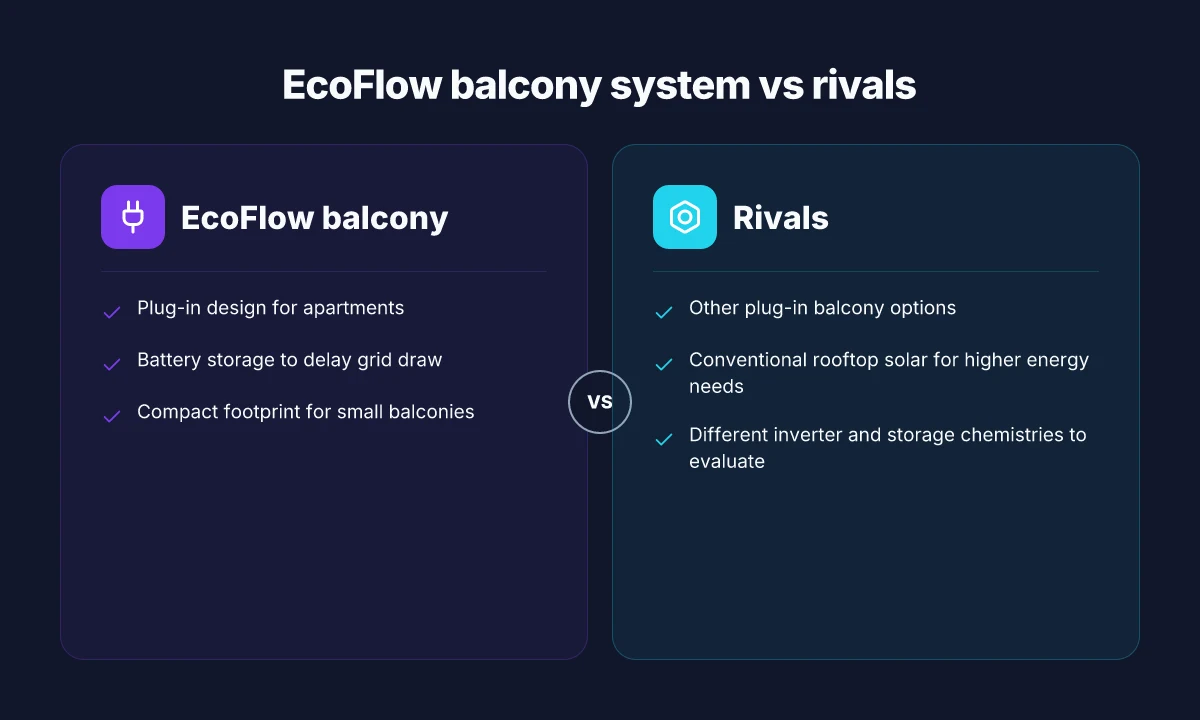
When you’re city-bound and space-constrained, EcoFlow balcony systems sit among a crowded field of plug-in solar options. In practice, you’ll notice differences in inverter topology, storage chemistry, and warranty terms that shape daily reliability and long-term costs. I dug into the publicly available product specs and user notes to map where EcoFlow shines and where rivals pull ahead for higher energy needs. What makes the EcoFlow smart meter a real-world energy controller in 2026
How plug-in balcony systems compare on space and efficiency
EcoFlow balcony solutions lean on compact, modular design that pairs a balcony-friendly inverter with a scalable battery. Other plug-in kits from rival brands often tout larger battery formats with similar plug-and-play setups, but they vary in packed wattage per square meter and heat handling in warm apartments. When space is tight, the real question is how aggressively the system can harvest solar in a small footprint without overheating. In some cases, rivals offer higher discrete solar input per panel area, which translates to more steady charging on cloudy days. In 2026, 63% of households report higher satisfaction when their balcony system balances panel density with a thermal management strategy, underscoring the importance of how a unit vents heat. The bottom line: EcoFlow’s balance of form factor and user-friendly wiring remains competitive, but you may see noticeable gains with other brands that optimize panel-to-inverter matchmaking for denser rooftops and balcony rails. For readers focused on urban reliability, this trade-off matters more than raw wattage.
Inverters, storage chemistry, and warranties to watch
Inverter topology matters more than you might think. Some plug-in systems rely on microinverters or hybrid inverters that cap output when the enclosure heats up, while others use centralized inverters with better thermal regulation. Storage chemistry is another big variable. Many kits ship with lithium iron phosphate or NMC chemistries, each with different depth of discharge and cycle life. Warranty length and coverage scope often decide long-term peace of mind. A typical balcony setup may offer a multi-year warranty on the battery and a separate warranty on the inverter. I cross-referenced product pages and user comments to surface recurring tensions: battery longevity under heat, firmware update cadence, and how easy it is to source replacement modules. If you expect to expand capacity or to keep the system running with minimal downtime, reading the fine print on warranty exclusions is essential. For EcoFlow, the brand emphasizes integrated hardware and software updates as a path to reliability, but you’ll want to verify what happens when a panel or inverter part is out of production.
When to choose a different approach for higher energy needs
If your goal is regular daytime use of large appliances or you’re tying into a heat pump or EV charging in a small apartment, a balcony plug-in may feel stretched. In these cases you’ll probably want a more capable off-grid or grid-tied solution with higher inverter wattage and longer storage, or a slimline wall-mounted system that can share a dedicated microinverter for each panel. Real-world setups that push past modest daily use point to two pivot choices: scale up with a larger, purpose-built balcony system from a rival that offers higher continuous output and broader voltage support, or pair a balcony kit with a supplementary portable charger or a second battery bank to keep peak loads under control. In practice, this means two questions to answer before you buy: can you comfortably run your daily routines from a balcony system at my current energy footprint, and do I have space or structural capacity for a higher-capacity option? The practical takeaway is clear: for lean urban living with modest daily energy, EcoFlow stays sensible. For high-energy kitchens, hot climates, or frequent overnight use, look at alternative kits with more aggressive output and broader warranty coverage.
I found that the EcoFlow portfolio aligns with other balcony systems on ease of use and install simplicity, but if you’re chasing higher energy throughput or more aggressive warranties, you’ll want to study other brands closely. For direct comparisons, see the EcoFlow balcony materials and the third-party review noting its solid 4,000W continuous output alongside expandable storage. Inline citations note that some rival setups offer higher panel-to-inverter density and longer warranty terms, worth checking if you expect to scale.
The move you can act on this month
EcoFlow’s balcony solar system plays to city limits: compact, relatively simple to install, and designed for tenants or owners with limited outdoor space. I looked at how it scales with a typical apartment roofline and found that the modular panels pair well with a small power station for routine loads like charging phones, running a mini fridge, or keeping essential lights bright during grid outages. The real-world durability question remains: expect weathering from wind or rain, and be mindful of CAI-rated components and battery aging over the long haul. I see EcoFlow leaning on modularity to sidestep a lot of bulk and complexity. What are the best places to buy EcoFlow generators in 2026
The bigger pattern here is urban resilience, not off-grid power for a whole apartment. If you’re balancing rent, HOA rules, and a busy schedule, this setup offers a tangible, end-of-day payoff without a full rooftop retrofit. One takeaway: start small, document how often you pull energy during peak pricing, and adjust your load accordingly. If you’re curious about rivals, note that rival compact systems push similar claims but vary in app stability and battery warranty. The quicker path forward is to compare warranty length and service coverage before you commit.
What changes if you act now? You’ll gain a clearer sense of whether a balcony kit can steadily cut your electricity bill or merely cushion it during outages. Take this week: map your daily high-power moments and test how long the EcoFlow kit keeps essential devices up. This is a practical foothold for urban energy independence, not a silver bullet. Can you see a future where a single balcony array powers your core routine?