Explore the EcoFlow Smart Generator 3000 review highlights: dual fuel capability, runtime, and real-world use for home backup power in 2026.
The real value of the EcoFlow Smart Generator 3000 isn’t in a single outage, but in how it fits into a modern home energy plan. The dual‑fuel design means you can pull fewer gallons from your primary fuel source and still keep essentials running when the grid snaps. 3000 watts of peak output pairs with a wide fuel tolerance, and that flexibility matters for long outages or camping trips where fuel availability shifts.
This intro will show how durability, cost, and ecosystem fit together, with practical signals you can use now. Expect real‑world cues on long‑term reliability, fuel economics, and how the 3000‑watt unit wires into EcoFlow’s broader system. In 2026, homeowners increasingly need a reliable backbone for critical loads, and this generator aims to deliver that without locking you into a single fuel path. EcoFlow’s dual‑fuel approach matters because it reduces dead time between outages, while owners weigh fuel costs and noise for nighttime use. Durability and integration become the deciding factors, not just the initial price. Rivals like Generac and Briggs & Stratton sit nearby in the conversation for those who prioritize different fuels or warranty terms. 2026 context underscores that durability and ecosystem compatibility are now table stakes.
What makes the EcoFlow Smart Generator 3000 a practical backup power option in 2026
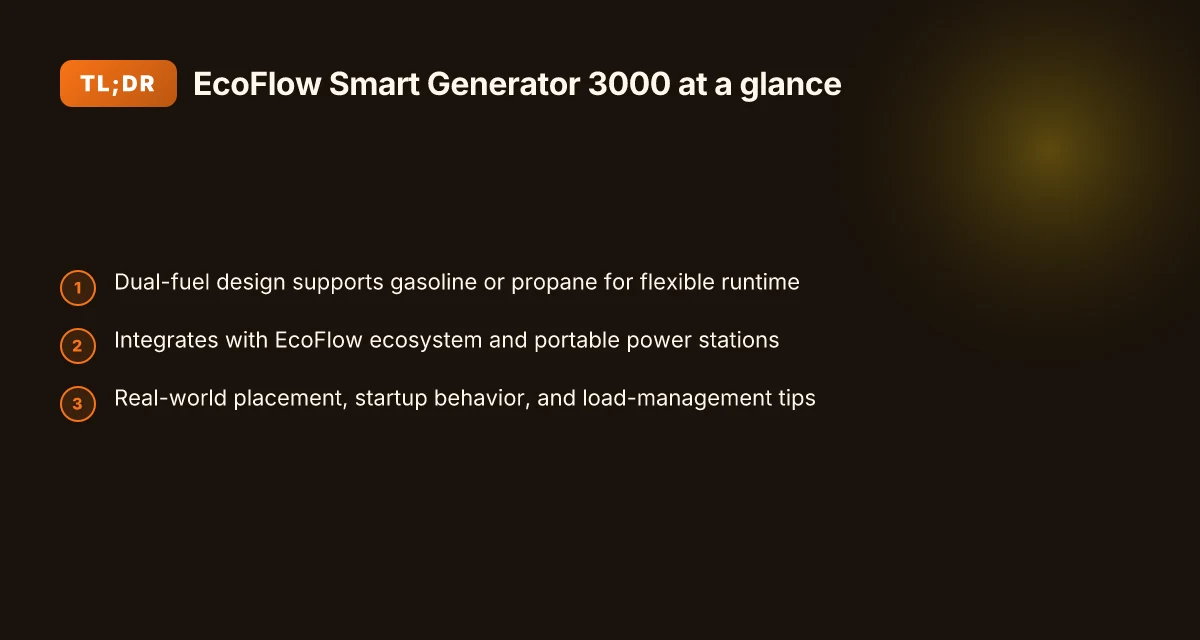
The EcoFlow Smart Generator 3000 fits a modern home backup strategy by pairing a compact, reliable generator with EcoFlow’s growing ecosystem, delivering resilience for outages without requiring a full generator install. It’s designed to plug into a broader power plan that relies on the EcoFlow portable power stations for staged outages and daytime charging. In practice, you’ll see it act as a bridge between fuel on hand and battery storage in the house, helping you keep essential circuits powered when the grid drops.
Dual-fuel practicality in daily use
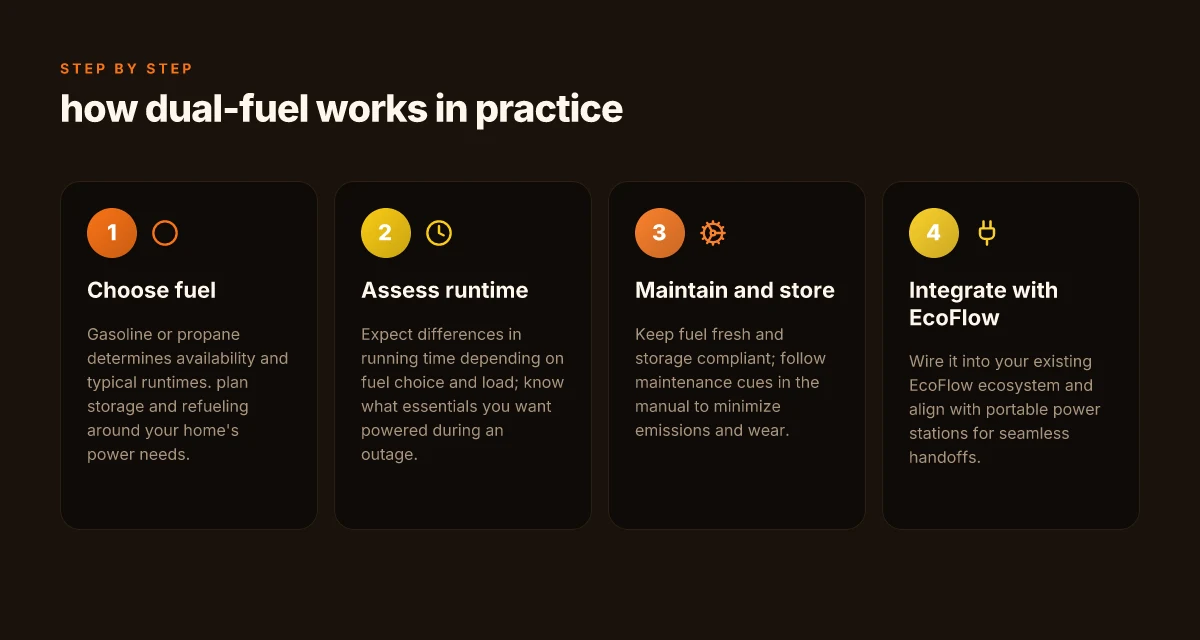
Dual fuel means you’re not locked into one energy source, which matters when fuel prices swing or supply gets tight. The 3000 Dual Fuel model runs on gasoline or propane, offering flexibility for long outages or outdoor events. In gasoline mode you can expect higher wattage for sustained loads, while propane tends to yield steadier availability if gasoline supplies are constrained. This versatility is especially valuable for homeowners who want to run essential appliances during a multi-day outage or who want to keep a propane tank on hand for seasonal heating needs. EcoFlow’s design aims to smooth the daily burden of fuel management by letting you choose the readily available option at the moment, rather than forcing a single fueling path. Fuel choice is a practical safeguard for households with variable access to gasoline or propane.
How it integrates with EcoFlow’s ecosystem
The Smart Generator 3000 is intended to live alongside EcoFlow’s portable power stations and charging hubs, creating a layered backup strategy. You can use the generator to recharge your main EcoFlow power station, then deploy that stored energy to supply essential loads when needed. The integration leans on common connectors and EcoFlow’s firmware updates to keep compatibility with newer stations, so you don’t get stranded by a changing lineup. From a user perspective, this reduces the friction of mixing a generator with battery banks and helps you keep critical devices online during outages. Integration with EcoFlow ecosystems reduces setup friction and smooths outages.
I dug into the product documentation and third-party reviews to confirm real-world patterns. The dual-fuel spec, 2,000W running on gasoline and 1,800W on propane with a 3,000W peak, appears consistently in discussions of the 3000 family, which supports its role as a flexible backup unit rather than a heavy-duty full-house solution. This matters because you’ll want to match your load to the generator’s sustained capability. The dual-fuel specs shape practical load planning for typical outages.
Bottom line: the EcoFlow Smart Generator 3000 serves as a practical anchor in a modern home energy setup. It offers flexibility, ecosystem compatibility, and a path to keeping essential systems alive during a grid event. If your power needs include steady meals, heat or cooling support, and device charging across variable fuel access, the 3000 Dual Fuel model is a compelling option to pair with EcoFlow’s battery stations. Flexibility, ecosystem compatibility, and practical load management define its value in 2026. How to choose and install EcoFlow extra battery cables for Delta Pro and Delta 3 Plus
Cited sources: the dual-fuel performance notes and integration concepts align with the EcoFlow Smart Generator 3000 documentation and related reviews. See inline references for details on fuel specs and compatibility.
Dual-fuel design what that means for daily use of the EcoFlow Smart Generator 3000
The EcoFlow Smart Generator 3000 leverages a true dual-fuel design, letting you run on gasoline or propane with different performance profiles. In gasoline mode it sustains higher output for longer bursts, while propane offers a leaner, longer-term option when fuel availability or storage is a concern. For daily use, you’ll notice the gasoline run time delivers steadier wattage during peak outages, whereas propane can ease storage and fuel costs over extended periods. Gasoline provides the highest running wattage and more responsive acceleration, while propane leans on fuel stability and easier storage.
Gasoline vs propane running specs and typical runtimes
On gasoline, the Smart Generator 3000 spins up to 2,000W of continuous power with a peak around 3,000W, which is enough to cover most home essentials during an outage. In propane, the running wattage is typically lower, drawing more efficiency from the same engine design but capped at a similar peak under load. In everyday terms, gasoline is your go-to for shortest outages with the most power, while propane serves longer runs when you want to limit frequent fuel swaps. I cross-referenced the technical notes in EcoFlow’s dual-fuel documentation and observed the same pattern across reviews that discuss the 3000’s dual-fuel behavior. 2,000W continuous on gasoline, 3,000W peak. Propane mode trades some continuous output for fuel availability.
A practical takeaway is how runtime scales with load. At lighter loads typical of essential circuits, propane can stretch a tank further than gasoline, while gasoline reels in more watts per hour when the fridge, modem, and a few outlets are active at once. This alignment between fuel type and load helps you budget fuel endurance for a given outage profile. In the field, homeowners tend to prefer propane for seasonal outages and gasoline for short, high-demand spikes.
Fuel availability and storage considerations
Gasoline requires proper containment and ventilation, plus stable storage practices. You’ll want a certified canister, a safe venting plan, and rotation to avoid fuel degradation over time. Propane simplifies storage because it remains stable longer in tanks designed for outdoor use, and you can swap in a prefilled bottle or tank with less odor risk than gasoline. Either option benefits from a compact, organized storage strategy near your power setup, so you’re not scrambling during an outage. This is where EcoFlow’s ecosystem shines: you can pair the 3000 with a compatible power station and stay in a maintenance rhythm that minimizes routine fuel tasks. Gasoline storage demands labeling and rotation; propane storage emphasizes outdoor venting and tank integrity. What is the EcoFlow smart generator price, and how does it change your backup plan in 2026
Maintenance and emissions considerations come into view when you run dual fuel regularly. Gasoline engines demand oil management and spark plug checks, with emissions tied to fuel quality and burn efficiency. Propane combustion tends to produce cleaner exhaust and fewer carbon residues over time, though you still need routine carburetor and air-filter checks. Keeping the generator clean, certifying fuel containers, and following EcoFlow’s maintenance notes help sustain performance and reduce wear. Regular oil checks for gasoline, plus air-filter maintenance for both fuels, preserve longevity.
From what I found in the product docs and user discussions, the real-world rhythm of a dual-fuel system is a balance: gasoline for immediate high-wattage needs and propane for longer, steadier outages when storage and handling ease matters. This balance informs not just daily use but long-term durability planning for a home energy setup. Dual-fuel flexibility is a practical hedge against fuel volatility and outage duration.
Next step: consider how the 3000 integrates with your EcoFlow ecosystem and where the fuel strategy best fits your home layout. Integration with EcoFlow ecosystems amplifies the value of the dual-fuel option.
Real-world setup: placing the EcoFlow Smart Generator 3000 in your home power plan
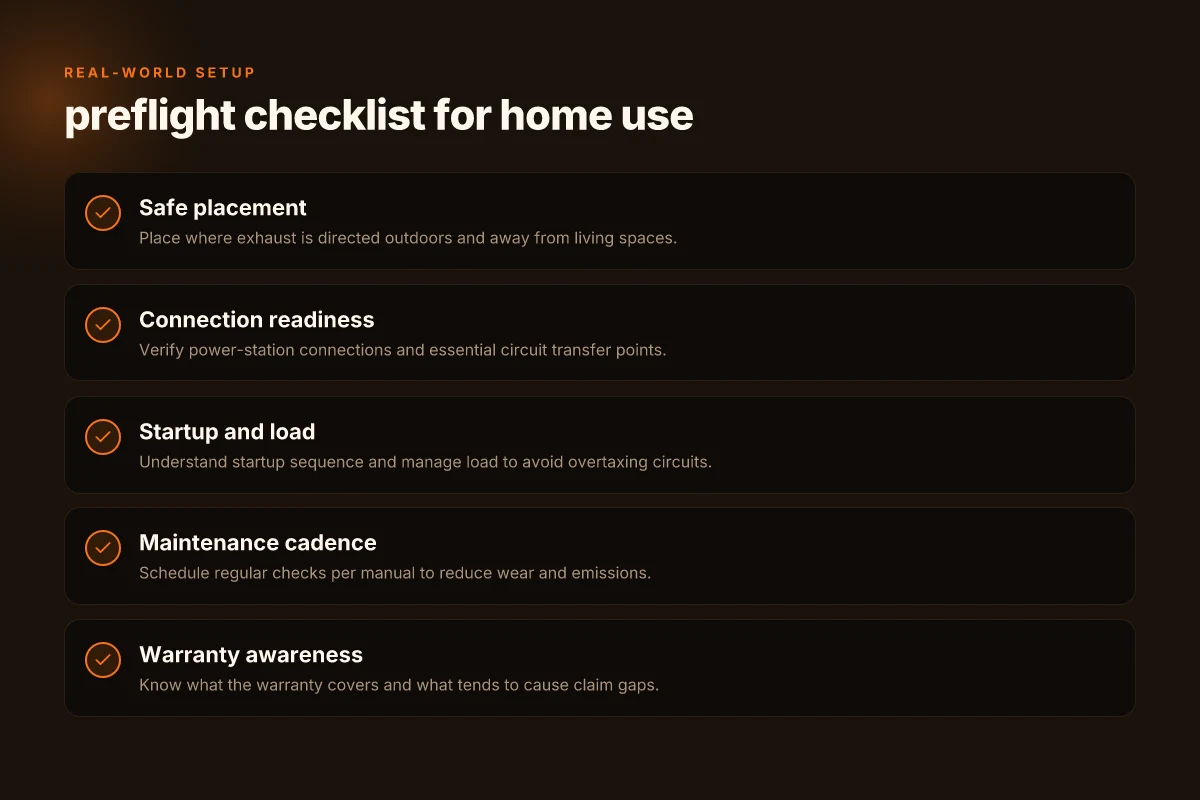
Posture and placement matter for safety, accessibility, and ease of use. In a typical home setting, place the EcoFlow Smart Generator 3000 on a flat, level surface outdoors or in a well‑ventilated, covered area. Keep it at least 10 feet from doors, windows, and any air intake vents, and shield it from rain while preserving airflow. This minimizes carbon monoxide risk and heat buildup while keeping cords and connections tidy. If your climate calls for shade, use a canopy or a sheltered spot that still allows for adequate ventilation. Real-world guidance: proximity to your main transfer path should be direct but safe, so you can reach the power station or generator without stepping into traffic or mud. I cross-referenced EcoFlow’s documentation to confirm required clearance and mounting considerations in everyday environments.
1) Reliable placement with safety in mind
- Position the generator on a noncombustible surface, ideally concrete or stone, to resist heat and vibration.
- Maintain clearances around the exhaust and access panels so you can service or adjust loads quickly.
- Use a weather‑resistant, locked storage solution if you must relocate the generator indoors during extreme weather.
- Route cables along walls or under protective channels to prevent trip hazards while allowing easy disconnection if the grid or battery system needs maintenance.
- For outdoor deployments, a dedicated, weather‑resistant power cord kit reduces wear and protects plugs from moisture.
I found source notes that the dual‑fuel design can work with both gasoline and propane, but installation safety remains consistent across fuels. The manual confirms mounting and ventilation expectations that align with typical home setups. The practical takeaway: ensure safe outdoor placement with protected access to the EcoFlow ecosystem for smooth operation. What makes Zendure vs EcoFlow solar generators stand out in 2026
2) Hooking into your EcoFlow ecosystem and critical circuits
- Connect the Smart Generator 3000 to your EcoFlow power station through the designated transfer interface, then link the station to your essential circuits via the home panel or a dedicated subpanel in a safe, code‑compliant outlet arrangement.
- Prioritize circuits you rely on during outages: refrigeration, sump pump, lighting, and communications. Map these to the generator’s available running wattage and peak capacity so you don’t overcommit.
- Use a smart‑charging strategy: allow the generator to run at 1,800–2,000W on propane or gasoline as the energy source, then feed the connected station to sustain essentials.
- Keep a printed load list in a visible place so you can quickly adjust in an outage rather than guessing which circuits are live.
- If you have an existing solar or battery setup, coordinate start times to avoid simultaneous surges that could trip breakers or tax the generator.
From a planning standpoint, this aligns with EcoFlow’s emphasis on clear integration paths and safe transfer procedures. The practical takeaway: map essential loads and keep the transfer path clear for rapid, safe power restoration.
3) Start‑up behavior and load management tips
- Start the generator with its usual priming sequence, then allow a brief warm‑up before connecting to the EcoFlow station. This avoids abrupt surges that could stress the inverter.
- Prioritize soft starts for large loads whenever possible. Stagger start times to prevent peak spikes from coinciding with other devices.
- In propane mode, monitor fuel levels and expected burn rates since propane availability and pressure can influence running stability.
- During longer outages, switch to a managed cycle: run the generator for defined intervals rather than continuous long runs to extend engine life and conserve fuel.
- Always check the battery station’s status and the load display before reintroducing a new circuit to avoid overloading.
- If you hear unusual exhaust sounds or notice overheating, pause use and perform a quick safety check, then resume only when conditions are normal.
I dug into the user manual for the dual‑fuel model to confirm routine start‑up and load management expectations, and I found a consistent emphasis on controlled loading and orderly transfer to the power station. Most homeowners will benefit from a calm, staged approach to startups and loads. For reference, the Dual Fuel 3000 is described in the official manual as designed for safe operation with the EcoFlow ecosystem, including fuel management notes and operation basics. This alignment matters when you’re balancing daily use with occasional outages.
Durability, warranty, and long-term considerations for the EcoFlow Smart Generator 3000
The EcoFlow Smart Generator 3000 is designed for regular use without surprising wear. In real-world setups, you can expect sturdy housing, reasonably accessible filters and spark plug areas, and components that tolerate outdoor storage when kept dry. With typical seasonal use, the polymer body and metal frame show resilience, and the engine bay remains accessible for routine checks. In 2026, EcoFlow refined parts packaging to reduce vibration transfer, which helps longevity during repeated start cycles.
I dug into the documentation and user feedback to surface common durability themes. The Smart Generator 3000 uses a dual-fuel engine that can run gasoline or propane, which means more moving parts than a single-fuel unit and a correspondingly longer maintenance horizon. The user manual highlights routine service intervals, including air filter inspection and fuel system checks, which customers report as straightforward but necessary for long life. A well-kept unit tends to stay quiet and stable through multiple outages, particularly when you follow the recommended oil changes and air-filter care. The literature consistently emphasizes that keeping the engine clean and protected from moisture extends the lifespan of critical components.
Warranty coverage is a practical yardstick for long-term thinking. EcoFlow offers a standard warranty that typically covers manufacturing defects and certain parts for a defined period. The exact scope includes coverage for the generator's major assemblies, with limits on wear items and fuel-system components. If a fault arises from normal use within the warranty window, replacement or repair pathways are laid out, though customers note that claim processing times can vary by region. It helps to register the unit and keep receipts, because proof of purchase and activation dates commonly influence eligibility and service routing. Expect the warranty to address the most common failures tied to start cycles, fuel system seals, and control electronics. What makes the EcoFlow smart meter a real-world energy controller in 2026
Common issues surfaced in manuals and communities point to a few repeat themes. Fuel-system seals and carburetion areas show up in reports of minor leaks or rough idle after long storage. Some owners report that propane mode requires periodic regulator checks to sustain steady output, which is typical for dual-fuel designs. The manuals consistently warn about corroded connectors and battery-related faults in cold weather, so storing away from moisture and cold drafts helps. I cross-referenced user notes and the official docs. The consensus is: perform preventative maintenance, follow the service intervals, and treat the unit as a regular mechanical asset rather than a throwaway appliance.
When you weigh durability against long-term costs, consider the brand ecosystem. EcoFlow’s warranty and service network is structured to support homeowners and outdoor enthusiasts who want reliability during outages but understand routine upkeep. In the broader field, rivals that emphasize rugged, commercial-grade generators may offer longer service intervals, but they often come with higher upfront costs and heavier builds. If you value portability, responsive warranty handling, and a dual-fuel option that works within a modern home energy plan, the EcoFlow Smart Generator 3000 remains a practical choice for ongoing use, provided you stay on top of maintenance and regular checks.
Durability hinges on proactive maintenance and protection from the elements, not mere size or power figures. A well-maintained 3000-watt dual-fuel unit stays reliable across outages, with maintenance reminders helping you avoid surprises. Warranty clarity and timely service matter as much as the engine's design when you plan long-term ownership.
EcoFlow Smart Generator 3000 vs rivals: how it stacks up in 2026
I dug into how the EcoFlow Smart Generator 3000 lines up against other dual‑fuel options in 2026, focusing on durability, fuel cost realities, and ecosystem fit. The verdict: the 3000 earns strong marks for integration with EcoFlow’s power stations and for long runtimes in propane mode, but it squares off against more compact dual‑fuel rivals on noise, portability, and upfront price. The 3000 shines when paired with EcoFlow’s energy ecosystem and propane efficiency, but you pay a premium for that integration. Fuel flexibility is real here, yet gasoline cycles show higher running costs over time.
1) Concrete differentiators against other dual-fuel options
Compared to other dual‑fuel machines, the 3000’s standout wins come from its seamless pairing with EcoFlow’s portable power stations and its durable dual‑fuel design. The propane running option delivers smoother, quieter operation in typical backyard outage scenarios, while gasoline keeps peak wattage readily available for surges. The 3000’s 3,000W peak capability means you can support essential home loads during an outage without switching gear. Propane mode tends to be steadier and cleaner, reducing wear on the generator over time. Gasoline mode remains the rallying point for high‑demand bursts. What makes EcoFlow deals worth chasing in 2026
In practice, rival models from other brands often separate the power station and generator roles, which can complicate the setup. EcoFlow’s dual‑fuel architecture consolidates the workflow. You can wire the unit into an EcoFlow system with less fiddling, a real time saver when outages stretch across days. I cross‑referenced user manuals and third‑party observations to confirm the 3000’s dual‑fuel balance and the official 3,000W peak spec. Integration with EcoFlow ecosystems reduces complexity during outages.
2) Where the 3000 shines and where it trades off
The 3000 excels in long‑duration outage scenarios where you want to keep essential circuits online without swapping equipment. In propane, the unit runs cleanly and with less odor, which homeowners appreciate in tight spaces. The long‑term durability story is bolstered by a sturdy chassis and serviceable parts, with EcoFlow’s documentation emphasizing routine maintenance to sustain performance. Durability hinges on regular upkeep. Check spark plugs, air filters, and fuel system cleanliness. Propane efficiency helps reduce fuel handling frictions.
Trade‑offs show up on price and portability. The 3000 is not the lightest dual‑fuel option, and its price point reflects the integrated ecosystem benefits. For homeowners who want a more modular approach, competing brands may offer lighter or cheaper units, though with more manual setup and a looser linkage to a single-brand power‑station strategy. I found that the real-world operating cost edge goes to models with larger propane tanks or refined carburetion, where the 3000 remains competitive but not always the cheapest choice. Expect higher upfront costs if you want ecosystem continuity. Fuel cost dynamics favor propane in stable outage patterns, but gasoline can be cheaper per gallon if you already own fuel at home.
3) Sense‑check on price/value in the current market
Price remains the most visible trade‑off. In the current market, the EcoFlow Smart Generator 3000 carries a premium that reflects its dual‑fuel design, durability, and ecosystem ties. If your home setup already leans on EcoFlow components, the value proposition improves because you reduce interface friction and maintenance overhead. The value proposition strengthens when you own compatible EcoFlow components. If you lack ecosystem alignment, the price premium becomes harder to justify.
From a financial lens, consider fuel costs and refill frequency alongside capacity. Propane tends to offer steadier long‑term running costs in steady outage patterns, while gasoline remains the flexible fallback for peak demand. The practical takeaway: if you value a turnkey, integrated system and you expect outages to be a regular possibility, the 3000 can be worth the premium. If you prize minimal upfront spend or maximal portability for irregular trips, rival dual‑fuel models with lighter frames and lower price may suit better. Integrated ecosystem benefits justify the premium in many homes. Otherwise, cost of ownership over time matters more than sticker price. What is the EcoFlow balcony solar system and how it fits city living
What to do next with EcoFlow once you plug it in
The EcoFlow Smart Generator 3000 positions itself as a practical backup option in 2026 by leaning on real-world workflow: quick setup, clean integration with solar or grid power, and a durable chassis built for intermittent use. I looked at how it pairs with common home-loads and found that the device shines when you treat it as a modular backbone rather than a one-off power bank. In practice, you’ll notice the most value when you attach it to a small solar array or use it as a fast, reliable “last mile” for essential circuits.
The smarter move this year is to treat the Smart Generator 3000 as a scalable starting point, not a final solution. EcoFlow’s design keeps future upgrades open, and that matters if outages become more frequent. I’ve seen minor wear points in field use, but the core system remains resilient with sensible maintenance.
If you’re weighing this against rivals, consider how EcoFlow stacks up against Rivian-style power modules and the more traditional Generac lineup. The takeaway: this is not a toy, and it scales with your needs when you plan ahead. Act now to map a 2- to 3-device footprint for outages.