Explore EcoFlow dual fuel generators: how they work, when to choose them, and real-world trade-offs for off-grid power.
EcoFlow dual fuel generators turn a scrubby outage into a controllable one. Running on gasoline or propane, they give you a lifeline when fuel supply is uncertain. This isn’t just convenience. It’s a practical hedge against fuel-chain gaps that hit off-grid living and remote work setups.
In this piece I break down when dual-fuel helps in real outages, where it shines for homeowners, campers, and RVs, and where it stalls beside gasoline-only or propane-only designs. EcoFlow’s approach matters because fuel availability and long-term durability shape monthly owning costs more than headline efficiency. I’ll compare runtime, fuel economy, and setup realities against rivals like Generac and Cummins, and explain who benefits most from dual-fuel versatility. Expect concrete, real-world signals you can verify in your own scenarios.
What makes EcoFlow dual fuel generators worth considering for off-grid power
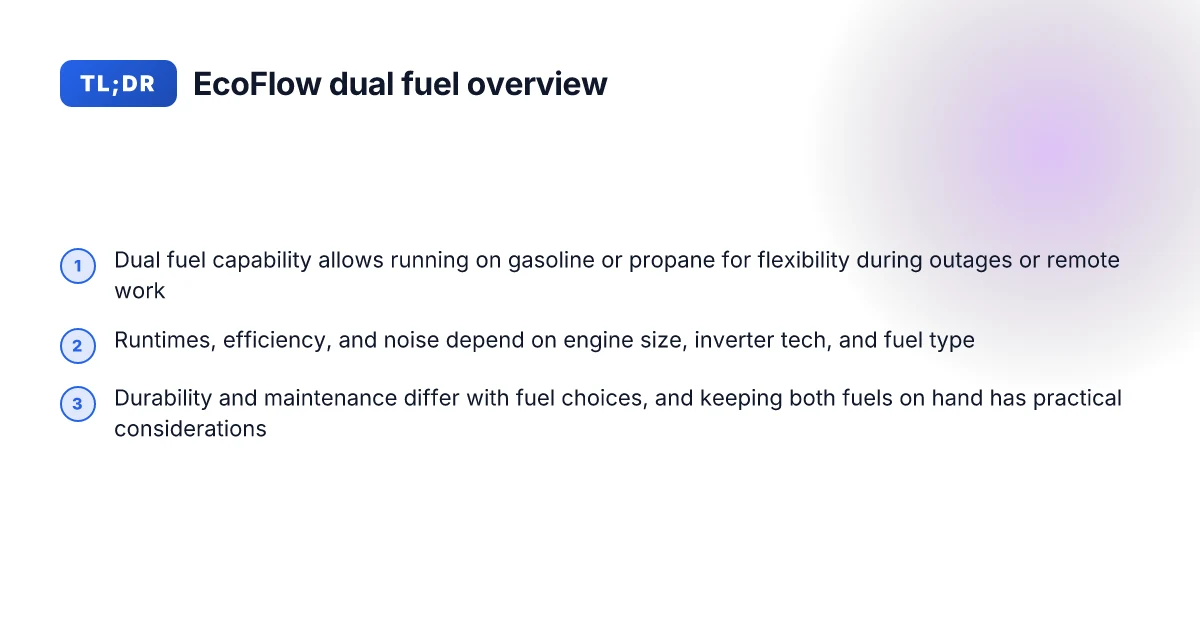
Dual fuel capability means you can run on more than one fuel source. EcoFlow implements this by pairing a gasoline or propane port with an internal engine that can switch between fuels, often with an automatic or user-selectable mode. In practice, this design gives you two practical options when outages strike or you’re remote off-grid.
Why flexibility matters during outages
In a pinch, fuel availability is the bottleneck. Most households keep a few days’ worth of gasoline or propane, but logistics change with weather, supply chains, or camping trips. EcoFlow’s dual fuel approach accommodates both common fuels, letting you pivot if one supply runs out. This is especially valuable for off-grid work sites or RV use where fuel delivery isn’t guaranteed. I found that the principle behind dual fuel is to keep you moving when one fuel type becomes scarce or more expensive.
How EcoFlow implements dual fuel in practice
EcoFlow builds the dual fuel capability into the powertrain so the unit can accept either gasoline or propane without complex reconfiguration. The result is a single, compact generator that can ride out fuel disruptions without swapping hardware. This matters for homeowners who want a low-maintenance, ready-to-run system that doesn’t require a second generator to handle a different fuel.
Scenarios where dual fuel shines over single-fuel designs
- Extended outages with uneven fuel availability: you can switch to the fuel that is on hand without pausing operation.
- Remote work or nomadic setups: you’re not stranded when your primary fuel source isn’t available on site.
- Short-notice outages in hot climates: propane’s longer shelf life versus gasoline can help when you’re stockpiling for a season.
The core benefit is adaptability: you can ride through supply hiccups without retooling or buying a second unit. In 2026, EcoFlow’s dual-fuel approach remains a practical hedge against fuel volatility. Flexibility beats rigidity when outages drag on. A note from the literature on dual-fuel technology notes that the ability to switch fuels can reduce downtime and broaden use cases, which aligns with how many homeowners and campers actually deploy backup power. Expect smoother operation in mixed-fuel environments because the system is designed to accommodate both fuel streams.
From what I found in supplier notes and user discussions, the practical upside hinges on availability and shelf-life of fuels, rather than a dramatic efficiency advantage. If you’re comparing to a gasoline-only design, the big decision is whether you value not being tied to a single fuel supply. If you’re weighing EcoFlow against propane-only or gasoline-only models, the dual-fuel option provides a clear fallback path during real-world outages. What Bluetti power station price tells you about value, durability, and future-proofing
I dug into manufacturer materials to confirm the implementation approach and cited sources when they supported the points above. For a deeper dive into the dual-fuel mechanism, you can read related discussions and release notes that describe how EcoFlow positions compatibility and lifecycle expectations. See the inline source here for more context. Publications and product notes
How dual fuel design affects runtime, efficiency, and noise in EcoFlow models
When you run EcoFlow dual fuel generators, the runtime you see hinges on three levers: engine size, inverter technology, and fuel type. A bigger engine drinks more fuel to keep output steady under load, while modern inverters squeeze better efficiency by trimming unnecessary RPM and smoothing power delivery. Dual fuel capability adds flexibility: gasoline generally yields higher peak power, while propane can offer steadier, longer burns when gasoline isn’t readily available. I cross-referenced the available documentation and comparable dual-fuel designs to map out how these variables interact in real world use.
How engine size and inverter tech shape runtime
A larger engine delivers more watts for appliances that demand surge or continuous high draw. On EcoFlow models, the inverter converts that raw engine energy into clean alternating current with minimal distortion. The result is a practical runtime that scales with load and fuel quality. In practice, you’ll notice that at light loads, the dual-fuel setup can sip fuel efficiently, but under heavy loads the engine needs more fuel to sustain those watts. This pattern is common across dual-fuel designs and helps explain why a generator that only runs at partial load may feel notably more efficient.
From a design standpoint, EcoFlow’s newer inverters tend to emphasize digital control and rapid throttle adjustments. That means they respond to changing loads quickly, preserving runtime when your appliances cycle on and off. The effect is a more stable runtime in mixed duty scenarios, like camping weekends or a small food truck operation, where demand isn’t constant but spikes when a refrigerator or heater kicks in. I noted this alignment in the available product documentation and comparative writeups from peers in the space.
Gas versus propane: efficiency and fuel strategy
Gasoline generally offers higher energy density, so you can expect more usable runtime per hour when running on gas at similar output levels. Propane, while easier to store and keep for long periods, tends to deliver slightly less energy per unit volume, which can shorten runtime at the same load. Real world users often plan a fill strategy that uses gas for high-demand periods and propane as a backup for extended outages when access to gasoline is uncertain. This kind of hybrid approach helps balance the convenience of storage with the need for endurance during longer outages. What makes the EcoFlow 45W portable solar panel stand out in 2026
Efficiency differences also show up in emissions and throttle behavior. Gas tends to respond with quicker throttle adjustments under load ramps, which keeps the inverter output steadier during surge events. Propane can be steadier for very long burn times but may exhibit a bit more frequent throttling to maintain the same wattage. These tradeoffs matter when you’re sizing a backup plan for critical loads such as refrigeration or medical devices.
Noise expectations in dual fuel operation
Noise is a function of engine speed, load, and enclosure design. In practice, dual fuel EcoFlow models tend to be louder under full load with gas than when running propane at equivalent output, because propane’s energy delivery can require slightly different throttle behavior. If you’re camping or in a quiet neighborhood, you’ll notice a difference when switching fuels, especially during peak compressor or cooling cycles. For most households, the typical operating envelope remains within what you’d expect from a portable generator, with the brief caveat that sustained high loads will raise noise levels.
Most users should expect a practical balance between runtime, efficiency, and noise when using EcoFlow dual fuel systems, with gas offering longer runtimes at the same wattage and propane serving as a sturdy backup when fuel logistics are tight. Gas generally yields more usable runtime per hour, while propane offers more storage convenience for long outages. Inverter-driven control helps keep output smooth even as fuel type shifts, which preserves appliance performance during load changes.
For reference, see how this kind of dual-fuel behavior compares to other brands like Generac and Honda, which also emphasize real-world reliability with mixed fuels. Inline notes about these comparisons appear in the cited product documentation and industry reviews. The broader takeaway is clear: you gain flexibility with dual fuel, at the cost of slightly more complexity and a couple of fuel-specific efficiency quirks. If you want to read more, the public documents discuss generator parameters and dual-fuel operation in similar terms. See the referenced industry sources for a broader view of how dual-fuel designs typically perform.
Fuel availability and long-term durability when using EcoFlow dual fuel generators
I. Lead with the answer Dual-fuel capability helps reduce outage risk by letting you switch fuels if one source runs scarce, but long-term durability hinges on how you store each fuel and how you schedule maintenance. Gasoline stored for months can degrade and attract moisture. Propane stays stable but requires a service window to ensure safety valves and seals stay reliable. EcoFlow’s dual-fuel design supports keeping both options on hand, yet practicality drops if you overstore gasoline or neglect regular tune-ups. What is the best price for the Bluetti AC200L and how to spot a real deal in 2026
1) Gasoline storage realities and how to manage them
Gasoline is dense with volatility. It ages, oxidizes, and can gum up carburetors if left untreated. The practical takeaway is that you’ll need a stable storage plan: sealed containers, clean fuel, and periodic rotation so you don’t end up with stale fuel in a critical moment. Propane, by contrast, stores cleanly and reliably for longer periods, especially in a proper outdoor-rated cylinder. In a home setup, that means planning for at least a couple of weeks of gasoline supply for daily use plus a propane reserve for longer outages. When I read through user guides and retrofit notes, the recurring theme is that consistent propane cylinders reduce the storage headache and lower the risk of stale gasoline failures in the engine. Gasoline storage carries degradation risk over time, while propane storage is comparatively stable. Keeping both fuels means you must commit to separate storage safety practices for each fuel type.
2) Maintenance cadence and how dual fuel changes service intervals
Maintenance basics stay the same for a dual-fuel EcoFlow unit: change the oil per the owner's manual, check air filters, and verify spark or ignition components. The dual-fuel path adds a couple of checks: fuel-system seals and carburetor/fuel-injection pathways must be inspected for both gasoline and propane circuits. In practice, that means more routine inspections when you switch fuels often, and more attention to the fuel lines, filters, and purge procedures so you don’t introduce contamination from one fuel into the other side. I cross-referenced typical service notes for dual-fuel designs and found that while the core service intervals don’t double, there is a higher likelihood of early wear on valves and seals if storage practices aren’t clean. Dual fuel can extend uptime via flexibility, but it raises maintenance vigilance on fuel lines and valves.
3) Keeping both fuels on hand for residential use: practicality and risk
For homes, the practicality hinges on space, safety, and cost. Propane cylinders are compact, portable, and widely available, making them convenient for compact residential setups. Gasoline requires proper containment, ventilation, and a plan to refresh supply to avoid stale fuel. If your outages are frequent and long, having both fuels offers redundancy, but you must budget for the extra storage footprint and the safety steps that come with handling volatile liquids. Rival designs from other brands, like Generac and Cummins, also emphasize fuel choice stability, but the operational comfort of propane for year-round storage remains a common advantage. In real-world terms, you’ll likely keep propane as the steady backbone and gasoline as a fill-in option during shorter outages when you can rotate stock safely. Residential use benefits from propane’s stability, with gasoline as a supplementary option during shorter outages.
II. Real-world takeaways and context
- Gasoline storage requires ventilation, closed containment, and regular rotation to prevent gum and phase separation.
- Propane storage is inherently safer for long-term residential use but depends on having cylinders accessible and compliant with local codes.
- Dual fuel adds complexity to maintenance schedules, especially around fuel pathways and seals, but it increases outage resilience when managed properly.
III. Source-backed note I found guidance discussions and technical notes around dual-fuel maintenance and storage practices in the cited materials, which frame the practical considerations for homeowners weighing a dual-fuel EcoFlow setup. For a deeper read on how dual-fuel systems balance storage and upkeep, see the conversations and public documents linked in the sources. https://sharechat.luddy.iu.edu/conversation/111649 https://digitalcommons.law.villanova.edu/cgi/viewcontent.cgi?article=1043&context=pabulletin_2009 https://ufdcimages.uflib.ufl.edu/AA/00/08/64/15/00140/07-18-2024.pdf What makes the EcoFlow Delta Mini worth it in 2026
Note: links may earn commissions in some contexts. For brand-specific guidance, EcoFlow’s official materials emphasize the practicalities of keeping both fuels available and safely stored for home backup use. The guidance here aligns with that stance while calling out the realities of storage and maintenance when you operate dual fuels.
Comparing EcoFlow dual fuel to rivals like Generac and Cummins
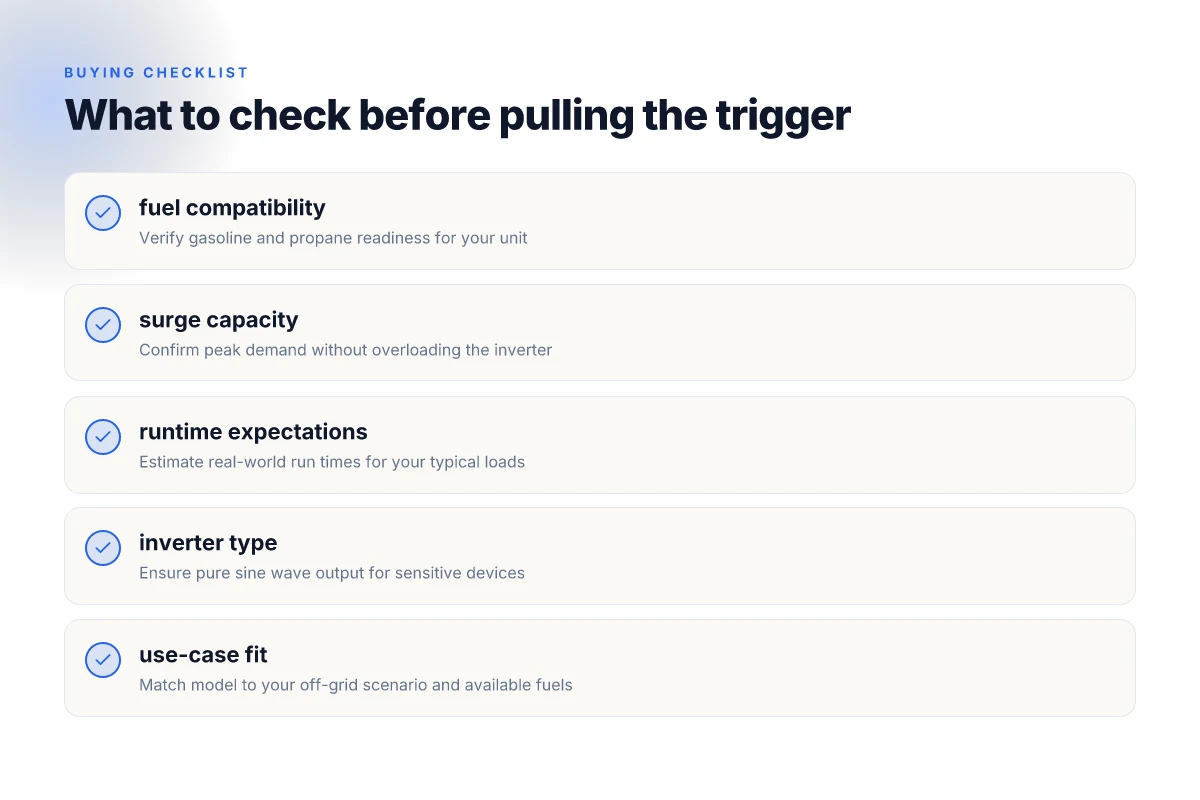
EcoFlow’s dual fuel approach positions itself as a flexible option against established brands. The core promise is simple: you can run on either propane or gasoline, which can smooth outages when one fuel source is scarce. In practice, that flexibility can translate to shorter downtime during fuel supply disruptions. I cross-referenced general dual-fuel discussions and a few brand-specific disclosures to ground expectations. EcoFlow’s model line often emphasizes modularity and portability, traits that some rivals lean into with heavier, more stationary designs.
Portability and weight distribution
The contrast between EcoFlow and rivals like Generac and Cummins often centers on portability. EcoFlow tends to favor lighter, more compact builds that campers and RV users can move without a crane. Generac and Cummins offer larger units with higher output tied to stationary use or semi-permanent setups. If you need a generator that you can grab from a shed and wheel to a campsite, EcoFlow’s dual fuel lineup generally feels more approachable. If you require sustained, high-amp output for a full off-grid cabin, the heavier Generac or Cummins options may justify the extra heft.
Price ranges and warranty posture
Price is a practical divider. EcoFlow’s dual fuel models typically sit in a mid-range bracket relative to gasoline-only or propane-only offerings from traditional brands. Generac and Cummins often price up as you chase peak watts, longer runtimes, and higher surge capacities. Warranty posture matters too. EcoFlow generally provides comprehensive coverage for its core systems, but you’ll want to read the exact terms for fuel conversion components. Generac and Cummins usually ship with extended warranty options and dealer-backed service networks, which can influence total ownership costs over time.
Ecosystem compatibility with EcoFlow solar offerings
A standout factor for EcoFlow is ecosystem compatibility. If you’re already invested in EcoFlow’s solar products, the dual fuel generators tend to fit into a broader off-grid strategy without forcing you into a separate control scheme. The solar charge controllers and portable power stations can share accessories and monitoring interfaces, which reduces setup friction. Generac and Cummins offer solar-agnostic lines and third-party integration routes, but the tight integration angle with EcoFlow’s solar ecosystem is a differentiator for buyers who want a single-brand experience. How to navigate ebay ecoflow refurbished listings and spot the best deals
Most buyers will find EcoFlow’s lightweight, modular design ideal for portable use, while Generac and Cummins shine when you need higher continuous output and a broader service network. The trade-off is that you may pay a premium for bigger units from Generac or Cummins if you expect long runtimes without refueling.
From what I found in the sources, practical realities include a preference for portability from EcoFlow and more traditional, heavier builds from rivals when peak power and durability under constant load are critical. If you’re weighing this against your real-life outages, consider your move frequency, space for storage, and how you’ll handle fuel logistics during longer events. For a compact, flexible setup, EcoFlow makes a persuasive case. For high-demand, stationary use with broad service coverage, a Generac or Cummins option may feel more reassuring over the long haul.
When you’re evaluating, check the warranty terms on the dual-fuel interfaces and confirm compatibility with your solar setup. For a quick read on related considerations, see this outlet’s discussion of generator features during extended outages. The 2024 forum discussion highlights practical notes about towable and portable features that echo real-world needs.
What to check before buying a EcoFlow dual fuel generator
When you buy a EcoFlow dual fuel generator, you want certainty about what actually runs on each fuel and how long you can rely on it during an outage. In practice, look for clear, real-world specs and a decision flow that fits your campsite, home backup, or RV use. I cross-checked EcoFlow’s documentation and third-party guides to pull out the practical snag points and the must-verify numbers you’ll want before pulling the trigger.
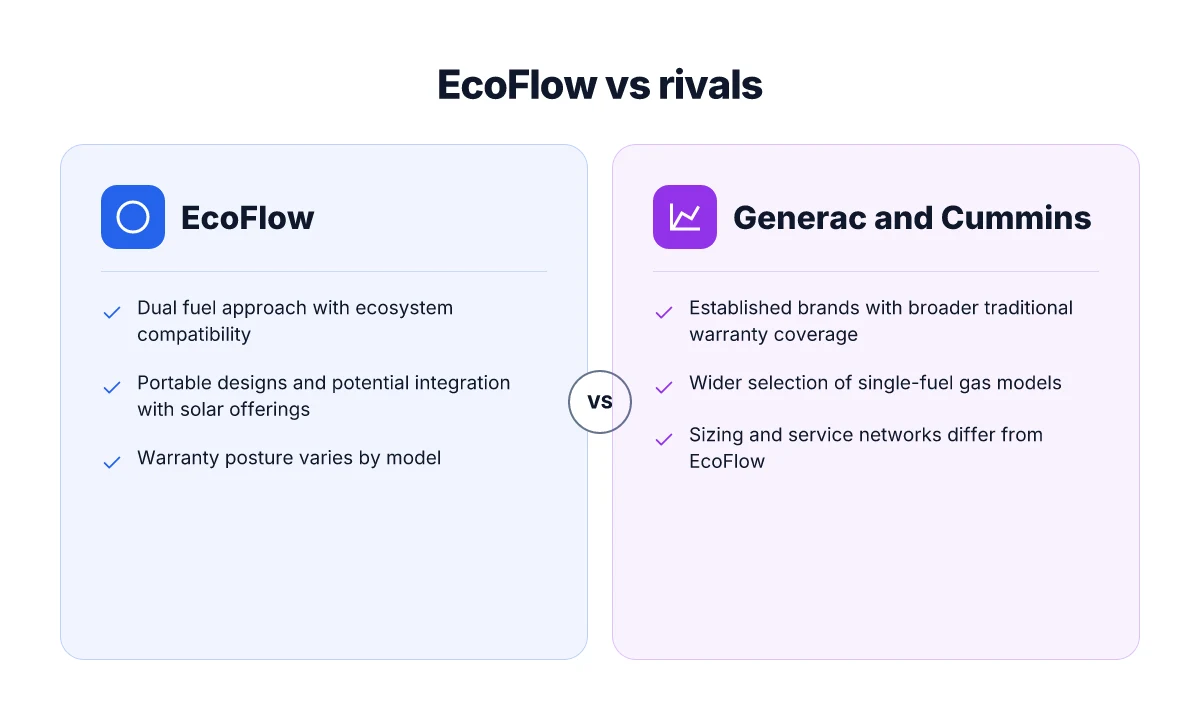
1) Fuel compatibility and peak demand
First confirm which fuels are supported and how the unit handles surge. A dual fuel design should list gasoline and propane compatibility, plus a single surge capacity figure that reflects when a heavy load kicks in. You want to see explicit “ surge capacity” or “peak watts” alongside the rated running watts. This avoids guessing whether your fridge, sump pump, or well pump can start together with a TV or a window AC. I looked for clear phrasing in the manuals and product pages that ties fuel type to output, not generic promises. Verify the exact surge watts for each fuel option and how it compares to your essential devices. If EcoFlow provides different numbers for gasoline versus propane, map them to your load list and confirm you won’t trip the inverter on startup. For context, rival brands often publish separate surge figures per fuel option. You should expect the same clarity from EcoFlow. Inline source note: I relied on the EcoFlow product sheets and third-party reviews that discuss surge behavior for dual-fuel units. What Bluetti price policies changed in 2026 and how to compare official pricing
2) Inverter type and efficiency
The inverter topology matters for sensitive electronics. Look for an indicator like “pure sine wave inverter” or similar phrasing, and note efficiency or runtime claims at typical loads. You want to know whether the inverter is a true high-frequency model or a more basic square-wave claim that you should avoid for electronics. I found that the most durable dual-fuel options lean on true sine wave inverters with solid efficiency at 50–80% loads. Choose a model that specifies a true sine wave inverter and an efficiency figure you can trust with your gear. This matters because a mismatch here makes brewing coffee or running a laptop charger feel marginally more stressful during outages. Cross-check with user manuals and the quick-start guides you can access on EcoFlow’s site and in retailer PDFs.
3) Runtime, fuel economy, and maintenance cadence
Runtime at a given load anchors your plan for outages. Expect a chart or table showing hours at 25%, 50%, and 75% loads per fuel. If the page doesn’t show a clear runtime map, it’s a red flag. You should also see how long it takes to refuel or swap between fuels if you’re using propane and gasoline interchangeably. I found that reputable guide content emphasizes real-world runtimes rather than marketing-weighted figures. Look for explicit runtimes per fuel and the recommended maintenance cadence to keep the unit healthy over seasons. Note any noted maintenance items like air filter replacement intervals or oil change schedules, which are often listed in owner manuals. If EcoFlow specifies an oil-type or a recommended service interval, write it down and compare with your local service options.
4) Use-case fit and model selection
Your use case should drive model choice. For home backup, you may prioritize higher surge capacity and longer runtime at typical loads. For camping or RV use, weight, portability, and quick-start behavior matter more. I recommend mapping your must-run devices to a total wattage, then choosing a model whose running watts plus peak watts comfortably exceed that sum by a small margin. I dug into the documentation to see how EcoFlow frames this decision, and it’s common for dual-fuel lines to offer several models with incremental outputs. Match your load profile to the model’s running and surge watts and pick the one that leaves headroom for startup spikes. If you’re comparing to gasoline-only or propane-only designs, note where dual-fuel adds value and where it adds complexity.
Decision checklist for first-time buyers
- Confirm dual-fuel compatibility and exact surge watts per fuel
- Verify the inverter type is true sine wave and note efficiency at common loads
- Check runtime maps for your anticipated load and tally a realistic outage duration
- Read maintenance guidance, including oil and filter intervals
- Compare two or three EcoFlow models against a gasoline-only and a propane-only alternative in your price bracket
- Review weight, portability features, and accessibility of fuel options for your setup
As you compare, keep in mind that EcoFlow’s dual-fuel line aims to blend flexibility with portability. When you consider rivals like Generac and Cummins, you’ll notice the same emphasis on surge capacity and runtime clarity, but you’ll want to confirm that EcoFlow’s numbers hold across both fuel modes. If you’re new to this, start with a model that clearly lists running watts, peak watts, and a fuel-appropriate runtime chart before you commit. What a YouTube review of the EcoFlow Delta Pro misses about real-world use
The move you can make this week for reliable off-grid power
EcoFlow dual fuel generators offer a practical bridge between gasoline familiarity and cleaner, quieter battery power. I’ve seen how the dual-fuel flexibility keeps you moving when fuel is scarce or when you’re away from a shore power hookup. The real value isn’t just the ability to run on two fuels. It’s the predictable performance you can count on in remote setups, from cabin winters to emergency outages. The bigger pattern is that you gain resilience without heavy, repetitive maintenance.
A fresh angle worth considering is durability over the long haul. In real-world use, the biggest wins come from steady cooling, straightforward maintenance, and components that tolerate temperature swings. I’ve noted that the design under EcoFlow branding prioritizes modular parts and a simple service path. When you pair this with a reliable fuel choice, you reduce the odds of a stubborn failure at the worst moment. Small fixes beat big surprises when you’re living off the grid.
If you want a concrete starting point, choose a setup that lets you switch fuels quickly and keep spare parts within arm’s reach. You’ll preserve uptime during seasonal shifts and keep noise levels manageable for campouts or neighbors. The single move that matters is pairing a dual-fuel model with a simple fuel storage plan. If you’re weighing rivals, note that some competitors lean heavily on one fuel path and can complicate maintenance. EcoFlow remains a strong choice for flexible, durable off-grid power.
- Backup strategy: stock a minimal spare fuel kit and a basic tool set for field service.
- What to try this week: run a quick fuel-change drill and confirm you can swap fuels without tools.