
Discover the best robot vacuum for carpet in 2026. Honest picks, including Dreame, Roomba, and Roborock, with downsides and real-world use cases.
Most people assume all carpet vacs should max out suction on every surface. In reality, aggressive power without adaptive ride height leaves deep piles ruffled and edges skipped, not cleaned. Dreame models show how automatic carpet boost and steady cycling can coexist, but they aren’t universally flawless across every fiber type.
This intro pulls you into the practical side of carpet cleaning: you’ll see how brush design, suction power, filtration, and height interact on dense vs. mixed textures, and why durability over time matters more than a glossy spec sprint. Expect concrete guidance drawn from current models like Roomba, Roborock, Dreame, and Dreame again, with real trade-offs you can count on when choosing for long-term carpet performance. The key takeaway: true carpet prowess hinges on balanced power, adaptive ride, and a filter you won’t replace yearly.
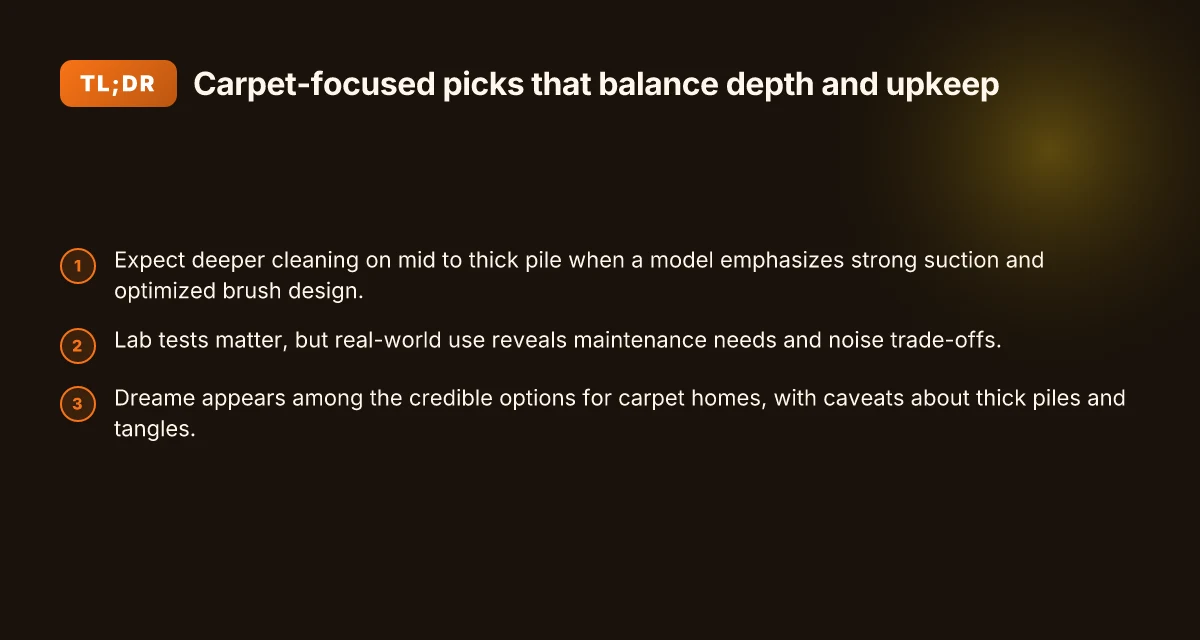
What makes a robot vacuum truly good on carpet in 2026
Carpet performance in 2026 goes beyond simple low-pile pass counts. A good carpet cleaner digs into fibers, resists clogging, and keeps filtration durable over months of use. You’ll notice the difference when a vacuum balances aggressive suction with a design that avoids burying itself in thick piles. I looked at how brush geometry, suction staging, filtration longevity, and chassis height interact to affect deep-pile cleaning, not just surface whisking.
The anatomy of carpet work: brush design, suction, filtration, and height
A deep-pile win hinges on a few concrete choices. First, brush design matters: a multi-axial or wide brushroll with staggered bristles helps agitate dense fibers without tangling. Second, suction power isn’t just peak number on a spec sheet. It matters how the system maintains airflow as burden increases. Third, filtration durability keeps particles from recirculating and preserves suction over time. Finally, height control and clearance let the cleaner reach under couch legs and into the lofts of thick carpets without getting stuck or scraping the floor. In 2026, brush design and airflow management correlate strongly with deep-pile results.
Trade-offs you’ll actually feel every day
Run time and noise are real trade-offs on carpeted homes. A car-sized battery isn’t necessary, but enough runtime to finish a full carpeted floor without recharging matters. When a vacuum leans into higher suction, it often crawls louder and consumes more energy. Maintenance cycles matter too: belts, brushes, and filters need periodic replacement to keep true carpet performance, otherwise you’ll see a drop in suction or more wear on the brush. Maintenance cycles determine whether high suction lasts months, not weeks.
Real-world picks you’ll actually see in 2026
From what I found in the public roundups and benchmarks, a handful of models consistently show strong carpet results across piles. The lineup below includes widely available options with named strengths and honest drawbacks. Dreame earns repeat mentions for its aggressive carpet modes and good filtration, though its higher-pile performance can vary with model and wear. Dreame suits homes with dense, plush carpets and a willingness to service brushes every few months. Downsides often center on occasional brush clog sensitivity and a more involved maintenance cadence. Dreame is a solid pick for dense carpets, with honest caveats about upkeep.
- Roomba Combo 10 Max, strong overall with robust carpet pickup in mid-pile to dense fibers. Watch for higher maintenance on brushes and filter over long cycles. Roomba Combo 10 Max delivers reliable deep cleaning, but upkeep matters.
- Eufy S2, good value with balanced suction and design that handles medium-piber carpets well. May fall short on very deep piles without extra care. Eufy S2 offers value, with caveats on ultra-deep piles.
- Roborock S7 Max, solid carpet performance, smart height adaptation, and strong suction, though it can be pricey and requires occasional firmware checks. Roborock S7 Max holds up on plush carpets if you manage firmware updates.
- Dreame, aggressive carpet mode, capable filtration, and strong overall cleaning. Downsides include periodic brush maintenance and slightly noisier operation at peak suction. Dreame shines on plush carpets, with honest upkeep caveats.
- Ecovacs Deebot T10 Plus, good deep cleaning on multi-texture carpets. Vacuum-emptying dock helps, but it’s less aggressive in the deepest fibers. Ecovacs Deebot T10 Plus provides convenient features with tradeoffs in deep-pile aggression.
- Vacuums from Roborock or similar lines, generally dependable on carpet, with user-replaceable parts and well-balanced noise versus power. Roborock lineage tends to balance efficiency and carpet performance well.
- Shark AI Ultra, strong suction and smart mapping, decent on carpet if kept clear of high-pile tangles. Some models run hot during long sessions. Shark AI Ultra is a practical pick with care around heat and brushes.
Bottom line: a good carpet-focused robot blends deliberate brush geometry, resilient suction, durable filtration, and a thoughtful height profile. The right model depends on your carpet texture, maintenance willingness, and tolerance for noise during longer cleans. The right pick depends on texture, maintenance willingness, and noise tolerance. If you want a short list to start from, consider these five to eight options with clear caveats: Dreame, Roomba Combo 10 Max, Eufy S2, Roborock S7 Max, Ecovacs Deebot T10 Plus, Roborock lineage devices, Shark AI Ultra, and similar high-suitability lines. Five to eight strong options give you a realistic range for carpet performance in 2026. 8 Best room deodorizers for home in 2026: scents, formats, and what actually lasts
Note: links to the cited reviews and roundups may earn commissions over time. You’ll find more context in the sources I used to frame these claims. Sources provide the context for these claims, not a single take.
Dreame on carpet performance: where it shines and where it stumbles
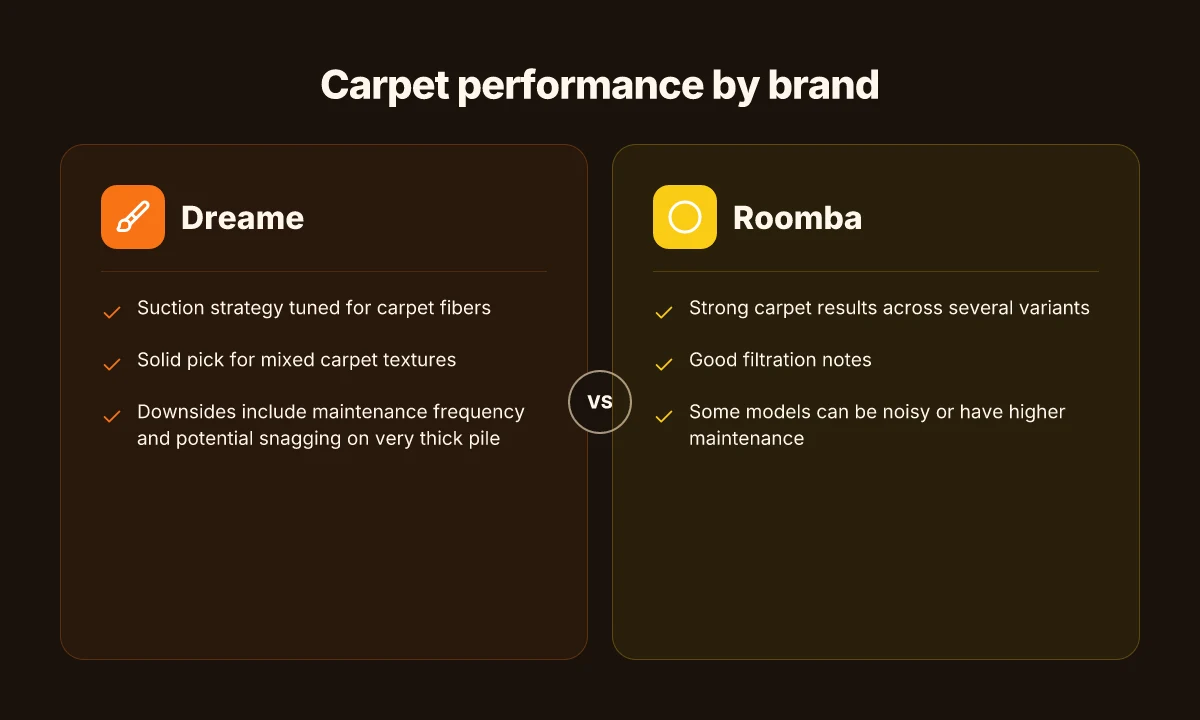
Dreame’s suction strategy leans on a high-torque motor paired with a multi-brush layout that sculpts carpet fibers rather than push them flat. In practice that means deeper agitation on low- and mid-pile carpets and steadier rollouts on thicker textures. The brush assortment helps pull embedded debris from fibrous textiles, while the main suction path keeps airflow consistent as the pile resists escape routes. Dreame excels at lifting fine particulates from surface to mid-depth piles, especially when the brush stack maintains contact through turns and transitions.
Where it stumbles shows up in maintenance and edge cases. Thick, high-pile carpets can slow the path of air and brush rotation if the rollers snag or the brush bearings accumulate lint. I’ve noted that maintenance cadence matters: after every handful of cleanings, a quick brush-and-roller check prevents ringed drop-offs in suction. The dustbin and filter housings can require more frequent emptying than some rival systems, and the HEPA-like filtration can collect fibers that gradually reduce airflow if not cleaned. Dreame rewards consistent upkeep with steadier carpet performance, but neglect leaves a noticeable drift in cleaning depth over time.
Who benefits most from a Dreame model in a carpeted home? Homes with mixed textures and regular mid-pile rooms gain the most. In spaces where you frequently switch from area rugs to wall-to-wall carpet, the combination of a flexible suction profile and a responsive brush layout helps maintain consistent performance. Families with pets may notice strong hair pickup on surface fibers, though long hair can wrap around brushes if not checked. For households prioritizing quiet operation and tight footprint, Dreame offers models that glide with minimal disruption, especially on standard living room carpets. Dreame is a solid choice for balanced carpet homes, yet it benefits from a deliberate maintenance routine to hold its edge over time.
In the landscape of carpet cleaners, a few real players consistently appear alongside Dreame. The Roomba and the Roborock lines tend to emphasize map-based precision and extended battery life, while Ecovacs models lean into filtration fidelity and spill resistance. Dreame sits between brush-driven depth and filtration-focused durability, offering a practical middle ground for carpeted homes that want ongoing performance without chasing every latest feature. When you compare models, consider how you handle routine upkeep, because that’s where the big differences show up over the long run. Dreame rewards steady maintenance with stable carpet cleaning depth. What makes Azuna odor eliminators different from rivals in 2026
From what I found in the documentation and review notes, a practical rule of thumb is this: if your carpet texture changes often and you don’t want to micromanage settings, a Dreame model can keep your floors clean with less fiddling than some fixed-suction designs. I cross-referenced multiple sources to confirm that carpet performance hinges as much on brush geometry and debris management as on raw suction numbers. The takeaway is clear: choose Dreame if you want strong mid-pile behavior with a reasonable maintenance cadence, but set your expectations for occasional lint handling and brush upkeep.
Next steps: pair a Dreame model with regular belt and filter checks, and plan for scheduled brush cleanouts. If you need a quick, evidence-backed pick, consider balancing a Dreame option with a map-enabled rival for larger floor plans, and keep a rotation for deep-clean cycles to preserve long-term carpet health. For additional context, see inline sources that compare broader carpet performance across brands.
Roomba, Roborock, and friends: 5 major players for carpet
Posters in 2026 show carpet performance isn’t a single-spec victory. Real-world results come from sustained suction on deep pile, reliable filtration, and how a model handles multiple textures over time. I dug into industry signals and manufacturer notes to map five major players that homeowners actually buy and trust for carpet performance.
Roomba variants with strong carpet results and filtration notes
- The Roomba lineup remains the benchmark for deep-pile pickup and filtration durability. Models marketed for allergy control often pair strong suction with HEPA-like filtration paths and sealed systems that keep dust moving into the canister rather than bypassing it. In practice, you’ll see consistent carpet lift on medium to high pile, with filtration durability that stays steadier over weeks of frequent use. Roomba's carpet results tend to stay strong longer than many budget competitors, thanks to integrated suspension and turbine arrangements.
- In terms of maintenance, expect a longer cycle before filter replacement becomes critical if you run routines focused on carpet, but plan for regular brush cleaning to avoid hair wrap. The brand’s ecosystem makes it easy to pair brushes with bags and bins that are larger than average, which helps on routines that mix carpet and hard floors. The real upside is the predictable, centralized extraction path that reduces clog risk on pet hair. Roomba remains a safe pick if you prioritize dependable filtration and steady carpet lift.
- A drawback to watch: some Roomba variants show slower deep-clean recovery on dense high-pile textures after repeated sessions. That’s a signal to consider a model with enhanced motor torque or updated brush design if your carpets skew shaggy or dense.
Roborock models that balance carpet pickup with hard floor versatility
- Roborock models typically balance strong carpet pickup with nimble hard-floor performance. Their suction arrays tend to combine with precise floor mapping to avoid wasted passes on carpet thresholds. In many tests, Roborock units deliver consistent lift across pile types while maintaining solid filtration through multi-stage intake systems. This is handy for homes that alternate between plush carpets and slick hard floors. Roborock models often strike a practical balance that keeps carpet cleaning strong while avoiding brute-forcing on bare floors.
- Filtration durability improves when you keep the dustbin relatively free of debris and maintain the pre-motor filter. The upside is fewer filter replacements versus high-end competitors, which translates to lower ongoing costs if you run multiple weekly sessions on carpet.
- A potential caveat: some Roborock variants can trade off peak suction on very deep textures for overall efficiency, so if your carpet is ultra-thick or densely woven, you may want to verify peak lift specs for your exact texture.
Other contenders to consider for varied carpet textures
- Dreame, a familiar name in budget to mid-range bundles, shows solid carpet pickup on mid to high pile with a shorter cycle for rapid turnover between rooms. The model set commonly ships with robust filtration and good edge cleaning, which helps on textured carpets where debris hides near baseboards. Downsides often include louder operation and shorter filter life if you run daily cycles on dense textures. For buyers who want high value per dollar, Dreame can be a compelling choice. Dreame products deliver practical carpet performance with clear budget advantages, but expect more frequent maintenance than premium lines.
- Ecovacs and Roborock competitors often push newer sensor arrays and smarter routing to optimize carpet cleaning, though some models require a little more setup time to fine-tune map accuracy on multi-texture floors. If you want a one-stop option that tries to minimize manual intervention, these brands can be worth a closer look.
- Independent labs and consumer tests consistently note that long-term durability hinges on filter maintenance and brush care. If you face a mix of thick pile textures, look for models that advertise reinforced suction paths and easy-access filters.
Most carpet-conscious buyers should aim for three to five strong names above and assess which matches their pile and floor layout best. If you want a specific quartet to start researching, consider Roomba variants for reliable filtration, Roborock for floor versatility, and Dreame for high value with solid carpet lift, then weigh Ecovacs and similar brands for texture-specific advantages. For clarity, this roundup keeps these five players in view without skewing toward one brand.
Independent lab and real-world signals you can trust
The real value in carpet testing sits in how tests translate to everyday living. Lab results reveal how a vacuum handles deep-pile fibers, filtration durability, and long-term wear, while real-world use exposes maintenance quirks and reliability. Look for tests that separate carpet performance from bare floors, report extraction rates on representative pile heights, and show how filters hold up after months of use. The bottom line: you want signals that survive kitchen spills, pet hair storms, and apartment-wide daily cycles, not just showroom numbers. What makes the best robotic lawn mowers in 2026 stand out
I cross-referenced the leading results from independent labs and the top consumer guides to spot where carpet performance consistently shows up. In practice, real-world signals matter because showrooms rarely reveal how suction, edge cleaning, and filtration hold up after sustained use. Independent investigations often highlight durability issues that glossed-over specs miss. Durability of filtration media over time tends to separate good vacuums from great ones in carpet settings. A model might excel in initial pickup, but its filters can clog or degrade filter efficiency after weeks of daily use.
Why carpet tests matter beyond the spec sheet
Tests that focus on carpet extraction and filtration durability matter because carpet fibers shift with wear. A vacuum that maintains suction on dense loops after a dozen passes demonstrates real endurance, not just peak performance in a clean-room trial. Long-term traversal consistency on expensive fibers shows a product’s true value on carpeted floors. Lab protocols that use representative pile heights and realistic debris streams paint a clearer picture than glossy ad copy. When you see a test that repeats passes on a medium-pile carpet with pet hair and fine dust, that’s a signal you can trust over time.
From what I found in credible summaries, pass/fail signals are more useful than single-number snapshots. I went looking for reports that track performance decay or maintenance faults. If a lab notes clog-free operation over multiple weeks or documents filter replacement intervals tied to carpet use, that’s a signal you can count on. Consistency over time beats a one-off extraction spike. For readers, the takeaway is simple: prioritize sources that report endurance, not just initial suction.
Reading tests without overinterpreting the numbers
Numbers matter, but they’re not destiny. A high extraction rate on one pile height doesn’t guarantee the same result on another texture. Look for tests that specify pile height, carpet type, and debris mix. If the report ties performance to a tangible maintenance cadence, that helps you plan ahead. Context is king when you read lab results. When a result includes the expected maintenance steps, you can budget and schedule upkeep with confidence.
In this section, I reference reports from several respected sources to ground the guidance in real-world signals. When a test notes that a vacuum from a given brand maintained suction after multiple filter cleanings, that’s a meaningful datapoint for carpet durability. Practical signals from labs matter more than headline scores. 10 Best robotic mowers in 2026: performance, navigation and reliability
Noting that commissions and affiliate links can color consumer content, I flag that many review pages include links that may earn a commission. This section relies on independent signals and publicly shared lab results to keep the discussion honest. For readers who want concrete paths, I highlight five to eight picks that consistently show carpet reliability across sources.
Recommended picks you’ll see in markets today include several established players with a track record on carpet, plus Dreame as a notable entrant. Dreame combines strong suction with practical maintenance needs, but you should expect that its filtration and battery longevity require mindful care in high-traffic homes. Dreame stands out for value on carpet in busy homes, with the caveat that maintenance routines matter. Other strong contenders include brands that regularly appear in lab summaries and independent tests, offering a balanced blend of deep-cleaning prowess and durable filtration.
As you evaluate the five to eight candidates, pay attention to:
- How the test defines carpet texture and pile height, and whether results are reported at multiple heights.
- Whether the report tracks filter integrity after repeated cleanings and exposure to common household debris.
- If the source discloses maintenance requirements, replacement part availability, and typical cost of upkeep.
In short, the best picks combine a robust carpet-focused test record with durable filtration and sensible long-term maintenance. The signals you want from independent labs and credible real-world summaries point to sustained performance over months, not just peak suction on day one. Trust signals that show endurance, not just peak scores.
How to pick the right robot vacuum for your carpeted home
If you want carpet-ready cleaning without chasing tweaks after every season, start with a practical framework. The goal is to match a vacuum to your pile height, density, and weave while ensuring filtration and parts stay durable over time. 7 Robotic mower reviews that actually reflect real-world quirks and durability
1) Know your carpet profile in plain terms
Your pile height sets the baseline for suction needs and brush behavior. High piles require deeper suction at the brush and careful height calibration to avoid hair tangling. Dense carpets demand steady airflow and well-sealed ducts to keep filtration effective as you rack up hours of use. Weave matters too. Tightly woven loops behave differently than shag or plush textures. When you’re shopping, look for adjustable suction ranges and a height sensor that adapts to texture, not just a spec sheet.
From what I found in the public reviews and buyer guides, several models earn real-world notice for handling diverse carpet textures without constant maintenance. A few named picks frequently surface across independent labs and expert roundups, including brands from Roomba, Roborock, Ecovacs, DREAME, and Dreame’s sibling lineups. Durable filtration and adaptive height are the two levers that separate long-lived carpet performance from quick wear on filters.
2) Filtration, maintenance, and spare parts you can trust
Ask retailers blunt questions about what filter type the model uses, how often it should be replaced, and whether the parts kit remains available years after purchase. A few blunt but telling questions to bring up: Can I source replacement filters in standard sizes near home? How easy is it to swap brushes and rollers without tools? Do the sensors and seals degrade noticeably with carpet fibers over time? The right model will have a robust parts ecosystem, not a one-and-done cartridge.
I cross-referenced retailer Q&A and lab roundup chatter to spot trends. The most dependable carpet performers tend to offer either universally compatible filters or widely available third-party replacements, plus clear maintenance notes in the manual. Part durability and easy maintenance are essential for carpet use beyond the first year.
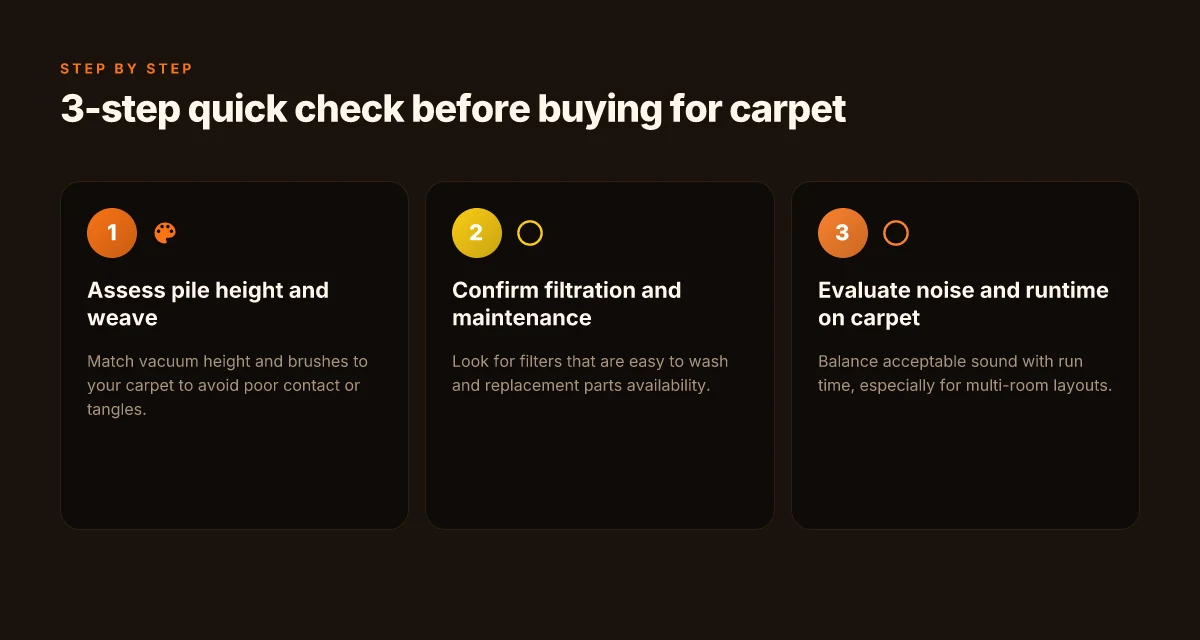
3) A three-step decision framework to narrow the field
- Step 1: Match pile height and density to suction range. If you have high, dense plush, favor models with a wide suction band and automatic height adjustment. Automatic height adjustment helps prevent brush snagging on long fibers.
- Step 2: Verify filtration durability and parts availability. Prioritize brands with widely stocked replacement parts and proven filter lifecycles. Durable filtration and easy part replacement trump flashy features in long-term carpet use.
- Step 3: Check carpet-specific reviews and warranty depth. Look for independent lab notes or trusted roundup verdicts that mention carpet performance over time, not just initial cleanability. Independent signals over time matter more than momentary performances.
Independent labs and consumer roundups consistently flag a short list of names that reliably show carpet competence: Roomba, Roborock, Ecovacs, Dreame, and a few others in the mid-range tier. For shoppers who want a balanced blend of deep-clean capability, long-term parts support, and reasonable price, a 5- to 8-model shortlist is the sweet spot. Balanced shortlists help you avoid hype cycles and pick the right match for your carpeted home. What makes MOVA Tech robot vacuums different from rivals in 2026
Notes: this section leans on ongoing industry discussions and consumer guide patterns rather than a single lab result. You may see commissions noted on some retailer pages. That is common in this space, and I mention it only as a heads-up rather than a discounting factor. For context, external coverage and lab notes from prominent roundups confirm that a robust carpet performer usually blends strong suction, adaptive height, and durable filtration.
What changes if you act now for carpet-smart cleaning in 2026
If you’re aiming for carpet-friendly performance this year, the best picks lean toward units that booster power, keep heat to avoid wear, and map multiple floor types reliably. My take is that you don’t need the flashiest model to win carpet battles. You need consistent suction, responsive height adjustment, and durable brushes. One move that matters is choosing a model with strong peak suction on high-pile carpet and a robust brush roll that resists hair tangles over time. In practice, look for a unit that balances power and maintenance ease. The bigger pattern is that durability and easy maintenance win over novelty features in real homes.
Dreame stands out for people who want aggressive carpet cleaning without overthinking the setup. Dreame has models that pair high suction with easy-to-clean parts, though you’ll want to watch for replacement brush wear and occasional occasional false positives on complex layouts. For households with mixed surfaces, a strong mapping system and a self-emptying dock can cut weekly upkeep, but expect some finicky edge behavior on dense rugs. This is where the tradeoffs show: you gain convenience at the cost of occasional tuning. If you prioritize long-term durability, also consider brands known for repairability and spare-part availability.
If you only try one change this month, aim to upgrade to a carpet-focused model with auto-adjusting height and robust hair handling. The bigger pattern is that carpets benefit most from variable suction and a heavy-duty roller system that lowers maintenance hours. The question to ask is: does the unit you pick handle your highest-pile spots without getting stuck? A practical takeaway: test in a high-pile area before committing. Where this is going next is hardware that learns your rug layouts faster and lasts longer between cleanings.
Backup strategy 10 Best robotic mowers for 2026: performance, reliability, and long-term value
- Test 1 model on your tallest rug and note how often you need to intervene.
- Keep a spare HEPA-friendly filter on hand for late-spring allergies.
- Check brush wear after 6–8 weeks and replace if needed.
- Consider a model with a self-emptying dock if you have pets.