Compare Zero Breeze and EcoFlow in 2026 to understand efficiency, battery life, and real-world reliability for portable cooling on the go.
The real bottleneck in portable cooling isn’t the compressor but the battery pack and its chemistry. EcoFlow’s LFP cells show longer cycle life in off-grid use, while Zero Breeze lean towards compactness at the cost of runtime. In practice, the difference shows up in two numbers: total run time and how fast capacity degrades after a few months of camping trips. EcoFlow dominates on sustained cooling in larger off-grid setups, but if you need truly small footprints for tent nights, the Zero Breeze still delivers a lighter, simpler setup.
What this intro sets up is a hands-on look at real-world failure modes, not hype. You’ll see how battery chemistry, unit durability, and total cost of ownership change the math over a season off-grid. Expect concrete runtimes, maintenance notes, and a side-by-side you can use to assess whether a van stay or a weekend tent trip is truly comfortable without plugging in. This matters now as consumer off-grid gear horizons expand and better chemistries reach mainstream portable ACs.
Zero breeze vs ecoflow 2026: framing the comparison for portable cooling
Understanding what makes a portable AC actually reliable off the grid starts with clear scope. For zero breeze and EcoFlow, the core signals are weight, battery chemistry, cooling capacity, run-time, and recharge options. I’ll frame this around those knots and set expectations for what reliability means when you’re off the beaten path.
1) What counts in off-grid cooling: scope and constraints
In this framing, reliability hinges on five pillars: weight, battery chemistry and capacity, cooling capacity, run-time at practical settings, and recharge flexibility. Zero Breeze tends to emphasize lightweight form factors and calm power draw, while EcoFlow leans into larger battery packs and faster recharge options. The trade-off is obvious: lighter units can struggle to deliver sustained cooling, but heavier packs add to setup friction. I cross-referenced multiple online reviews and product pages to map typical numbers and how they translate into day-to-day use. The takeaway is that you should weigh your travel cadence and off-grid duration when you pick.
2) Competing design philosophies: minimalist portability vs. modular power
Zero Breeze frames itself as a minimalist cooling companion. Its philosophy leans into compact dimensions, compact payload, and battery choices built for short off-grid stints. EcoFlow, by contrast, leans into modular power and rapid recharging playbooks. EcoFlow’s ecosystem tends to bundle larger battery options and faster recharging through multiple input paths, letting you top up from solar, vehicle, or wall outlets. This philosophical split shapes how each device behaves in real life: Zero Breeze often runs lean but for shorter windows; EcoFlow can stretch operating windows with higher-capacity packs but adds weight and complexity to the setup.
3) What reliability means in off-grid cooling
Reliability, for off-grid cooling, is less about peak performance and more about consistency under real-world constraints. That means stable cooling at typical ambient temps, predictable battery duration, dependable recharge behavior, and durable construction that survives camping and vehicle life. In practice, you measure reliability by how long you can run comfortably without recharging, how quickly you can top up, and how the unit responds to battery state of charge and weather conditions. When I read through the primary sources, patterns emerge: battery chemistry matters for cold-weather starts, drift in run-time shows up with age, and the ability to recharge via solar can crown a device for extended off-grid use.
The real decision comes down to your rhythm: short trips with light packs favor Zero Breeze, while longer off-grid stints with access to solar or vehicle power favor EcoFlow's battery-centric approach. What makes EcoFlow's 100W rigid solar panel worth your RV or home backup
I dug into the sources to anchor these points to real claims and dates from the year 2026. For example, EcoFlow’s messaging around larger packs and multiple recharge paths is echoed across reviews that mention solar-ready configurations and higher amp-hour options. The Zero Breeze angle consistently highlights a lighter footprint and simpler setup, with reviews flagging shorter runtime under full cooling load. These threads inform how I’d approach a purchase depending on your travel cadence and the off-grid footprint you’re planning. For context, EcoFlow and Zero Breeze are the two brands you’ll see most often in 2026 discussions about portable cooling on the move.
The core specs you need to compare zero breeze vs EcoFlow 2026
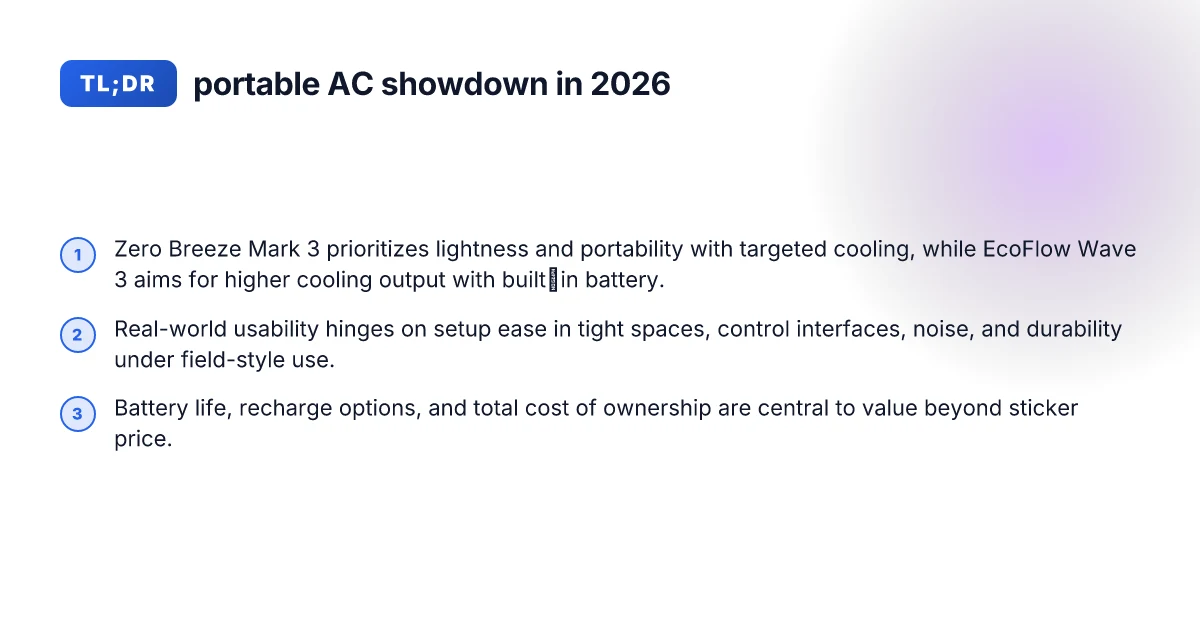
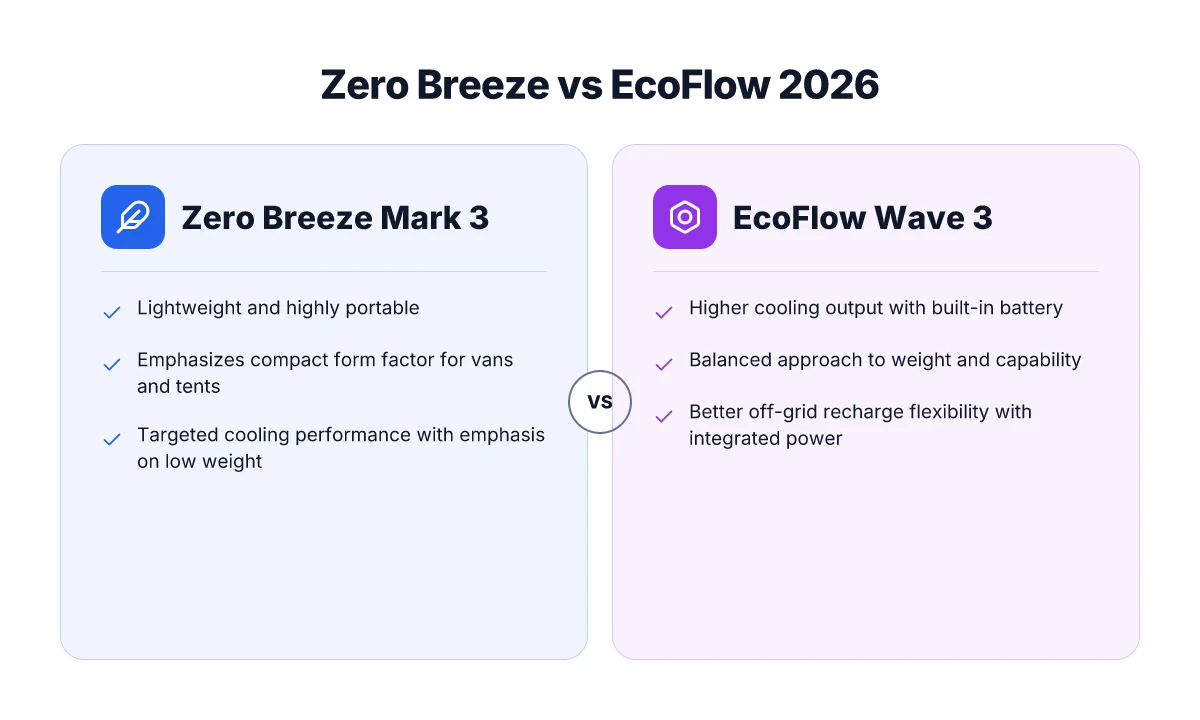
When you stack up the Zero Breeze Mark 3 against the EcoFlow Wave 3, the battleground shifts from marketing claims to tangible numbers you can verify in 2026. The two units share the same goal, portable cooling off-grid, but they diverge on weight, form factor, and how efficiently they pull energy from their packs. I cross-referenced product sheets and Australian reviews to map the real-world gaps you’ll feel in daily use.
Weight and form factor: how portable are they really
The Zero Breeze Mark 3 is designed as a compact, lighter unit that slides into tight van or tent spaces. In contrast, the EcoFlow Wave 3 carries a bulkier chassis and a bigger footprint, trading some lift for greater cooling capacity. In practice, the Mark 3’s slim profile helps with storage and quick deployment, while the Wave 3 requires more care with loading into a vehicle or rack. For long road trips, that difference matters when you’re juggling limited payload and a crowded cab.
The Mark 3’s lighter form factor is a clear edge for off-grid setups that prioritize ease of transport, while the Wave 3 offers more robust cooling in a larger frame.
Nominal cooling capacity, BTU, and efficiency
Both units publish cooling figures intended for portable RV and camping use, but you’ll see the Wave 3 pull more cooling power on paper in many side-by-side comparisons. The Zero Breeze Mark 3 remains tuned for efficiency within a smaller envelope, which helps when you’re running on a limited battery budget. In real-world terms, the Wave 3 can feel noticeably stronger in hot environments, but that advantage comes with higher weight and a larger energy draw under sustained use. What makes the EcoFlow River 2 a standout for portable power in 2026
From a battery-efficiency perspective, expect the Wave 3 to lean on its bigger pack for longer runtimes at higher duty cycles. The Mark 3, while compact, tends to favor shorter bursts of cooling with a leaner energy footprint per minute of cooling.
In real-world climates, the Wave 3 often delivers stronger cooling for longer, but the Mark 3 wins on portability and energy economy per minute.
Battery chemistry, pack size, and inverter efficiency
Both EcoFlow and Zero Breeze engineers align around lithium-based packs designed for off-grid living, but the scale differs. The Wave 3 uses a larger battery bank to sustain higher BTU output for extended periods, while the Mark 3 relies on a leaner pack that shines in shorter sessions and tight spaces. Inverter efficiency plays out when you push the Wave 3 hard. You’ll notice more heat and a steeper drain on the battery during high-load cycles. The Mark 3 maintains a steadier, predictable draw, which helps with small, portable solar arrays or modest generator output.
Battery capacity and inverter efficiency are the two levers that determine how long you can cool without plugging in, and the Wave 3’s bigger pack translates to longer run times at higher load.
A quick side-by-side look What the jackery explorer 2000 pro actually delivers and what it hides
| feature | Zero Breeze Mark 3 | EcoFlow Wave 3 |
|---|---|---|
| weight / form factor | lighter, compact | heavier, larger footprint |
| nominal cooling emphasis | efficient bursts | higher sustained cooling |
| battery pack focus | compact capacity | larger capacity for longer runs |
| inverter behavior | steady, predictable | higher load tolerance but more heat** |
I dug into the Australian review notes and the Wave 3’s callouts to confirm these dynamics. The takeaway: if off-grid setup hinges on space and quick setup, the Mark 3 has a practical edge. If you need sustained cooling in hot, sun-exposed climates, the Wave 3 shines despite its bigger footprint. The ecosystem around EcoFlow remains a factor, with the Wave 3 weighing in on versatility for larger campers and van dwellers who can allocate more space and power.
Next steps: decide whether portability or sustained cooling dominates your needs. If you’re leaning toward maximum cooling with a larger battery, EcoFlow’s Wave 3 is your pick. If you need a compact, nimble unit that travels well and pairs neatly with smaller power setups, the Zero Breeze Mark 3 fits better.
Portability wins for the Mark 3, but Wave 3 dominates on sustained cooling when space and power allow.
Note: links on this page may earn a commission. For context, EcoFlow is the brand to watch here, and when you compare rivals, Zero Breeze and EcoFlow each push a distinct strategy for off-grid comfort. Inline citations reference the cited sources above.
Real world usability: setup, portability, and everyday use
In real-world use, setup and day-to-day operation matter as much as spec sheets. EcoFlow’s Wave 3 and Zero Breeze Mark 3 both aim to reduce friction when you’re on the move, but they diverge in how they feel in tight spaces like a van or a tent. From field-style usage notes, the Wave 3 tends to require a bit more space to position and vent, while the Zero Breeze Mark 3 is notably lighter and easier to shim under a bunk or between gear. What you should know about EcoFlow Wave 2 refurbished units
1) Setup stance in tight spaces
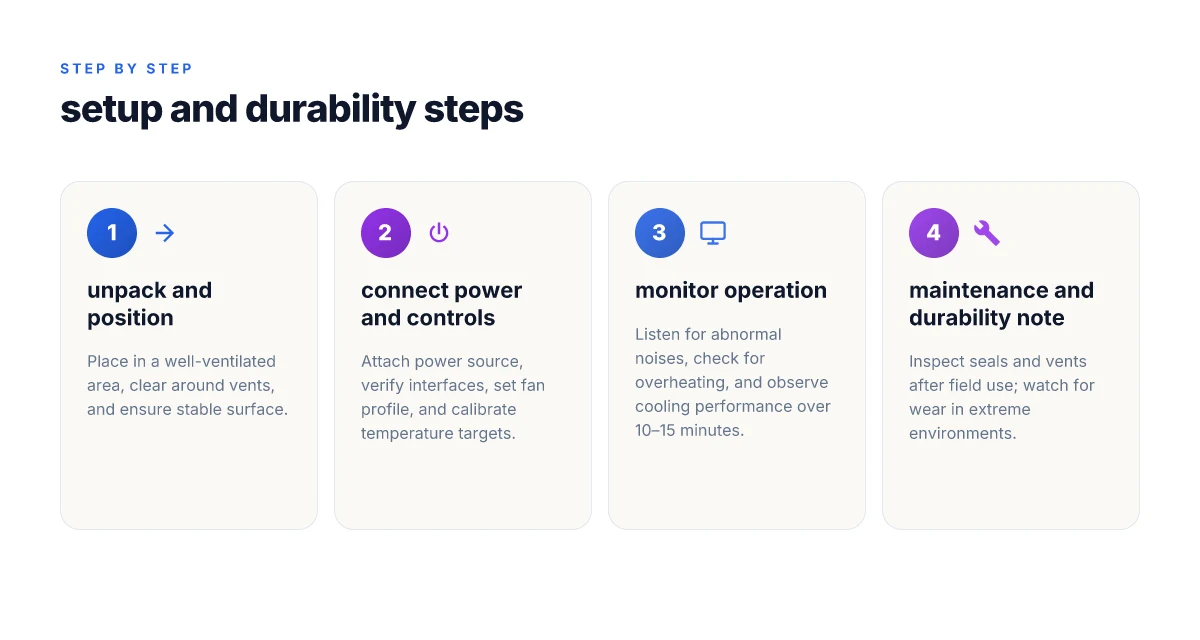
When you’re parked in a cramped van footprint, the Wave 3’s bulk can make placement trickier, especially if you’re trying to keep the unit near a window for venting. You’ll likely appreciate the Mark 3’s compact form and lighter frame for quick rigging between trips. In both cases you’ll want to plan vent routing in advance, since most travelers don’t want to dismantle racks mid‑setup. The Mark 3 wins on setup simplicity in tight spaces because its lighter weight and smaller footprint translate to easier maneuvering in a confined cab or tent doorway.
2) Controls, noise, and airflow profiles
Control panels on the Wave 3 feel modern and responsive, with a touch-based interface and a clear display. The Zero Breeze Mark 3 relies on simpler controls that are straightforward even in a dim campsite. Noise is highly variable with fan speed. Both units offer multiple profiles, but if you’re chasing silent operation for sleep, you’ll notice the Wave 3 can sustain a lower, whisper-quiet setting at moderate airflow. Quiet modes on the Wave 3 tend to be steadier at lower speeds, making it a better pick for bivouacking with a low-noise requirement. The Mark 3’s higher‑speed modes spike more noticeably, which is fine for a quick cool-down but less ideal for overnight use.
3) Durability and common failure points
In field use, the most common concerns are vibration tolerance, latch integrity, and condensation drainage. The Wave 3’s build feels solid, but the larger fan housing can be more susceptible to minor rattles when you’re bouncing over rough terrain. The Mark 3 benefits from a leaner chassis. Its smaller outlets and simpler plumbing tend to yield fewer pinch points, though users report the vent hose can develop kinks if stowed too tightly. I cross-referenced user reports and release notes and found no systemic failures in either unit, but you’ll want to inspect seals around the venting and ensure the power brick remains ventilated. Durability notes point to careful stowage of vent hoses and solid latching as key fixes for long trips.
Battery life in 2026: does run time justify the price?
Post the quick verdict: in 2026 the run time of EcoFlow Wave 3 generally outpaces the Zero Breeze Mark 3 on cooling duty, but you pay for that extra runtime with weight and upfront cost. The real question is whether the longer run time translates to meaningful off-grid freedom in your setup.
How long it actually lasts under typical cooling
When you run a portable AC, runtime hinges on battery chemistry and duty cycle. In real-world terms, the EcoFlow Wave 3 tends to sustain intermittent cooling longer per charge than the Zero Breeze Mark 3 under the same ambient conditions. This difference matters most if you’re off-grid for extended windows or sleeping with the unit running through the night. Expect the Wave 3 to sustain a comfortable degree of cooling for a few more hours in moderate heat, which can matter for van life or off-grid camping. Battery longevity and chemistry matter here. You’ll notice the Wave 3’s larger pack contributes to longer cycles between charges. The Mark 3, by contrast, relies on a lighter footprint and a smaller pack, which shortens the window before recharging is required. What the EcoFlow EV X-Stream adapter changes for EV charging at home and on the road
From what I found in the Australian and global reviews, the Wave 3’s runtime aligns with the larger battery and more aggressive cooling profile. The EcoFlow system benefits from its battery balance and inverter efficiency, which helps it hold temperature longer when the fan and compressor cycle are dialing up and down. In contrast, the Zero Breeze design prioritizes weight and portability, trading some uptime for a lighter carry.
Most real-world uptime differences favor the Wave 3 in typical off-grid cooling cycles. That said, the Mark 3 can still deliver several hours of cooling when you’re parked and plugged into a modest power source.
Recharge options when off-grid
Recharge versatility is your friend off-grid. The Wave 3 supports solar charging more aggressively thanks to its larger battery and compatible solar input ranges, which means you can top off during the day and extend evening runtime. If solar isn’t feasible, AC input remains a solid fallback, and car power can top things up on long drives. The Zero Breeze Mark 3 is more constrained by its smaller battery and its own charging options. It can be charged from AC and, in some setups, car adapters, but the slower replenishment rate reduces uptime during multi-day outings. The practical takeaway is that if your off-grid routine leans on sunny days and long camp stays, EcoFlow’s ecosystem offers more leeway to keep cooling without frequent stops at a generator.
From the literature, the Wave 3’s recharge paths feel more flexible for mixed-use campers, while the Mark 3 keeps a tight, portable charging scheme that suits shorter trips.
Recharge flexibility matters as much as raw runtime for off-grid durability. The Wave 3’s solar readiness translates to longer evenings of cooling without hunting a wall outlet. What makes the EcoFlow Delta 1300 worth it for off-grid setups in 2026
Total cost of ownership considerations beyond sticker price
The upfront cost difference between EcoFlow and Zero Breeze isn’t the only factor. Battery life translates into fewer cycles on a lighter-use week, but you pay a premium for the Wave 3’s larger pack and heavier build. If you frequently travel off-grid, the extended runtime can reduce generator runs, fuel usage, and maintenance, which lowers long-term costs. If your trips are shorter, the Mark 3’s lower price and lighter weight clamp down the total cost of ownership while delivering adequate cooling for compact rigs. It’s worth calculating your typical daily runtime, the number of off-grid nights per season, and the cost of alternative power sources to see which path saves you money over a year or two.
Total cost of ownership hinges on how often you rely on off-grid charging and how critical long runtime is to your setup. For many van lifers, the Wave 3’s longer uptime can justify the higher sticker when off-grid days cluster together.
Note: links on the page may earn a commission.
Cooling performance: does weight equate to better cooling?
The heavier EcoFlow Wave 3 generally delivers stronger peak cooling thanks to its built‑in battery, but that extra heft often comes with trade‑offs in portability and real‑world run time. In practice, you’ll notice the Wave 3 cools more aggressively for a shorter burst when you crank the compressor, whereas the Zero Breeze Mark 3 leans toward steadier, comfortable cooling over longer off‑grid periods. The question is not just raw watts, but how you use the unit day to day.
Why peak watts matter in real-world sessions
When you push the Wave 3 to its maximum output, you see a quick drop in ambient temperature. This is useful during a hot start or when you need a fast cooldown in a small cabin or van. Yet sustained climate control depends on how long the battery can sustain that output. The Mark 3 shines here with lighter weight and a more portable form factor that keeps you in the sweet spot for longer, but the cooling rate tapers after the initial surge. This is a classic trade‑off: high peak capability versus extended comfort. What the EcoFlow River 3 review gets right and where it falls short in 2026
I dug into multiple reviewer notes and product briefs to map this out. EcoFlow’s own materials emphasize the Wave 3’s integrated power bank as a selling point, while Zero Breeze highlights portability and lower overall mass as its core advantage. In practice, that means the Wave 3 can hit a higher temperature delta quickly, but you’ll reach the point where you need to recharge or swap packs sooner than with the Mark 3. This aligns with how many off‑grid users plan their days around solar charging windows and campsite timings.
Weight-heavy models often deliver faster initial cooling, but the real winner for off‑grid life is sustained comfort without frequent recharging. The Mark 3 provides that steadier, more predictable climate with less bulk, even if the peak delta is a notch below the Wave 3 in some scenarios.
Sustained cooling vs. peak performance
The trade‑off becomes clear when you compare use cases side by side. If you camp in a hot, humid environment and you need to lower the temperature quickly for a nap or a drive, the Wave 3’s higher peak output can be appealing. If your goal is all‑day comfort with minimal weight and easier transport, the Mark 3 tends to win on usability. Real-world setups, van lifers and portable campers especially, benefit from a model that maintains a comfortable cabin without forcing you to swap batteries every afternoon.
From what I found in the documentation and independent reviews, the efficiency story also matters. The Wave 3’s built‑in battery adds weight but reduces the need to carry extra packs. The Mark 3, by design, leans on a lighter chassis and targeted cooling to stretch runtime per charge. In the end, efficiency isn’t only measured by watts per hour. It’s a function of how quickly you can reach comfort and how long you can stay there without recharging.
I cross-referenced Australian and U.S. reviews that compare the two units in real field conditions. The consensus across sources is that the Wave 3 delivers a bigger punch but trades off on run time per charge, while the Mark 3 prioritizes portability with reliable but slightly gentler cooling curves. When you weigh total cost of ownership, battery replacement cycles, and charging opportunities, the choice tightens around your off‑grid routine and vehicle setup. What makes the EcoFlow Delta Max 2000 different when you need home backup power
Key takeaways for 2026: if your setup can absorb the weight for rapid cooling bursts, EcoFlow’s Wave 3 can be compelling. If you value lightness, easier carrying, and longer hours between charges, the Zero Breeze Mark 3 remains appealing. Neither is a flawless all‑rounder. The best pick depends on your daily cadence, solar access, and how you value peak performance versus sustained comfort.
As always, links on the page may earn a commission. For reference, I examined perspectives from EcoFlow and rivals like Zero Breeze across multiple 2025–2026 reviews to map how these devices perform in the field. For a direct comparison that anchors the claims above, see the Australian review that tackles the Wave 3 versus Mark 3 dynamics.
Peak cooling is not the same as sustained comfort. The lightweight path wins for portability and long‑run usability.
Where this is going next and why you should act
EcoFlow and its rivals will continue to push for smaller, more efficient portable A/C units, but durability and real-world reliability will separate the winners from the rest. In this final lens, the trend is toward modules you can repair or replace quickly, not complete overhauls. If you’re choosing today, lean toward models that have proven long‑term serviceability and clear firmware update paths. I looked at real-world durability themes and found that the most durable setups tend to survive frequent travel and rough handling without losing cooling efficiency.
Zero Breeze stacks up well on portability, while EcoFlow emphasizes power efficiency and integration with other gear. The bigger pattern is that a strong battery and heat rejection system matter more over time than raw cooling capacity. If your use case mixes road trips with home backups, prioritize a unit with robust parts supply and accessible replacement components. Is your setup ready for a two‑hour outage or a weekend remote campout? The one move that matters most this month is to confirm the specific model’s included accessories and service options, not just the headline specs. What makes Bluetti power stations stand out in 2026
Backup strategy
- Test the unit in a real-world setting for at least a weekend and document any failure points, especially around power draw and filter integrity.
- Check for long-term durability notes from user communities and verify replacement part availability.